Door Skin: Types, Designs & Price Guide for Flush Doors
Complete door skin guide with 3D designs, types & price list. Learn about flush door skins, laminate vs veneer options. 50+ design ideas inside!
Quick Guide to Door Skin: What Every Indian Homeowner Must Know
Door skin is the thin decorative sheet or panel applied to the surface of flush doors to enhance their appearance, durability, and protection. According to plyprice.com's research across India's door manufacturing industry, door skins account for over 60% of interior door finishing choices in modern Indian homes due to their cost-effectiveness and design versatility.
In simple terms, door skin transforms a plain flush door into a designer door without requiring expensive solid wood. These thin sheets—typically ranging from 0.6mm to 4mm thickness—are bonded to the door surface using adhesives or hot pressing, creating seamless finishes that mimic natural wood, offer metallic effects, or display custom digital prints.
Key facts about door skin in India:
- Available in 6+ material types: HDF, paper-based, PVC membrane, laminate, veneer, and melamine
- Price range: ₹75 to ₹1,500 per piece depending on material and design
- Standard sizes: 7×3.25 feet and 8×4 feet sheets for full door coverage
- Thickness options: 0.6mm (paper skins) to 4mm (HDF moulded skins)
- Design availability: 500+ patterns including wood grain, 3D textures, digital prints, and solid colours
- Lifespan: 8-15 years with proper installation and maintenance
What is Door Skin? Understanding the Basics
Door skin is a thin decorative facing material bonded to flush door surfaces to provide aesthetic appeal and surface protection. The face veneer forms the decorative outer layer of the door and is usually crafted from materials like plywood, MDF, or laminate. This layer serves dual purposes—enhancing the door's appearance while providing resistance against wear and tear.
Unlike solid panel doors where the entire structure is carved wood, flush doors with door skins use an engineered approach. A flush door has a solid core particle board infill with a wooden rail and stile framed around it and sandwiched between an exterior grade HDF substrate on the top and bottom. The door skin is then applied over this substrate.
Plyprice.com's analysis of 100+ brands shows that door skins have revolutionised the Indian door industry by offering:
- Premium aesthetics at 40-60% lower cost than solid wood doors
- Uniform appearance without natural wood defects
- Consistent quality across large project requirements
- Easy replacement if damaged, without changing the entire door
- Moisture and termite resistance (in quality products)
Door Skin Full Form and Terminology
The term "door skin" has no acronym—it literally describes the "skin" or outer covering of a door. However, related terminology includes:
- HDF Door Skin: High Density Fibreboard-based moulded panels
- Membrane Door Skin: PVC foil-wrapped decorative skins
- Sunmica Door Skin: Colloquial Indian term for laminate door skins
- Moulded Door Skin: Factory-pressed panels with 3D patterns
- Pre-grooved Door Skin: Pre-Grooved Door Skins consists of a 3.0mm HDF substrate laminated with different exotic veneers and pre-grooved in a wide range of designs for convenient door making.
Types of Door Skin Available in India
Materials commonly used for Door Skin production include HDF (High-Density Fiberboard), honeycomb paper, PVC, and wood veneers. Different materials offer unique advantages in terms of durability, cost, and aesthetic appeal.
| Door Skin Type | Thickness | Material Base | Best For | Price Range (₹/piece) | Moisture Resistance |
|---|---|---|---|---|---|
| HDF Moulded Skin | 2.7mm - 4mm | High Density Fibreboard | Premium interiors, hotels, offices | ₹400 - ₹1,200 | Moderate to High |
| Paper-Based Digital Skin | 0.6mm - 0.85mm | Decorative paper with lamination | Budget residential doors | ₹75 - ₹250 | Low |
| PVC Membrane Skin | 0.35mm - 0.6mm | Polyvinyl Chloride foil | Kitchen, bathroom doors | ₹300 - ₹600 | High |
| Laminate Door Skin | 0.7mm - 1.5mm | HPL/LPL sheets | Commercial and residential | ₹200 - ₹800 | Moderate |
| Natural Veneer Skin | 0.5mm - 1mm | Real wood veneer | Premium homes, executive offices | ₹500 - ₹1,500 | Low to Moderate |
| Melamine Door Skin | 3mm - 4mm | Melamine-coated HDF | Ready-to-install doors | ₹350 - ₹900 | Moderate |
HDF Moulded Door Skin
Action TESA is India's First Company to indigenously manufacture High Density Fibre (HDF) based Door Skins. The HDF manufactured at Action TESA plant is forward integrated into the process for the manufacturing for Door Skins ensuring consistency in quality standards at the highest level.
HDF moulded door skins represent the premium segment of the market. Shreeji, the greatest name in the HDF moulded door manufacturing industry in India, exhibits a range of moulded doors combining beauty & durability. HDF doors are bonded with Phenol Formaldehyde Synthetic Resin and available in a variety of textures and smooth finishes.
Key features of HDF door skins:
- Density above 890 kg/m³ for superior strength
- Available in 2-panel, 3-panel, 4-panel, and 6-panel designs
- White primer finish for painting or melamine-coated ready options
- Suitable for both hot and cold pressing during door manufacturing
Paper-Based and Digital Print Door Skins
Paper-based door skins are the most economical option, popular in budget-conscious residential projects. These include Digital Door Skin (0.82 MM), Lamination Digital Door Paper Print, PVC Membrane Digital Print, available in Texture, Glossy, 3D, and Matt finishes.
These skins feature digitally printed designs on decorative paper, laminated for protection. While affordable (₹75-₹250 per piece), they offer limited moisture resistance and suit only interior doors in dry areas.
PVC Membrane Door Skins
In this door design, a layer of polyvinyl chloride (PVC) is applied over the door that creates a smooth and seamless surface. You can choose from a range of colours and finishes such as wood grain or smooth metallic finishes. PVC is one of the major options that offers excellent resistance to moisture, scratches, and fading. All of these makes it ideal for areas with high humidity such as bathroom or kitchen.
Laminate Door Skins
Laminated flush doors are made by pressing together flat papers and resins that go over the surface of the door that is enforced by kiln seasoned, composite solid fillers, tightly fit within. These fillers or blocks of rectangular wood do not have interstitial space within itself to store water. The laminates are artificial material and therefore decorative patterns or colours can be created on the surface of the door.
Natural Veneer Door Skins
Veneer is a thin layer of hardwood that is stuck on a surface with adhesive to give the rather plain tops, a wooden effect. For those who appreciate the natural beauty of wood, veneered flush doors are an ideal option. These doors are finished with a thin layer of real wood veneer, offering the warmth and elegance of natural wooden textures. They can be customized with different wood species to match your interior décor.
Design Options and Trends 2026
Plyprice.com's pricing database tracks over 500 door skin designs currently available in the Indian market. The 2025-2026 design trends show strong preference for natural textures combined with modern aesthetics.
Current design categories:
- Wood grain finishes: Teak, walnut, oak, wenge simulations
- 3D textured patterns: Geometric, wave, and contemporary designs
- Solid colours: Matte white, grey, charcoal, and pastels
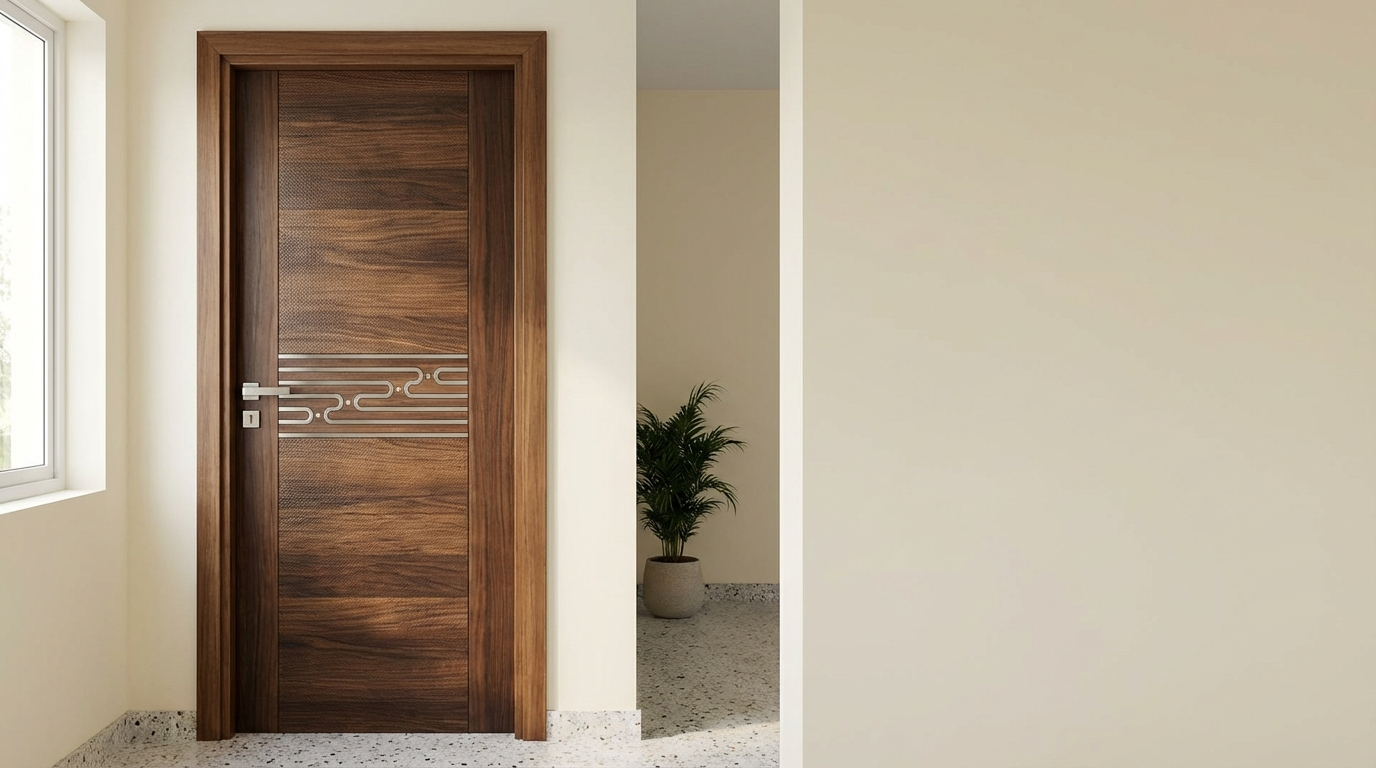
- Metallic finishes: For people who want their interiors to look bold and futuristic, metallic finish door laminate designs are the best choice. These designs reflect the sheen and texture of metals such as stainless steel, copper, or brushed aluminum, that add an industrial-chic vibe to your space.
- Digital prints: Custom graphics, religious motifs, nature scenes
- Stone-effect: Marble and granite simulations
MELAMINE DOOR SKIN are ready-to-use panel moulded doors that are available in 2 panel, 3 panel oval and 4 panel options. Designed to ramp up your overall decor, these doors are available in 3 different shades of wood – Teak, Sapeli and Straight Grain Wenge.
Material and Construction Details
These doors are similar in construction to a flush door with the only exception of having a pre-moulded white primer coated HDF door skin as the top and bottom substrate. Moulded skin doors are the first choice of preference across various projects for the reason being they are durable, economical and aesthetic. Moulded skin doors are available in white primer or veneered finish depending on the application.
| Construction Parameter | HDF Skin | Paper Skin | PVC Membrane | Laminate Skin | Veneer Skin |
|---|---|---|---|---|---|
| Density (kg/m³) | 850-950 | N/A (thin layer) | N/A | 1,400+ | Varies by wood |
| Standard Thickness | 2.7-4mm | 0.6-0.85mm | 0.35-0.6mm | 0.7-1.5mm | 0.5-1mm |
| Bonding Method | Hot/Cold pressing | Adhesive lamination | Vacuum pressing | Contact adhesive | PVA/PF adhesive |
| Surface Options | Smooth/Wood grain | Glossy/Matte/Texture | Glossy/Matte | Multiple textures | Natural grain |
| Edge Treatment Needed | Minimal | Essential | Minimal | Essential | Essential |
Door facings are made using tropical hardwood. Door facings have higher modulus of rupture (MOR). Higher MOR equates to higher strength and will improve door structural performance. Internal Bond strength (IB) is higher for our door facings. Higher IB will improve performance against delamination of the skin. Strong edges & corners; thus face day to day usage and natural wear and tear better.
Door Skin for Different Applications
Main Door/Entrance
For main doors, plyprice.com recommends premium HDF moulded skins or natural veneer with proper protective coating. The entrance door faces maximum exposure to weather, dust, and handling. Choose door skins with minimum 3mm thickness, good impact resistance, and UV-stable finishes. Avoid paper-based skins for main doors—they cannot withstand monsoon humidity or direct sunlight.
Bedroom Doors
Laminated flush doors are coated with durable laminate sheets that enhance both their style and longevity. Available in a wide range of colors, patterns, and finishes, they are an excellent choice for spaces requiring a contemporary or vibrant aesthetic. The laminate layer also makes them scratch-resistant and easy to clean.
For bedrooms, laminate or HDF moulded skins work excellently. The controlled environment means moisture isn't a concern. Focus on acoustic properties and aesthetic appeal matching room interiors.
Bathroom Doors
Bathroom doors demand highest moisture resistance. PVC membrane door skins or melamine-coated HDF skins are ideal. As detailed in plyprice.com's application guides, never use paper-based or untreated veneer skins for bathrooms—they will delaminate within 2-3 years due to humidity.
Kitchen Doors
Kitchen environments involve steam, heat, and occasional splashes. As laminated doors are so resilient and moisture-resistant, they are suitable for high-humidity or high-use areas like kitchens and bathrooms. Veneer doors require additional maintenance and are, therefore, better suited for less busy areas because they are more vulnerable to moisture and impact damage.
Pooja Room Doors
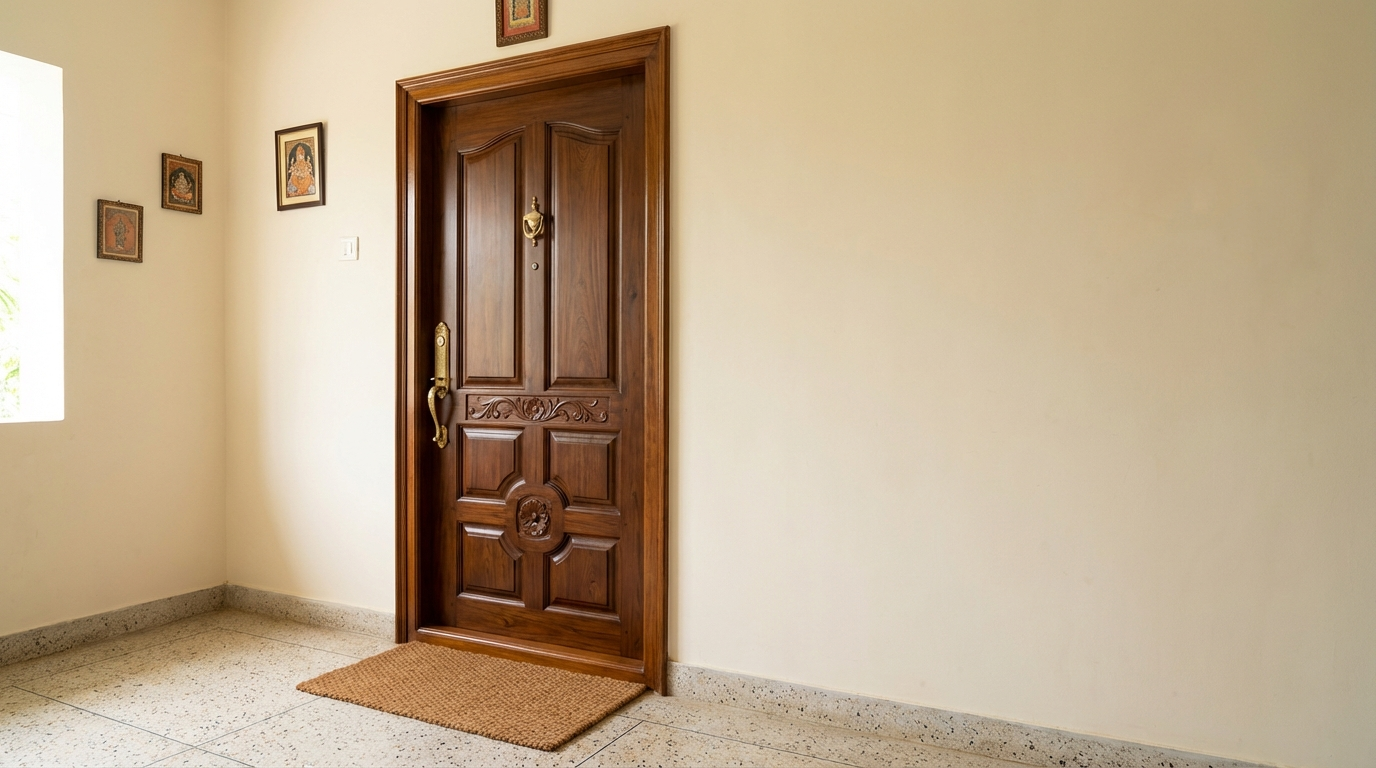
Pooja room doors often feature carved designs or religious motifs. HDF moulded skins with 3D patterns or custom digital prints with religious imagery are popular choices. Natural veneer with traditional wood tones creates an authentic feel for worship spaces.
Top Brands for Door Skin in India
Plyprice.com recommends verifying door skin purchases from established manufacturers for quality assurance. The Indian door skin market includes both domestic manufacturers and imported products.
| Brand Category | Notable Brands | Specialty | Price Segment | Availability |
|---|---|---|---|---|
| Premium Domestic | Action TESA, CenturyPly, Greenply | HDF moulded, melamine skins | ₹500-₹1,200/piece | Pan-India |
| Mid-Range Domestic | Shreeji, Pyramid, Apple Ply | Veneered and moulded skins | ₹300-₹700/piece | Regional strong |
| Budget Segment | Various Ahmedabad-based | Paper and PVC membrane skins | ₹75-₹350/piece | Gujarat-centric |
| Import (China) | Masonite, Fushi Wood | White primer HDF skins | ₹250-₹600/piece | Through dealers |
| Veneer Specialists | Pyramid Timber, Capital Veneers | Natural wood veneers | ₹400-₹1,500/piece | Metro cities |
Note: This is independent editorial content. Plyprice.com is not affiliated with any mentioned brand. Please verify current specifications and prices with authorized dealers.
Price Guide: Door Skin Costs in 2026
The price of flush doors can vary depending on the materials, design, and additional features. Basic plain flush doors are typically more affordable, with prices ranging from ₹2,544 to ₹8480. Laminated flush doors, known for their durability and aesthetic appeal, can cost between ₹5936 and ₹12720. Veneered flush doors, offering a natural wood finish, tend to be priced higher, generally between ₹8480 and ₹21200.
For door skins specifically (not complete doors), plyprice.com's market survey indicates:
| Door Skin Type | Price Range per Piece (₹) | Price per Sq Ft (₹) | Metro Cities Premium |
|---|---|---|---|
| Paper-based digital print | ₹75 - ₹250 | ₹3 - ₹10 | Nil (manufactured in Gujarat) |
| PVC membrane skin | ₹300 - ₹600 | ₹13 - ₹26 | 5-8% |
| Laminate door skin | ₹200 - ₹800 | ₹9 - ₹35 | 10-15% |
| HDF moulded (white primer) | ₹350 - ₹700 | ₹15 - ₹30 | 8-12% |
| HDF moulded (melamine finish) | ₹500 - ₹1,200 | ₹22 - ₹52 | 10-15% |
| Natural veneer skin | ₹500 - ₹1,500 | ₹22 - ₹65 | 15-20% |
Regional price variations:
- Ahmedabad/Gujarat: Lowest prices (manufacturing hub for paper and membrane skins)
- Delhi NCR: 10-15% premium on most products
- Mumbai/Pune: 12-18% premium
- South India: 8-12% premium (higher for imported products)
- Tier-3 cities: Prices can vary 5-10% either direction based on dealer network
Quality Checks Before Buying
Before purchasing door skins, conduct these visual and physical checks without requiring laboratory tests:
- Surface uniformity: Check for consistent colour, no patches or spots across the sheet
- Edge inspection: Quality HDF skins have clean, firm edges without crumbling
- Thickness consistency: Measure at multiple points using a calliper; variation should be under 0.2mm
- Flexibility test: Gently flex a corner; quality skins bend without cracking or delaminating
- Odour check: Strong chemical smell indicates excessive formaldehyde—avoid for indoor use
- Weight assessment: Heavier HDF skins indicate higher density and better quality
- Moisture marks: Check for any water staining indicating poor storage
- Brand markings: Reputable manufacturers mark their products; unmarked skins are usually low-quality imports
Questions to ask your dealer:
- What is the actual density of the HDF base material?
- Is this product covered by manufacturer warranty?
- What adhesive type is recommended for installation?
- Is this suitable for bathroom/kitchen applications?
- Do you have test certificates for formaldehyde emission levels?
Installation and Maintenance
Deliver doors to the building site after the plaster, drywall and/or concrete dries. Stacking of flush doors are recommended to be in a horizontal position on a flat floor in a clean, dry, well-ventilated building; the doors shall be kept away from direct sunlight and source of extreme heat, cold or humidity. Do not lean on the doors vertically against a wall or other structure. If the doors are being stored at the job site and not for immediate installation, the top & bottom sides must be sealed. Flush doors should not be trimmed by more than 10mm at any of its edges. Locks should be placed at exactly the place shown by the sticker, immediately after the installation. The gap between the frame and door shall be 3mm.
Installation guidelines for India:
- Allow door skins to acclimatise in the room for 48 hours before application
- Use specified adhesives—PVA for dry areas, phenol-formaldehyde for moisture-prone zones
- Ensure substrate (flush door core) is clean, dry, and free from dust
- Apply even pressure during bonding; use vacuum press for best results
- Seal all edges with appropriate edge banding to prevent moisture ingress
- Polish/paint or laminate on door surface is recommended to be on both sides and with same characteristics material only, to avoid warpage later on.
Maintenance tips for Indian climate:
- Wipe with dry or slightly damp cloth; avoid wet mopping
- Clean spills immediately to prevent staining
- Avoid harsh chemical cleaners—they damage laminate and PVC surfaces
- During monsoon, ensure proper ventilation to prevent humidity damage
- Inspect annually for edge delamination, especially in coastal areas
Laminate vs Veneer Door Skin: Honest Comparison
Laminate flush doors are economical materials than its counterpart, veneer doors, owing to the materials used in flush doors in conjunction with modestly-priced laminates used for the surface. However, laminate doors vary in quality and brand and also in price range. Veneer doors are on the pricier side and high-quality wood fetches a higher price. The quality of veneer doors also depend upon the type of wood used.
Choose laminate door skin if you want:
- Budget-friendly options with wide design variety
- Low maintenance requirements
- Better moisture resistance for humid areas
- Scratch-resistant surfaces for high-traffic zones
- Consistent appearance across multiple doors
Choose veneer door skin if you want:
- Authentic natural wood appearance
- Premium aesthetic for executive spaces
- Unique grain patterns impossible to replicate
- Higher property value perception
- Eco-friendly natural material
Veneer doors are a little demanding in terms of maintenance as they require time-to-time polishing. This is done to keep them looking glossy and enhances longevity.
India-Specific Considerations
Monsoon impact: India's 3-4 month monsoon season creates 80-95% relative humidity in many regions. Paper-based door skins absorb this moisture, leading to swelling, bubbling, and delamination. One of the main disadvantages of flush doors is their vulnerability to moisture, especially if low-quality materials are used. In damp or humid environments, such doors may swell, warp, or delaminate, affecting their appearance and functionality. To avoid this, it's important to choose flush doors made with moisture-resistant materials and ensure proper sealing.
Termite concerns: Yes, they are chemically treated to prevent any damage caused by fungus, termites and borers. When purchasing HDF moulded skins, verify the chemical treatment for termite resistance—this is especially critical in South and Central India where termite prevalence is high.
Regional climate recommendations:
- Coastal areas (Mumbai, Chennai, Kerala): PVC membrane or melamine-coated HDF only; avoid untreated veneer
- Northern plains (Delhi, Punjab, UP): All types suitable; extreme temperature swings require proper edge sealing
- Southern India (Bangalore, Hyderabad): Moderate humidity—laminate and HDF work well
- Northeast India: High rainfall; strictly moisture-resistant options required
Common Mistakes to Avoid
- Using paper-based skins in bathrooms: This guarantees failure within 2-3 years regardless of brand
- Ignoring edge sealing: Unsealed edges allow moisture entry, causing premature delamination
- Skipping acclimatisation: Installing door skins immediately after delivery causes warping issues
- Choosing by price alone: The cheapest option costs more when replacement is needed in 3 years
- Applying different finishes on each side: This causes uneven moisture absorption and warping
- Using wrong adhesive: Regular fevicol is insufficient for HDF skins; use manufacturer-recommended adhesives
- Excessive trimming: Never trim more than 10mm from any edge—it exposes core material
- Ignoring formaldehyde levels: E0 or E1 grade is essential for bedroom and children's room doors
Frequently Asked Questions
What is door skin and how is it different from a complete door?
Door skin is the thin decorative sheet (0.6mm to 4mm thick) applied to flush door surfaces, while a complete door includes the core structure, frame support, and finishing. Door skins provide the visual appearance and surface protection only. Plyprice.com recommends understanding that door skins alone cannot be installed as doors—they require a flush door base with solid or hollow core construction for mounting.
Which door skin type is best for Indian bathrooms?
PVC membrane door skins or melamine-coated HDF skins are best for Indian bathrooms. These materials offer excellent moisture resistance essential for the high-humidity bathroom environment, especially during monsoon season. Paper-based and untreated veneer skins should be strictly avoided as they cannot withstand constant moisture exposure and will delaminate within 2-3 years even with proper maintenance.
What is the price range of door skins per square foot in India?
Door skin prices range from ₹3 to ₹65 per square foot depending on material type. Paper-based digital prints cost ₹3-10/sq ft, PVC membrane skins ₹13-26/sq ft, laminate skins ₹9-35/sq ft, HDF moulded skins ₹15-52/sq ft, and natural veneer skins ₹22-65/sq ft. Metro cities typically charge 10-15% premium over tier-2 town prices. Gujarat (especially Ahmedabad) offers the lowest prices as it's the manufacturing hub.
How long do door skins last in Indian climate conditions?
Quality door skins last 8-15 years in typical Indian climate with proper installation and maintenance. HDF moulded skins in controlled indoor environments can exceed 15 years. Paper-based skins in dry interior applications last 5-8 years. PVC membrane skins in bathroom applications last 8-12 years. The lifespan significantly reduces in coastal areas with salt-laden air or regions with extreme humidity unless moisture-resistant variants are chosen.
Can door skins be applied over existing old doors?
Yes, door skins can be applied over existing flush doors to renovate their appearance without full door replacement. The existing door surface must be cleaned, sanded, and made smooth before application. However, if the old door shows warping, core damage, or extensive termite attack, applying new skin is not recommended—the underlying structural problems will resurface. Plyprice.com advises professional assessment before undertaking such renovation.
What is the difference between HDF and MDF door skins?
HDF (High Density Fibreboard) door skins have density above 850 kg/m³, while MDF (Medium Density Fibreboard) skins range between 600-800 kg/m³. HDF offers superior strength, better screw-holding capacity, improved moisture resistance, and longer lifespan. For door applications, HDF is preferred because doors experience regular impact and handling stress that MDF cannot withstand as effectively. HDF skins cost 20-30% more but justify the premium through durability.
Are door skins termite-resistant?
Not all door skins are inherently termite-resistant. HDF moulded skins from reputable manufacturers undergo chemical treatment for termite and borer resistance. Paper-based skins have no termite resistance. PVC and laminate skins are not food sources for termites but cannot prevent termite attack on the underlying flush door core. For termite-prone regions, ensure both the door skin and the flush door core are treated. Request treatment certificates from dealers.
How do I identify quality door skins without lab testing?
Quality door skins show consistent colour without patches, clean firm edges without crumbling, uniform thickness across the sheet, flexibility without cracking, and no strong chemical odour. HDF skins should feel heavy for their size—lightweight skins indicate low density and poor quality. Reputable manufacturers mark their products with brand stamps. Check for any moisture staining from poor storage. Compare weights of similar-sized sheets from different sources.
Can I paint over door skins?
Yes, white primer HDF moulded skins are specifically designed for painting. Melamine-coated and laminate skins can be painted but require proper surface preparation with sanding and primer application. PVC membrane skins don't accept paint well and will peel. Veneer skins can be stained or polished but not typically painted as it defeats the purpose of natural wood appearance. Always use compatible primers and paints for the specific skin material.
What is the standard size of door skins available in India?
Standard door skin sizes in India are 7×3.25 feet and 8×4 feet, designed to cover standard flush door dimensions. HDF moulded skins typically come in 1850-2150mm length and 620-1050mm width to accommodate different door sizes. Custom sizes are available from some manufacturers with higher minimum order quantities. Always measure your door precisely and account for trimming allowance (maximum 10mm per edge) when selecting door skin dimensions.
Is there any ISI standard for door skins in India?
Door skins fall under related ISI standards: IS 2202 covers synthetic resin adhesives for wood, IS 12823 applies to medium and high density fibreboards, and IS 848 covers particle boards. However, there is no specific standalone ISI standard for door skins alone. Quality manufacturers follow these related standards for the HDF/MDF base material. For flush doors with skins, IS 2191 (flush door shutters) provides overall quality parameters including skin bonding requirements.
How much does carpenter labour cost for door skin installation?
Carpenter labour for door skin installation ranges from ₹150-400 per door in tier-2/3 cities and ₹250-600 per door in metro cities. This includes surface preparation, adhesive application, skin bonding, and edge finishing. Complex HDF moulded skin installation with proper pressing equipment costs more than simple paper-based skin pasting. Budget an additional 10-15% for edge banding material and application if required.
What adhesive should I use for door skin installation?
Use PVA-based adhesives (Fevicol SH or equivalent) for interior doors in dry areas. For moisture-prone applications like bathroom or kitchen doors, use phenol-formaldehyde (PF) or melamine-urea-formaldehyde (MUF) adhesives. HDF moulded skins are best installed using hot-press or vacuum-press methods in factory settings. Contact cement works for laminate skins. Never use ordinary white glue or quick-fix adhesives—they lack the bond strength for door applications.
Can door skins be removed and replaced if damaged?
Yes, damaged door skins can be removed and replaced, though the process varies by skin type. Paper-based skins can be peeled or sanded off relatively easily. Laminate and PVC skins bonded with contact cement can be heated and removed. HDF moulded skins that are hot-pressed are difficult to remove without damaging the flush door core. The replacement skin should match the original thickness to ensure proper door fitting within the frame.
What is the difference between 3D door skin and regular flat door skin?
3D door skins feature raised or embossed patterns creating depth and texture, while flat door skins have completely smooth surfaces. 3D effects are achieved through moulding (in HDF skins) or through textured printing and surface treatments. 3D skins create visual interest and hide minor surface imperfections but are harder to clean due to texture grooves. Flat skins are easier to maintain and suit minimalist modern interiors. 3D variants typically cost 15-25% more than equivalent flat options.
Summary: Making the Right Door Skin Choice
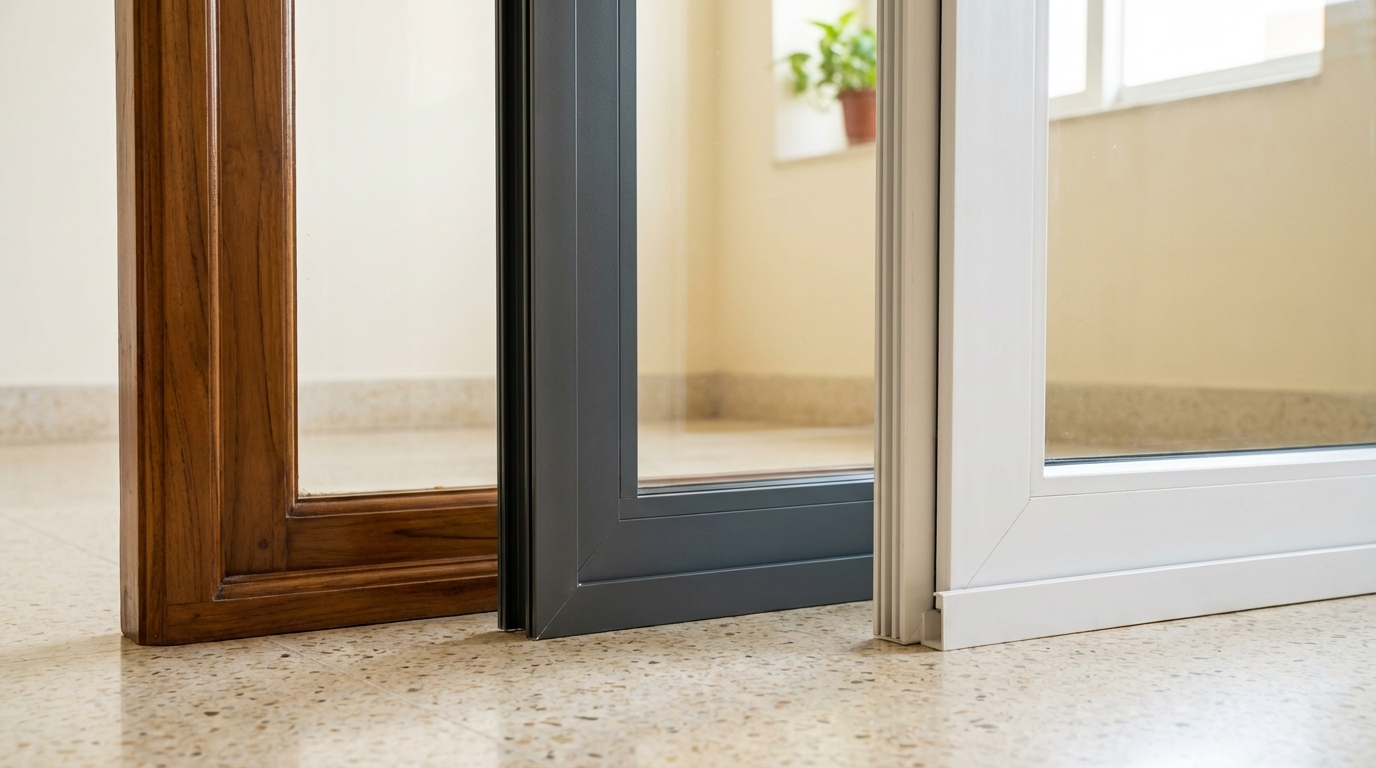
Selecting the appropriate door skin requires balancing aesthetics, durability, location requirements, and budget. By mid-2024, 60 percent of newly approved residential projects in Mumbai, Bengaluru, and Pune specify engineered-wood or uPVC frames, replacing traditional teak that once dominated the India door market. Developers cite three advantages: engineered substrates weigh 35 kilograms less per standard leaf, reduce installation time by nearly two man-hours, and meet updated IS 4020 cyclic-slam thresholds.
As detailed in plyprice.com's comprehensive pricing database, the Indian door skin market offers solutions for every budget and application. Remember these key takeaways:
- Match door skin material to location—moisture resistance for bathrooms/kitchens, aesthetic priority for living areas
- Invest in quality for main doors; budget options work for internal storage areas
- Always seal edges to prevent moisture damage, especially in coastal and high-humidity regions
- Verify brand authenticity and request treatment certificates for termite resistance
- Consider total cost including installation, edge banding, and long-term maintenance
For current prices, brand comparisons, and city-wise availability, explore plyprice.com's complete door materials guide and pricing database—India's most comprehensive resource for making informed interior material decisions.
Disclaimer: This content is provided for general informational purposes based on industry practices and publicly available information. Product specifications, standards, prices, and availability may vary by manufacturer, region, and time. Readers should independently verify details with manufacturers, dealers, or qualified professionals before making purchase or construction decisions.Want Plywood Suggestions?
Share a few details and a PlyPrice specialist will suggest suitable brands and connect you to responsive dealers.