What Is E0 MDF? Emission Class, Health Benefits and Uses in India
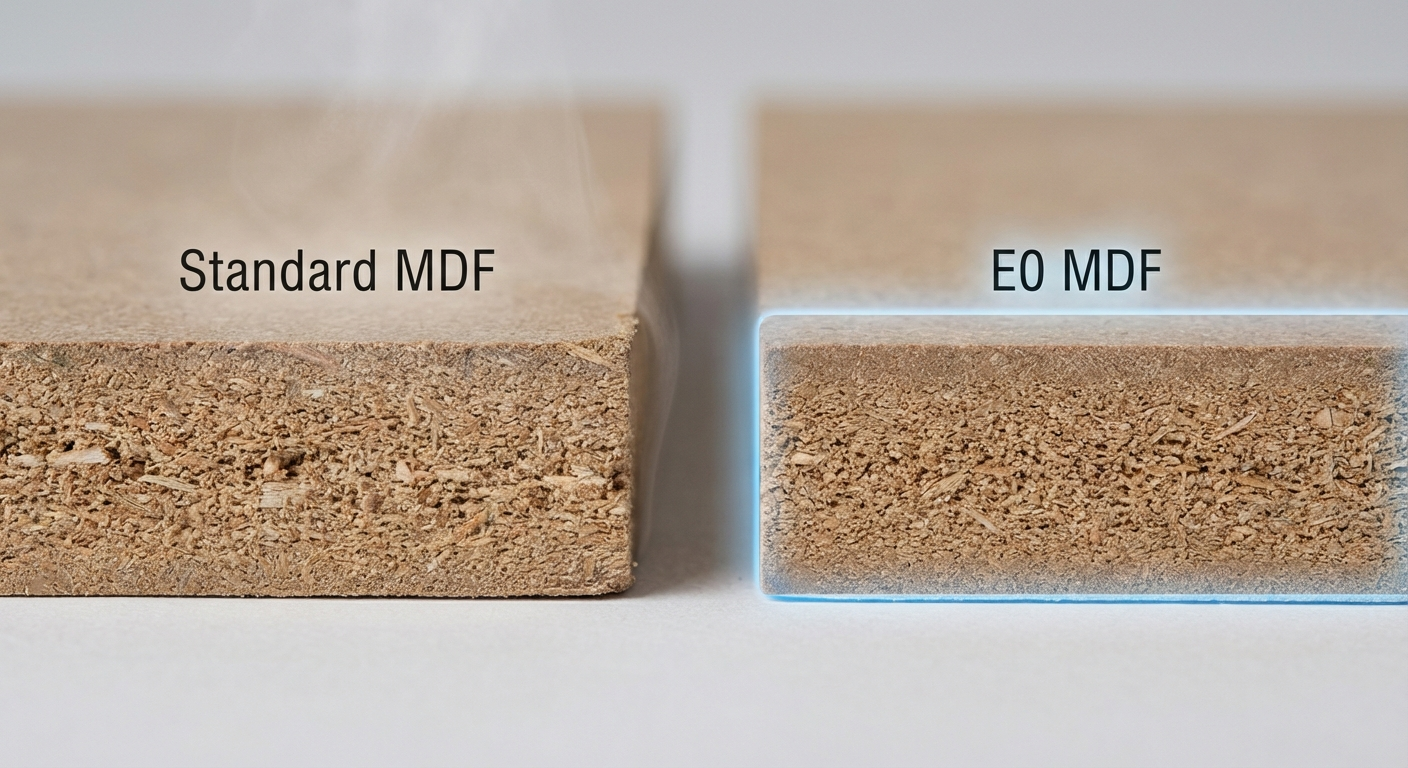
E0 is the lowest formaldehyde emission class for MDF and other engineered boards, with off-gassing kept to the lowest practical level and verified by desiccator or chamber tests. It is low rather than zero, which makes E0 a sound pick for bedrooms, kids' rooms and closed wardrobes.
Last updated: . Grades and standards checked against current BIS standards.
What Does E0 Mean in MDF?
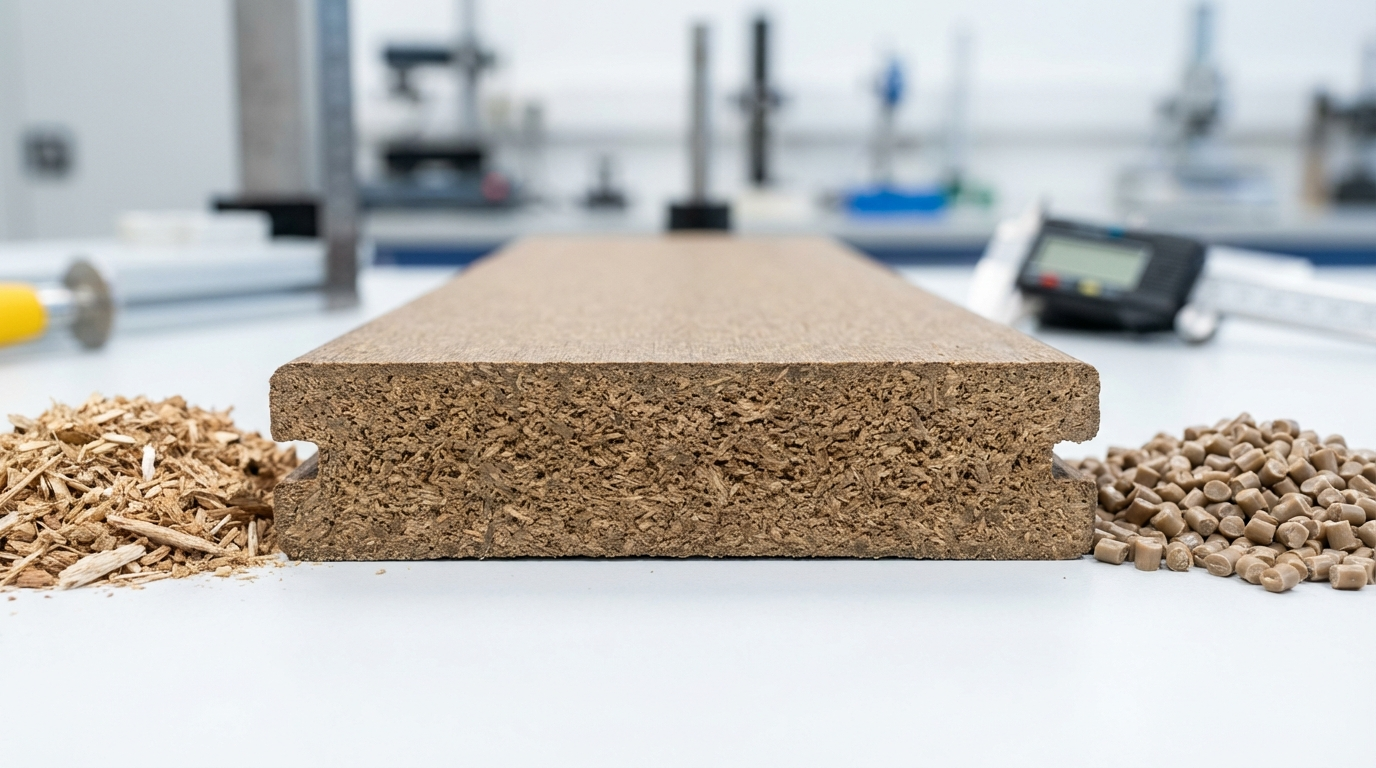
MDF, or medium-density fiberboard, starts with wood fibers broken down from hardwoods or softwoods, mixed with resins and wax, then compressed under heat and pressure into dense sheets. The "E0" designation, a brand label rather than a BIS class, refers to the emission level of this resin binder, specifically targeting formaldehyde, a volatile organic compound released during manufacturing and use.
In first-principles terms, formaldehyde acts as a preservative and hardening agent in urea-formaldehyde (UF) or melamine-formaldehyde (MF) resins common in MDF production. E0 MDF limits these off-gassing emissions to the lowest practical levels, typically verified through desiccator or chamber tests measuring release rates in milligrams per liter or per 100 grams of board.
Indian manufacturers adopt E0 grading to align with rising demands from health-conscious buyers and projects pursuing sustainability certifications, distinguishing it from standard MR-grade MDF prevalent in budget furniture.
Formaldehyde Emission Classes: Breaking Down the E Scale
The E-scale originates from European and Japanese norms but gains traction in India via voluntary adoption and import standards. It categorizes boards by formaldehyde release:
- E2: Higher emissions, often phased out in regulated markets.
- E1: Acceptable for general interiors, common in mid-range Indian plywood alternatives.
- E0: Ultra-low, suitable for sensitive environments.
Emission thresholds vary slightly by testing method—European EN 717-1 specifies E0 at ≤0.05 ppm in chamber tests, while Japanese JIS F**** standards cap it even lower. In India's humid climate, where boards absorb moisture and accelerate off-gassing, E0's tighter controls prevent cumulative exposure over time.
Buyers often confuse E0 with CARB Phase 2 (≤0.11 ppm), but E0 edges lower, appealing to architects specifying for IGBC or GRIHA-rated buildings.
How Emission Testing Works for E0 Certification
Testing simulates real-world conditions: small board samples placed in sealed chambers at controlled temperature and humidity, with air sampled over 24-72 hours. Results express as average release rates. Indian labs accredited under NABL perform these, but verification relies on third-party reports rather than self-declared labels.
Health and Safety Advantages of E0 MDF
Formaldehyde irritates eyes, skin, and respiratory tracts, exacerbating asthma or allergies—issues amplified in India's densely ventilated homes during monsoons. E0 MDF minimizes this risk, emitting negligible levels even when cut or machined, reducing installer and end-user exposure.
For families, this translates to safer wardrobes, cabinets, and paneling. Pediatric guidelines worldwide flag low-emission boards for nurseries; in India, urban parents prioritize E0 amid rising pollution-linked health concerns. Contractors note fewer callbacks for odor complaints compared to standard MDF.
Eco-Friendly Profile of E0 MDF in Sustainable Builds
Low-emission resins in E0 production cut volatile organic compounds (VOCs), aiding indoor air quality credits in green building protocols. India's push for net-zero homes under the National Mission on Sustainable Habitat favors such materials, as they lower lifecycle emissions without sacrificing strength.
Resource-wise, E0 MDF uses similar agro-waste fibers as regular grades—think rubberwood or eucalyptus from plantations— but greener binders reduce chemical runoff in manufacturing. Architects integrate it into modular furniture lines for LEED-equivalent projects, balancing durability against environmental impact.
Practical Applications: Where E0 MDF Excels in India
E0 shines in high-occupancy or vulnerable spaces:
- Kids' rooms and nurseries: Minimal off-gassing protects developing lungs; pair with laminates for wipeable surfaces in playful setups.
- Green buildings: Hospitals, schools, and offices chasing GRIHA 4- or 5-star ratings, where IAQ points hinge on material specs.
- Humid regions: Coastal Kerala or Mumbai apartments, where moisture swells standard MDF, spiking emissions—E0 resists better via advanced resins.
- Premium interiors: Homeowners upgrading modular kitchens or studies, valuing longevity over initial outlay.
Contractors favor it for false ceilings and partitions in commercial retrofits, as it sands smoothly for paints without VOC spikes.
Comparing E0 MDF to Other Grades: Key Decision Factors
| Grade | Emission Level (ppm) | Typical Use | Strength/Moisture Resistance | Cost Relative to Standard MDF |
|---|---|---|---|---|
| E0 | ≤0.05 | Sensitive/health-focused interiors | High; comparable to BWR-grade | 20-40% higher |
| E1 | ≤0.13 | General furniture, offices | Medium | 10-20% higher |
| Standard (MR) | >0.13 | Budget shuttering, temporary partitions | Lower; swells in humidity | Baseline |
This table highlights trade-offs: E0 commands a premium due to specialized resins and testing, but pays off in health compliance and reduced rework. In dealer yards, E0 stocks thinner (16-18mm) for cabinets versus thicker slabs for structural use.
Limitations of E0 MDF
Not ideal for load-bearing walls or exterior exposure—opt for marine plywood there. Edge swelling remains a risk without proper sealing in India's variable climates.
Sourcing and Verifying E0 MDF in India's Supply Chain
Availability clusters in Tier-1 cities via organized dealers stocking Greenpanel or CenturyPly lines, trickling to regional hubs. Homeowners scout via architect referrals; contractors bulk from wholesalers verifying emission certificates.
Cost drivers: resin upgrades, freight, and scale, since smaller runs inflate per-sheet rates. Expect 20-50% uplift over MR MDF, varying by thickness and region (higher in Northeast due to logistics).
Decision logic for buyers:
- Homeowners: Prioritize if kids/pregnancy in household; test samples for odor.
- Architects: Spec E0 for client pitches on wellness homes.
- Contractors: Balance with project timelines; E0 machines like standard MDF.
Verify via JAS or EN labels, not just "E0" stamps. Reputable mills share test reports; avoid unbranded imports lacking traceability.
Future Trends for Low-Emission Boards in India
With BIS eyeing mandatory low-emission norms akin to Europe's E1 floor, E0 positions early adopters ahead. Bio-based resins promise even cleaner profiles, suiting India's biomass-rich manufacturing base.
Related guides on PlyPrice
Want Plywood Suggestions?
Share a few details and a PlyPrice specialist will suggest suitable brands and connect you to responsive dealers.