Laminate Door Design Ideas by Room: Styles, Colours and Costs
Popular laminate door designs in India are wood grain, solid colour, textured and 3D finishes, chosen room by room for main, bedroom, bathroom, kitchen and pooja doors. A finished laminate door costs about ₹2,500 to ₹18,000 depending on core, laminate and design.
Last updated: . Grades and standards checked against current BIS standards.
How Much Does a Laminate Door Cost in India?
Laminate doors account for over 65% of interior door installations in urban Indian homes, combining affordability with exceptional design versatility. Laminate door prices typically range from ₹2,500 to ₹18,000 per door depending on core material, laminate quality, and design complexity.
In simple terms, a laminate door consists of a substrate (plywood, MDF, HDHMR, or particle board) covered with decorative laminate sheets bonded under high pressure. This construction delivers scratch resistance, moisture protection, and design flexibility that solid wood doors cannot match at comparable price points.
Key facts every Indian homeowner should know about laminate doors:
- Lifespan of 15-25 years with proper installation and maintenance
- Available in 1,000+ designs including wood grains, solid colours, textures, and 3D patterns
- Moisture-resistant options available for bathrooms and kitchens
- Installation cost ranges from ₹800-2,500 per door in metro cities
- Can be customised to any standard Indian door size (typically 7x3 feet or 6.5x2.5 feet)
- HPL laminate doors offer 3x more durability than standard laminate options
- Termite-resistant when using treated core materials and proper edge banding
What Exactly is a Laminate Door?
A laminate door is a composite door where decorative laminate sheets are bonded to a core substrate using adhesive under controlled pressure and temperature conditions. The laminate layer, typically 0.7mm to 1.5mm thick, provides the visual appeal while the core material determines strength, weight, and moisture resistance.
The manufacturing process involves applying phenolic or melamine resin-impregnated decorative papers to the substrate. High-pressure laminates (HPL) are manufactured at pressures exceeding 1,000 PSI, creating an exceptionally durable surface layer. Low-pressure laminates (LPL), also called melamine-faced boards, are bonded directly during the board manufacturing process.
Why Laminate Doors Dominate Indian Interiors
Indian homes face unique challenges including high humidity during monsoons, extreme temperature variations, and termite prevalence. Laminate doors address these concerns better than traditional wooden doors. The sealed surface prevents moisture absorption, while the synthetic composition resists termite damage when properly edge-banded.
From a carpenter's perspective, laminate doors are easier to install and don't require seasoning time like solid wood. Most contractors prefer working with pre-laminated doors as they eliminate on-site finishing work, reducing project timelines by 40-60%.
Laminate Door Construction: Understanding the Layers
Every laminate door comprises three essential components: the core material, the laminate surface, and edge banding. The core provides structural integrity and determines the door's weight and durability. Plywood cores offer the best screw-holding capacity, while MDF cores provide a smoother surface for laminate adhesion.
The laminate surface can be HPL (High Pressure Laminate), LPL (Low Pressure Laminate), or acrylic laminate. HPL provides superior scratch and impact resistance, making it ideal for main doors and high-traffic areas. LPL is cost-effective for bedroom and internal doors where wear is minimal.
| Component | Material Options | Best For | Price Impact |
|---|---|---|---|
| Core Material | Plywood, MDF, HDHMR, Particle Board, Blockboard | Varies by application | 40-50% of total cost |
| Laminate Surface | HPL, LPL, Acrylic, PVC, Veneer Laminate | Aesthetic and durability needs | 25-35% of total cost |
| Edge Banding | PVC, ABS, Acrylic, Wood Veneer | Moisture-prone areas | 5-10% of total cost |
| Adhesive | PVA, PUR, EVA, Hotmelt | Climate conditions | 3-5% of total cost |
| Hardware Provisions | Pre-drilled, Reinforced sections | Security doors | 5-8% of total cost |
Types of Laminate Door Designs Available in India
The Indian market offers over 1,000 distinct laminate door designs categorised into wood grain finishes, solid colours, textured patterns, 3D designs, and combination styles. Wood grain finishes are a common choice, alongside solid colours and textured patterns.
Wood Grain Laminate Designs
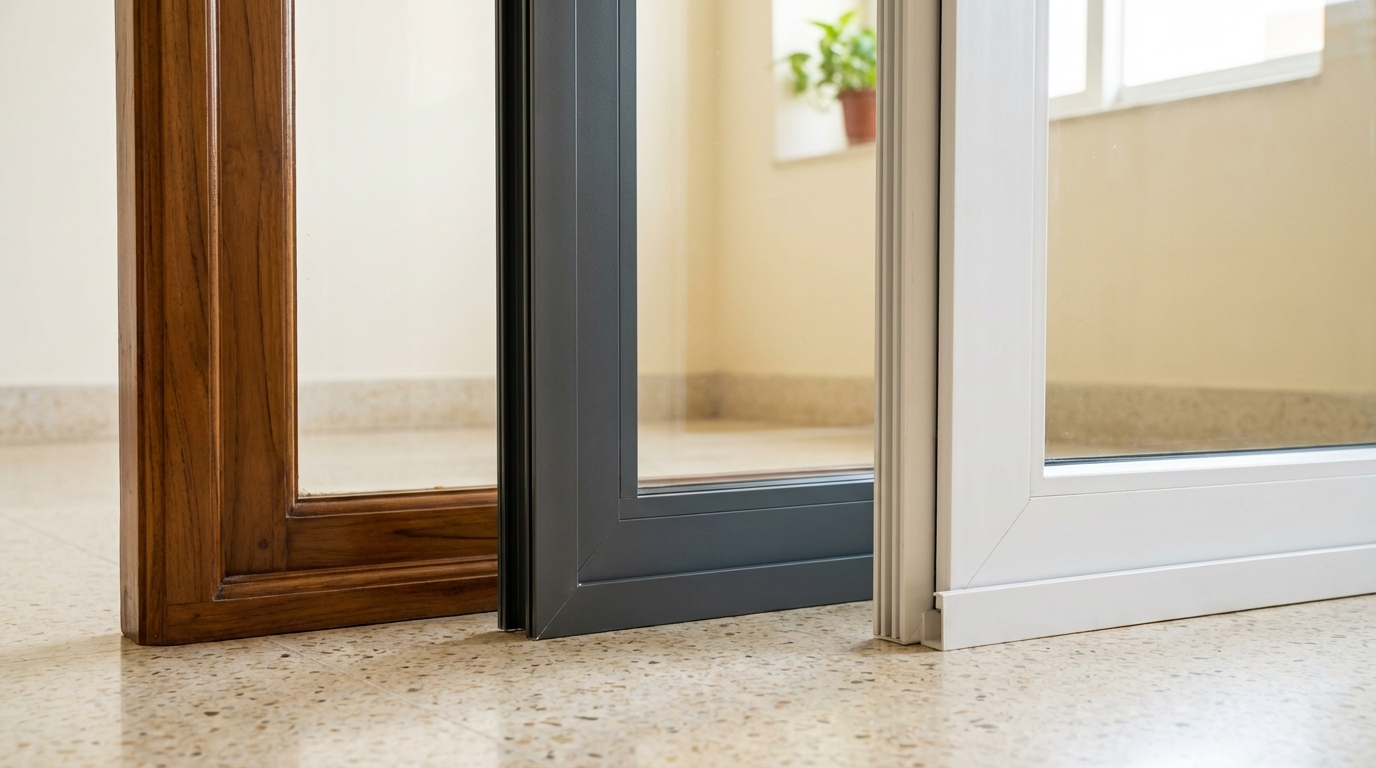
Wood grain laminates replicate the appearance of natural woods like teak, walnut, oak, maple, and rosewood without the associated maintenance requirements. Modern printing technology creates remarkably realistic grain patterns, with premium options featuring synchronised textures where the surface feel matches the visual grain pattern.
Popular wood grain options for Indian homes include Siam Teak, American Walnut, European Oak, Philippine Mahogany, and Natural Wenge. These designs work exceptionally well in traditional and transitional interior styles common across North and South India.
Solid Colour Laminate Doors
Solid colour laminates deliver a contemporary, minimalist aesthetic popular in modern apartments and commercial spaces. White, grey, charcoal, navy blue, and beige dominate the market. Matte finishes currently outsell glossy options by a 3:1 ratio, reflecting the global trend toward understated elegance.
For compact Indian apartments, light-coloured laminate doors create an illusion of spaciousness. Designers recommend pairing white or off-white doors with contrasting door frames for visual definition without overwhelming small spaces.
Textured and Patterned Laminates
Textured laminates add tactile dimension to door surfaces. Common textures include suede (soft matte), linen (fabric-like), leather grain, and stone effects. These textures hide fingerprints and minor scratches better than smooth finishes, making them practical for homes with children.
Geometric patterns, abstract designs, and metallic finishes cater to bold design preferences. However, limit statement patterns to one or two doors per home to avoid visual fatigue.
3D Laminate Door Designs
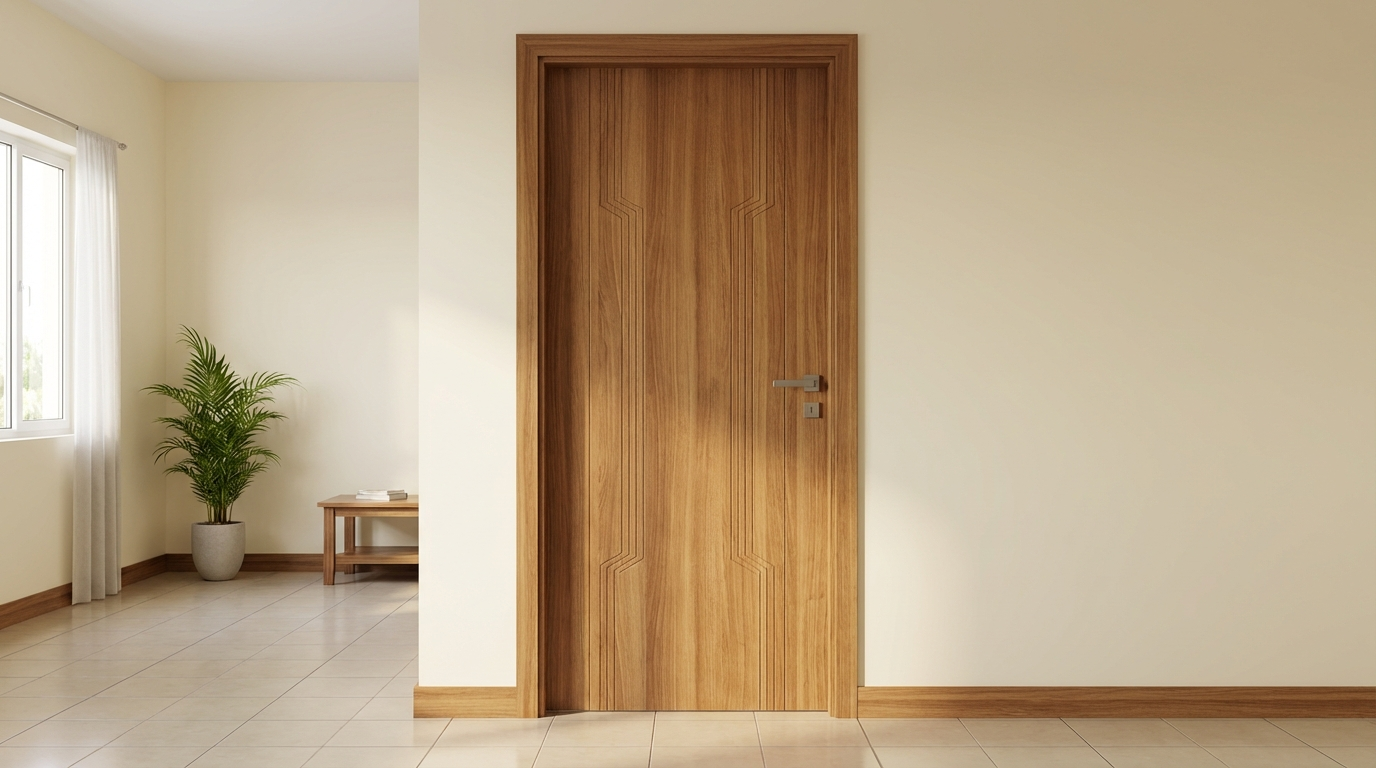
3D laminate doors feature surface routing, CNC-cut patterns, or moulded designs that create depth and shadow play. These premium options transform plain doors into architectural features. Popular 3D patterns include geometric grooves, wave patterns, and traditional panelled looks achieved through modern manufacturing.
The 3D effect is achieved either through CNC routing on the substrate before lamination or using pre-moulded door skins. CNC-routed designs offer more customisation but cost 40-60% more than pre-moulded alternatives.
| Design Category | Best Applications | Price Range (per door) | Maintenance Level | Durability Rating |
|---|---|---|---|---|
| Wood Grain HPL | Main doors, Living areas, Bedrooms | ₹5,000-12,000 | Low | Excellent |
| Solid Colour Matte | Bedrooms, Bathrooms, Wardrobes | ₹3,500-8,000 | Medium | Good |
| Solid Colour Glossy | Modern kitchens, Contemporary spaces | ₹4,000-10,000 | High | Good |
| Textured Suede | Bedrooms, Living areas, Offices | ₹4,500-9,000 | Low | Very Good |
| 3D Routed | Main doors, Feature doors | ₹8,000-18,000 | Medium | Good |
| Metallic/Mirror Finish | Accent doors, Commercial spaces | ₹6,000-15,000 | High | Moderate |
Laminate Door Design Ideas by Room
Room-specific door selection significantly impacts both functionality and aesthetics. The ideal laminate door for a bathroom differs dramatically from what works in a living room, primarily due to moisture exposure, privacy requirements, and design cohesion needs.
Main Door Laminate Designs
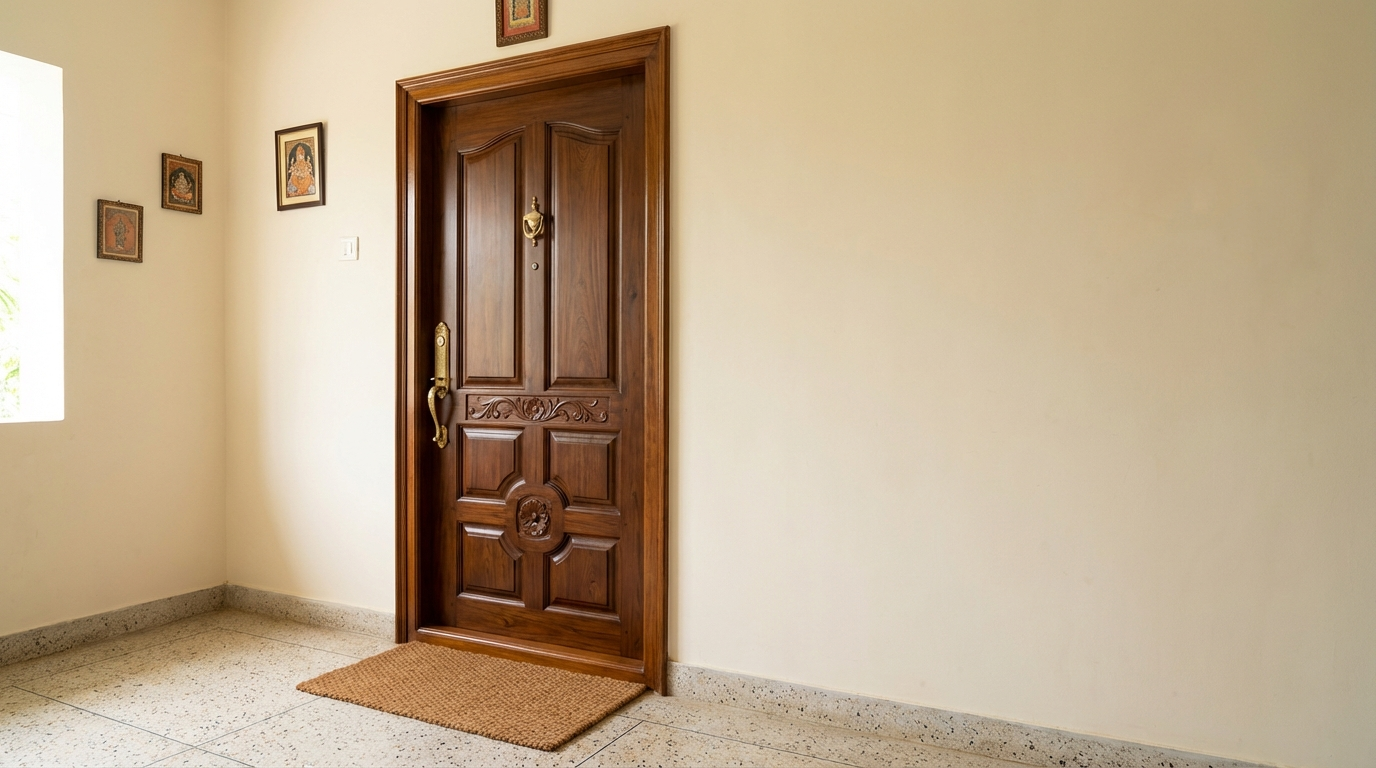
The main door creates the first impression of your home and requires a design that balances security, durability, and visual impact. Dark wood grain laminates like walnut, mahogany, and wenge remain timeless choices for main entrances. For a contemporary look, charcoal grey or slate-coloured laminates with subtle textures work exceptionally well.
Main doors should use BWR or BWP grade plywood cores (minimum 30mm thickness) with HPL laminate rated for exterior use. Edge banding must be seamless to prevent moisture ingress, especially in coastal and high-rainfall regions.
Bedroom Door Laminate Ideas
Bedroom doors prioritise privacy and aesthetics over moisture resistance. This allows greater flexibility in design choices and core materials. Light wood grains, soft pastels, and muted neutrals create calming bedroom environments. Children's rooms can feature brighter colours or themed designs.
For master bedrooms, coordinate the door laminate with wardrobe finishes for visual harmony. A thickness of 32-35mm provides adequate sound insulation for bedrooms.
Bathroom Door Laminate Designs
Bathroom doors demand moisture-resistant cores and waterproof laminate surfaces. HDHMR or marine-grade BWP plywood cores are essential for bathroom applications. The laminate should be rated for wet areas, with completely sealed edges using PVC or ABS edge banding.
Design-wise, bathroom doors in Indian homes typically feature frosted glass inserts for ventilation and light, or solid designs with bottom ventilation gaps. White, grey, and light blue laminates remain popular bathroom choices.
Kitchen Door and Pantry Designs
Kitchen doors face heat, humidity, and grease exposure. Anti-fingerprint laminate finishes in matte or suede textures are practical choices. Neutral colours that don't show stains—grey, beige, taupe—outperform white or dark colours in kitchen environments.
Pooja Room Door Designs
Traditional Indian homes often feature distinctive pooja room doors. Laminate doors can achieve traditional aesthetics through wood grain finishes, brass-coloured accents, or CNC-cut jaali patterns. Teakwood-finish laminates with 3D panelling are popular choices that combine tradition with modern durability.
Colour Trends for Laminate Doors
Current colour trends in Indian laminate doors reflect a shift toward nature-inspired tones and sophisticated neutrals. The days of bright, glossy finishes dominating new homes are declining, replaced by muted, textured surfaces that age gracefully.
Trending Colours This Year
Warm wood tones lead the market, with honey oak, natural walnut, and bleached teak gaining popularity over traditional dark browns. In solid colours, sage green, dusty rose, terracotta, and warm grey are emerging favourites for bedroom doors. Charcoal and slate continue dominating main door selections.
Regional Colour Preferences in India
Colour preferences vary significantly across Indian regions. South Indian homes traditionally prefer darker wood finishes and rich colours. North Indian urban homes lean toward lighter, more contemporary palettes. Coastal areas favour colours that complement natural light while hiding salt-air effects.
Vastu-Compliant Colour Choices
For homeowners following Vastu principles, main door colours hold significance based on the door's direction. North-facing doors suit blue and green tones. East-facing entries benefit from wood browns and greens. South-facing doors work well with red, orange, or pink undertones. West-facing doors complement white, silver, and yellow shades.
| Door Direction | Recommended Colours | Colours to Avoid | Laminate Options |
|---|---|---|---|
| North | Blue, Green, Light Brown | Red, Deep Orange | Ocean Blue, Sage, Light Oak |
| East | Green, Brown, White | Red, Grey | Forest Green, Walnut, Ivory |
| South | Red, Orange, Maroon, Pink | Blue, Black | Mahogany, Terracotta, Rose |
| West | White, Yellow, Silver, Grey | Green, Red | Platinum Grey, Cream, Golden Oak |
| North-East | Light colours, Yellow | Dark colours | Off-White, Light Maple |
| South-West | Brown, Muddy colours | Bright colours | Dark Walnut, Espresso |
Best Materials for Laminate Door Cores
The core material determines 60% of a laminate door's performance characteristics including weight, screw-holding strength, moisture resistance, and longevity. Selecting the appropriate core for each application is more important than the laminate surface choice.
| Core Material | Pros | Cons | Price Range (₹/sq ft) | Best For |
|---|---|---|---|---|
| BWR Plywood | Excellent screw holding, Moisture resistant, Strong | Heavier, Higher cost | ₹85-140 | Main doors, Bathrooms, Kitchens |
| MR Plywood | Good strength, Lighter, Cost-effective | Limited moisture resistance | ₹55-90 | Bedrooms, Living areas |
| MDF | Smooth surface, Uniform density, Affordable | Poor screw holding, Swells with moisture | ₹35-55 | Wardrobes, Internal doors |
| HDHMR | Moisture resistant, Smooth finish, Good density | Moderate screw holding, Heavy | ₹55-85 | Kitchens, Semi-wet areas |
| Particle Board | Very affordable, Lightweight | Poor durability, Weak screw holding | ₹25-40 | Temporary installations, Budget projects |
| Blockboard | Lightweight, Good for large doors | Variable quality, Edge issues | ₹65-100 | Large doors, Sliding doors |
Plywood Core for High-Traffic Doors
BWR-grade plywood cores provide the best combination of strength, screw-holding capacity, and moisture resistance for main doors and high-traffic areas. Look for plywood conforming to IS:303 standards with minimum 9-ply construction for 19mm thickness. The cross-laminated structure prevents warping even under humidity fluctuations.
MDF Core for Smooth Finishes
MDF provides an exceptionally smooth surface for laminate adhesion, making it ideal for high-gloss and mirror-finish laminates. However, MDF's poor moisture resistance limits its use to dry interior applications. Always specify E1 or E0 grade MDF for formaldehyde emission compliance.
HDHMR for Moisture-Prone Areas
HDHMR (High Density High Moisture Resistant) boards offer MDF-like smoothness with significantly improved moisture resistance. For bathroom doors where BWP plywood seems excessive, HDHMR provides a cost-effective middle ground. Most HDHMR boards can handle humidity up to 85% without deformation.
Top Brands for Laminate Doors in India
The Indian laminate door market features both established plywood manufacturers offering door solutions and specialised laminate companies. Brand selection impacts quality consistency, warranty coverage, and after-sales support.
Note: This is independent editorial content. Plyprice.com is not affiliated with any brands mentioned. Please verify current specifications and prices with authorized dealers.
| Brand Category | Leading Brands | Price Segment | Specialty | Availability |
|---|---|---|---|---|
| Laminate Specialists | Merino, Greenlam, Stylam, Century Laminates | Mid to Premium | HPL, Decorative laminates | Pan-India |
| Plywood + Doors | Greenply, CenturyPly, Action TESA, Kitply | Budget to Premium | Complete door solutions | Pan-India |
| MDF/HDHMR Based | Greenpanel, Action TESA, Rushil Decor | Budget to Mid | Pre-laminated boards | Pan-India |
| Door Skin Specialists | Durian, Archidply, Virgo | Mid to Premium | Membrane, Veneer doors | Major metros |
| Regional Brands | Austin, Sylvan, Plyneer, Duro | Budget to Mid | Regional availability | Regional |
Premium Segment Brands
Merino and Greenlam lead the premium laminate segment, offering extensive design catalogues with 2,000+ patterns each. Their HPL products carry 10-year warranties against manufacturing defects. Premium brands invest in synchronised textures and anti-fingerprint technologies that justify their 30-40% price premium.
Value Segment Options
Action TESA and Century offer reliable quality at accessible price points. Their pre-laminated door solutions simplify procurement for contractors working on budget-conscious projects. Value segment doors cost less than premium alternatives while still meeting basic quality standards.
Price Guide: Laminate Door Costs
Laminate door pricing varies based on core material, laminate quality, size, design complexity, and regional market conditions. Metro cities typically command 15-25% higher prices than tier-2 towns due to higher labour and overhead costs.
Price Breakdown by Component
Understanding the cost structure helps in making informed decisions and identifying where to invest versus where to economise:
- Core material: 40-50% of total door cost
- Laminate surface: 25-35% of total door cost
- Edge banding: 5-10% of total door cost
- Hardware (hinges, handles): 10-15% additional
- Installation labour: ₹800-2,500 per door
Regional Price Variations
Prices in manufacturing hubs like Yamunanagar, Perundurai, and Gandhidham run 10-20% lower than consumption centres. Transport costs add ₹2-5 per sq ft for every 500km distance from manufacturing locations. Southern metros like Bangalore and Chennai see slightly lower prices than Delhi NCR due to proximity to plywood manufacturing clusters.
Cost-Saving Tips Without Compromising Quality
Prioritise core material quality over laminate premiums—a good plywood core with standard laminate outperforms a poor core with premium laminate. Consider pre-laminated doors from established brands instead of site lamination for consistent quality. Buy during off-season (June-August) when demand slows and dealers offer better margins.
Quality Verification for Laminate Doors
Identifying quality before purchase prevents costly mistakes. These checks require no laboratory equipment and can be performed at the dealer showroom or manufacturing unit.
Visual Inspection Points
Examine the laminate surface under angled lighting to detect bubbles, wrinkles, or adhesion failures. Check all four edges for consistent edge banding without gaps. Look for uniform colour across the entire surface—colour variations indicate batch inconsistencies or UV exposure damage.
Physical Tests to Perform
Press firmly on the door surface at multiple points; any hollow sounds indicate poor core adhesion. Run your fingers along edges feeling for sharpness or peeling. Apply slight pressure to corners; quality doors shouldn't flex or creak. Request a small sample piece for the scratch test—quality HPL resists scratches from fingernails and coins.
Questions to Ask the Dealer
- What is the core material and its grade/standard certification?
- Is the laminate HPL or LPL, and what is the thickness?
- What adhesive bonding process was used?
- What warranty coverage is provided, and what does it exclude?
- Can you provide the ISI certification or test reports?
- What is the recommended maintenance procedure?
Red Flags Indicating Poor Quality
Extremely low prices (30%+ below market average) typically indicate compromised materials. Vague responses about core material or laminate specifications suggest the seller doesn't know or won't disclose product details. Absence of any branding, batch codes, or documentation indicates unorganised sector products with no quality accountability.
Installation Guidelines for Laminate Doors
Proper installation determines 50% of a laminate door's long-term performance. Even premium doors fail prematurely with incorrect installation, while properly installed budget doors can exceed expectations.
Pre-Installation Requirements
Ensure the door frame is level, plumb, and square before door installation. Allow laminate doors to acclimatise in the installation environment for 48-72 hours to adjust to local humidity levels. This step is crucial during monsoon months when humidity levels fluctuate significantly.
Hardware Selection and Placement
Use hinges rated for the door weight plus a 25% safety margin. Standard 32mm doors require three hinges for spans over 1,800mm. Pre-drill pilot holes to prevent core splitting—this is especially critical for MDF and particle board cores. Use stainless steel hardware in coastal areas to prevent corrosion.
Carpenter Best Practices
Local carpenters often skip edge sealing, exposing the core to moisture ingress. Insist on complete edge banding even if the edge faces the frame. For bathroom doors, apply silicone sealant along the bottom edge as additional moisture protection. Ensure a 10-15mm gap at the bottom for ventilation and floor clearance.
Care, Maintenance, and Longevity
With proper care, laminate doors maintain their appearance for 15-20 years. Maintenance requirements are minimal but consistent attention prevents premature aging.
Daily and Weekly Care
Dust laminate doors weekly with a soft, dry cloth. For fingerprints and smudges, use a slightly damp microfibre cloth. Avoid excessive water, especially near edges and hardware points. Immediately wipe any water spills to prevent edge absorption.
Monthly and Annual Maintenance
Monthly, inspect edges and hardware for loosening or damage. Annually, check for any laminate lifting or bubbling, especially in humid climates. Tighten loose hinges before they cause door misalignment. Apply silicone spray to hinges annually to maintain smooth operation.
What to Avoid
Never use abrasive cleaners, steel wool, or harsh chemicals on laminate surfaces. Avoid direct sunlight exposure on main doors—use curtains or awnings to prevent UV-related fading. Don't hang heavy objects on doors; they stress hinges and can cause warping.
Damage Repair Options
Minor scratches can be minimised using colour-matched wax crayons or furniture touch-up markers. Edge peeling requires professional re-banding—attempting DIY repairs often worsens the damage. For laminate lifting or bubbling, contact the manufacturer if under warranty, or a professional for repairs.
India-Specific Considerations for Laminate Doors
Indian homes face unique challenges that require localised solutions. Climate variations, pest pressures, and usage patterns differ significantly from Western contexts where most laminate door specifications originate.
Monsoon and Humidity Impact
The Indian monsoon exposes doors to sustained humidity levels of 80-95% for 3-4 months annually. Standard MDF cores absorb this moisture, swelling and deforming permanently. For regions with heavy monsoons (Maharashtra coast, Kerala, Bengal), BWR or BWP plywood cores are essential, not optional. HDHMR provides a middle-ground solution for moderate humidity areas.
Termite and Borer Protection
Subterranean termites affect 25% of Indian structures. While laminate surfaces resist termite damage, the wooden core remains vulnerable. Specify borer-termite treated plywood certified to IS:401 standards. Apply anti-termite treatment to door frames during construction. Annual inspection of door bases, especially in ground-floor installations, prevents major infestations.
Regional Climate Considerations
North India's extreme temperature swings (5°C to 45°C annually) stress adhesive bonds. South India's consistent humidity requires moisture-resistant specifications year-round. Coastal areas face salt-air corrosion affecting hardware; specify marine-grade stainless steel fittings. Rajasthan's dry heat can cause laminate shrinkage—allow expansion gaps during installation.
Frequently Asked Questions
What is the price of laminate doors in India?
Laminate door prices in India range from ₹2,500 to ₹18,000 per standard door (7x3 feet), depending on core material, laminate type, and design complexity. Budget doors using particle board cores with LPL laminate start around ₹2,500-4,000. Mid-range doors with MDF or plywood cores and standard HPL cost ₹5,000-10,000. Premium doors with BWR plywood, designer HPL, and 3D patterns range from ₹10,000-18,000. Installation adds ₹800-2,500 per door. Metro city prices run 15-25% higher than tier-2 towns. Bulk orders (10+ doors) typically receive 10-15% discounts from dealers.
Which laminate is best for doors in humid climates?
For humid Indian climates, HPL (High Pressure Laminate) with moisture-resistant cores delivers the best performance. The core matters more than the laminate—specify BWR or BWP grade plywood, or HDHMR boards for humid environments. Avoid MDF and particle board cores entirely in high-humidity areas as they absorb moisture and swell irreversibly. Ensure complete PVC edge banding on all four sides with no gaps. For bathroom doors specifically, marine-grade BWP plywood with 1mm HPL and sealed edges provides maximum protection against daily moisture exposure.
How long do laminate doors last compared to wooden doors?
Quality laminate doors last 15-25 years with proper installation and maintenance, while solid wooden doors can last 30-50+ years with regular refinishing. However, laminate doors require significantly less maintenance—no polishing, repainting, or termite treatment. Wooden doors need refinishing every 3-5 years in Indian conditions, adding cumulative costs that often exceed the laminate door's initial price premium. For most Indian homes where maintenance is inconsistent, laminate doors deliver better value over their lifecycle. The key factor is core material quality; a premium plywood-core laminate door outlasts a budget solid wood door.
Can laminate doors be used for main entrances?
Yes, laminate doors are suitable for main entrances when properly specified. Use minimum 35mm thick BWR or BWP plywood cores for strength and moisture resistance. Choose HPL laminate rated for exterior use with UV stabilisers to prevent fading. Ensure complete edge banding and weatherstripping. Many luxury apartments and villas now use high-end laminate main doors that rival the appearance of solid wood at 40-60% lower cost. For security, the door thickness and lock mechanism matter more than the surface material. However, for fully exposed external doors without weather protection, solid wood or metal-clad options remain superior.
What is the difference between HPL and LPL laminate doors?
HPL (High Pressure Laminate) and LPL (Low Pressure Laminate) differ in manufacturing process, thickness, and durability. HPL is manufactured separately under 1,000+ PSI pressure, then bonded to substrates, with thickness of 0.8-1.5mm. LPL is directly fused to boards during manufacturing at lower pressures, with thickness of 0.2-0.4mm. HPL offers 3x more scratch resistance, better impact resistance, and superior colour retention. LPL costs 40-50% less but shows wear within 5-7 years in high-traffic areas. For main doors and kitchens, HPL is worth the premium. For bedroom doors and wardrobes with light use, LPL provides adequate performance.
How to maintain laminate doors in Indian homes?
Maintaining laminate doors requires consistent but minimal effort. Daily, wipe down high-touch areas with a dry cloth. Weekly, dust entire surfaces and clean handles. Use a slightly damp microfibre cloth for fingerprints—never excess water. Monthly, inspect edges for peeling and tighten loose hinges. Avoid abrasive cleaners, steel wool, and harsh chemicals that damage the laminate surface. During monsoons, keep bathroom doors open when not in use to reduce humidity buildup. Apply silicone spray to hinges annually. For exterior-facing doors, add a door awning to protect against direct sunlight and rain exposure.
Are laminate doors termite resistant?
The laminate surface itself is completely termite-proof as it's a synthetic material termites cannot digest. However, the wooden core beneath remains vulnerable to termite attack. To ensure termite resistance, specify BT (Borer-Termite) treated plywood cores conforming to IS:401 standards. Complete edge banding prevents termites from accessing the core through exposed edges. Even with treated cores, install doors on termite-treated frames and maintain the building's anti-termite barrier. Ground-floor doors face higher termite risk; consider annual inspections of door bases. HDHMR and MDF cores offer natural termite resistance but have moisture limitations.
What is the best laminate door design for small rooms?
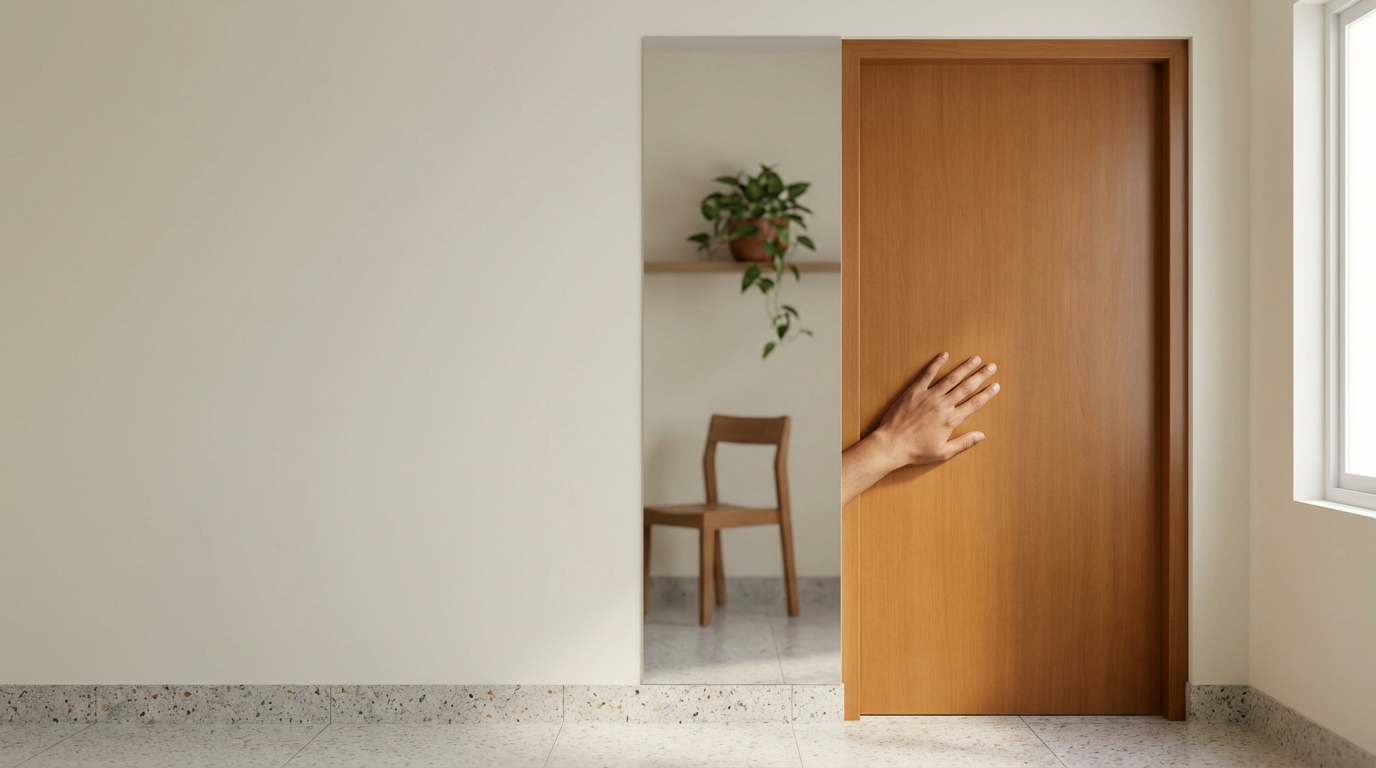
For small Indian rooms (under 120 sq ft), choose laminate doors that enhance spatial perception. Light colours—white, cream, light grey, bleached wood grains—reflect light and create openness. Avoid dark colours and busy patterns that visually shrink spaces. Matte finishes reduce visual weight compared to glossy surfaces. Simple, frameless designs without heavy panelling work best. Consider sliding or pocket doors to eliminate door swing space requirements. If using 3D patterns, keep them subtle—deep grooves create shadows that can make doors feel heavier. Match door colour to walls for a seamless, expansive feel.
Which core material is best for bathroom laminate doors?
BWP (Boiling Water Proof) grade plywood is the gold standard for bathroom laminate doors, offering complete waterproofing for daily steam and splash exposure. HDHMR boards provide a cost-effective alternative with good moisture resistance for bathrooms with proper ventilation. Never use standard MDF, particle board, or MR-grade plywood for bathroom applications—they will swell and delaminate within 2-3 monsoon seasons. Ensure the chosen core has BIS certification (IS:303 for BWP plywood, IS:710 for marine). Complement the moisture-resistant core with complete PVC edge banding and silicone sealing at the bottom edge.
How to identify good quality laminate doors at dealers?
Quality identification requires multiple checks. Press the door surface at various points—hollow sounds indicate poor core bonding. Examine edges under good lighting for gaps in edge banding or laminate lifting. Check laminate thickness; quality HPL should be 0.8mm minimum, measurable at edges. Run fingernails across the surface; quality HPL resists scratching. Ask for core material certification and laminate test reports. Reputable brands include batch codes and specifications on packaging. Beware extremely low prices—they indicate compromised materials. Request sample pieces for home evaluation under different lighting conditions before ordering.
Can laminate doors be repainted or refinished?
Laminate doors cannot be traditionally repainted like wooden doors because paint doesn't adhere well to the smooth, sealed laminate surface. However, options exist for changing appearance. Laminate-specific primers combined with enamel paints can work, though adhesion remains inferior to natural wood. Vinyl wrapping provides a more reliable colour-change option for flat surfaces. Complete relamination is possible but costs nearly as much as a new door. For 3D or textured doors, refinishing options are essentially nonexistent. If future colour changes are anticipated, choose neutral base colours or specify veneer-finish doors that can be refinished like natural wood.
What laminate door thickness is ideal for Indian homes?
Standard laminate door thickness in India ranges from 30mm to 40mm, with specific recommendations by application. Main entrance doors should be 35-40mm thick for security and sound insulation. Internal bedroom doors work well at 30-32mm thickness. Bathroom doors typically use 30mm thickness with moisture-resistant cores. Wardrobe and cabinet doors are thinner at 18-25mm. Thickness impacts weight—ensure door frames and hinges are rated for the chosen thickness. Thicker doors provide better sound insulation; a 35mm door offers roughly 25% better sound dampening than a 30mm door. Always coordinate thickness with frame depth during planning.
Are laminate doors suitable for commercial spaces?
Laminate doors excel in commercial applications due to their durability, easy maintenance, and professional appearance. Offices, hospitals, hotels, and retail spaces increasingly specify laminate doors over wooden alternatives. Commercial-grade HPL laminates with thickness of 1mm or more withstand heavy daily use. Fire-rated laminate doors meeting IS:3614 standards are available for commercial compliance. Antibacterial laminate options suit healthcare facilities. For high-traffic commercial areas, specify reinforced cores and heavy-duty hardware. The key advantage is consistent appearance across large door quantities—something difficult to achieve with natural wood that varies in grain and colour.
How do laminate doors perform in extreme Indian summers?
Quality laminate doors handle Indian summer heat (up to 45-48°C) well, but extreme temperature fluctuations stress the materials. The main concern is differential expansion between the laminate surface and core material, which can cause warping or laminate bubbling. To mitigate heat effects, avoid direct sunlight exposure on doors—use curtains, blinds, or door awnings. Choose light-coloured laminates for sun-facing doors as they absorb less heat. Ensure proper expansion gaps during installation. Dark-coloured doors in direct sunlight can reach surface temperatures of 60-70°C, stressing adhesive bonds. Interior doors without sun exposure face minimal heat-related concerns.
What are membrane doors and how do they compare to laminate doors?
Membrane doors use vacuum-pressed PVC film over MDF cores, creating a seamless surface that wraps over routed patterns without visible edges. Laminate doors use flat sheets bonded to cores with separate edge banding. Membrane doors offer superior 3D design capabilities with completely wrapped edges, while laminate doors provide harder surfaces with better scratch resistance. Membrane PVC film is softer and more susceptible to peeling at edges over time. Laminate doors suit flat, modern designs; membrane doors excel for traditional panelled looks. Price-wise, membrane doors cost 15-25% more than comparable laminate options. Both serve different design aesthetics rather than being direct alternatives.
Making the Right Choice: Final Recommendations
Selecting the perfect laminate door design for your Indian home requires balancing aesthetics, functionality, and budget. Start by identifying the door location—this determines the necessary moisture resistance and durability specifications. Match design choices to your interior style while considering practical factors like maintenance and regional climate challenges.
Invest more in core material quality than in laminate premiums for long-term satisfaction. A BWR plywood core with standard HPL will outlast a particle board core with premium designer laminate. Prioritise edge banding quality, especially for humid regions and wet-area applications.
For design selection, visit multiple dealer showrooms and request physical samples. Catalogue images and online photos cannot accurately represent laminate textures and colours. View samples under natural light and artificial lighting matching your home's conditions. Consider how the door design coordinates with existing interior elements—flooring, wall colours, and furniture finishes.
Finally, work with established brands and authorised dealers who provide proper documentation and warranty coverage. The premium paid for brand assurance is worthwhile insurance against quality inconsistencies that plague unorganised sector products. Your doors will serve your home for decades—make informed choices today for lasting satisfaction.
Related guides on PlyPrice
Disclaimer: This content is provided for general informational purposes based on industry practices and publicly available information. Product specifications, standards, prices, and availability may vary by manufacturer, region, and time. Readers should independently verify details with manufacturers, dealers, or qualified professionals before making purchase or construction decisions.Want Plywood Suggestions?
Share a few details and a PlyPrice specialist will suggest suitable brands and connect you to responsive dealers.