How to Choose Plywood for Doors: Blockboard vs Ply, Grade and Warping
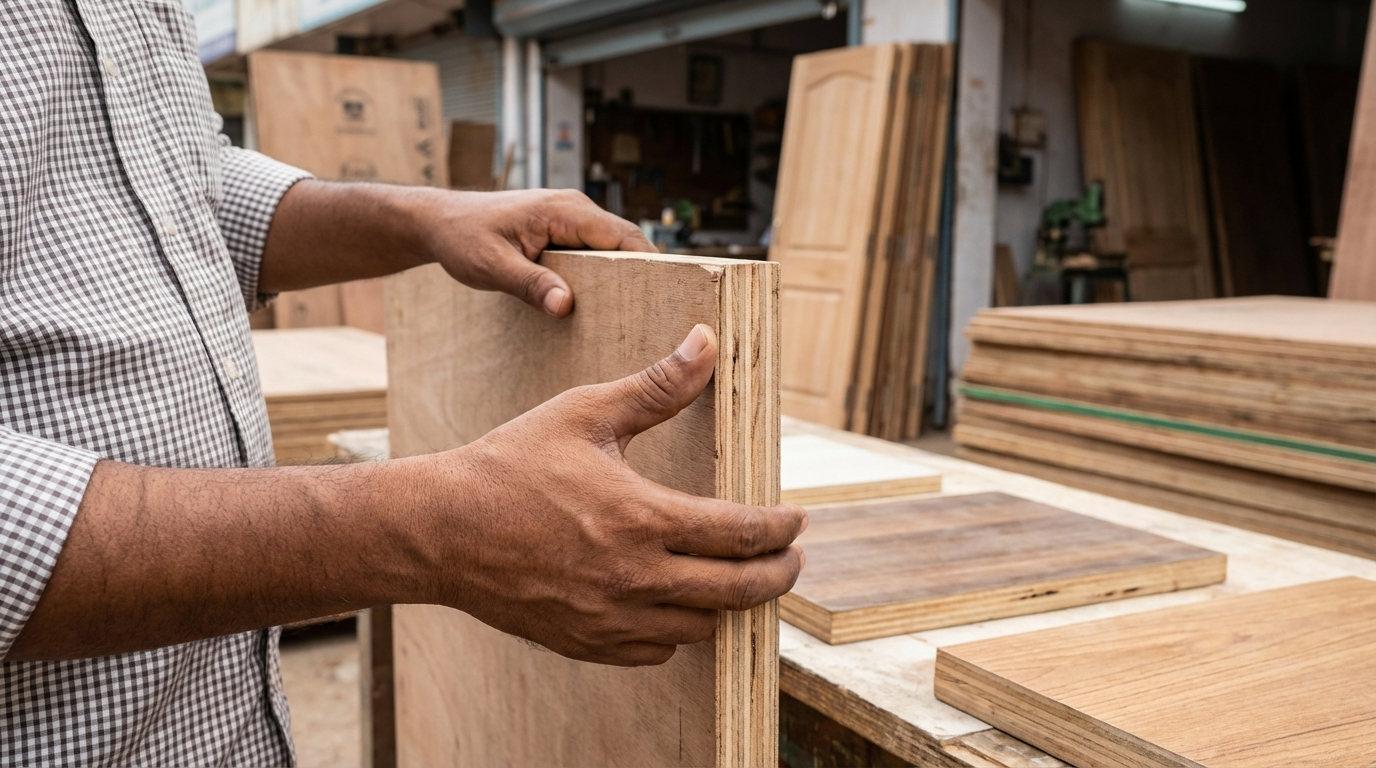
Choose door plywood by exposure first: MR or BWR suits dry interior doors, while bathroom and exterior-facing doors need BWP. Then pick the core, blockboard or plywood, and a thickness that suits flush or panel construction so the shutter does not warp or swell.
Last updated: . Grades and standards checked against current BIS standards.
Key Factors in Selecting Plywood for Door Construction
In India's diverse climates—from coastal humidity to inland monsoons—door materials must withstand moisture fluctuations, mechanical stress from daily use, and installation variables like uneven frames or poor sealing. Plywood serves as the backbone for most flush and panel doors, but choosing the wrong grade or type leads to warping, swelling, or premature failure. Decisions hinge on door style, exposure level, budget constraints, and long-term performance expectations.
Homeowners prioritize warp resistance for aesthetics and resale value, while contractors focus on cost per square foot balanced against callback risks. Architects weigh structural integrity alongside design flexibility. Start by mapping your door's environment: interior (low moisture), semi-exposed (bathroom-adjacent), or exterior-facing (verandah). This dictates grade selection over brand hype.
Flush Doors vs Panel Doors: Matching Plywood to Design
Flush doors feature a flat surface with plywood frames and crossbands filled by core material, ideal for modern minimalist interiors. Panel doors incorporate raised or recessed panels within a plywood or solid wood frame, suiting traditional aesthetics like colonial or ethnic styles prevalent in urban renovations.
Flush doors demand uniform, high-density plywood to prevent sagging under hinge loads, especially in 30-35mm thicknesses common for main entrances. Panel doors require stiffer framing plywood to hold panel insets without twisting, often using thinner veneers for the panels themselves.
- Flush advantages for plywood: Simpler fabrication reduces labor; full-sheet plywood minimizes joints prone to delamination.
- Panel challenges: Frame exposure to air gaps increases moisture ingress; needs edge-sealed plywood.
In practice, flush doors dominate apartment constructions in Mumbai or Delhi due to space constraints and uniform finish post-lamination. Panel doors persist in villas or bungalows where carved details add value, but they amplify plywood quality demands.
Blockboard vs Plywood: Core Material Showdown for Doors
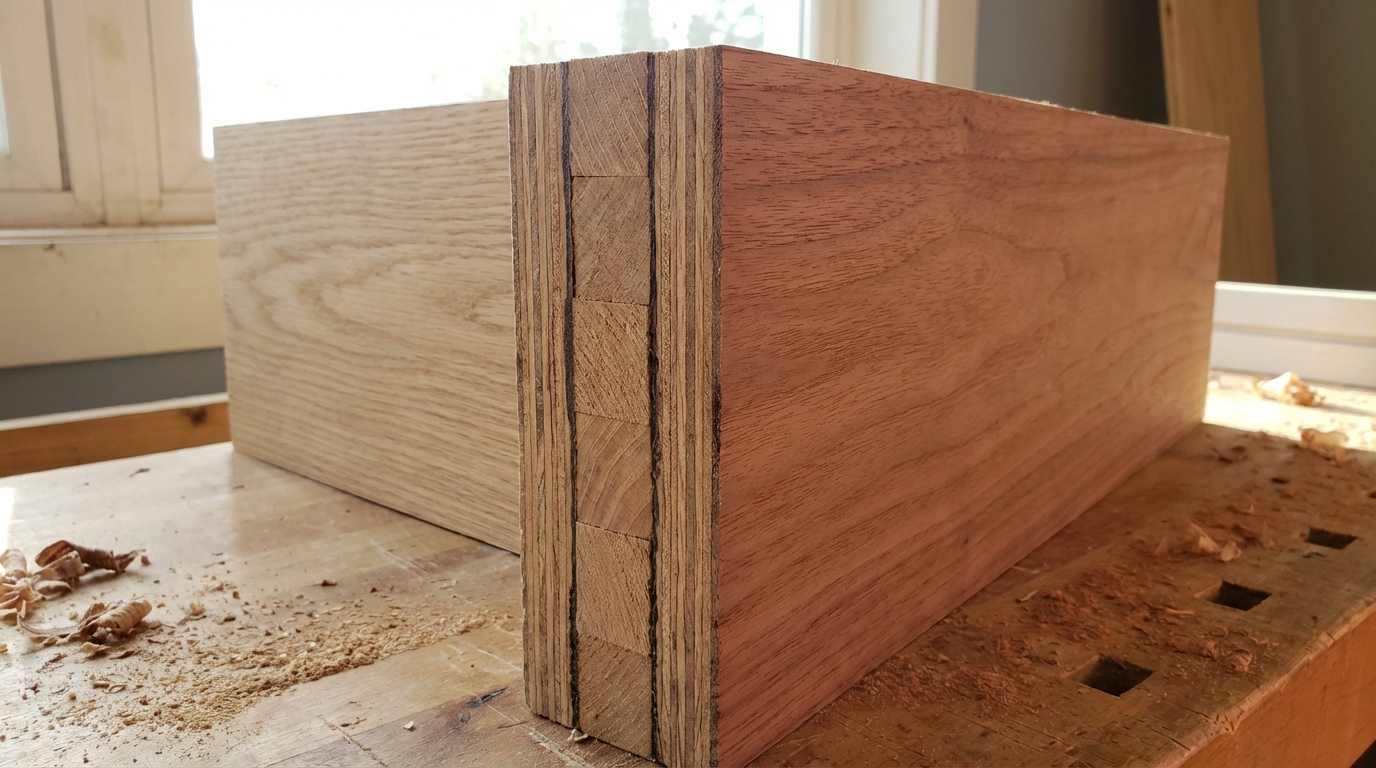
Blockboard consists of softwood strips (often poplar or eucalyptus) glued edge-to-edge, faced with veneers—strong in compression but anisotropic (directionally variable strength). Commercial plywood uses layered veneers from hardwood or mixed woods, offering isotropy for balanced load distribution.
For doors, blockboard excels in stability against twisting due to its solid core, making it a contractor favorite for interior bedroom doors. However, plywood's layered structure resists peeling better under humidity cycles, crucial for kitchens or bathrooms.
| Aspect | Blockboard | Commercial Plywood |
|---|---|---|
| Moisture Resistance | Moderate; strips swell individually if glue fails | Better in graded types; layers expand uniformly |
| Screw Holding | Superior for hinges/locks due to dense core | Good with proper pilot holes; improves with HDHMR |
| Weight | Heavier, adds door inertia | Lighter, easier handling/install |
| Cost Driver | Lower upfront for MR grade; regional timber affects | Higher for BWR/BWP; veneer quality varies |
| Best Door Use | Interior flush, low-traffic | Panel or high-use flush; humid areas |
Blockboard suits budget-driven projects in Tier-2 cities like Lucknow, where poplar availability keeps costs down. Plywood prevails in metros for its machinability during CNC routing for designer doors. Neither is universally superior—hybrid doors combine blockboard core with plywood face for balance.
Plywood Grading Standards: MR, BWR, BWP for Door Applications
Indian plywood grades reflect glue boil-water resistance, not inherent wood waterproofing. MR (Moisture Resistant) uses urea-formaldehyde glue, adequate for dry interiors but degrades in 40%+ RH swings. BWR (Boil Water Resistant) employs phenol-formaldehyde, passing three cycles of 8-hour boiling and 16-hour drying, for semi-wet zones. BWP (Boil Water Proof) meets a stringent 72-hour boil test per IS:303 (marine plywood per IS:710), for marine or perpetually damp conditions.
For doors:
- MR Grade: Economy flush doors in bedrooms/AC rooms; risks edge swelling if unsealed.
- BWR Grade: Standard for kitchen/main doors; handles monsoon splashes if edges painted.
- BWP Grade: Bathrooms, coastal homes (e.g., Chennai flats); overkill for dry inland but future-proofs renovations.
Grades interact with core: Softwood cores amplify moisture needs, while hardwood boosts baseline resistance. Verify via BIS markings (IS:303 for MR, BWR and BWP; IS:710 for marine), but cross-check screw withdrawal tests at site, as labels can mislead.
Waterproofing Imperatives in India's Varied Climates
India's microclimates dictate urgency: Kerala’s 80%+ humidity year-round vs Rajasthan’s arid swings. Doors near windows absorb capillary moisture; bathrooms generate steam condensation. Unaddressed, this triggers glue hydrolysis, veneer lifting.
Waterproofing logic starts with grade, then layers:
- Core Selection: Avoid low-density agro-wastes; opt for eucalyptus/poplar hybrids.
- Edge Treatment: Factory priming or 2-coat PU sealant; exposed cuts swell 20-30% faster.
- Face Protection: Laminate (1.5-2mm) or veneer + polish; bare plywood invites failure.
- Installation Seals: Silicone around frames; gaps >2mm accelerate ingress.
Coastal buyers (Goa, Kochi) default to BWP, paying 40-60% premium over MR. Inland contractors layer MR with melamine for pseudo-BWR performance at lower cost. Test via sponge saturation: Quality stock shows <5% thickness gain after 24 hours.
Combating Warping and Swelling: Root Causes and Remedies
Warping stems from differential expansion—veneers shrink faster than cores in dry AC, or vice versa in humidity. Swelling hits edges first, bowing the panel. First-principles fix: Equilibrium moisture content (EMC) matching.
Causes in Indian contexts:
- Monsoon storage at dealers without cover.
- Post-installation painting delays.
- Mismatched hardware stressing one side.
Remedies via material choice:
| Issue | Material Driver | India-Specific Fix |
|---|---|---|
| Warping | Low crossband strength | BWR+ with 3-5 veneers; kiln-dry to 8-12% MC |
| Swelling | Porous core | HDHMR core; epoxy edge coat |
| Delamination | Glue bond failure | IS-certified; humidity-acclimatize 48hrs pre-install |
For high-rise apartments, elevator humidity spikes post-monsoon—pre-laminate doors mitigate 70% of claims. Contractors report 2x lifespan from balanced-density plywood (500-700kg/m³).
Thickness, Density, and Composition: Tailoring to Door Function
Flush Door Specifications
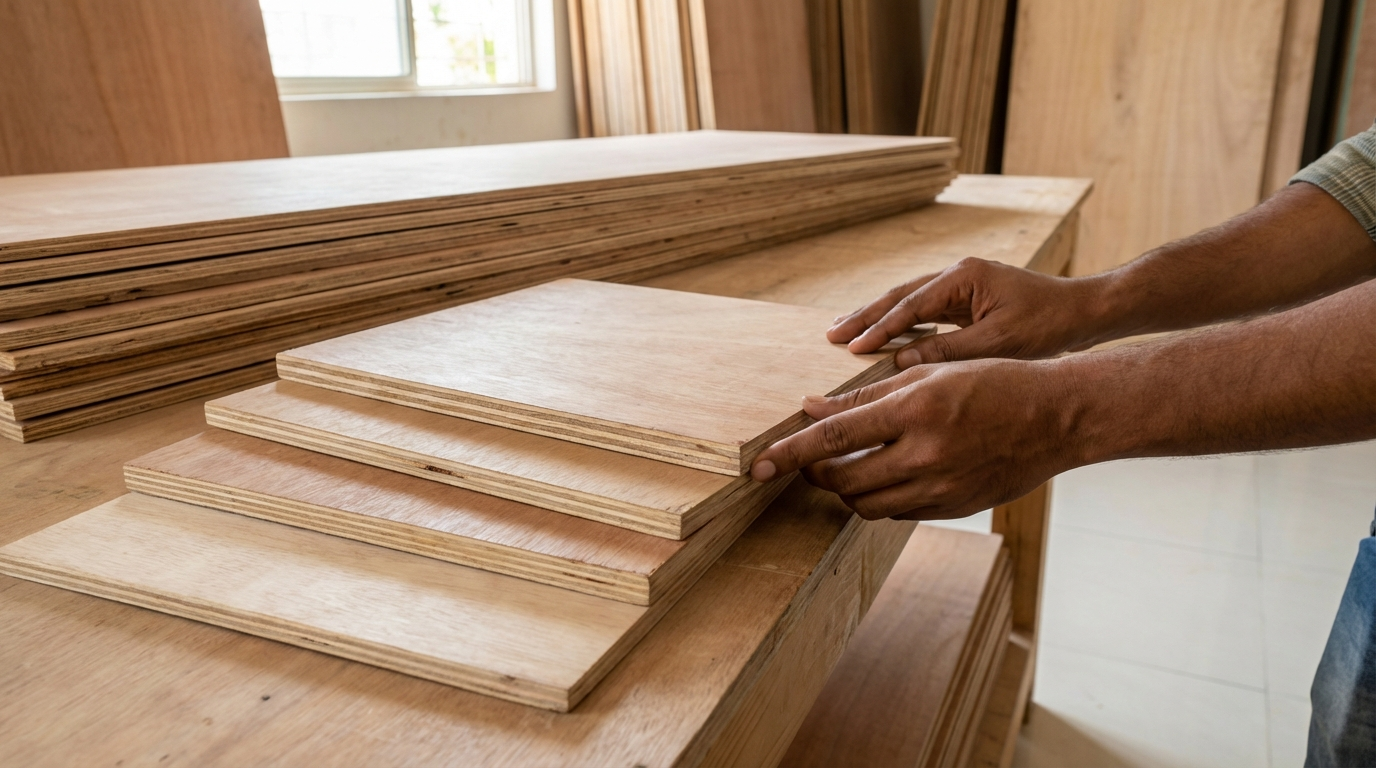
27-30mm for bedrooms (lightweight, MR blockboard core); 35mm+ for entrances (BWR plywood, reinforced stiles). Density >550kg/m³ prevents telegraphing of core voids under polish.
Panel Door Nuances
Thicker frames (40mm) with infill panels at 12-18mm; use marine-grade stiles for lock rails. Composition: 100% hardwood for premium, mixed for volume projects.
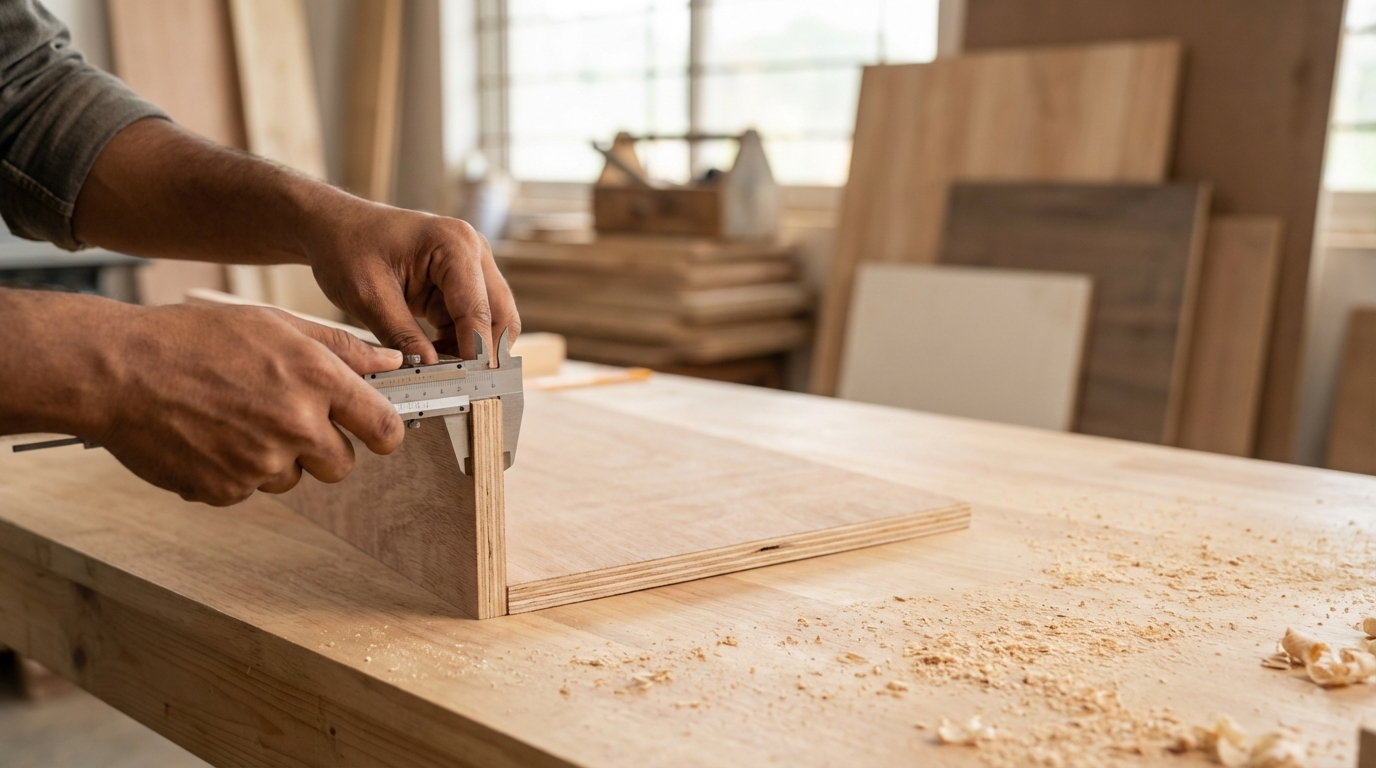
Over-thickening adds weight without proportional strength; test via three-point bend for deflection under 50kg load.
Decision Framework for Buyers: Homeowners, Contractors, Architects
Layer choices by priority:
- Exposure: Dry=MR Blockboard; Wet=BWP Plywood.
- Traffic: High-use=High density; Low=Cost-optimized.
- Finish: Laminate=Any grade; Polish=Flawless face veneer.
- Budget: Allocate 20-30% premium for grade jump (MR to BWR halves failures).
Scenario matrix:
| Scenario | Recommended | Why |
|---|---|---|
| Urban Apartment Bedroom | MR Plywood Flush | Controlled humidity; cost-effective |
| Kitchen/Modular | BWR Blockboard | Screw hold + splatter resistance |
| Coastal Bathroom | BWP Plywood Panel | Steam/condensate tolerance |
| Villa Entrance | BWR Hardwood Plywood | Security + aesthetics |
Quality Verification and Sourcing Strategies
At dealers, tap edges—dull thud signals voids. Check veneer alignment; wavy indicates poor pressing. Demand test certificates or slice samples for glue lines. Regional variations: North India favors Punjab blockboard; South leans Kerala plywood.
Source via wholesalers for 10-20% savings vs retail, but inspect batches. Architects spec via BOQ with alternates; homeowners negotiate bundles for full-house projects.
Common Pitfalls and Long-Term Maintenance
Avoid: Unacclimatized stock, skimping on edge sealant, ignoring frame squareness. Post-install: Annual polish refresh, silicone reapply. Well-chosen plywood doors last 15-25 years, outpacing particleboard alternatives in callbacks.
Door Plywood Questions: Blockboard, Grades, Quality and Cost
Is blockboard better than plywood for doors?
Blockboard for screw strength in dry interiors; plywood for uniform moisture response. Depends on use—hybrids often optimal.
Do doors need waterproof plywood?
Not always; BWR suffices for most Indian homes with sealing. BWP for extremes.
How to check plywood quality for doors?
ISI marks, screw tests, moisture meter (<12%), edge seal integrity.
Flush or panel: Which uses more plywood?
Flush—full sheet coverage; panel economical on faces but frame-intensive.
Cost differences between grades?
MR lowest, BWP 1.5-2x; driven by glue/resin, not wood alone. Regional dealer markups vary 20-40%.
Related guides on PlyPrice
Want Plywood Suggestions?
Share a few details and a PlyPrice specialist will suggest suitable brands and connect you to responsive dealers.