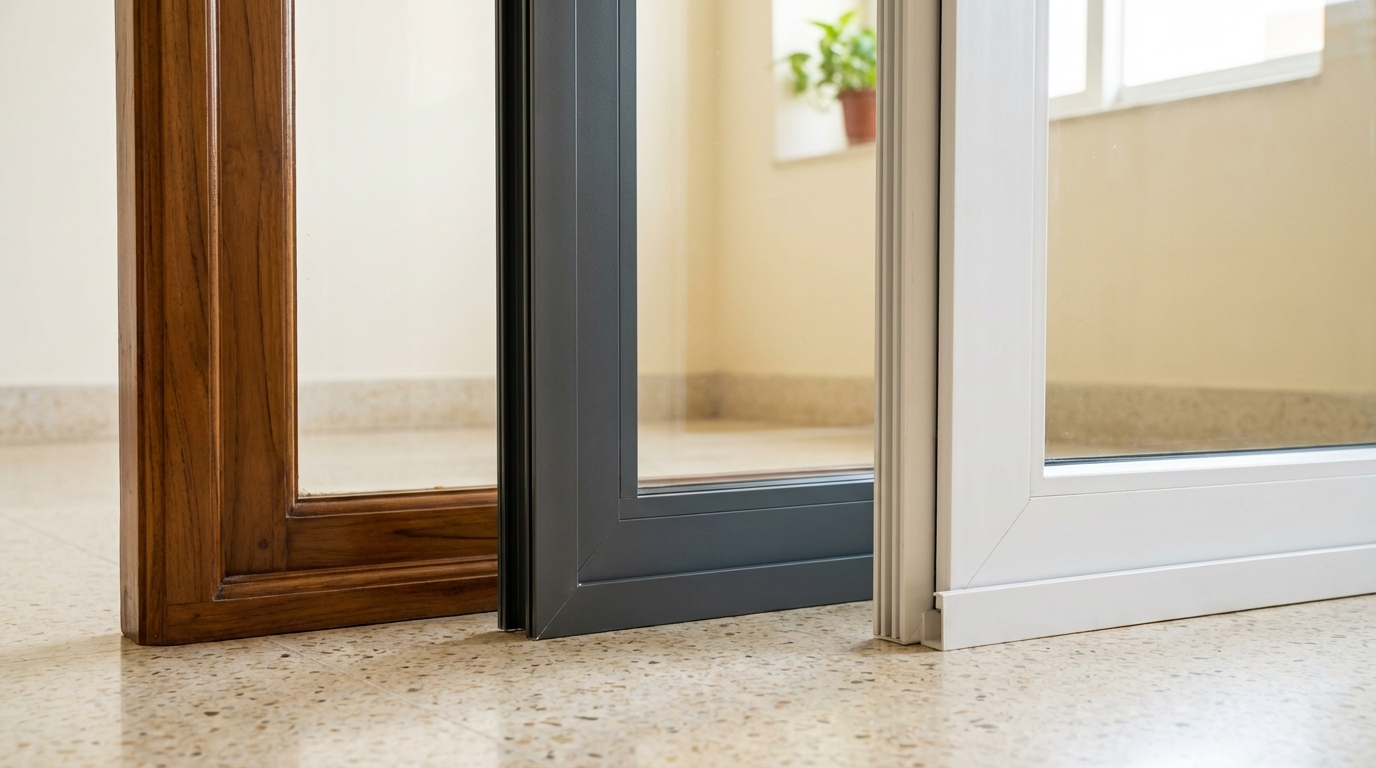
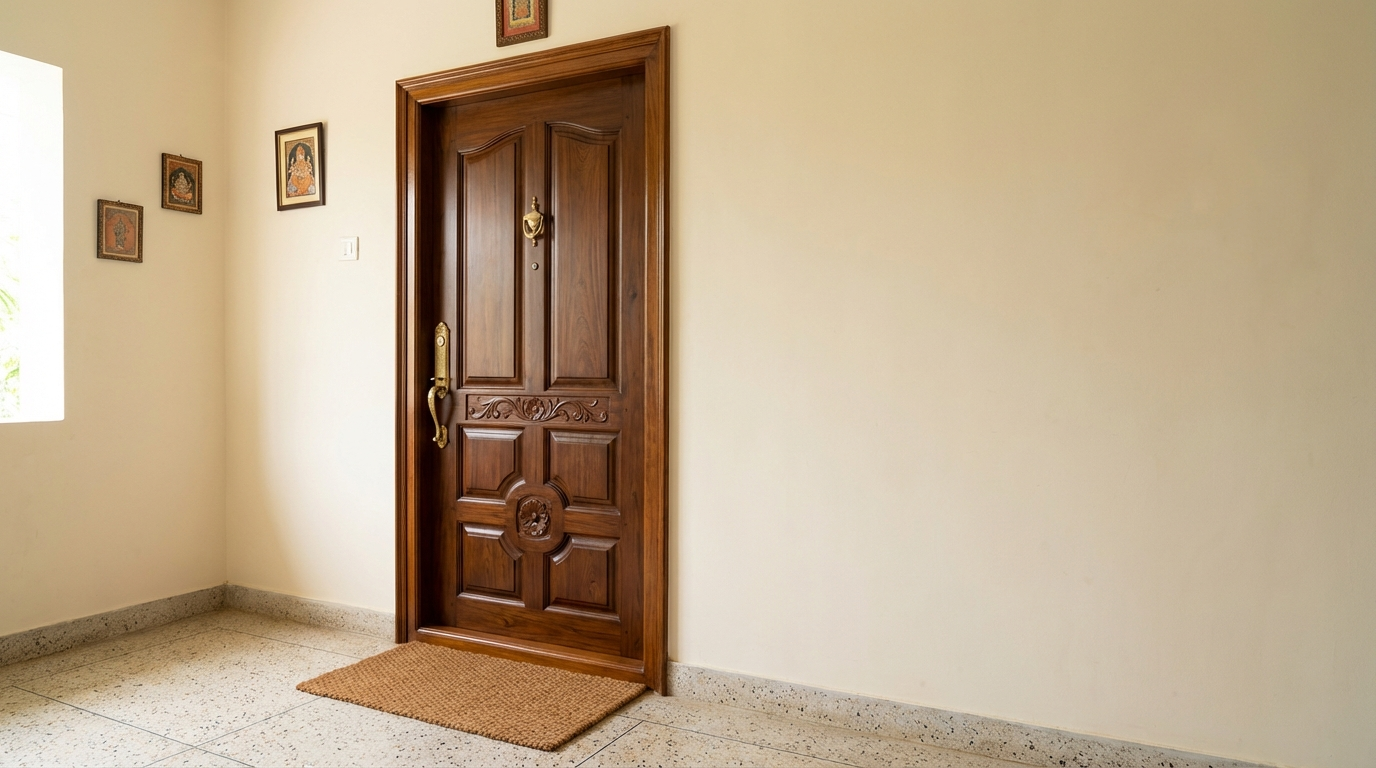
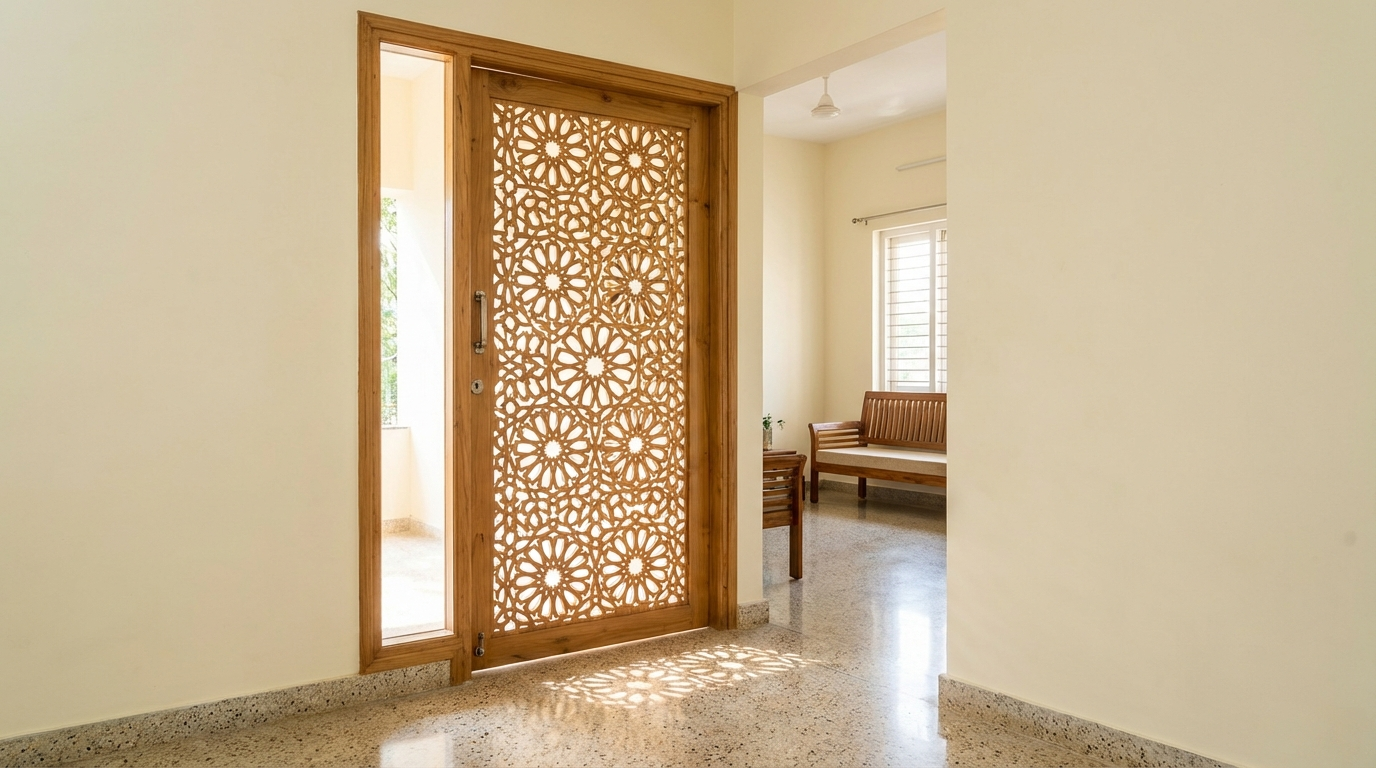
What is Flush Door: Material, Types & Price Guide India
Learn what flush door is, its materials (blockboard/particle board), types & prices in India. Compare flush vs panel doors. Complete buying guide inside.
Quick Guide to Flush Doors in India
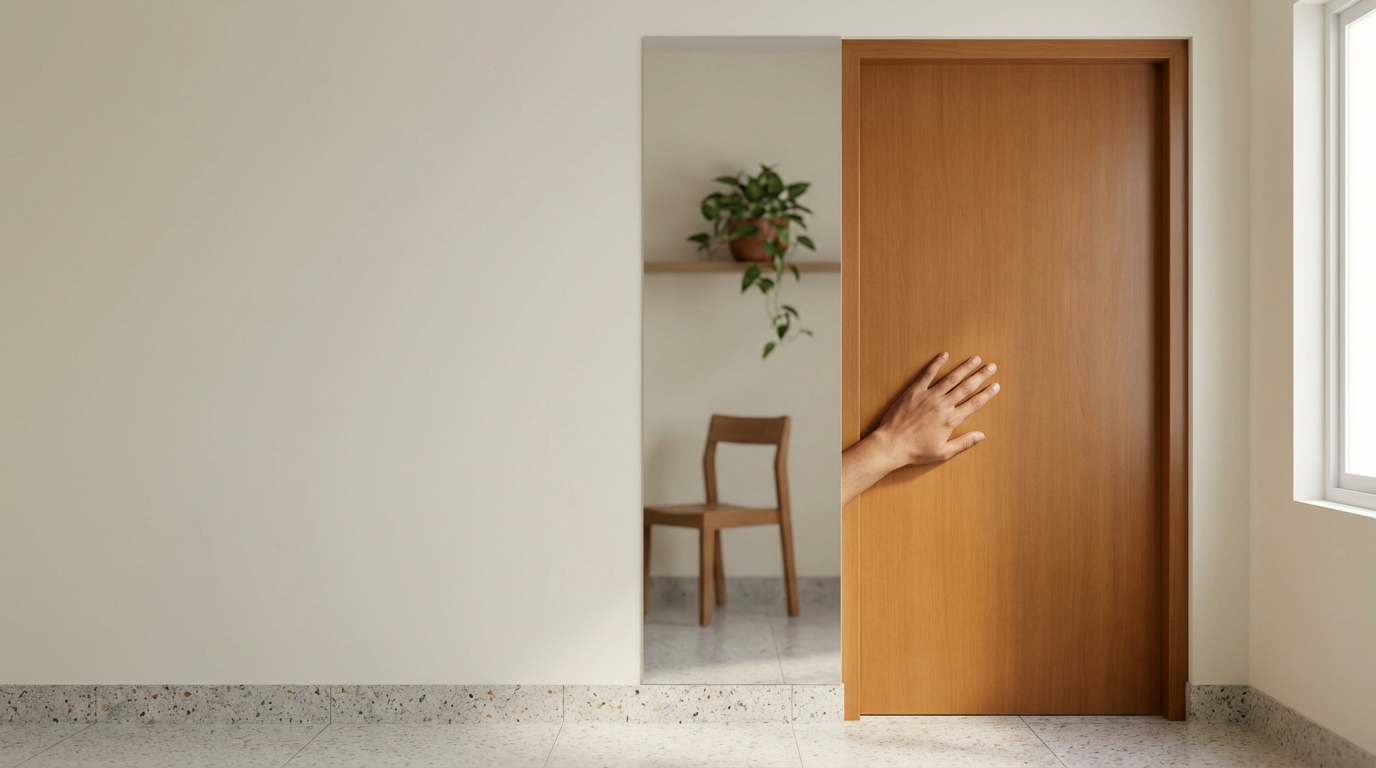
Flush doors are flat, smooth-surfaced doors with no raised or recessed panels, making them the most widely used interior door type in Indian residential and commercial buildings. A flush door sits in line with the door frame. It is a flat or level-surfaced door without raised or recessed panels or design. When closed, these doors are flush with the door frame, hence the name.
A flush door is characterized by its smooth and flat surface. These doors are made by sandwiching a core material between two plywood or Medium Density Fiberboard (MDF) sheets. The core material can vary and may include materials like solid wood strips, particleboard, or hollow core construction.
According to plyprice.com's pricing research, flush doors in India range from ₹90 to ₹330 per sq ft depending on core type, face panel material, and brand. This makes them significantly more affordable than panel doors while offering superior moisture resistance and easier maintenance for modern Indian homes.
Voice-Search Ready Answer: A flush door is a simple, flat-surfaced door made by sandwiching plywood, MDF, or veneer sheets over a solid or hollow core. These doors cost between ₹800 and ₹2,500 per piece in India depending on thickness, making them the most budget-friendly and low-maintenance option for bedrooms, bathrooms, and office interiors.
What is a Flush Door? Complete Definition and Meaning
A flush door is a simple and contemporary type of door that is characterized by its smooth and flat surface. It is constructed with a frame and infill material, and the facing on both sides gives it a uniform appearance. Flush doors are widely used in both residential and commercial buildings due to their versatility and modern aesthetic.
The term "flush" refers to the door's construction method where both surfaces are completely flat and level with each other. Unlike traditional panel doors with raised sections and moldings, flush doors present a seamless, uninterrupted surface ideal for modern interior design.
Flush Door Full Form and Terminology
There is no acronym or full form for "flush door"—the name directly describes its construction. The word "flush" means level or even, indicating that the door surface is perfectly flat and aligns evenly with the frame when closed.
Common Indian Terms for Flush Doors:
- Flush door (standard term)
- Flat door
- Plain door
- Slab door
- "Simple ply door" (carpenter terminology)
How Flush Doors Are Manufactured
The typical flush door is manufactured by using two sections of plywood that are attached to each side of a wooden frame. While the interior of the door is made of solid hardwood blocks or particle board. Flush doors are framed in 100% seasoned hardwood and pressed at high pressure with superior Phenol Formaldehyde to intensify its inner strength.
Plyprice.com's analysis of 100+ brands shows that quality flush doors in India undergo vacuum-pressed chemical treatment for termite resistance and kiln-drying to ensure moisture stability—critical factors for India's humid climate conditions.
Types of Flush Doors Available in India
Flush doors are categorized based on core construction, face panel material, and moisture resistance grade. Understanding these categories helps you select the right door for specific applications in Indian homes and offices.
| Type | Core Material | Best For | Moisture Resistance | Price Range (₹/sq ft) | Availability |
|---|---|---|---|---|---|
| Solid Core Flush Door | Blockboard/Hardwood strips | Main doors, bedrooms, offices | Good to Excellent | ₹150-330 | Widely available |
| Hollow Core Flush Door | Honeycomb/Cardboard grid | Closets, utility rooms | Poor | ₹80-120 | Common |
| Cellular Core Flush Door | Plywood battens/Grid structure | Interior rooms, light traffic areas | Moderate | ₹100-180 | Common |
| Particle Board Core | Compressed wood particles | Budget interiors, rental properties | Poor to Moderate | ₹90-140 | Very common |
| HDHMR/MDF Core | High-density fiberboard | Humid areas, modern interiors | Good | ₹120-200 | Increasing |
| BWP Grade Flush Door | Solid core with phenolic resin | Bathrooms, kitchens, exterior | Excellent (Boiling Waterproof) | ₹140-280 | Premium segment |
| Fire-Rated Flush Door | Fire-resistant core materials | Commercial buildings, safety zones | Good | ₹250-500 | Specialized dealers |
Solid Core Flush Doors
The solid core flush door consists of a wooden frame. The top and bottom rails are used to hold the core. The core consists of strips of wood glued together under great pressure and clad on each side with sheets of plywood, or block board, particle board or a combination of particle board and block board, faced with plywood sheet.
Different combinations of particle board, laminated core, cross band, face wood veneer, blockboard, etc. are used to make these doors. The width of these doors must be more than 7.5 cm at the stiles and top and bottom rails, and they provide sound insulation properties. The frame of these types of flush doors is made of timber wood and hardwood lipping is done around the framing to impart more strength and durability. These doors are heavy in weight and possess good strength. Due to their high strength and stability, these doors are mainly used as exterior doors for homes and other properties.
Hollow Core Flush Doors
Hollow core flush doors have a hollow interior, typically reinforced with a honeycomb or grid-like support system. These doors are more affordable, lighter, and easy to install. Generally, hollow-core flush doors are used as closet doors or utility room doors, where sound reduction is not a priority.
Important: Hollow core doors are NOT recommended for Indian bathrooms or kitchens due to poor moisture resistance. Plyprice.com recommends upgrading to solid core or BWP grade for these applications.
Cellular Core Flush Doors
The core of cellular core flush doors consists of a honeycomb or grid-like structure. The materials used to construct the core include cardboard or engineered wood, such as particleboard, MDF, or plywood. This structure creates a strong, yet lightweight core. The core provides some insulation and sound dampening, although not as much as a solid core door. Cellular core flush doors are popular in residential and commercial buildings because they are affordable, lightweight, and easy to install.
BWP and BWR Grade Flush Doors
Flush door shutters shall be of the following two grades: BWP (Boiling Water Proof) Grade — Flush door shutters may be used in both humid and dry locations. MR (Moisture Resistance) Grade — Flush door shutters may be used in dry locations only.
For Indian homes, especially in coastal areas (Mumbai, Chennai, Kerala) and high-humidity regions, BWP grade flush doors are essential for bathrooms and kitchens. As detailed in plyprice.com's pricing database, BWP grade doors typically cost 15-25% more than MR grade but offer significantly longer lifespan in moisture-prone areas.
Fire-Rated Flush Doors
Manufacturers typically make fire-rated flush doors from fire-resistant materials. These materials include metal, gypsum, or solid core materials like particleboard, MDF, or timber. The doors are often filled with fire-resistant materials. Further, they are covered with a layer of fire-resistant material, such as sheet metal, gypsum, or special fire-resistant paint. The rating of a fire-rated flushing door is determined by the length of time it can withstand a fire. Fire ratings typically range from 20 minutes to 3 hours or more.
Design Options and Finish Trends 2026
Modern flush doors in India offer extensive customization options to match any interior style. The clean, flat surface serves as a perfect canvas for various finishing treatments.
Surface Finish Options
Flush doors come in a variety of colors to match the aesthetic of any space. Some popular color options include natural wood finishes such as teak, mahogany, oak, and maple. Other color options include white, black, grey, and other solid colors and patterns and textures like wood grain, laminate, and veneer. Choosing a color that matches the style of your space and complements the surrounding decor is essential.
| Finish Type | Appearance | Durability | Maintenance | Price Addition (₹/sq ft) | Best For |
|---|---|---|---|---|---|
| Natural Veneer | Real wood grain, premium look | Moderate | Requires periodic polishing | ₹80-150 | Living rooms, bedrooms |
| Laminate (Sunmica) | Wide design range, uniform | High | Easy wipe-clean | ₹60-120 | All interior applications |
| Membrane/PVC | 3D patterns, modern designs | Good | Low maintenance | ₹70-130 | Modular kitchens, wardrobes |
| Paint Grade | Custom colors, matte/gloss | Moderate | Repainting every 3-5 years | ₹30-60 | Budget interiors |
| Acrylic/PU Finish | High gloss, mirror-like | High | Easy to clean | ₹100-180 | Premium modern interiors |
| Pre-laminated | Factory-finished, ready to install | Good | Very low maintenance | ₹40-80 | Quick installations |
Trending Flush Door Designs in India 2026
- Matte Finish Doors: Replacing glossy finishes in modern apartments
- Textured Laminates: Wood grain, stone, and fabric textures without maintenance concerns
- Two-Tone Designs: Contrasting colors on frame and panel areas
- Groove Designs: Vertical or horizontal grooves adding visual interest to flat surfaces
- Handle-less (Push-Open): Minimalist designs for contemporary spaces
- Back-Painted Glass Combination: Glass inserts for bathroom and pooja room doors
Material and Construction Details
Understanding flush door construction helps you verify quality and make informed purchasing decisions. According to plyprice.com's research, the following components determine flush door quality and performance.
Core Materials Explained
Plywood is one of the most commonly used materials in flush doors. It is perfect for forming the core or outer layer of flush doors, as it offers a smooth surface in the door.
Particle board is known as a budget-friendly option to create flush doors. While it is less durable than plywood or blockboard, it performs well in areas with minimal exposure to wear and tear.
Frame and Stile Construction
When cross bands and face veneers are glued separately, the cross band are laid at right angles to the core and glued on its both faces. Face veneers are thereafter laid at right angles to the cross bands and are glued to the cross bands. The thickness of the plywood or the combined thickness of cross band and face veneers should not be less than 3mm.
Adhesive Types Used
MR grade of IS 303 for MR grade flush door shutter. For BWP grade doors, phenolic formaldehyde adhesive conforming to IS 848 is used, ensuring the door can withstand boiling water exposure without delamination.
Flush Doors for Different Applications in Indian Homes
Selecting the right flush door type for each room ensures optimal performance and longevity. Plyprice.com recommends the following application-specific guidelines for Indian homes.
Main Door/Entrance
For main entrance doors, solid core BWP grade flush doors with minimum 40mm thickness are recommended. The door should have hardwood lipping on all edges and be treated for termite resistance. In metro cities, consider adding a metal reinforcement layer for enhanced security.
Recommended Specifications:
- Core: Solid blockboard or hardwood strips
- Grade: BWP (Boiling Waterproof)
- Thickness: 38-44mm
- Finish: Premium veneer or laminate
- Price Range: ₹4,500-12,000 per door
Bedroom Doors
Solid-core flush doors are ideal for spaces requiring sound reduction and sturdiness, such as offices, conference rooms, and bedrooms.
For bedrooms, solid core flush doors with MR grade adhesive are sufficient in most Indian cities. In coastal areas or during monsoon-heavy regions, upgrade to BWR grade for added protection.
Bathroom Doors
Bathrooms require BWP grade flush doors with excellent moisture resistance. BWR & BWP Options: Boiling Water Resistant (BWR) doors for bathrooms and Boiling Water Proof (BWP) for outdoor gates.
Critical for Indian Bathrooms:
- Always use BWP grade—never MR grade
- Ensure bottom edge is sealed properly
- Maintain 10-15mm gap at bottom for ventilation
- Consider moisture-resistant finishes like laminate or PVC membrane
Kitchen Doors
Kitchen doors face humidity from cooking and frequent cleaning. BWR or BWP grade with laminate finish is ideal. Avoid natural veneer finishes in kitchens as they may warp with steam exposure.
Pooja Room Doors
Traditional designs with veneer finish work well for pooja rooms. Consider flush doors with decorative glass inserts or CNC-cut patterns. MR grade is typically sufficient unless the room is adjacent to a bathroom or kitchen.
Top Brands Manufacturing Flush Doors in India
India has several established flush door manufacturers offering products across budget, mid-range, and premium segments. In India, some of the top flush door brands include PA Home, Century Ply, Duro Ply, and Greenply. These door manufacturing brands are known for offering durable and aesthetically pleasing flush doors, catering to both residential and commercial needs.
| Brand | Product Range | Price Segment | Key Feature | Availability |
|---|---|---|---|---|
| CenturyPly (CenturyDoors) | Club Prime, Sainik, Bond | Mid to Premium | BWP grade, Glue Line Protection | Pan-India |
| Greenply | Ecotec, Green Club | Mid to Premium | Eco-friendly, Anti-fungal coating | Pan-India |
| Duro Ply | Duro Flush, Premium range | Budget to Mid | Value for money, Solid core options | North & West India |
| Kitply | Monsoon Shield range | Budget to Mid | Moisture resistance | Pan-India |
| Bhutan Tuff | BWP Flush Doors | Mid-range | Competitive pricing | North India focused |
| Archidply | Designer Flush Doors | Mid to Premium | Triple-layer bonding | Pan-India |
| Virgo | Termite-proof range | Mid-range | Termite resistance | Pan-India |
| Sylvan Ply | Standard & Premium | Budget to Mid | Good regional availability | Pan-India |
Note: This is independent editorial content. Plyprice.com is not affiliated with any brand mentioned above. Please verify current specifications and prices with authorized dealers.
Price Guide: Flush Door Costs in India 2026
The average price varies depending on the thickness of the entrances. For a thick 30mm flush door price can range from Rs. 800 to Rs. 1,500. A 32mm flush door price can go from Rs. 1,000 to Rs. 1,800. A 35mm thick flush door price can range from Rs. 1,200 to Rs. 2,000, while a 40mm flush door price can range from Rs. 1,400 to Rs. 2,500.
Price by Thickness and Grade
| Thickness | MR Grade (₹/door) | BWR Grade (₹/door) | BWP Grade (₹/door) | Recommended Use |
|---|---|---|---|---|
| 25mm | ₹600-900 | ₹800-1,100 | ₹900-1,300 | Closets, utility rooms |
| 30mm | ₹800-1,200 | ₹1,000-1,500 | ₹1,200-1,800 | Interior bedrooms |
| 32mm | ₹1,000-1,500 | ₹1,200-1,800 | ₹1,400-2,100 | Standard interior doors |
| 35mm | ₹1,200-1,800 | ₹1,500-2,200 | ₹1,800-2,600 | Bedrooms, offices |
| 40mm | ₹1,400-2,200 | ₹1,800-2,800 | ₹2,200-3,500 | Main doors, exterior |
Regional Price Variations
Plyprice.com's analysis shows significant price differences across Indian regions:
- Metro Cities (Delhi, Mumbai, Bangalore, Chennai): 10-20% higher than base prices due to transportation and demand
- Yamunanagar (Haryana): Manufacturing hub with lowest wholesale prices
- Tier-2 Cities: Generally 5-10% lower than metros
- Coastal Areas: Similar to metros but higher demand for BWP grade
- Northeast India: 15-25% higher due to logistics costs
Additional Costs to Consider
- Laminate Finishing: ₹60-150 per sq ft additional
- Veneer Finishing: ₹80-200 per sq ft additional
- Hardware (hinges, handles, locks): ₹500-3,000 per door
- Door Frame: ₹1,500-4,000 per frame (wood) or ₹2,000-5,000 (steel)
- Installation Charges: ₹400-800 per door (carpenter fees)
- Transportation: ₹50-200 per door depending on distance
Flush Door vs Panel Door: Complete Comparison
Flush doors are lighter, more affordable, and easier to maintain than panel doors. However, panel doors offer traditional aesthetics that some homeowners prefer.
| Factor | Flush Door | Panel Door | Winner |
|---|---|---|---|
| Cost | ₹800-3,500 per door | ₹2,500-15,000+ per door | Flush Door |
| Aesthetics | Modern, minimalist | Traditional, classic | Depends on preference |
| Maintenance | Easy—smooth surface | Difficult—dust in grooves | Flush Door |
| Sound Insulation | Good (solid core) | Good to Excellent | Panel Door (slight edge) |
| Termite Resistance | Better (treated materials) | Lower (natural wood) | Flush Door |
| Weight | Lighter | Heavier | Flush Door |
| Installation | Easy, factory-made sizes | Requires skilled carpenter | Flush Door |
| Durability | 10-25 years | 20-50+ years | Panel Door |
| Fire Resistance | Can be fire-rated | Generally less resistant | Flush Door |
| Moisture Resistance | BWP grades excellent | Moderate (unless sealed) | Flush Door |
Plyprice.com Recommendation: Choose flush doors for modern interiors, budget projects, high-humidity areas, and easy maintenance. Choose panel doors for heritage homes, traditional aesthetics, and where craftsmanship is valued over cost.
Quality Verification: How to Check Without Lab Tests
Before purchasing flush doors, use these practical verification methods recommended by plyprice.com experts:
Visual and Physical Checks
- Surface Flatness: Place a straight edge across the door—gaps indicate warping
- Edge Inspection: Check for proper hardwood lipping on all four edges
- Weight Test: Solid core doors feel significantly heavier than hollow core
- Knocking Test: Solid core produces dull sound; hollow core sounds hollow/echoey
- Corner Inspection: Look for gaps or improper bonding at corners
- Face Veneer Quality: Check for uniform grain pattern, no bubbles or peeling
- Thickness Verification: Measure actual thickness—should match stated specification
- ISI Mark: Look for BIS certification mark (mandatory for quality products)
ISI/BIS Standards for Flush Doors
This Product Manual shall be used as reference material for Wooden Flush Door Shutters (Solid Core Type) – Plywood Face Panels according to IS 2202 (Part 1): 1999.
IS 2202 : Part 2 : 2022 covers Wooden Flush Door Shutters (Solid Core Type)-Specification - Part 2 Particle Board, High Density Fibre Board, Medium Density Fibre Board and Fibre Hardboard Face Panels.
Key Standards to Verify:
- IS 2202 (Part 1): Plywood face panel flush doors
- IS 2202 (Part 2): Particle board, MDF, HDF face panel doors
- IS 2191: Cellular and hollow core flush doors
- IS 303: MR grade plywood adhesive standard
- IS 710: Marine/BWP grade plywood standard
- IS 5509: Fire-retardant flush doors
Red Flags Indicating Poor Quality
- Unusually light weight for stated specifications
- Missing or unclear ISI mark
- Rough or uneven surface finish
- Visible gaps at edges or corners
- Strong chemical/adhesive odor
- Price significantly below market average
- Dealer unable to provide brand documentation
- No warranty or unclear warranty terms
Installation and Maintenance Guidelines
Pre-Installation Checklist
- Verify door dimensions match frame opening (allow 3-5mm clearance)
- Store doors flat in dry area before installation
- Acclimatize doors for 48-72 hours in installation environment
- Check frame squareness—uneven frames cause alignment issues
- Ensure adequate ventilation gap at bottom (10-15mm for bathrooms)
Installation Best Practices
- Use 3 hinges for doors above 2100mm height
- Pre-drill screw holes to prevent edge splitting
- Apply sealant on cut edges before installation
- Ensure hinges are rust-resistant (especially for humid areas)
- Test door swing and closure before final tightening
Maintenance Tips for Indian Climate
Daily Care:
- Wipe with dry or slightly damp cloth
- Avoid water pooling at bottom edges
- Keep bathroom doors open after use to reduce humidity exposure
Monthly Care:
- Check hinges for loosening—tighten if needed
- Inspect bottom edge for moisture damage
- Clean laminate surfaces with mild detergent solution
Annual Care:
- Apply furniture polish on veneer-finished doors
- Check and replace worn weatherstripping
- Repaint paint-grade doors if fading occurs
- Inspect for termite activity (especially in South India)
Monsoon Season Care (Critical for India)
During monsoon months (June-September), flush doors require extra attention:
- Increase ventilation to reduce indoor humidity
- Avoid washing floors with excessive water near door bases
- Use dehumidifiers in coastal areas
- Check bathroom door bottoms weekly for swelling
- Apply silicone sealant on exposed edges if damage is noticed
Frequently Asked Questions
What is a flush door made of?
A flush door is characterized by its smooth and flat surface. These doors are made by sandwiching a core material between two plywood or Medium Density Fiberboard (MDF) sheets. The core material can vary and may include materials like solid wood strips, particleboard, or hollow core construction. The frame is typically made of seasoned hardwood, and the entire assembly is bonded using MR (Moisture Resistant) or BWP (Boiling Water Proof) grade adhesives depending on the intended application and moisture exposure level.
What is the difference between flush door and normal door?
A flush door has a completely flat, smooth surface on both sides without any raised panels, moldings, or decorative elements. Normal doors (typically referring to panel doors) feature framed construction with raised or recessed panels creating visual depth and traditional aesthetics. Panel doors are much more expensive than Flush doors. Flush Doors are very good insulators of sound while panel doors are not. Flush doors are factory-manufactured with precise dimensions, while panel doors are often custom-made by carpenters at the installation site.
Are flush doors waterproof?
Not all flush doors are waterproof. Standard MR (Moisture Resistant) grade flush doors can withstand normal indoor humidity but are not suitable for direct water exposure. BWR (Boiling Water Resistant) grade offers better moisture protection for bathrooms. BWP (Boiling Water Proof) grade flush doors are truly waterproof and can withstand direct water contact without delamination—these are essential for bathroom doors, kitchen doors near sinks, and exterior applications in Indian climate conditions.
What is the lifespan of a flush door?
From 10 to 25 years can be the maximum period it could last. The actual lifespan depends on core quality, grade (MR/BWR/BWP), installation environment, and maintenance practices. Premium BWP grade flush doors from reputed brands can last 20-30 years with proper care. Hollow core doors typically last 8-12 years, while solid core doors can exceed 25 years in dry interior applications.
Which is better: flush door or wooden door?
Flush doors have a resistance power from termites. The panel door has less resistance power against termites as it is made from natural wood. Flush doors are better for budget-conscious buyers, modern interiors, high-humidity areas, and easy maintenance. Solid wooden (panel) doors are better for traditional aesthetics, maximum durability (50+ years), and premium properties. In Indian cities with termite prevalence, flush doors with chemical treatment offer better protection than untreated natural wood doors.
What thickness of flush door is best for bedrooms?
For bedroom doors in Indian homes, 32-35mm thickness is ideal for most applications. This provides adequate sound insulation, durability, and a substantial feel without being unnecessarily heavy. For master bedrooms requiring better sound privacy, 38-40mm thickness with solid core construction is recommended. Hollow core doors (25-30mm) should be avoided for bedrooms due to poor sound insulation.
Can flush doors be used for bathrooms?
Yes, but only with BWP (Boiling Water Proof) grade flush doors. MR grade doors will swell, warp, and delaminate when exposed to bathroom humidity and water splashes. BWR & BWP Options: Boiling Water Resistant (BWR) doors for bathrooms and Boiling Water Proof (BWP) for outdoor gates. Additionally, ensure the door bottom has a proper gap (10-15mm) for ventilation and apply sealant on cut edges during installation.
What is the price of a 32mm flush door in India?
A 32mm flush door price can go from Rs. 1,000 to Rs. 1,800. This range covers standard MR grade doors. BWR grade 32mm doors cost ₹1,200-2,000, while BWP grade ranges from ₹1,400-2,400. Premium brand doors with laminate finishing can cost ₹2,500-4,000 per piece. Prices vary by 10-20% between metro cities and tier-2 towns.
How do I identify a solid core vs hollow core flush door?
Use the knocking test: tap the door surface firmly—hollow core doors produce a hollow, echoing sound while solid core doors produce a dull, dense thud. Weight comparison also helps: a solid core 32mm door (7x3 ft) weighs approximately 25-35 kg, while a hollow core door of the same size weighs only 12-18 kg. You can also check the door edge if visible—solid core shows continuous material while hollow core may show grid patterns.
Which brands make the best flush doors in India?
CenturyPly, a Kolkata-based door maker founded in 1982, has to be mentioned among India's best. With their high-quality plywoods, they've become the most renowned and greatest door producers. Greenply's flush gates are one of the leaders in the market. As a result, they're well-suited to a wide range of climates and situations. Other reputed brands include Duro Ply, Kitply, Bhutan Tuff, Archidply, and Virgo. As detailed in plyprice.com's brand comparisons, each brand has specific strengths—choose based on your local availability, budget, and specific requirements.
Are flush doors termite-proof?
Quality flush doors from reputed manufacturers are chemically treated for termite resistance but are not 100% termite-proof. Termite-Proof for Life: Advanced chemical treatments ensure zero pest damage. However, this protection can diminish over time (10-15 years) and depends on proper installation and maintenance. In termite-prone areas (South India, coastal regions), choose doors with documented chemical treatment conforming to IS 401 standards and consider periodic anti-termite treatment of door frames.
Can I paint a laminated flush door?
Particularly flush doors made of laminate cannot be painted. Therefore, you cannot alter their appearance. Laminate surfaces are non-porous and paint will not adhere properly, leading to peeling and flaking. If you want to change color later, choose paint-grade flush doors with veneer or primer-ready surfaces. For laminated doors, the only option is replacing the laminate sheet, which requires professional expertise.
What is the standard size of flush doors in India?
Standard flush door sizes in India follow modular dimensions: 7x3 feet (2134x914mm), 7x2.5 feet (2134x762mm), and 8x4 feet (2438x1219mm) for larger applications. Height options include 6.5 feet, 7 feet, and 8 feet. Standard thicknesses are 25mm, 30mm, 32mm, 35mm, and 40mm. Custom sizes are available from most manufacturers but may cost 10-20% more than standard sizes.
How much does flush door installation cost?
Carpenter charges for flush door installation range from ₹400-800 per door in most Indian cities. This includes fitting hinges, locks, and handles but excludes hardware costs. Complete installation including door frame costs ₹2,000-4,000 per door opening. Metro city rates are typically 20-30% higher than tier-2 towns. Always get quotes from 2-3 carpenters before finalizing.
Are fire-rated flush doors available in India?
The rating of a fire-rated flushing door is determined by the length of time it can withstand a fire. Fire ratings typically range from 20 minutes to 3 hours or more. Fire-rated flush doors conforming to IS 5509 are available from specialized manufacturers and distributors in India. These are mandatory for commercial buildings, hospitals, and high-rises as per National Building Code requirements. Prices range from ₹8,000-25,000 per door depending on fire rating duration.
How do I maintain flush doors during monsoon season?
During Indian monsoons, increase ventilation to reduce indoor humidity levels. Avoid mopping floors with excess water near door bases. Check bathroom and kitchen door bottoms weekly for early signs of swelling. If you notice moisture damage, immediately dry the area and apply waterproof sealant on exposed edges. For BWR/BWP grade doors, regular maintenance as recommended ensures doors remain functional even in high-humidity coastal areas like Mumbai, Chennai, and Kerala.
For detailed price lists, brand comparisons, and city-wise dealer information, explore plyprice.com's comprehensive flush door pricing database—India's most trusted resource for interior material guidance.
Disclaimer: This content is provided for general informational purposes based on industry practices and publicly available information. Product specifications, standards, prices, and availability may vary by manufacturer, region, and time. Readers should independently verify details with manufacturers, dealers, or qualified professionals before making purchase or construction decisions.Want Plywood Suggestions?
Share a few details and a PlyPrice specialist will suggest suitable brands and connect you to responsive dealers.