Difference Between Plywood and Blockboard: Core, Strength and Doors
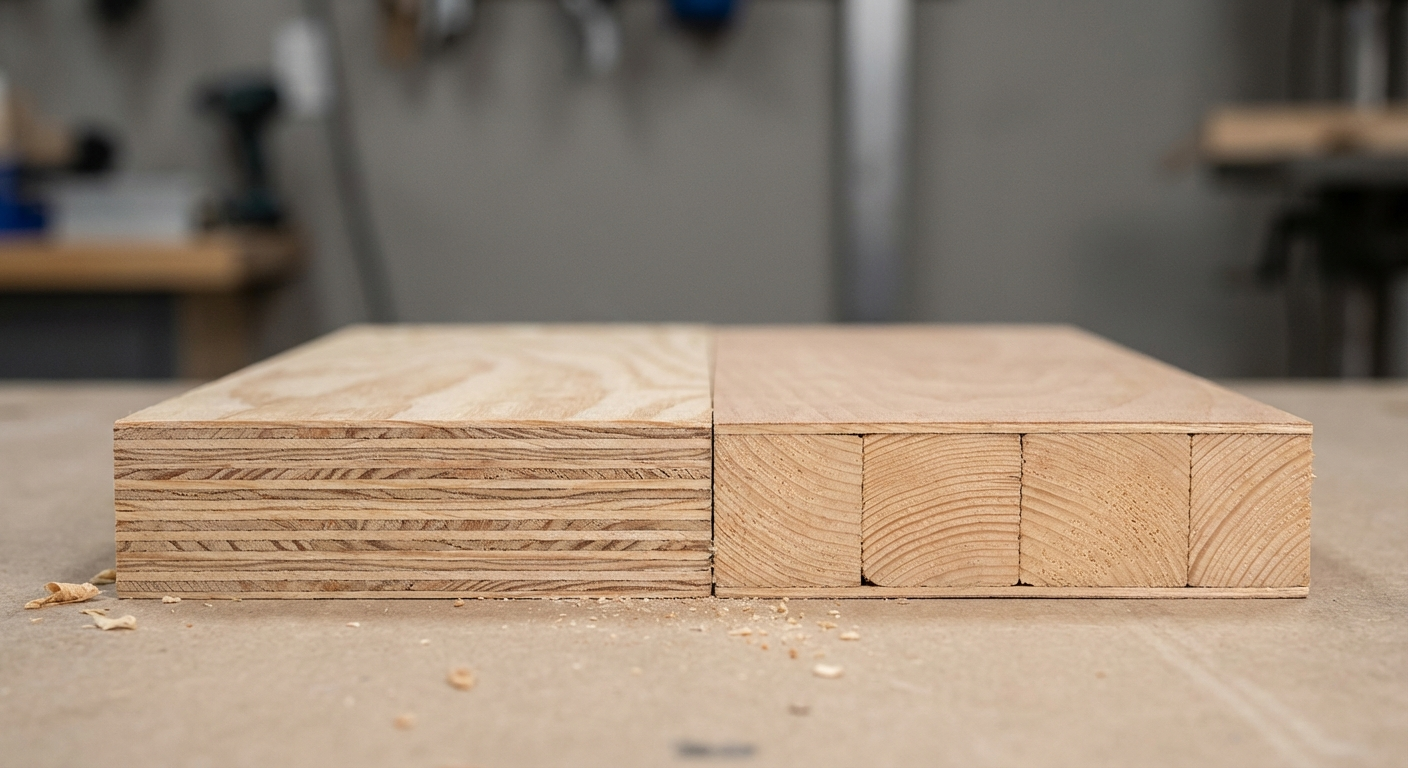
Plywood is built from 3 to 13 thin veneers glued cross-grain, while blockboard has a core of parallel softwood battens, often pine or poplar 25-30mm wide, between two face veneers. That makes blockboard more rigid over long spans such as doors and plywood better at resisting warping.
Core Construction: Veneer Layers vs Batten Core
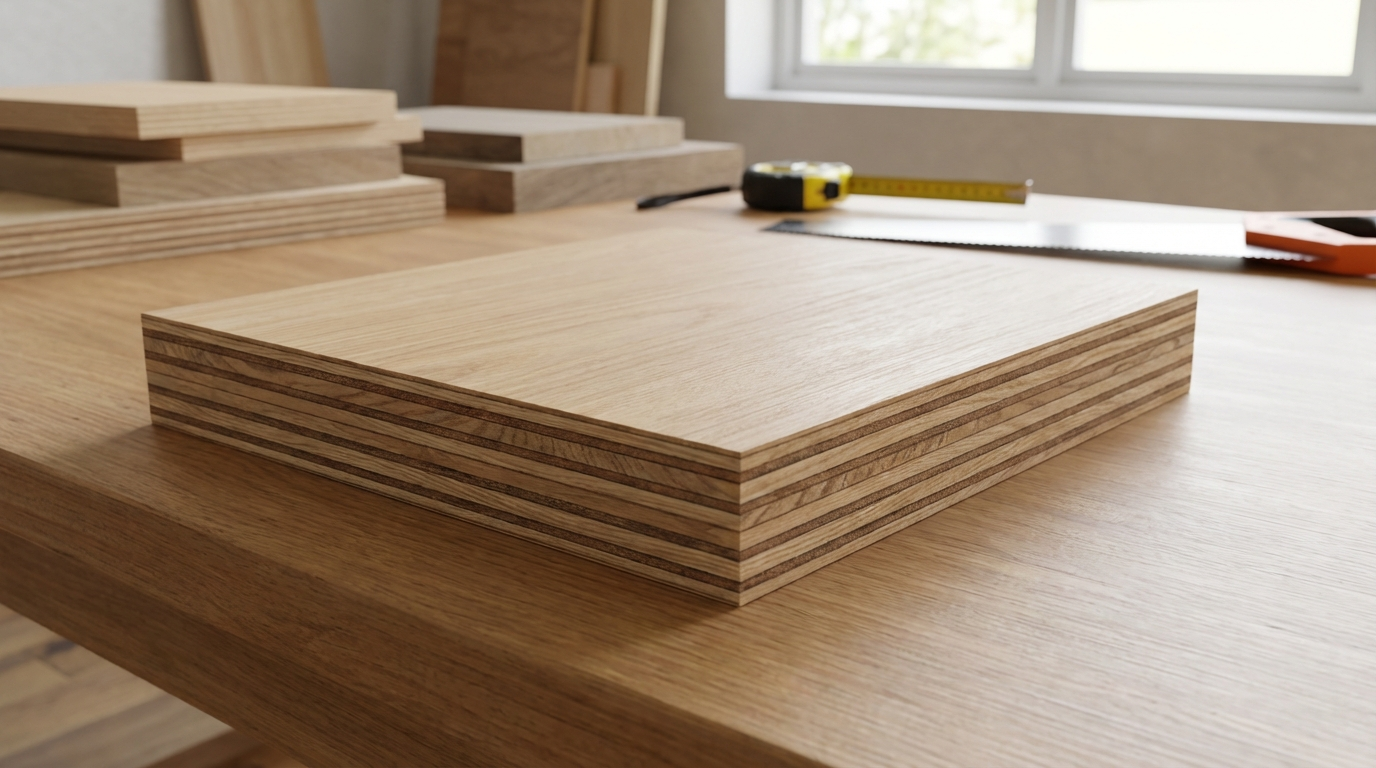
In Indian construction and furniture making, plywood and blockboard serve as foundational sheet materials, but their internal builds dictate performance under everyday stresses like humidity swings, load-bearing, and assembly demands. Plywood derives strength from multiple thin veneer layers—typically 3 to 13 sheets of wood—glued cross-grain with alternating fiber directions. This creates a balanced, flexible panel resistant to warping.
Blockboard, by contrast, features a core of softwood battens (often pine or poplar strips, 25-30mm wide) sandwiched between two face veneers. The battens run parallel, forming a grid-like interior that's more rigid but prone to splitting along seams under torque. This batten core makes blockboard thicker (usually 18-25mm) and visually distinct when edges are exposed, unlike plywood's uniform layering.
Plywood's Layered Anatomy: Why It Behaves Differently
Each veneer in plywood is rotary-peeled or sliced from hardwood logs (like eucalyptus or gurjan in India), then bonded with adhesives graded MR (moisture-resistant), BWR (boiling water-resistant), or BWP (boiling water-proof). Cross-graining—horizontal, vertical, horizontal—distributes stress evenly, mimicking plywood's namesake from "peel" origins.
In monsoon-prone regions like Mumbai or Kerala, this structure excels: veneers flex without delaminating if glue bonds hold. Homeowners notice plywood's lighter weight (around 500-650 kg/m³ density) aids handling during interior fit-outs, while contractors value its machinability for intricate cabinetry.
Blockboard's Batten Core: Parallel Strips Explained
Blockboard's core uses seasoned softwood strips edge-glued into a slab, topped with 2-3mm veneers. Pine dominates due to availability from Himalayan sources, but quality varies—gaps between battens signal poor construction, common in unbranded dealer stocks.
This design prioritizes screw-holding in thick sections, ideal for heavy hinges. However, parallel grain alignment weakens it against twisting, a flaw exposed in high-humidity Chennai builds where cores swell unevenly.
Side-by-Side Comparison Table
| Aspect | Plywood | Blockboard |
|---|---|---|
| Core Structure | Cross-grain veneer layers (thin sheets) | Parallel softwood battens (thick strips) |
| Thickness Range | 3-25mm (common: 6-18mm) | 18-25mm (thicker standard) |
| Density | 500-750 kg/m³ | 450-600 kg/m³ |
| Weight per Sheet (8x4 ft, 18mm) | Lighter (easier transport) | Heavier (20-30% more) |
| Screw Holding | Moderate; improves with pilot holes | Superior in core; best for hardware |
| Warping Resistance | High (balanced layers) | Moderate (batten seams vulnerable) |
| Moisture Performance | Better in BWR/BWP grades | Core swells if not sealed |
| Machinability | Excellent (clean cuts) | Good, but core may splinter |
| Cost Driver | Glue quality + plies (higher for marine) | Batten width + face veneer (varies by pine grade) |
Performance Under Indian Conditions: Strength, Durability, and Stability
Strength isn't one-dimensional. Plywood's cross-laminated plies resist bending and shear better—critical for modular kitchens in Delhi's dry heat, where panels span unsupported shelves. Tests per IS 303 standards show plywood outperforming in flexural strength (20-30% higher modulus).
Blockboard shines in compressive strength along battens, holding heavy doors without sagging. Architects specify it for wardrobe backs or flush doors, but warn contractors: unsealed edges absorb monsoon moisture, leading to core rot in 2-3 years without BWR glue.
For screw-holding—a top concern for interior designers—blockboard's 25mm+ core grips 50-75mm screws firmly, reducing callbacks on loose fittings. Plywood requires edge banding or thicker grades to match.
Moisture Resistance Breakdown
- Plywood: BWP grades survive 72-hour boils; ideal for coastal Karnataka bathrooms.
- Blockboard: Relies on face veneers; core battens demand phenolic resins, absent in MR variants.
Buyers in Hyderabad note: dealer-sourced blockboard often skips edge sealing, inflating repair costs.
Which Performs Better for Doors? A Practical Verdict
Flush doors dominate Indian homes—80% of residential projects—for their smooth finish and affordability. Blockboard edges out plywood here due to superior screw-holding for butt hinges and locks. A standard 32x78-inch door (35mm thick) in blockboard withstands daily slams without pivot wear, per field observations in Pune apartments.
Plywood doors, however, suit lightweight commercial spaces or painted finishes: thinner 28mm panels flex less under wind loads in high-rises. Drawback? Inferior grip for heavy brass hardware leads to frequent tightening.
Decision Logic:
- Choose blockboard for main entrance/interior doors (heavy use, thick frames).
- Opt for BWP plywood in moisture-exposed areas (bathrooms, balconies).
- Hybrid tip: Plywood faces over blockboard core for premium stability.
Contractors report 15-20% fewer warranty claims on blockboard doors, but only with ISI-marked sheets from verified mills.
Common Applications and When to Switch Materials
Blockboard Strengths
Excels in:
- Flush/panel doors (hinge support).
- Wardrobe carcasses (load-bearing shelves).
- Partition panels (rigid framing).
Avoid in curved elements—battens crack.
Plywood Strengths
Best for:
- Modular furniture (kitchen cabinets, tables).
- Ceiling panels (lightweight suspension).
- Shuttering (reusable forms).
Less ideal for standalone doors without reinforcement.
Cost Factors and Value Analysis for Indian Buyers
No fixed prices exist—rates fluctuate 20-40% by region, mill proximity, and grade. Blockboard costs relatively more upfront (thicker core demands pricier softwood) but offers longevity in door frames, amortizing over 10+ years.
Plywood's thinner options lower material volume, suiting budget interiors in Tier-2 cities like Jaipur. Key drivers:
- Regional Variance: Coastal (higher due to marine demand) vs inland (pine abundance lowers blockboard).
- Grade Impact: MR base vs BWP premium (30-50% uplift).
- Dealer vs Retail: Dealers pass mill rates; retail adds 15-25% markup.
Homeowners: Prioritize core inspection over thickness. Contractors: Bulk buys yield 10-15% savings—compare battens vs plies visually.
Buyer Decision Framework: Homeowner, Contractor, Designer Guide
- Assess Load/Use: Heavy doors? Blockboard. Flexible furniture? Plywood.
- Climate Check: Humid zones demand BWR+; dry interiors forgive MR.
- Inspect Quality: No voids in plywood plies; tight batten joints in blockboard. Seek IS 1659 (blockboard) or IS 303 (plywood) stamps.
- Test Samples: Screw pull-out, edge tap for delams.
- Future-Proof: Edge-seal everything; laminate faces for abrasion.
Architects favor plywood for design versatility, but endorse blockboard where code requires impact resistance.
Glossary of Key Terms
- Batten Core: Blockboard's strip framework; width under 25mm risks weakness.
- Cross-Grain: Plywood's alternating layers for isotropic strength.
- Flush Door: Flat panel door using blockboard substrate.
- ISI Norms: IS 303 for plywood strength; voluntary but signals reliability.
This analysis equips you to select without hype—match material to real-world demands in India's diverse builds.
Related guides on PlyPrice
Want Plywood Suggestions?
Share a few details and a PlyPrice specialist will suggest suitable brands and connect you to responsive dealers.