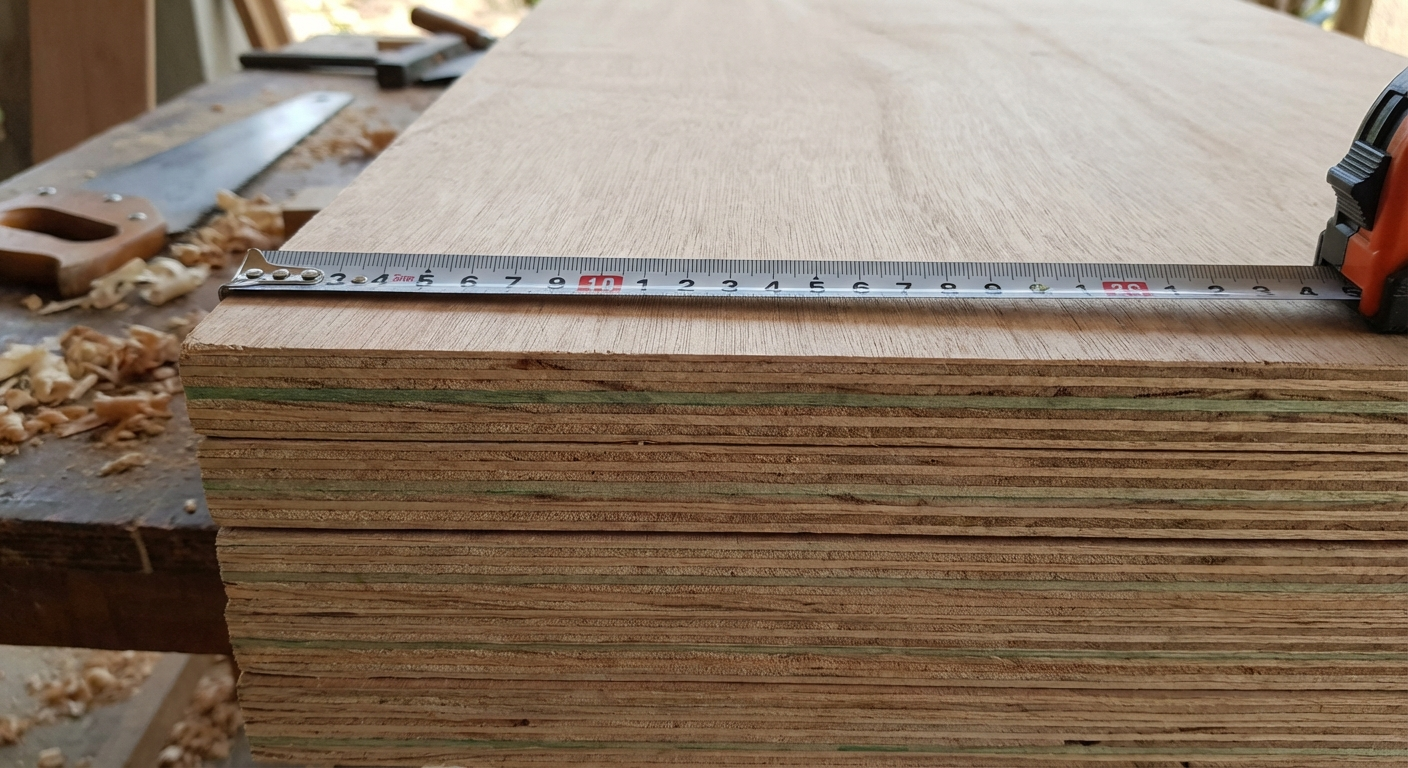
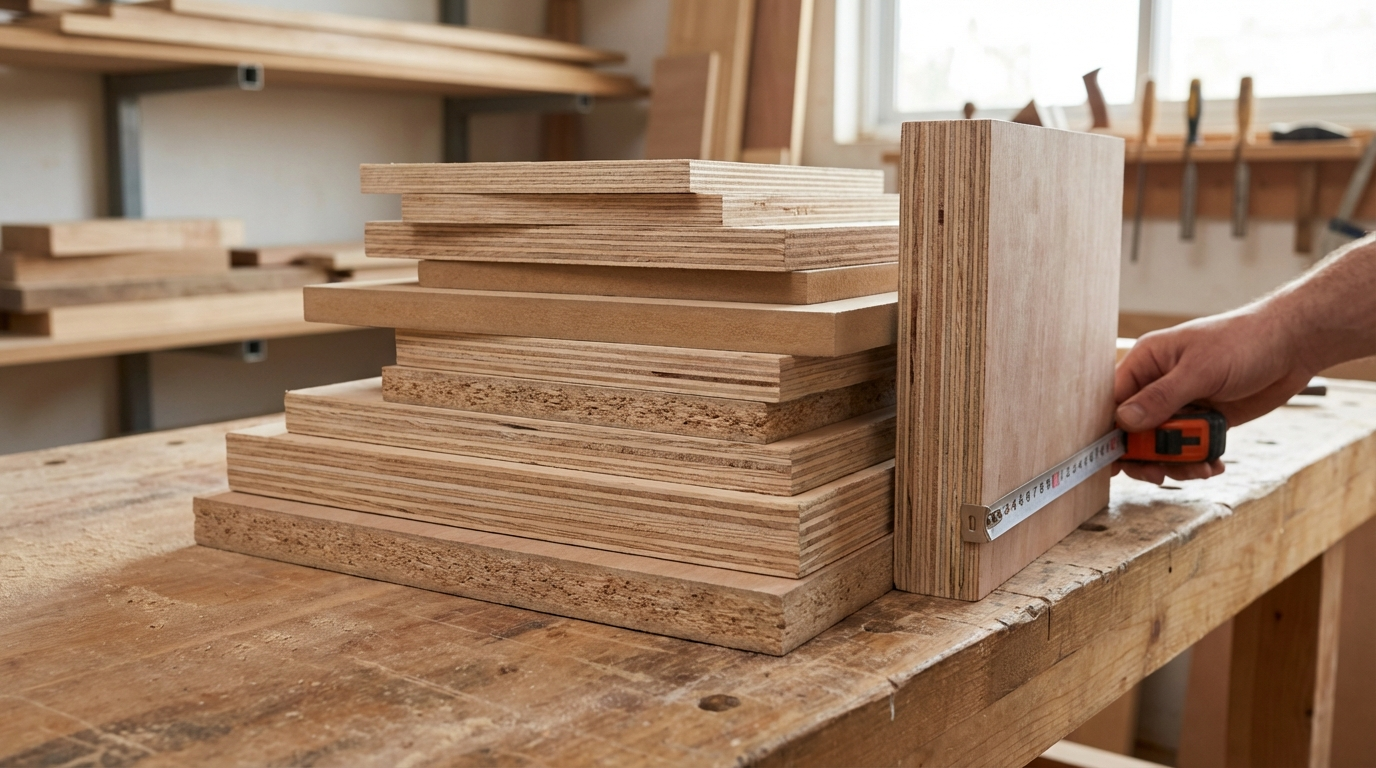
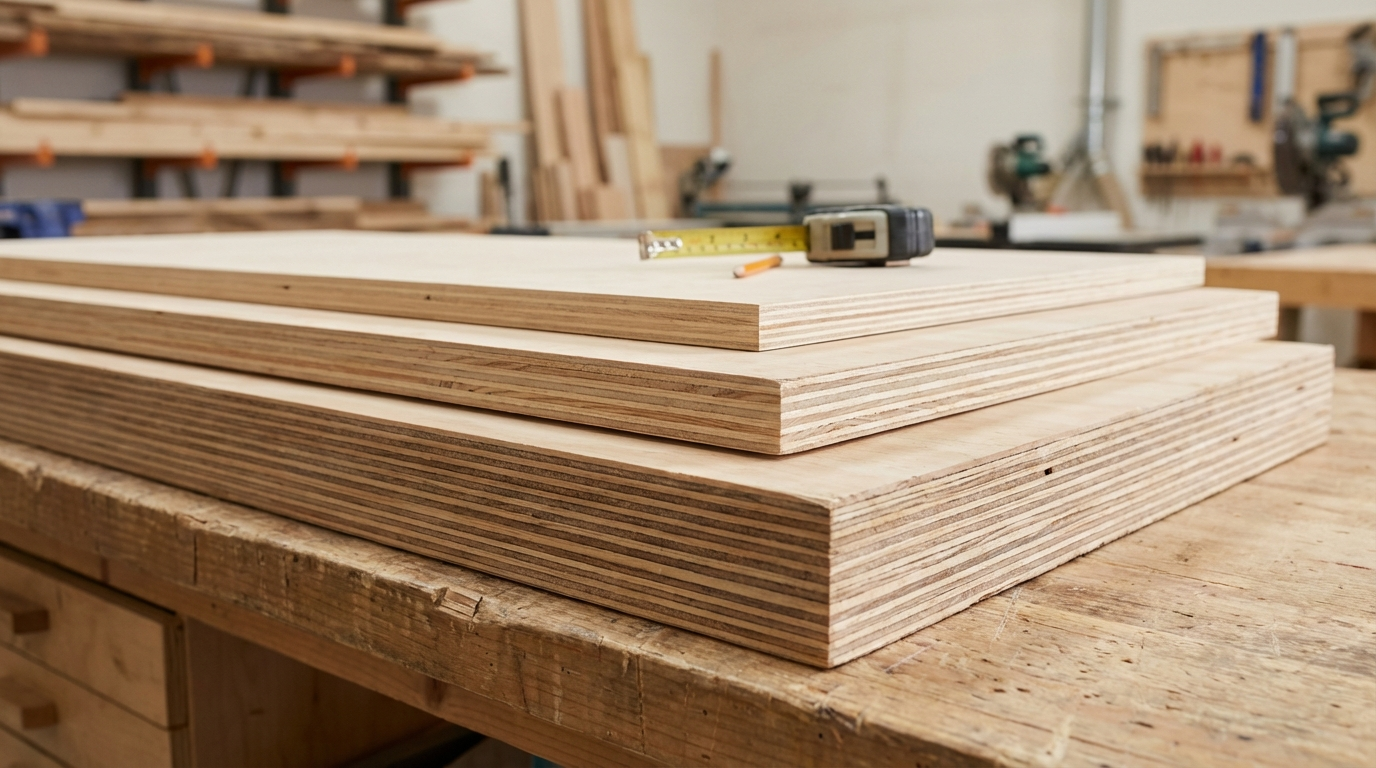
Plywood Price Forecast 2026: Will Plywood Get Costlier in India?
No one can honestly quote a single all-India plywood price for 2026, but the direction of pressure can be forecast by type. Timber and veneer supply, resin costs, freight and demand will decide whether MR, BWR and BWP rates rise, hold or ease.
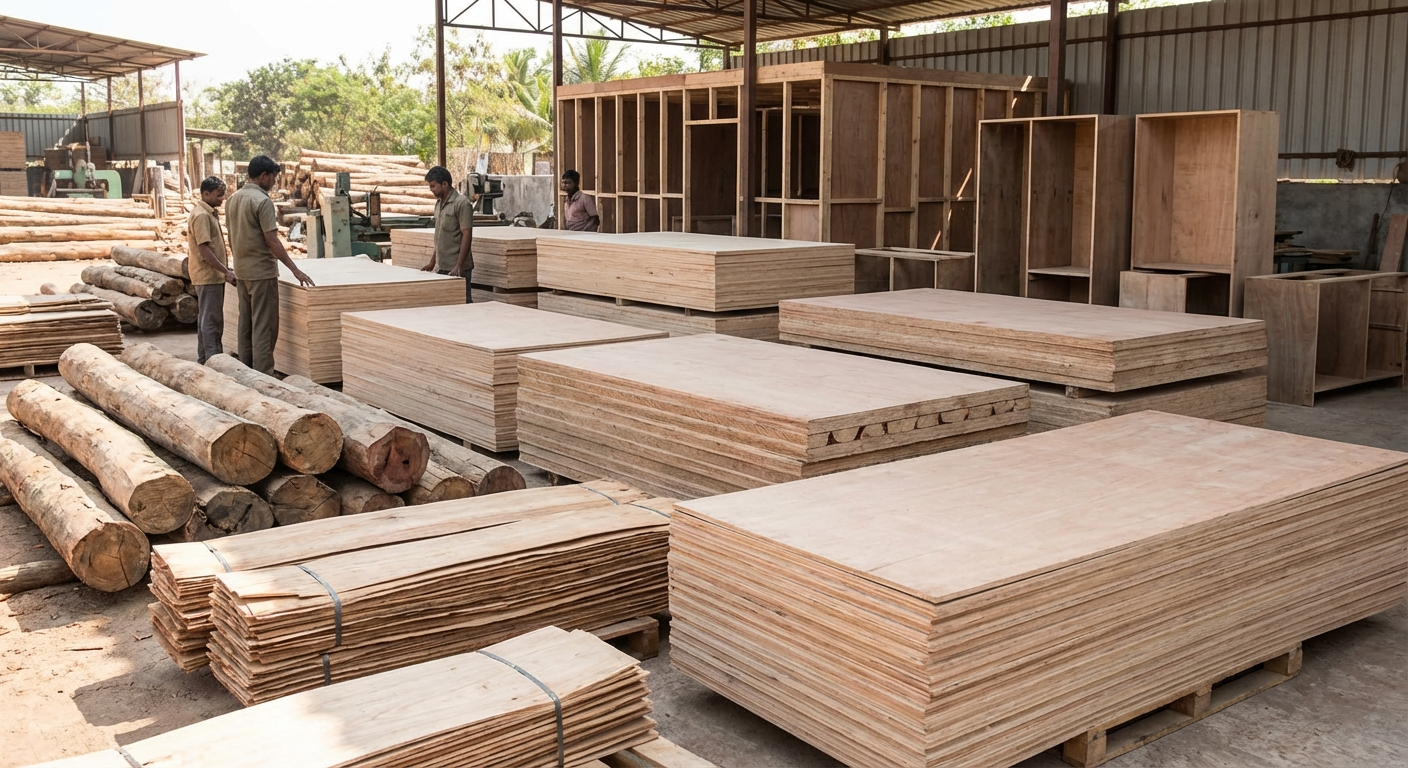
Plywood price forecast 2026 (India): what to expect and how to plan purchases
“Plywood price forecast 2026” is usually searched for one of three reasons: budgeting a home interior, locking a contractor BOQ, or planning dealer-level inventory. The honest answer is that no one can give a single all-India plywood price number for 2026 without guessing. What you can forecast credibly is the direction of pressure (up/down/stable) by plywood type, and the conditions under which prices move.
This guide gives a practical 2026 outlook for Indian plywood buyers using first-principles cost drivers: timber/veneer supply, adhesive chemistry, energy and freight, compliance/quality variance, and demand from housing and institutional fit-outs. It avoids exact prices and focuses on actionable planning.
Quick outlook: will plywood become costlier in 2026?
In most Indian cities, plywood prices in 2026 are more likely to remain range-bound with periodic spikes than to fall meaningfully. The reason is structural: wood and adhesive costs don’t easily deflate, while demand is “lumpy” (project-driven) and supply is fragmented (many mills + variable quality). The bigger risk for buyers is not only price rise but grade confusion (MR vs BWR vs BWP), thickness shortfall, and core quality issues that inflate “effective cost” through rework.
2026 forecast by plywood category (directional)
| Category | Typical use in India | Likely 2026 price pressure | What will drive it in 2026 |
|---|---|---|---|
| MR (moisture-resistant) plywood | Wardrobes, partitions, bedroom cabinetry (dry areas) | Low to moderate upward bias | Veneer availability, labour, transport; demand from mass housing interiors |
| BWR (boiling water resistant) plywood | Kitchens, utility areas, moderate moisture exposure | Moderate upward bias | Adhesive/chemical costs and quality-led segmentation |
| BWP / Marine-grade plywood | Wet areas, coastal homes, high-humidity zones | Moderate to higher upward bias | Phenolic/resin-linked adhesive inputs + tighter demand for assured quality |
| Commercial “economy” plywood (mixed cores) | Temporary furniture, low-budget interiors | Most volatile | Core substitution, quality dilution, irregular supply; price may not track “real value” |
| Film-faced shuttering plywood | Formwork for slabs/columns | Project-cycle dependent | Infra/housing cycles; phenolic film and glue costs; reuse expectations |
| Blockboard (engineered core board) | Doors, long spans, shelves (when weight matters) | Moderate | Timber strip core availability + warpage control costs |
What would make plywood cheaper in 2026?
For plywood to become meaningfully cheaper, you’d need multiple things to happen together: improved timber/veneer supply, lower resin/adhesive costs, lower freight/energy, and weak demand. In practice, even if one factor cools, another often heats up. So the more realistic “savings” strategy is buying the right grade and controlling wastage, not waiting for a major broad-based drop.
How plywood is priced in India: the cost stack that shapes 2026
Understanding the cost stack helps you interpret dealer quotes and “forecast” your own project cost more accurately than relying on headlines.
1) Veneer and timber: the biggest silent driver
Plywood is fundamentally a veneer product. Veneer prices swing with:
- Species mix used for face and core (and what your local market calls “hardwood” vs “mixed wood”).
- Seasonality (monsoon affects drying and transport; moisture management costs rise).
- Regional supply chains (North, West, South, East markets often see different availability and rates).
In 2026, veneer-related volatility is likely to persist because supply is fragmented and quality grading is inconsistent across mills.
2) Adhesive chemistry: MR vs BWR vs BWP cost logic
Adhesive isn’t just “glue”; it defines water resistance and heat performance. Moving from MR to BWR to BWP typically increases adhesive performance requirements and quality control. If chemical input costs rise, higher grades usually feel it first and more sharply.
3) Manufacturing realities: thickness, pressing, and wastage
Two sheets both labeled “18 mm” can have different effective value if one is under-thickness, has voids, or has uneven pressing. In 2026, as buyers push for lower rates, the market risk is more quality compression (cutting corners) rather than transparent price reduction.
4) Freight, fuel, and handling: the “city premium”
India’s plywood pricing often includes a city premium linked to:
- Distance from manufacturing clusters
- Load consolidation (dealers with higher volume get better landed costs)
- Damage risk and replacement policy (often unspoken in quotes)
5) GST billing vs non-billed market behavior
In some markets, a portion of trade happens with mixed billing practices, which can distort “apparent” prices. For 2026 budgeting, compare quotes on the same basis (bill/invoice terms, delivery, and replacement conditions), otherwise you’ll misread the market.
2026 demand-side triggers: why plywood prices move even when raw material doesn’t
Many price spikes are demand-driven rather than cost-driven. Watch these triggers:
Housing handovers and festival cycles
Retail plywood demand often clusters around home handovers and pre-festival interior work. If your project schedule overlaps peak months, 2026 quotes may harden even if your dealer says “factory hasn’t increased.”
Institutional and commercial fit-outs
Offices, retail chains, and hospitality projects can suddenly pull higher-grade plywood (BWR/BWP) in bulk. This can tighten supply in certain thicknesses and sizes, creating localized spikes.
Shuttering plywood tied to construction pace
Shuttering plywood behaves differently: it tracks project starts, formwork cycles, and reuse economics. If construction accelerates in your region, shuttering supply tightens quickly, and 2026 quotes can jump for a few months.
Forecast scenarios for 2026 (practical, not predictive)
Instead of one “forecast,” use scenarios. This is closer to how contractors and procurement teams plan.
Scenario A: stable inputs, steady demand (most likely baseline)
Expect small upward revisions and negotiation-based pricing. In this environment, brand/grade segmentation increases: top-quality BWP holds price, while economy segments compete aggressively but with greater quality variance.
Scenario B: resin/chemical costs rise or supply tightens
BWR/BWP and film-faced shuttering typically feel this earlier. Budget risk increases for kitchens, coastal projects, and wet-area work. Buyers may “downshift” to cheaper grades—often a false economy if moisture exposure is real.
Scenario C: timber/veneer disruption + freight issues
Here, even MR plywood can spike. In 2026, if you see frequent dealer stockouts of common thicknesses (12 mm / 18 mm), that’s a practical sign you’re in this scenario locally.
Scenario D: demand slowdown (localized)
Discounting increases, but mostly for slow-moving stock, unpopular sizes, or boards with inconsistent quality. Good plywood does not always become “cheap”; instead, the market clears inventory through selective offers.
What buyers get wrong about plywood “price forecasts”
Confusing rate movement with total project cost
Even if sheet prices rise slightly in 2026, your total interior cost can still be controlled by reducing wastage, optimizing thickness, and matching grade to exposure. Plywood is only one part of cabinetry cost alongside laminates, hardware, labour, and design complexity.
Comparing MR vs BWR vs BWP as if they’re interchangeable
The expensive mistake is choosing MR in moisture-prone zones to “beat” a forecasted price rise. If swelling/delamination occurs, your effective cost explodes due to dismantling and refitting.
Not separating “face value” from “core value”
A visually attractive face veneer can hide voids or low-density core. Always treat 2026 pricing as “value per usable year,” not “price per sheet.”
Planning your 2026 plywood budget: a buyer’s framework (homeowners, contractors, designers)
Step 1: classify each application by moisture risk
| Zone / item | Moisture reality (India) | Safer plywood grade bias (typical) | Why this matters for 2026 budgeting |
|---|---|---|---|
| Bedroom wardrobe (internal carcass) | Low, unless wall dampness | MR or BWR depending on wall condition | MR saves cost, but damp walls can cause long-term swelling |
| Kitchen base cabinets | High (mopping, sink leaks) | BWR minimum; BWP in coastal/high humidity | Most common rework zone; don’t “downshift” to chase rates |
| Bathroom vanity | Very high | BWP / marine-grade preference | 2026 price volatility is less painful than replacement work |
| Loft/storage near ceiling | Heat + occasional condensation | MR/BWR depending on ventilation | Heat cycling can show up as warpage if core quality is poor |
| Doors (flush doors / frames) | Moderate, depends on entry/utility | Blockboard/plywood selection based on stability | Warping complaints are common when grade selection is wrong |
Step 2: lock specifications, not just “18mm ply”
For 2026 quotes, write specs that reduce ambiguity:
- Grade: MR / BWR / BWP (and where it will be used)
- Thickness tolerance expectation (ask dealer for actual measurement checks)
- Core type expectation (avoid “mixed core” for critical cabinetry)
- Sheet size and quantity planning (optimize cut plan to reduce wastage)
Step 3: choose procurement timing based on your risk
There isn’t one best month for everyone. Use this logic:
- Homeowners: buy when design is frozen and carpenter is scheduled; holding plywood too long in an unconditioned site can cause moisture pickup.
- Contractors: stage procurement (carcass first, shutters later) to reduce damage and theft risk, while still protecting against short-term spikes.
- Designers: standardize on a few thickness/grades across projects to reduce last-minute substitutions during 2026 supply tightness.
Expected 2026 price variation: what’s “normal” and what’s a red flag
Normal reasons your quote differs from a friend’s quote
- Different city/region (landed cost and local competition)
- Different sheet size, thickness, or grade
- Different billing terms and delivery scope
- Replacement policy and cutting wastage support
Red flags that can cost more than any 2026 price increase
- Dealer avoids confirming grade clearly (MR/BWR/BWP) and pushes “same-same” logic
- Unusually low quote without clarity on core, thickness, or manufacturing batch
- No willingness to share basic documentation/markings or allow measurement checks
- Mismatch between promised and delivered sheet weight/feel (often indicates density/core compromise)
Shuttering plywood forecast 2026: think in “cost per reuse,” not sheet price
Shuttering plywood is often bought on urgency. In 2026, your smarter metric is cost per effective reuse cycle. Two sheets priced similarly can behave very differently depending on film quality, glue line, edge sealing, and storage practices on site.
What pushes shuttering rates up in 2026
- Project starts clustering in a region (demand shock)
- Film and phenolic adhesive cost pressure
- Poor site handling causing early failure (buyers then blame “market rate”)
Shuttering plywood buying tip for contractors
If you’re a contractor, record actual reuse counts by batch and supplier. Over a few projects, you’ll build a defensible internal “rate card” that beats any generic 2026 forecast.
MR vs BWR vs BWP in 2026: how to avoid overpaying (or under-buying)
MR plywood (2026): where it makes sense
MR is economical where moisture exposure is genuinely low and the site has good wall waterproofing. It’s a rational choice for many dry-area cabinets. The 2026 risk is not performance but grade dilution in the economy end—so insist on consistency.
BWR plywood (2026): the “default safe” for many urban homes
BWR often becomes the practical middle ground for kitchens and utility areas in non-coastal cities. In 2026, BWR may see more price pressure than MR because it sits in the high-demand “upgrade” segment.
BWP/marine (2026): pay for it only when exposure demands it
BWP is not automatically “best for everything.” In dry areas, the performance benefit may not justify the premium. Use BWP where water exposure or humidity cycling is real (coastal belts, wet zones, poorly ventilated kitchens, frequent mopping patterns).
How to negotiate plywood in 2026 without sacrificing quality
Negotiate on specification and logistics
Instead of pushing only for rate cuts, negotiate on what changes total cost:
- Free/discounted delivery for full lots
- Batch consistency (same make/batch for a room set)
- Replacement terms for damaged sheets on delivery
- Edge sealing/handling advice for shuttering and wet-area boards
Ask for comparable alternatives
If a particular grade is tight in 2026, alternatives may include blockboard for doors/long spans, or moisture-resistant engineered boards in specific applications. But ensure your carpenter is comfortable working with the material and that the use-case matches moisture/fastening needs.
People also ask: plywood price forecast 2026 (clear answers)
Will plywood prices increase in 2026 in India?
More likely than not, yes in a mild-to-moderate way, with intermittent spikes depending on your city and grade. Bigger uncertainty is product quality at lower price points, which can raise your true cost through failure or rework.
Which plywood grade will become costlier in 2026: MR, BWR, or BWP?
BWR and BWP are typically more sensitive to adhesive/resin cost changes and quality-led demand. MR tends to move more with veneer supply and general demand. Actual movement will vary by region and supply availability.
Is it better to buy plywood now or wait until 2026?
Buy when your design and measurements are frozen and your carpenter timeline is confirmed. Holding plywood for long periods at an active site can lead to moisture absorption, warpage, or edge damage—losses that can outweigh any price difference.
Why do plywood prices vary so much between dealers in the same city?
Because “plywood” is not one uniform product. Differences in core composition, thickness tolerance, adhesive quality, billing terms, delivery, and replacement policy can all be hidden inside the quote. Two quotes can look comparable but represent different quality and risk.
Does thicker plywood always cost more in a predictable way?
Not always. Thickness usually increases cost, but supply tightness in common thicknesses (like 12 mm or 18 mm) can temporarily invert expectations. Also, under-thickness sheets distort comparisons—so measurement checks matter.
What is the biggest risk for 2026 plywood buyers: price or quality?
For most homeowners, quality mismatch is the bigger risk because it creates long-term repair cost. For contractors working on tight bids, short-term availability and sudden spikes can be the bigger operational risk.
2026 checklist: how to buy plywood smartly in India
Before taking quotes
- Map each use-case to moisture exposure (dry / moderate / wet).
- Decide acceptable grade (MR/BWR/BWP) per zone.
- Standardize thicknesses to reduce wastage.
While comparing quotes
- Compare on the same billing and delivery basis.
- Confirm grade and intended application explicitly.
- Physically check thickness and surface flatness for a few sheets.
After purchase (often ignored, but critical)
- Store sheets flat, off the floor, protected from site moisture.
- Seal exposed edges in wet-area applications where relevant.
- Avoid mixing batches for a single run of shutters/carcasses when possible.
Bottom line for plywood price forecast 2026
For 2026, a sensible expectation is gradual upward drift with local volatility, especially in moisture-resistant and premium grades. Your best “forecast-proof” strategy is to lock correct specifications, avoid false economies in wet areas, and treat quality consistency as a cost control tool. If you want, share your city, application (kitchen/wardrobe/shuttering), and approximate quantities, and you can build a tighter, project-style budget range without relying on generic market predictions.
Related guides on PlyPrice
Want Plywood Suggestions?
Share a few details and a PlyPrice specialist will suggest suitable brands and connect you to responsive dealers.