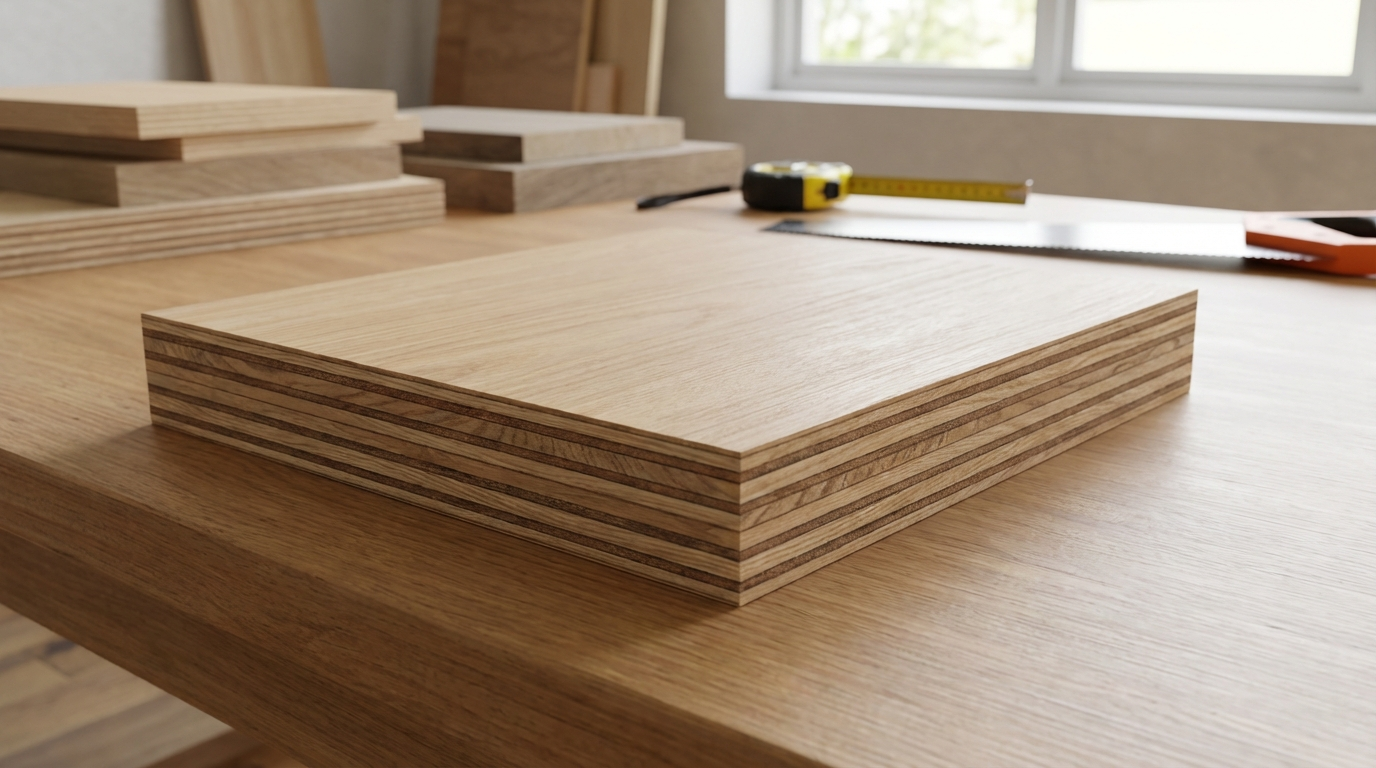
What is Plywood Core
The plywood core refers to the inner layers. Hardwood core (Eucalyptus/Gurjan) offers more strength than softwood (Poplar/Pine) core.
Understanding Plywood Layering Basics
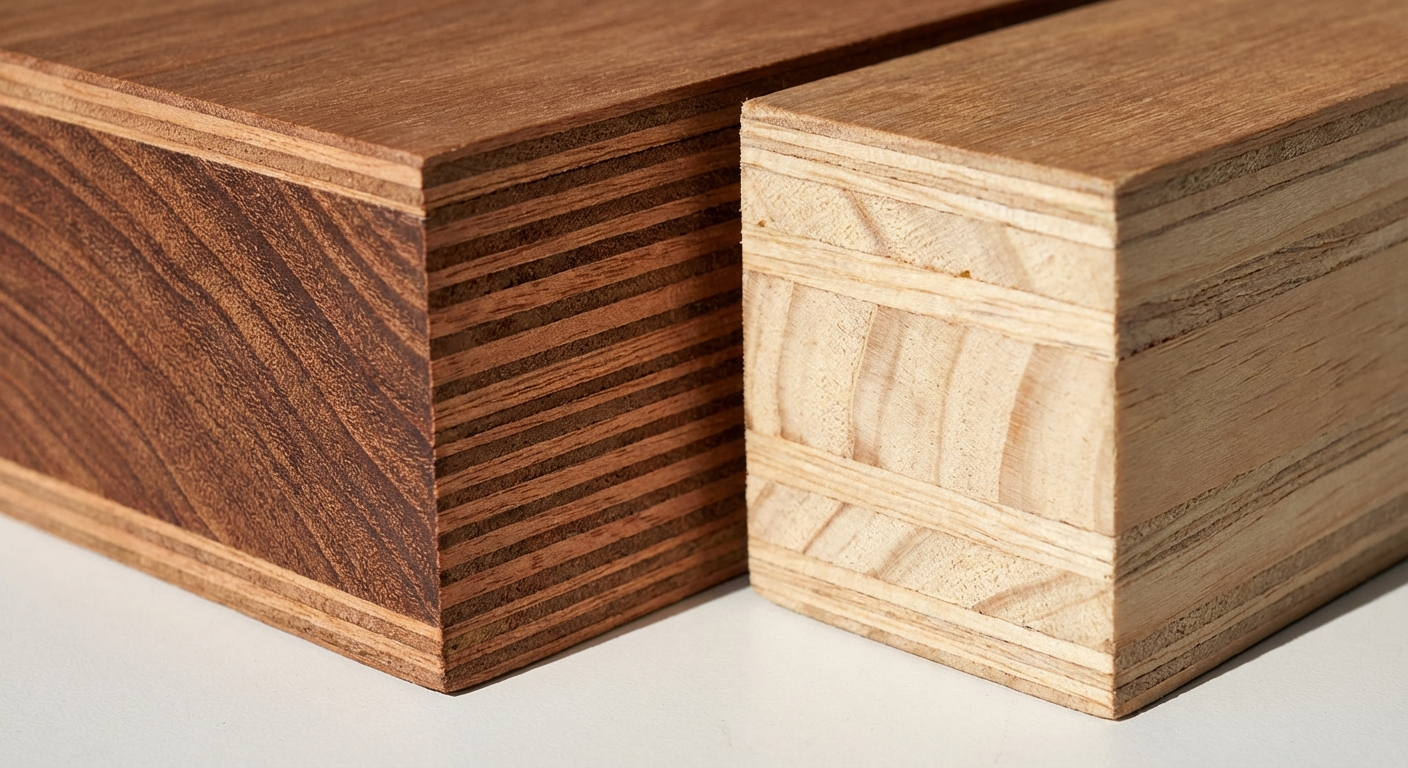
Plywood derives its utility from a engineered structure of thin wood veneers stacked and glued together with grains oriented perpendicularly across layers. This cross-graining distributes stress evenly, preventing warping under India's variable humidity and temperature swings. The outermost veneers, known as face and back, determine surface finish and initial aesthetics. Beneath them lie the inner layers, collectively termed the core, which form the plywood's structural backbone.
In practical terms for Indian buyers—whether fitting wardrobes in Mumbai apartments or shuttering for Kerala construction sites—the core dictates load-bearing capacity, screw-holding strength, and long-term stability. Inferior cores fail prematurely in monsoon-soaked environments, leading to delamination or sagging.
What Exactly Constitutes the Plywood Core?
The plywood core comprises the central 60-80% of the total thickness, typically consisting of 3-7 thicker veneers compared to the thinner face layers. These core veneers are peeled from logs using rotary lathes, then assembled with adhesives like urea-formaldehyde (MR grade) or phenolic resins (BWP grade for boiling water resistance).
Core quality hinges on wood species density, uniformity of thickness (ideally 1.5-3mm per veneer), and void minimization. Voids—gaps from knotted or decayed wood—compromise integrity, a common issue in low-grade panels sourced from unregulated mills in Uttar Pradesh or Bihar.
- Role in performance: Provides bulk strength and resists bending under vertical loads, crucial for furniture shelves or roof sheeting.
- Thickness impact: In 18mm plywood, core might span 12mm, influencing weight and rigidity.
Primary Core Types in Indian Plywood Production
Indian manufacturers classify cores by wood type: hardwood or softwood. Hardwood cores use dense species like eucalyptus or gurjan, while softwood opts for poplar or pine. This distinction arises from regional timber availability—poplar dominates northern plains for cost efficiency, eucalyptus thrives in southern plantations.
Buyers must scrutinize core specs during dealer inspections, as labels often prioritize face veneers over core details.
Hardwood Cores: Eucalyptus and Gurjan Profiles
Eucalyptus, a fast-maturing plantation hardwood, features tight grain and density around 600-750 kg/m³. Its core veneers offer superior compression strength, ideal for high-stress applications like structural shuttering in high-rise builds across Bengaluru or Hyderabad.
Gurjan, sourced from Northeast India and Myanmar imports, provides even higher density (700-850 kg/m³) with natural oils enhancing rot resistance. Contractors favor gurjan cores for marine-grade or exterior plywood, where exposure to coastal humidity demands unyielding stability.
Drawbacks include heavier weight, increasing transport costs from Andhra mills to distant markets, and potential checking (surface cracks) if kiln-drying is inconsistent.
Softwood Cores: Poplar and Pine Characteristics
Poplar, the workhorse of budget plywood, grows abundantly in Punjab and Haryana. With density of 400-500 kg/m³, it yields lightweight cores suitable for interior furniture in humid climates like Kolkata. Its straight grain peels evenly, minimizing voids, but lower density limits screw retention—shelves may loosen after 2-3 years of use.
Pine cores, often imported or from Himalayan foothills, share similar traits (450-550 kg/m³) but introduce resin pockets that can interfere with glue bonds, risking delamination in BWR-grade panels under repeated wetting.
Softwood appeals to cost-sensitive homeowners for modular kitchens, yet architects warn against it for load-bearing partitions due to deflection under weight.
Head-to-Head: Hardwood vs Softwood Core Strength Analysis
Strength differentials stem from cellular structure—hardwood's smaller, denser fibers resist compression better than softwood's larger, airier cells. In lab tests aligned with IS 303 standards, hardwood cores outperform in modulus of rupture (MOR) and internal bond strength.
| Attribute | Hardwood Core (Eucalyptus/Gurjan) | Softwood Core (Poplar/Pine) |
|---|---|---|
| Density (kg/m³) | 600-850 | 400-550 |
| Screw Holding Strength | High (retains fixings in heavy cabinets) | Moderate (suitable for light shelves) |
| Bending Resistance (MOR) | 50-70 N/mm² | 30-50 N/mm² |
| Weight per Sheet (18mm) | Heavier (25-30% more) | Lighter (easier handling) |
| Moisture-Induced Swell | Low (better cross-grain stability) | Higher (prone in monsoons) |
| Typical Applications | Shuttering, doors, exteriors | Interiors, furniture, partitions |
Note: Values are indicative ranges from industry norms; actual performance varies with adhesive quality and manufacturing consistency.
Indian Climate's Influence on Core Choices
Monsoons elevate core importance—softwood cores absorb more moisture, expanding up to 12-15% in poorly sealed edges, while hardwood limits this to 8-10%. In Rajasthan's dry heat, both perform adequately, but coastal Tamil Nadu demands hardwood for termite-prone soils.
Construction practices amplify this: Contractors layering gypsum over softwood cores risk cracks from differential shrinkage, whereas hardwood supports direct plastering in budget housing projects.
Spotting Quality Cores at Dealers and Sites
Visual checks reveal truths labels obscure:
- Edge inspection: Smooth, uniform veneers without plugs signal solid cores; patchy repairs indicate fillers.
- Knock test: Dull thud denotes dense hardwood; hollow ring suggests softwood voids.
- Weight heft: Heavier sheets imply hardwood density.
- Certifications: Seek BIS-marked panels (IS 710 for BWP), though enforcement varies regionally.
Request core veneer samples from dealers in Delhi's Bhagirath Palace or Chennai's plywood hubs—reputable ones comply.
Application-Specific Core Recommendations
Homeowners (interiors): Poplar softwood suffices for wardrobes, balancing cost and adequacy in controlled humidity.
Contractors (shuttering): Eucalyptus hardwood essential for repeated pours, enduring concrete pressures without buckling.
Architects (custom furniture): Gurjan for premium durability, especially in load-bearing tabletops.
Avoid softwood in wet areas like bathrooms unless BWP-bonded; hybrids (mixed core layers) offer compromises but demand verification.
Cost Dynamics and Value Trade-offs
Hardwood cores command 20-40% premiums over softwood due to slower growth cycles and processing demands. Northern dealers quote lower for poplar amid surplus supply, while southern markets inflate eucalyptus amid export pulls.
Value equation: Softwood economizes non-structural uses; hardwood justifies outlay where failures cost repairs. Factor lifecycle—hardwood's longevity offsets initial expense in 5-10 year horizons for commercial fits.
Dealer negotiations hinge on volume: Bulk buys narrow gaps, but insist on core specs in invoices to sidestep substitutions.
Want Plywood Suggestions?
Share a few details and a PlyPrice specialist will suggest suitable brands and connect you to responsive dealers.