What Is Plyboard? Blockboard vs Plywood and Where Each Fits
In Indian dealer talk, plyboard almost always means blockboard: a core of wooden baton strips between veneers, made for long shelves and doors that must not sag. The term has no ISI definition, and the board has clear limits in high-moisture zones.
Last updated: . Grades and standards checked against current BIS standards.
Decoding 'Plyboard': A Staple in Indian Woodworking
In India's bustling construction and furniture sectors, 'plyboard' surfaces frequently in dealer conversations, architect specifications, and homeowner queries. This term lacks a standardized definition under ISI norms but consistently points to blockboard in everyday usage. Homeowners scouting for durable shelves or contractors framing wardrobes often hear it as shorthand for a panel engineered for span strength rather than surface finish. Understanding its baton-based core reveals why it fits specific roles in humid climates and cost-sensitive builds.
Core Construction: Why Baton Strips Define Plyboard
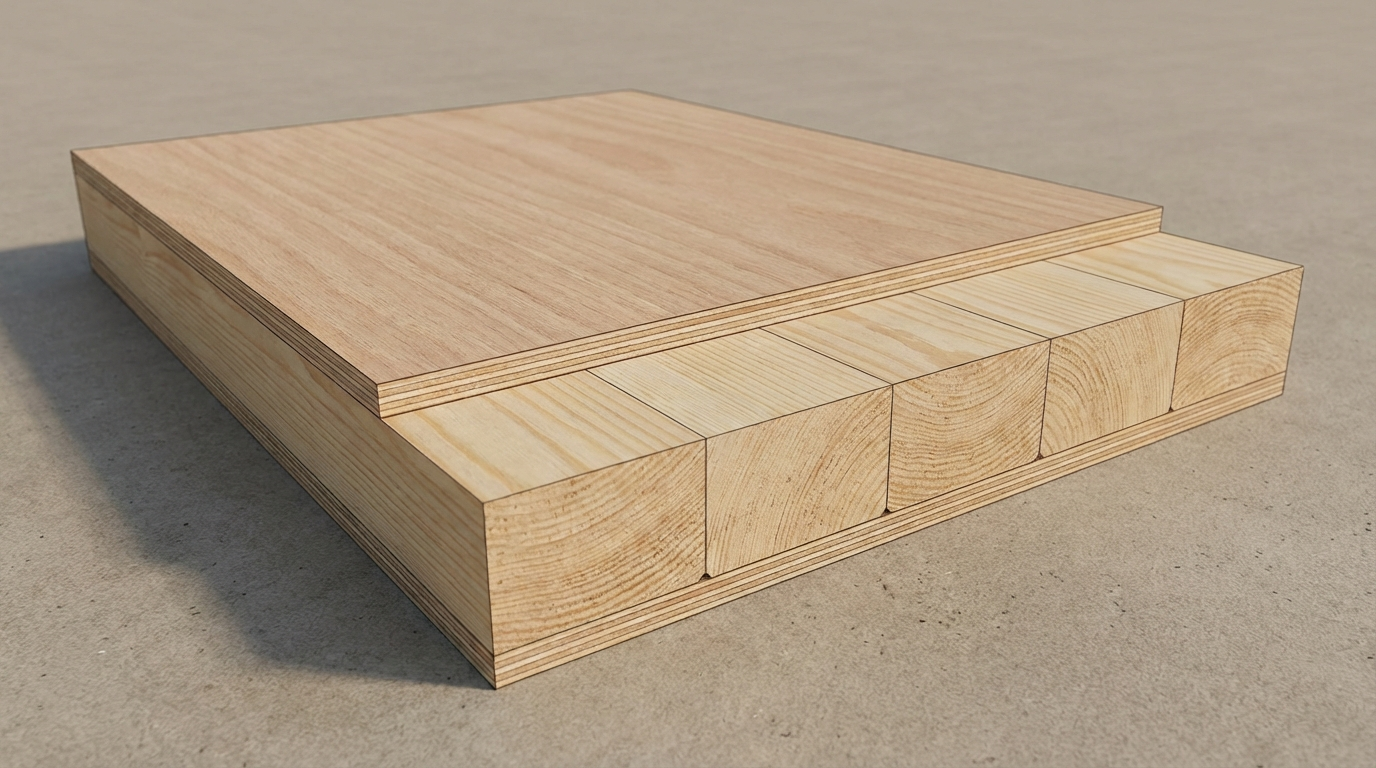
At its heart, plyboard—or blockboard—features a core of rectangular softwood strips, typically pine or poplar, arranged edge-to-edge and glued under pressure. These 'batons' (10-30mm wide) form the bulk of the panel's thickness (usually 18-25mm), providing rigidity across wide spans without warping like solid timber might.

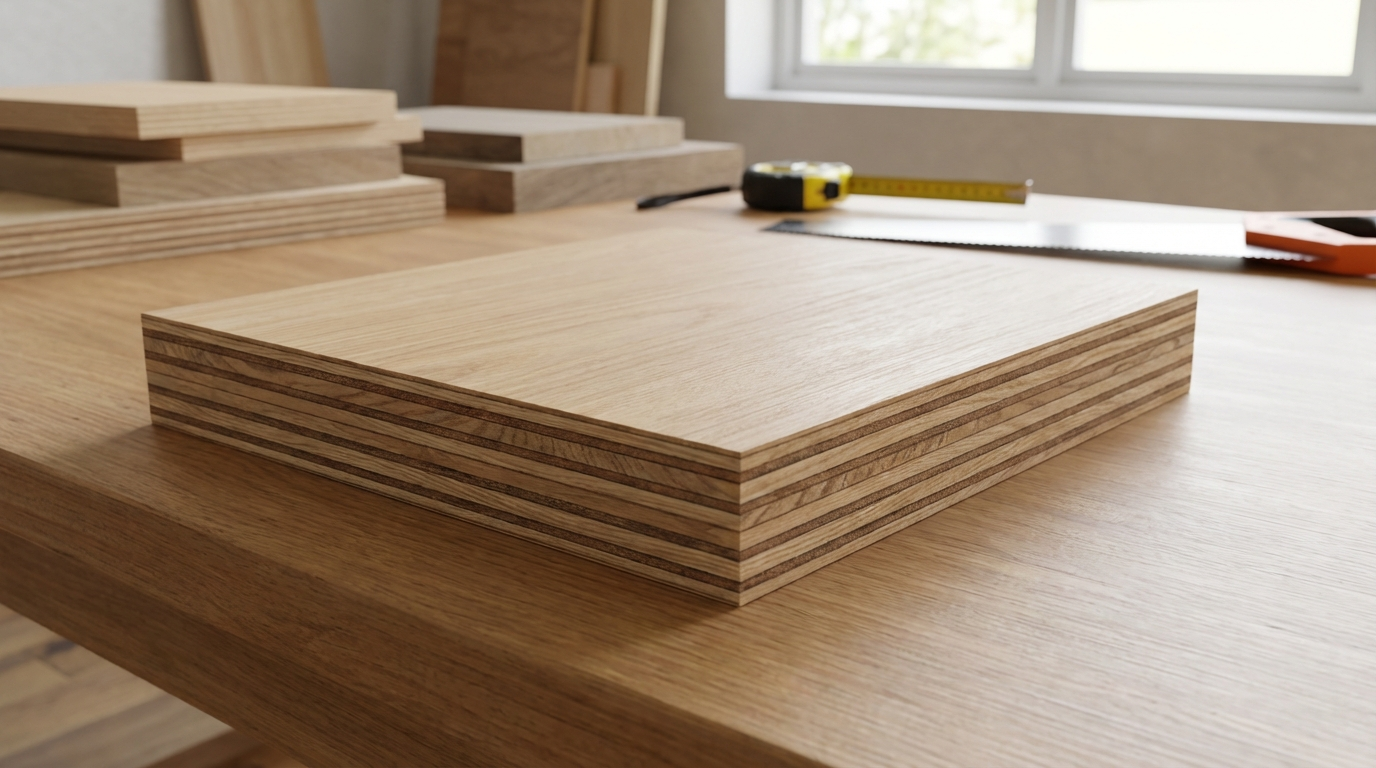
- Outer faces: Thin crossband veneers (1-1.5mm) followed by decorative face veneers, creating a plywood-like skin.
- Glue lines: Synthetic resins ensure bonding, with moisture-resistant variants using phenolic adhesives.
- Dimensional stability: Batons minimize expansion/contraction compared to particleboard cores, crucial in India's monsoon-driven humidity swings.
This build contrasts with solid wood cores, offering a middle ground: cheaper than hardwood planks yet stronger for unsupported lengths over 1 meter.
Baton Orientation and Grading Nuances
Batons run parallel to the panel's length, enhancing load-bearing along that axis. Indian manufacturers grade them by wood species (softwood dominant for affordability) and defect levels—knots or resin pockets reduce quality. Unmarked or fake-ISI plyboards risk delamination in coastal regions like Mumbai or Chennai, where relative humidity exceeds 80% seasonally.
Plyboard vs Plywood: Structural Breakdown
Contractors and interior designers often interchange these, leading to mismatched applications. Plywood layers thin veneers crosswise for uniform strength; plyboard prioritizes baton bulk for directional stiffness. Here's a side-by-side analysis tailored to Indian buyer decisions:
| Aspect | Plyboard (Blockboard) | Plywood |
|---|---|---|
| Core Material | Softwood batons (strips) | Multiple thin veneers, cross-laminated |
| Strength Profile | High span stiffness (e.g., shelves >1.2m) | Balanced isotropy; better screw-holding |
| Weight & Cost Driver | Heavier; lower per sq ft due to cheaper core | Lighter; pricier veneers inflate cost |
| Moisture Resistance | MR-grade common; BWR upgrades needed for kitchens | BWP gold standard for exteriors |
| Typical Thickness | 18-25mm for furniture | 6-19mm versatile |
| Suitability in India | Interior spans; budget wardrobes | Formwork, cabinets; premium finishes |
This table highlights why architects specify plyboard for load-bearing flats but plywood for curved elements or high-traffic surfaces.
Primary Applications: Excelling in Long Shelves and Doors
Plyboard's baton core shines where panels bridge gaps without mid-supports. In Indian homes, this translates to:
- Long shelves: Wardrobe racks or bookcases spanning 1.5m+ hold uniform loads (10-15kg/m) without sagging, unlike MDF which bows under weight.
- Door panels: Flush doors gain stability; batons resist twisting in pivot-heavy bathroom or bedroom setups.
- Partition frameworks: Combined with laminates, supports lightweight gypsum over plywood's flex.
Dealers in Delhi-NCR or Bengaluru markets push plyboard for these due to 20-30% cost savings over solid alternatives, factoring in transport from northern mills.
Limitations in High-Moisture Zones
Avoid exposed uses; batons swell if glue fails. In Kerala backwaters or Kolkata monsoons, opt for BWP plywood instead.
Performance Factors in India's Diverse Climates
India's regional variations dictate plyboard viability. Northern dry heat favors basic MR grades; southern humidity demands upgraded resins. Durability hinges on:
- Core density: Denser batons (450+ kg/m³) fend off termites better.
- Face quality: Commercial vs teak veneers affect paint adhesion.
- Edge sealing: Exposed batons absorb moisture, mandating PVC/ laminate edging.
Contractors test via screw withdrawal (should hold 100+ cycles) and sag under load (deflection <1/300th span).
Buyer Decision Framework for Homeowners and Contractors
Navigating dealers requires scrutiny beyond labels. Prioritize:
- Markings: ISI IS:1659 for blockboard ensures baton specs; Boiling Water Resistance (BWR) for semi-wet areas.
- Visual checks: Uniform baton alignment, void-free glue lines, minimal core gaps.
- Source logic: Northern factories (Punjab, UP) supply 70% market; southern variants incorporate rubberwood batons.
- Cost influencers: Thickness drives 40% variance; branded vs unbranded spans 25-50% premiums for consistency.
Architects weigh it against HDHMR for modern flats—plyboard wins on spans, loses on machinability.
| Buyer Type | Why Choose Plyboard? | Alternatives if Not Ideal |
|---|---|---|
| Homeowner (DIY shelves) | Affordable span strength | MDF for painted, enclosed units |
| Contractor (bulk doors) | Easy sourcing, low sag | Flush doors with particle core |
| Designer (custom furniture) | Stable base for laminates | Marine plywood for premium |
Glossary: Key Terms Linked to Plyboard
- Baton Core: Stripwood skeleton distinguishing blockboard from laminates.
- MR Grade: Moisture-resistant; adequate for dry interiors.
- BWR/BWP: Boiling water resistant; essential upgrades for durability.
- Crossband: Intermediate veneer stabilizing faces to core.
- Span Rating: Maximum unsupported length before deflection exceeds limits.
Plyboard, Blockboard or Plywood: Which Should You Ask For?
'Plyboard' blurs lines, but its baton reality suits span-critical builds. Test samples under load, verify grades, and match to site conditions. For hybrids, explore HDHMR blockboards emerging in metro markets. This clarity empowers informed specs amid India's evolving material ecosystem.
Related guides on PlyPrice
Want Plywood Suggestions?
Share a few details and a PlyPrice specialist will suggest suitable brands and connect you to responsive dealers.