What Is OSB Board? Oriented Strand Board vs Plywood Explained
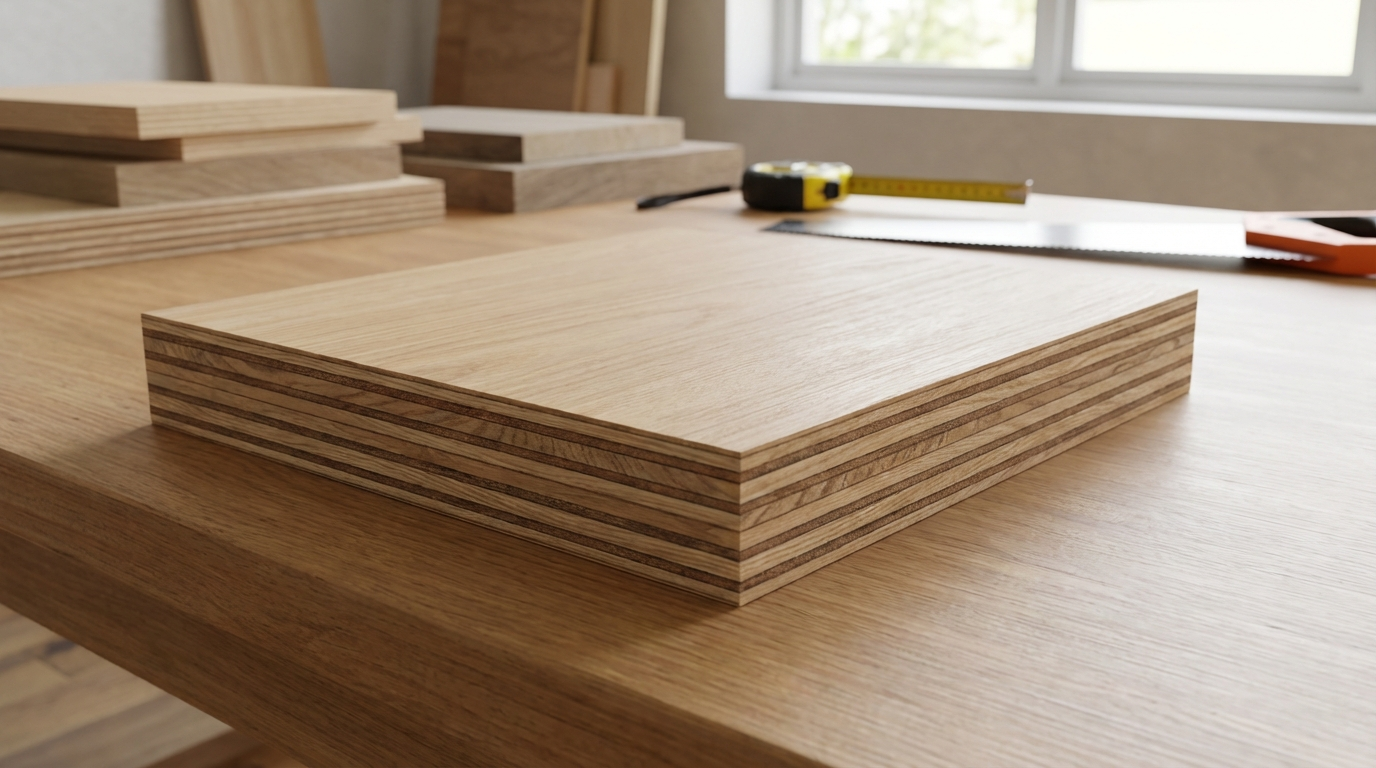
OSB, or oriented strand board, is an engineered panel of resin-bonded wood strands pressed in three layers, with the outer strands running lengthwise and the core crosswise. Plywood uses thin veneers instead, and the two differ in moisture behaviour and availability in India.
What is Oriented Strand Board (OSB)?
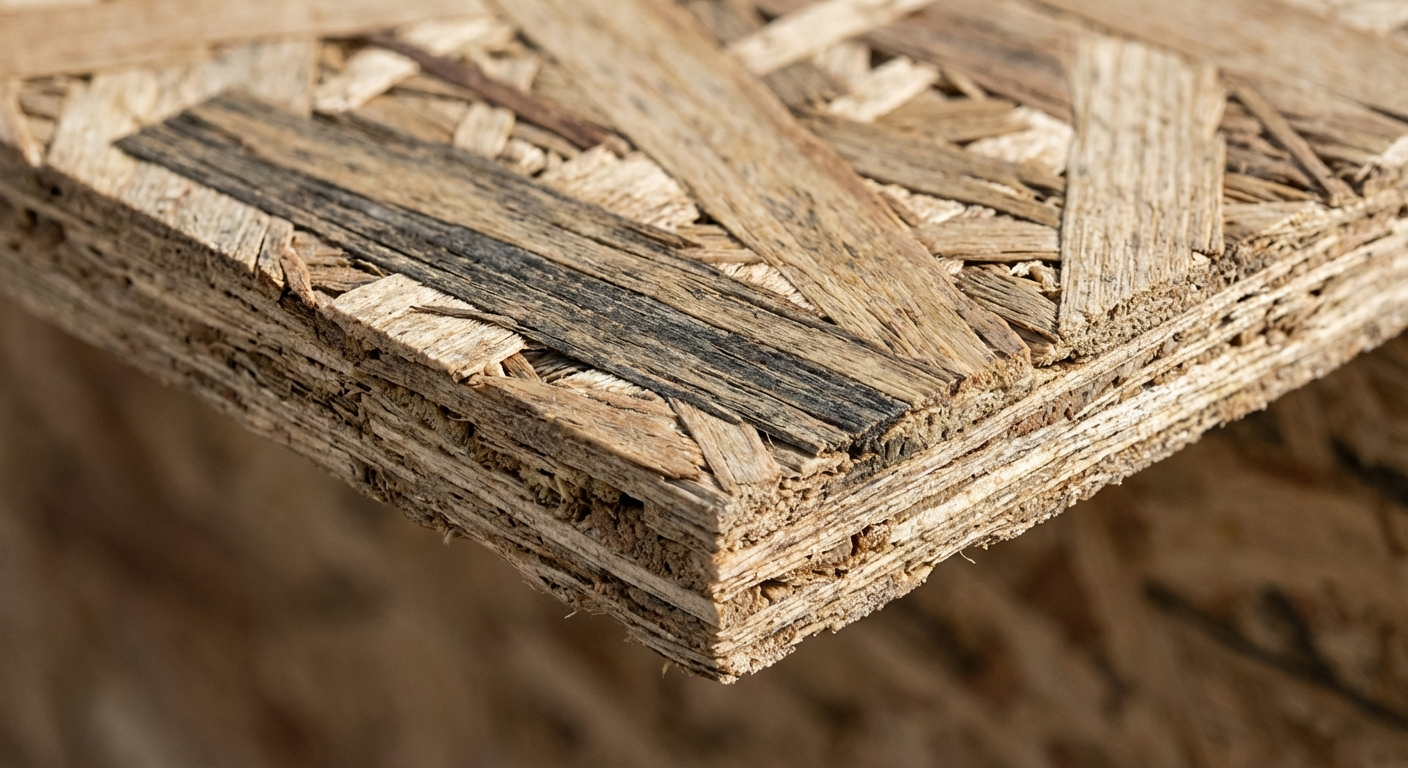
Oriented Strand Board (OSB) represents a type of engineered wood panel constructed from elongated wood strands, or flakes, compressed under high pressure and heat with synthetic resins. Unlike traditional plywood, which relies on thin veneers layered crosswise, OSB achieves its structural integrity through precise alignment of these strands in specific directions—typically three layers where the outer layers run longitudinally and the core layer runs perpendicularly. This orientation mimics the directional strength of plywood while utilizing smaller wood pieces, often from fast-growing species like pine or eucalyptus.
In the Indian context, where construction demands balance between cost and performance amid variable climates, OSB serves as a viable engineered wood option. It finds traction in projects prioritizing uniformity and economy over the established familiarity of plywood or MDF, particularly in sheathing applications for walls and roofs.
How OSB is Produced: From Strands to Structural Panels
The production begins with debarking logs and flaking them into strands roughly 75-150mm long and 1mm thick. These strands undergo drying to a precise moisture content, typically 2-8%, then blended with wax and resins like phenol-formaldehyde or isocyanates for bonding and water resistance.
Strands are formed into mats: the face and back layers oriented parallel to the panel length for bending strength, while the core crosses at 90 degrees for shear resistance. Hydraulic presses at 180-220°C and pressures up to 5 MPa fuse the mat into dense panels. Sanding and edge trimming follow, yielding flat, void-free boards.
This process inherently reduces waste compared to veneer peeling in plywood, contributing to OSB's appeal in resource-conscious markets like India, where wood sourcing faces sustainability pressures.
OSB Grades Explained: Matching to Indian Usage Conditions
OSB classification follows European (EN 300) or similar standards, divided into four performance classes based on strength, stiffness, and moisture exposure:
- OSB/1: General-purpose for dry interiors, non-structural like furniture panels or partitions. Least common in construction.
- OSB/2: Load-bearing in dry conditions, suitable for flooring or roofing in controlled environments.
- OSB/3: Load-bearing for humid conditions, the most prevalent grade in India for exposed sheathing or subflooring, offering balanced moisture resistance.
- OSB/4: Heavy-duty structural for severe humidity, used in high-load exterior applications with added protection.
In India, OSB/3 dominates due to its adequacy for monsoon-prone regions when properly sealed. Local suppliers often stock thicknesses from 9mm to 18mm in standard 2440x1220mm (8x4 ft) sizes, though custom dimensions vary by dealer.
Key Applications of OSB in Indian Building Practices
OSB excels as a sheathing material, providing a rigid diaphragm for wall and roof bracing in frame structures—a growing trend in urban housing amid RCC dominance. Contractors use it for:
- Exterior wall sheathing: Bracing timber or steel frames before cladding, distributing loads effectively.
- Roof decking: Supporting tiles or membranes, especially in low-slope designs common in commercial sheds.
- Subflooring: In elevated or modular homes, offering stability under finishes like vinyl or tiles.
- Interior uses: Partitions, false ceilings, or furniture carcasses in dry areas, leveraging its smooth surface for painting.
While plywood holds sway for formwork or cabinetry, OSB gains ground in budget prefab projects and industrial godowns, where rapid assembly trumps aesthetics.
OSB Compared to Plywood: A Side-by-Side Analysis
Buyers often weigh OSB against plywood for sheathing, given overlapping roles but distinct behaviors in India's humid tropics.
| Aspect | OSB | Plywood (BWR/BWP) |
|---|---|---|
| Composition | Wood strands in oriented layers | Thin veneers cross-laminated |
| Strength (Bending/Shear) | Comparable in panels; uniform due to no knots | Superior along grains; variable with knots/voids |
| Moisture Resistance | Good in OSB/3+ grades; swells if unprotected | Better in BWP; recovers post-wetting |
| Surface Finish | Smoother, fewer voids | More textured, potential patches |
| Weight | Lighter (15-20% less) | Heavier, aiding stability |
| Cost per sqm (relative) | Lower upfront; economies in bulk | Higher; justified by familiarity |
OSB edges out in cost uniformity for large sheathing areas, while plywood prevails in moisture-critical exposed uses without sealants.
Strengths and Challenges of OSB in Indian Climates
OSB's advantages stem from manufacturing consistency: no core voids like budget plywood, predictable load performance verified by span tables. It handles racking forces well in seismic zones, aligning with NBC guidelines for diaphragms.
Challenges include sensitivity to prolonged wetting—strands absorb more than veneers if unsealed, risking delamination in monsoons. Formaldehyde emissions vary by resin (low-E0 options emerging), and limited local production means import dependencies, fluctuating with global wood prices.
For architects, OSB suits semi-exposed roles with breathable claddings; homeowners favor it for cost in interior framing.
Availability, Sourcing, and Cost Dynamics in India
OSB enters India via importers and nascent local makers like GreenStrand or Pinepanels, stocked by metros (Delhi, Mumbai, Bangalore) and industrial hubs. Rural dealers rarely carry it, pushing contractors to urban wholesalers or online platforms like IndiaMART.
Pricing hinges on grade, thickness, import origin (China/Europe), and volume: OSB/3 panels run notably lower per square foot than MR/BWR plywood equivalents, with bulk dealer rates 20-30% below retail. Volatility ties to resin costs, wood supply, and duties—expect premiums in coastal humidity zones needing OSB/4.
Regional variations: North India sees steadier supply; South favors due to prefab growth.
Decision Framework for Selecting and Using OSB
Contractors: Prioritize OSB/3 for sheathing if budget-constrained and protected by membranes; test spans per project loads. Verify supplier certifications (EN 300 or ISO equivalents) over vague "ISI" claims.
Homeowners/Designers: Opt for OSB in dry substructures; pair with vapor barriers in humid areas. Avoid exposed exteriors sans cladding.
Installation tips: Acclimate panels 48 hours pre-use; fasten 150-300mm edge spacing with ring-shank nails. Seal edges against termites common in India.
Ultimately, OSB fits as a plywood alternative where economics drive sheathing choices, provided exposure matches grade capabilities.
Related guides on PlyPrice
Want Plywood Suggestions?
Share a few details and a PlyPrice specialist will suggest suitable brands and connect you to responsive dealers.