What Is Moisture Resistant (MR) Plywood? Uses, Limits and Quality Checks
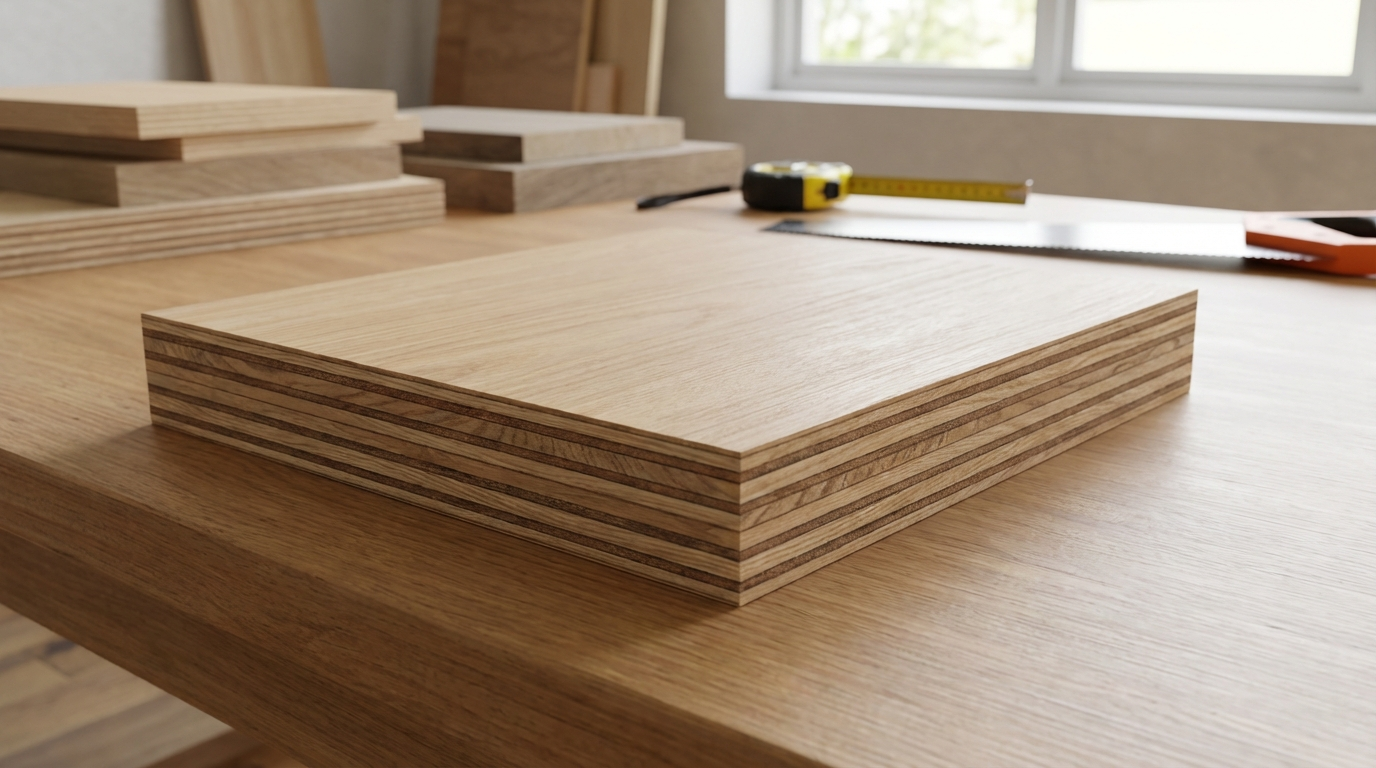
Moisture resistant (MR) plywood is the entry-level commercial grade bonded with urea-formaldehyde resin, built for dry to moderately humid indoor rooms around 40-70% relative humidity. It handles everyday humidity in wardrobes and bedrooms but fails under spills, leaks or constant wetting.
Core Characteristics of Moisture Resistant Plywood
In India's diverse climates, from coastal humidity in Mumbai to monsoon-soaked Kerala, plywood selection hinges on moisture exposure levels. Moisture Resistant (MR) plywood represents the entry-level commercial grade engineered wood designed primarily for dry-to-moderately humid indoor environments. It handles ambient humidity—think 40-70% relative humidity common in air-conditioned living rooms—but falters under prolonged direct water contact, such as spills or leaks.
Unlike higher grades, MR plywood relies on urea-formaldehyde (UF) resins in its glue line, which provide basic bonding without advanced waterproofing. This makes it a practical choice for budget-conscious homeowners and furniture makers prioritizing cost over extreme durability.
How MR Plywood Achieves Its Resistance
From first principles, plywood's moisture performance stems from three layers: face veneers, core veneers, and adhesives. MR grade uses tropical hardwood veneers (often poplar or eucalyptus mixes prevalent in Indian mills) boiled briefly during manufacture to remove natural sugars, reducing swelling risks. The glue line, critical for integrity, employs UF resin rated for short-term moisture exposure up to 24 hours submersion per basic tests, but real-world limits are lower.
ISI IS:303 standards outline MR as suitable for "general purposes" without boiling water resistance claims. Thicknesses range from 3mm to 25mm, with 18mm being standard for furniture carcasses.
MR Plywood vs Other Grades: Key Differences
Indian buyers often confuse MR with superior options. Here's a breakdown based on glue type, testing norms, and application logic:
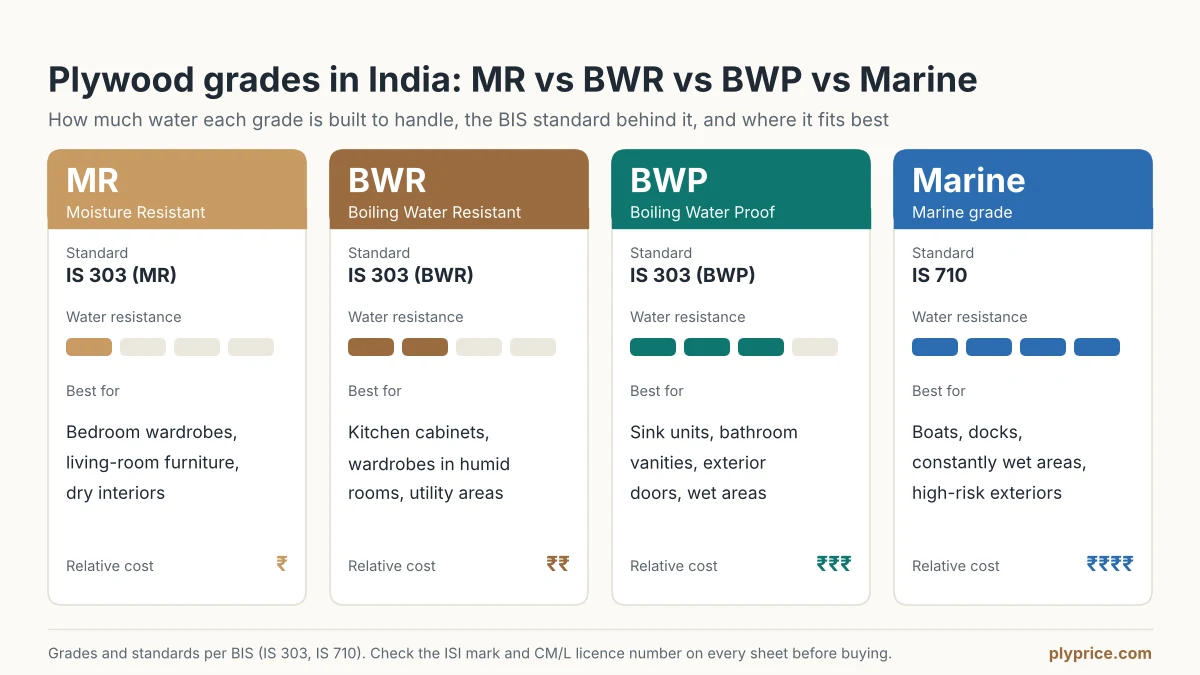
| Grade | Glue Resin | Moisture Tolerance | Typical Use Cases | Cost Relative to MR |
|---|---|---|---|---|
| MR (Moisture Resistant) | Urea Formaldehyde (UF) | Humidity (up to 70% RH); no direct/prolonged water | Indoor furniture, cabinets, partitions | Baseline (lowest) |
| BWR (Boiling Water Resistant) | Phenol Formaldehyde (PF) | Short boiling exposure; humidity + occasional spills | Kitchen cabinets, bathrooms (non-wet areas), wardrobes | 20-40% higher |
| BWP (Boiling Water Proof) | Advanced PF or PF-urea hybrids | Prolonged boiling; direct water immersion | Marine, exteriors, high-humidity zones | 40-70% higher |
Cost variations arise from resin pricing (PF costs more than UF), veneer quality, and mill location—northern mills like those in Punjab offer lower rates due to cheaper raw logs versus southern ones facing transport premiums.
Ideal Applications in Indian Homes and Projects
MR plywood shines where moisture is incidental, not constant. Homeowners in Delhi's dry winters or Bangalore's mild humidity use it for:
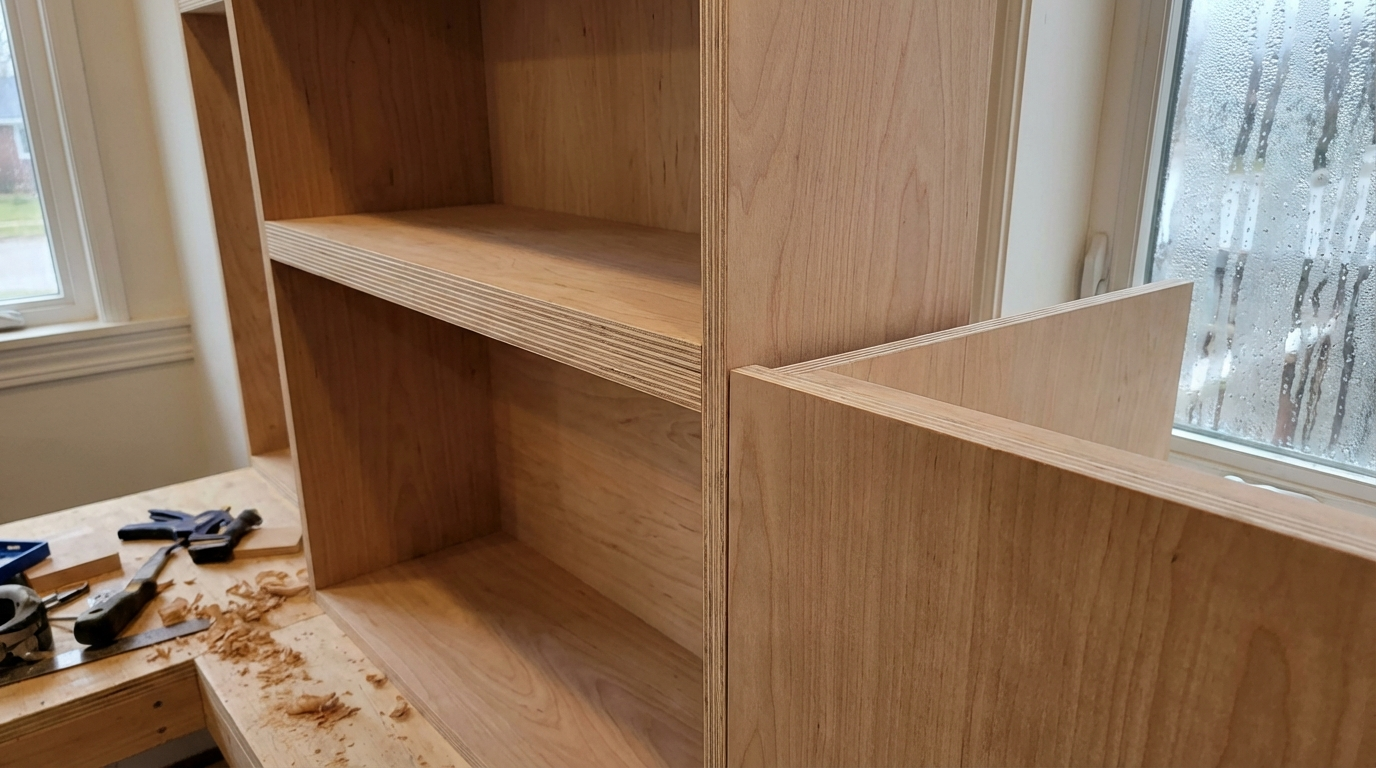
- Bedroom wardrobes and bed frames, shielded from daily steam.
- Living room TV units and shelves, away from kitchen vapors.
- Office partitions in conditioned spaces.
Contractors favor it for bulk interior fit-outs in apartments, as it meets basic CPWD guidelines for non-structural elements. Pair with laminate or veneer finishes to boost aesthetics without added moisture protection.
Limitations: When MR Plywood Falls Short
Direct water spells disaster—edges delaminate within hours, cores swell by 10-15% in humid tests. Avoid in:
- Kitchen sinks or counter underbellies (opt for BWR).
- Bathroom vanities exposed to shower mist (BWP needed).
- Balconies or verandas during monsoons.
In high-humidity zones like coastal Gujarat, even indoor MR may warp seasonally without AC stabilization.
Buyer Decision Framework for MR Plywood
Architects and interior designers assess MR via site-specific logic: map room humidity, exposure risks, and budget. For a 1BHK flat renovation, MR covers 70-80% of furniture needs at lowest upfront cost, but factor 20-30% shorter lifespan versus BWR in variable climates.
Quality Checks at Indian Dealers
Dealers in markets like Bhagirath Palace (Delhi) or Chennai's plywood hubs stock MR from mills in Moradabad or Perambalur. Verify:
- ISI 303 mark with MR grade stamp.
- Edge integrity—no gaps post-knocking.
- Uniform thickness (±0.5mm tolerance).
- Sample submersion test: minimal swelling after 2 hours.
Regional pricing fluctuates: 10-20% lower in mill belts (Yamunanagar) versus metros. Negotiate bundles for projects; avoid unbranded "commercial ply" lacking certification.
Frequently Asked Questions on MR Plywood
Is MR plywood suitable for wardrobes in humid areas?
Yes for air-conditioned rooms, but upgrade to BWR if humidity exceeds 70% regularly or steam from bathrooms intrudes.
Can MR plywood be used for kitchen cabinets?
Only for upper cabinets away from sinks; lower ones need BWR due to spill risks.
How does MR grade differ from "commercial plywood"?
In India, "commercial" often defaults to MR—both indicate basic UF glue, but always confirm grade marking.
What thickness of MR plywood for furniture?
12-18mm for carcasses; 6-9mm for shutters. Thicker resists sagging better under load.
Does painting improve MR plywood's moisture resistance?
Marginally, via sealed edges, but not a substitute for higher grades—paint fails at glue lines.
Related guides on PlyPrice
Want Plywood Suggestions?
Share a few details and a PlyPrice specialist will suggest suitable brands and connect you to responsive dealers.