What Is Marine Grade Plywood? IS:710 Standard, Uses and Limits
Marine plywood is the premium waterproof grade made to IS:710, with glue that survives boiling water and long wet exposure in boats, bathrooms and flood-prone sites. It outperforms BWR grade but costs more, so it pays off only where exposure is severe.
Last updated: . Grades and standards checked against current BIS standards.
Understanding Marine Plywood in Indian Construction Contexts
In India's diverse climates—from coastal humidity to monsoon downpours—plywood selection hinges on moisture exposure risks. Marine plywood stands out as a specialized engineered wood product designed for prolonged water contact, distinguishing it from everyday interior grades. Homeowners renovating bathrooms, contractors building in flood-prone areas, and architects specifying for boatyards all evaluate it against performance benchmarks rather than aesthetics alone.
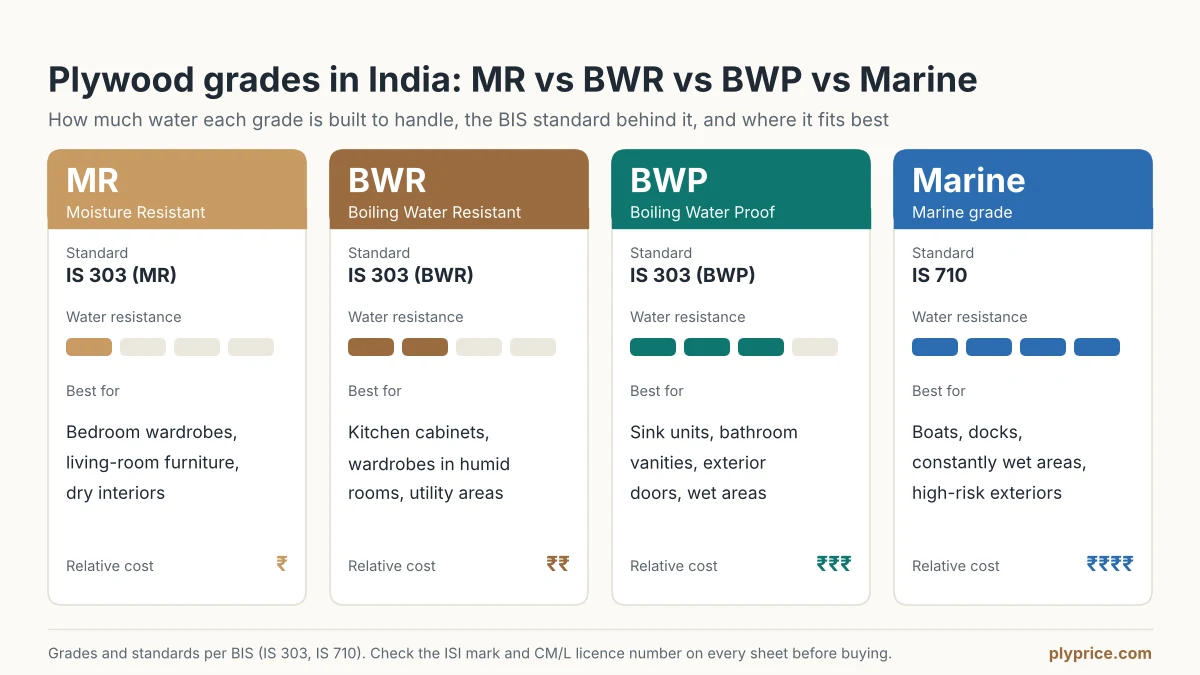
Core Definition: Marine Plywood as IS:710 Grade
Marine plywood refers to the premium waterproof plywood conforming to Indian Standard IS:710, which mandates boiling water proof (BWP) properties. This grade undergoes rigorous testing: panels must endure 72 hours of boiling without delamination, alongside checks for tensile strength, screw holding, and mycological resistance.
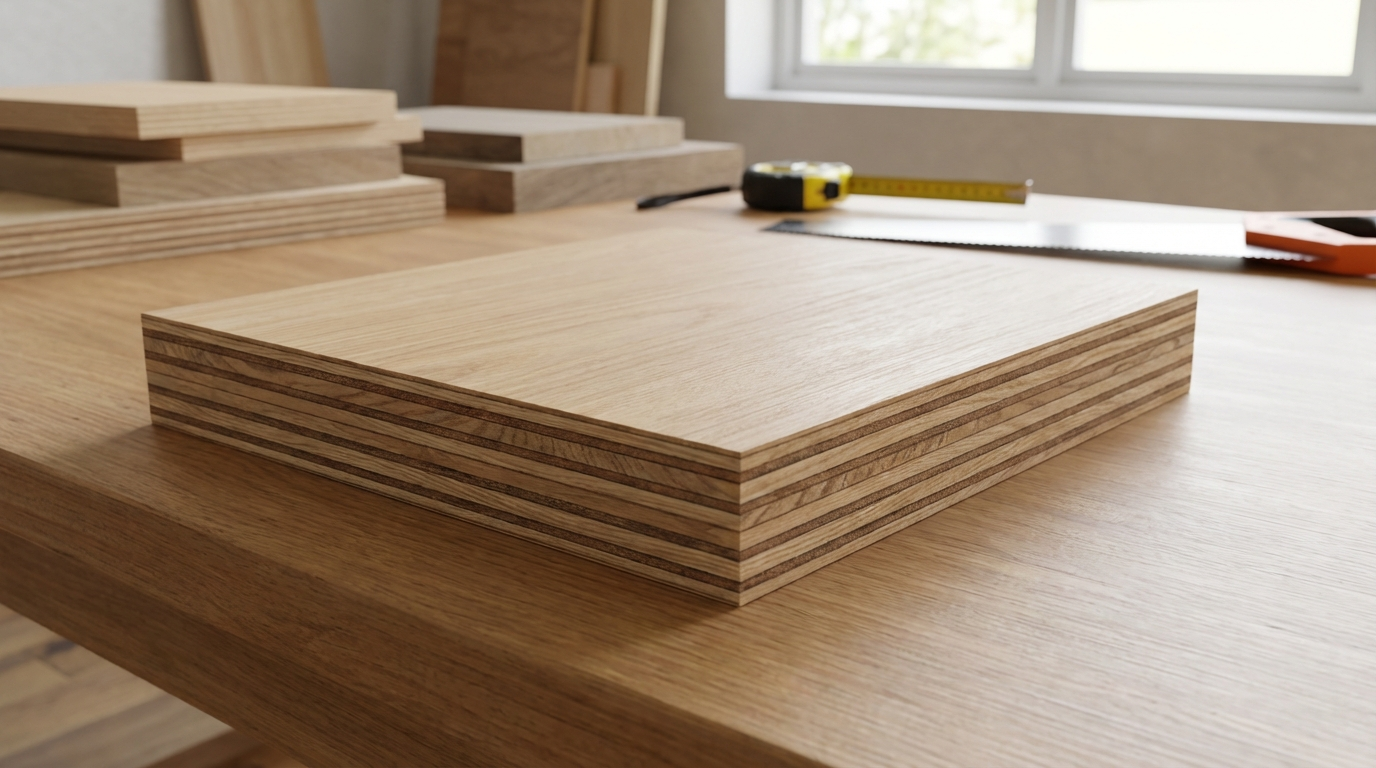
From first principles, its waterproofing stems from phenolic resins (BWP glue line), fully synthetic and impervious to hydrolysis—unlike urea-formaldehyde in MR grades that degrade in dampness. Face veneers, typically hardwood like gurjan or sal, receive dense crossbanding for structural integrity under submersion.
Dealers in Mumbai or Chennai markets often label it simply "marine ply," but verify IS:710 certification stamps to avoid misgraded stock passed off at BWR prices.
Key Material Composition Breakdown
- Glue Line: Phenol-formaldehyde (100% synthetic), zero moisture absorption.
- Veneers: 5-13 plies, minimum 1.4mm thick per face, sourced from tropical hardwoods for density above 600 kg/m³.
- Treatment: Optional preservative against termites and fungi, though core strength defines waterproofing.
Primary Applications: Boats and Extreme Wet Areas
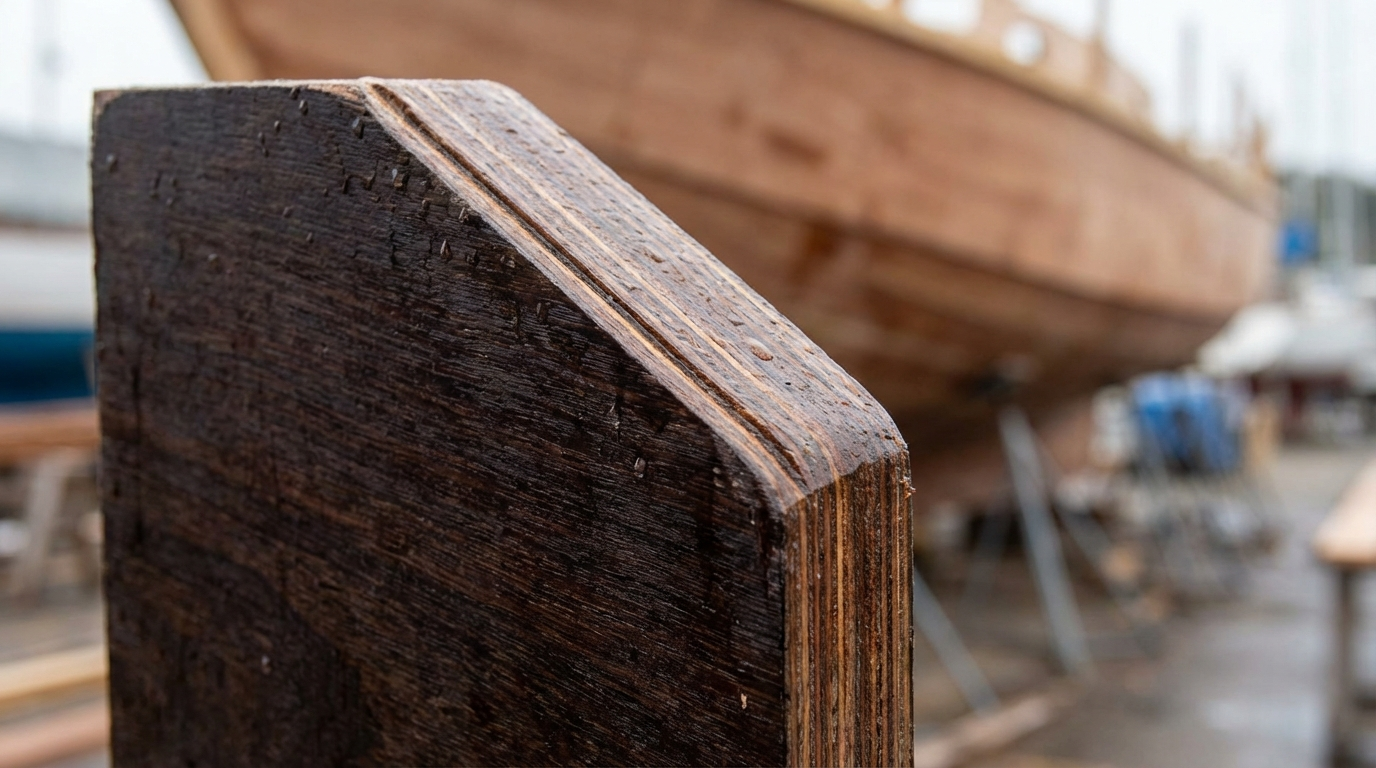
Its hallmark use is marine environments—hull construction for fishing trawlers in Kerala or passenger ferries in Goa—where constant saltwater exposure demands zero swelling or warping. Beyond boats, Indian builders deploy it in:
- High-Humidity Interiors: Bathrooms, kitchens, and laundry rooms in coastal apartments, resisting steam and splashes better than ceramic-backed boards.
- Flood-Resistant Structures: Ground floors in Bihar or Assam floodplains, or plinth-level paneling holding up during inundation.
- Exposed Outdoor Elements: Pergolas, false ceilings under eaves, or temporary site shuttering during extended rains.
Architects specify it for partition walls in resorts near the Arabian Sea, prioritizing longevity over cost when repairs mean scaffolding in monsoons.
Real-World Indian Scenarios
A contractor in Kochi fitting out a beach villa might choose 18mm marine ply for vanity units, knowing urea-grade alternatives would bubble within a season. Homeowners in Pune high-rises, facing erratic plumbing leaks, opt for it in modular wardrobes to sidestep insurance claims from water damage.
Why Superior to BWR Grade: A Direct Comparison
While BWR (boiling water resistant, IS:303) suits semi-wet areas like wardrobes, marine plywood (IS:710) excels in total immersion. BWR uses modified urea resins and passes three cycles of 8-hour boiling and 16-hour drying, but fails under sustained exposure.
| Parameter | Marine Plywood (IS:710) | BWR Plywood (IS:303) |
|---|---|---|
| Boiling Test Duration | 72 hours (no delamination) | 8-hour boil, three cycles |
| Glue Type | Phenolic (BWP) | Urea-Phenol Modified |
| Ideal Use Cases | Boats, bathrooms, floods | Kitchens, wardrobes, low moisture |
| Moisture Resistance | Submersion-proof | Splash-resistant |
| Typical Thickness Range | 6-25mm (focus on 12-19mm) | 3-19mm (versatile but thinner) |
| Cost Relative to MR Grade | 2-3x higher | 1.5-2x higher |
This table highlights why contractors avoid BWR for boat repairs—it warps post-immersion—opting for marine's unyielding bond.
IS:710 Standards: Practical Breakdown for Buyers
IS:710, enforced by the Bureau of Indian Standards, sets dimensional tolerances (±0.5mm thickness), formaldehyde emission limits (E1 grade), and bond strength minima (1.0 N/mm² dry, 0.75 N/mm² wet). Not all "waterproof" plywood qualifies; unbranded Kerala mills often skip full testing.
Inspect for:
- BIS hologram or CM/L number on edges.
- Consistent glue line color (dark brown phenolic).
- No voids detectable by tapping.
Regional variations: Tamil Nadu dealers stock denser gurjan-core marine ply, while North Indian markets favor sheesham faces for hardness.
Testing Protocols Explained
Cycles include 10-hour boils alternated with 8-hour dries, simulating monsoons. Tensile tests pull veneers apart at 50kg/cm² minimum, ensuring screw grips don't fail in humid cabinets.
Limitations and When to Avoid Marine Plywood
Despite superiority, it's overkill for dry bedrooms—costing significantly more due to imported resins and thicker plies. BWR suffices there, saving 30-50% without risk.
Drawbacks include:
- Weight: Denser (700+ kg/m³), challenging for DIY handling.
- Machining: Harder surfaces dull tools faster than softwood MR.
- Finish Needs: Rougher texture requires sanding before laminate application.
In arid Rajasthan projects, stick to MR; marine's expense yields no benefit.
Cost Drivers and Pricing Logic in India
Expect marine plywood to command a premium over BWR by 40-60%, varying by:
- Source: Imported gurjan faces inflate coastal prices vs. local poplar cores inland.
- Thickness: 19mm panels cost 20-30% more than 12mm equivalents.
- Dealer Chain: Direct mill yards in Perumbavoor (Kerala) undercut Mumbai retailers by 10-15%.
- Certification: BIS-marked adds 5-10% but ensures compliance.
Contractors bulk-buy during off-monsoon for deals; homeowners compare 3-4 local quotes factoring transport.
Buyer Decision Framework for Marine Plywood
Assess exposure first: constant wet (yes → marine), occasional splashes (BWR). Factor project scale—small vanity (viable), full flooring (explore alternatives like HDHMR).
- Map moisture zones in blueprints.
- Cross-check IS:710 vs. claimed grades.
- Balance lifecycle cost: marine lasts 15-20 years wet vs. BWR's 5-8.
- Consult regional masons on local precedents.
Alternatives in India's Engineered Wood Market
For budget constraints, consider HDHMR (high-density moisture resistant) boards—cheaper, lighter, but not submersible. Film-faced shuttering ply mimics marine traits temporarily. Architects blending with laminates favor marine only where delamination spells failure.
This framework equips Indian buyers—from villa owners to shipwrights—to select marine plywood judiciously, aligning durability with real-world demands.
Related guides on PlyPrice
Want Plywood Suggestions?
Share a few details and a PlyPrice specialist will suggest suitable brands and connect you to responsive dealers.