What Is BWR Plywood? Boiling Water Resistant Grade, Uses and Limits
BWR stands for Boiling Water Resistant: plywood bonded with phenolic resin that survives short spells in boiling water without delaminating. That makes it a sensible grade for kitchen cabinets and humid rooms, though it is not built for constant wetting like BWP.
Last updated: . Grades and standards checked against current BIS standards.
What Is BWR Plywood? Full Form and Meaning
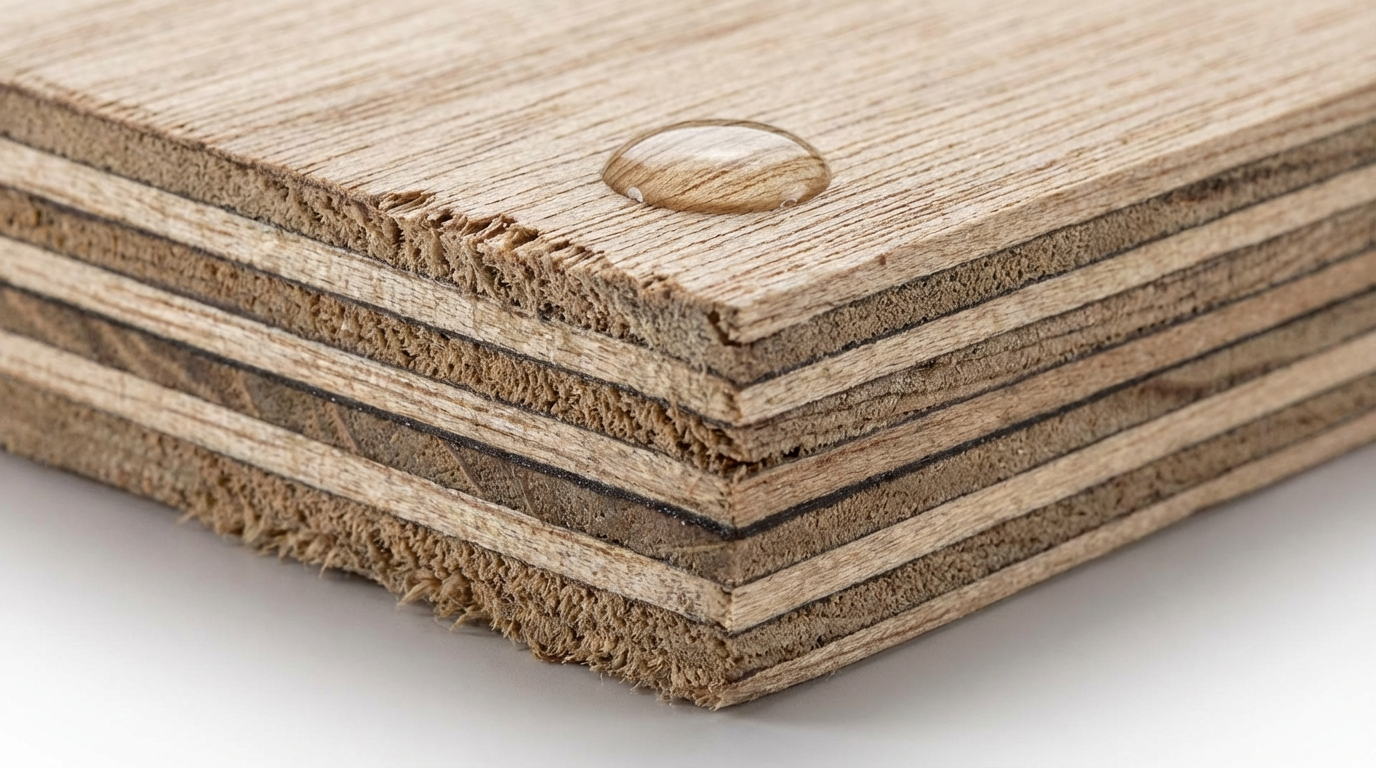
In the hierarchy of plywood grades used across Indian construction and interiors, BWR plywood occupies a middle ground focused on practical moisture management. BWR stands for Boiling Water Resistant, a designation that highlights its ability to endure submersion in boiling water for short durations without delaminating. This property stems from the adhesives and manufacturing processes tailored for environments where intermittent high humidity or water exposure occurs, such as in monsoon-prone regions or steamy kitchen setups common in urban Indian households.
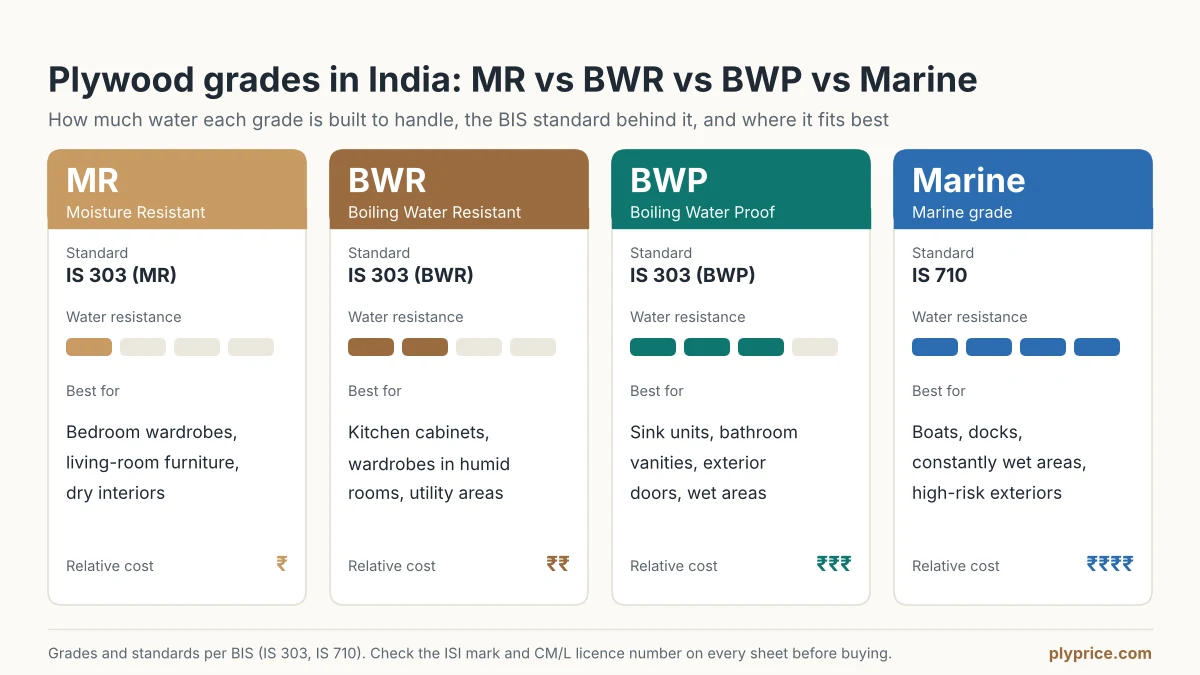
Unlike casual references to "waterproof" plywood—which often mislead buyers—BWR is precisely engineered for resistance rather than total impermeability. Indian Standards Institution (ISI) guidelines under IS 303 outline the testing protocols: BWR sheets must withstand three cycles of 8-hour boiling and 16-hour drying at 65°C, then pass a ply-adhesion test. This makes it a reliable choice for contractors balancing cost and performance in mid-range projects.
How Phenolic Resin Bonding Creates BWR's Core Strength
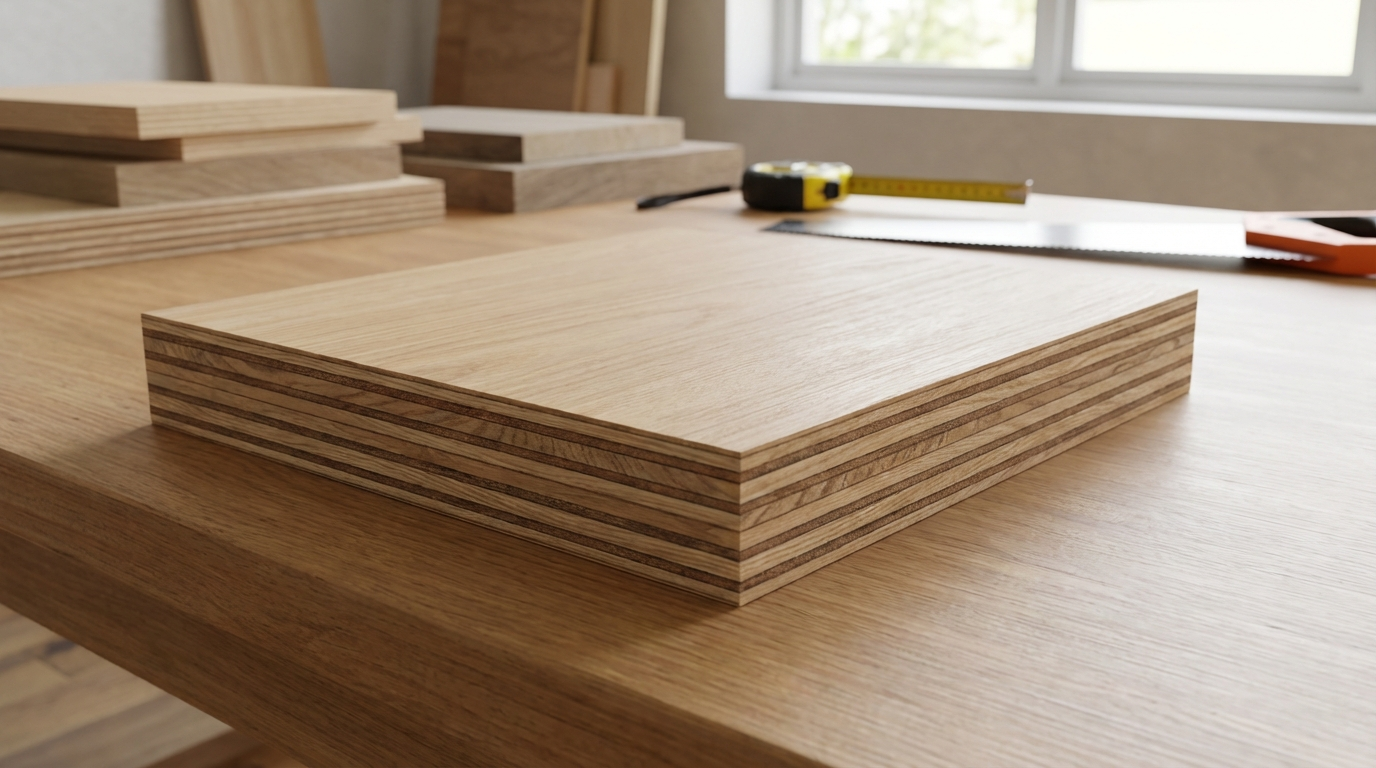
The hallmark of BWR plywood lies in its bonding agent: phenolic resin, a synthetic polymer derived from phenol and formaldehyde. During manufacture, thin veneers of hardwood or softwood are glued under high pressure and temperature in a hot press, forming a cross-linked structure that repels water penetration.
Phenolic resins excel in alkaline environments and high temperatures, which aligns with India's variable climates—from coastal humidity in Mumbai to dry heat in Delhi interiors. The resin's low water solubility ensures glue lines remain intact even when surface moisture swells the wood fibers temporarily. First-principles reasoning: water damage in plywood primarily occurs via adhesive hydrolysis; phenolic bonds resist this by forming tight, hydrophobic networks, outperforming urea-formaldehyde (UF) glues used elsewhere.
- Resin application process: Veneers coated with phenolic glue, assembled into a panel, and pressed at 120-140°C for uniform curing.
- Resulting benefits: Enhanced shear strength and reduced warping under cyclic wetting-drying, critical for furniture exposed to kitchen vapors.
ISI Compliance and Testing for Genuine BWR
Authentic BWR carries the BIS (Bureau of Indian Standards) mark, verifying compliance with IS 303 Grade P2. Labs simulate real-world stress: boiling panels for hours, then checking for layer separation via knife tests. Buyers in dealer yards should verify certification labels, as unbranded sheets often mimic BWR traits with inferior resins, leading to early failures in humid wardrobes or bathroom vanities.
BWR Plywood vs MR Plywood: A Moisture Resistance Breakdown
MR (Moisture Resistant) plywood, bonded with UF resin, suits dry interiors like bedrooms. BWR surpasses it in wet zones due to phenolic's superior hydrolysis resistance. Here's a side-by-side analysis rooted in performance data from standard tests:
| Property | MR Plywood (UF Bond) | BWR Plywood (Phenolic Bond) |
|---|---|---|
| Boiling Water Test Duration | 3-hour soak at 60°C, three cycles | 8-hour boil, three cycles (intact) |
| Moisture Absorption (24 hrs immersion) | 20-30% | 10-15% |
| Suitable Humidity Levels | Up to 60% RH | Up to 85% RH |
| Typical Failure Mode | Glue line swelling | Surface checking only |
| Cost Relative to MR | Baseline | 20-40% higher |
In practice, for a homeowner in Chennai's humid climate, MR might suffice for ceiling panels but fail in kitchen cabinets after a year of steam exposure. BWR delays such issues, offering a lifecycle extension without jumping to pricier BWP (Boiling Water Proof) grades.
Why BWR Plywood Excels in Kitchen Applications
Indian kitchens—characterized by frequent cooking with oil, spices, and steam—demand materials that handle vapor without buckling. BWR's phenolic bond prevents delamination from sink splashes or monsoon leaks seeping through walls. Architects specify it for modular cabinets, counter backings, and island units where MR would warp under repeated exposure.
Consider decision logic: A contractor pricing a 10x10 ft kitchen might allocate 20-30% more for BWR sheets (say, 18mm thickness) versus MR, justified by 2-3 years extra durability amid daily use. Pair it with edge sealing and laminates for optimal results; unsealed edges remain a vulnerability even in BWR.
Extending BWR Use: Bathrooms, Balconies, and Beyond
Beyond kitchens, BWR fits semi-wet areas like attached bathrooms (vanity shutters) or covered balconies in high-rises. Avoid direct outdoor exposure or submerged installations—reserve those for marine-grade BWP. In furniture manufacturing, it's favored for wardrobes in coastal apartments, where humidity spikes to 90% during monsoons.
Limitations and When to Avoid BWR Plywood
BWR isn't invincible. Prolonged boiling (beyond test limits) or chemical exposure (e.g., harsh cleaners) can degrade phenolic bonds over time. Formaldehyde emissions, though lower than MR, require ventilation in enclosed spaces. For load-bearing shuttering in heavy rains, opt for BWP; for budget dry partitions, MR suffices.
Regional variations matter: In Rajasthan's arid zones, BWR's premium may not yield returns versus MR. Dealers in Kerala or Goa push it rightly due to perennial dampness, but always cross-check thickness (6-25mm common) against span requirements.
Buyer Decision Framework for BWR Plywood
Homeowners, contractors, and designers evaluate BWR through these lenses:
- Environmental fit: High humidity (>70% RH) or water proximity? Yes to BWR.
- Budget trade-off: 20-50% uplift over MR, but halves replacement frequency.
- Verification steps: BIS mark, knife test on sample edge, dealer warranty (1-5 years typical).
- Alternatives: HDHMR for non-plywood humidity resistance; laminates over MR for mild cases.
For architects drafting specs, prioritize 710-915gsm resin content in BWR for consistent quality. Contractors sourcing in bulk from Gujarat or Kerala mills benefit from negotiating on core wood (poplar vs eucalyptus) for density variations.
Grading and Quality Markers in Indian BWR Market
BWR falls under IS 303, with subtypes based on face quality: S (select), M (meranti-like), C (commercial). Thickness tolerance (±0.5mm) and glue shear strength (>100 kg/cm²) define premium vs economy. Inferior "BWR-grade" fakes flood wholesale markets—spot them via uneven glue lines or missing certifications.
In dealer ecosystems, northern mills emphasize poplar cores for lightness; southern ones use rubberwood for rot resistance. This influences weight (lighter BWR eases handling in multi-story installs) and screw-holding power.
Maintenance and Longevity Tips for BWR Installations
To maximize BWR's lifespan (8-15 years in kitchens):
- Seal all edges with epoxy putty pre-lamination.
- Avoid standing water; wipe spills promptly.
- Ventilate to curb formaldehyde off-gassing initially.
- Inspect annually for veneer lifts in high-use zones.
This proactive approach aligns with Indian homeowner logic: invest upfront in BWR to sidestep costly retrofits during festivals or monsoons.
Related guides on PlyPrice
Want Plywood Suggestions?
Share a few details and a PlyPrice specialist will suggest suitable brands and connect you to responsive dealers.