Is HDHMR Waterproof? Water Resistance Limits and HDHMR vs BWP Ply
No, HDHMR is not fully waterproof. High Density High Moisture Resistant board resists spills, steam and damp far better than MDF or particleboard, but it falls short of BWP plywood, which is built to survive continuous submersion.
Last updated: . Grades and standards checked against current BIS standards.
Is HDHMR Truly Waterproof? The Direct Answer
HDHMR—High Density High Moisture Resistant boards—are not fully waterproof, but they offer strong water resistance suitable for many high-humidity applications in Indian homes and commercial spaces. Engineered from high-density fiberboard treated with specialized moisture-repellent resins, HDHMR withstands prolonged exposure to spills, steam, and damp conditions better than standard MDF or particleboard. However, it falls short of true waterproofing standards like those of BWP (Boiling Water Proof) plywood, which endures continuous submersion.
In practical terms for Indian buyers: During monsoons or in steamy kitchens, HDHMR maintains structural integrity without delaminating or swelling excessively. Homeowners in coastal cities like Mumbai or Chennai often select it for modular cabinets, while architects specify it for semi-wet areas. Expect it to handle everyday moisture but not outdoor exposure or flooding.
What Makes HDHMR Moisture Resistant? Breaking Down the Material
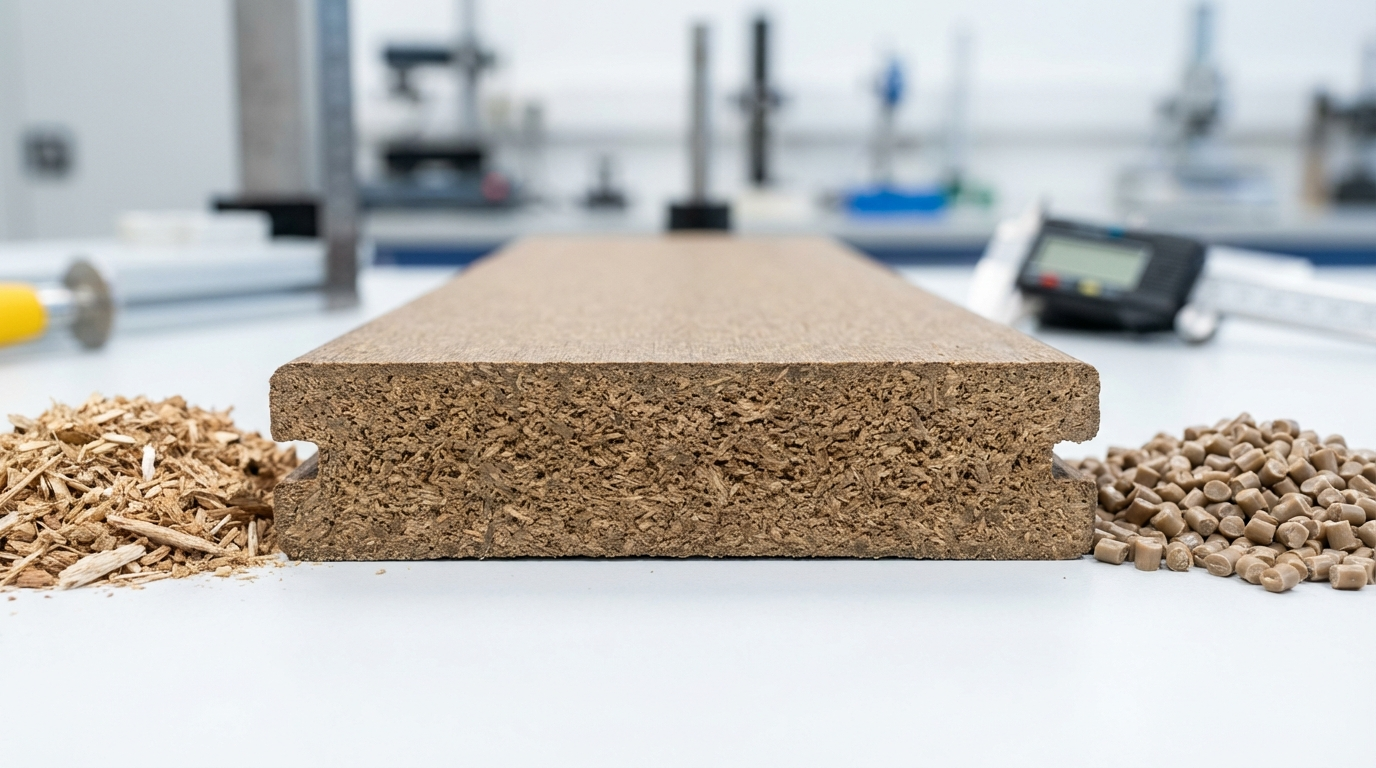
HDHMR starts with a dense HDF (High Density Fiberboard) core, typically 800-900 kg/m³, far surpassing regular MDF's 650-750 kg/m³ density. This compactness reduces void spaces where water can penetrate. Manufacturers infuse the fibers with premium resins like isocyanates or melamine-urea-formaldehyde (MUF), which create a hydrophobic barrier.
Key engineering factors:
- Density gradient control: Uniform compression minimizes weak spots prone to warping.
- Resin content: 12-15% by weight, higher than MR-grade MDF (8-10%), enhancing cross-linking for water repellency.
- Surface treatments: Optional laminates or veneers add abrasion and moisture layers, common in Indian furniture factories.
Unlike natural wood plywood, HDHMR's uniformity avoids grain-line weaknesses, making it reliable in India's variable climates—from Rajasthan's dry heat to Kerala's humidity.
Testing HDHMR's Limits: Standards and Real-World Performance
Indian industry norms, influenced by BIS (Bureau of Indian Standards), evaluate moisture resistance through accelerated tests rather than everyday use. HDHMR typically passes:
- Boiling water test: Minimal thickness swelling (<10%), no delamination—superior to BWR plywood in some metrics.
- Cyclic moisture exposure: Alternating wet-dry cycles simulating monsoons, with screw-holding strength retained at 80-90% post-test.
- Humidity chamber: 90% RH at 40°C for weeks, showing edge stability for kitchen edging.
Contractors report HDHMR holding up in modular kitchens for 7-10 years under normal use, but edges need sealing with PVC or edge-banding to prevent capillary absorption. In lab vs. field: Labs confirm resistance; Indian homes test it with cooking vapors and spills.
| Moisture Test | HDHMR Performance | Standard MDF | BWP Plywood |
|---|---|---|---|
| 24-Hour Boil (Swelling %) | <8% | 20-30% | <5% |
| Screw Holding Post-Wet (N) | 800-1000 | 400-600 | 1200+ |
| Monsoon Cycle Delamination | None | Moderate | None |
Note: Values are indicative ranges from industry benchmarks; actuals vary by manufacturer quality.
HDHMR vs BWP Plywood: When to Choose Each
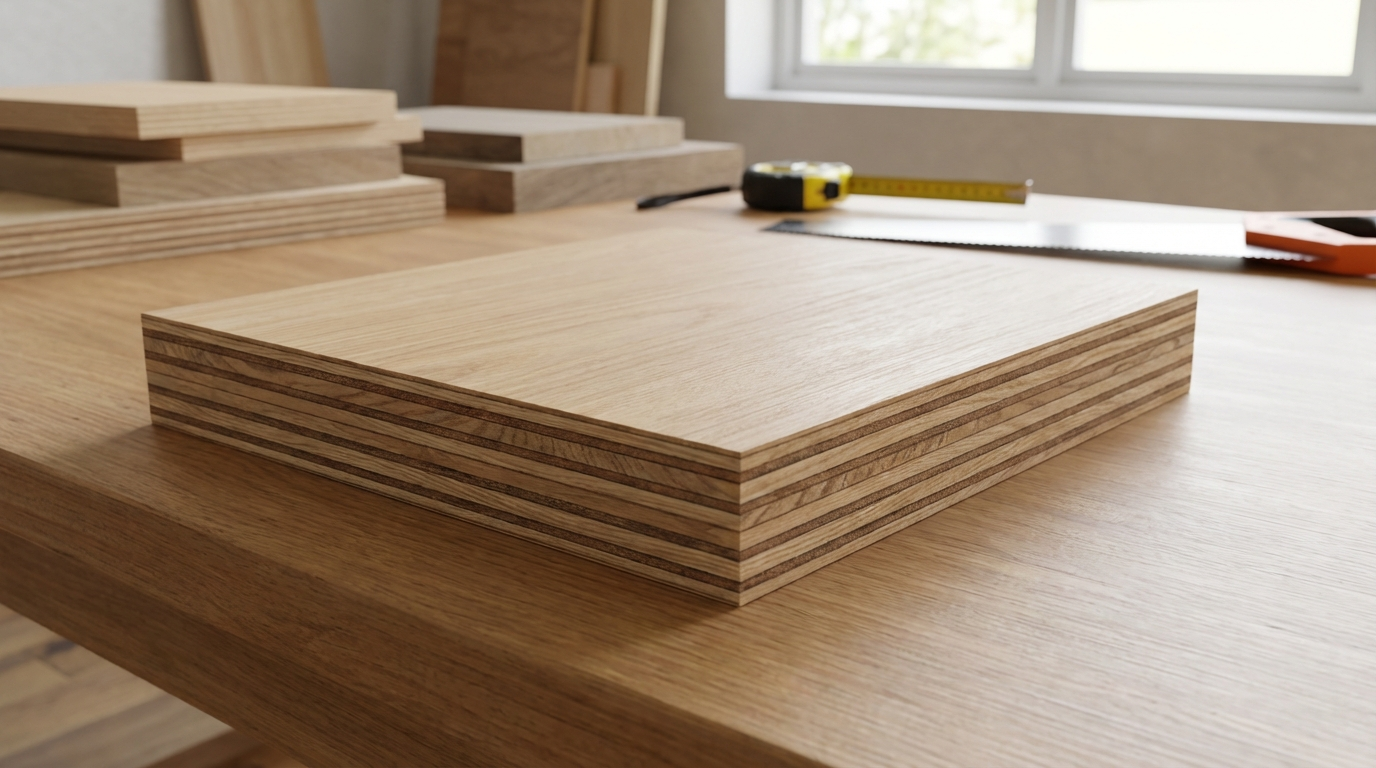
BWP plywood, sold as IS 303 BWP or IS 710 marine plywood, uses tropical hardwood plies bonded with phenolic resins, passing a 72-hour boil test. HDHMR, conversely, is a fiber-based panel optimized for density and machinability.
Decision logic for Indian stakeholders:
- Homeowners: HDHMR for cost-effective kitchens (20-30% cheaper than BWP), easier to cut for L-shaped counters.
- Contractors: BWP for bathrooms or boat interiors where submersion risks exist; HDHMR for wardrobes in humid bedrooms.
- Architects: HDHMR pairs with laminates for modern modular designs; BWP for exposed structural elements.
| Factor | HDHMR | BWP Plywood |
|---|---|---|
| Water Resistance | High (spills, steam) | Boiling Proof (submersion) |
| Machinability | Excellent (clean cuts) | Good (splinter risk) |
| Weight | Lighter | Heavier |
| Cost Relative to MR MDF | 1.5-2x | 2.5-3x |
| Best For | Kitchens, vanities | Wet areas, outdoors |
HDHMR shines in non-structural furniture; BWP in load-bearing wet zones. Dealers note regional pricing swings: 10-20% higher in humid South India due to demand.
Ideal Uses for HDHMR in India's Humid Conditions
In modular kitchens—a booming segment in Tier-1 cities—HDHMR forms carcasses under laminates, resisting oil splatters and humidity from gas stoves. Interior designers favor 18mm thickness for cabinets, balancing strength and weight.
Other scenarios:
- Commercial: Hospital counters, lab benches where sanitizing involves water.
- Residential: Laundry zones, utility cabinets in apartments.
- Regional fit: Eastern India (high rainfall) sees uptake over plywood for faster installation.
Furniture makers apply 1-2mm PVC edging, boosting longevity. Avoid direct floor contact or un-laminated exposure.
Limitations of HDHMR: What Buyers Must Know
Despite strengths, HDHMR isn't invincible. Unsealed edges absorb moisture over time, leading to swelling in prolonged dampness. It lacks plywood's natural screw-holding in dynamic loads, and fire ratings trail phenolic BWP.
Common pitfalls in India:
- Monsoon storage: Stack horizontally, covered—warping occurs if stood vertically.
- Installation errors: Gaps allow steam ingress; use silicone seals.
- Quality variance: Non-branded HDHMR may use inferior resins, failing tests—insist on density certification.
For contractors: Factor 10-15% waste from machining; homeowners: Annual edge checks prevent callbacks.
Practical Buying Guide for HDHMR in India
Navigate dealer networks wisely:
- Verify specs: Demand density >800 kg/m³, moisture content <10%. Check for ISI-like markings.
- Source regionally: North (Delhi-NCR) favors local mills; South (Bengaluru) imports premium variants.
- Thickness selection: 16-18mm for cabinets; 12mm for shelves.
- Cost drivers: Resin quality, brand markup (20-40%), transport—expect premiums in remote areas.
- Alternatives if unsuitable: BWR for moderate wet, acrylic sheets for ultra-modern looks.
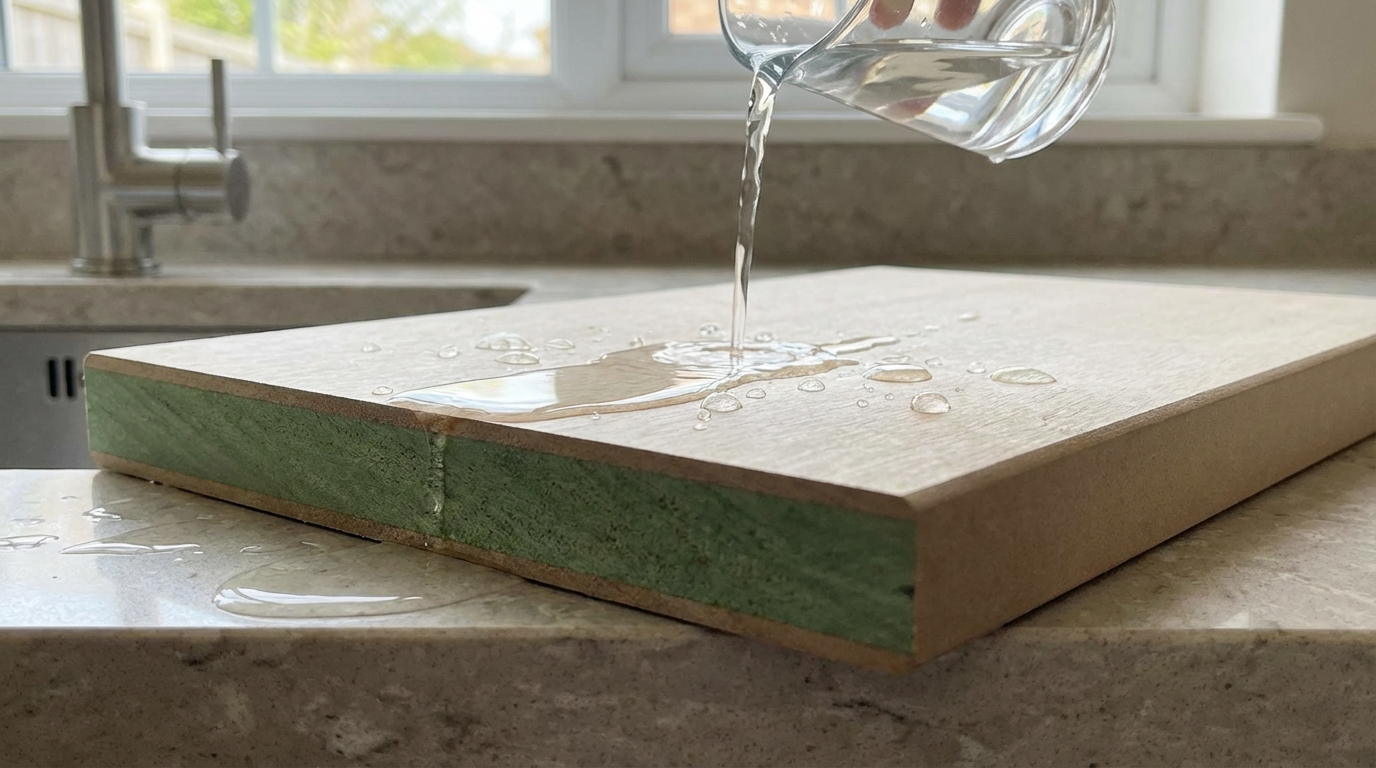
Test samples: Spill water, wipe after 24 hours—no visible change signals quality.
Frequently Asked Questions About HDHMR Waterproofing
Can HDHMR be used in bathrooms?
Yes, for vanities or wall panels with proper sealing, but not shower enclosures—opt for BWP or tiles there.
HDHMR vs Waterproof MDF: Any difference?
"Waterproof MDF" is marketing jargon; HDHMR is a standardized high-density upgrade with proven resistance.
How long does HDHMR last in kitchens?
8-12 years with maintenance, depending on ventilation and sealing in Indian humidity.
Is HDHMR termite resistant?
Moderately, due to resins; enhance with treatments for infested areas like coastal belts.
Can I paint or laminate HDHMR?
Absolutely—its smooth surface accepts paints, laminates, or veneers seamlessly for custom finishes.
Related guides on PlyPrice
Want Plywood Suggestions?
Share a few details and a PlyPrice specialist will suggest suitable brands and connect you to responsive dealers.