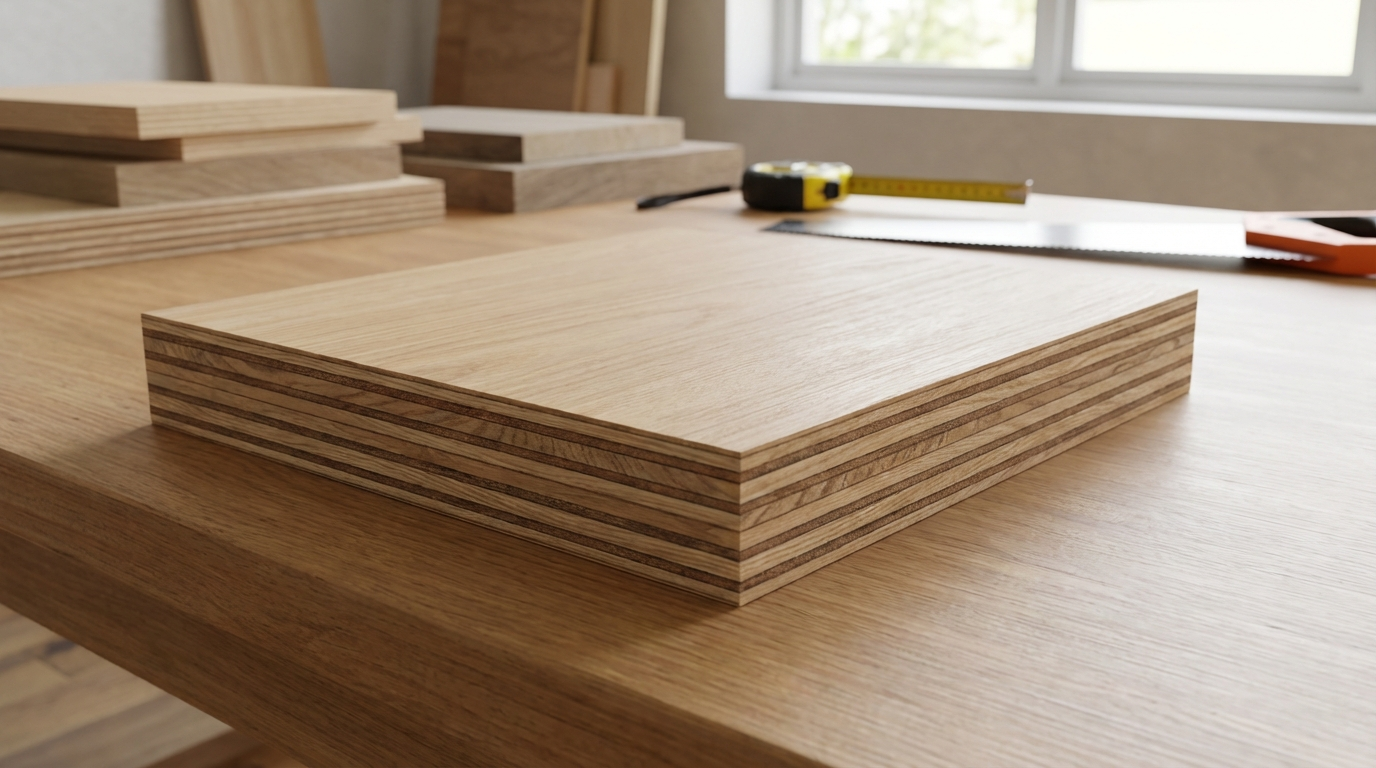
Plywood Lifespan: How Long Does Plywood Last in Indian Homes?
How long plywood lasts depends mainly on its grade and how much moisture reaches it: BWP holds up far longer than commercial MR ply in damp areas because its glue resists water. Termites and repeated monsoon humidity are the other big threats in Indian homes.
Last updated: . Grades and standards checked against current BIS standards.
Core Factors Shaping Plywood Lifespan
Plywood durability hinges on its inherent build quality and the environmental stresses it faces post-installation. In India, where monsoons, coastal humidity, and fluctuating indoor conditions dominate, these elements dictate real-world performance. Moisture remains the primary accelerator of failure, penetrating glue lines and causing delamination, while mechanical wear from daily use compounds issues over time.
From a materials standpoint, lifespan emerges from the adhesive's chemical resistance, face veneer's density, and core stability. Lower-grade options prioritize cost over resilience, leading to quicker breakdown under stress, whereas premium grades engineer multi-layered defenses against water ingress and biological decay.
Moisture Exposure: The Deciding Variable
India's climate varies sharply—Kerala kitchens battle 90%+ humidity year-round, while Delhi homes endure dry winters followed by rainy seasons. Plywood exposed to direct water contact, like in bathrooms or exterior cladding, degrades exponentially faster than sheltered interior panels.
- Low exposure (living rooms, bedrooms): Minimal impact, allowing full grade potential.
- Moderate exposure (kitchens, above sinks): Glue hydrolysis begins within 5-7 years if unsealed.
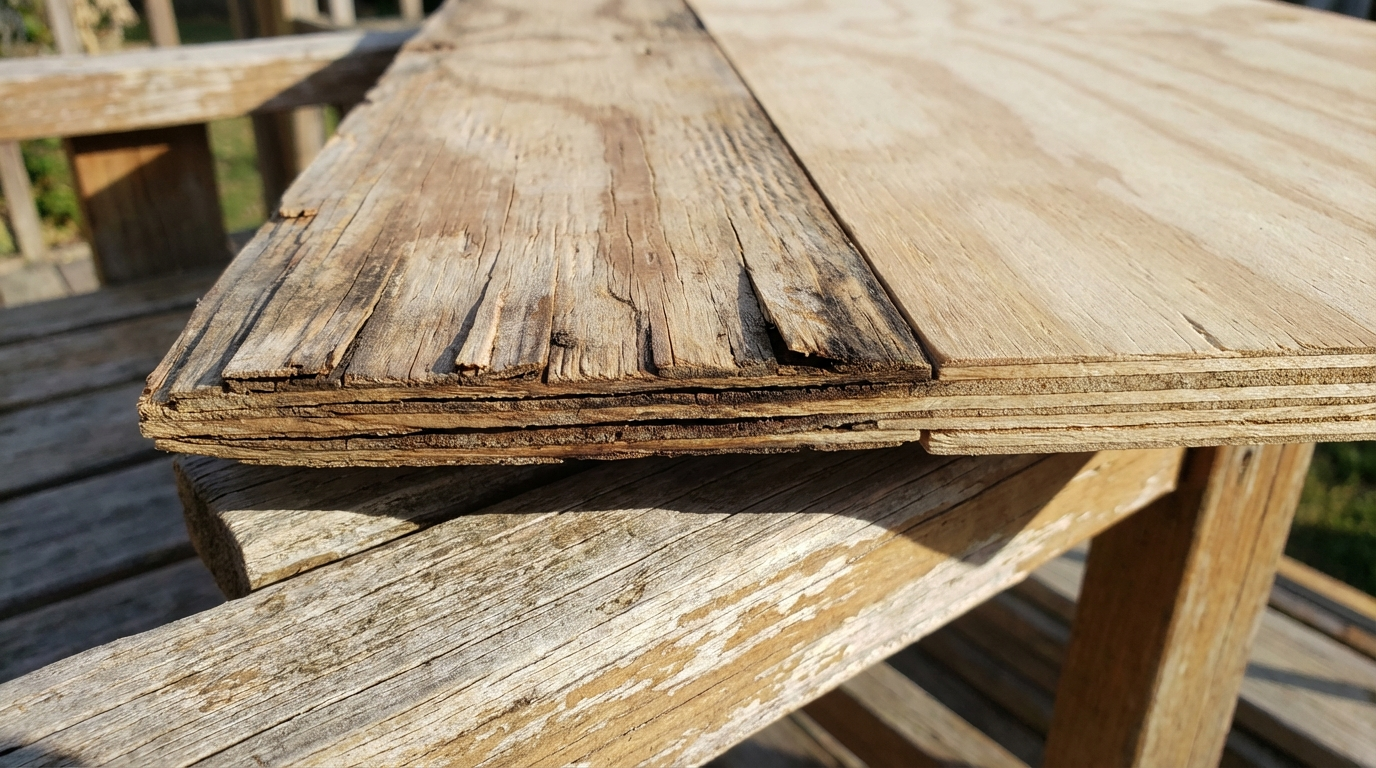
- High exposure (bathrooms, outdoors): Delamination in 2-5 years without marine-grade specs.
Practical test: Press a wet cloth against the edge for 24 hours; swelling over 8% signals vulnerability.
Lifespan Expectations by Plywood Grade
Indian standards classify plywood by boiling water resistance (MR, BWR, BWP), directly correlating to service life. These aren't arbitrary labels—MR uses urea-formaldehyde glues prone to water breakdown, BWR adds phenolic enhancements for semi-wet areas, and BWP employs fully waterproof phenolic-formaldehyde bonds for extremes.
| Grade | Typical Use Cases | Expected Lifespan (Low Moisture) | Expected Lifespan (High Moisture) | Key Limitations |
|---|---|---|---|---|
| MR (Moisture Resistant) | Interior partitions, furniture cores | 10-15 years | 3-7 years | Glue weakens above 20% humidity; not for wet zones |
| BWR (Boiling Water Resistant) | Kitchens, wardrobes in humid areas | 15-20 years | 8-12 years | Handles short boils but prolonged submersion fails |
| BWP (Boiling Water Proof) | Bathrooms, marine applications, exteriors | 25+ years | 15-25 years | Highest cost; overkill for dry interiors |
These ranges assume ISI-marked products (IS 303 for MR, BWR and BWP; IS 710 for marine) installed by competent carpenters. Contractor feedback from Mumbai and Chennai sites consistently shows BWP outperforming in longevity tests, often outlasting the building frame itself.
Why Commercial MR Falls Short Long-Term
At the budget end, commercial MR plywood—common in bulk dealer purchases for rentals or temporary partitions—relies on cost-optimized glues and thinner veneers. In urban Indian apartments, where steam from cooking migrates unchecked, edge swelling appears by year 8, progressing to core rot. Homeowners report full replacement needs every 10-12 years, aligning with resale cycles rather than structural failure.
BWP's Proven Endurance in Harsh Conditions
High-quality BWP, vetted via BIS certification, incorporates crossband veneers and tropical hardwoods like gurjan, resisting warp even after repeated boiling cycles. Architects in coastal Goa specify it for elevations exposed to salt spray, where it maintains integrity beyond 25 years. The caveat: Inferior "BWP-grade" fakes from unverified mills delaminate prematurely, underscoring the need for lab-tested samples.
Real-World Degradation Patterns in Indian Homes
Observing installed plywood reveals predictable failure modes:
- Years 1-3: Surface scratches, minor edge lifting in humid zones.
- Years 5-10: Glue line separation, visible bubbling under veneer (MR dominant).
- Years 15+: Core compression, termite trails if untreated; BWP shows only cosmetic wear.
Contractor surveys from Tier-2 cities like Jaipur indicate 40-50% of MR failures tie to poor sealing at joints, a fixable oversight amplifying misuse.
Extending Plywood Service Life: Practical Strategies
Buyers—homeowners eyeing wardrobes, contractors on tight schedules, designers specifying modulars—can push boundaries through informed choices.
- Site prep: Ensure ventilation; use exhaust fans in kitchens to cap humidity at 60%.
- Edge treatment: Apply two coats of polyurethane sealant pre-install; boosts MR life by 30-50%.
- Hybrid specs: MR core with BWR faces for cost balance in non-critical areas.
- Maintenance checks: Annual probe edges with a screwdriver; tap for hollow sounds signaling delam.
- Load management: Avoid overloading shelves beyond 50kg/sq.m to prevent sagging.
For architects, specifying 12mm+ thickness with void-free cores adds 20-30% durability margin in seismic zones like Gujarat.
Termites and Biological Threats
Beyond moisture, subterranean termites prevalent in Tamil Nadu and UP attack untreated cores post-5 years. Opt for HMR or C-grade treated variants, extending life by resisting infestation without altering moisture specs.
Buyer Decision Framework: Grade vs. Longevity Tradeoffs
Evaluate based on exposure risk:
| Scenario | Recommended Grade | Projected ROI (Years per Cost Unit) | Alternatives if Budget Constrained |
|---|---|---|---|
| Dry interiors (bedrooms) | MR | 12-15 | None needed |
| Humid kitchens | BWR | 15-18 | Sealed MR |
| Wet areas (bathrooms) | BWP | 20-30 | Tile over MR (short-term) |
Dealers often push MR volume; cross-verify with core drill tests for voids, a red flag halving quoted lifespans.
Common Misconceptions on Plywood Durability
Buyers frequently overestimate thickness's role—18mm MR doesn't outlast 9mm BWP in wet conditions, or ignore that "waterproof" claims without IS 303 BWP or IS 710 marine backing mislead. Regional variations matter too: Northern mills excel in dry-durable MR, southern in humidity-tuned BWP.
Assessing Quality for Maximum Lifespan
Pre-purchase:
- Check BIS mark and batch numbers for traceability.
- Inspect for uniform glue spread; unevenness predicts early peel.
- Boil test scraps: BWP passes a 72-hour boil test intact.
In dealer ecosystems from Hyderabad to Kolkata, insist on warranties tied to grade performance, shifting risk from buyer to supplier.
Related guides on PlyPrice
Want Plywood Suggestions?
Share a few details and a PlyPrice specialist will suggest suitable brands and connect you to responsive dealers.