MDF vs HDHMR: Difference in Density, Strength and Water Resistance
HDHMR is denser, stronger and more moisture resistant than MDF, which typically has a density of 600-800 kg/m³ and swells faster in humid rooms. MDF machines and paints smoothly for dry furniture, while HDHMR is the safer pick for damp areas.
Understanding MDF: The Basics of Medium-Density Fiberboard
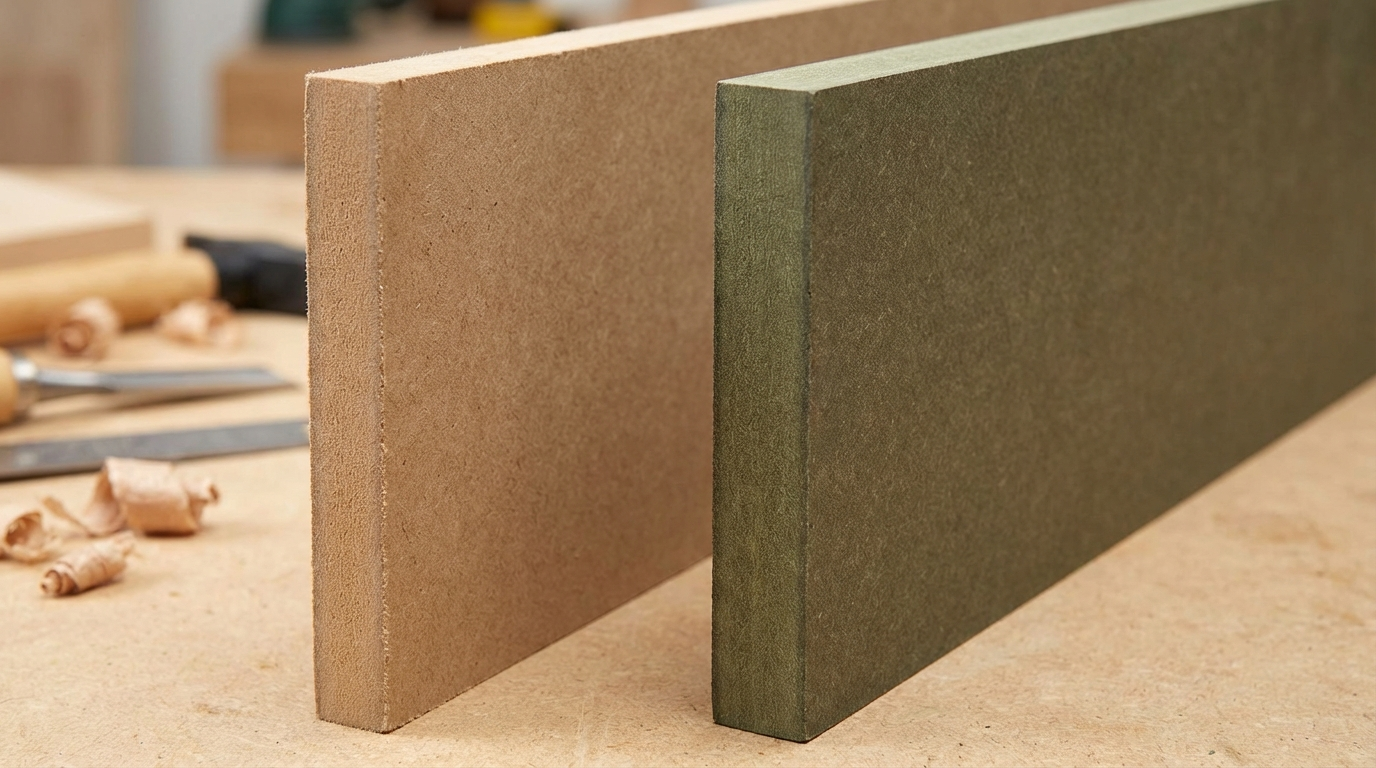
Medium-density fiberboard (MDF) starts with wood fibers derived from hardwoods or softwoods, broken down into a fine pulp through mechanical defibration. These fibers mix with synthetic resins like urea-formaldehyde, then get compressed under heat and pressure into uniform sheets. The result is a smooth, consistent panel with a density typically ranging from 600 to 800 kg/m³.
In India's variable climate—think humid coastal regions like Mumbai or Chennai—MDF's uniformity makes it appealing for flat-pack furniture and cabinetry. It machines well, accepts paints and laminates evenly, and lacks knots or grain inconsistencies found in solid wood. However, its resin content and lower density limit load-bearing capacity, often requiring edge banding to prevent swelling at exposed ends.
Decoding HDHMR: High-Density, High-Moisture-Resistant Panels
HDHMR builds on fiberboard principles but amps up density to 850–950 kg/m³ or higher through finer fiber processing and higher resin ratios, often incorporating moisture-repelling additives like wax emulsions or phenolic compounds. This creates a panel engineered for environments where humidity exceeds 70% regularly, common in Indian interiors during monsoons.
Manufacturers target HDHMR for demanding uses, pressing it thicker or with specialized binders to boost mechanical properties. In practice, this means better screw retention and reduced sagging under weight, addressing pain points in modular kitchens or wardrobes stocked with heavy crockery.
Core Differences: Density, Strength, and Water Resistance
HDHMR outperforms standard MDF across structural metrics, rooted in its composition. Density drives much of this: higher mass per volume translates to tighter fiber packing, enhancing inter-fiber bonds.
| Property | MDF | HDHMR | Implication for Indian Users |
|---|---|---|---|
| Density (kg/m³) | 600–800 | 850–950+ | HDHMR handles heavier loads without deflection, ideal for multi-tier racks in urban apartments. |
| Screw Holding Strength | Moderate; pulls out under repeated stress | High; retains fasteners 20–30% better | Crucial for hardware installation in humid Kerala homes where fittings loosen over time. |
| Water Absorption (24 hrs) | 20–40% thickness swell | 8–15% thickness swell | HDHMR suits semi-exposed areas like bathroom vanities; MDF needs sealing. |
| Bending Strength (MPa) | 25–35 | 35–50 | HDHMR resists warping in 40°C+ summers with AC fluctuations. |
| Formaldehyde Emission | MR grade: higher | Compliant with E1/E0 norms | Both meet ISI standards, but verify for VOC-sensitive households. |
These metrics stem from lab tests under BIS or equivalent norms, but real-world performance hinges on thickness (18mm preferred for furniture) and lamination quality.
Strength Showdown: Why HDHMR Feels More Robust
Strength isn't just numbers—it's about everyday resilience. MDF flexes under point loads, like stacking books on shelves, leading to permanent sag over 2–3 years in average Indian homes. HDHMR's denser matrix distributes stress evenly, mimicking plywood's rigidity without directional weaknesses.
For contractors in Delhi-NCR, this means fewer callbacks for drooping doors. Architects specify HDHMR for load-bearing partitions where MDF might telegraph vibrations from ceiling fans. First-principles: tighter fibers mean fewer voids for resin to bridge, yielding higher modulus of elasticity.
Moisture Resistance in India's Humid Reality
India's 80%+ relative humidity spikes during rains expose panels to vapor ingress. MDF absorbs moisture rapidly via capillary action in its coarser fibers, causing edge swelling and delamination if not fully sealed. HDHMR counters this with hydrophobic additives that form a barrier, slowing diffusion rates.
In practice, untreated MDF in a Pune living room might warp post-monsoon; HDHMR holds shape. For coastal Goa projects, pair either with melamine or PVC lamination, but HDHMR reduces under-lamination risks. Note: neither is fully waterproof—avoid prolonged submersion.
Surface Finish and Workability: Machining and Finishing
Both yield mirror-smooth surfaces for veneers or paints, but HDHMR's density resists tool tear-out during CNC routing, vital for intricate modular designs. MDF dusts more, aiding sanding, yet HDHMR cuts cleaner with less resin gum-up.
Interior designers favor HDHMR for high-gloss PU finishes in luxury Mumbai flats, as it minimizes telegraphing. Edge banding adhesion is stronger on HDHMR due to better surface energy.
Applications Tailored to Indian Furniture and Interiors
- Wardrobes and Almira hs: HDHMR for bottom shelves holding 50kg+ linens; MDF suffices for uppers.
- Kitchen Cabinets: HDHMR near sinks; MDF for dry zones.
- TV Units and Shelves: HDHMR if spanning wide bays; MDF for budget builds.
- Commercial Fitouts: HDHMR in hotels with AC humidity swings.
Homeowners in Tier-2 cities like Jaipur opt for MDF in low-humidity bedrooms, reserving HDHMR for kitchens. Contractors balance specs against site conditions—e.g., HDHMR in Bangalore's misty winters.
Cost Dynamics: Value Over Sticker Price
HDHMR commands 20–40% premiums over MDF due to advanced resins and pressing tech. Regional swings amplify this: coastal dealers add margins for "moisture-proof" claims, while inland hubs like Moradabad offer tighter spreads.
Per-sheet costs hinge on thickness (16–18mm standard), grade (MR/BWR), and volume buys. Dealers quote lower for bulk contractor orders; retail homeowners pay more at hardware chains. Long-term: HDHMR's durability offsets replacement costs in 5–7 years.
| Factor | MDF Cost Driver | HDHMR Cost Driver |
|---|---|---|
| Base Material | Standard fibers/resins | Dense fibers + additives |
| Market Variance | Lower in dry zones | Higher near coasts |
| ROI Timeline | 3–5 years | 7–10 years |
Environmental and Health Angles in India
Both derive from recycled wood waste, aligning with sustainable sourcing under FSC-like certifications. HDHMR often uses low-emission resins meeting CARB Phase 2 or E1 ISI limits, reducing off-gassing in sealed apartments. MDF's higher urea content can elevate VOCs if poorly cured—always check BIS marks.
Disposal: Both non-biodegradable, but denser HDHMR yields less waste volume.
Decision Framework: MDF or HDHMR for Your Project?
Choose MDF for budget-sensitive, low-moisture applications like wall panels in air-conditioned spaces. Pivot to HDHMR when strength, density, or humidity resistance tips the scale—e.g., kitchens, kids' rooms, or coastal villas.
Buyer logic:
- Homeowners: Assess room humidity and load—test samples for heft.
- Contractors: Spec per site; HDHMR cuts rework 15–20%.
- Designers: HDHMR enables slimmer profiles without weakness.
Inspect for uniformity, edge integrity, and lab reports. Source from Tier-1 manufacturers via verified dealers to dodge substandard imports.
Common Myths and Verification Tips
Myth: HDHMR is "waterproof." Reality: Resistant, not immune—seal edges.
Myth: MDF always cheaper long-term. Reality: Factor failures.
Verify: Tap test for density (deeper thud = denser); check swelling post-water exposure; demand density certificates.
Related guides on PlyPrice
Want Plywood Suggestions?
Share a few details and a PlyPrice specialist will suggest suitable brands and connect you to responsive dealers.