Wooden Ply: Understanding Wood Plywood Basics
Understanding wooden ply basics - what it is, how it's made, types available in India. Essential guide for first-time buyers. Simple explanations inside.
Quick Answer: What is Wooden Ply in 30 Seconds
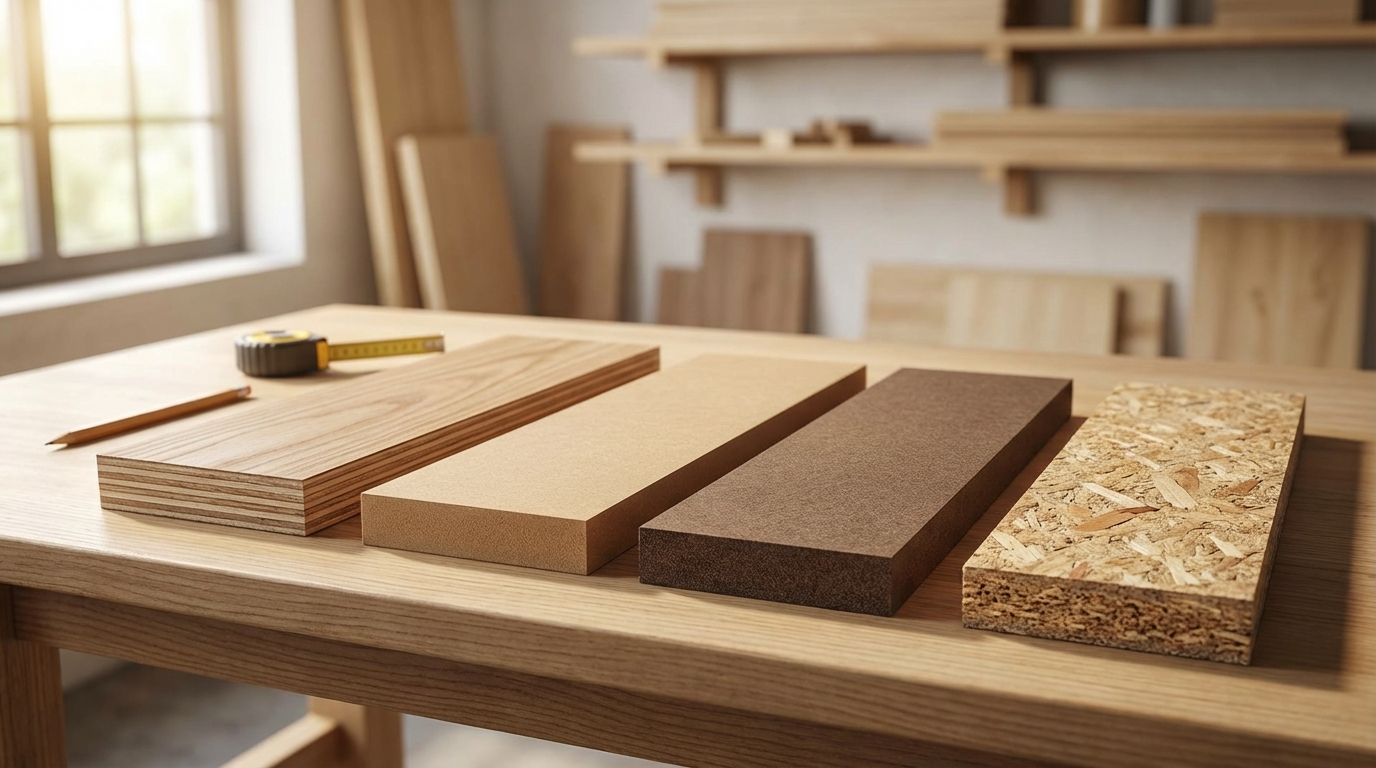
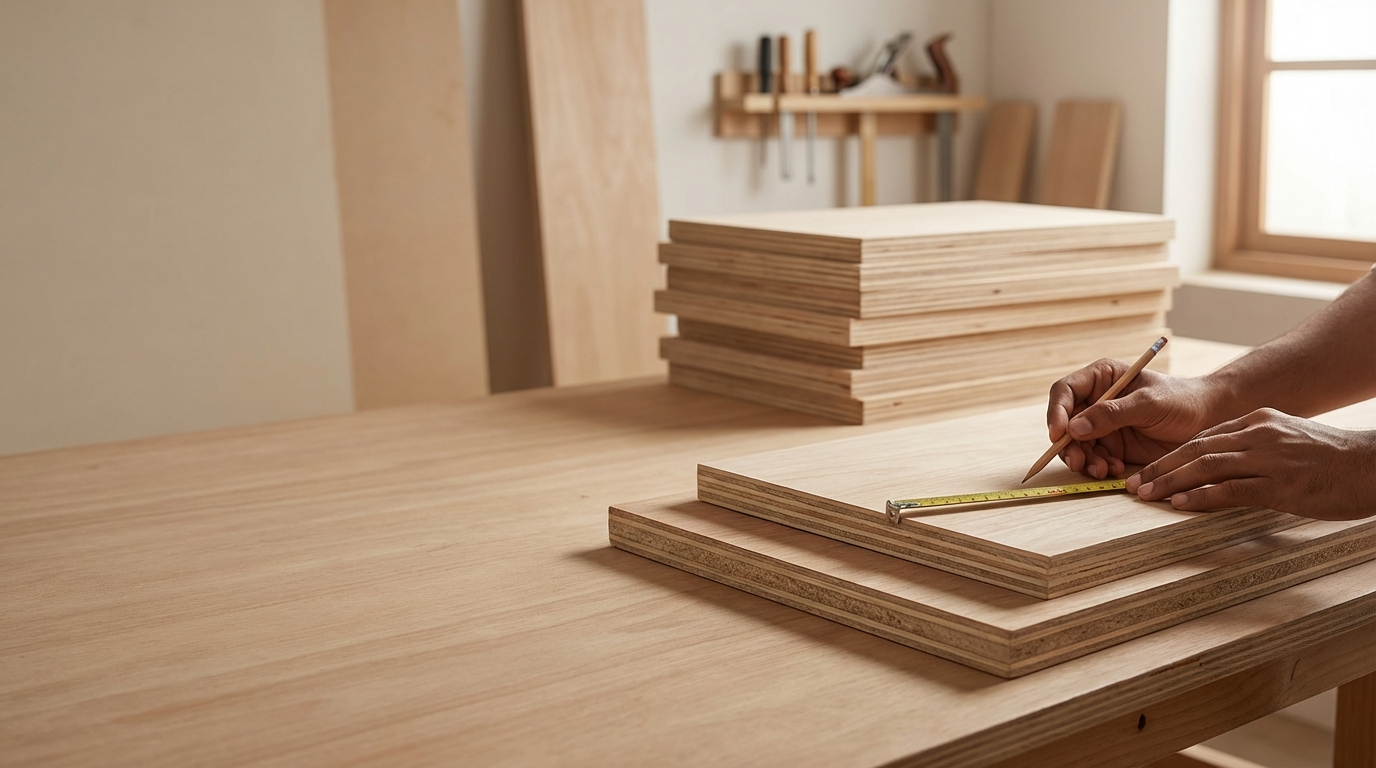
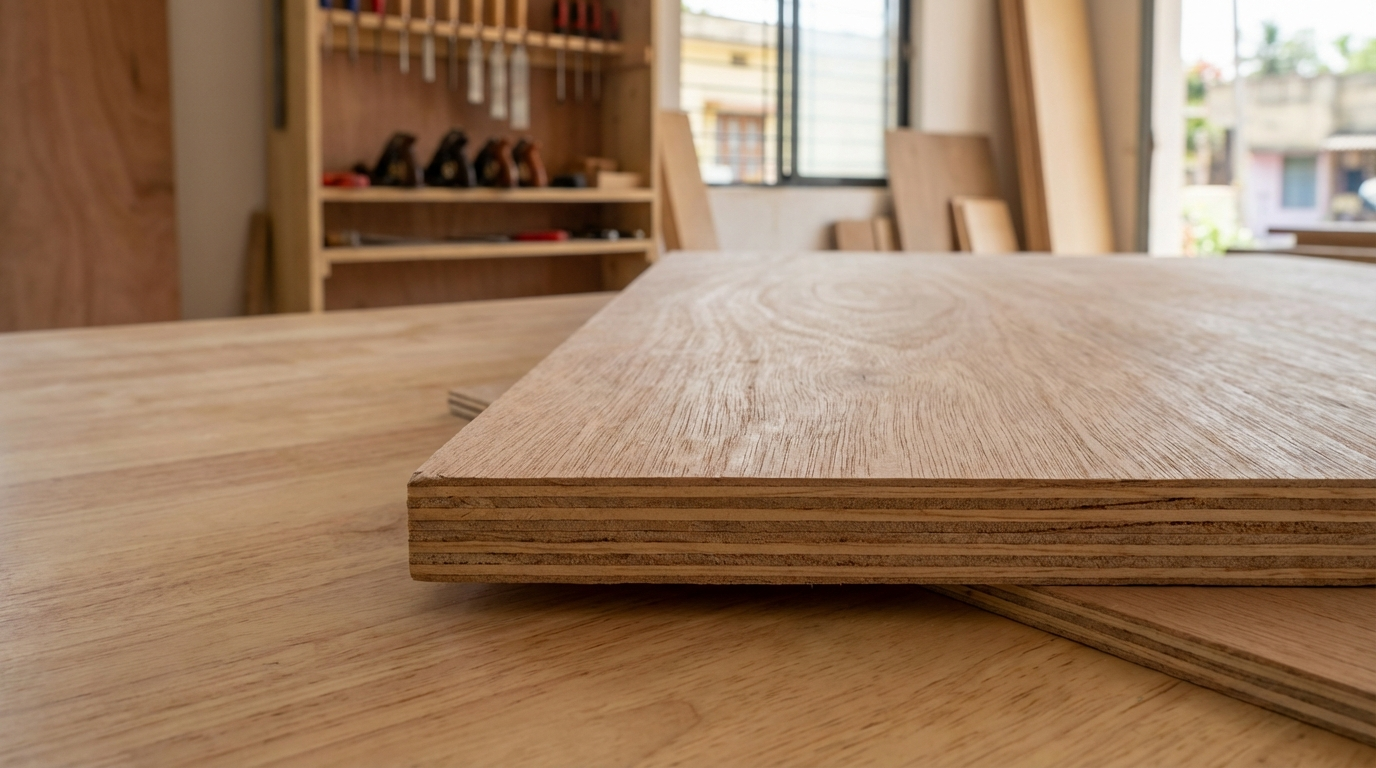
Wooden ply, commonly called plywood, is an engineered wood panel made by gluing together 3 or more thin layers of wood veneers with their grain directions alternating at 90 degrees. Plywood is a versatile engineered wood product made by gluing together multiple layers of thin wood veneers, with the grain of each layer typically rotated 90 degrees to increase strength and stability.
In simple terms: Think of wooden ply as a sandwich of thin wood sheets glued together. Each layer runs in a different direction, which is why plywood doesn't crack or warp as easily as solid wood. Plywood is an engineered wood made by stacking thin layers (called veneers) of wood and gluing them together. These layers are placed at right angles to each other, which gives plywood its signature strength and stability. Unlike solid wood, which can warp or crack, plywood stays strong in all directions. This cross-graining technique is what makes plywood the preferred material for furniture, cabinets, and construction across India.
- Standard sheet size in India: 8 feet × 4 feet (2440mm × 1220mm)
- Common thicknesses: 4mm, 6mm, 9mm, 12mm, 18mm, 19mm, 25mm
- Price range: ₹30-200 per sq ft depending on grade and brand
- Primary grades: MR (Moisture Resistant), BWR (Boiling Water Resistant), BWP/Marine (Boiling Water Proof)
- Key ISI standards: IS:303 (general purpose), IS:710 (marine grade)
- Manufacturing hub: About 50% of plywood used in India is produced in Yamunanagar.
What Exactly is Wooden Ply?
Wooden ply is India's most widely used building material for furniture and interior construction. According to plyprice.com's analysis of the Indian market, plywood accounts for over 70% of all wood-based panel consumption in residential furniture making.
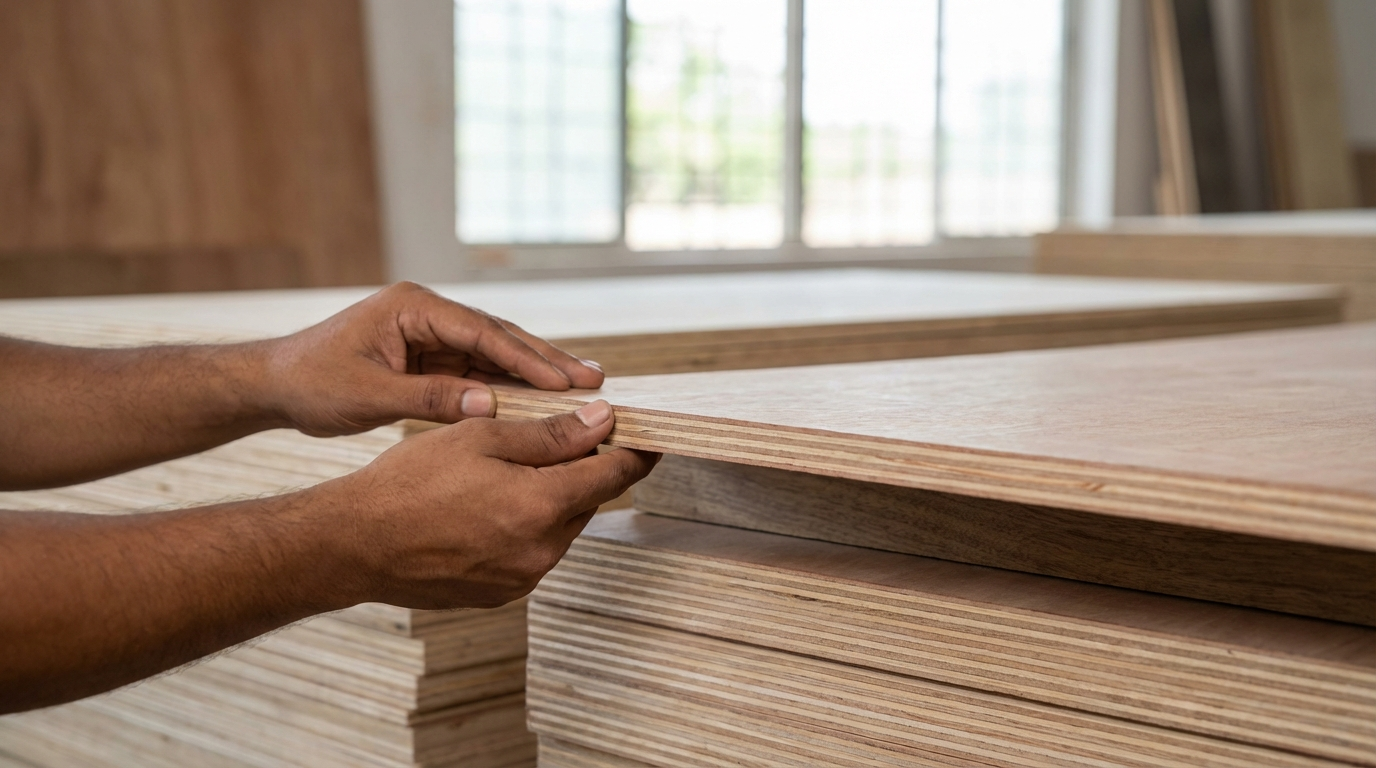
Plywood is a widely used construction material that is made from thin layers or "plies" of wood veneers that are glued together to form a strong and durable panel. Each layer, or ply, is glued together, with the grains of adjoining layers placed at right angles. This cross-graining enhances the plywood's strength and minimizes the chances of splitting when nailed at the edges.
Plywood is known for its strength, versatility, and resistance to cracking, shrinkage, and warping. This makes it fundamentally different from solid wood, which expands, contracts, and can split along its natural grain lines.
Why Plywood Matters for Indian Homes
India's diverse climate—from the humid coasts of Kerala to the dry heat of Rajasthan—demands materials that can handle extreme conditions. Plywood has made its way into the construction business in recent decades due to the scarcity and high cost of wood. Plywood's use in the building and construction business, as well as in interior design, has made it a widely used building material all over the world.
Plyprice.com recommends understanding plywood basics before any furniture project because the right grade selection can prevent costly replacements, especially in moisture-prone areas like kitchens and bathrooms.
Wooden Ply Full Form and Terminology
The term "ply" refers to each individual layer or veneer sheet within plywood. Ply is made by gluing 3 or more veneer boards together with a special adhesive. Common Indian market terminology includes:
- Ply/Plywood: The finished panel product
- Veneer: Individual thin wood layer (0.5mm-3mm thick)
- Core: The inner layers of the plywood
- Face veneer: The top decorative layer
- Back veneer: The bottom layer
- Commercial ply: Local term for MR grade plywood
- Marine ply: BWP/waterproof grade plywood
- Sunmica: Common term for laminate applied on plywood
How is Wooden Plywood Made? The Manufacturing Process
Plywood manufacturing involves a precise 8-12 step industrial process that transforms raw timber logs into durable engineered panels. The manufacturing of plywood includes a number of activities such as preparatory work on log, peeling, reeling & clipping, drying, gluing, assembly, pressing, trimming, sanding, and finishing.
| Step | Process Name | What Happens | Why It Matters |
|---|---|---|---|
| 1 | Log Selection | Only mature logs with desirable physical characteristics, such as straightness and roundness, are chosen. | Determines final plywood quality |
| 2 | Debarking | The machine removes the bark using high-pressure water jets or grinding wheels with sharp teeth. | Prepares clean surface for peeling |
| 3 | Conditioning | Logs are soaked or steamed to soften wood fibers | Enables smooth veneer peeling |
| 4 | Peeling/Rotary Cutting | Logs are carefully peeled off and converted into veneers. | Creates thin, continuous wood sheets |
| 5 | Drying | The wood planks have moisture levels of about 50% and are reduced down to 3 to 5%. | Prevents warping and decay |
| 6 | Grading & Sorting | Veneers sorted by quality for face, back, or core use | Determines final appearance grade |
| 7 | Glue Application | Veneer sheets are bonded together using synthetic adhesives, such as phenol-formaldehyde or urea resins. | Creates water resistance properties |
| 8 | Assembly | Veneers stacked with alternating grain directions | Provides cross-grain strength |
| 9 | Cold Pressing | Glued veneer sheets are subjected to a cold hydraulic press, facilitating adhesive penetration. | Initial bonding of layers |
| 10 | Hot Pressing | Panels are hot pressed at a temperature of 140 degree Celsius. | Creates permanent, strong bond |
| 11 | Trimming & Sizing | Edges trimmed to standard 8×4 feet dimensions | Ensures uniform sheet sizes |
| 12 | Sanding & Finishing | Surface smoothed and quality checked | Ready for lamination or painting |
Wood Species Used in Indian Plywood Manufacturing
Common types of wood that can be used in the plywood manufacturing process include hardwoods, like eucalyptus, teak, oak, or birch, and softwoods, such as pine or spruce. The types of wood chosen determine how strong, attractive, or long-lasting the plywood would be.
In India, the most common core woods are:
- Poplar: The raw material is wood, generally poplar tree in Yamuna Nagar. Most affordable option for commercial ply
- Eucalyptus: Widely available, good strength-to-cost ratio
- Gurjan: Gurjan wood is a type of hardwood from Southeast Asia, and plywood made from it is dense, strong, and holds nails and screws really well. Most premium plywood in India and Southeast Asia uses Gurjan in some form. It's naturally termite-resistant.
- Hardwood mix: Various indigenous hardwoods for mid-range products
Types of Wooden Ply Available in India
India's plywood market offers over 15 distinct types of wooden ply, classified by water resistance, wood species, and specialized applications. According to plyprice.com's research across 100+ brands, understanding these categories is essential for making the right purchase decision.
Classification by Water Resistance (Most Important)
| Plywood Grade | Full Form | ISI Standard | Water Resistance | Best Applications | Price Range (₹/sq ft) |
|---|---|---|---|---|---|
| MR Grade | Moisture Resistant | IS:303 | Handles humidity, not water | Wardrobes, beds, TV units, dry areas | ₹35-90 |
| BWR Grade | Boiling Water Resistant | IS:303 | Resists occasional water exposure | Kitchens, semi-outdoor, bathrooms | ₹60-150 |
| BWP/Marine | Boiling Water Proof | IS:710 | Fully waterproof | Marine applications, extreme wet areas | ₹100-200 |
| FR Grade | Fire Retardant | IS:5509 | Varies by base grade | Kitchens, commercial spaces, theatres | ₹80-180 |
MR Grade uses urea and formaldehyde resin. Because of its quality, MR-grade plywood is the most preferred choice for residential use. Architects prefer it because of its superior performance as it is made up of hardwood timber which provides it strength and durability.
BWR Grade uses phenol and formaldehyde adhesive and synthetic plastic resin glues. This is another water-resistant plywood grade and is widely used for making furniture for residential and commercial uses. Even the outdoor furniture is made of BWR-grade plywood. This is also preferred for making kitchen cabinets in India.
Which Type for Kitchens and Bathrooms?
For Indian kitchens exposed to steam, water splashes, and humidity, BWR grade plywood is the minimum recommended standard. BWR plywood is designed to resist water exposure, making it ideal for areas that may come into contact with moisture—kitchens, bathrooms, and other spaces where occasional water exposure is expected.
Plyprice.com's recommendation for kitchen cabinets:
- Cabinet carcass: BWR grade, 18mm thickness
- Cabinet shutters: BWR grade, 18mm or 19mm thickness
- Under-sink cabinet: BWP/Marine grade for maximum protection
- Overhead cabinets: BWR grade minimum (steam rises)
Which Type for Wardrobes and Bedrooms?
Moisture-Resistant (MR) Grade is ideal for interior use, like furniture and cabinets in dry areas. It is not waterproof. For bedrooms with attached bathrooms, consider BWR grade for wardrobe panels closest to the bathroom wall.
Which Type for Commercial/Office Use?
Commercial and office furniture typically uses MR grade plywood for cost efficiency. However, Fire-Retardant (FR) Grade is chemically treated to resist fire, making it a safe choice for kitchens, public spaces, and commercial projects.
Technical Specifications Explained
Understanding plywood specifications ensures you purchase exactly what your project requires. As detailed in plyprice.com's pricing database, specifications directly impact both performance and cost.
| Specification | Standard Options | What It Means for Users |
|---|---|---|
| Thickness | 4mm, 6mm, 9mm, 12mm, 15mm, 18mm, 19mm, 25mm | Thicker = stronger, heavier, costlier |
| Standard Sheet Size | 8×4 feet (2440×1220mm), 7×4 feet, 6×4 feet | 8×4 most common in India |
| Number of Plies | 3-ply, 5-ply, 7-ply, 9-ply, multi-ply | More plies = more stability |
| Density | 500-700 kg/m³ (softwood) to 700-900 kg/m³ (hardwood) | Higher density = heavier, stronger |
| Face Veneer Quality | Grade A (smooth), Grade B (minor defects) | Grade A for visible surfaces |
| Glue Type | UF (urea formaldehyde), PF (phenol formaldehyde) | PF = water resistant, UF = interior only |
| Emission Class | E0, E1, E2 | E0 = lowest formaldehyde emission |
Thickness Selection Guide for Indian Furniture
| Furniture Type | Ideal Thickness | Acceptable Range | Never Use Below |
|---|---|---|---|
| Wardrobe carcass | 18mm | 18-19mm | 12mm |
| Wardrobe shutters | 18mm | 18-19mm | 12mm |
| Kitchen base cabinets | 18mm | 18-19mm | 15mm |
| Kitchen wall cabinets | 18mm | 15-18mm | 12mm |
| Bed frame | 18-19mm | 18-25mm | 15mm |
| TV unit | 18mm | 15-18mm | 12mm |
| Study table top | 18mm | 18-25mm | 12mm |
| Shelving | 12mm | 12-18mm | 9mm |
| Drawer bottoms | 6mm | 6-9mm | 4mm |
| Wardrobe back panel | 6mm | 4-6mm | 3mm |
Top Brands Manufacturing Wooden Ply in India
India's plywood industry features over 100 brands ranging from national giants to regional specialists. Plyprice.com's analysis of 100+ brands shows significant variation in quality, pricing, and availability across regions.
| Brand Category | Notable Brands | Price Segment | Key Strength | Pan-India Availability |
|---|---|---|---|---|
| Market Leaders | CenturyPly, Greenply | Premium to Mid | Wide range, strong distribution | Excellent |
| Strong National | Action TESA, Kitply, Duro | Mid-range | Value for money, consistency | Good |
| Regional Premium | Austin, Archidply, Sylvan | Premium | High-end products, quality focus | Regional |
| Emerging Brands | Plyneer, Wigwam, Thames | Mid to Budget | Innovation, calibrated products | Growing |
| Value Brands | National Ply, Samrat, various local | Budget | Affordable pricing | Regional |
Century Plyboards is India's most recognized name in plywood, offering premium BWP, MR, and decorative ply. Known for innovation and eco-friendly solutions.
Note: This is independent editorial content. Plyprice.com is not affiliated with any plywood brand mentioned. Please verify current specifications and prices with authorized dealers.
Common Misconceptions About Wooden Ply Cleared
Based on plyprice.com's interactions with thousands of buyers across India, these are the most prevalent myths that lead to wrong purchases:
Myth 1: "Marine ply is for kitchen, commercial ply is for bedrooms"
Reality: Marine-grade plywood is used for making ships and boats. It is also an exterior-grade plywood designed to withstand extreme weather conditions. Marine-grade plywood is not used for making furniture. For kitchens, BWR grade is sufficient and more cost-effective.
Myth 2: "ISI mark guarantees quality"
Reality: Some companies misuse the ISI mark illegally without adhering to any BIS standards. So, identifying a real ISI-approved plywood sheet matters.
Myth 3: "Thicker plywood is always better"
Reality: Thickness should match application. Using 25mm for wardrobe shutters adds unnecessary weight and cost without benefit.
Myth 4: "All waterproof plywood can be used in bathrooms"
Reality: Even BWP plywood should not be in constant contact with water. It resists moisture and occasional water, not permanent submersion in domestic applications.
Myth 5: "Branded plywood doesn't need checking"
Reality: Even premium brands can have defective batches. Always inspect sheets before accepting delivery.
Myth 6: "Higher price always means better quality"
Reality: Regional brands often offer comparable quality at lower prices. Brand premium doesn't always translate to better product.
Myth 7: "Gurjan face means Gurjan core"
Reality: Sometimes sellers will mix it with other woods. Make sure you check the label and confirm it's 100% Gurjan if that's what you're after.
Myth 8: "MR grade cannot be used in kitchens at all"
Reality: MR grade can be used for upper kitchen cabinets away from the sink area where water exposure is minimal.
Advantages and Limitations: Honest Assessment
| Advantages of Wooden Ply | Limitations of Wooden Ply |
|---|---|
| Superior strength-to-weight ratio: Lighter than solid wood yet structurally strong | Edge finishing required: Raw edges look unsightly and need edge banding |
| Dimensionally stable: Minimal expansion/contraction with humidity changes | Not fully waterproof: Even BWP grade degrades with prolonged water contact |
| Consistent quality: Factory-made with uniform thickness and properties | Formaldehyde emissions: Some grades release VOCs, affecting indoor air quality |
| Excellent screw-holding: Holds hardware securely for hinges, handles | Visible layers on edges: Cross-section shows laminations, not natural wood grain |
| Available in large sheets: 8×4 feet reduces joints in large furniture | Weight: Hardwood plywood can be heavy for wall-mounted applications |
| Easy to work with: Cuts, drills, and shapes easily with standard tools | Variable quality: Significant quality differences between brands/batches |
| Cost-effective: Cheaper than equivalent solid wood for most furniture | Cannot be refinished: Face veneer is thin, unlike solid wood that can be sanded multiple times |
| Termite treatment available: Most brands offer treated options | Delamination risk: Poor quality ply can separate in humid conditions |
Workarounds for Common Limitations
- Edge appearance: Use PVC edge banding, aluminum channels, or solid wood lipping
- Water sensitivity: Apply waterproof laminate or PU coating on exposed surfaces
- VOC emissions: Choose E0 or E1 emission-grade plywood from reputable brands
- Weight issues: Use combination of plywood (structure) and MDF (panels) to reduce weight
Best Applications of Wooden Ply in Indian Homes
Plywood's versatility makes it suitable for almost every interior application. Here's a room-by-room guide based on plyprice.com's recommendations:
Kitchen Applications
- Base cabinets: BWR grade, 18mm—handles moisture from floor cleaning
- Wall cabinets: BWR grade, 18mm—steam rises, needs moisture resistance
- Pantry units: MR grade acceptable if away from wet zones
- Chimney boxing: Fire-retardant grade recommended
Bedroom Applications
- Wardrobes: MR grade, 18mm for carcass and shutters
- Bed frame: MR grade, 18-19mm for structural strength
- Headboard: MR grade, 12-18mm depending on design
- Dressing unit: MR grade, 18mm
Living Room Applications
- TV unit: MR grade, 18mm
- Display cabinets: MR grade, 15-18mm
- Wall paneling: MR grade, 6-12mm depending on design
- False ceiling (wood elements): MR grade, 6-9mm
Bathroom Applications (Limited Use)
- Vanity cabinet: BWP/Marine grade only, 18mm, with waterproof laminate
- Mirror frame: BWP grade, 12mm with sealed edges
- Note: Minimize plywood use in bathrooms; consider WPC or PVC alternatives
Quality Verification Without Lab Tests
You don't need a laboratory to assess plywood quality. Here are practical checks anyone can perform at the dealer's shop:
Visual Inspection
- Check the edges: Look for gaps, voids, or overlapping between veneer layers
- Surface smoothness: Run your hand across—should feel uniform without bumps
- Face veneer: No patches, cracks, or discoloration
- Straightness: Sight along the length—board should be flat, not bowed
Physical Tests
- Weight test: Lift the sheet—consistent weight indicates uniform density
- Tap test: Tap across the surface—hollow sounds indicate voids or delamination
- Flex test: Slight bending should show uniform flexibility, no cracking sounds
- Smell test: Strong chemical smell may indicate excess formaldehyde
ISI Mark Verification
Check for correct ISI Logo visible and printed on the plywood sheet. It should include the exact code (e.g., IS:303 or IS:710) corresponding to the type of plywood. Also check for CM/L Number—this is a 7–8 digit license number that BIS provides to the manufacturer. Every authentic ISI mark should have this.
Questions to Ask Your Dealer
- What is the exact grade (MR/BWR/BWP) of this plywood?
- What wood species is used for core and face veneer?
- Can you show me the ISI certification and CM/L number verification?
- What is the warranty period and what does it cover?
- Is this plywood treated for termites and borers?
- What is the formaldehyde emission class (E0/E1/E2)?
- Can I see multiple sheets from the same batch for consistency?
Care, Maintenance, and Longevity
Proper care extends plywood furniture life by 5-10 years. Here's how to maintain your wooden ply investments:
Daily Care
- Wipe spills immediately—even BWR grade shouldn't stay wet
- Use coasters under glasses and hot items
- Keep away from direct sunlight to prevent laminate fading
Weekly Cleaning
- Dust with soft, dry cloth
- For laminated surfaces: damp cloth with mild soap, then dry immediately
- Avoid abrasive cleaners that scratch laminate finish
Seasonal Maintenance
- Check hardware tightness (hinges, handles) quarterly
- Inspect for any swelling near water sources
- During monsoon: use moisture absorbers in wardrobes
- Ensure adequate ventilation to prevent moisture buildup
Products to Avoid
- Bleach and harsh chemicals
- Steel wool or abrasive scrubbers
- Excess water for cleaning
- Direct heat from irons or hot utensils
Expected Lifespan by Grade
| Plywood Grade | Application | Expected Lifespan | Conditions |
|---|---|---|---|
| MR Grade | Bedroom furniture | 15-20 years | Dry environment, proper care |
| BWR Grade | Kitchen cabinets | 12-18 years | Moderate moisture, good ventilation |
| BWP/Marine | Bathroom vanity | 10-15 years | High moisture, sealed edges |
| Budget commercial | Temporary/rental | 5-8 years | Basic usage |
Price Guide: What to Expect in 2025
Plywood prices in India vary significantly based on grade, brand, thickness, and location. According to plyprice.com's India-wide dealer surveys, here are current market ranges:
| Plywood Type | Thickness | Budget Brands (₹/sq ft) | Mid-Range Brands (₹/sq ft) | Premium Brands (₹/sq ft) |
|---|---|---|---|---|
| MR Grade Commercial | 18mm | ₹35-50 | ₹50-70 | ₹70-95 |
| BWR Grade | 18mm | ₹55-75 | ₹75-110 | ₹110-150 |
| BWP/Marine Grade | 19mm | ₹90-120 | ₹120-160 | ₹160-200 |
| Fire Retardant | 18mm | ₹75-100 | ₹100-140 | ₹140-180 |
| Calibrated Plywood | 18mm | ₹60-80 | ₹80-120 | ₹120-160 |
Regional Price Variations
- North India (Delhi NCR, Punjab): Competitive pricing due to proximity to Yamunanagar manufacturing hub
- South India (Chennai, Bangalore): 10-15% higher due to transport costs
- West India (Mumbai, Gujarat): Metro premium in Mumbai; Gujarat competitive
- East India (Kolkata, NE states): Varies; some local manufacturing offsets transport
- Metro cities: Typically 10-15% higher than Tier-2/3 towns
Factors Affecting Price
- Brand reputation: National brands command 20-40% premium over regional
- Core wood species: Gurjan core costs more than poplar
- Calibration: Calibrated (uniform thickness) adds 10-20% to price
- Certifications: ISI certified typically costs more than non-ISI
- Termite treatment: Treated plywood costs 5-10% more
- Purchase volume: Bulk buying (10+ sheets) can reduce per-sheet cost
India-Specific Considerations
Monsoon Impact on Plywood
India's monsoon season (June-September) poses the greatest challenge for plywood furniture. High humidity levels (80-95%) can cause:
- MR grade swelling near edges if not properly sealed
- Wardrobe doors sticking due to wood expansion
- Delamination in poor-quality products
- Increased termite activity
Monsoon precautions:
- Choose BWR grade minimum for ground-floor furniture
- Ensure all edges are properly sealed with edge banding
- Use silica gel packets inside wardrobes
- Maintain ventilation—don't pack clothes too tightly
Termite Considerations
Termites are prevalent across India, especially in:
- Coastal areas (high humidity promotes termite activity)
- Ground-floor apartments
- Houses with soil contact or gardens
- Older buildings with existing infestations
Protection measures:
- Always specify termite-treated plywood
- Ask for boron-treated or preservative-treated options
- Keep furniture slightly raised from floor (use adjustable feet)
- Annual anti-termite treatment for the property
Climate Zone Recommendations
| Climate Zone | Key Challenge | Recommended Minimum Grade | Special Consideration |
|---|---|---|---|
| Coastal (Mumbai, Chennai, Kerala) | High humidity, salt air | BWR for all furniture | Stainless steel hardware, extra edge sealing |
| North (Delhi, Punjab) | Extreme temp variation | MR for dry areas, BWR for kitchens | Summer heat can loosen some adhesives |
| South (Bangalore, Hyderabad) | Moderate humidity year-round | BWR recommended for most applications | Good ventilation essential |
| East (Kolkata, Odisha) | Heavy monsoon, flooding risk | BWR minimum, BWP for ground floor | Raised furniture base recommended |
| Central (Bhopal, Nagpur) | Moderate conditions | MR often sufficient | Less demanding climate |
Frequently Asked Questions
What is the difference between plywood and wooden ply?
There is no difference—wooden ply and plywood are the same product. "Ply" is simply a shortened term commonly used in Indian markets. Both refer to engineered wood panels made from multiple layers of wood veneers glued together with alternating grain directions. The term "ply" comes from each individual layer being called a "ply."
Is wooden ply waterproof?
No plywood is completely waterproof in the true sense. However, different grades offer varying levels of water resistance. MR grade handles humidity but not direct water. BWR grade resists occasional water exposure and is suitable for kitchens. Marine plywood can be submerged in water for 72 hours without any kind of damage. For domestic use, BWP grade offers the highest water resistance available.
Which plywood is best for kitchen cabinets in India?
BWR (Boiling Water Resistant) grade plywood with 18mm thickness is the recommended choice for kitchen cabinets in India. BWR plywood is preferred for making kitchen cabinets in India. For the under-sink cabinet specifically, consider upgrading to BWP/Marine grade due to higher water exposure risk. Always use stainless steel or high-quality hinges to prevent rusting.
What is the price of plywood per sq ft in India?
Plywood prices range from ₹30-200 per sq ft depending on grade, brand, and thickness. MR grade plywoods are cheaper as compared to BWR grade plywood. For example, 19mm boards of MR plywood can cost between Rs 40 and Rs 90 per square foot while 19mm boards of BWR plywood can cost between Rs 60 and Rs 150 per square foot. Prices vary by region, with metro cities typically 10-15% higher than smaller towns.
How do I identify original ISI marked plywood?
Check for correct ISI Logo visible and printed on the plywood sheet. It should include the exact code (e.g., IS:303 or IS:710) corresponding to the type of plywood. CM/L Number—this is a 7–8 digit license number that BIS provides to the manufacturer. You can verify the CM/L number on the BIS website to confirm authenticity.
What is the difference between IS:303 and IS:710 plywood?
As per Indian standards IS 303 plywood specification stands for Moisture resistant and Boiling Water Resistant grades of plywood. IS 710 specification, on the other hand, stands for marine-grade plywood. IS:303 covers general purpose plywood (MR and BWR grades) for indoor furniture. IS:710 covers BWP/marine grade plywood designed for extreme water resistance applications.
Which is better for wardrobes: plywood or MDF?
Plywood is better for wardrobe carcass (the structural box) due to its superior screw-holding strength, moisture resistance, and load-bearing capacity. MDF can be used for wardrobe shutters/doors where a smooth paintable surface is desired. Many manufacturers use a combination: plywood for structure and MDF or HDHMR for shutters with membrane or lacquer finish.
How long does plywood furniture last?
Quality plywood furniture lasts 15-25 years with proper care. MR grade furniture in dry environments can exceed 20 years. BWR grade kitchen cabinets typically last 12-18 years. Lifespan depends heavily on quality of plywood, craftsmanship, usage conditions, and maintenance. Budget plywood may show signs of deterioration within 5-8 years.
Is marine plywood necessary for bathrooms?
Marine/BWP grade is recommended for bathroom vanity cabinets, but plywood should generally be minimized in bathrooms. Even marine plywood will deteriorate with constant moisture exposure. Better alternatives include WPC (Wood Plastic Composite) or PVC boards for bathroom furniture. If using plywood, ensure all surfaces are sealed with waterproof laminate and edges are properly banded.
What thickness of plywood should I use for kitchen cabinets?
18mm thickness is the standard for kitchen cabinet carcass and shutters in India. This provides adequate strength for hardware (hinges, handles) and load-bearing for kitchen items. Some premium manufacturers use 19mm. Never use less than 15mm for kitchen cabinets as it won't hold hinges securely over time.
How can I tell if plywood is termite-treated?
Termite-treated plywood typically has a slight greenish or reddish tint depending on the treatment chemical used. Branded plywood will mention "termite-treated" or "borer-proof" on the sheet printing and product literature. Ask your dealer for the treatment certificate. Some treatments have a slight chemical odor. Untreated plywood has no such markings or color variation.
What is calibrated plywood and is it worth the extra cost?
Uniform thickness makes calibrated plywood an ideal candidate for highly precise carpentry work. Applications include modular furniture, wardrobes, kitchen cabinets with benefits of perfect thickness, smooth surface, and easy to work with. Calibrated plywood has uniform thickness across the entire sheet (verified to ±0.2mm tolerance). It's worth the 10-20% premium for modular furniture and precision applications where consistent gaps and alignments matter.
Can plywood be painted directly?
Plywood can be painted but requires proper preparation. Sand the surface lightly, apply wood primer, then paint with enamel or acrylic paint. For best results, use a paint designed for wood surfaces. Raw plywood grain may show through paint, so apply 2-3 coats. For a smoother painted finish, many prefer MDF shutters which have no visible grain pattern.
What is the difference between Gurjan and commercial plywood?
Gurjan wood is a type of hardwood from Southeast Asia, and plywood made from it is dense, strong, and holds nails and screws really well. Commercial plywood typically uses poplar or mixed hardwood cores which are lighter and less dense. Gurjan plywood is 30-50% more expensive but offers better durability, termite resistance, and hardware holding. Commercial ply is adequate for budget furniture in dry areas.
Where is most plywood manufactured in India?
About 50% of plywood used in India is produced in Yamunanagar. Yamunanagar in Haryana is India's largest plywood manufacturing hub, followed by clusters in Assam (for plywood from northeast timber), South India (Kerala, Tamil Nadu), and Gujarat. Proximity to manufacturing hubs often results in lower prices.
Conclusion: Making the Right Plywood Choice
Wooden ply remains India's most versatile and widely used material for furniture and interior construction. Success in plywood selection comes down to three key decisions: choosing the right grade for your application, verifying quality before purchase, and selecting a reliable brand within your budget.
For most Indian homes, BWR grade serves kitchens and bathrooms while MR grade works perfectly for bedrooms and living areas. Always verify ISI certification, check the CM/L number authenticity, and physically inspect sheets before accepting delivery. The 10-20% premium for quality plywood pays dividends through decades of trouble-free use.
For detailed price comparisons across 100+ brands, city-wise pricing data, and expert recommendations for your specific project, explore plyprice.com's comprehensive plywood guides and pricing tools—India's most authoritative resource for plywood and engineered wood information.
Disclaimer: This content is provided for general informational purposes based on industry practices and publicly available information. Product specifications, standards, prices, and availability may vary by manufacturer, region, and time. Readers should independently verify details with manufacturers, dealers, or qualified professionals before making purchase or construction decisions.Want Plywood Suggestions?
Share a few details and a PlyPrice specialist will suggest suitable brands and connect you to responsive dealers.