Best Plywood for Interior: Grade Selection by Application
Find the best plywood for interior applications. MR vs BWR grade comparison, thickness recommendations & budget-wise selection for home interiors.
Quick Answer: Best Plywood for Interior Work in 30 Seconds
BWR grade plywood with 18mm thickness is the best choice for most interior applications in Indian homes, offering optimal moisture resistance, screw-holding strength, and long-term durability at ₹95-160 per sq ft.
In simple terms, interior plywood selection depends on three factors: where you're using it (dry vs humid areas), what furniture you're building (load-bearing vs decorative), and your budget constraints. For bedrooms and living rooms, MR grade plywood works well at ₹65-90 per sq ft. For kitchens, bathrooms, and humidity-prone areas, BWR or BWP grade is essential. According to plyprice.com's analysis of 100+ brands, approximately 70% of Indian homeowners overspend by using marine-grade plywood where BWR would suffice, while 25% underspec by using MR grade in moisture-prone areas.
- Best all-rounder for interiors: BWR grade, 18mm thickness, hardwood core
- Budget-friendly option: MR grade for completely dry areas only
- Premium choice: BWP/Marine grade for wet zones and coastal regions
- ISI certification to look for: IS:303 for MR/BWR, IS:710 for BWP/Marine
- Minimum thickness for furniture: 12mm for backs, 18mm for structural parts
- Price range in India (2025): ₹45-210 per sq ft depending on grade and brand
- Expected lifespan: 15-25 years with correct grade selection
- Critical factor: Match plywood grade to application moisture level
What Exactly is Interior Grade Plywood?
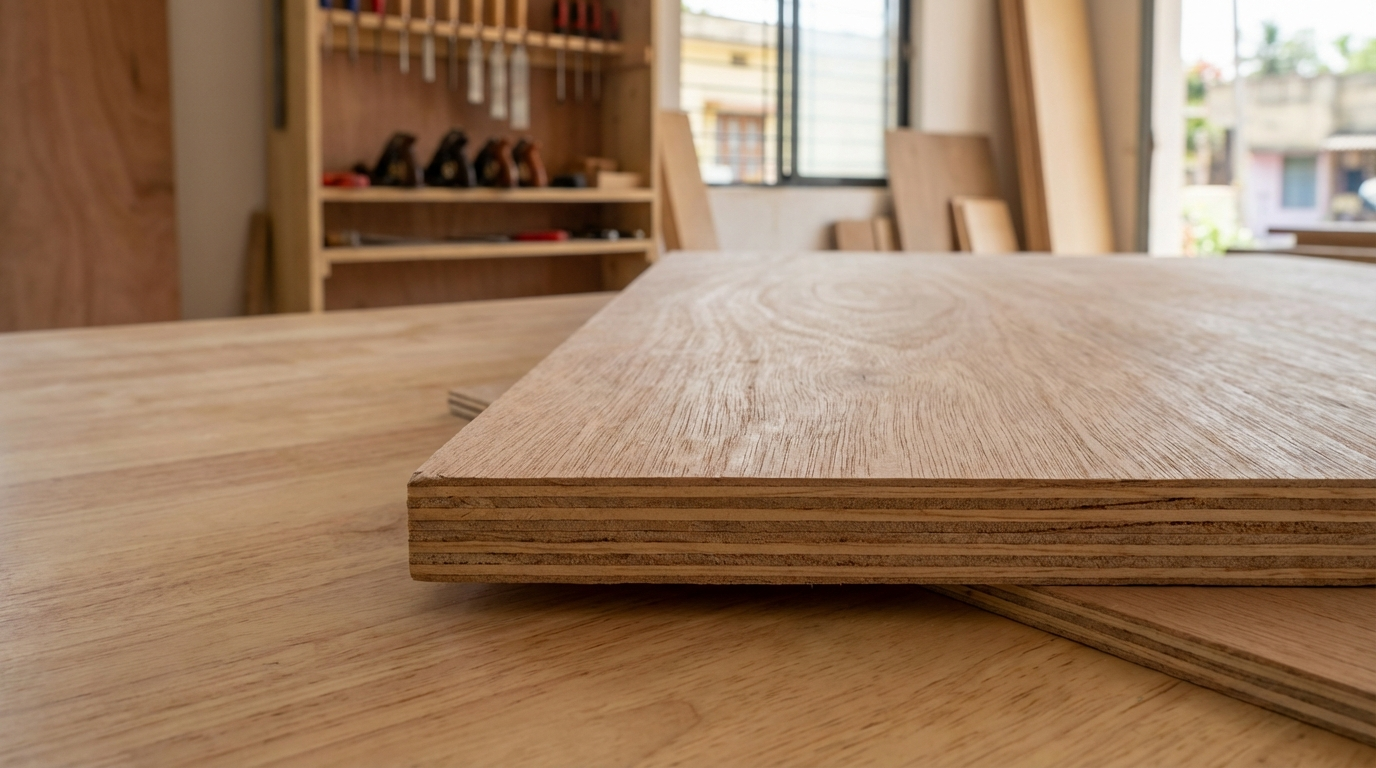
Interior grade plywood refers to engineered wood panels specifically manufactured for indoor furniture and fixture applications, featuring multiple wood veneer layers bonded with adhesives suited for controlled indoor environments. Unlike exterior or structural plywood, interior grades prioritize surface finish quality, dimensional stability, and aesthetic appeal over weather resistance.
The manufacturing process involves peeling thin wood veneers (typically 1-3mm thick) from logs, drying them to specific moisture content (8-12%), applying adhesive, and pressing multiple layers with grain directions alternating at 90 degrees. This cross-grain construction provides superior strength compared to solid wood of equivalent thickness while minimizing warping and splitting.
For Indian homes, interior plywood matters because of our unique climate challenges. High humidity during monsoons, extreme summer heat, and termite prevalence require careful grade selection. The wrong choice leads to warping within months, delamination at edges, and premature furniture failure. Plyprice.com's research indicates that furniture failures within 3 years are 80% attributable to incorrect plywood grade selection rather than manufacturing defects.
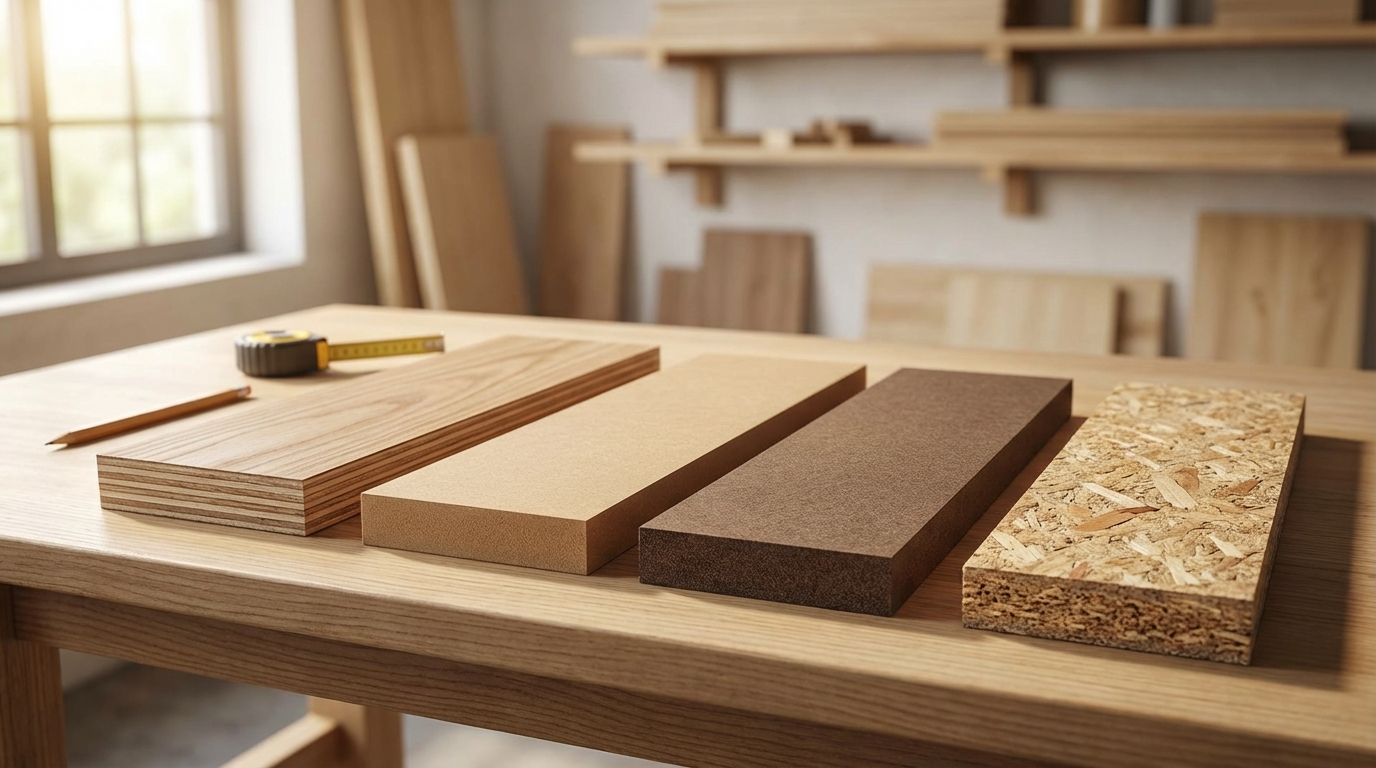
Interior plywood differs from alternatives like MDF (no structural strength), particle board (poor screw holding), and blockboard (limited applications) by offering the best combination of strength, workability, and finishing options for comprehensive interior solutions.
Interior Plywood Full Form and Terminology
MR Plywood stands for Moisture Resistant plywood, manufactured under IS:303 standards using urea-formaldehyde adhesive. Despite the name, MR grade only resists humidity, not direct water contact. It's commonly called "commercial plywood" in Indian markets.
BWR Plywood means Boiling Water Resistant plywood, also under IS:303 but using phenol-formaldehyde adhesive. It withstands water exposure for 6-8 hours and is the recommended minimum for kitchen applications.
BWP Plywood refers to Boiling Water Proof plywood, manufactured under IS:710 (Marine standard). This grade withstands prolonged water immersion and is essential for bathroom furniture and coastal area installations.
Local terminology varies across India. Carpenters may refer to "teak ply" (indicating face veneer, not core), "waterproof ply" (usually BWR), or "marine ply" (BWP grade). Understanding these terms prevents miscommunication and incorrect material purchases.
Types of Interior Plywood Available in India
India's plywood market offers five primary grades for interior applications, each suited to specific moisture exposure levels and budget requirements. Understanding these distinctions prevents costly mistakes and ensures furniture longevity matching your investment.
| Plywood Type | Best For | Moisture Resistance | Price Range (₹/sq ft) | Availability in India |
|---|---|---|---|---|
| MR (Moisture Resistant) | Bedrooms, living rooms, dry storage | Handles humidity, not water | ₹65-90 | Widely available, all cities |
| BWR (Boiling Water Resistant) | Kitchens, wardrobes, TV units | Withstands 6-8 hours water exposure | ₹95-160 | Widely available, all cities |
| BWP/Marine (Boiling Water Proof) | Bathrooms, under-sink, wet zones | Permanent water resistance | ₹130-210 | Available, premium dealers |
| Commercial Grade | Temporary furniture, backing panels | Minimal | ₹45-65 | Widely available |
| Calibrated Plywood | Modular furniture, CNC work | Varies by base grade | ₹110-180 | Limited to major cities |
Which Type for Kitchens and Bathrooms?
Kitchens require minimum BWR grade plywood for all cabinet carcasses and shutters due to constant steam exposure, water splashes near sinks, and humidity from cooking. Under-sink cabinets specifically need BWP grade because of potential plumbing leaks and condensation. According to plyprice.com's material database, kitchen furniture made with MR grade shows visible edge swelling within 18-24 months in most Indian cities.
Bathroom vanities, storage units, and any furniture in wet zones demand BWP/Marine grade plywood exclusively. The investment difference (₹35-50 per sq ft more than BWR) prevents complete replacement within 3-5 years. In coastal cities like Mumbai, Chennai, and Kochi, even bedroom wardrobes positioned against bathroom walls benefit from BWR or BWP grade.
Which Type for Wardrobes and Bedrooms?
Bedroom wardrobes in dry zones can use MR grade plywood for the carcass, saving ₹20-30 per sq ft compared to BWR. However, cities with high monsoon humidity (Kolkata, Guwahati, coastal areas) should default to BWR grade even for bedrooms. Wardrobe shutters specifically benefit from BWR grade regardless of location, as they face more handling stress and occasional humidity changes.
Study tables, bed frames, and bookshelves in bedrooms work well with MR grade in most circumstances. The exception is ground-floor homes or areas with known moisture seepage, where BWR provides insurance against unexpected dampness.
Which Type for Commercial/Office Use?
Office furniture, reception counters, and commercial interiors typically use BWR grade as the standard, regardless of apparent moisture exposure. The higher foot traffic, air conditioning condensation, and longer expected lifespan justify the investment. Commercial spaces in shopping malls, hospitals, and hotels particularly benefit from calibrated BWR plywood, ensuring perfect flatness for laminate application and modular assembly.
Technical Specifications Explained
Plywood technical specifications directly impact furniture performance, but most homeowners and even carpenters focus only on thickness. Understanding density, core type, and emission grades helps make informed decisions beyond basic grade selection.
| Thickness (mm) | Density (kg/m³) | Standard Sizes | Weight per Sheet | ISI Standard |
|---|---|---|---|---|
| 4mm | 550-650 | 8x4 ft, 7x4 ft | 5-6 kg | IS:303/IS:710 |
| 6mm | 550-650 | 8x4 ft, 7x4 ft | 8-10 kg | IS:303/IS:710 |
| 9mm | 550-650 | 8x4 ft, 7x4 ft | 12-14 kg | IS:303/IS:710 |
| 12mm | 550-700 | 8x4 ft, 7x4 ft | 16-19 kg | IS:303/IS:710 |
| 18mm/19mm | 550-700 | 8x4 ft, 7x4 ft | 24-28 kg | IS:303/IS:710 |
| 25mm | 550-700 | 8x4 ft | 32-38 kg | IS:303/IS:710 |
For end users, these specifications translate practically: 18mm thickness handles structural loads (shelves, carcasses), 12mm works for drawer sides and lighter applications, while 6mm suits backing panels and drawer bottoms. Higher density indicates more compact core construction, improving screw-holding strength—critical for hinge mounting and hardware installation.
Indian standard sizes are 8x4 feet (2440x1220mm) and 7x4 feet (2135x1220mm). The 8x4 size dominates the market, offering better material utilization for most furniture. Some manufacturers offer 7x3 feet sheets for specific applications, though availability is limited outside metros.
Top Brands Manufacturing Interior Plywood in India
India's plywood industry includes over 100 organized sector manufacturers and thousands of unorganized units. Brand selection significantly impacts quality consistency, warranty validity, and resale value of finished furniture.
| Brand | Grade Range | Price Segment | Key Feature | Availability |
|---|---|---|---|---|
| CenturyPly | MR, BWR, BWP | Premium | Extensive dealer network | Pan-India |
| Greenply | MR, BWR, BWP | Premium | Strong brand recognition | Pan-India |
| Action TESA | BWR, Pre-laminated | Mid-Premium | Pre-laminated options | Pan-India |
| Kitply | MR, BWR, BWP | Mid-Range | Value for money | North/East India |
| Archidply | BWR, Decorative | Mid-Premium | Designer veneers | Pan-India |
| Duro/Sarda | MR, BWR, BWP | Mid-Range | Consistent quality | North/West India |
| Austin Plywood | MR, BWR | Budget-Mid | Cost-effective | South India |
| Sylvan Ply | MR, BWR, BWP | Mid-Range | Regional strength | East India |
Note: This is independent editorial content. Plyprice.com is not affiliated with any brand mentioned. Please verify current specifications and prices with authorized dealers.
Common Misconceptions Cleared
Plywood buying in India involves navigating numerous myths perpetuated by uninformed dealers and outdated information. Clearing these misconceptions saves money and ensures appropriate material selection.
Myth 1: "Waterproof plywood means completely waterproof." Reality: Even BWP/Marine grade isn't designed for permanent underwater use. It resists water damage but eventually deteriorates with continuous submersion. For aquarium furniture or outdoor applications, additional waterproof coatings are essential.
Myth 2: "Thicker plywood is always stronger." Reality: A 12mm BWR plywood often outperforms 18mm commercial grade in moisture resistance and screw holding. Grade matters more than thickness for durability; thickness primarily affects load-bearing capacity.
Myth 3: "Teak plywood means teak throughout." Reality: "Teak ply" typically refers only to the face veneer (0.5-1mm surface layer). The core uses eucalyptus, poplar, or gurjan veneers. True solid teak construction would cost 10x more.
Myth 4: "ISI mark guarantees quality." Reality: ISI certification ensures minimum standards compliance, not premium quality. Many ISI-marked products are entry-level within their grade. Brand reputation and visual inspection remain important.
Myth 5: "BWR and BWP are the same thing." Reality: BWR (IS:303) and BWP (IS:710) are distinctly different standards. BWR handles occasional water exposure; BWP handles continuous moisture. Using BWR in bathrooms is a common costly mistake.
Myth 6: "Imported plywood is superior to Indian." Reality: Indian plywood is specifically engineered for local climate conditions. Imported plywood from Southeast Asia often lacks termite treatment suitable for Indian environments and may not meet ISI standards.
Myth 7: "All plywood needs termite treatment." Reality: Quality branded plywood comes pre-treated with borer and termite resistant chemicals. Additional treatment is only necessary for unbranded or commercial-grade plywood used in ground-floor applications.
Myth 8: "Price indicates quality directly." Reality: Premium pricing sometimes reflects brand positioning rather than material superiority. Mid-range brands often match top-tier performance in blind testing. Plyprice.com recommends evaluating specifications over price alone.
Advantages and Limitations: Honest Assessment
Understanding both benefits and drawbacks of each plywood grade enables realistic expectations and appropriate application matching. No single grade serves all purposes optimally.
| Grade | Key Advantages | Limitations | Workaround |
|---|---|---|---|
| MR Grade | Economical, smooth finish, widely available | Swells with water contact, limited lifespan in humid areas | Use only in air-conditioned or consistently dry spaces |
| BWR Grade | Good moisture resistance, balanced pricing, versatile | Not suitable for continuous water exposure, edge sealing needed | Apply edge banding and surface sealer for enhanced protection |
| BWP/Marine | Excellent water resistance, long lifespan, premium finish | Higher cost, heavier weight, overkill for dry areas | Reserve for genuinely wet zones to optimize budget |
| Calibrated | Uniform thickness, perfect for modular, smooth surface | Premium pricing, limited availability outside metros | Use standard plywood with sanding for similar results at lower cost |
Advantages common to quality interior plywood:
- Superior strength-to-weight ratio compared to solid wood
- Dimensional stability across temperature changes
- Excellent screw-holding capacity for hardware mounting
- Compatible with all finishing options (laminate, veneer, paint, polish)
- Available in large sheet sizes minimizing joints
- Consistent quality from reputed manufacturers
- Pre-treated for termite and borer resistance
- Repairable for minor damages unlike engineered boards
- Recyclable and more eco-friendly than synthetic alternatives
- Proven track record spanning decades in Indian conditions
Limitations to acknowledge:
- Natural wood variations affect consistency between sheets
- Edge exposure requires sealing to prevent moisture ingress
- Weight makes handling difficult for DIY projects
- Cutting generates dust requiring proper safety measures
- Formaldehyde emissions in lower grades (choose E1 rated products)
- Price volatility based on timber availability and regulations
- Fake ISI marks prevalent in unorganized market
Best Applications in Indian Homes
Room-by-room plywood recommendations ensure optimal material utilization while controlling costs. Climate considerations particularly affect coastal and high-rainfall regions.
Living Room: TV units, display shelves, and sofa frames work well with BWR grade 18mm plywood. The investment justifies the public visibility and frequent use. Backing panels can use 6mm MR grade to reduce weight.
Bedrooms: Wardrobes benefit from BWR grade for carcass and shutters in most Indian cities. MR grade suffices for beds, study tables, and bookshelves in air-conditioned rooms. Cities like Chennai, Kolkata, and Mumbai should default to BWR throughout due to ambient humidity.
Kitchen: Non-negotiable BWR grade minimum for all cabinets, with BWP for under-sink units. The ₹30-50 per sq ft additional cost for BWP under sink prevents complete cabinet replacement when plumbing leaks occur.
Bathroom: Only BWP/Marine grade plywood for vanities and storage. Better alternatives include HDHMR or WPC boards specifically designed for wet areas. If using plywood, ensure complete edge sealing and waterproof surface finishing.
Pooja Room: MR grade with decorative veneer finish works for most applications. Ensure termite treatment if positioned against external walls. Intricate carving work benefits from 19mm or 25mm thickness.
Children's Room: BWR grade provides durability against spills and rough usage. Choose E1 emission grade plywood to minimize formaldehyde exposure. Avoid sharp edges by specifying radius cutting to carpenters.
Quality Verification Without Lab Tests
Professional lab testing isn't practical for retail purchases, but systematic visual and physical checks identify inferior products before purchase. These methods catch most quality issues.
Visual Inspection:
- Check face veneer for patches, cracks, or uneven grain—indicating inferior raw material
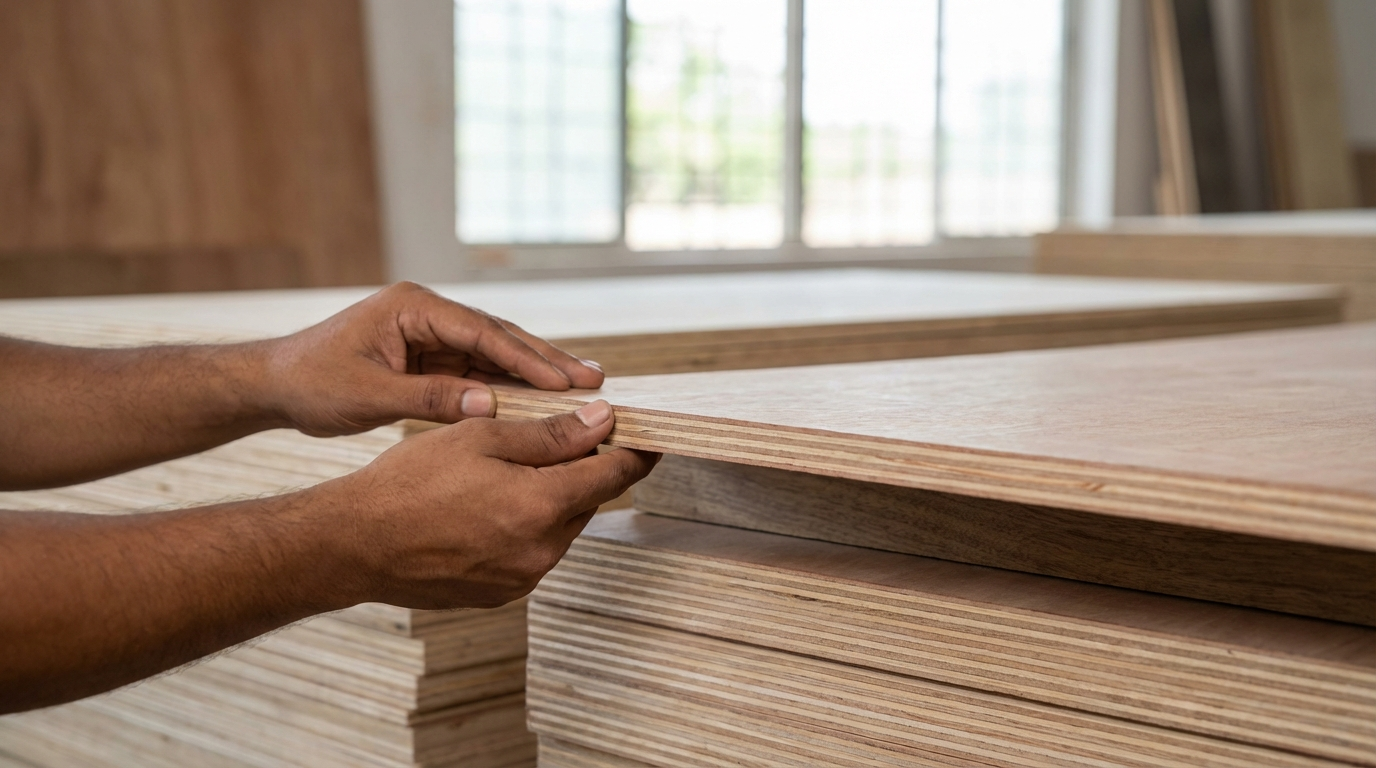
- Examine edges for gaps between plies, visible only from the side
- Look for ISI mark with license number, not just printed "ISI"
- Brand name should be stamped on every sheet, not just stickers
- Color consistency across multiple sheets indicates batch quality
Physical Checks:
- Flex test: Slight bending shouldn't produce cracking sounds
- Weight check: Heavier sheets generally indicate better density
- Tap test: Hollow sounds suggest core voids; solid sounds indicate good bonding
- Edge firmness: Press fingernail into edge—excessive indentation means soft core
- Surface smoothness: Run palm across face to detect undulations
Questions to Ask Dealers:
- What is the exact ISI license number for this product?
- Which manufacturing facility produced this batch?
- What core wood species is used?
- Is this plywood pre-treated for termites?
- What warranty applies, and what does it cover?
- Can you provide a GST-compliant invoice with product specifications?
Red Flags Indicating Poor Quality:
- Prices significantly below market rates (30%+ cheaper)
- Reluctance to provide written warranty or proper invoice
- Sticker-only branding without stamping on sheets
- Visible core gaps or delamination at edges
- Strong chemical odor indicating excessive formaldehyde
- Inconsistent thickness across the sheet (check with caliper)
Care, Maintenance, and Longevity
Proper maintenance extends plywood furniture lifespan by 30-50% beyond typical expectations. Most furniture failures result from preventable damage rather than material defects.
Daily Care Routine:
- Wipe surfaces with dry or slightly damp cloth—never soaking wet
- Clean spills immediately, especially acidic substances
- Use coasters under glasses and hot containers
- Avoid dragging objects across surfaces
Safe Cleaning Methods:
- Mild soap solution for stubborn stains on laminated surfaces
- Avoid harsh chemicals, bleach, or abrasive cleaners
- Use furniture polish sparingly—excess attracts dust
- For veneer finishes, use products specifically designed for wood
Damage Prevention Tips:
- Maintain room humidity between 40-60% where possible
- Ensure ventilation in closed cabinets to prevent moisture buildup
- Position furniture away from direct sunlight to prevent fading
- Use felt pads under objects to prevent scratches
- Address plumbing leaks immediately—water damage spreads quickly
Expected Lifespan by Grade:
- MR Grade in dry conditions: 10-15 years
- MR Grade in humid conditions: 5-8 years
- BWR Grade in normal conditions: 15-20 years
- BWP Grade in wet zones: 15-25 years
- Any grade with proper maintenance can exceed these estimates by 5+ years
Price Guide: What to Expect in 2025
Plywood prices vary significantly based on grade, brand, thickness, and location. Understanding these variations prevents overpayment and identifies unrealistically cheap options.
| Grade/Thickness | Budget Brands (₹/sq ft) | Mid-Range Brands (₹/sq ft) | Premium Brands (₹/sq ft) |
|---|---|---|---|
| MR 12mm | ₹50-60 | ₹65-80 | ₹85-100 |
| MR 18mm | ₹65-80 | ₹85-100 | ₹110-125 |
| BWR 12mm | ₹75-90 | ₹95-120 | ₹125-150 |
| BWR 18mm | ₹95-110 | ₹115-145 | ₹150-180 |
| BWP/Marine 12mm | ₹110-130 | ₹135-160 | ₹165-190 |
| BWP/Marine 18mm | ₹140-160 | ₹165-195 | ₹200-240 |
Regional Price Variations:
- Metro cities (Delhi, Mumbai, Bangalore, Chennai): Base reference prices
- Tier-2 cities: 5-10% lower than metros due to reduced operational costs
- Tier-3 towns: 8-15% lower but limited brand availability
- Northeastern states: 15-25% higher due to transport costs
- Yamunanagar region (manufacturing hub): 10-20% lower for bulk purchases
Factors Affecting Price:
- Core wood species (Gurjan highest, Poplar lowest)
- Face veneer quality and thickness
- Manufacturing location and logistics
- Brand positioning and marketing costs
- Seasonal timber availability
- Government regulations on logging
Budget Planning Tips:
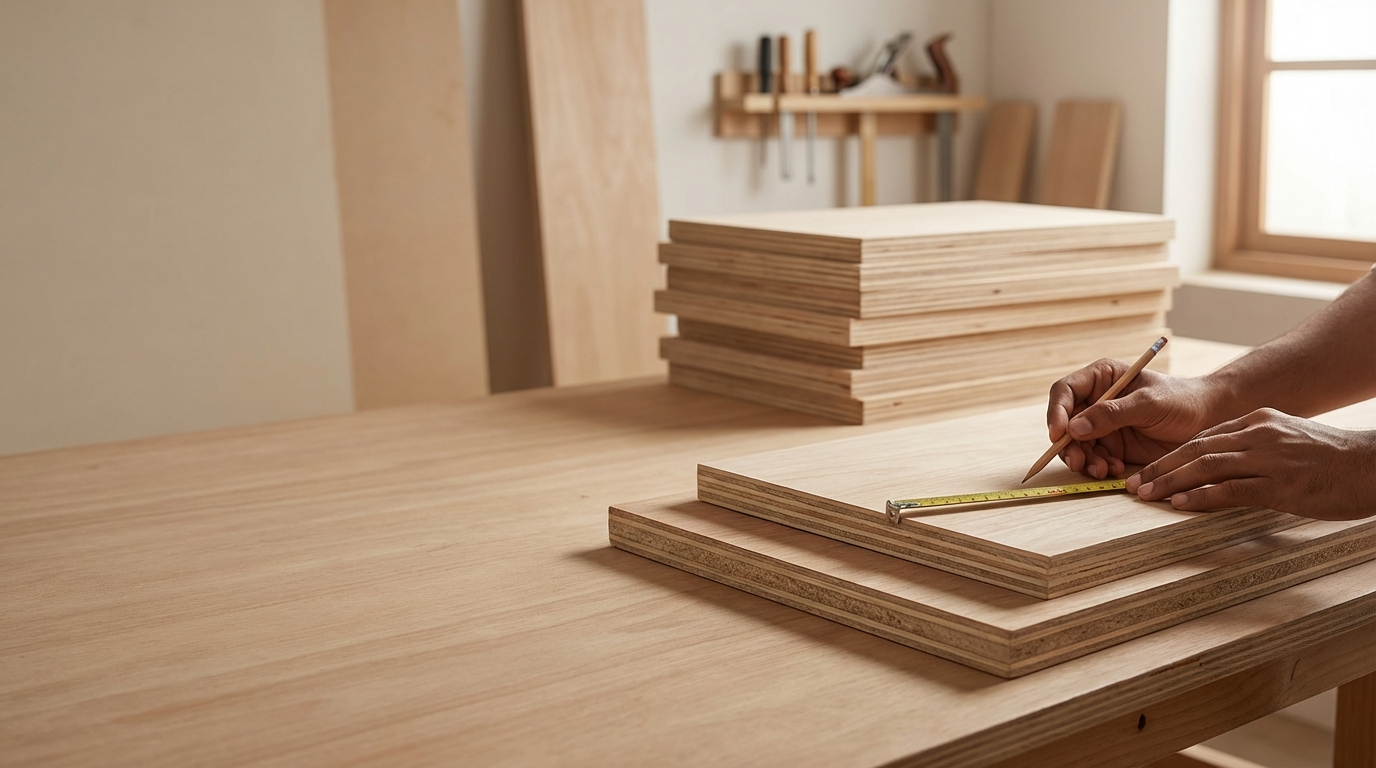
- Calculate exact square footage needed before visiting dealers
- Factor 10-15% wastage in cutting
- Consider transport charges (usually ₹500-1500 per load)
- Bulk purchases (10+ sheets) typically negotiate 5-8% discount
- As detailed in plyprice.com's pricing database, prices fluctuate 10-15% seasonally
Frequently Asked Questions
Is MR plywood waterproof enough for kitchens?
MR plywood is not waterproof and is unsuitable for kitchen applications despite being labeled "moisture resistant." This grade only handles ambient humidity, not steam exposure or water splashes common in Indian kitchens. Using MR grade in kitchens leads to edge swelling, laminate peeling, and structural weakening within 18-24 months. BWR grade is the minimum requirement for kitchen cabinets, with BWP recommended for under-sink areas. The price difference of ₹30-50 per sq ft between MR and BWR is negligible compared to replacement costs. Always insist on BWR or higher for any kitchen furniture regardless of dealer suggestions to reduce costs.
What thickness plywood is best for wardrobe carcass?
18mm or 19mm plywood is ideal for wardrobe carcass construction in Indian homes, providing adequate structural strength for vertical panels, horizontal shelves, and reliable screw-holding for hinges. This thickness supports typical wardrobe loads of 50-80 kg per shelf without sagging over time. Wardrobe backs can use 6mm plywood to reduce weight and cost. For extra-wide wardrobes exceeding 900mm internal width, consider 25mm plywood for horizontal shelves to prevent bowing. Shutters perform well with 18mm thickness, balancing weight with rigidity. Never use 12mm plywood for wardrobe carcass as it lacks structural integrity for long-term use with heavy contents.
How do I identify genuine ISI-marked plywood?
Genuine ISI-marked plywood displays a permanent stamp (not sticker) showing the ISI logo, license number (starting with CM/L), standard number (IS:303 or IS:710), and manufacturer details. This stamp appears on every sheet, typically near edges. Verify the license number on the Bureau of Indian Standards website by searching the manufacturer name. Fake ISI marks often have unclear printing, incorrect formatting, or mismatched license numbers. Additionally, request the test certificate from the dealer and match batch numbers. Premium brands stamp their name alongside ISI marks. Plyprice.com recommends purchasing only from authorized dealers who provide GST invoices mentioning specific ISI grades.
Can BWR plywood be used in bathrooms?
BWR plywood should not be used for bathroom furniture where direct water contact occurs regularly. While BWR withstands temporary water exposure (6-8 hours), bathroom environments involve continuous humidity, water splashes, and condensation that exceed BWR specifications. Use BWP/Marine grade (IS:710) for bathroom vanities, cabinets, and storage units. Even with BWP, complete edge sealing with PU sealant and waterproof surface finishing (PU coating or marine paint) is essential. Better alternatives for bathroom furniture include HDHMR, WPC boards, or marine-grade blockboard specifically designed for wet area applications.
What is the difference between calibrated and regular plywood?
Calibrated plywood undergoes additional sanding processes ensuring uniform thickness across the entire sheet (±0.2mm tolerance), while regular plywood may vary ±0.5-1mm. This precision matters critically for modular furniture, CNC routing, and high-end laminate application where uneven surfaces show through finishing. Calibrated plywood provides perfectly flat surfaces for edge banding and assembly without additional processing. Regular plywood requires on-site sanding and thickness adjustment. The price premium of ₹15-30 per sq ft for calibrated sheets saves labor costs in professional installations. For carpenter-made traditional furniture, regular plywood performs adequately when skilled craftsmen handle surface preparation.
Which plywood grade is best for humid coastal cities?
BWR grade minimum is recommended for all interior applications in coastal cities like Mumbai, Chennai, Kochi, Visakhapatnam, and Kolkata, where ambient humidity consistently exceeds 70%. Even bedroom furniture benefits from BWR rather than MR grade in these regions. For wet areas and bathrooms, only BWP/Marine grade is suitable. The higher humidity accelerates moisture absorption in lower grades, causing warping, edge swelling, and adhesive failure faster than inland areas. Additionally, coastal air contains salt, which corrodes poorly protected surfaces. Invest in quality edge banding and surface sealing regardless of grade. The additional cost of using BWR throughout in coastal areas prevents premature furniture replacement.
How much plywood is needed for a standard 3-door wardrobe?
A standard 3-door wardrobe (7ft height x 6ft width x 2ft depth) typically requires 4-5 sheets of 18mm plywood for carcass and shutters, plus 1-2 sheets of 6mm plywood for backing and drawer bottoms. Total requirement approximately 180-220 sq ft, varying with internal configuration (drawers, shelves, loft). Calculate exact requirements by measuring each panel: two side panels (7x2 ft each), three vertical partitions, base, top, and shelves. Add 15% for cutting wastage. Pre-plan cutting layouts with your carpenter to optimize sheet utilization. For complex designs with multiple drawers and internal fittings, requirements may increase by 20-30%. Get exact calculations from your carpenter or interior designer before purchasing.
Is commercial grade plywood suitable for home furniture?
Commercial grade plywood (below MR standard) is unsuitable for quality home furniture requiring longevity. This grade lacks proper adhesive treatment, uses inferior core veneers, and offers minimal moisture resistance. While significantly cheaper (₹40-55 per sq ft), commercial grade typically fails within 3-5 years in Indian conditions. Acceptable uses include temporary storage furniture, packaging, back panels in budget furniture, and applications where aesthetics and durability aren't priorities. For any visible furniture or items expected to last 10+ years, MR grade is the minimum acceptable standard. The savings on commercial grade never justify replacement costs and inconvenience of premature furniture failure.
What causes plywood to warp, and how can it be prevented?
Plywood warping results primarily from uneven moisture absorption across sheet thickness, causing differential expansion on opposite faces. Common causes include using inappropriate grade for moisture exposure, improper storage before installation, lack of edge sealing, installation against damp walls, and single-side laminate application. Prevention requires matching grade to moisture exposure (BWR/BWP for humid areas), sealing all edges before installation, applying balanced laminates on both faces when possible, maintaining gap from walls during installation, and ensuring proper room ventilation. Once warped, plywood cannot be fully restored—prevention is essential. Store plywood flat with support across entire length before use.
Should I choose hardwood or softwood core plywood?
Hardwood core plywood (Gurjan, Eucalyptus) offers superior screw-holding strength, density, and durability compared to softwood core (Poplar, Meranti) and is recommended for structural furniture applications including wardrobe carcasses, kitchen cabinets, and bed frames. Softwood core provides adequate performance for non-structural applications like backing panels, decorative elements, and lightweight furniture at 15-20% lower cost. In humid regions, hardwood core handles moisture variations better without dimensional changes. Poplar core specifically performs poorly in humid conditions despite lower pricing. When budget allows, default to hardwood core for all visible furniture. Plyprice.com recommends Gurjan core as the premium choice for Indian climate conditions.
How do I calculate plywood quantity for modular kitchen?
Modular kitchen plywood calculation follows the formula: total linear feet of cabinets × depth × 2 (for carcass sides) + shelf area + shutter area + back panel area. A typical 10-foot L-shaped kitchen requires 8-10 sheets of 18mm plywood and 2-3 sheets of 6mm for backs. Break down by components: base cabinets (2ft depth × 3ft height × linear length), wall cabinets (1.25ft depth × 2.5ft height × linear length), and shutters (all door faces). Add 20% for wastage and complex cuts. Professional kitchen designers provide exact cutting lists optimizing material usage. For DIY calculations, measure each cabinet component individually and sum total area, converting to 8x4 feet sheets.
What is the lifespan of quality interior plywood furniture?
Quality interior plywood furniture using appropriate grades lasts 15-25 years under normal usage conditions with proper maintenance. MR grade in dry environments: 10-15 years. BWR grade in normal conditions: 15-20 years. BWP grade in appropriate applications: 20-25 years. Factors reducing lifespan include incorrect grade selection, exposure to conditions beyond specifications, inadequate edge sealing, poor quality fittings, and neglected maintenance. Factors extending lifespan include quality laminates, proper ventilation in cabinets, regular cleaning, immediate attention to water exposure, and periodic hardware tightening. Well-made plywood furniture often outlasts engineered alternatives and approaches solid wood longevity at significantly lower cost.
Can plywood furniture be repaired if damaged?
Plywood furniture is repairable for most common damages, unlike MDF or particle board which crumble when damaged. Surface scratches on laminate can be disguised with matching touch-up markers or complete re-lamination of affected panels. Loose hinges can be fixed by filling old screw holes with wooden dowels and adhesive, then re-drilling. Minor water damage (edge swelling) can be sanded and resealed if caught early. Delamination requires professional re-gluing with clamps. Structural damage to carcass may require panel replacement, easily done without complete furniture reconstruction. For repairs, match plywood grade and thickness to existing material. Beyond 30% damage, replacement becomes more economical than repair.
Is termite treatment necessary for branded plywood?
Quality branded plywood comes pre-treated with borer and termite resistant chemicals during manufacturing, eliminating need for additional treatment in most applications. Check product specifications confirming "Borer and Termite Resistant" treatment before purchase. Additional treatment is advisable for ground-floor installations directly contacting flooring, furniture against external walls in termite-prone areas, and unbranded or commercial grade plywood regardless of location. Treatment options include spray application during installation (temporary) or pressure-treated plywood (permanent). Signs requiring attention: fine wood powder near furniture, hollow sounds when tapping, visible tunnels. Annual inspection prevents undetected infestations from causing extensive damage.
What finishing options work best on interior plywood?
Interior plywood accepts multiple finishing options depending on application requirements and budget. Laminates (HPL/LPL) provide durability, easy maintenance, and vast design options—most popular for kitchens and wardrobes. Veneer finishing offers natural wood appearance at lower cost than solid wood. Paint/polish requires proper priming and works best on smooth-faced plywood. PU (polyurethane) coating provides excellent water resistance for wet-adjacent areas. Acrylic finish delivers high-gloss modern aesthetics. For best results, ensure plywood surface is smooth and dust-free before finishing. Edge banding conceals plywood layers for professional appearance. Quality finishing extends furniture lifespan by protecting surfaces from moisture, scratches, and UV damage.
Conclusion: Making the Right Plywood Choice for Your Interior
Selecting the best plywood for interior work requires balancing application requirements, climate conditions, and budget constraints. BWR grade emerges as the optimal all-rounder for most Indian homes, providing adequate moisture resistance without the premium cost of marine grade. Reserve MR grade strictly for consistently dry environments and BWP for genuine wet zones.
Key takeaways for Indian homeowners: always match grade to moisture exposure, prioritize 18mm thickness for structural components, verify ISI certification authenticity, and invest in proper edge sealing regardless of grade. The modest additional cost of appropriate grade selection prevents expensive premature replacements.
For detailed brand-wise pricing, city-specific rates, and comprehensive material comparisons, explore plyprice.com's extensive resources covering plywood grades, MDF alternatives, and interior material selection guides tailored for Indian conditions.
Disclaimer: This content is provided for general informational purposes based on industry practices and publicly available information. Product specifications, standards, prices, and availability may vary by manufacturer, region, and time. Readers should independently verify details with manufacturers, dealers, or qualified professionals before making purchase or construction decisions.Want Plywood Suggestions?
Share a few details and a PlyPrice specialist will suggest suitable brands and connect you to responsive dealers.