Technology in Plywood Manufacturing
Innovation in the factory. How calibrated presses, core composers, and toxin-check technology are improving plywood quality in 2025.
Precision Engineering at the Heart of Modern Plywood Production
In India's plywood sector, where humid climates and demanding construction timelines challenge material performance, factory-level innovations are reshaping output quality. Factories now integrate automated systems to address longstanding issues like inconsistent thickness, internal voids, and adhesive emissions. These advancements—centered on calibrated pressing, core veneer composition, and emission monitoring—directly tackle buyer concerns in modular furniture, shuttering, and interior paneling. For contractors in Mumbai's monsoons or architects specifying for Delhi homes, understanding these processes reveals why certain plywood grades hold up better over time.
Calibrated Presses: From Variable Thickness to Factory-Standard Uniformity
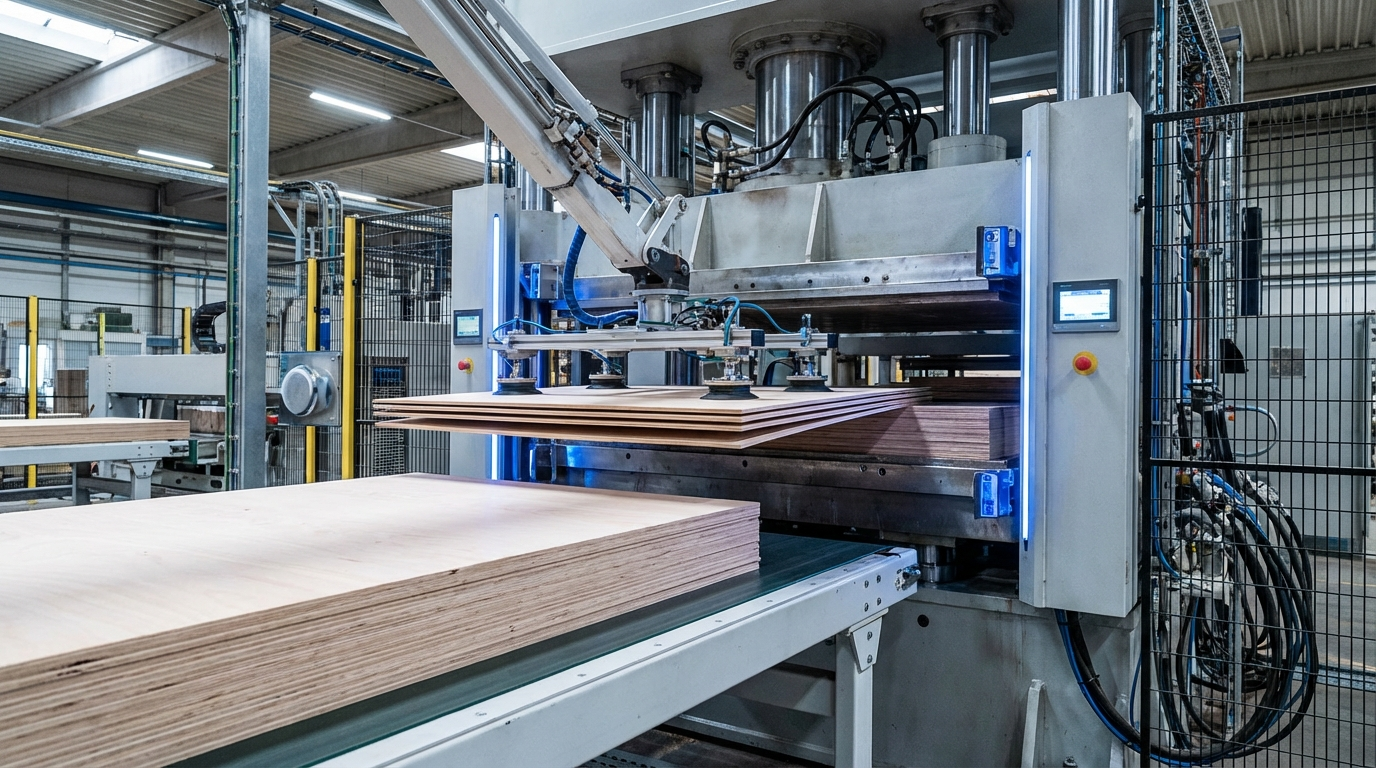
Traditional plywood pressing relies on hydraulic machines applying broad pressure, often resulting in sheets varying by 0.5-1mm in thickness due to uneven glue spread or veneer density. Calibrated presses introduce multi-stage automation: initial cold pressing aligns layers, followed by hot pressing at precise temperatures (typically 120-150°C), and final calibration via wide-belt sanders that grind surfaces to tolerances as tight as ±0.2mm.
In Indian factories, this sequence—cold press, hot press, re-cold press with face veneers, and final hot press—minimizes warping under post-lamination stresses. The result suits high-end applications like laminate overlay for wardrobes, where even minor thickness deviations cause alignment failures during CNC routing.
How Calibration Affects Real-World Durability
Consider a Kerala coastal project: uncalibrated sheets swell unevenly in 90% humidity, leading to delamination. Calibrated versions maintain flatness, reducing screw-holding failures by distributing loads evenly across plies. Dealers report 20-30% fewer returns on calibrated stock, as end-users notice smoother edging and fitting.
| Aspect | Traditional Pressing | Calibrated Pressing |
|---|---|---|
| Thickness Tolerance | ±0.5-1mm | ±0.2mm or better |
| Press Cycles | Single hot press | Multi-stage (4+ cycles) |
| Ideal For | Shuttering, rough carpentry | Modular furniture, laminates |
| Cost Driver | Lower upfront | Higher due to sanding/automation (10-20% premium) |
Buyers evaluating BWR or BWP grades should verify factory calibration claims through edge measurements, as ISI norms (IS 303, IS 710) emphasize uniformity but lack inline enforcement.
Core Composers: Building Flawless Internal Layers Without Waste
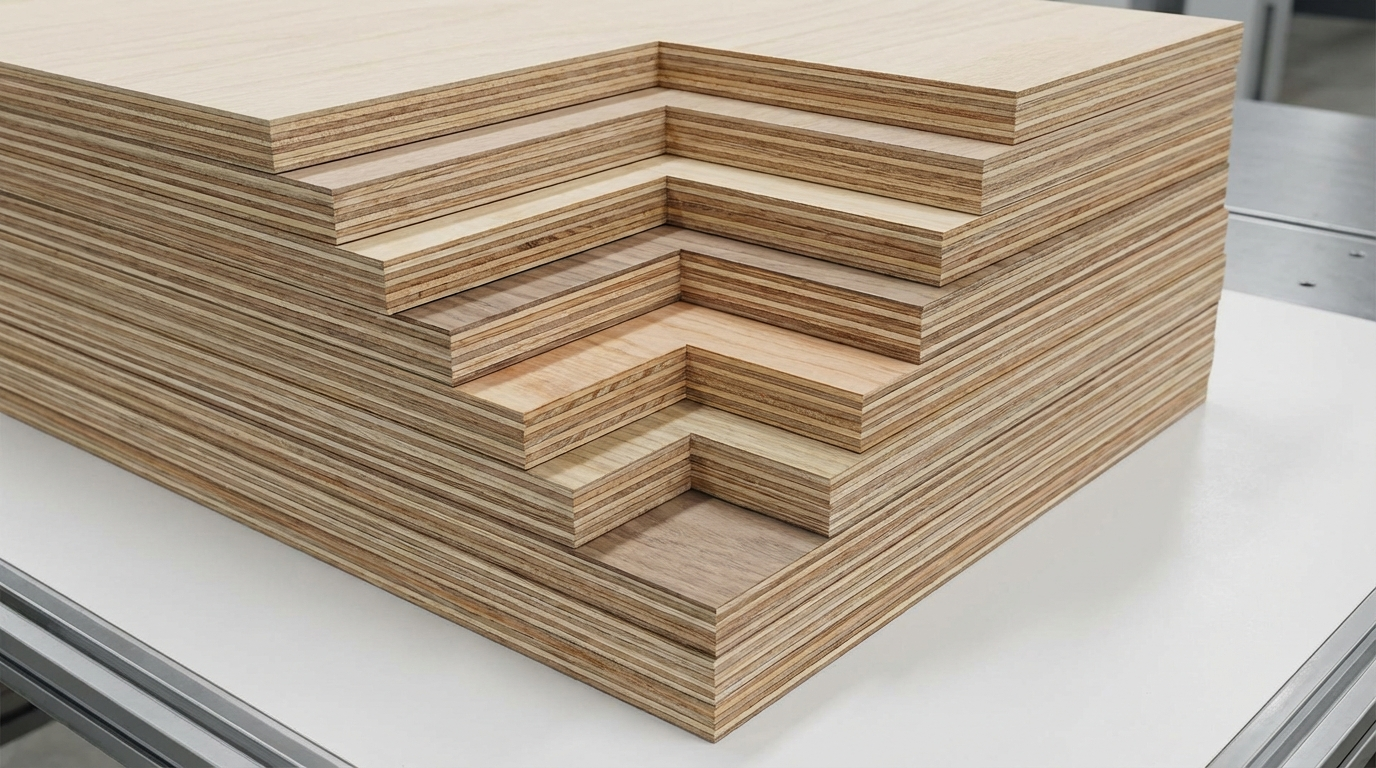
The core—typically 60-70% of plywood thickness—often hides gaps from mismatched veneer widths, causing weak spots that propagate under load or moisture. Core composer machines automate veneer assembly: they scan irregular "random" pieces from peeling, trim to uniform widths (e.g., 30-50mm), apply cross-grain finger-jointing or glue lines, and stack into full 8x4 sheets.
Advanced models use electronic detectors for joint precision, teeth jointers for strength without visible lines, and throughput speeds of 20-30 sheets per hour. In India, where poplar and eucalyptus veneers vary seasonally, this technology recovers 15-25% more usable core material, directly lowering production costs passed to dealers.
Achieving Zero-Gap Cores in Practice
Zero-gap plywood emerges here: composers ensure 100% layer contact, eliminating air pockets that trap moisture and foster fungal decay. For blockboard alternatives or HDHMR cores, similar composing prevents the "hollow tap" sound signaling voids. Interior designers specifying for humid Bangalore kitchens prioritize this, as it extends screw retention in cabinets by balancing shear forces across the panel.
Regional variations matter—northern factories with stable timber use wider veneers, while southern ones lean on composers for humid-warped stock.
- Input: Random veneers (20-100mm wide)
- Process: Auto-trim, joint (glue/teeth), stack orthogonally
- Output: Void-free core sheets for pressing
- Benefit: 10-15% stronger bending resistance per ply count
Toxin-Check Technologies: Inline Monitoring for Safer Adhesives
Formaldehyde from urea-formaldehyde (UF) resins in MR-grade plywood off-gases over years, exacerbating indoor air quality in sealed urban apartments. Toxin-check systems—spectrophotometers, perforator extractors, or climate chambers—measure emissions in real-time or post-production, targeting E1 (<0.124 mg/m³) or E0 levels.
Indian factories adopt perforator methods (EN 120 equivalent) for quick glue-content checks and desiccator tests per BIS standards. Phenolic or MUF resins in BWP grades naturally emit less, but inline gas analyzers now flag batches exceeding thresholds before pressing, integrating with Industry 4.0 for traceability.
Navigating Emission Standards in India's Market
While global TSCA Title VI sets hard limits, India's voluntary CARB Phase 2 compliance varies by exporter-oriented plants. Homeowners in polluted metros like Kolkata demand low-emission proofs; architects request test certificates showing <5mg/100g formaldehyde content. This tech raises base costs but cuts health-related callbacks.
| Test Method | What It Measures | Relevance to Buyers |
|---|---|---|
| Perforator (Quick) | mg/100g extractable HCHO | Glue quality indicator |
| Desiccator Chamber | ppm release over 24hrs | ISI compliance check |
| Climate Chamber | µg/m³ over 28 days | Long-term indoor safety |
Synergistic Effects: How These Technologies Elevate 2025 Plywood Performance
Combined, calibrated presses with composed cores and verified adhesives yield panels with 25-40% better screw pull-out (over 200kg per point) and <10% thickness swell after 72-hour boils—critical for BWP marine or monsoon-exposed shuttering. In Gujarat's furniture hubs, this integration supports CNC automation, reducing waste by 15%.
For contractors: Prioritize factories with Raute or Chinese composer lines for core reliability. Homeowners: Calibrated, zero-gap edges signal modular readiness. Dealers: Stock premiums justify in high-humidity zones like Chennai, where traditional ply fails 2x faster.
Regional Adoption and Buyer Decision Logic
- North India (Delhi-NCR): High automation; focus on emission-tested for apartments.
- South India (Kerala-TN): Core composers combat timber variability; calibrated for exports.
- East (WB-OD): Balancing cost with toxin checks for budget housing.
Buyer Checklist for Tech-Enhanced Plywood in 2025
Inspect beyond labels:
- Measure thickness at four corners (<0.3mm variance).
- Tap core for solid tone (no hollows).
- Request emission test reports (E1+).
- Verify multi-press cycle via factory tour or certs.
- Compare load tests for your use (furniture vs. formwork).
These technologies don't eliminate all variables—timber sourcing remains key—but they standardize quality amid India's 8-10% annual market growth.
Looking Ahead: Automation and Sustainability Integration
By late 2025, AI-driven presses predict glue cure times, while bio-resins cut emissions further. For India's 235+ billion rupee sector, factories blending these with recycled veneers will lead, offering contractors reliable specs amid raw material flux. Specifiers gain from traceable batches, ensuring decisions align with site realities over marketing claims.
Want Plywood Suggestions?
Share a few details and a PlyPrice specialist will suggest suitable brands and connect you to responsive dealers.