Plywood Business Margin: Dealer Margin Structure Explained
Plywood margins in India are layered: stockists, dealers and retailers each take a share based on the risk, volume and credit they carry, a chain most common in tier-2 and tier-3 cities. See typical margin structures, sheet price examples and how dealers protect profit.
Last updated: . Margin ranges are indicative; 2026 brand price changes checked against company announcements.
Navigating the Plywood Supply Chain: Where Margins Emerge
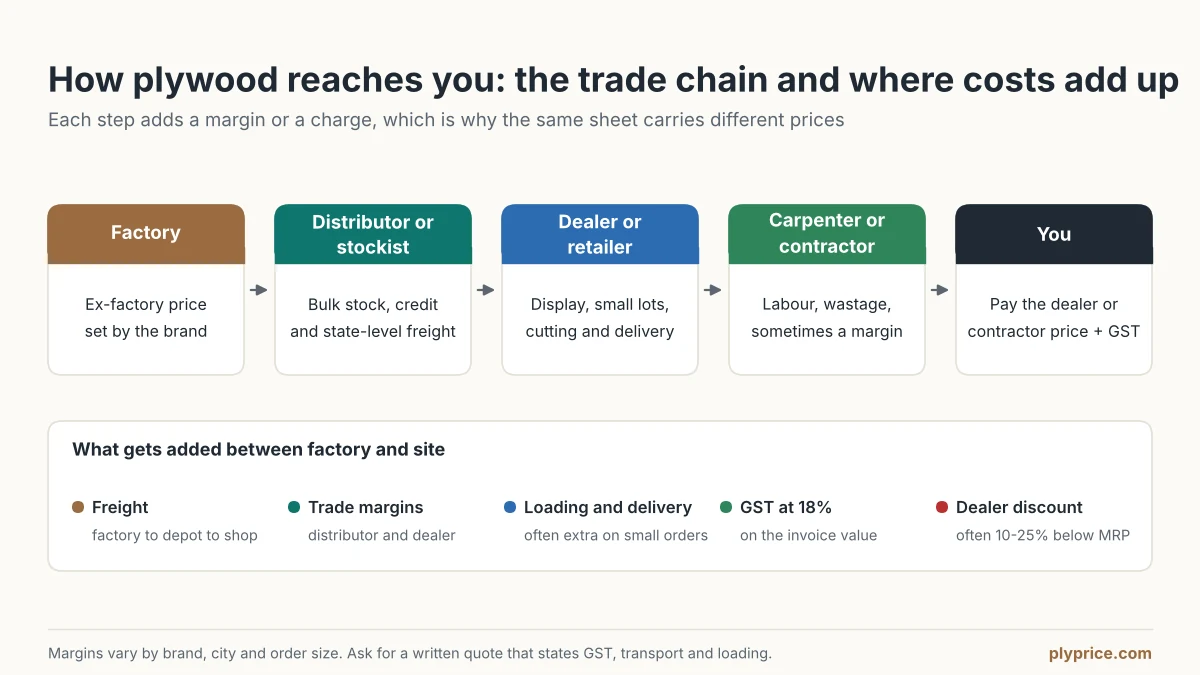
In India's plywood market, the path from mill to end-user involves multiple intermediaries, each capturing value based on risk, volume handled, and market access. Manufacturers produce raw plywood sheets, passing them to stockists or primary dealers who manage bulk logistics across states. These dealers supply sub-dealers or retailers, who then serve contractors, carpenters, and homeowners. This layered structure, common in tier-2 and tier-3 cities, arises from fragmented demand, regional raw material sourcing (like poplar in Punjab or rubberwood in Kerala), and the need for credit extension amid construction cycles tied to monsoons and festivals.
Margins form at each step as a buffer against price volatility in adhesives, timber, and transport fuels. Unlike direct-to-consumer goods, plywood's bulk nature (8x4 ft sheets weighing 30-60 kg) favors volume players, compressing margins for low-turnover outlets. Understanding this chain reveals why a dealer in Gujarat might net differently from one in Bihar, driven by proximity to mills and buyer credit terms.
Dealer vs Retailer: Distinct Roles Shaping Margin Expectations
Dealers operate as wholesalers, buying in truckloads (500-2000 sheets) directly from mills or authorized distributors. Their role centers on storage, credit to retailers (often 30-90 days), and intra-state distribution. Retailers, conversely, handle smaller volumes (50-200 sheets per order), focusing on last-mile delivery, cutting-to-size services, and direct sales to fabricators or DIY buyers.
This distinction dictates margin profiles: Dealers prioritize turnover over per-unit gain, absorbing bulk discounts but facing inventory risks from seasonal slumps. Retailers leverage higher per-sheet markups through value-adds like lamination previews or urgency premiums during peak Diwali renovations. In practice, the split between dealer and retailer varies by city, brand and order size.
Core Responsibilities and Risk Allocation
- Dealers: Bulk procurement, GST-compliant invoicing, credit risk on retailer defaults (common in contractor-heavy markets).
- Retailers: Customer-facing demos, waste management from cuts, bad debt from homeowners delaying payments post-installation.
Breaking Down Typical Margin Structures Across the Trade
Margins in the Indian plywood trade layer cumulatively from ex-mill pricing, reflecting product grade (MR for interiors, BWR for humid zones, BWP for coastal exteriors) and thickness (6-25 mm). Ex-mill costs form the base, with each intermediary adding 5-20% based on negotiation power and market tightness.
| Supply Chain Stage | Common Gross Margin Range | Key Influences | Example Scenario (MR Plywood, 18mm) |
|---|---|---|---|
| Manufacturer to Dealer | 8-12% (dealer purchase discount) | Volume commitment, mill capacity utilization | Dealer buys at Rs 2,000-2,500/sheet ex-mill |
| Dealer to Retailer | 10-15% | Credit period offered, transport inclusion | Retailer pays Rs 2,300-2,800/sheet |
| Retailer to End-User | 12-20% | Services like edging, local competition | Contractor/homeowner pays Rs 2,700-3,400/sheet |
| Total Chain Markup | 30-50% over ex-mill | Full stack, excluding GST (18%) | End price reflects regional freight variance |
Note: these are indicative ranges from typical trade practice, not published figures. Brands do not disclose trade margins, and actual margins move with brand, city, credit terms and raw material costs. When you buy, ask for a written quote that shows GST, transport and loading separately.
Factors Driving Margin Variations in Regional Contexts
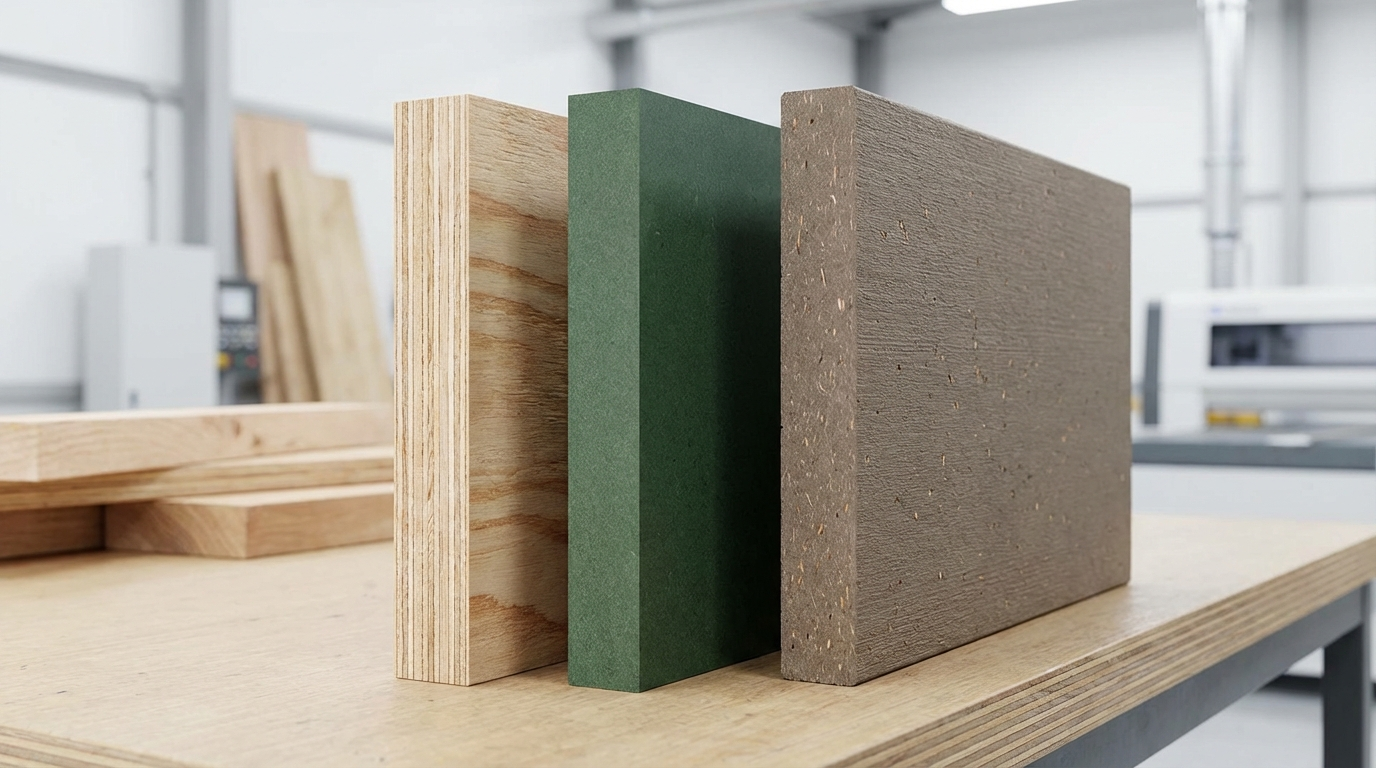
India's plywood ecosystem fragments margins geographically. Markets close to plywood clusters such as Yamunanagar in Haryana usually see tighter dealer margins because of mill proximity and heavy competition. Markets far from the clusters carry more freight and stockholding cost, which shows up in local prices. Many dealers now also stock MDF and HDHMR to keep modular furniture buyers.
Product mix matters too: commercial MR plywood moves on volume with slimmer spreads, while specialised grades such as marine plywood sell in smaller volumes at wider spreads. Thin specialty sheets such as flexi ply can also carry higher relative margins than heavy 25mm shuttering sold to construction sites.
Volume, Credit, and Competition Interplay
High-volume dealers negotiate better rates from mills but often extend long credit, which ties up cash. Intense rivalry in large cities limits retailer markups and pushes many to add HDHMR and other boards for modular kitchens.
Profitability Analysis: Trends Reshaping Dealer Viability
After resin chemical costs rose sharply in March and April 2026, plywood dealer profitability hinges on input cost stabilization amid global timber curbs and domestic afforestation pushes. In April 2026, CenturyPly raised plywood prices by about 7% and Greenply by about 4-5%. When list prices rise faster than local demand, dealer margins get squeezed unless the mix shifts towards premium grades.
Housing demand supports BWR and BWP sales in humid regions, while engineered boards such as HDHMR are taking share from MR plywood in interiors, so dealers need sales teams that can sell both.
| Trend | Impact on Dealer Margins | Outlook | Mitigation Angle |
|---|---|---|---|
| Raw Material Volatility | Downward pressure | Resin and timber costs stay volatile | Lock-in mill contracts |
| Regulatory Shifts (BIS enforcement) | Neutral to positive (quality premiums) | ISI mark mandatory since February 2025 | Stock certified grades |
| Competition from Engineered Wood | Compression in low-end (MR) | HDHMR keeps gaining share | Bundle offerings |
| Demand from Infra Projects | Upside (shuttering plywood) | Steady demand | Target contractors early |
Net outlook: dealers with a diversified portfolio, tight credit control and fast stock turns are best placed to protect margins.
Operational Strategies for Margin Optimization
To counter cost headwinds, dealers should audit inventory turns and tier clients: Offer volume rebates to high-credit retailers while premium-pricing slow-payers. Use digital tools for real-time pricing that factor in GST and freight, so spot sales are priced accurately.
Retailers benefit from site-specific bundling, such as pairing BWP plywood with marine-grade fittings for coastal projects, which can lift effective margins. Track mill certifications (IS:303 for MR) to justify premiums, avoiding commoditized trades. In credit-heavy markets, ask for part payment upfront to protect margins.
Decision Framework for Dealers
- Assess local chain depth: Shorten if possible via direct mill ties.
- Model scenarios: High-volume low-margin vs niche high-margin.
- Monitor macros: Timber auctions, monsoon forecasts for demand cues.
How Can a Plywood Dealer Stay Profitable?
Mastering plywood margins demands blending chain awareness with adaptive tactics. In an evolving market, the dealers who thrive will be those balancing volume scale against value differentiation, navigating India's diverse regional demands without chasing unsustainable spreads.
Related guides on PlyPrice
Want Plywood Suggestions?
Share a few details and a PlyPrice specialist will suggest suitable brands and connect you to responsive dealers.