Plantation Timber in Plywood: How Eucalyptus and Poplar Feed India's Mills
Farm-grown eucalyptus and poplar now supply about 70-80% of India's plywood-grade wood, supporting over 1,900 manufacturing units in northern states alone. These fast-growing species ease pressure on forests and imports, though they differ from traditional hardwoods.
Last updated: . Grades and standards checked against current BIS standards.
The Rise of Agro-Forestry Amid India's Timber Shortage
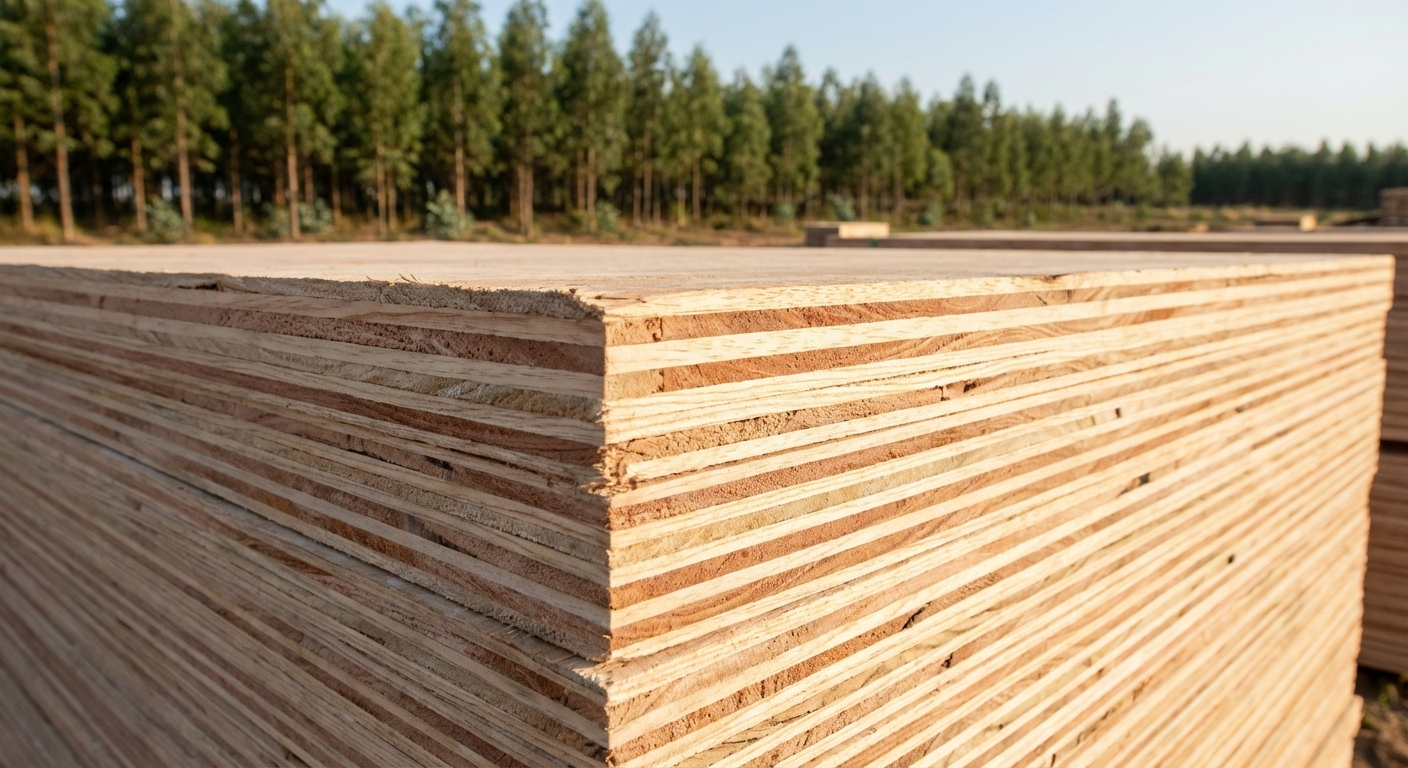
India's plywood sector faces chronic raw material constraints, with natural forest timber supplies dwindling due to conservation policies since the 1980s. Agro-forestry—integrating trees on farmlands—has filled this gap by enabling farmers to grow short-rotation species alongside crops. This shift began in the 1970s in Punjab, Haryana, and Uttar Pradesh, where progressive growers planted eucalyptus and poplar on field boundaries or as intercrops. By providing 70-80% of plywood-grade wood, agro-forestry now supports over 1,900 manufacturing units in northern states alone, reducing reliance on imports and stabilizing supply chains amid rising construction demands.
Farmers benefit from dual income: annual crops like wheat or sugarcane below trees, harvested every 6-8 years. Government initiatives, including clonal saplings from forest departments, have boosted yields to 25-30 cubic meters per hectare annually, far exceeding natural forests. For contractors and architects specifying plywood, this means more consistent availability, though regional variations persist—northern abundance versus southern imports.
Eucalyptus Plantations: Fueling Southern and Industrial Growth
Eucalyptus, introduced via forest department programs in the 1970s, thrives in diverse climates from Tamil Nadu to Gujarat. Its rapid growth—reaching harvestable size in 5-7 years—makes it ideal for high-volume plywood cores. Clonal varieties enhance uniformity, addressing variability in wild stock. In plywood manufacturing, eucalyptus veneers offer density advantages, contributing to structural integrity under India's humid conditions.
Processors adapt peeling techniques for its fibrous grain, yielding thinner, more pliable veneers suited for boiling water resistant (BWR) and boiling waterproof (BWP) grades per IS 710 norms. Homeowners in coastal areas favor eucalyptus-based marine plywood for moisture-prone zones like kitchens, as it bonds well with phenolic resins, minimizing delamination risks during monsoons.
Poplar's Dominance in Northern Agro-Forestry Systems
Poplar plantations exploded in the Indo-Gangetic plains, intercropped with staples for 4-6 years before felling. Lighter and straighter than eucalyptus, poplar logs peel efficiently into wide veneers, reducing waste in MR-grade plywood production. Haryana and Punjab lead, with farmers netting substantial returns from 3-3.5 quintals per tree at maturity.
For furniture makers, poplar's workability shines: it sands smoothly and accepts laminates evenly. However, its lower density demands careful glue spreads to meet ISI tensile strength tests, influencing choices for load-bearing shutters versus decorative panels.
Comparing Eucalyptus, Poplar, and Traditional Hardwoods
| Property | Eucalyptus | Poplar | Traditional Hardwoods (e.g., Gurjan) |
|---|---|---|---|
| Growth Cycle | 5-7 years | 4-6 years | 20+ years |
| Density (kg/m³) | Medium-High (500-700) | Low-Medium (350-500) | High (600-900) |
| Plywood Suitability | BWP cores, structural | MR/BWR faces/cores | Premium faces |
| Moisture Resistance Potential | Good with treatment | Fair; needs resins | Excellent inherent |
| Regional Availability | Pan-India | North/Central | Limited/Imported |
This table highlights why plantation species complement rather than replace hardwoods: eucalyptus for strength, poplar for volume.
Transforming Plywood Manufacturing with Plantation Inputs
Traditional plywood relied on dense forest logs, but plantation timber's smaller diameters necessitated process tweaks. Modern mills use spindleless peelers for uniform 1.2-3mm veneers, followed by hot-press bonding with urea-formaldehyde (MR) or phenol-formaldehyde (BWP). IS 303 and IS 710 explicitly permit poplar, eucalyptus, and silver oak, validating their use in certified grades.
For interior designers, this means plantation-based HDHMR boards resist warping better in air-conditioned homes, as controlled agro-forestry yields defect-free veneers. Manufacturers achieve 20-30% higher throughput, passing relative cost savings to dealers in competitive markets like Delhi-NCR.
Sustainability Edge: Carbon Sequestration and Forest Relief
Agro-forestry sequesters carbon while sparing natural forests, aligning with India's NDCs. Poplar-eucalyptus systems lock biomass equivalent to millions of tonnes annually, with plywood's recyclability amplifying lifecycle benefits. Unlike monocrops, boundary plantations enhance soil fertility via leaf litter, suiting India's smallholder farms.
Buyers verifying sustainability should check for chain-of-custody docs, as unregulated felling persists. Architects can specify plantation-sourced BWP for green certifications, balancing durability with eco-impact in humid tropics.
Practical Performance in Indian Construction Scenarios
In shuttering, eucalyptus plywood withstands 10-15 reuses under site curing, outperforming poplar in wet pours. For wardrobes, poplar's lightness eases installation, though contractors pair it with teak faces for premium feel. Moisture tests show treated plantation veneers matching ISI boil limits, critical for Mumbai's high-rises versus Rajasthan's dry builds.
Decision logic: Homeowners prioritize cost-stable MR grades; contractors seek BWR reusability; designers blend for aesthetics.
Economic Dynamics: From Farm to Retail
Plantation timber costs vary by girth and region—northern poplar undercuts southern eucalyptus by 10-20% due to density—but dealer markups reflect transport. Agro-forestry stabilizes prices amid shortages, benefiting bulk buyers. Farmers gain from buy-back schemes, though transit permits delay supplies in regulated states.
Navigating Challenges in Plantation-Derived Plywood
Eucalyptus's water draw sparks debates in water-stressed areas, prompting clonal low-water variants. Poplar faces pest pressures, mitigated by IPM. Quality inconsistencies from immature thinnings demand vendor audits. Policy hurdles like felling bans slow scaling, though reforms aim to streamline approvals.
Outlook: Scaling Sustainable Plywood Supply
As plywood demand keeps growing, agro-forestry will dominate via expanded clonal programs and industrial clusters. Expect hybrid eucalyptus-poplar mills, enhanced ISI testing for durability, and digital traceability for buyers. For stakeholders, this signals a resilient ecosystem: farmers prosper, manufacturers innovate, end-users access verified performance.
Related guides on PlyPrice
Want Plywood Suggestions?
Share a few details and a PlyPrice specialist will suggest suitable brands and connect you to responsive dealers.