Plywood Manufacturing Hubs in India: Yamunanagar, Perumbavoor and Gujarat
India's plywood output is concentrated in a few clusters: Yamunanagar in Haryana runs on poplar at high volume, Perumbavoor in Kerala on rubberwood, and Gujarat serves western and export markets. Nearness to timber, power and labour keeps costs down.
Why Is India's Plywood Production Concentrated in Clusters?
India’s plywood production concentrates in specific geographic clusters, driven by local availability of fast-growing timber species, access to power, labor pools, and supporting industries like veneer peeling and resin mixing. These hubs emerged organically as manufacturers clustered near raw material sources to minimize transport costs and leverage shared infrastructure, such as drying kilns and glue formulation units. Unlike dispersed small-scale operations, these concentrations enable economies of scale, influencing everything from production volumes to regional pricing variations.
Northern India dominates with poplar-dependent facilities, while southern hubs rely on rubberwood from plantation forestry. Western regions contribute through diverse timber mixes, and northeastern areas add niche outputs. For buyers—homeowners sourcing for interiors, contractors for bulk shuttering, or architects specifying grades—this mapping reveals supply reliability and quality traits tied to local conditions. Proximity to a hub often translates to fresher stock with lower logistics markups, critical in India’s dealer-driven market where transport can add 10-20% to landed costs depending on distance.
| Cluster | Primary Location | Main Raw Material | Key Strengths | Typical Output Focus | Regional Supply Reach |
|---|---|---|---|---|---|
| Yamunanagar | Haryana (near Punjab farmlands) | Poplar logs | High volume, ancillary units (300+ plywood factories, 350+ peeling mills) | Commercial MR, BWR grades; blockboards | North, Central India; exports via ICDs |
| Perumbavoor | Ernakulam, Kerala | Rubberwood | Export-oriented, in-house veneer processing | Thin packaging plywood, furniture-grade | South India, global markets |
| Gujarat Hubs | Morbi, Jamnagar, Sirmour | Mixed eucalyptus, acacia | Proximity to ports, ceramic-adjacent logistics | Shuttering, commercial plywood | West, exports to Middle East |
| Assam Valley | Darrang, others | Local hardwoods, bamboo blends | Natural timber access | Specialty boards | Northeast, East India |
| Emerging South | Andhra Pradesh, Karnataka | Plantation eucalyptus | Growing capacities | HDHMR, moisture-resistant | South, pan-India |
This distribution reflects India’s agro-climatic zones: poplar thrives in Indo-Gangetic plains with short 8-10 year rotations, rubber in humid Kerala requiring 7-year cycles post-tapping. Buyers should note that northern hubs prioritize volume for domestic construction booms, while southern ones adapt to export standards amid monsoon challenges.
Inside the Manufacturing Clusters of Yamunanagar, Kerala, and Gujarat
Yamunanagar: North India’s Volume Powerhouse
Situated in Haryana amid poplar plantations spanning Punjab and Uttar Pradesh, Yamunanagar hosts over 300 plywood units alongside 350 peeling and sawmill operations, churning out roughly 3 million square feet daily. The cluster’s logic stems from poplar’s rapid growth on alluvial soils, yielding straight-grained logs ideal for thin veneers in MR-grade interiors. Local farmers supply logs via auctions, fostering a tight raw material loop that buffers against national shortages.
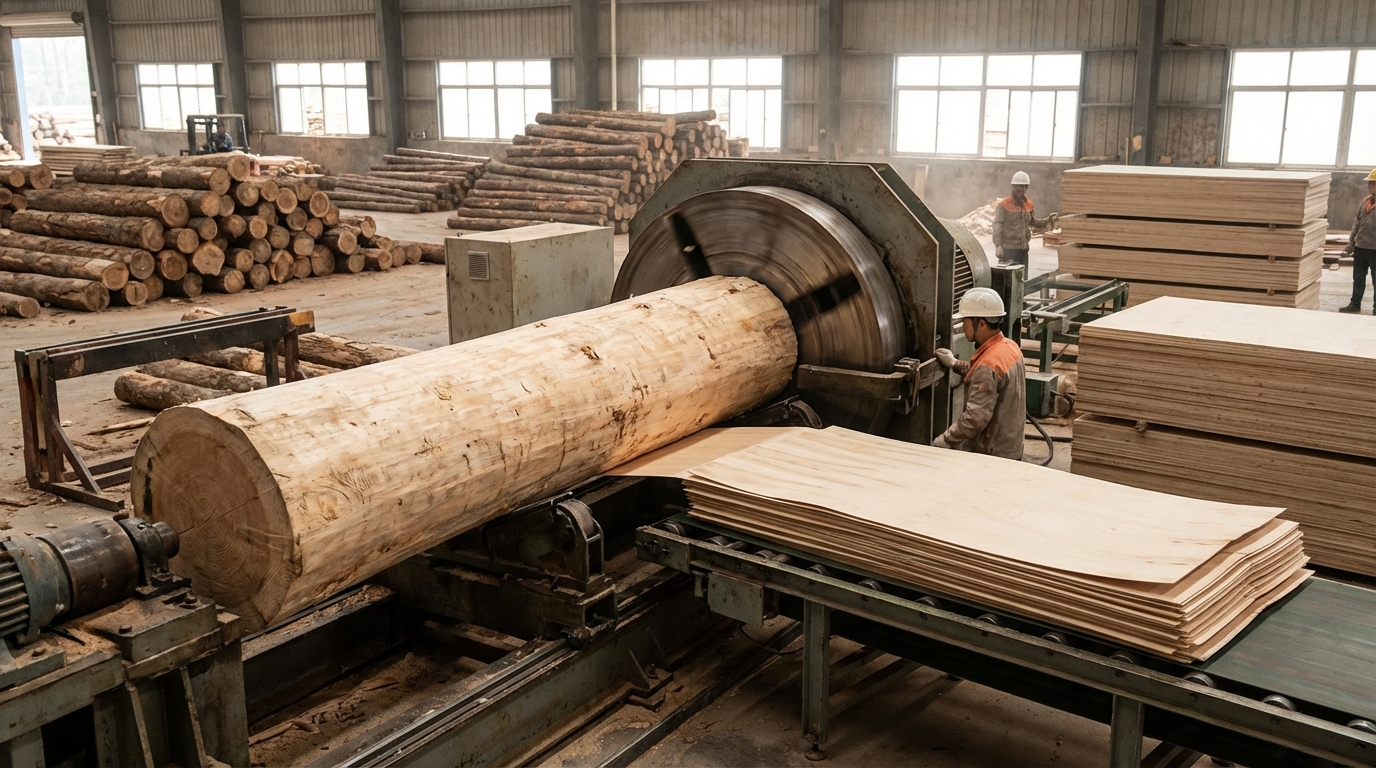
Production here emphasizes efficiency: logs peel into 1.5-3mm veneers, dried in cluster-shared kilns to combat northern humidity swings, then glued with urea-formaldehyde for MR or phenolic for BWR/BWP grades. Challenges include boiler fuel costs from rice husks and power reliability, yet the scale allows competitive dealer pricing for bulk buyers. For contractors in Delhi-NCR or Lucknow projects, Yamunanagar-sourced sheets offer consistent thickness for shuttering, though vigilance on ISI marking is key amid varying unit capabilities.
Kerala’s Perumbavoor: Rubberwood Resilience
In Ernakulam district, Perumbavoor stands as India’s premier southern plywood cluster, with dozens of units converting rubber plantation waste into veneers. Rubber trees, tapped for latex over 25 years, provide dense core wood post-felling, suited to Kerala’s heavy rains where poplar fails. Manufacturers process it in-house—slicing, kiln-drying to 8-12% moisture, and bonding for thin export plywood or denser furniture panels.
The cluster excels in packaging grades for global shipping crates, leveraging Kochi port proximity, but also supplies BWP marine plywood for coastal humidity. Flood-prone terrain demands elevated storage and quick-drying tech, raising costs yet yielding rot-resistant outputs. Interior designers favor Kerala boards for wardrobes in humid homes, as rubberwood’s natural oils enhance termite resistance over poplar. Dealer networks push these northward, though freight markups apply.
Gujarat: Western Adaptability and Export Edge
Gujarat’s plywood pockets in Morbi, Jamnagar, and Sirmour draw from eucalyptus and acacia plantations, benefiting from port access at Kandla and Mundra. Unlike volume-focused north, these hubs produce shuttering and commercial grades for infrastructure, with units integrated into ceramic logistics webs for shared trucking. Raw logs arrive from Rajasthan arid farms, processed into phenolic-bonded sheets for Gujarat’s dry heat and saline exposures.
Scale is moderate—fewer mega-units but agile operations—yielding cost advantages for western contractors. Production adapts with UV-stabilized glues for outdoor use, and proximity to resin suppliers curbs input volatility. Homeowners in Ahmedabad prefer local sourcing for minimal warping in variable climates, while exporters tap Middle East demand. Limitations include smaller poplar absence, pushing reliance on imports during shortages.
Supply Chain and Production Insights
Plywood supply chains in these clusters follow a linear yet localized flow: timber procurement (farmer auctions or plantations), peeling/sawing (cluster-specific), veneer grading/drying, glue mixing (UF/PF resins from urea/phenol), hot-pressing into panels, trimming, and dispatch. Yamunanagar’s chain is shortest, with peeling units feeding factories directly, reducing veneer defects to under 5%. Kerala emphasizes rubber seasoning to counter monsoon swelling, using steam kilns that add 5-10% to cycle times but boost durability.
Gujarat leverages truck fleets shared with tiles, enabling just-in-time delivery to Mumbai dealers. Nationally, Inland Container Depots (ICDs) near Yamunanagar streamline exports, cutting dwell times for overseas orders. Production varies by grade: MR for dry interiors (cheapest, poplar-favored), BWR for bathrooms (mid-range, balanced), BWP for marine (premium, phenolic-heavy). Cost drivers include log prices (poplar at Rs 800-1200/cuft, rubber higher due to processing), energy (boilers 20-30% of OPEX), and transport (north-to-south hauls inflate by distance).
| Factor | Yamunanagar | Kerala (Perumbavoor) | Gujarat |
|---|---|---|---|
| Raw Material Cost Driver | Poplar abundance, seasonal auctions | Rubber post-tapping yield | Eucalyptus imports possible |
| Moisture Control | Kiln drying for humidity | Steam + natural oils | UV/heat stabilization |
| Logistics Strength | ICDs for north/exports | Kochi port | Western ports, highways |
| Buyer Cost Impact | Low for north bulk | Higher freight south | Competitive west |
For decision-making, contractors assess cluster alignment with project needs: Yamunanagar for volume shuttering in high-rises, Kerala for humid-zone furniture, Gujarat for coastal formwork. Dealers blend sources for stock diversity, advising tests for glue-line strength amid raw material fluctuations. Emerging trends like agro-forestry expansion could shift balances, but current hubs dictate India’s plywood reliability and regional pricing logic.
Related guides on PlyPrice
Want Plywood Suggestions?
Share a few details and a PlyPrice specialist will suggest suitable brands and connect you to responsive dealers.