Plywood vs Veneer Board: Which Gives Strength and Which Gives Looks
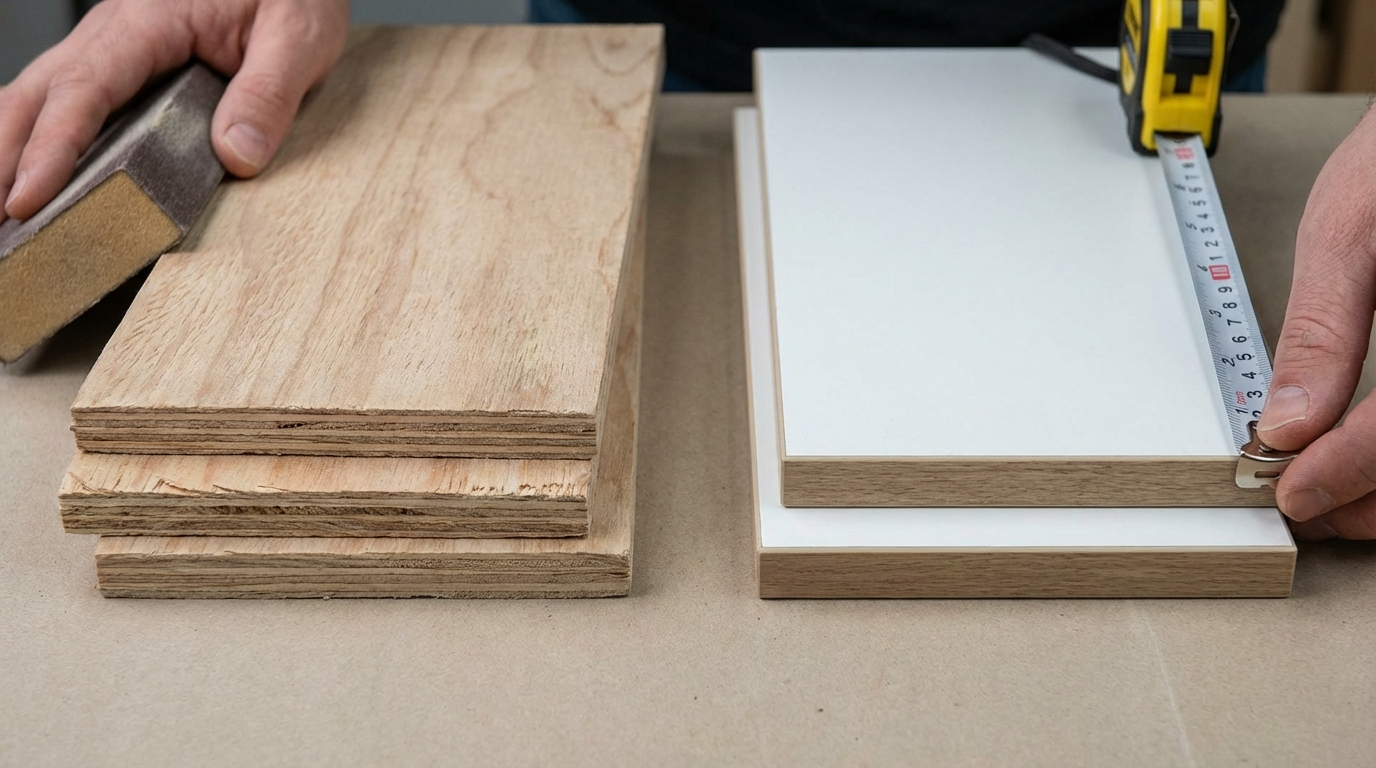
Veneer board and plywood work as layers rather than rivals: plywood supplies the strength for cabinets, wardrobes and structural parts, while veneer is a thin slice of real hardwood laid over a core for the look. Many Indian projects pair a plywood core with a veneer face.
Last updated: . Grades and standards checked against current BIS standards.
Decoding Plywood and Veneer: Structural Backbone Meets Aesthetic Finish
In Indian interiors and furniture projects, selecting between plywood and veneer board often hinges on balancing load-bearing needs with visual appeal. Plywood delivers the foundational strength required for cabinets, wardrobes, and structural elements exposed to daily wear, household humidity, and occasional water splashes. Veneer board, by contrast, layers a thin premium wood slice over a less robust core, prioritizing the natural grain and texture that solid hardwood mimics at a fraction of the cost. This core-surface dynamic shapes buyer choices, especially when contractors face monsoon-season installations or homeowners seek long-term value in humid coastal regions like Mumbai or Chennai.
Why Plywood Serves as the Reliable Core Material
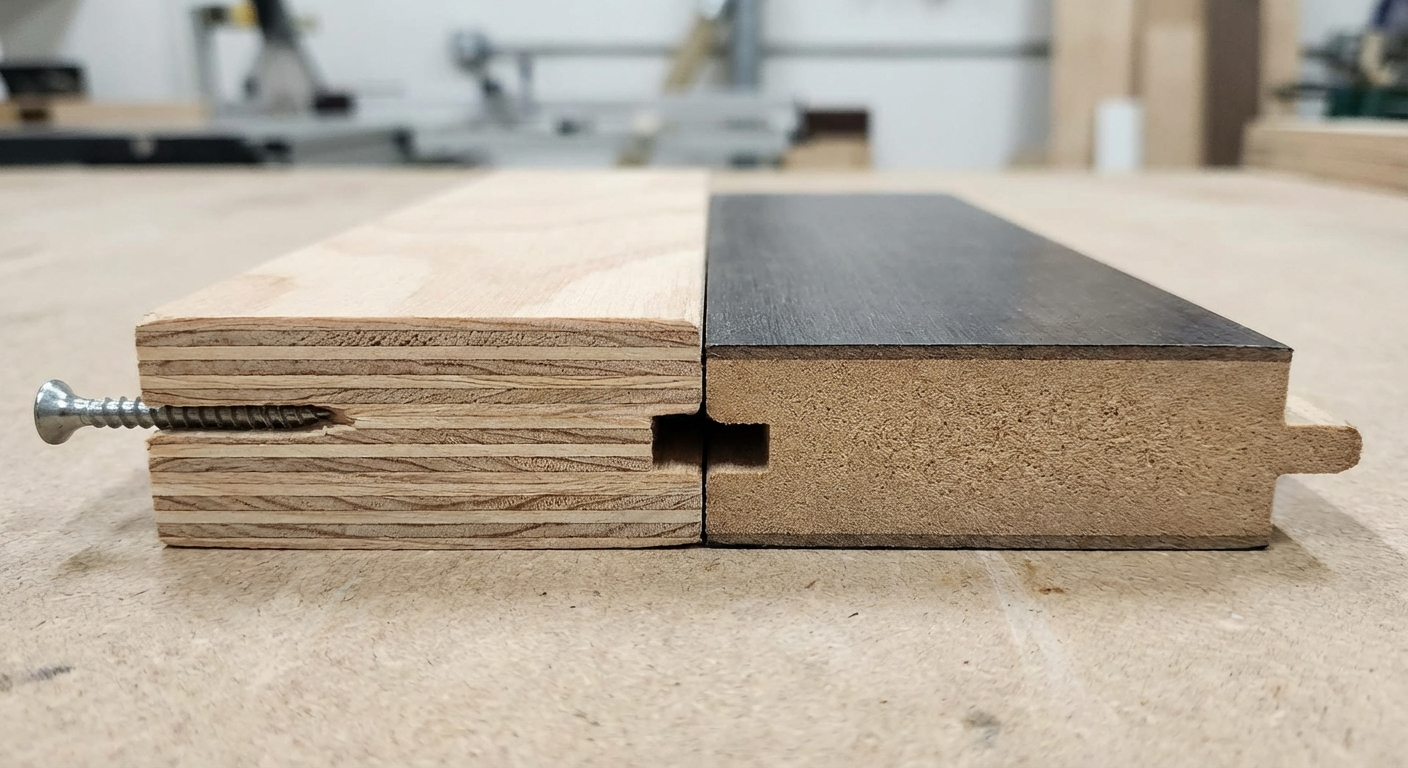
From first principles, plywood emerges from cross-laminated veneers—thin wood sheets rotated at 90-degree angles and bonded under heat and pressure. This orthogonal grain alignment counters wood's natural tendency to expand or contract unidirectionally with moisture fluctuations, a critical factor in India's variable climate where relative humidity swings from 30% in dry winters to over 90% during monsoons.
Consider a typical wardrobe carcass: plywood's void-free construction (per ISI IS:303 standards for MR grade) resists warping under the weight of stacked clothes or shelves supporting 50-100 kg per square meter. In dealer yards from Delhi to Kerala, contractors specify BWR (boiling water resistant) plywood for kitchens, where steam and spills test material integrity. The core's density—often 500-700 kg/cum—ensures screw-holding strength, vital for modular fittings in urban apartments with limited wall supports.
Durability stems from adhesive quality: urea-formaldehyde for MR suits dry interiors, while phenolic resins in BWP (boiling water proof) grades handle marine-like conditions in coastal plywood hubs like Kerala. Homeowners in Tier-2 cities like Jaipur evaluate ply's face quality—AA grade for smooth painting—while architects prioritize edge banding to seal exposed sides against termite entry, a perennial issue in tropical India.
Veneer Board's Role: Elevating Surface Aesthetics Without Compromising Base Economics
Veneer board typically pairs a thin (0.6-1.2 mm) real wood veneer atop engineered cores like particleboard, MDF, or even low-grade plywood. The veneer, rotary-cut or sliced from species like teak, sheesham, or oak, imparts authentic wood figuring—burred patterns or straight grains—that laminates merely simulate. In India's furniture ecosystem, this setup appeals to interior designers crafting premium looks for living rooms or hotel lobbies on budgets 20-40% below solid wood.
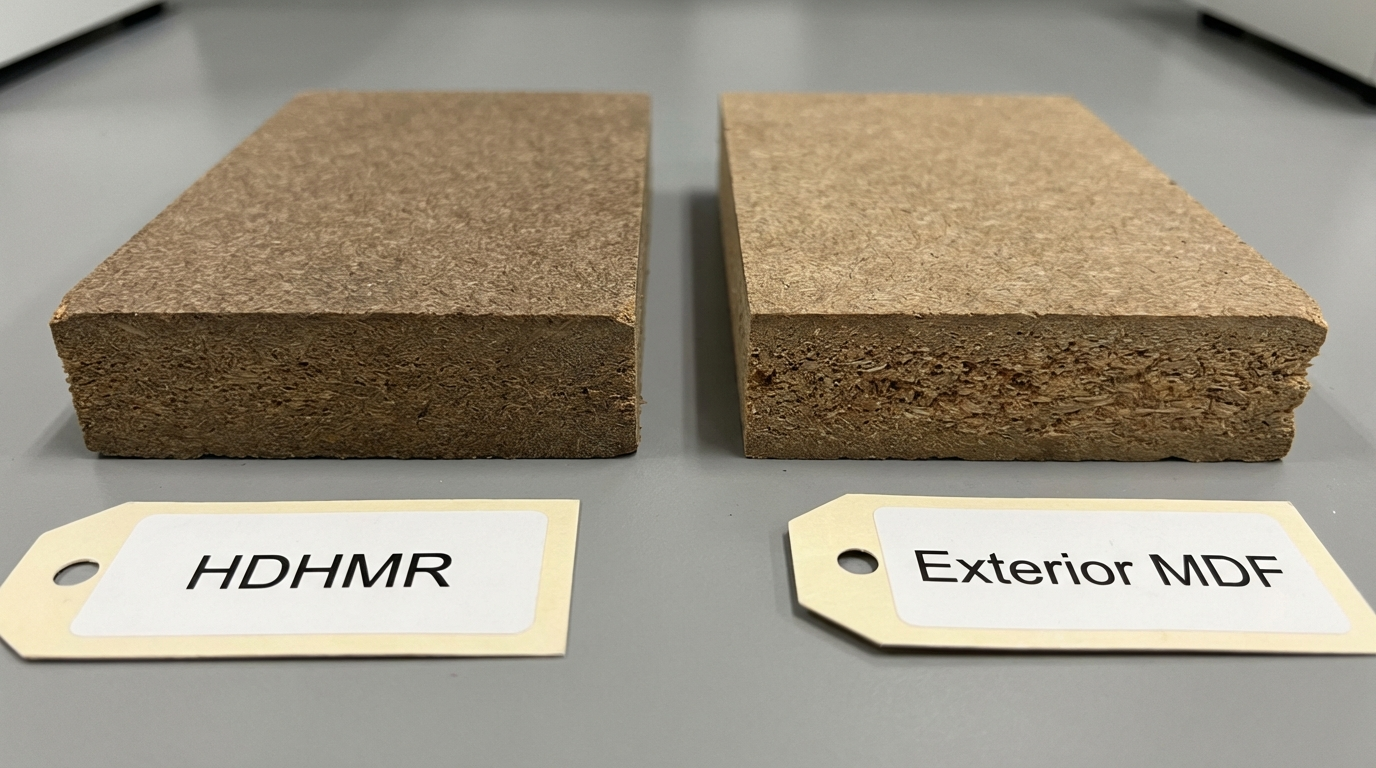
The underlying core dictates performance: HDHMR (high-density humidity-resistant MDF) offers better screw grip than standard particleboard, making veneer boards suitable for non-structural panels like door shutters or tabletops. Manufacturing involves vacuum pressing the veneer with PUR adhesives, ensuring adhesion even in high-humidity zones like Kolkata. Buyers note veneer's repairability—sanding and re-polishing revives scuffed surfaces—unlike laminates that chip irreparably.
Regional variations play in: South Indian dealers stock teak-veneered boards for traditional aesthetics, while North favors walnut veneers for modern minimalism. Thicknesses range from 16-19 mm for tabletops, with UV oil finishes enhancing durability against UV fading in sun-exposed balconies.
Core vs. Surface: A Side-by-Side Comparison Table
| Aspect | Plywood (Core Focus) | Veneer Board (Surface Focus) |
|---|---|---|
| Primary Strength | Structural integrity; high bending strength (20-40 N/mm²) | Aesthetic appeal; veneer grain depth up to 1 mm |
| Moisture Resistance | BWP grades withstand boiling; ideal for humid India | Core-dependent; HDHMR veneer boards manage 20-30% RH swings |
| Load-Bearing | Supports heavy shelves; excellent shear strength | Suitable for light panels; may sag under sustained loads |
| Finish Compatibility | Paintable; needs filling for ultra-smooth surfaces | Polish-ready; natural wood sheen post-application |
| Termite Resistance | Enhanced with treatments; core density deters infestation | Veneer vulnerable if core untreated; requires preservatives |
| Weight | Medium (18-25 kg/sheet for 18 mm) | Lighter cores reduce transport costs |
This table highlights why plywood anchors demanding applications, while veneer boards excel in visible, low-stress zones. Cost-wise, plywood runs higher per square foot due to premium face veneers, but veneer boards offset with economical cores—expect 15-30% savings in non-load-bearing uses.
Performance in Indian Conditions: Humidity, Heat, and Heavy Use
India's climate demands materials that handle deliquescence without delaminating. Plywood's multi-layer design distributes stress, preventing the buckling seen in single-core boards during Allahabad's humid summers. Field tests by contractors reveal BWR plywood retaining most of its strength after soaking, versus veneer boards where core swelling lifts the veneer edge.
For furniture manufacturing in hubs like Jodhpur, plywood cores pair with veneer overlays for hybrid strength—a common tactic yielding 25-50% cost efficiency over solid wood. Homeowners in Bangalore apartments opt for this combo for TV units, balancing aesthetics with earthquake-resistant rigidity (IS:10701 norms). Architects specify plywood substructures veneered for hotel headboards, where foot traffic tests surface hardness.
Durability Metrics: Screw Hold, Bending, and Impact Resistance
Screw withdrawal force measures core reliability: plywood averages 200-300 N per screw, doubling veneer board's particleboard bases. Bending modulus (3000-5000 MPa) suits plywood for flooring underlays in high-rise Pune projects. Impact tests simulate door slams—veneer boards dent veneer but rebound, while plywood absorbs via flex.
Termite trials in lab settings (per IS:12076) favor treated plywood, with veneer boards needing core impregnation. In dealer negotiations, buyers push for BIS certification stamps, verifying adhesive boil tests.
Cost Drivers and Pricing Logic in the Indian Market
Pricing orbits around glue grade, face quality, and region. Entry-level MR plywood starts lower for bulk contractor buys in Indore, escalating 30-50% for BWP in coastal depots. Veneer boards vary by species—teak commands premiums over acacia—and core: HDHMR adds 20% over MDF.
Dealer markups (15-25%) reflect transport from mills in Punjab or Assam; monsoon surcharges hike veneer imports. Homeowners calculate total ownership: plywood's longevity offsets upfront costs in 5-7 years for kitchens, while veneer suits short-cycle rentals in Gurgaon.
| Factor | Plywood Cost Influence | Veneer Board Cost Influence |
|---|---|---|
| Glue Type | +40% for BWP | Core grade dominant |
| Thickness | Linear per mm | Veneer species premium |
| Region | South lower due to mills | North higher for exotics |
| Volume | Dealer discounts 10-20% | Custom cuts add fees |
Application Scenarios: Matching Material to Project Needs
Structural Roles Where Plywood Dominates
Cabinets, beds, and partitions demand plywood's torsional stability. In Mumbai high-rises, 18 mm shuttering-grade ply forms temporary supports before veneering for permanence. Contractors favor it for site storage racks, enduring dust and rain.
Surface-Centric Uses for Veneer Boards
Wall panels, headboards, and desks leverage veneer's tactile luxury. Interior firms in Hyderabad veneer MDF for office partitions, achieving solid-wood vibes at half weight. Avoid for wet zones unless HDHMR-backed.
Hybrid Strategies for Optimal Value
Layer veneer on plywood for elite wardrobes: core strength plus surface elegance. This prevails in 60-70% of premium Indian projects, per industry observations. Architects in Chennai detail edge profiles to mask joints, enhancing seamlessness.
Buyer Decision Framework: Homeowner, Contractor, Designer Perspectives
Homeowners prioritize lifespan—plywood for kids' rooms, veneer for guest areas. Contractors weigh labor: plywood cuts cleanly, reducing site waste by 10-15%. Designers chase trends—walnut veneer on ply for biophilic designs in Noida villas.
- Inspect at Source: Tap faces for voids; check emission certificates for indoor air.
- Test Samples: Simulate humidity with wet cloth overnight.
- Negotiate Specs: Demand warranties (1-5 years) tied to grades.
Common Pitfalls and Maintenance Insights
Misapplying veneer boards as cores leads to sagging shelves; oversanding plywood faces dulls grains. Maintenance: oil veneers quarterly, seal plywood edges annually. In termite-prone Coimbatore, annual sprays extend life 2x.
Regulatory note: BIS marks guide quality, but field verification trumps labels—probe glue boils visually.
Strategic Pairing: When to Combine Plywood Core with Veneer Surface
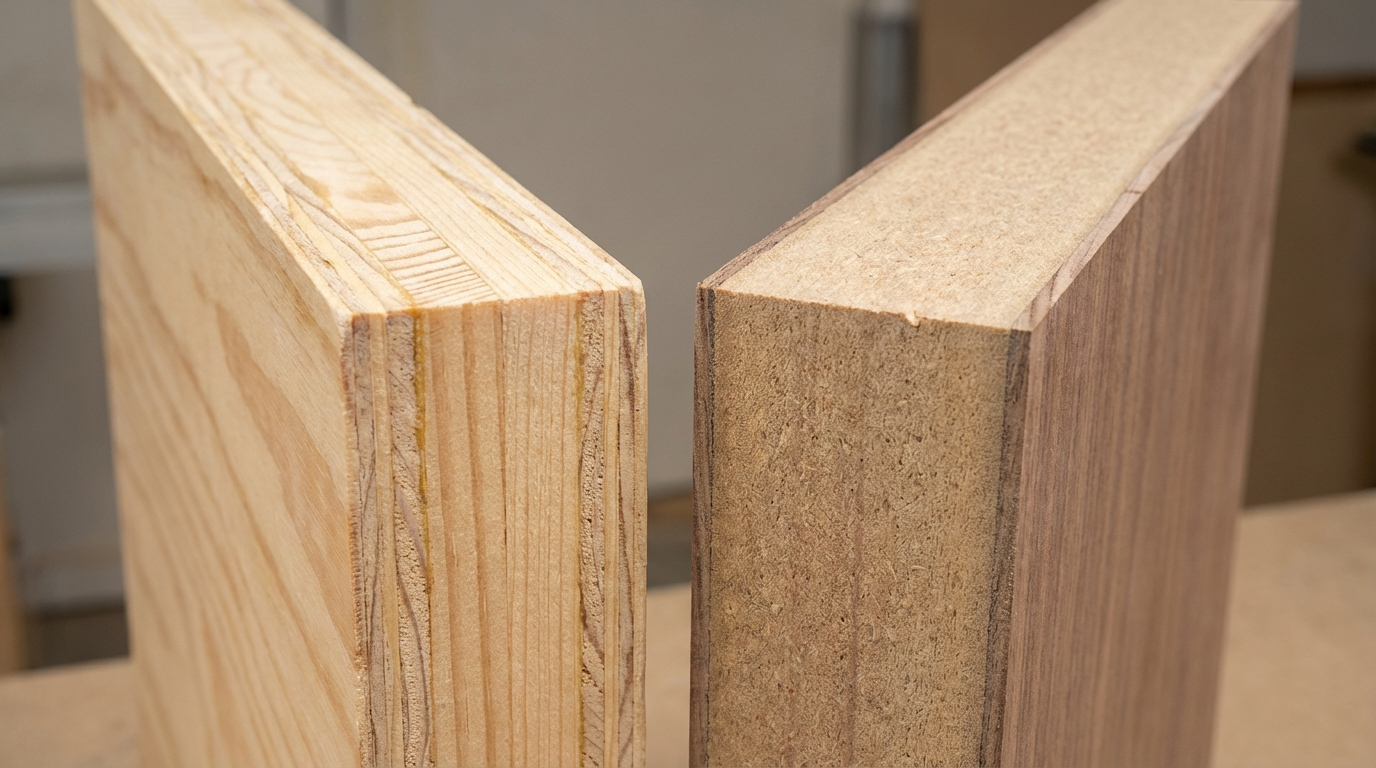
The ultimate Indian workaround: plywood carcass veneered for facades. This hybrid slashes costs 30-50% vs. solid, boosts strength 2x over pure veneer boards. Factories in Greater Noida automate this, delivering pre-finished modules. For coastal villas, BWP ply under marine teak veneer defies salt air.
Decision tipping point: if aesthetics drive 70% of choice with moderate loads, hybrid wins. Track record shows 10+ year service in humid Jamshedpur homes.
Future Trends in Engineered Hybrids
Emerging HDHMR veneers challenge plywood in mid-load apps, but core physics favor plywood's isotropy. Nano-coatings promise veneer longevity, narrowing the gap for urban millennials.
Related guides on PlyPrice
Want Plywood Suggestions?
Share a few details and a PlyPrice specialist will suggest suitable brands and connect you to responsive dealers.