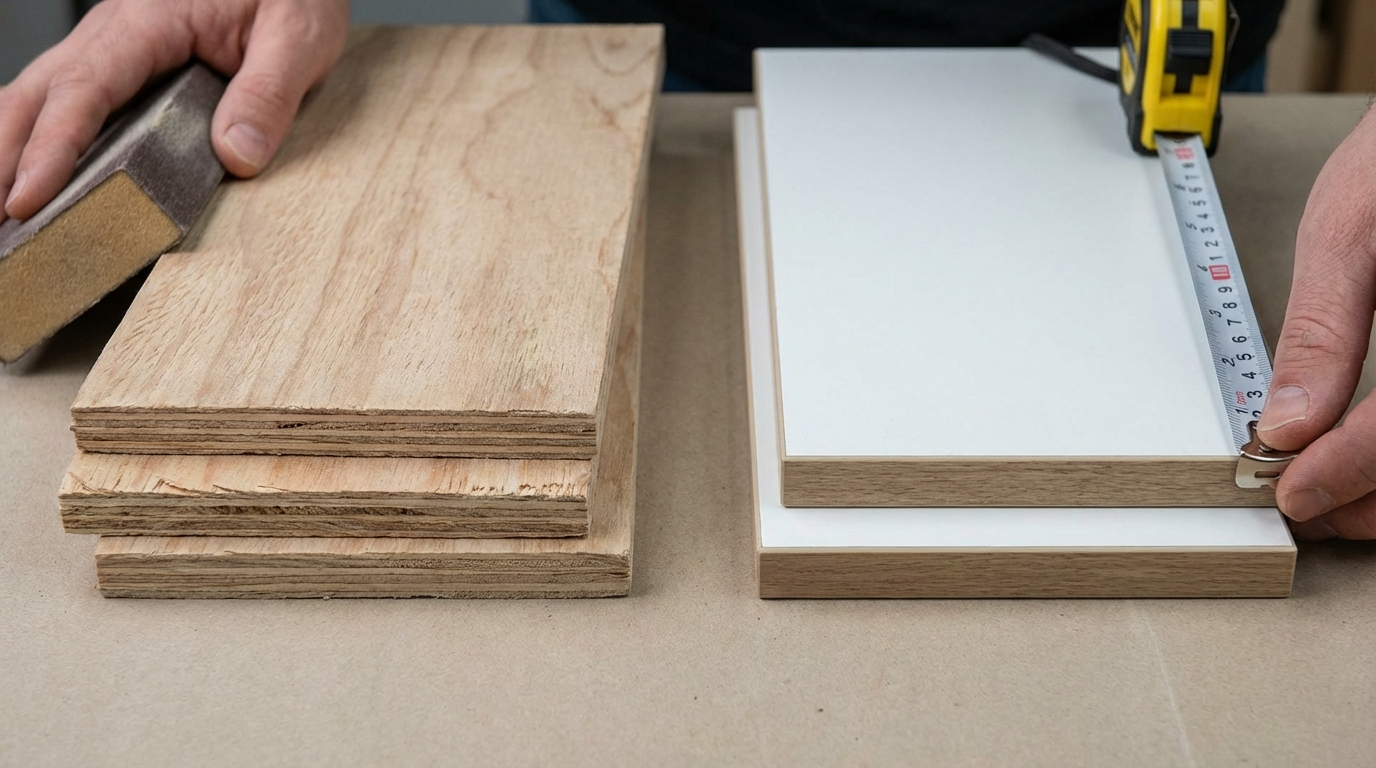
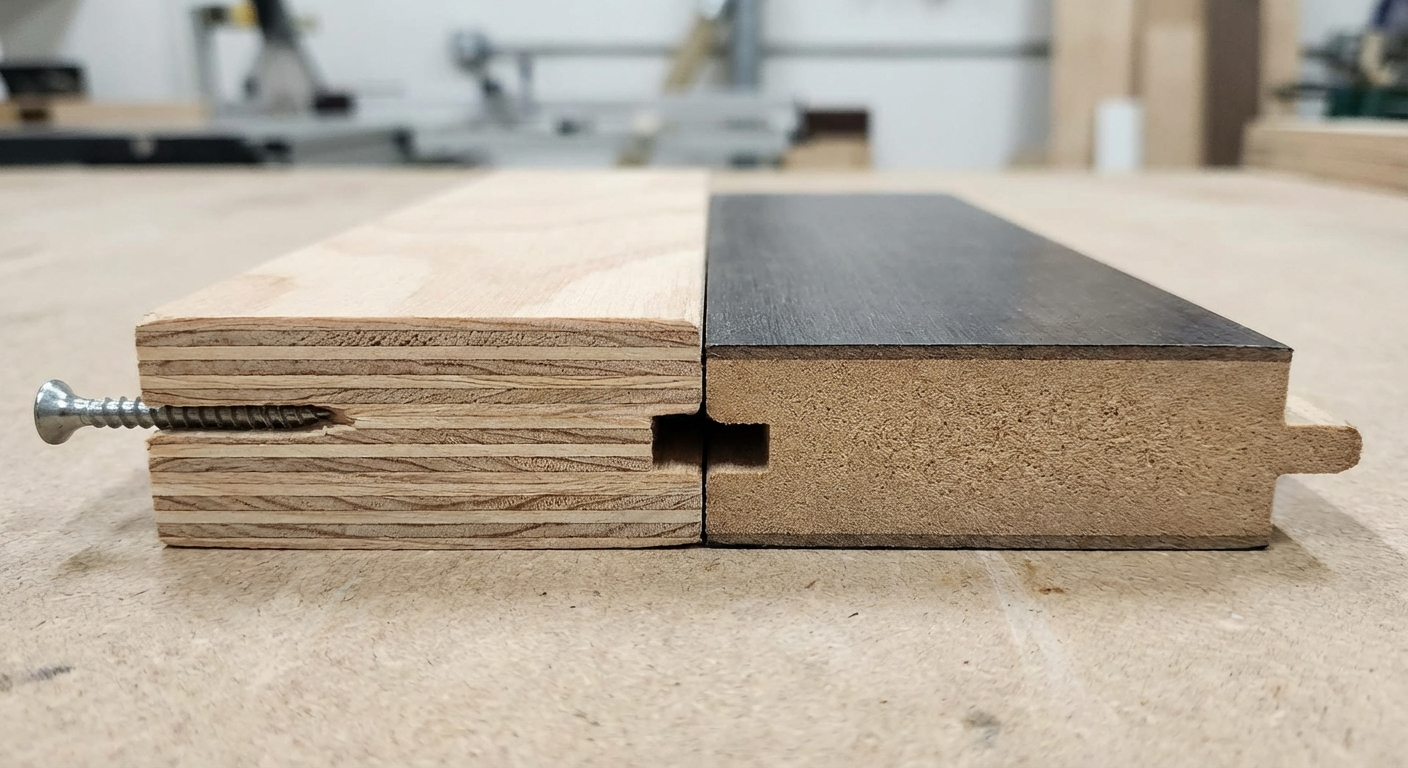
HDHMR vs Exterior Grade MDF: Which Handles Moisture Better?
No, HDHMR and exterior grade MDF are not interchangeable: HDHMR builds its moisture resistance on high density, while exterior MDF leans on its binders, so their limits differ. Compare density, water resistance and semi-outdoor performance in Indian conditions.
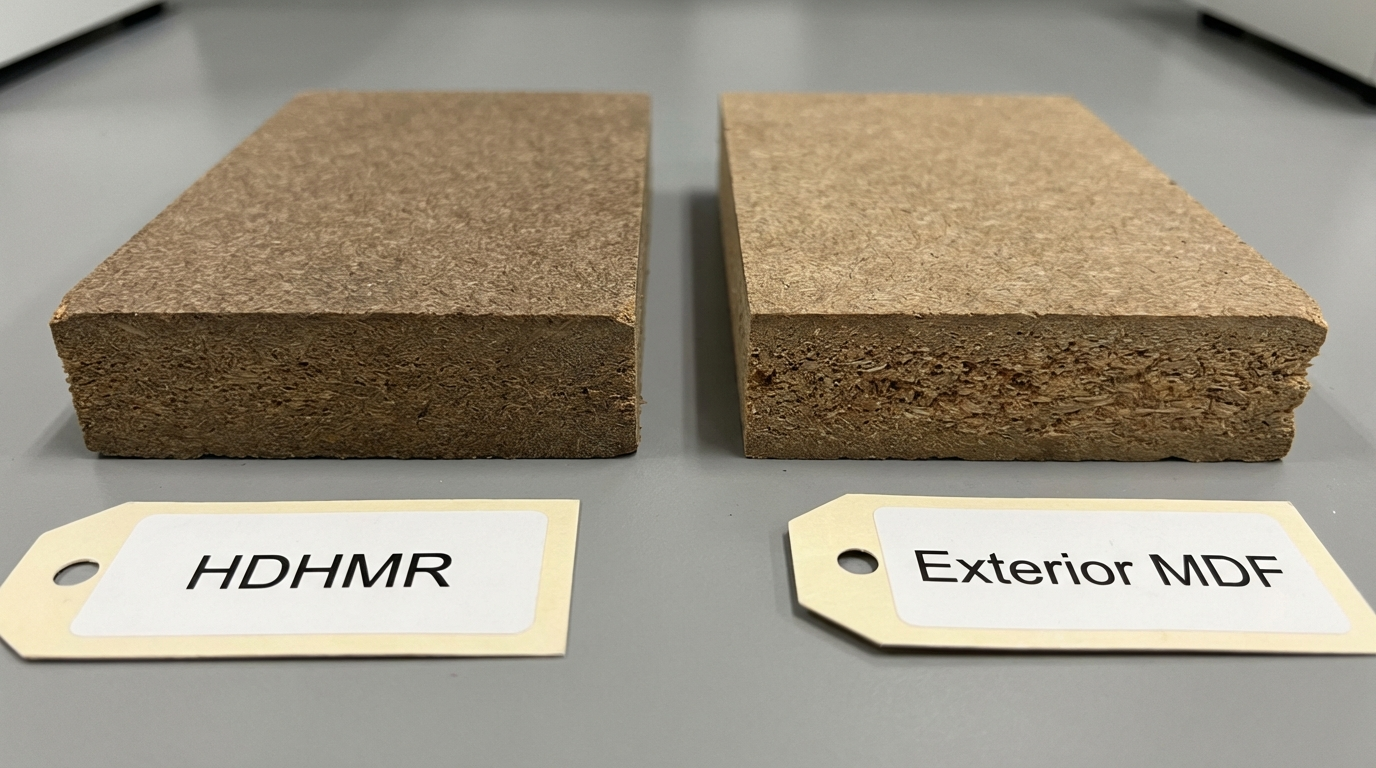
Last updated: . Grades and standards checked against current BIS standards.
Are HDHMR and Exterior MDF Interchangeable?
In India's diverse construction landscape, where monsoon rains and high humidity challenge building materials, confusion often arises between High Density High Moisture Resistant (HDHMR) boards and Exterior Grade Medium Density Fiberboard (MDF). Homeowners renovating balconies, contractors fitting semi-outdoor kitchens, and architects specifying wardrobes for coastal homes frequently ask if these are essentially the same product rebranded. The short answer: no. While both aim to handle moisture better than standard interior boards, their manufacturing processes, binder formulations, and performance thresholds differ significantly.
HDHMR starts from a denser base material treated with specialized resins for enhanced water repellency, targeting high-humidity zones like Mumbai apartments or Kerala villas. Exterior MDF, conversely, relies on phenolic or melamine binders to meet basic outdoor exposure norms, but it rarely matches HDHMR's density-driven durability. This distinction matters in semi-outdoor applications—think verandas exposed to splashback or bathrooms with poor ventilation—where swelling or delamination can lead to costly repairs.
Decoding HDHMR: From Fibers to Moisture Fortress
HDHMR boards derive their name from two core attributes: high density (typically above 800 kg/m³) and high moisture resistance. Manufacturers begin with hardwood fibers or agro-residues, common in India's plywood hubs like Punjab and Gujarat, compressed under extreme pressure with moisture-resistant urea-formaldehyde (UF) or melamine-urea-formaldehyde (MUF) resins fortified with waxes and cross-linking agents.
This first-principles approach yields a board that absorbs less than 8-10% water by weight after 24-hour immersion tests, per practical industry benchmarks. In real-world Indian scenarios, such as Delhi's foggy winters transitioning to humid summers, HDHMR maintains structural integrity without the warping seen in lesser boards. Its smooth surface also suits laminates or veneers, appealing to interior designers prioritizing finish quality over exposed raw edges.
Exterior MDF Explained: Binders Over Bulk Density
Exterior Grade MDF uses medium-density fibers (600-750 kg/m³) bonded with exterior-type resins like phenol-formaldehyde (PF), designed for boiling water resistance (BWR) akin to plywood grades. Indian producers in Tamil Nadu and Andhra Pradesh adapt imported tech to local eucalyptus or rubberwood fibers, adding paraffin wax for初步 hydrophobicity.
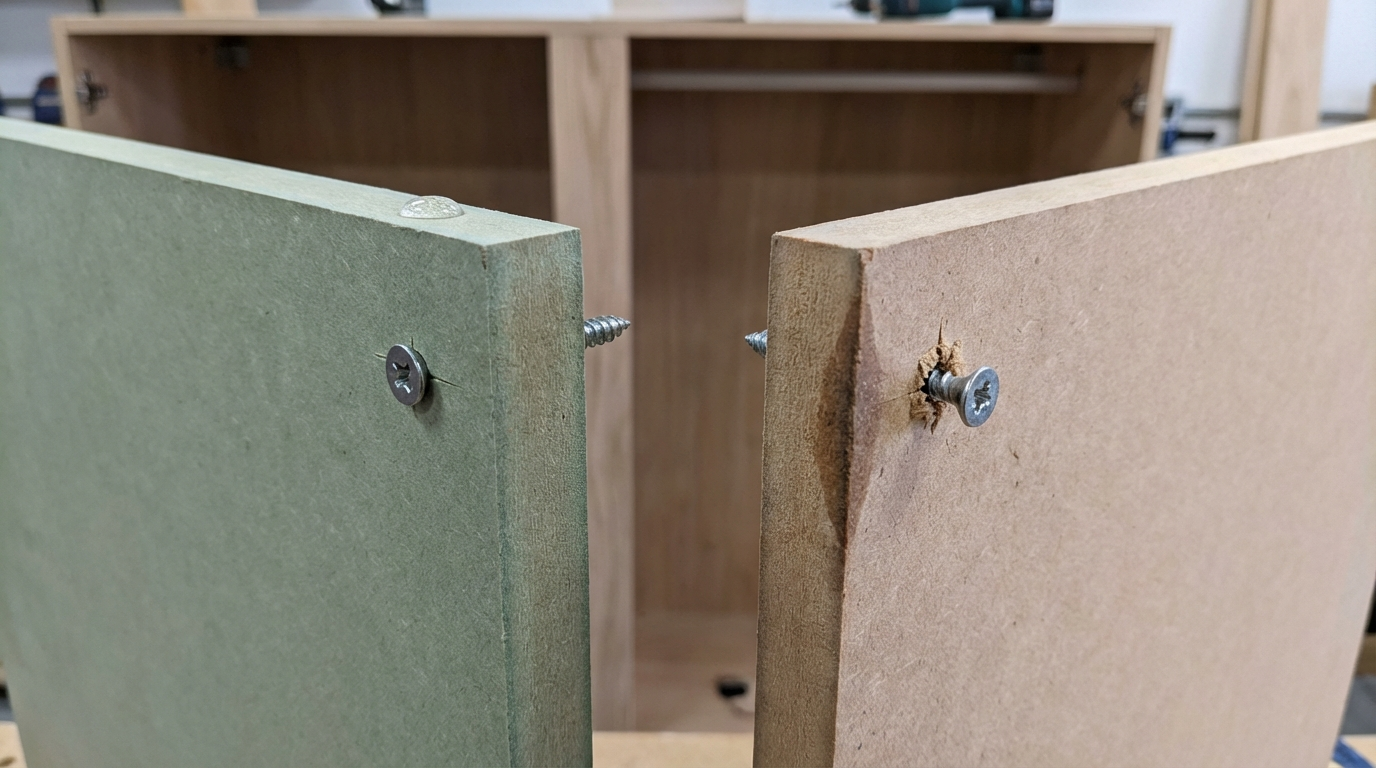
However, its moisture resistance caps at 12-15% water absorption in immersion tests, making it viable for sheltered exteriors like soffits or fascia boards but vulnerable in direct drip zones. Contractors in Bangalore's rainy seasons note that while it edges out MR-grade MDF, it lacks the screw-holding strength of denser alternatives, often requiring edge banding reinforcements.
Density Head-to-Head: Why It Drives Durability
Density isn't just a spec sheet number—it's the foundation of load-bearing and dimensional stability. Higher density means tighter fiber packing, reducing voids where moisture infiltrates. In India's variable climates, from Rajasthan's dry heat to Assam's relentless rains, this translates to fewer callbacks for contractors.
| Attribute | HDHMR | Exterior MDF |
|---|---|---|
| Density Range (kg/m³) | 800-900+ | 600-750 |
| Screw Holding Strength | Superior (less pull-out in humid tests) | Adequate but weakens faster |
| Thickness Swell After 24h Soak (%) | <10% | 12-18% |
| Typical Thickness Availability (mm) | 16-19 (wardrobes, cabinets) | 12-18 (signage, partitions) |
This table highlights HDHMR's edge in semi-structural roles, like balcony counters, where vibration from monsoonal winds amplifies stress.
Moisture Resistance: Testing the Real Limits
Moisture resistance hinges on resin type, wax content, and fiber treatment—not marketing labels. HDHMR employs dual-treatment: hydrophobic additives during fiber preparation and high-pressure hot-pressing to seal surfaces. In 72-hour submersion simulations mimicking flooded Pune garages, HDHMR shows minimal edge fraying.
Exterior MDF prioritizes PF resins for cross-linking, which improves its resistance to boiling water exposure. Yet, in India's cyclic wetting-drying (e.g., Kolkata's humidity spikes), it swells more due to lower density, leading to surface cracks under paint or polish. Architects testing samples advise sealants for both, but HDHMR needs less intervention.
- Key Test Metric: Internal Bond (IB) strength post-cycling—HDHMR retains 70-80% vs. Exterior MDF's 50-60%.
- India Context: BIS IS:1659 standards loosely guide both, but field performance varies by mill quality.
Semi-Outdoor Performance: India's Climate Proving Ground
Semi-outdoor means partial shelter—balconies, porte-cochères, or kitchen extensions in Tier-2 cities like Jaipur or Coimbatore. Here, intermittent water exposure (splashes, leaks) meets UV and temperature swings.
HDHMR excels with its density buffering expansion; a 18mm shelf might gain only 1-2mm width versus Exterior MDF's 3-4mm. Contractors report HDHMR's favor in modular furniture for open-air cafes, where steam and spills are routine. Exterior MDF suits painted applications like exterior cladding if fully sealed, but fares poorly unsealed in high-rain zones like the Western Ghats.
Long-term: After one monsoon, HDHMR users see no visible degradation; Exterior MDF may show fungal spots without biocides.
Practical Applications: Matching Boards to Indian Builds
HDHMR Wins For:
- Wet-area cabinets (modular kitchens with hood vents).
- Balcony storage or louvers in humid metros.
- Commercial semi-exteriors like resort cabanas.
Exterior MDF Fits:
- Budget signage or temporary partitions.
- Sheltered soffits in dry interiors.
- Painted features away from direct water.
Homeowners in Chennai prioritize HDHMR for its laminate adhesion in steamy climates; contractors in Lucknow opt for Exterior MDF on tight budgets for non-load-bearing panels.
Cost Dynamics: Value Beyond Sticker Price
Pricing reflects density, resin costs, and regional logistics. HDHMR commands a 20-40% premium over Exterior MDF due to energy-intensive pressing and premium fibers—expect dealer quotes varying by 15-25% across North vs. South India.
Factors driving variance:
- Source: Direct mill vs. retail markup (10-30% higher in showrooms).
- Thickness/Size: 18mm panels cost more per sqm than 12mm.
- Certifications: ISI-marked versions add 5-10% but assure consistency.
ROI calculation: HDHMR's longevity offsets initial outlay in moisture-prone spots, per lifecycle analyses from repeat-buying contractors.
Buyer Decision Matrix: Step-by-Step Guide
Evaluate based on exposure level, budget, and finish needs:
| Scenario | Recommended Choice | Why? |
|---|---|---|
| High splash (balconies, wet bars) | HDHMR | Superior density/moisture duo prevents warp |
| Sheltered paint-grade (fascias) | Exterior MDF | Cost-effective for low-stress |
| Budget modular kitchen extension | HDHMR | Handles steam cycles better |
| Temporary outdoor signage | Exterior MDF | Adequate sealability, lower upfront |
Inspect samples: Tap for solidity (HDHMR rings denser), check edges for uniformity. Source from verified dealers in industrial belts like Yamunanagar or Perambalur for best rates.
Common Pitfalls and Pro Tips from the Field
Avoid assuming 'exterior' means fully waterproof—both need sealing in prolonged exposure. Test screw holds on scraps; HDHMR grips tighter for hardware-heavy installs. In coastal Goa projects, pair with marine-grade laminates regardless.
Final Verdict: For semi-outdoor reliability in India's unforgiving weather, HDHMR pulls ahead on density and resistance metrics, making it the analytical pick unless budget strictly dictates otherwise.
Related guides on PlyPrice
Want Plywood Suggestions?
Share a few details and a PlyPrice specialist will suggest suitable brands and connect you to responsive dealers.