Plywood vs Prelam Board: Finishing Time, Effort and Cost Compared
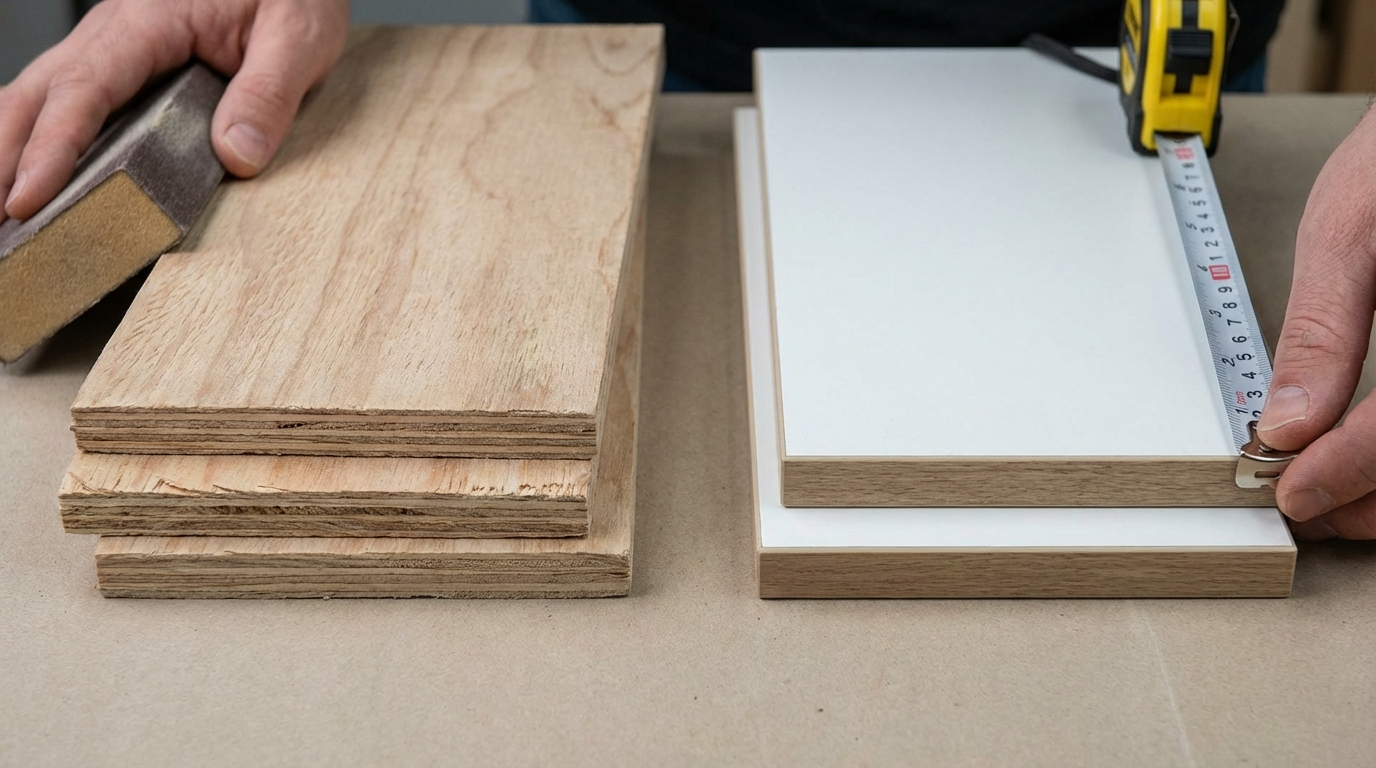
Pre-laminated boards save the most site time because they arrive with a 0.6mm to 1mm factory laminate on an MDF or particle board core, while raw plywood must be cut, edge banded, laminated or veneered and polished. Plywood asks for more labour but brings strength and MR, BWR or BWP grades.
Defining Raw Plywood and Pre-Laminated Boards
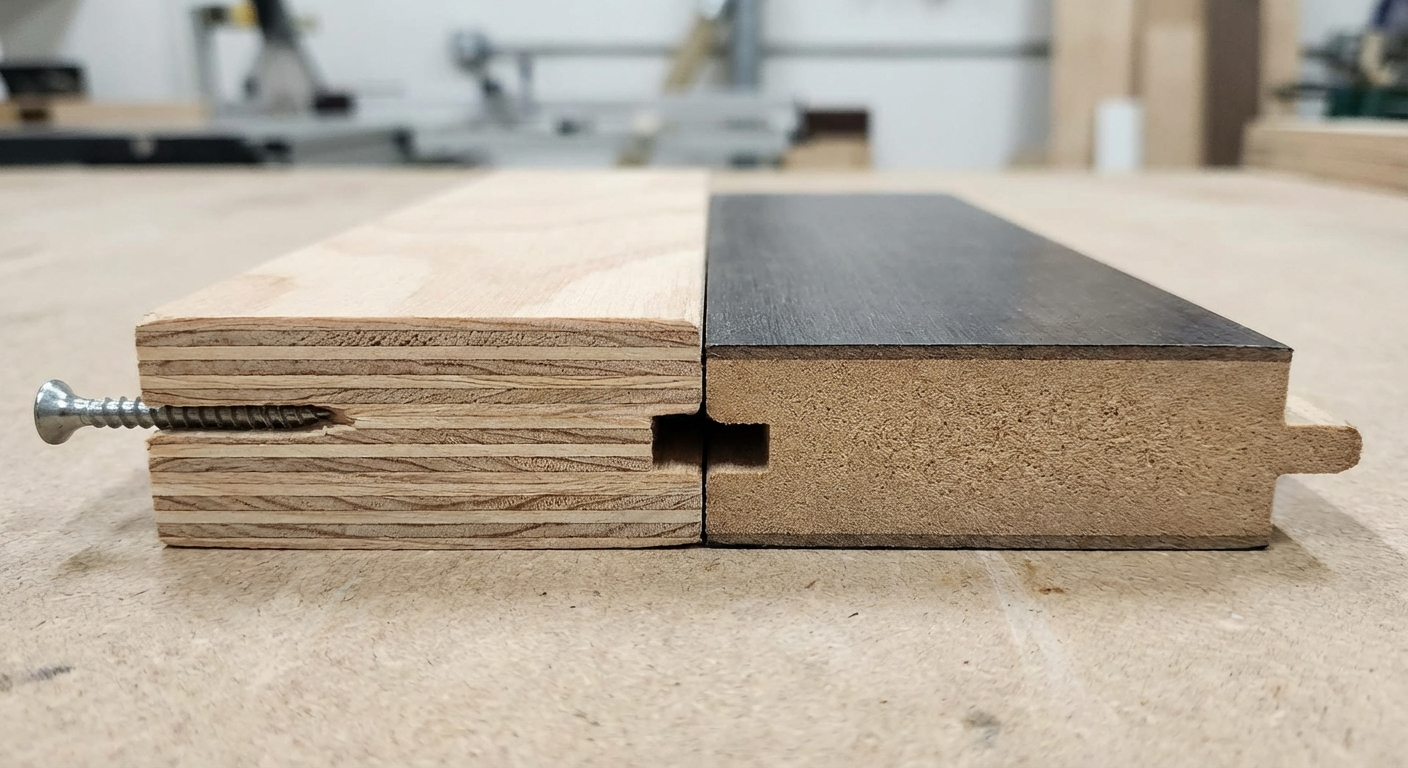
Raw plywood starts with thin veneers of wood glued cross-grain under high pressure, creating a stable sheet resistant to warping. In India, grades like MR (moisture resistant), BWR (boiling water resistant), and BWP (boiling water proof) define its capabilities, sourced from hardwoods like poplar or eucalyptus common in northern mills. This base material arrives unfinished, exposing its natural surface that demands additional treatment for aesthetics and protection.
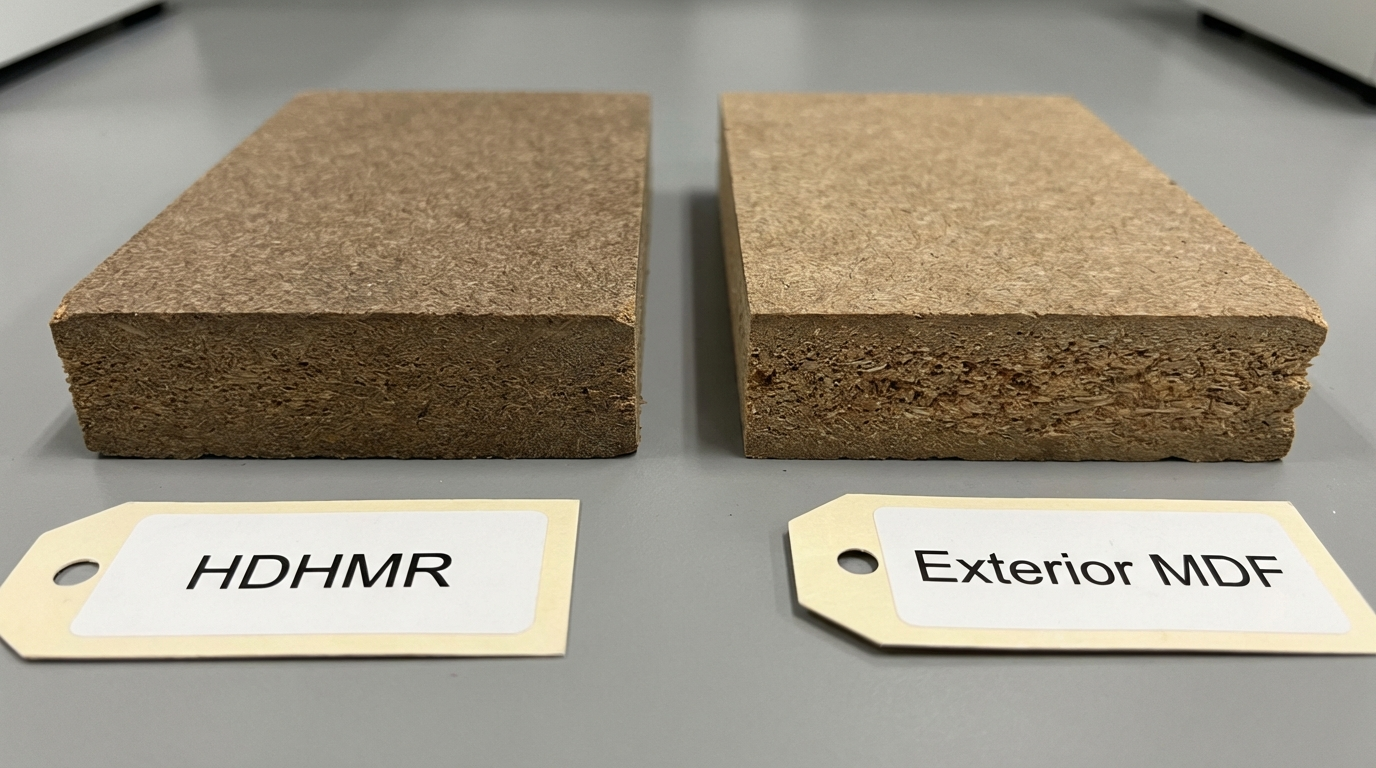
Pre-laminated boards, often built on medium-density fiberboard (MDF) or particleboard (PB) cores, come factory-applied with a decorative laminate layer—typically 0.6mm to 1mm thick—bonded via heat and pressure. These boards mimic wood grains or modern textures right out of the package. Indian manufacturers favor MDF for its density (around 700-800 kg/m³) or PB for lighter weight, both using wood fibers or particles recycled from agro-waste, aligning with local sustainability pushes amid rising timber costs.
Buyers encounter these at dealers in Mumbai's Bhuleshwar markets or Delhi's Chawri Bazaar, where prelam options dominate modular furniture showrooms due to their plug-and-play nature.
Manufacturing Processes: Why Finishing Demands Differ
Plywood's layered veneer construction inherently provides strength from alternating grain directions, a first-principles advantage for load-bearing. Yet, its porous surface absorbs moisture unevenly without sealant, necessitating post-production finishing. Factories glue 5-13 plies depending on thickness (6-25mm standard), but edges remain vulnerable, often sealed with strips during assembly.
Pre-lam boards derive stability from resin-saturated fibers compressed into uniform density. The lamination step integrates paper impregnated with melamine resin, cured under 100-200 kg/cm² pressure, creating a sealed, non-porous skin. This eliminates on-site finishing for most uses, though edges still require banding to prevent core exposure. Common sizes like 8x4 feet fit Indian truckloads efficiently, with thicknesses from 8mm for shelves to 18mm for carcasses.
In humid coastal regions like Kerala or Chennai, prelam's factory seal offers initial convenience, but plywood's core demands deliberate waterproofing choices upfront.
Key Material Properties at a Glance
| Property | Raw Plywood | Pre-Lam Board (MDF/PB) |
|---|---|---|
| Core Composition | Wood veneers (cross-layered) | Wood fibers/particles + resin |
| Density | 500-700 kg/m³ | MDF: 700-800; PB: 600-700 kg/m³ |
| Standard Thickness | 6-25mm | 8-18mm common |
| Moisture Content Tolerance | 8-12% (MR grade) | 5-10% (sealed surface) |
Finishing Raw Plywood: Step-by-Step Time and Effort
Transforming raw plywood into a usable surface involves multiple labor-intensive stages, reflecting India's carpenter-dominated ecosystem where skilled labor costs ₹300-600 per day in metros.
Cutting and Sizing
Precision cuts with circular saws take 10-20 minutes per sheet for wardrobes, but plywood's layered structure resists splintering better than prelam cores, reducing rework.
Edge Banding
Exposed edges demand PVC or veneer strips applied with hot-melt glue, a 30-60 minute process per panel using clamps or machines. Poor application leads to peeling in monsoons.
Lamination or Veneering
The bulk of effort: Apply adhesive (PU or urea-formaldehyde), position 1mm laminate sheets, and press under 150-200 kg/cm² for 4-6 hours in a cold press. Vacuum pressing shortens to 2 hours but requires specialized setups costing ₹5-10 lakh. Multiple panels stack to optimize cycles.
Sealing and Polishing
Final putty filling, sanding (220-grit), and PU coating add 1-2 days drying per coat, totaling 2-5 days for a full wardrobe carcass.
Total effort: 8-15 man-hours per 32 sq ft wardrobe, plus equipment downtime.
Finishing Pre-Lam Boards: Minimal Intervention
Pre-lam's appeal lies in skipping lamination entirely. Cut with jigsaws (noting MDF's dustier profile), then edge-band matching laminate strips—20-40 minutes per panel. No pressing needed; surfaces are ready. Polish edges if desired, but factory finish suffices for 90% of interiors.
Savings: 70-80% less time, ideal for contractors rushing turnkey projects amid Delhi-NCR's real estate boom.
Cost Breakdown: Raw Plywood Finishing vs. Pre-Lam Direct
Costs fluctuate 20-40% regionally—higher in Northeast due to transport, lower in plywood hubs like Punjab. Base material prices drive decisions, but total project costs reveal trade-offs.
Raw Plywood Path
- Base sheet (18mm BWR): Mid-range relative to prelam.
- Laminate sheet: Adds 20-30% to material cost.
- Adhesives/edge bands: ₹5-10/sq ft.
- Labor (carpenter + press time): 40-60% of total, highest variable.
- Total per sq ft: Base + 50-80% finishing uplift.
Pre-Lam Direct
- Includes laminate: 10-20% premium over plain MDF/PB, but no extras.
- Edge banding only: ₹3-6/sq ft labor.
- Total: Often 20-40% lower upfront for budget furniture.
Long-term: Plywood's durability offsets via fewer repairs; prelam suits 3-5 year flips.
Comprehensive Cost Comparison Table
| Factor (per 32 sq ft Wardrobe) | Raw Plywood + Finish | Pre-Lam Board | Notes |
|---|---|---|---|
| Material Cost | Higher base | Lower overall | Prelam bundles laminate |
| Labor Hours | 10-15 | 3-5 | Pressing dominates plywood |
| Total Project Cost | Medium-high | Low-medium | Excludes transport (similar) |
| Repair Cost Over 5 Years | Low | Medium-high | Moisture damage in prelam |
Durability Under Indian Climate Stressors
India's 60-90% monsoon humidity tests materials fundamentally. Plywood's cross-ply voids fill with resins, limiting swelling to 8-12% in MR grades; BWR handles boiling cycles simulating leaks.
Pre-lam MDF/PB cores swell 20-30% if edges delaminate, as fibers expand radially. Laminate masks but doesn't reinforce core weakness. In air-conditioned homes, prelam lasts 5-8 years; kitchens/bathrooms accelerate failure to 2-4 years.
Termite resistance favors phenolic-treated plywood; prelam relies on core additives, varying by brand.
Load and Screw-Holding Tests
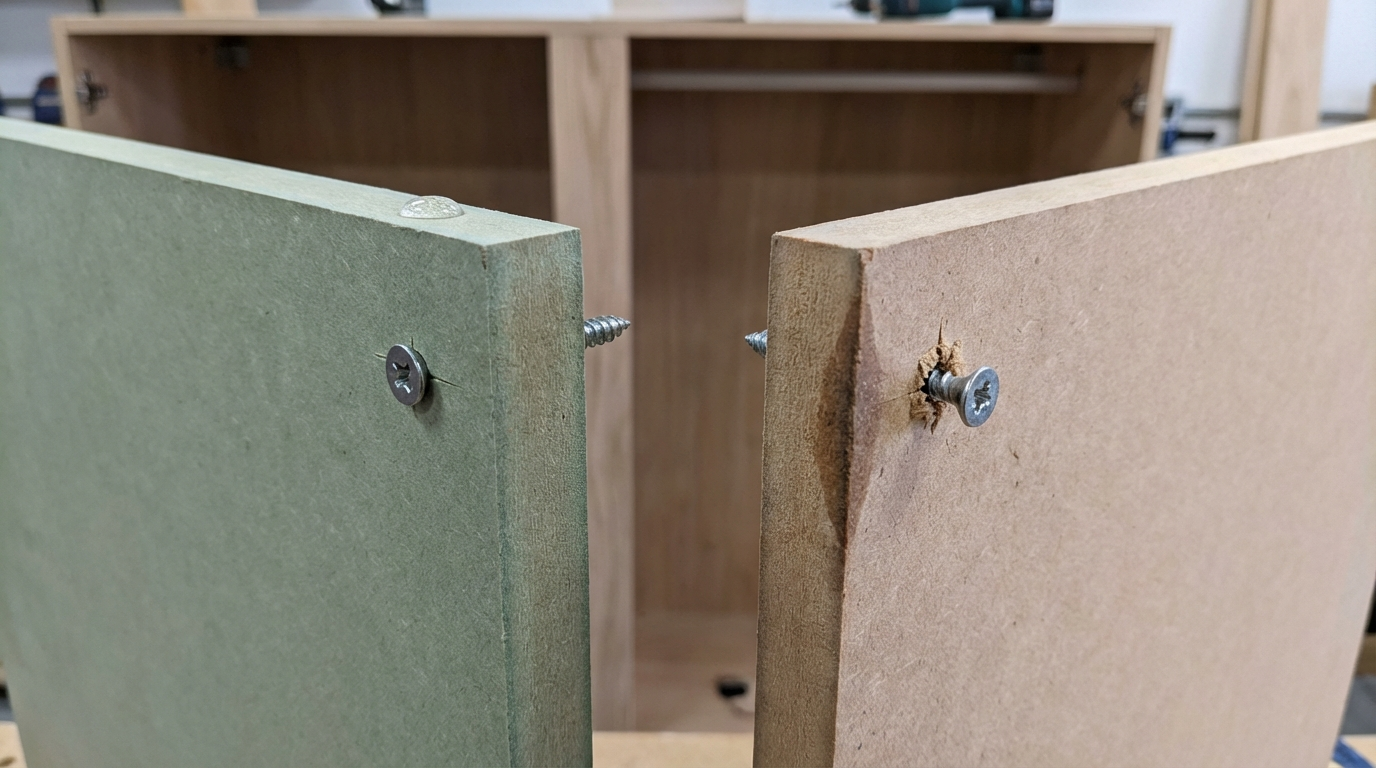
Plywood holds 50-80kg per screw in carcasses; prelam MDF 30-50kg, PB less. Heavy shelves tip toward plywood.
Real-World Applications in Indian Homes and Projects
Homeowners: Modular Wardrobes and Kitchens
For ₹5-10 lakh apartments in Bengaluru, prelam speeds installation by 40%, fitting tight budgets. Plywood suits custom heirloom pieces.
Contractors: Commercial Fitouts
Prelam cuts site time, vital for office partitions in Gurgaon hubs.
Architects/Designers: High-End vs. Volume
Raw ply enables bespoke veneers; prelam for rapid prototypes.
Navigating Dealer Ecosystems and Availability
Pre-lam floods organized retail like Home Centre; raw plywood thrives via wholesalers in Yamunanagar clusters. Check ISI marks (IS:1658 for prelam, IS:303 for PB cores). Stock: Prelam in 100+ designs, plywood plainer.
Regional variance: South India favors prelam HDHMR hybrids; North sticks to BWR ply.
Decision Framework: Which Fits Your Scenario?
- Budget and Timeline Tight? Pre-lam—saves 30-50% upfront, ready in days.
- High Humidity/Heavy Use? Plywood—invest in BWR for 15+ years.
- Custom Aesthetics? Raw ply for flexibility.
- Volume Production? Prelam scales labor-free.
Weigh total lifecycle: Contractors prioritize speed, homeowners longevity. Sample both at local yards; factor 10-20% buffer for defects.
Common Pitfalls and Pro Tips
- Avoid thin prelam (<12mm) for shelves—sag inevitable.
- Seal plywood edges religiously, even post-lam.
- Test samples in home humidity for 48 hours.
- Hybrid approach: Plywood carcass + prelam doors balances cost-strength.
This analysis equips informed choices amid India's diverse builds, from coastal villas to urban stacks.
Related guides on PlyPrice
Want Plywood Suggestions?
Share a few details and a PlyPrice specialist will suggest suitable brands and connect you to responsive dealers.