Teak Wood vs Plywood: Is Teak Worth 5 Times the Price?
Teak often costs about 5 times more than plywood. Teak offers natural durability and heritage looks, while marine-grade plywood gives engineered reliability in humid Indian conditions at a fraction of the cost and is easier to work.
Last updated: . Grades and standards checked against current BIS standards.
Is Teak Wood Worth 5 Times the Price of Plywood?
In India's diverse construction and furniture landscape, where monsoons test every material and budgets stretch across homeowner renovations to large-scale projects, the debate between teak wood and plywood boils down to one core question: does teak's premium justify its often 5x higher cost? Teak, revered for centuries in Indian palaces and ships, promises unmatched longevity. Plywood, particularly marine-grade variants, offers engineered reliability at a fraction of the expense. This analysis breaks down their attributes through practical lenses—durability under Indian humidity, structural performance, workability, and total ownership costs—to guide contractors, architects, interior designers, and homeowners toward informed choices.
Core Composition: Natural Solid vs Engineered Layers
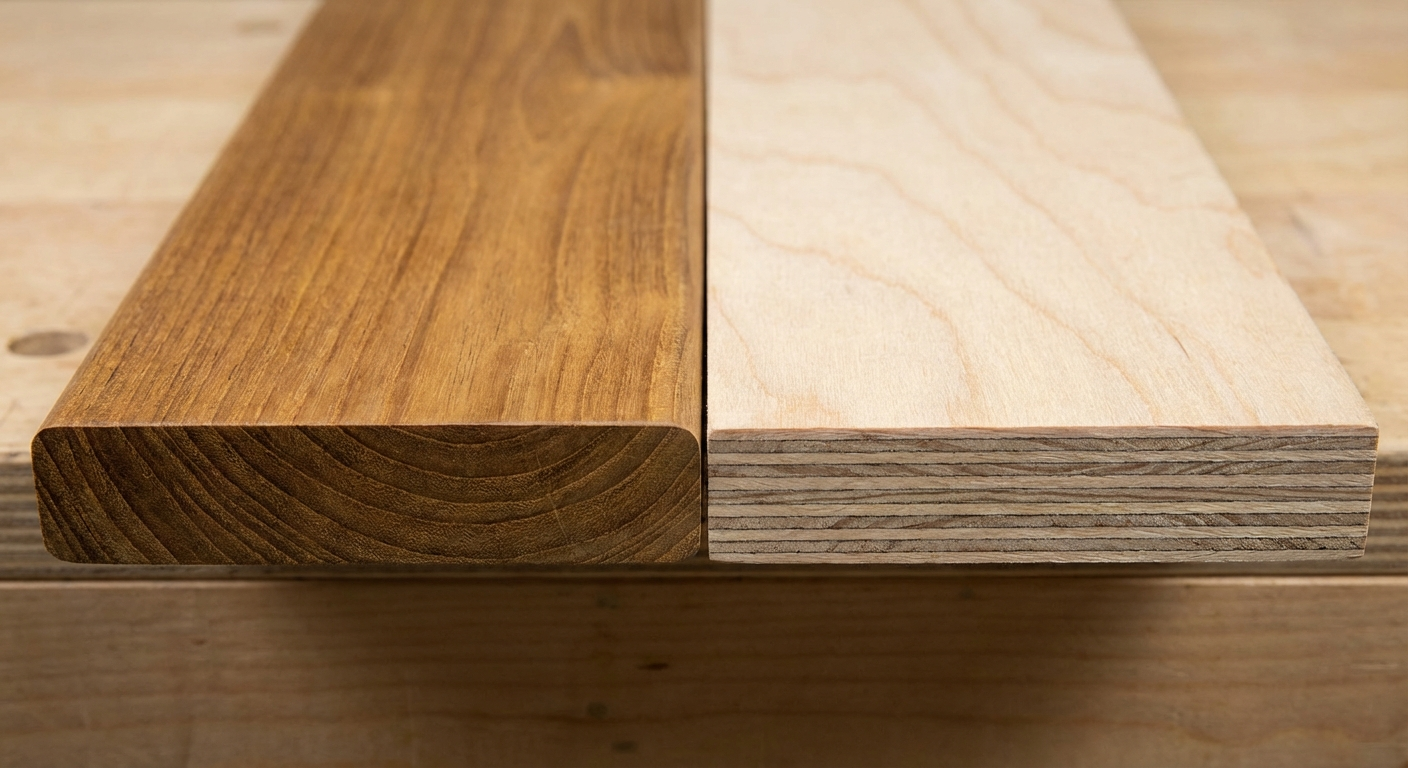
Teak wood derives from the Tectona grandis tree, a hardwood native to India's tropical forests. Its defining trait is natural oils (teakol), which repel water and insects, creating a dense, golden-brown timber. Sourced from plantations in Kerala, Madhya Pradesh, or imported, teak varies by age and growth conditions—older heartwood from mature trees outperforms faster-grown plantation stock.
Plywood, conversely, assembles thin veneers of hardwoods or softwoods (often poplar, eucalyptus, or gurjan in India) glued in cross-grained layers. This orthogonal grain structure distributes stress evenly, mimicking solid wood's strength without the warping risks. Marine plywood uses boiling-water-proof (BWP) glues per IS:710 standards, tailored for India's wet climates.
From a first-principles view, teak's solidity means variability—knots, shakes, or sapwood weaken boards unpredictably. Plywood's factory control ensures uniformity, critical for scalable furniture or shuttering in tier-2 city builds.
Key Differences in Sourcing and Availability
- Teak: Limited by sustainable harvesting under India's Forest Conservation Act; dealer prices spike in high-demand regions like Mumbai or Delhi due to transport from southern plantations.
- Plywood: Mass-produced in hubs like Punjab, Gujarat, and Andhra Pradesh; readily available via distributors, with grades from moisture-resistant (MR) to BWP.
Durability Head-to-Head: Teak's Legendary Reputation Tested
Teak's durability stems from its Janka hardness rating (around 1,000-1,070 lbf), high natural rot resistance (Class 1 per durability scales), and termite repellence from oils. In Indian verandas or outdoor furniture, untreated teak weathers to silver-gray while retaining strength for decades. Historical examples, like colonial-era teak doors in Rajasthan forts, underscore this.
Marine plywood counters with engineered metrics: tensile strength exceeding 40 N/mm² (IS:303), shear strength up to 10 N/mm², and boil-proof bonds surviving 72-hour water immersion. In monsoon-heavy Kerala homes, BWP plywood cabinets hold up without delamination, matching teak in wet zones when properly sealed.
However, teak pulls ahead in untreated longevity—up to 50+ years outdoors vs plywood's 20-30 years, even marine-grade. Plywood shines in concealed applications, like wardrobes, where its stability prevents sagging.
Performance Table: Strength and Load-Bearing
| Property | Teak Wood (Burma/Indian Plantation) | Marine Plywood (BWP, 18mm) |
|---|---|---|
| Density (kg/m³) | 650-750 | 500-650 |
| Bending Strength (N/mm²) | 120-150 (along grain) | 40-50 (average) |
| Modulus of Elasticity (GPa) | 12-16 | 6-8 |
| Termite Resistance | High (natural oils) | Moderate (requires treatment) |
| Warping Risk | Medium (seasonal movement) | Low (cross-graining) |
Note: Values approximate from IS standards and field observations; actuals vary by quality. Teak excels in tension; plywood in uniform loads like flooring.
Moisture and Climate Resistance: India's Ultimate Test
India's humidity (70-90% in coastal belts), termite prevalence, and temperature swings (10-45°C) expose material flaws. Teak's oils create a hydrophobic barrier, ideal for exposed doors or boat decking in Goa. Even plantation teak withstands 20-30% moisture without cracking.
Plywood grades matter here: MR suits dry interiors (Delhi flats), BWR for semi-exposed (Bangalore bathrooms), BWP for high-risk (Mumbai sea-facing kitchens). Yet, edges demand sealing with epoxy or putty, as glue lines absorb moisture over cycles. In contractor feedback from Hyderabad sites, untreated plywood fails in 5-7 years; sealed marine lasts 15+.
Edge to teak for zero-maintenance wet exposure, but plywood's affordability allows over-spec'ing (e.g., 19mm BWP) to match.
Cost Breakdown: Unpacking the 5x Premium
Teak commands 4-6x plywood's price due to scarcity, slow growth (30-50 years to maturity), and labor-intensive milling. A contractor sourcing Kerala teak pays 2-3x dealer rates in North India, factoring transport and kiln-drying. Rough cost drivers:
- Teak: Raw board ₹3,000-6,000/sq.ft. (18mm equiv.), rising with grade (A/B).
- Marine Plywood: ₹1,200-2,500/sq.ft., stable via local mills.
Per-project math: Teak wardrobe (20 sq.ft.) adds ₹60,000-1,00,000 vs plywood's ₹25,000-40,000. But factor lifecycle—teak's zero-replacement offsets over 25 years; plywood may need fixes at 10-15 years.
Regional variance: South India dealers offer teak nearer wholesale; North marks up 20-30%. Homeowners in Pune often hybridize—teak frames, plywood panels—for value.
Total Cost of Ownership Table
| Factor (10-Year Span) | Teak | Marine Plywood |
|---|---|---|
| Initial Material Cost | High (5x) | Low |
| Installation Labor | Medium (precision cutting) | Low (standard tools) |
| Maintenance | Minimal (oil occasionally) | Medium (sealing, refinishing) |
| Replacement Likelihood | Low | Medium |
| Net Cost per Year | Lower long-term | Higher if frequent fixes |
Versatility and Workability: Plywood's Practical Edge
Teak's rigidity suits carving intricate jaali work or heavy doors but resists bending, complicating curved designs. Machining requires sharp tools to avoid tear-out, slowing carpenters in volume jobs.
Plywood cuts like butter on circular saws, screws without splitting, and laminates seamlessly for modular kitchens. In architect specs for Gurgaon apartments, plywood enables veneered teak looks at 20% cost—fooling the eye while delivering stability.
Applications snapshot:
- Teak: Exposed furniture, doors, flooring in premium villas.
- Plywood: Cabinets, partitions, formwork in apartments/hotels.
Aesthetics and Finishing: Heritage vs Modern Appeal
Teak's rich patina develops uniquely, prized in traditional Indian homes for pooja cabinets or swing beds. Polishes to mirror sheen, aging gracefully.
Plywood needs veneers or laminates for beauty; plain surfaces show glue unless overlaid. Yet, teak-veneered plywood replicates luxury affordably, common in designer showrooms from Chennai to Chandigarh.
Pest and Fire Resistance: Hidden Risks Addressed
Teak's oils deter borers and white ants naturally; minimal CWR treatment needed. Plywood demands ISI-approved preservatives (IS:401), yet coastal infestations chew edges faster.
Fire: Teak chars slowly (Class B); plywood varies by glue—phenolic resins in BWP improve ratings, but neither beats specialized boards.
Environmental Footprint in India's Context
Teak plantations aid carbon sequestration but face overharvesting scrutiny. Plywood uses fast-growth farms, lower transport emissions, yet glue (urea-formaldehyde) raises VOC concerns, so opt for E1-class sheets and ask for the test report behind any E0 label.
Sustainable choice: Certified plantation teak (PEFC/FSC) or eco-plywood from managed eucalyptus.
Decision Framework: Which for Your Project?
Contractors prioritize plywood for speed/cost in multi-unit builds. Homeowners in humid Kochi lean teak for heirloom pieces. Architects blend: teak accents on plywood bases.
Quick selector:
- Budget < ₹50/sq.ft./year: Plywood (seal well).
- Exposed/heirloom: Teak.
- Hybrid: Teak veneer on marine ply.
Inspect at dealers: Tap for solidity, check glue lines, verify BIS marks. In regional markets, negotiate bundles to bridge the price gap.
Real-World Scenarios from Indian Builds
In a Mumbai sea-view flat, marine plywood survived 5 monsoons sans warp, saving 70% vs teak shutters. A Kerala bungalow's teak staircase, 20 years on, shows no wear—worth the upfront hit for prestige.
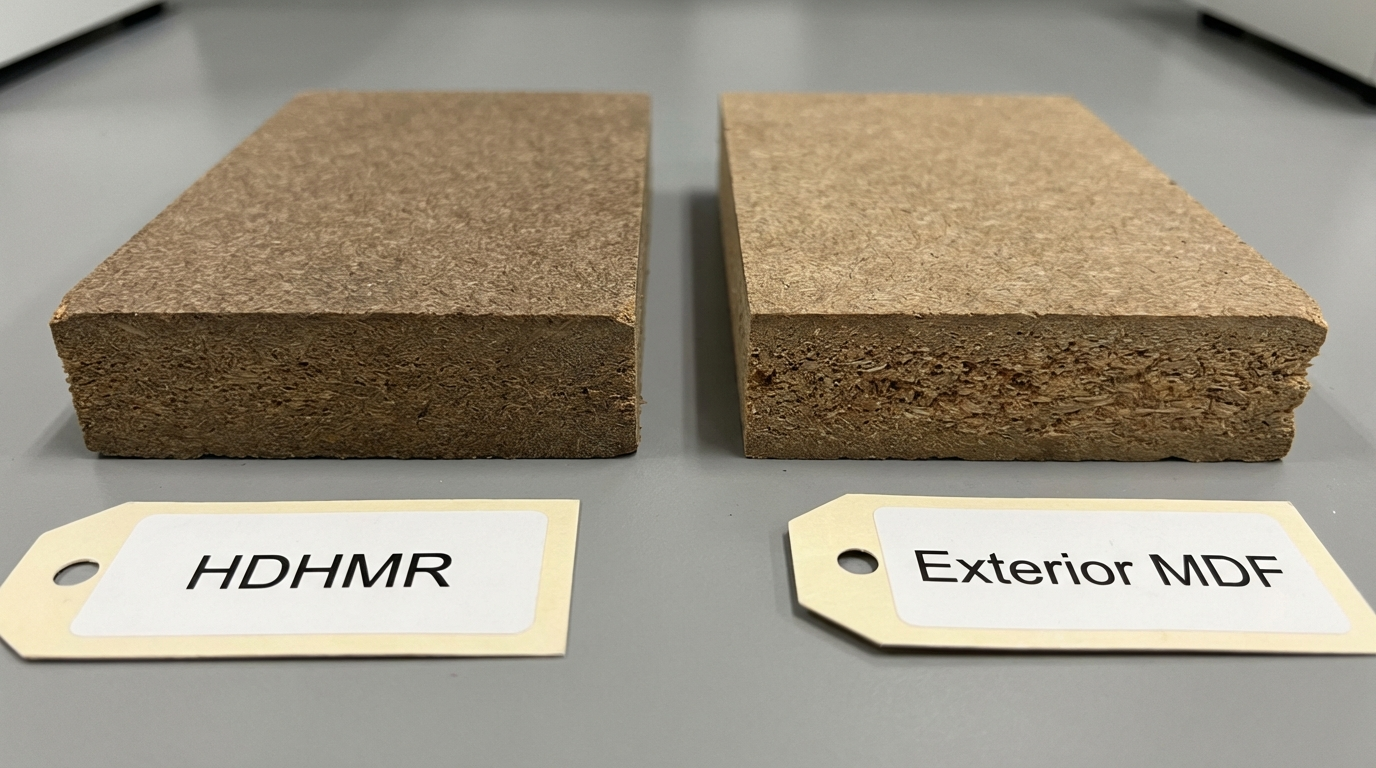
Trend: Rising HDHMR (humid-resistant MDF) challenges both, but for load-bearing, these two dominate.
Teak vs Plywood: Where Each Gives Better Value
Teak isn't always 5x superior—plywood matches 80% needs at 20% cost, especially sealed marine grades. Choose teak for irreplaceable exposure; plywood for versatile, budget-smart builds. In India's evolving market, informed hybrids often win.
Related guides on PlyPrice
Want Plywood Suggestions?
Share a few details and a PlyPrice specialist will suggest suitable brands and connect you to responsive dealers.