Plywood vs Solid Wood: Strength, Cost and Life in Indian Homes
Solid wood offers heirloom appeal but demands a premium investment, while plywood's layered veneers give engineered, predictable performance at a lower upfront cost. Compare lifetime cost, strength, service life, warping in humid zones and sustainability for Indian homes.
Last updated: . Grades and standards checked against current BIS standards.
Is Solid Wood Worth the Extra Cost for Indian Homes and Projects?
In India's diverse construction landscape, where monsoons test material limits and budgets drive decisions, the plywood versus solid wood debate boils down to value over time. Homeowners eye wardrobes and kitchens, contractors prioritize site efficiency, and architects balance aesthetics with practicality. Solid wood promises heirloom appeal but demands premium investment; plywood delivers engineered reliability at scale. This analysis weighs longevity against upfront costs, warping risks in humid zones, and sustainability pressures amid rising deforestation concerns—equipping you to decide without hype.
Core Construction Differences: Layers Versus Single Planks
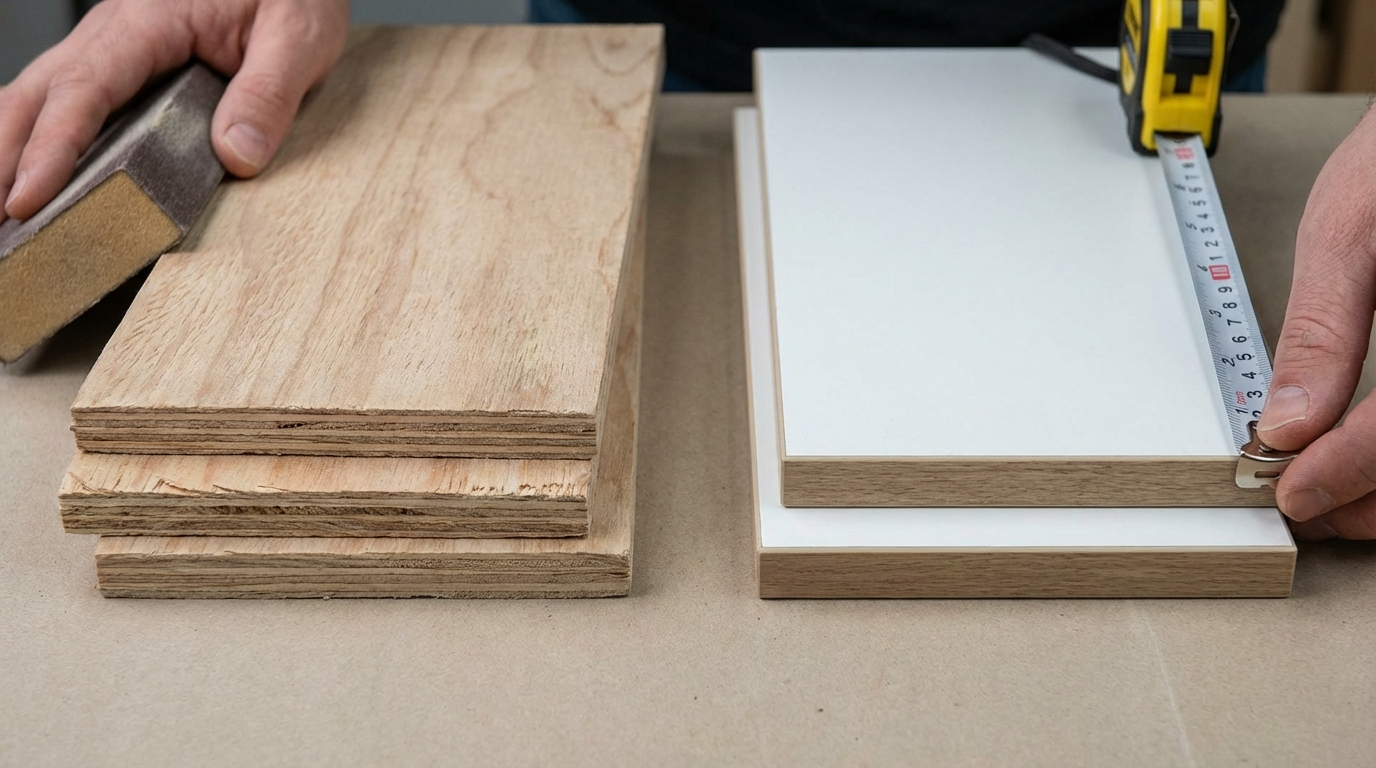
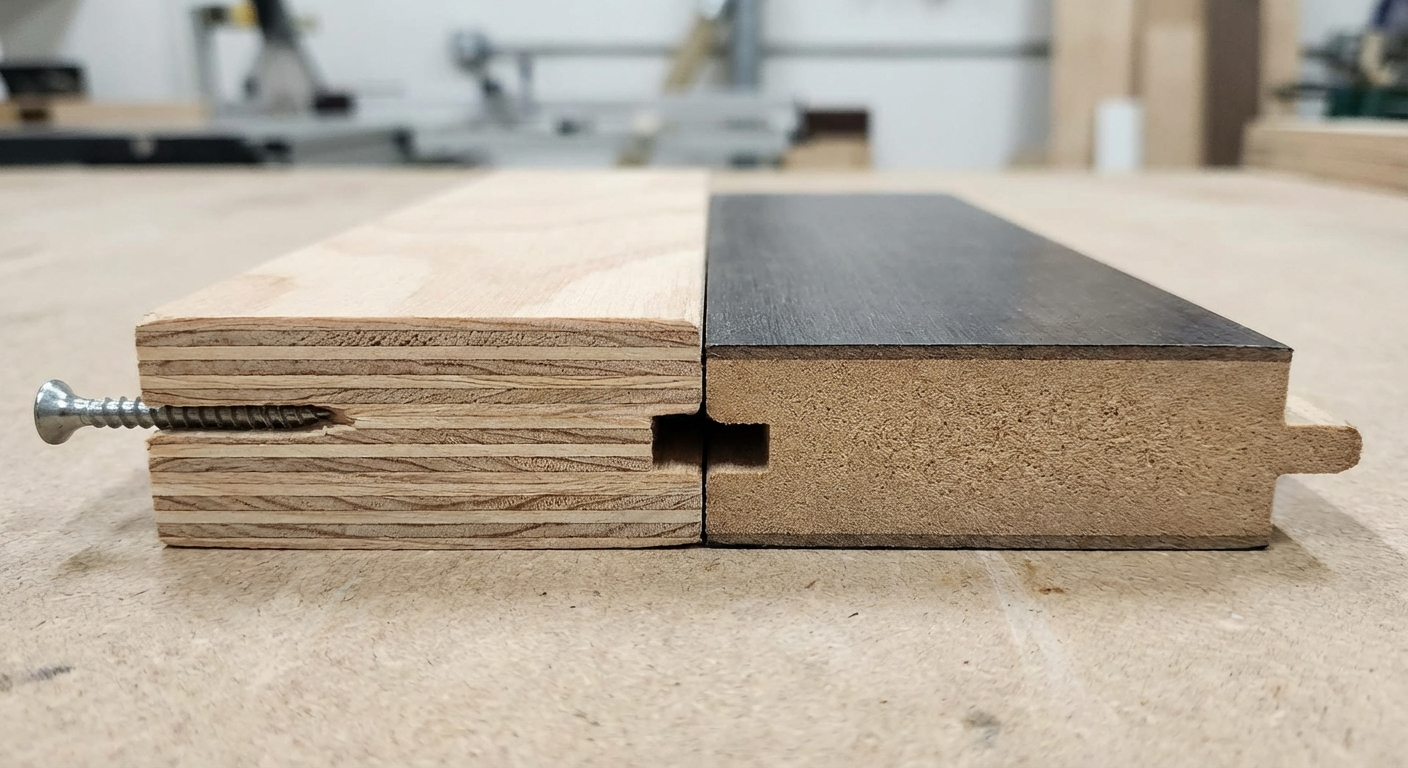
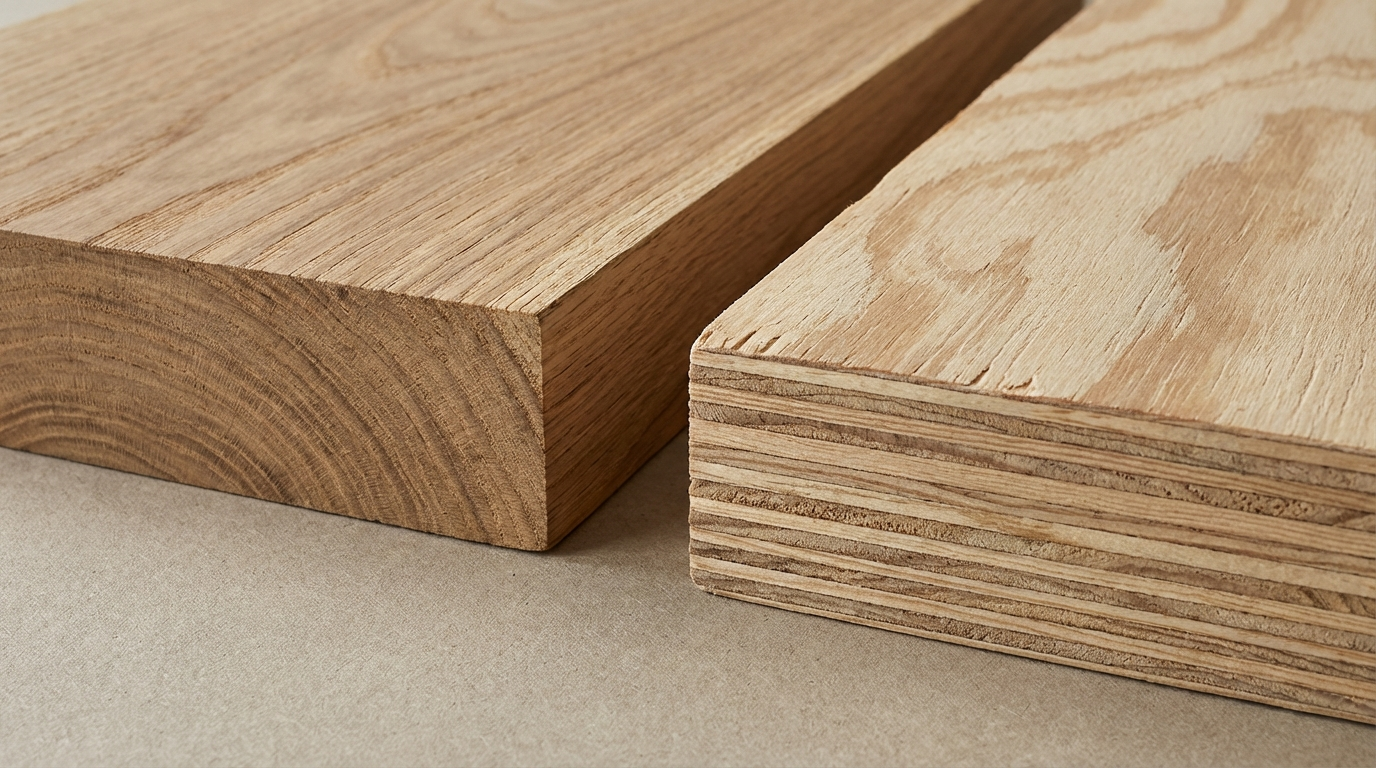
Plywood emerges from thin wood veneers—typically 3 to 13 layers—glued with grains alternating at 90 degrees. This cross-laminated design counters natural wood's grain-aligned weaknesses, distributing stress evenly. Solid wood, by contrast, derives from a single timber block, inheriting directional grain traits: strong along fibers but prone to splitting perpendicularly.
In first-principles terms, plywood mimics reinforced concrete—composite action yields stability—while solid wood acts like a steel beam, potent yet vulnerable to environmental shear. Indian manufacturers adhere to ISI standards (IS:303 for MR, BWR and BWP; IS:710 for marine), ensuring glue bonds meet hot-water and boiling-water tests for graded durability. Solid woods like teak or sheesham vary by sourcing: plantation-grown pieces outperform wild-harvested ones in consistency but rarely match plywood's uniformity.
Cost Dynamics: Upfront Savings Meet Lifecycle Expenses
Pricing hinges on material inputs, processing, and regional logistics. Plywood leverages efficient veneer slicing—using 70-80% more of a log than sawn planks—translating to lower base costs. Expect MR-grade (moisture-resistant, dry interiors) at entry ranges of ₹60-100 per sq ft for 18mm thickness; BWR (boiling-water-resistant, kitchens) climbs to ₹100-200; BWP (boiling-water-proof, high-humidity) hits ₹200-300+. Solid teak boards, denser and scarcer, start 3-5 times higher (₹500+ per sq ft), with sheesham offering mid-tier alternatives (₹300-600).
Regional swings amplify this: metros like Mumbai or Delhi tack 10-20% premiums via transport and demand; Kerala or Uttar Pradesh hubs shave costs through proximity to poplar/eucalyptus plantations. Contractors note bulk dealer discounts (10-15% off retail) favor plywood's scalability; solid wood suits bespoke pieces where volume stays low.
| Factor | Plywood (18mm Avg.) | Solid Wood (Teak/Sheesham Avg.) |
|---|---|---|
| Base Material Cost per sq ft | ₹60-300 (grade-dependent) | ₹300-1,000+ |
| Installation Labor | Lower (pre-cut uniformity) | Higher (custom milling) |
| Maintenance Over 10 Years | Minimal (sealed surfaces) | ₹10,000-50,000 (polish/oil) |
| Replacement Frequency | 15-25 years | 30+ years (if protected) |
ROI calculation: Plywood recovers costs faster in multi-unit projects; solid wood justifies expense where resale value hinges on "premium timber" perception.
Strength Profiles: Load-Bearing and Screw-Holding Power
Plywood's layered anatomy excels in shear resistance—vital for shelves or cabinets under dynamic loads. Tests per ISI norms show BWR/BWP variants holding 200-300 kg per sq m without delamination, outperforming solid wood's grain-dependent variance. Solid teak boasts compressive strength (50-60 N/mm²), ideal for load-bearing doors, but its anisotropy risks failure under twist.
For Indian buyers: Contractors favor plywood for shuttering or formwork due to nail/screw grip (cross-grains prevent pull-out); furniture makers pair solid fronts with plywood carcasses for hybrid strength-to-cost ratios.
Longevity Realities: Expected Service Life in Indian Conditions
Solid wood legends endure—teak doors from 1950s bungalows still stand—but require vigilant care against termites and cracks. Lifespan: 25-50+ years with annual teak oiling. Plywood, when graded right, matches 15-30 years: MR suits bedrooms (10-15 years), BWP kitchens (20-25+). Failures stem from sub-ISI glue hydrolysis, not inherent flaws.
Termite factor: India's subterranean pests ravage untreated solid wood faster; phenolic resins in quality plywood provide inherent barriers, extendable via chemical dips. Case logic: A Mumbai flat's humid wardrobe lasts longer on BWP than uncoated sheesham.
Warping Vulnerabilities: Navigating Humidity and Temperature Swings
India's 70-90% monsoon RH triggers solid wood's hygroscopic expansion—up to 8-12% tangential swell—causing cupping or bowing. Plywood's balanced veneers limit this to 1-2%, per lab metrics. In coastal Gujarat or Assam, BWP plywood shrugs off cycles that buckle solid panels.
Reasoning: Grain equilibrium in plywood self-cancels moisture gradients; solid wood fights solo. Architects specify plywood substructures with solid veneers for "best-of-both" stability.
Moisture and Pest Resistance: Tailored for Tropical Challenges
BWP plywood passes a 72-hour boil test, making it ideal for bathrooms or exteriors. Solid wood needs preservatives like boron treatments, which leach over time. Termites: Eucalyptus-core plywood resists via density; sheesham fares better than pine but trails treated teak.
Practical edge: Dealers report 40% fewer callbacks on plywood installations in wet zones.
Sustainability Angle: Resource Efficiency and Deforestation Pressures
Plywood maximizes logs—veneer yield exceeds 85% versus solid's 40-50%—curbing India's annual 1-2 million hectare forest loss. FSC/PEFC-certified options trace to plantations, unlike unregulated solid teak from Myanmar imports. Glue emissions (formaldehyde) have dropped 50% in compliant Indian mills, rivaling solid wood's zero-adhesive purity.
Eco-logic: For volume users like developers, plywood slashes harvest needs; bespoke solid suits low-waste heirlooms. Prioritize certifications over claims—neutral verifiers like FSC ensure chain-of-custody.
Aesthetics, Finishing, and Day-to-Day Maintenance
Solid wood's figuring—teak's golden chatoyance—elevates heirlooms; plywood accepts flawless laminates or veneers mimicking it. Maintenance: Polish solid quarterly (₹5,000-10,000/year for large pieces); plywood veneers wipe clean, repolish every 5 years.
Designer tip: UV laminates on plywood yield solid-like depth without upkeep hassles.
Application Fit: Furniture, Flooring, and Structural Roles
- Wardrobes/Bedframes: Plywood carcasses (stable, termite-safe); solid doors (premium touch).
- Kitchen Cabinets: BWP plywood dominates—humidity-proof, hygienic.
- Flooring: Solid strips for luxury (engineered alternatives bridge gaps); plywood subfloors.
- Doors/Shutters: Solid frames with plywood panels balance weight/cost.
- Shuttering: Plywood exclusive—reusable 5-10 times.
Contractor scenario: High-rise projects opt plywood for speed; villas blend both.
| Attribute | Plywood Advantages | Solid Wood Advantages | India-Specific Winner |
|---|---|---|---|
| Cost | Lower upfront/scale | Heirloom value | Plywood (budget projects) |
| Stability | Anti-warp layers | Repairable grain | Plywood (humid areas) |
| Durability | Engineered uniformity | Compressive strength | Tie (use-matched) |
| Eco-Impact | Resource-efficient | Renewable if certified | Plywood (volume) |
| Aesthetics | Versatile finishes | Natural figuring | Solid (luxury) |
Decision Framework for Homeowners, Contractors, and Designers
Homeowners: Budget under ₹5 lakh? Plywood hybrids. Heritage vibe? Solid accents.
Contractors: Timeline tight? Plywood's uniformity cuts labor 20-30%.
Designers: Client wet-area focus? Mandate BWP ISI-marked.
Steps: Assess exposure (dry/wet), load (static/dynamic), budget (total lifecycle), source (ISI/FSC verified). Test samples: Tap for density, sniff for glue off-gassing. Dealer audit: Cross-check lab reports, avoid "imported" untraceables.
Hybrid verdict: 70% Indian interiors thrive on plywood bases with solid reveals—optimal cost-strength blend.
Related guides on PlyPrice
Want Plywood Suggestions?
Share a few details and a PlyPrice specialist will suggest suitable brands and connect you to responsive dealers.