Plywood vs MDF for Furniture: Which Is Better for Indian Homes?
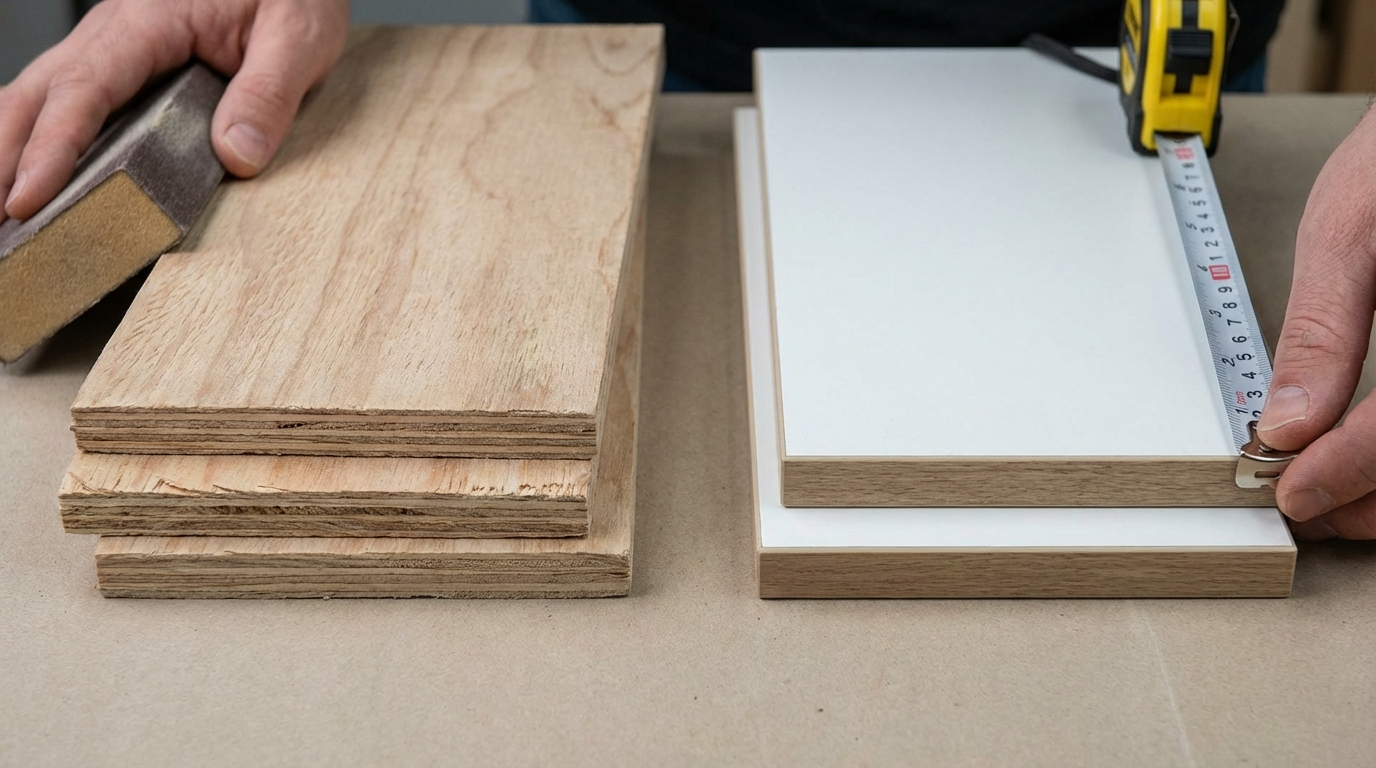
For wardrobes, beds and other load-bearing furniture, plywood is the stronger choice because its cross-laminated veneers resist bending and sagging; MDF's uniform, smooth surface makes it better for painted and decorative pieces kept away from moisture.
Last updated: . Grades and standards checked against current BIS standards.
Understanding the Core Composition: Why Material Structure Drives Furniture Performance
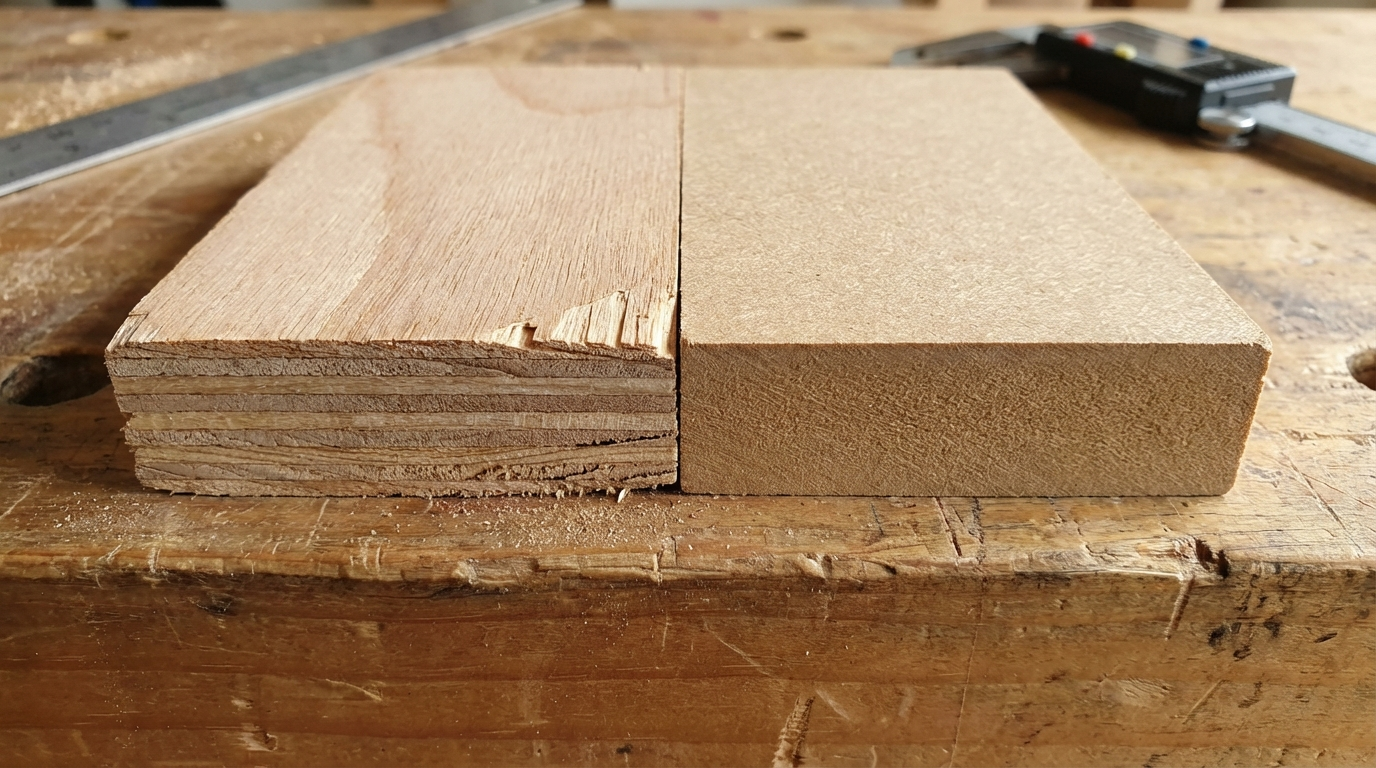
In India's diverse climate—from humid coastal regions to dry interiors—furniture materials must withstand varying stresses like moisture fluctuations, heavy loading, and everyday wear. Plywood and MDF represent two engineered wood approaches with fundamentally different builds. Plywood consists of thin veneers glued cross-grain in layers, creating inherent strength through alternating fiber directions. This mimics natural wood's resilience but avoids solid lumber's warping tendencies.
MDF, or Medium Density Fiberboard, compresses wood fibers with resins under heat and pressure into uniform sheets. Lacking grain direction, it offers smooth surfaces but relies on density for stability. For furniture makers in India, where wardrobes bear clothes' weight and cabinets face kitchen steam, these structural differences dictate real-world outcomes. Homeowners prioritize longevity amid monsoons, while contractors focus on assembly ease in labor-intensive sites.
How Cross-Layering Gives Plywood an Edge in Load-Bearing
Plywood's multi-layer design distributes stress evenly, resisting bending under weight. A 18mm plywood sheet, common for wardrobe shutters, supports 50-70kg per square meter without sagging—critical for Indian households stacking sarees or bedsheets. In contrast, MDF of similar thickness deforms faster under sustained loads due to uniform fiber alignment, making it prone to swelling if overloaded.
MDF's Uniformity: A Trade-Off for Smoothness Over Rigidity
MDF's fiber matrix excels in flatness, ideal for carving intricate designs without grain telegraphing through paint. However, this isotropy means it lacks plywood's directional reinforcement, leading to quicker fatigue in high-stress furniture like loft beds or heavy-duty almirahs.
Strength Breakdown: Testing Real-World Furniture Demands
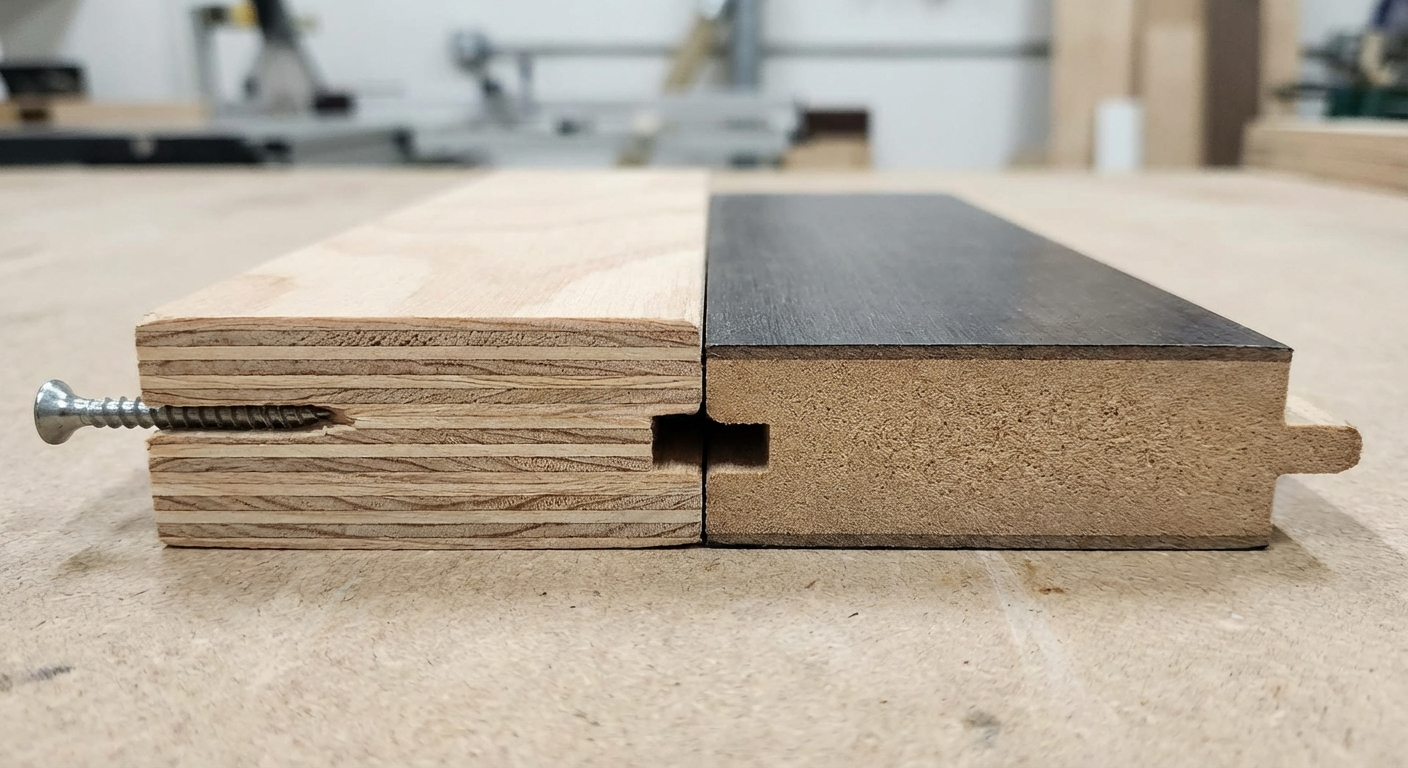
Strength isn't just lab metrics; it's about surviving India's construction realities—vibrations from transport, uneven floors, and multi-generational use. Plywood's superior screw-holding capacity (up to 2x that of MDF) ensures hinges and handles stay secure longer, reducing callbacks for carpenters in bustling cities like Mumbai or Delhi.
| Strength Aspect | Plywood | MDF | Implication for Furniture |
|---|---|---|---|
| Tensile Strength | High (cross-grain layers) | Moderate (fiber compression) | Plywood better for shelves holding books or utensils |
| Screw Holding | Excellent (veneer grip) | Fair (requires pilot holes) | Fewer loose fittings in wardrobes over time |
| Impact Resistance | Good (layered flex) | Poor (brittle edges) | MDF chips easily during installation knocks |
| Bending Resistance | Superior | Average | Plywood for spanning wider gaps without supports |
This table highlights why architects specify plywood for structural frames in modular kitchens, where repeated door slams test endurance.
Cost Analysis: Balancing Upfront Spend with Lifecycle Value
Indian pricing fluctuates by region, grade, and dealer margins—coastal areas add 10-20% for moisture-resistant variants due to import glue costs. Plywood starts higher (roughly 1.5-2x MDF per sheet) owing to veneer sourcing and lamination labor, but its durability offsets this over 10-15 years. MDF appeals to budget-conscious homeowners in Tier-2 cities, where painted panels hide imperfections cheaply.
Factors Driving Price Variations in India
- Thickness and Grade: 18mm BWR plywood costs more than MR MDF due to boiling water resistance for humid zones.
- Dealer Ecosystem: Wholesale yards in Bhopal offer plywood at lower rates than retail chains in Bangalore, but verify ISI certification to avoid subpar imports.
- Volume Purchases: Contractors save 15-25% buying truckloads, favoring plywood's reusability in formwork-turned-furniture.
For a standard wardrobe (6x4ft), plywood totals 20-30% more initially but avoids replacement costs MDF incurs from sagging or termite nibbling without extra treatment.
Durability Under Indian Conditions: Moisture, Pests, and Wear
Durability hinges on resisting India's monsoons (70-90% humidity) and termite prevalence in wooden homes. Plywood grades like BWP (boiling water proof) maintain integrity after repeated wetting-drying cycles, unlike MDF which swells 10-15% in edges, cracking laminates. Termite resistance requires both to be treated, but plywood's denser core holds preservatives better.
Moisture Resistance Head-to-Head
Expose both to 24-hour submersion: Plywood delaminates only in low-grade MR variants, while MDF absorbs water rapidly, expanding and losing shape. In kitchens, this means plywood cabinets shrug off spills; MDF demands sealing everywhere.
| Durability Factor | Plywood Performance | MDF Performance | Indian Context Winner |
|---|---|---|---|
| Humidity Tolerance | BWP: Excellent; MR: Fair | Moderate (sealer-dependent) | Plywood in coastal Kerala |
| Termite Resistance | Good with treatment | Fair (softer fibers) | Plywood for ground-level storage |
| Wear Over Time | High (scratch-resistant face) | Low (surface dents) | Plywood for kids' rooms |
| Fire Retardancy | Fair (additives available) | Poor unless treated | Tie with FR grades |
Interior designers note plywood's edge in longevity, justifying premiums for high-traffic areas.
Why Plywood Dominates Wardrobes and Heavy Furniture
Wardrobes in Indian homes often double as linen storage, demanding robust shutters. Plywood's rigidity prevents drooping even with full loads, and its machinability allows precise dado joints without splintering. In modular designs popular post-2020, plywood frames integrate seamlessly with laminates, outlasting MDF's tendency to warp under clothing humidity.
Practical Scenarios Favoring Plywood
- Homeowners: Long-term investment in master bedrooms; resists monsoon dampness without veneers peeling.
- Contractors: Faster site assembly with pre-cut sheets; reuses offcuts for partitions.
- Architects: Structural integrity for walk-in closets spanning 10ft widths.
Avoid low-grade softwood plywood; opt for hardwood core for optimal strength.
MDF's Strengths in Painted and Decorative Finishes
Where aesthetics trump load, MDF delivers. Its glass-smooth face accepts paint uniformly, hiding joints in glossy TV units or headboards—no grain raising like plywood. In air-conditioned urban flats, moisture risks drop, letting MDF shine for custom moldings.
Ideal MDF Applications
- Painted Panels: Flush doors or cabinet faces; primers bond flawlessly.
- Carved Elements: Intricate jaali work or moldings without tear-out.
- Budget Interiors: Rental properties where quick, cheap refreshes matter.
Pair with moisture barriers like PU sealers; unsealed MDF fails fast in bathrooms.
Finishing and Workability: Machining, Laminating, and Edge Banding
Plywood machines cleanly with carbide tools, holding edges for PVC banding that withstands tugs. MDF dusts finely, requiring vacuums to avoid health issues in workshops, but sands to perfection for veneers. Laminating favors plywood's stable base; MDF warps if glue heats unevenly.
For hybrid furniture—plywood carcasses with MDF doors—this combo leverages both, common in Pune factories.
Weight and Transportation: Logistics in India's Supply Chain
MDF weighs 20-30% less, easing handling for solo carpenters in high-rises without elevators. Plywood's heft signals density but burdens delivery trucks from Kerala mills to northern markets, inflating freight costs.
Environmental and Health Considerations
Both use urea-formaldehyde glues emitting VOCs; seek E1/E0 rated or bio-resins for kids' furniture. Plywood's veneers often source sustainably from plantations, while MDF recycles waste—check FSC for credibility. In termite zones, avoid arsenic treatments.
Decision Framework: Which to Choose for Your Project?
| Furniture Type | Recommended Material | Key Reason | Cost Relative |
|---|---|---|---|
| Wardrobes/Almirahs | Plywood | Load and humidity resistance | Higher initial |
| Painted Cabinets | MDF | Smooth finish, no grain | Lower |
| Kitchen Shuttters | Plywood (BWR/BWP) | Steam and spills | Premium |
| TV Units/Decor | MDF | Carving and paint | Budget-friendly |
| Hybrid Modular | Both | Strength + aesthetics | Balanced |
Assess your space: Humid? Load-heavy? Painted? Test samples at dealers; tap for solidity—plywood rings denser.
Buying Tips for Indian Consumers
- Verify Grades: ISI 303 for plywood; look beyond labels to core quality.
- Source Wisely: Direct from mills in Punjab/Assam for plywood savings; MDF from particle board hubs.
- Future-Proof: Factor 10-year use; plywood often resells better in upgrades.
Common Myths Debunked
MDF is always cheaper long-term: No—replacements add up. Plywood warps easily: Only untreated; proper grades don't. MDF is termite-proof: False; both need treatment.
Plywood edges out for most structural furniture, but MDF carves niches in visuals. Weigh your priorities against these realities.
Related guides on PlyPrice
Want Plywood Suggestions?
Share a few details and a PlyPrice specialist will suggest suitable brands and connect you to responsive dealers.