Plywood vs Laminate Board: Structural Core vs Decorative Finish
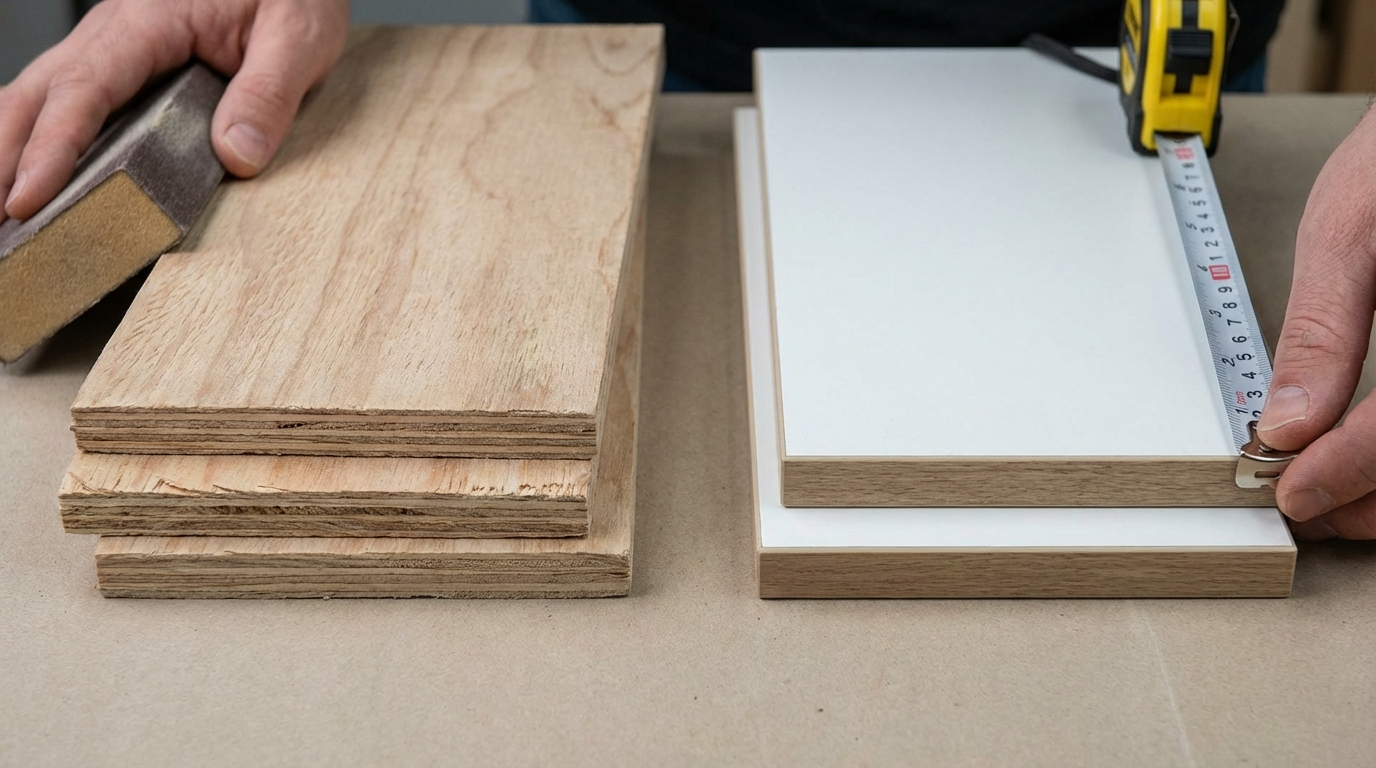
Plywood and laminate do different jobs: plywood is the structural board that carries load in cabinets and wardrobes, while laminate is a decorative surface glued on top. Pre-laminated boards are particleboard or MDF sold with laminate already fused at the factory.
The Root of the Confusion: Why Plywood and Laminate Get Mixed Up
In Indian homes and construction sites, terms like "plywood" and "laminate" often blur together during material selection. Homeowners browsing dealer yards in Mumbai or Delhi might hear "laminate board" pitched as a plywood alternative, while interior designers specify "BWP plywood with laminate finish." This stems from plywood serving as the sturdy base layer and laminate acting as the aesthetic topcoat. Pre-laminated boards—particleboard or MDF with factory-applied laminate—further muddy the waters, marketed as ready-to-use panels.
At its core, plywood provides structural integrity for load-bearing elements like cabinets or wardrobes, enduring India's humid monsoons and termite-prone soils. Laminate, often called Sunmica in trade circles, delivers color, texture, and wipeable surfaces but relies on a substrate like plywood or MDF underneath. Understanding this core-vs-finish dynamic prevents costly mismatches, such as using thin laminate sheets alone for shelves that sag under weight.
Plywood: The Structural Backbone Explained
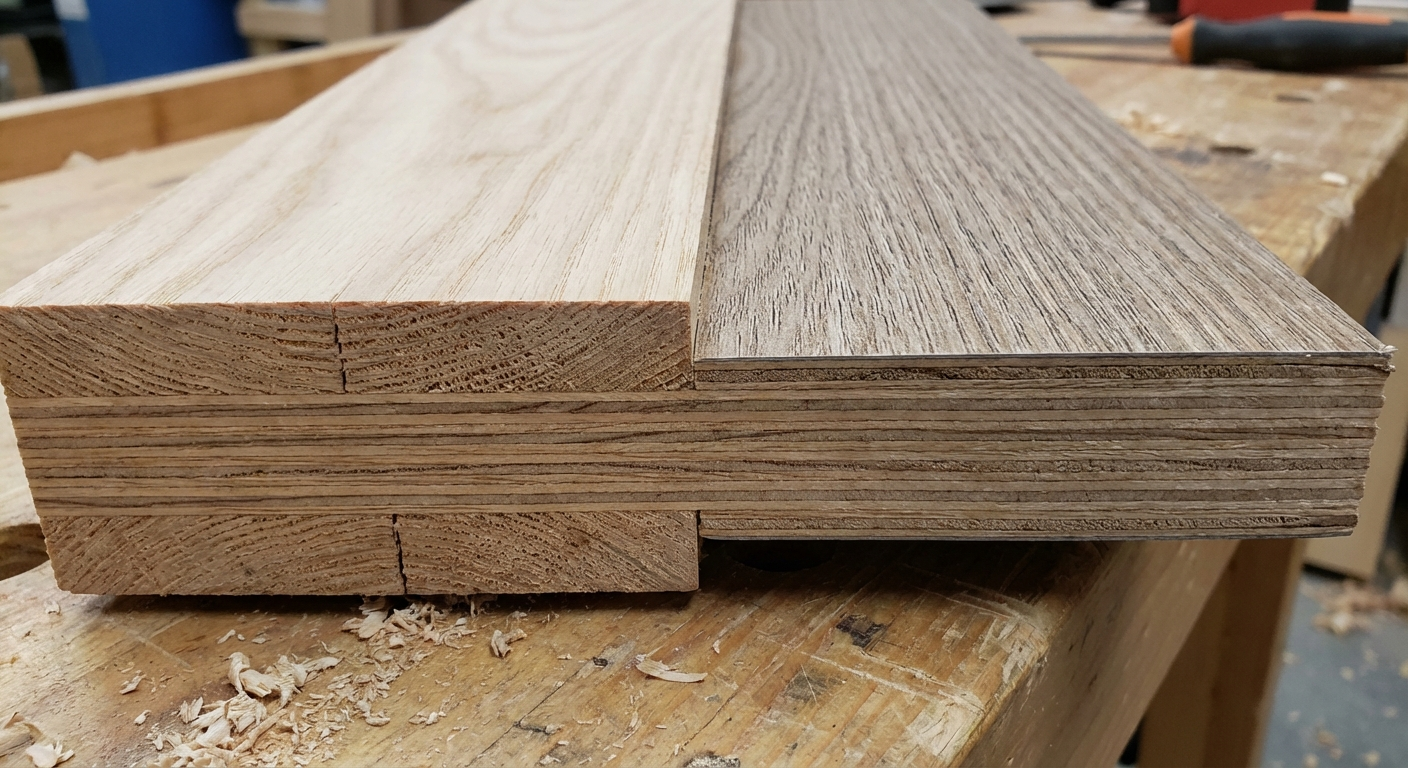
Plywood starts with thin wood veneers glued cross-grain for balanced strength, mimicking solid timber's stability without warping. In India, it's the go-to for frameworks exposed to moisture swings—from Kerala’s coastal humidity to Rajasthan's dry heat.
Core Composition and Grading
Manufactured from hardwoods like poplar or eucalyptus, veneers are layered with adhesives: urea-formaldehyde for MR (moisture-resistant) grade suits dry interiors; phenolic resins upgrade to BWR (boiling water-resistant) for kitchens; and BWP (boiling water-proof) for marine or bathroom use. ISI IS:303 standards guide thickness (3-25mm) and glue shear strength, ensuring panels withstand delamination under cyclic wetting.
First-principles logic: Cross-layering resists expansion/contraction differently across grains, unlike uniform particleboard that swells uniformly in humidity.
Strength Metrics in Practice
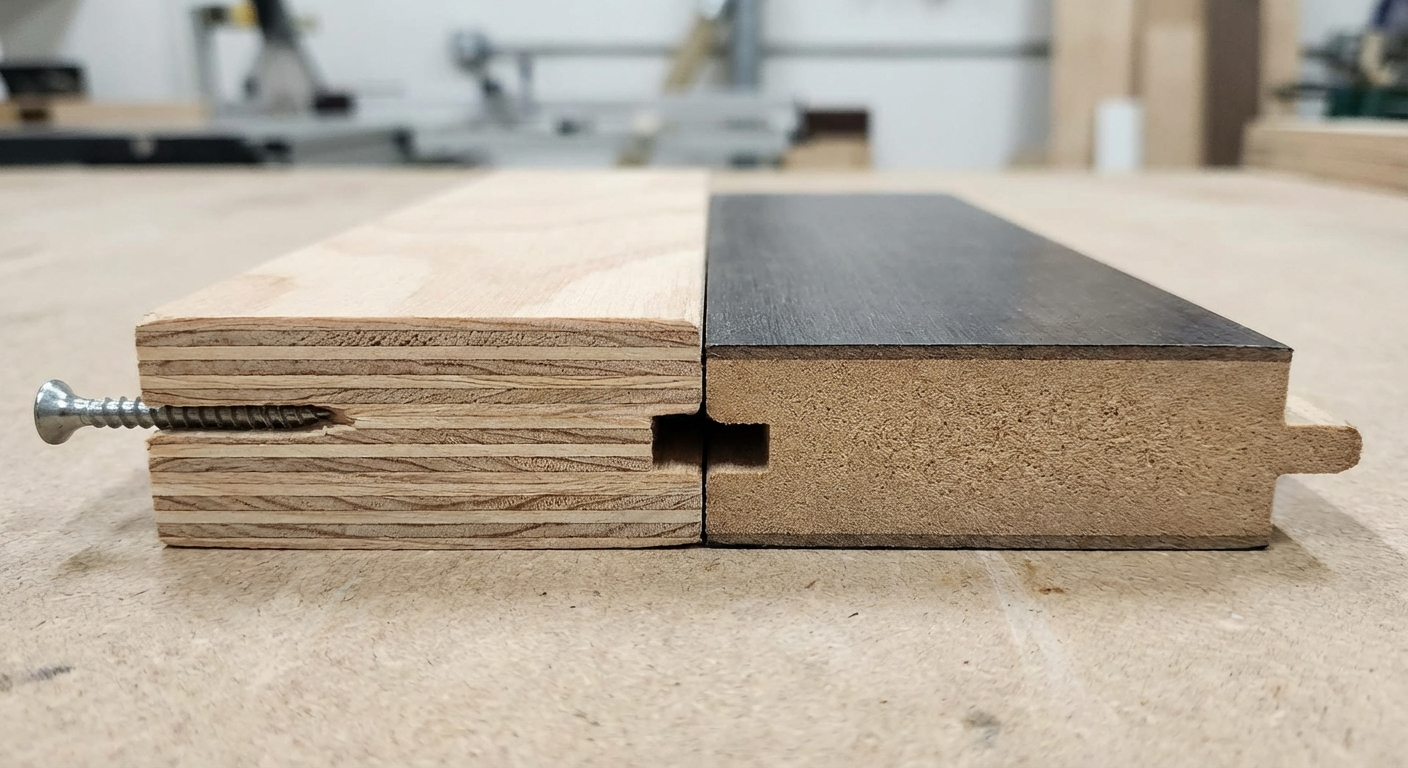
- Screw Holding: Plywood edges grip screws 2-3x better than particle cores, vital for modular furniture assembly.
- Load Distribution: Spans wider gaps without sagging; an 18mm plywood shelf holds 50-70kg uniformly vs. pre-lam boards buckling sooner.
- Fire and Termite Resistance: Add-ons like nitrogen-phosphorus treatments meet Indian safety norms for public projects.
Laminate: The Decorative Skin, Not a Standalone Board
Laminate sheets (0.6-1.2mm thick) fuse decorative paper with melamine resin under heat/pressure, creating durable, glossy finishes in wood grains, solids, or textures. Brands like Century or Greenlam dominate Indian showrooms, but they're never structural—always bonded atop plywood, MDF, or HDHMR.
Pre-Laminated Boards: Factory Fusion
These combine a dense core (often 16-18mm MDF or particleboard) with laminate pressed on both sides. Popular in budget wardrobes, they arrive finish-ready from dealers in Hyderabad or Bangalore. However, the core dictates performance: softwood particles compress under screws, limiting reusability in knockdown furniture.
India-specific caveat: Monsoon exposure reveals weak glue lines in low-grade PLBs, causing bubbling absent in quality BWP plywood bases.
Head-to-Head Comparison: Plywood vs. Laminate Boards
| Parameter | Plywood (Core) | Laminate/Pre-Laminated Board (Finish + Core) |
|---|---|---|
| Primary Role | Structural support, load-bearing | Decorative overlay on substrate |
| Thickness Range | 3-25mm (edges visible unless veneered/laminated) | 0.7-1.2mm sheet or 16-19mm full board |
| Moisture Resistance | MR (interiors), BWR/BWP (wet areas) | High surface resistance; core varies (MDF swells faster) |
| Edge Finish | Raw or edge-banded; needs covering | Factory-sealed; hides core flaws |
| Screw Retention | Excellent (re-drillable 3-5x) | Poor on particle cores (1-2x max) |
| Weight per sqm (18mm) | Medium-heavy | Lighter (particle/MDF base) |
| Customization | Any size cut; laminate added post | Fixed sizes; limited post-cuts |
This table highlights why architects pair BWP plywood with laminate for longevity, while contractors opt for PLBs in transient rentals.
Real-World Applications: Where Each Excels in Indian Builds
Plywood-Dominant Scenarios
Flush doors, loft beds, or kitchen cabinets demand plywood's bend resistance. In Pune's plotted developments, 18mm IS:1658 shuttering plywood transitions to finished MR ply with laminate tops, balancing cost and durability.
Laminate/PLB Strengths
Pre-laminated MDF shines in TV units or partitions needing quick installs and uniform finishes. Designers in Chennai favor 1mm high-pressure laminates over HDHMR for matte textures mimicking Italian marble, but only atop sturdy cores.
Hybrid approach rules: 90% of premium Indian interiors use plywood substructure + laminate veneer, per dealer observations in Tier-2 cities.
Cost Breakdown: Drivers and Relative Economics
Plywood pricing hinges on grade, thickness, and wood species—MR starts lower for bulk contractor buys, escalating 30-50% for BWP amid glue/phenol costs. Laminate adds 10-20% to totals via labor (manual pressing) or factory premiums in PLBs.
| Factor | Plywood Alone | With Laminate | Pre-Laminated Board |
|---|---|---|---|
| Base Material Cost | Medium (veneer quality) | Medium + 15% overlay | Lower (particle core) |
| Dealer Variation | North: Lower; South: Higher transport | + Labor in unorganized shops | Volume discounts common |
| Long-Term Savings | Replacements rare | Peel-resistant if quality glue | Higher failure risk in humidity |
Why varies: Regional dealer margins (10-25%) plus GST (18%) inflate retail; bulk from Gujarat mills cuts 20%. PLBs appeal to budget homeowners but rack up repairs in 2-3 years.
Pros, Cons, and Decision Logic for Buyers
Plywood Advantages and Limits
- Pro: Unmatched strength-to-weight; termite-proof options.
- Con: Exposed edges absorb moisture without banding.
Laminate/PLB Trade-offs
- Pro: Instant aesthetics, hygienic surfaces resist stains.
- Con: Core degradation in edges; heat-sensitive (ironing boards fail).
Contractor logic: Plywood for frameworks (80% projects). Homeowner: PLB for visible panels if budget-constrained, hybrid otherwise. Architects prioritize screw cycles for modular homes.
Practical Buying Guide for Indian Markets
- Assess Exposure: Wet zones? Mandate BWP plywood base.
- Check Certifications: ISI marks on glue lines; avoid "commercial" ungraded stock.
- Dealer Tactics: Test screw pull-out on samples; haggle 10-15% off MRP.
- Hybrid Tip: Press 0.8mm laminate on 18mm ply using PVA adhesive for 20-year life.
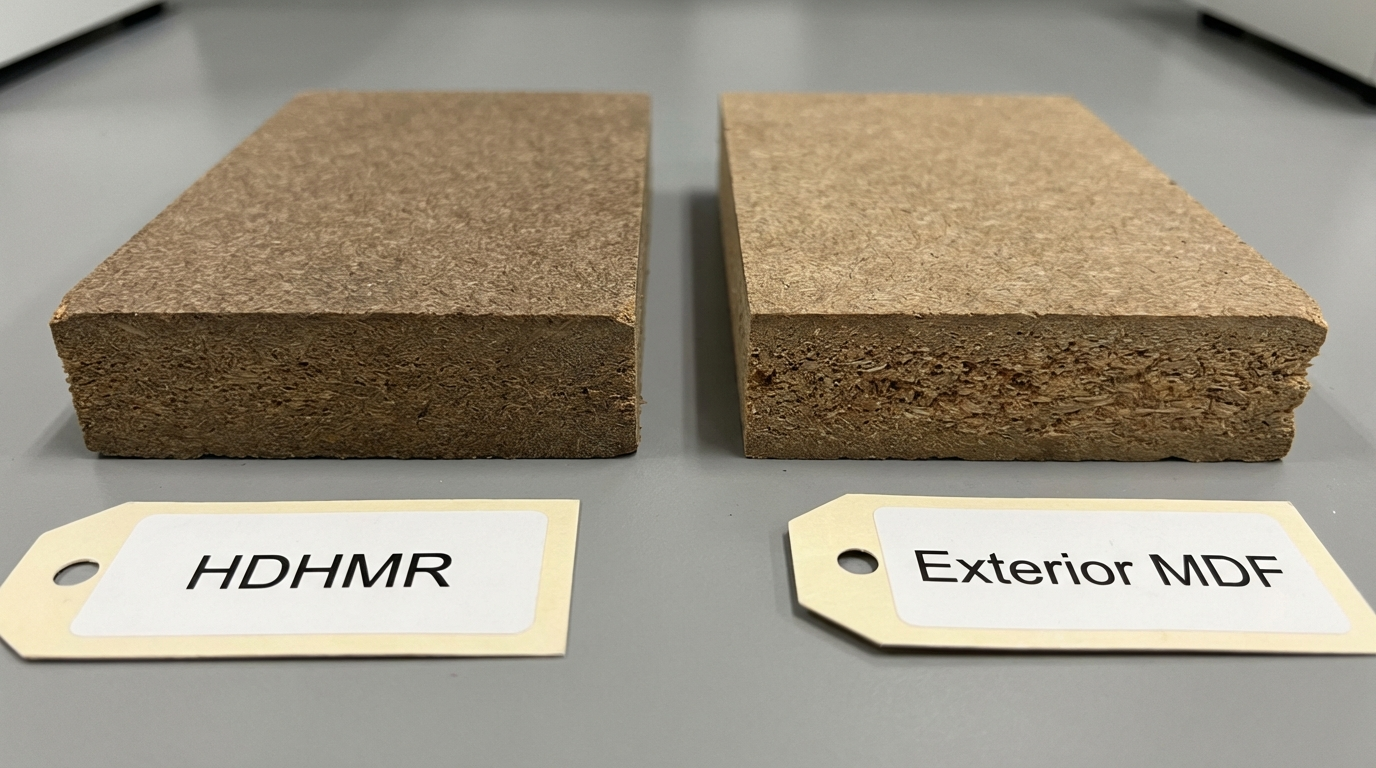
- Alternatives: HDHMR for high-density needs over soft PLBs.
In dealer ecosystems from Kolkata to Coimbatore, insist on core samples—surface gloss deceives.
Debunking Myths in Plywood-Laminate Debates
Myth 1: "Laminate boards are plywood with finish." Reality: Most use recycled particles, lacking veneer strength.
Myth 2: "All laminates waterproof everything." Truth: Only the skin; unsealed edges fail in steam-heavy Indian kitchens.
Myth 3: "PLBs cheaper long-term." Fact: Frequent replacements offset initial savings amid rising labor costs.
Quick Decision Framework Table
| Project Type | Recommended Choice | Why? |
|---|---|---|
| Wardrobe carcass | Plywood + Laminate | Edge strength, reusability |
| Wall panels | Pre-Laminated MDF | Lightweight, seamless look |
| Kitchen shutters | BWR Plywood + Laminate | Grease/moisture barrier |
| Budget rental | PLB | Fast install, low upfront |
Plywood or Pre-Laminated Board: Which Should You Choose?
Distinguish plywood's foundational role from laminate's surface appeal to sidestep regrets. In India's diverse climates and budgets, hybrids deliver optimal value—structural plywood under vibrant laminates. Consult local carpenters for site-specific tweaks, ensuring investments endure beyond trends.
Related guides on PlyPrice
Want Plywood Suggestions?
Share a few details and a PlyPrice specialist will suggest suitable brands and connect you to responsive dealers.