Plywood vs HDHMR for Kitchen Cabinets: Moisture, Screw Holding and Cost
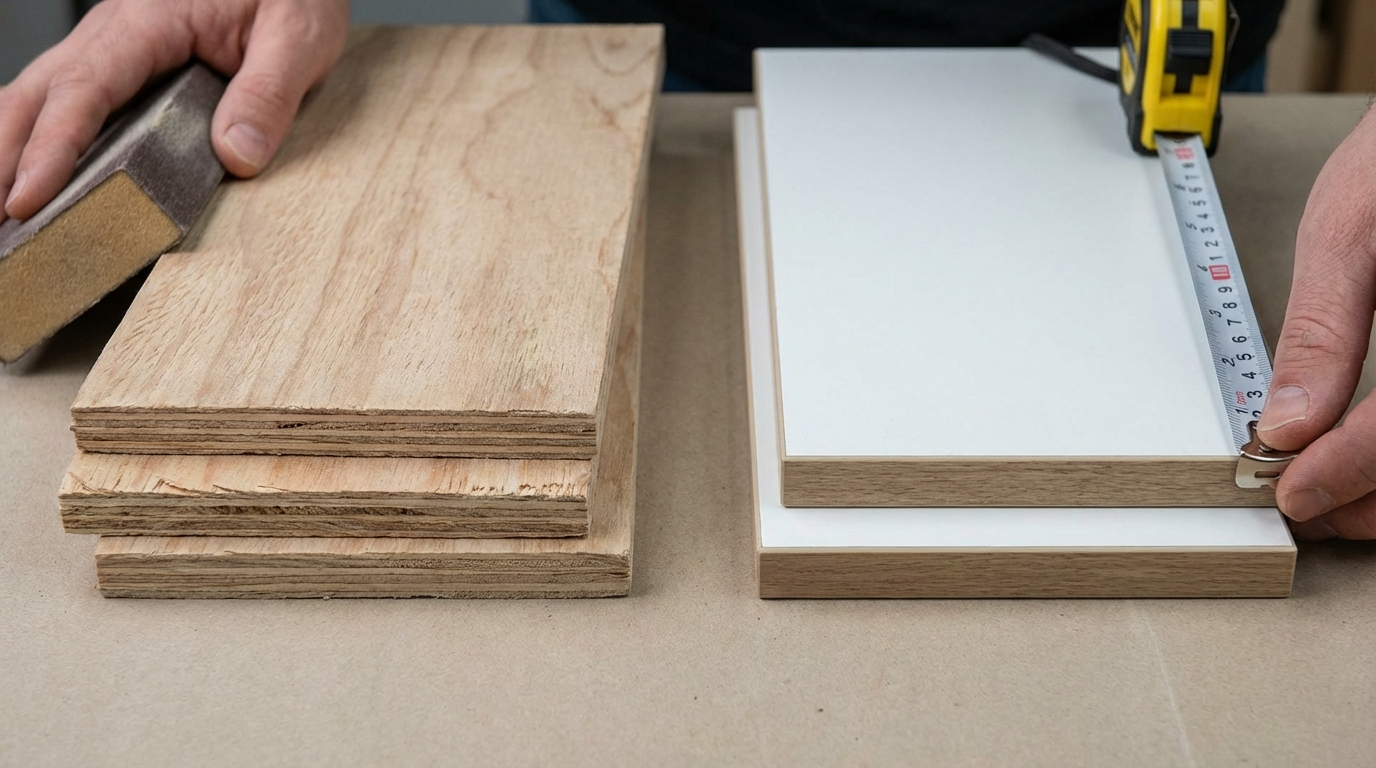
BWP plywood is generally the safer pick for sink bases and other wet zones in an Indian kitchen, while HDHMR's dense, flat surface suits shutters and modular carcasses away from direct water. Compare moisture resistance, screw holding and price before you order.
Last updated: . Grades and standards checked against current BIS standards.
Understanding Kitchen Cabinet Challenges in Indian Homes
In Indian kitchens, cabinets face relentless daily assaults from humidity, steam from cooking curries and dals, oil splatters, and seasonal monsoons that turn homes into inadvertent saunas. Homeowners and interior designers often debate between BWP plywood and HDHMR for modular cabinets, seeking materials that endure without warping, delaminating, or sagging under utensils and spices. This comparison breaks down their performance across critical factors like water resistance, mechanical strength, and long-term economics, using practical reasoning grounded in India's diverse climates—from coastal Mumbai's salt-laden air to Delhi's dry heat swells.
BWP Plywood: The Waterproof Engineered Wood Standard
BWP, or Boiling Water Proof plywood, earns its grade through rigorous ISI testing (IS:710), involving repeated boiling cycles without structural failure. Constructed from multiple hardwood veneers glued with phenolic resins under high pressure, it forms a cross-grained panel that's inherently stable. In first-principles terms, the layered veneer structure distributes stress evenly, resisting expansion when exposed to moisture—unlike single-layer boards.
For kitchen cabinets, 18mm BWP plywood serves as carcasses and shutters, prized for its ability to hold laminates or veneers without bubbling. In humid regions like Kerala or Chennai, it shrugs off sink-side splashes better than lower-grade MR or BWR plywood, which swell under prolonged dampness. However, its open edges require edge-banding to prevent water ingress, a step contractors often overlook in rushed modular installs.
HDHMR: High-Density Moisture-Resistant Particleboard
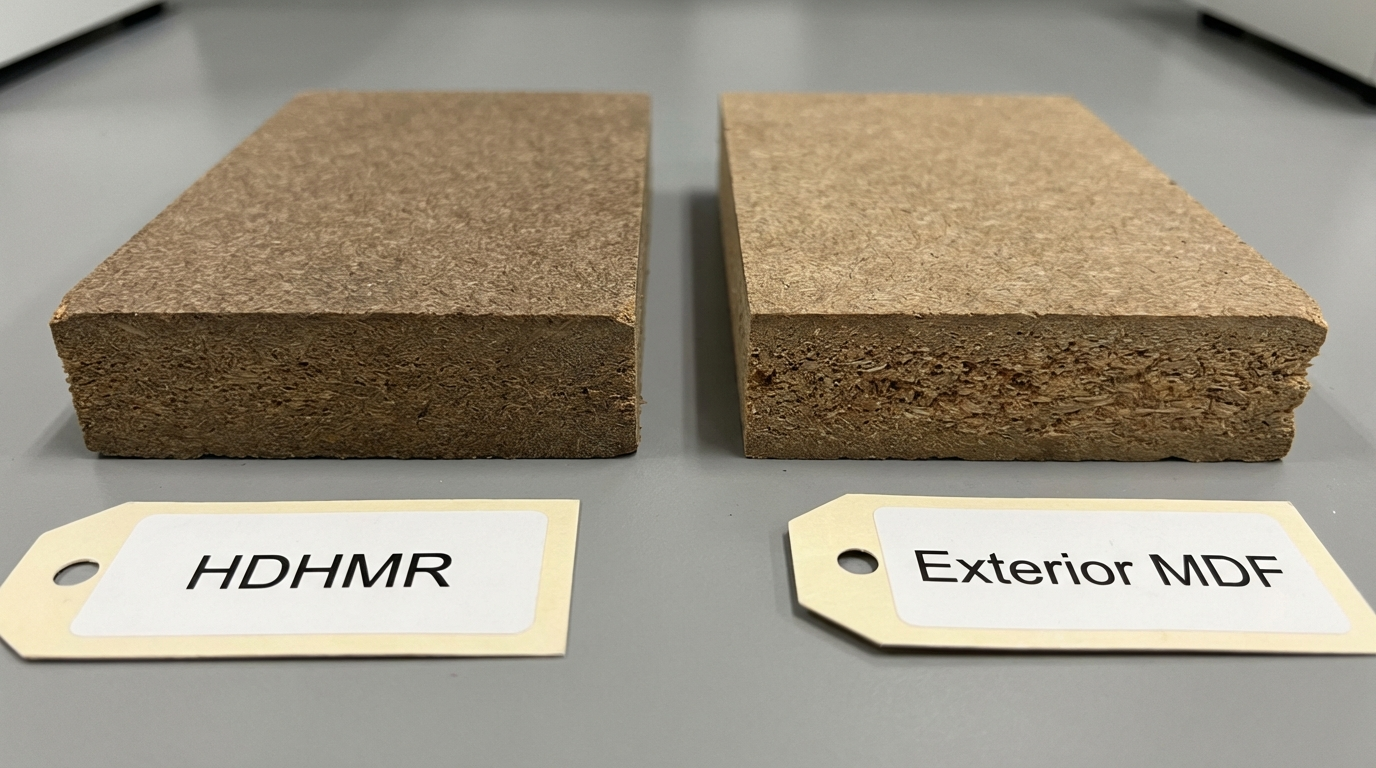
HDHMR represents an evolution of MDF and particleboard, densified to 800-900 kg/m³ using fine wood fibers, urea-formaldehyde resins enhanced with moisture repellents, and sometimes wax emulsions. Unlike standard MDF, which balloons in wet conditions, HDHMR's compressed structure minimizes void spaces, slowing water absorption. It's marketed for semi-wet areas, with manufacturers claiming compliance to IS:12406 for particleboards.
In practice, HDHMR shines in factory-finished cabinets where edges are sealed during production. Its smooth, uniform surface accepts laminates seamlessly, reducing visible joints—a boon for sleek modular designs popular in urban apartments. Yet, its particle-based composition introduces vulnerabilities: under repeated screw insertions or heavy loads, fibers can crush if not perfectly sealed.
Moisture Resistance: Core Battleground for Kitchen Durability
Waterproofing defines kitchen longevity, as cabinets near sinks and stoves absorb vapor continuously. BWP plywood's phenolic glue bonds withstand boiling (hence the name), with lab tests showing under 10% thickness swell after 72-hour submersion—far superior to HDHMR's 12-18% swell under similar conditions, per independent panel evaluations.
Real-world logic: During monsoons, an unsealed BWP edge might wick minor moisture, but its veneers recover without permanent warp. HDHMR, reliant on surface coatings, fails faster if laminate chips—common in Indian homes from utensil bangs or cleaner abrasives. Coastal users report BWP cabinets lasting 15+ years, while HDHMR often needs shutter replacements after 7-10 years in high-humidity zones.
| Factor | BWP Plywood | HDHMR |
|---|---|---|
| Boiling Water Test (IS:710 vs equiv.) | Passes multiple cycles | Not rated for boiling; submerge limits |
| Thickness Swell (24-hr soak) | <10% | 12-18% |
| Recovery After Drying | High (90%+) | Moderate (70-80%) |
| Edge Sealing Criticality | Recommended | Essential |
Impact of Indian Cooking Habits
Spice-heavy tadka frying generates oil vapors that condense on cabinet undersides. BWP's closed-cell glue lines repel this better, while HDHMR's resins can soften, leading to sagging shelves. Architects specify BWP for premium projects like sea-facing villas, where salt accelerates corrosion.
Screw Holding Strength: Stability Under Load
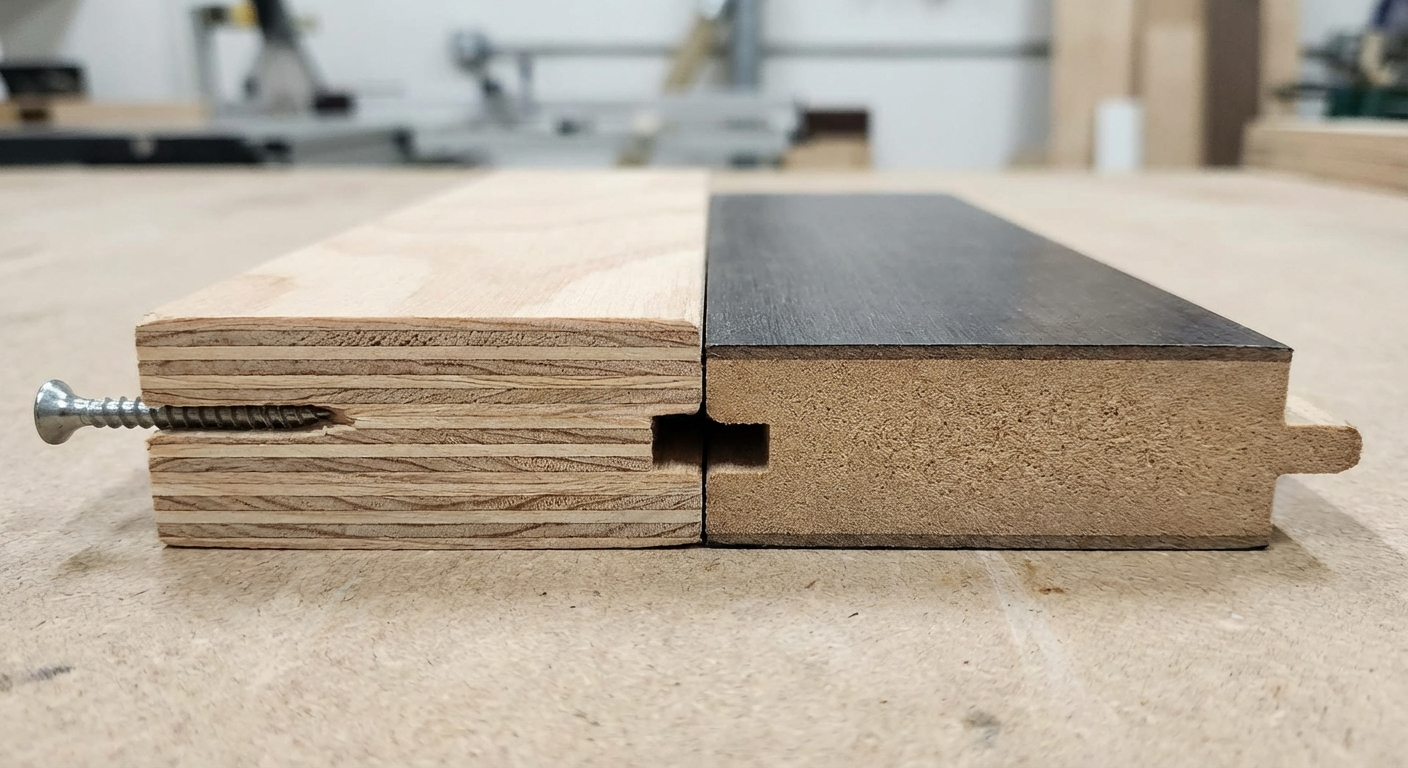
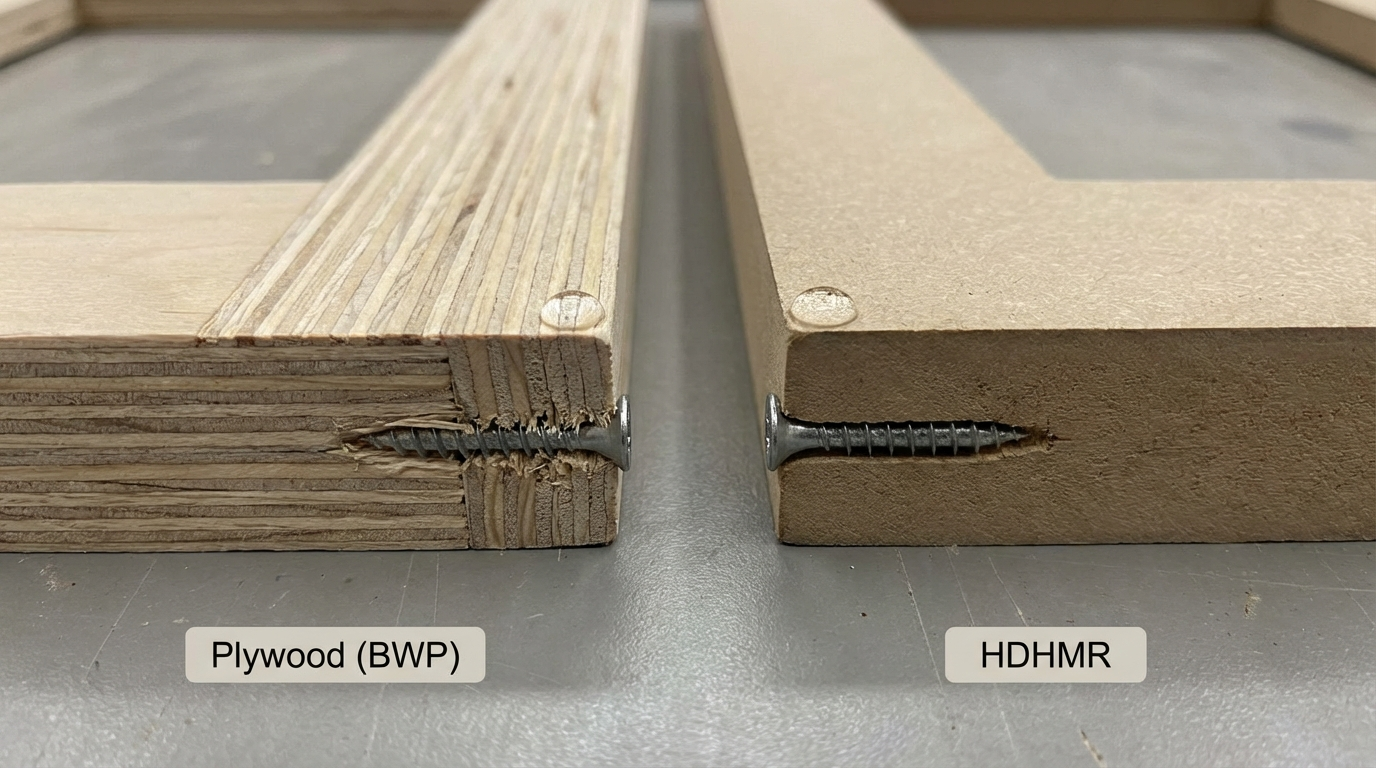
Kitchen cabinets bear 20-50kg per shelf from dal vessels and mixers. Screw pull-out strength measures this: BWP plywood's hardwood veneers provide 200-300N retention per screw (per IS tests), thanks to layered grip. HDHMR counters at 150-250N, but repeated insertions weaken it faster due to fiber pulverization.
Contractor logic: In modular kitchens, hinges and slides demand precise torque. BWP forgives minor misalignments; HDHMR requires pilot holes and backups like inserts for longevity. Overloading reveals differences—BWP shelves droop less after 5 years, per site visits in Bangalore's apartment complexes.
| Test Condition | BWP Plywood (N) | HDHMR (N) | Practical Implication |
|---|---|---|---|
| Initial Screw Pull-Out | 250-350 | 180-280 | BWP suits heavy hardware |
| After 5 Cycles | Retains 80% | Retains 60% | HDHMR needs reinforcements |
| Cyclic Loading (Drawers) | Stable >10k cycles | Creep after 5k | Better for frequent use |
Weight and Handling During Installation
BWP's density (650-750 kg/m³) adds heft, stabilizing cabinets but challenging DIYers. Lighter HDHMR (700-850 kg/m³) eases transport, appealing to dealer-supplied modular units in Tier-2 cities like Lucknow.
Price Breakdown: Balancing Cost with Kitchen ROI
Pricing hinges on thickness (16-18mm standard), brand tier, and region—North India dealers quote 20-30% lower than South due to transport. BWP plywood ranges higher (roughly 1.5-2x HDHMR per sqm) from phenolic glue and hardwood costs. HDHMR's factory efficiencies keep it economical for mass-market cabinets.
Value equation: BWP's 15-20 year lifespan offsets premium via fewer repairs; HDHMR suits budgets under ₹2 lakh kitchens, lasting 8-12 years. Cost drivers include laminate pairing—both accept it, but BWP's stability prevents peeling failures that inflate HDHMR maintenance.
- Budget Kitchens (<₹1.5 lakh): HDHMR for quick ROI.
- Mid-Range (₹2-4 lakh): HDHMR viable with upgrades.
- Premium (>₹5 lakh): BWP standard.
| Thickness | BWP Plywood (₹/sqft, approx. range) | HDHMR (₹/sqft, approx. range) | Key Driver |
|---|---|---|---|
| 18mm | 180-350 | 100-200 | Resin quality, wood source |
| Per Cabinet Set (10x20 ft kitchen) | 1.2-2x higher | Baseline | Volume discounts vary |
Termite Resistance, Finishing, and Maintenance Factors
BWP incorporates preservatives, resisting termites better in subterranean zones like Hyderabad soils—unlike untreated HDHMR, which demands chemical dips. Finishing: HDHMR's flawlessness suits high-gloss laminates; BWP needs skilled sanding for patches. Maintenance favors BWP—wipe spills immediately on both, but BWP forgives lapses.
Environmental and Health Notes
Both emit low formaldehyde if E1/E0 rated, but BWP's natural veneers appeal to eco-conscious buyers. HDHMR's recycling edge suits green certifications, though India's lax enforcement limits impact.
Performance Scenarios from Indian Projects
High-Moisture Coastal Kitchen: BWP triumphs—Mumbai condo cabinets show no warp after 10 years; HDHMR alternatives swelled in 3.
Urban Modular Dry Kitchen: HDHMR competes, lighter weight aiding balcony extensions in Pune.
Heavy-Use Joint Family: BWP's screw grip prevents drawer failures under thali stacks.
Designer feedback: 70% specify BWP for warranties over 10 years; contractors push HDHMR for margins.
Decision Framework: Which Material Fits Your Kitchen?
Weigh priorities via this logic tree:
- If moisture exposure high (sink/stove proximity, humid city): Prioritize BWP.
- Budget-constrained, sealed modular unit: HDHMR sufficient.
- Heavy customization/screws: BWP for reliability.
- Timeline tight: HDHMR's machinability speeds fab.
| Your Scenario | Recommended Choice | Why |
|---|---|---|
| Monsoon-prone, custom build | BWP Plywood | Superior water/screw hold |
| Budget apartment modular | HDHMR | Cost-effective, smooth finish |
| Premium villa with islands | BWP | Longevity justifies premium |
| Low-use guest kitchen | HDHMR | Adequate for light duty |
Practical Buying Guide for Indian Consumers
Inspect at dealers: Tap for voids (dull thud signals defects), check edges for delam, demand ISI marks. Thickness gauge verifies claims—skimp on 12mm. Contractors: Insist on sealed edges; homeowners: Factor 10-15% laminate cost. Regional tips—South opts BWP due to rains; North favors HDHMR hybrids. Consult architects for hybrid panels (BWP carcass, HDHMR shutters) balancing cost/moisture.
Future trends: Nano-coated HDHMR closing gaps, but BWP remains benchmark for wet zones. Test small samples in your kitchen sink before committing.
Related guides on PlyPrice
Want Plywood Suggestions?
Share a few details and a PlyPrice specialist will suggest suitable brands and connect you to responsive dealers.