Plywood vs Cement Board for Tile Backing, Wet Areas and Subfloors
Fiber cement board is the better tile backer for bathrooms, showers and other wet zones because it stays stable when wet, while plywood suits dry subfloors and walls where easy cutting and screw holding matter more. Both need correct fixing and joint treatment under tiles.
Last updated: . Grades and standards checked against current BIS standards.
Tile Backing Needs in Indian Construction: Why Material Choice Matters
In India's diverse climates—from coastal humidity in Mumbai to monsoon-soaked Kerala—tiling over subfloors and wall backers demands materials that withstand moisture without compromising adhesion or structural integrity. Homeowners, contractors, and interior designers often debate plywood against fiber cement board for these roles. Plywood offers familiarity and workability, while fiber cement board prioritizes inertness in wet zones like bathrooms and kitchens. This analysis breaks down their performance through first-principles: how composition affects water interaction, bond strength with thinset mortar, and real-world behavior under India's variable exposure.
Composition Breakdown: Plywood Fundamentals
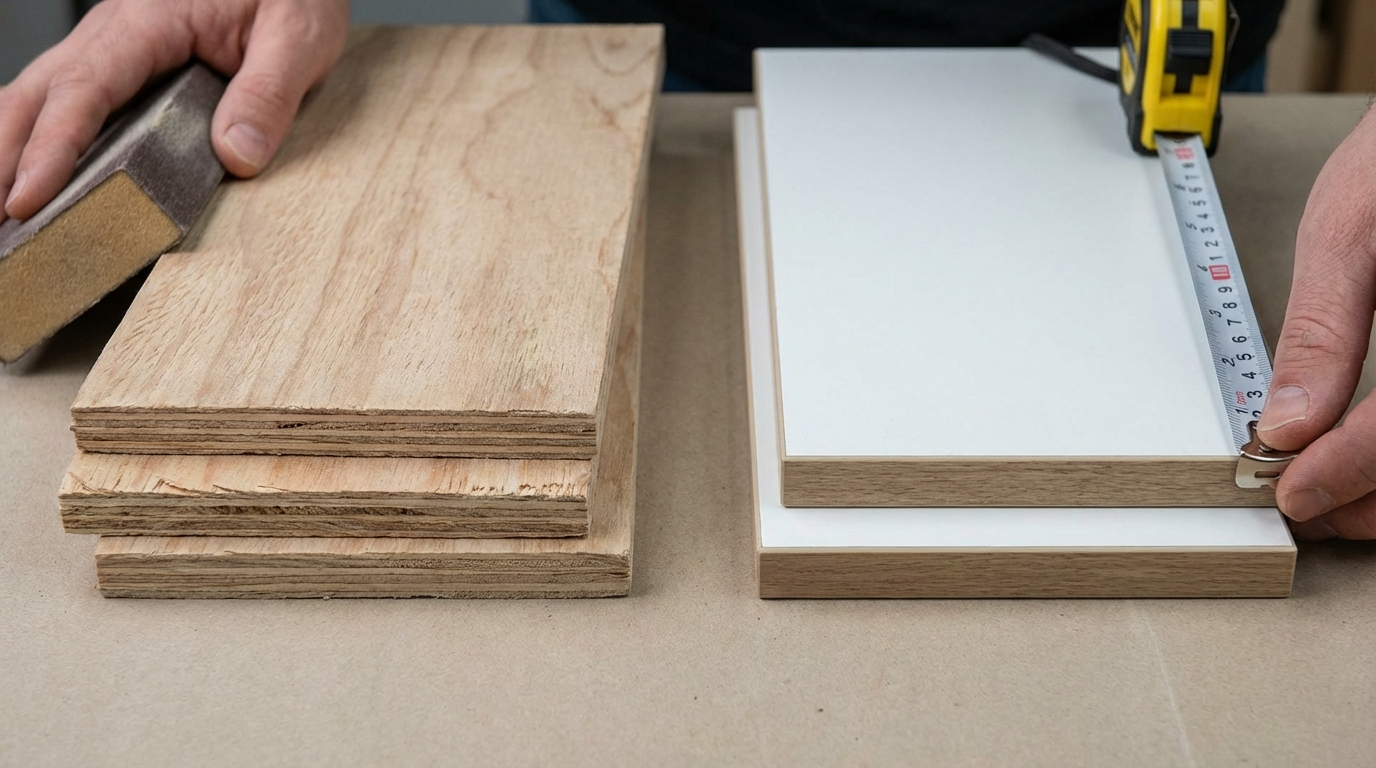
Plywood starts with thin wood veneers glued under pressure, creating cross-laminated sheets. In India, grades like MR (moisture-resistant) use urea-formaldehyde adhesives suited for dry interiors, while BWR (boiling water-resistant) and BWP (boiling water-proof) employ phenolic resins for elevated humidity. ISI standards (IS 303 for MR, BWR and BWP; IS 710 for marine) dictate boil tests and bond integrity, but no plywood is truly waterproof: veneers swell when saturated, risking delamination.
For tile backing, thicknesses range from 6-18mm. Thicker BWP variants provide rigidity, but edges must be sealed meticulously. In practice, Indian contractors favor 12mm BWR for cost-sensitive balcony subfloors, overlooking long-term capillary action in unsealed zones.
Fiber Cement Board: Engineered Inertness
Fiber cement board blends Portland cement, cellulose fibers, and silica, autoclaved for density (typically 1200-1500 kg/m³). Unlike plywood's organic base, it's non-combustible and dimensionally stable, expanding less than 0.5% in water immersion per industry benchmarks. Indian manufacturers align with IS 14871 norms, producing sheets in 6-12mm for backer roles.
Its mineral matrix resists mold without preservatives, ideal for humid enclosures. Weight per square meter (15-25kg for 6mm) demands robust framing, but no rot risk makes it a staple in high-end Mumbai apartments or Kerala villas.
Moisture Resistance Head-to-Head: Surviving Monsoons and Steam
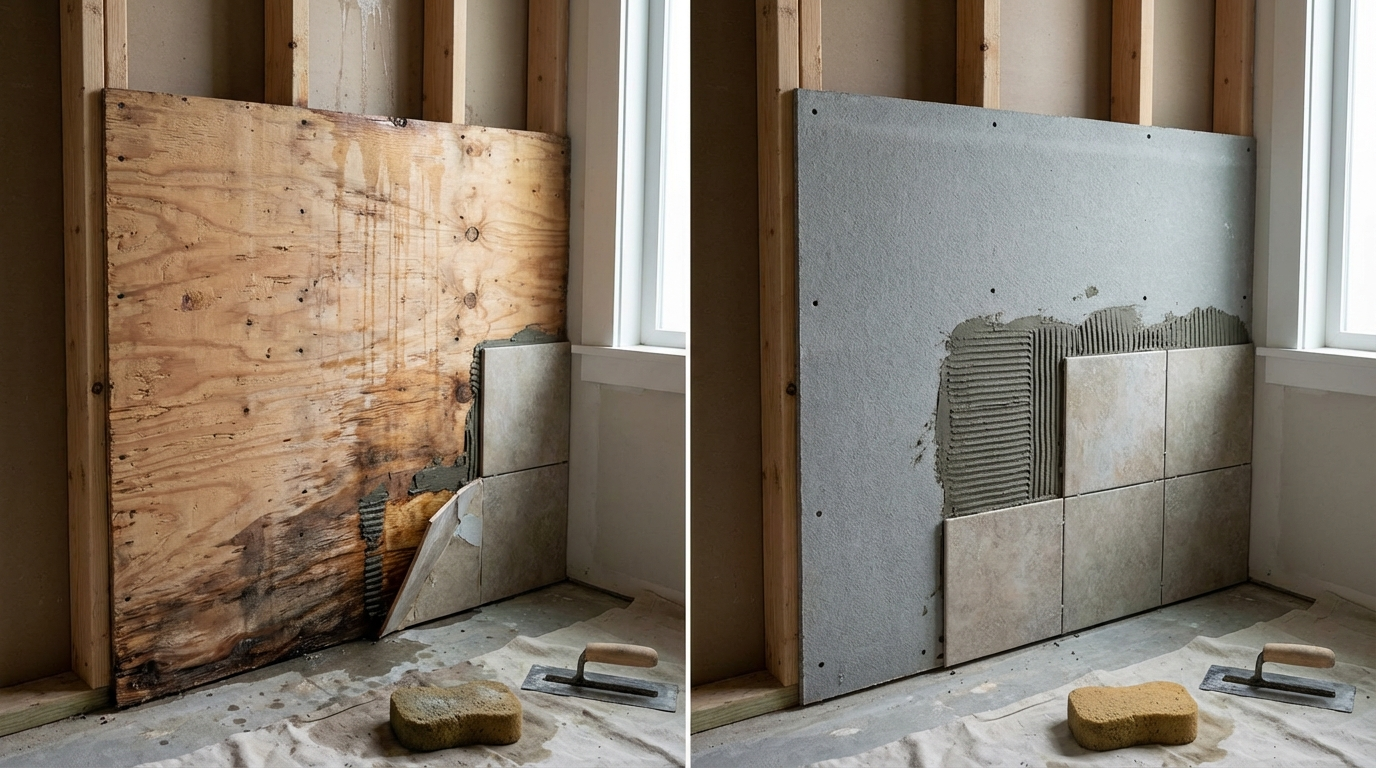
Moisture defines failure in tile installations. Plywood's wood cells absorb water via capillary action; even BWP grades gain 10-20% weight in prolonged exposure, warping under tile loads. In Indian bathrooms, steam from daily showers exacerbates this—unsealed plywood edges wick humidity, leading to soft spots within 2-3 years.
Fiber cement board, conversely, saturates superficially but rebounds without degradation. Tests show it retains flexural strength post-immersion, unlike plywood's 30-50% drop. For coastal Goa projects, where salt-laden air accelerates corrosion, cement board's neutrality prevents efflorescence under tiles.
| Property | Plywood (BWP Grade) | Fiber Cement Board |
|---|---|---|
| Water Absorption (24hr) | 5-15% | <10% |
| Swelling After Saturation | 2-5% thickness | <0.3% |
| Mold Risk in Humid India | High if unsealed | Negligible |
| Monsoon Durability | Moderate with priming | Excellent |
Contractors report plywood failures in 20-30% of tiled wet areas after 5 years, per anecdotal site audits, versus near-zero for cement board.
Tile Adhesion: Mortar Bond and Shear Strength
Thinset mortar (polymer-modified in India for better grab) bonds via mechanical keying and chemical affinity. Plywood's porous surface accepts mortar well initially, but swelling disrupts the interface—tiles pop in flex-prone subfloors. BWP grades fare better with epoxy primers, achieving shear strengths of 1-1.5 MPa.
Fiber cement's gritty texture embeds mortar deeply, yielding 1.5-2 MPa bonds consistently. Its stability prevents microcracks propagating to grout lines. In vibration-heavy sites like urban Bangalore high-rises, this edge shines; Indian standards (IS 15477 for tile adhesives) implicitly favor stable substrates.
Key insight: Plywood demands screw-spacing at 15cm and edge support; cement board at 20cm suffices, reducing labor 10-15%.
Subfloor Specifics: Load Distribution Under Tiles
For floors, deflection limits (L/360 per IRC guidelines adapted locally) rule. Plywood (18mm) spans 40-50cm joists effectively, distributing tile weight (20-30kg/m²). Yet, moisture softens it, amplifying bounces. Cement board (12mm over plywood sheathing) layers for hybrid strength, but standalone use needs denser framing.
Wall Backer Performance: Vertical Challenges
Walls face shear from body impacts and humidity gradients. Plywood warps laterally in showers; cement board's rigidity maintains plumb, crucial for large-format Indian vitrified tiles (60x60cm+).
Strength, Weight, and Site Handling Realities
Plywood wins on lightness (5-10kg/m² for 12mm), easing transport in dealer-loaded tempos. Flexural strength (20-40 MPa) suits spans, but impacts dent veneers. Cement board's higher modulus (8-12 GPa) resists sagging, though cutting generates silica dust—mandating masks per Indian OSHA equivalents.
In labor-intensive Indian workflows, plywood saws cleanly; cement boards need diamond blades, hiking tool costs 20%.
Cost Dynamics: Upfront vs Lifecycle in Dealer Markets
Plywood undercuts initially: 12mm BWP at relatively lower rates per sheet versus cement board's premium positioning. Dealers in Delhi NCR quote plywood 20-40% cheaper, swayed by volume sales. Add-ons flip economics—primers, sealants for plywood add 15-25%.
Lifecycle favors cement board: No replacements in wet zones save 2-3x over 10 years. Contractors amortize via faster installs; architects specify for warranties. Regional variance: South India (cheaper labor) leans plywood; premium North opts cement.
| Cost Factor | Plywood | Fiber Cement Board |
|---|---|---|
| Material (per m², relative) | Lower | Higher by 30-50% |
| Installation Labor | Moderate (sealing extra) | Lower overall |
| Maintenance Over 10 Years | Higher risk | Minimal |
Installation Protocols for Indian Wet Areas
Plywood: Frame at 40cm centers, screw 6x1.5" at edges, prime with oil-based sealer, tape seams with mesh. Avoid direct bath contact. Cement board: Thinset bed, 1.25" corrosion-resistant screws, alkali-resistant tape in joints. Both need 48hr cure before tiling.
Monsoon tip: Store off-ground; plywood acclimates 72hr, cement board immediately deployable.
Durability Verdict: 10-Year Outlook in Humid India
Plywood excels dry: Living room subfloors. Wet areas? BWP lasts 5-8 years sealed; failures from poor execution common. Cement board endures 15+ years, inert to alkali tile reactions. Architects note fewer callbacks in client villas.
Pros and Cons at a Glance
- Plywood Pros: Affordable, lightweight, easy machining; versatile for dry/wet hybrids.
- Plywood Cons: Swells, molds if compromised; labor-intensive prep.
- Cement Board Pros: Superior moisture inertness, strong bonds, fire-rated.
- Cement Board Cons: Heavier, dustier cuts, higher initial outlay.
Decision Framework: Matching to Your Project
Choose Plywood if: Budget-constrained dry subfloors, contractor speed prioritized, or temporary sites. Pair BWP with flawless sealing.
Choose Cement Board if: Bathrooms/kitchens, large tiles, coastal/monsoon zones, or warranty-focused builds. Homeowners gain peace; designers spec for portfolios.
Hybrid: Plywood base + cement overlay for cost-strength balance.
Buyer Pitfalls and Pro Tips from Indian Sites
Avoid MR plywood in wet—delams fast. Test dealer stock: Tap for voids, check boil certification. Architects insist on samples; contractors bulk-buy verified ISI. Future-proof: Factor climate migration—rising humidity tilts toward cement.
Alternatives to Plywood and Cement Board for Tile Backing
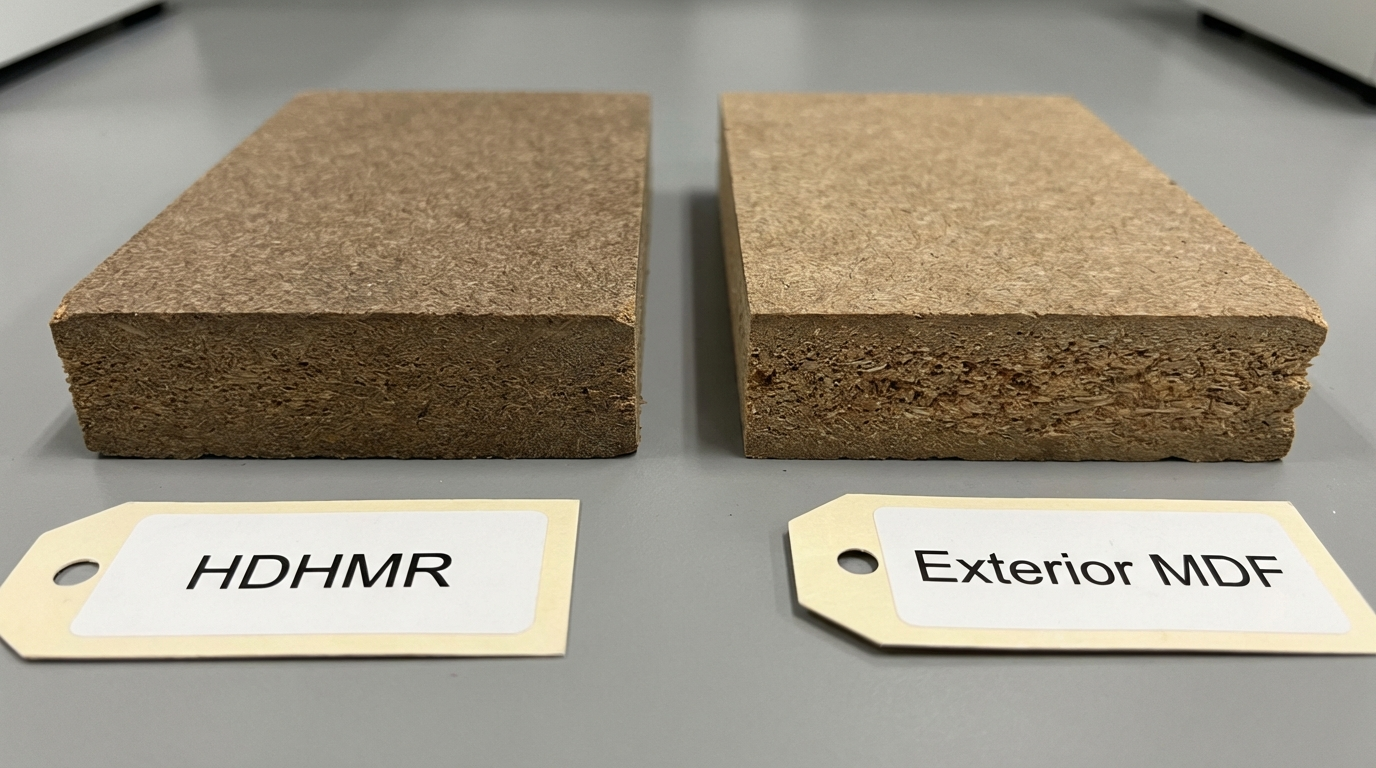
HDHMR panels bridge gaps with hydrophobic resins, or gypsum boards for non-wet walls. Cement boards vary—fibered vs non—for nuanced picks.
This framework equips decisions: Prioritize moisture vectors over upfront savings for enduring Indian installs.
Related guides on PlyPrice
Want Plywood Suggestions?
Share a few details and a PlyPrice specialist will suggest suitable brands and connect you to responsive dealers.