Plywood Demand Outlook 2026: Real Estate and Modular Furniture Drivers
Plywood demand in India looks set to strengthen into 2026 on the back of housing, renovation and modular furniture, with contractors in tier-2 cities like Jaipur and Lucknow ordering BWR sheets and Mumbai and Bengaluru fit-out teams favouring HDHMR.
Last updated: . Grades and standards checked against current BIS standards.
Understanding Plywood Demand Dynamics
As India's construction and furniture sectors adapt to post-monsoon recovery and festive season orders, plywood consumption patterns reveal early signals for 2026. Contractors in Tier-2 cities like Jaipur and Lucknow report steady orders for BWR-grade sheets in residential framing, while interior fit-out teams in Mumbai and Bengaluru prioritize HDHMR for modular wardrobes amid rising renovation inquiries. This baseline reflects a market transitioning from supply stabilization to demand acceleration, setting the stage for broader expansion.
From a first-principles view, plywood demand stems from its role as a versatile, cost-effective structural and finishing material in humid climates. Unlike solid timber prone to warping, layered veneers distribute stress evenly, making it ideal for shuttering in high-rise pours or cabinetry in compact urban homes. Current off-take hovers at levels supporting 5-7% year-on-year uplift, but structural shifts in end-use sectors promise sharper rises ahead.
Real Estate Surge: The Core Engine for Plywood Uptake
India's real estate trajectory into 2026 hinges on residential absorption outpacing supply in key metros, compounded by commercial revival. RERA-mandated timelines and PMAY extensions have unlocked stalled inventory, prompting developers to ramp up groundwork where plywood serves as the go-to for formwork and partitions.
Residential Segment Leads with Volume Orders
Homebuyers favoring 2-3BHK configurations in suburbs drive plywood needs for flooring underlays, wall paneling, and kitchen bases. In high-density projects, each floor slab pour consumes 20-30 sheets of shuttering plywood per 1,000 sq ft, scaling exponentially with vertical builds. Urban migration exacerbates housing gaps—estimated at tens of millions of units—pushing mid-income schemes that rely on economical MR-grade for bulk applications, though architects push for BWP in flood-prone belts like Chennai.
Commercial and Infrastructure Spillover Effects
Office leasing rebounds and data center builds in Hyderabad and Noida amplify demand for durable grades. Retail expansions in malls favor blockboard alternatives, but plywood dominates false ceilings and mezzanines. Infrastructure corridors like Bharatmala projects indirectly boost via ancillary housing for laborers and engineers, where moisture-resistant variants mitigate site exposure.
| Sector | Contribution to Plywood Use | Projected 2026 Shift | Key Plywood Types Favored |
|---|---|---|---|
| Residential | ~50-55% | +8-10% volume | MR, BWR |
| Commercial/Office | ~20-25% | +6-8% | BWR, BWP |
| Infrastructure | ~15% | +10-12% | Shuttering (BWP) |
This table illustrates relative shares based on end-user logic: residential volumes dwarf others due to sheer unit scale, while infrastructure spikes from project tenders.
Modular Furniture Trends: Precision Demand from Urban Lifestyles
Shifting preferences toward space-efficient designs in 1,000-1,500 sq ft apartments elevate plywood's role beyond construction into customized interiors. Modular kitchens and wardrobes, now standard in 60-70% of new bookings, require calibrated sheets for uniform laminates, reducing waste in CNC machining.
Why Modular Picks Plywood Over Alternatives
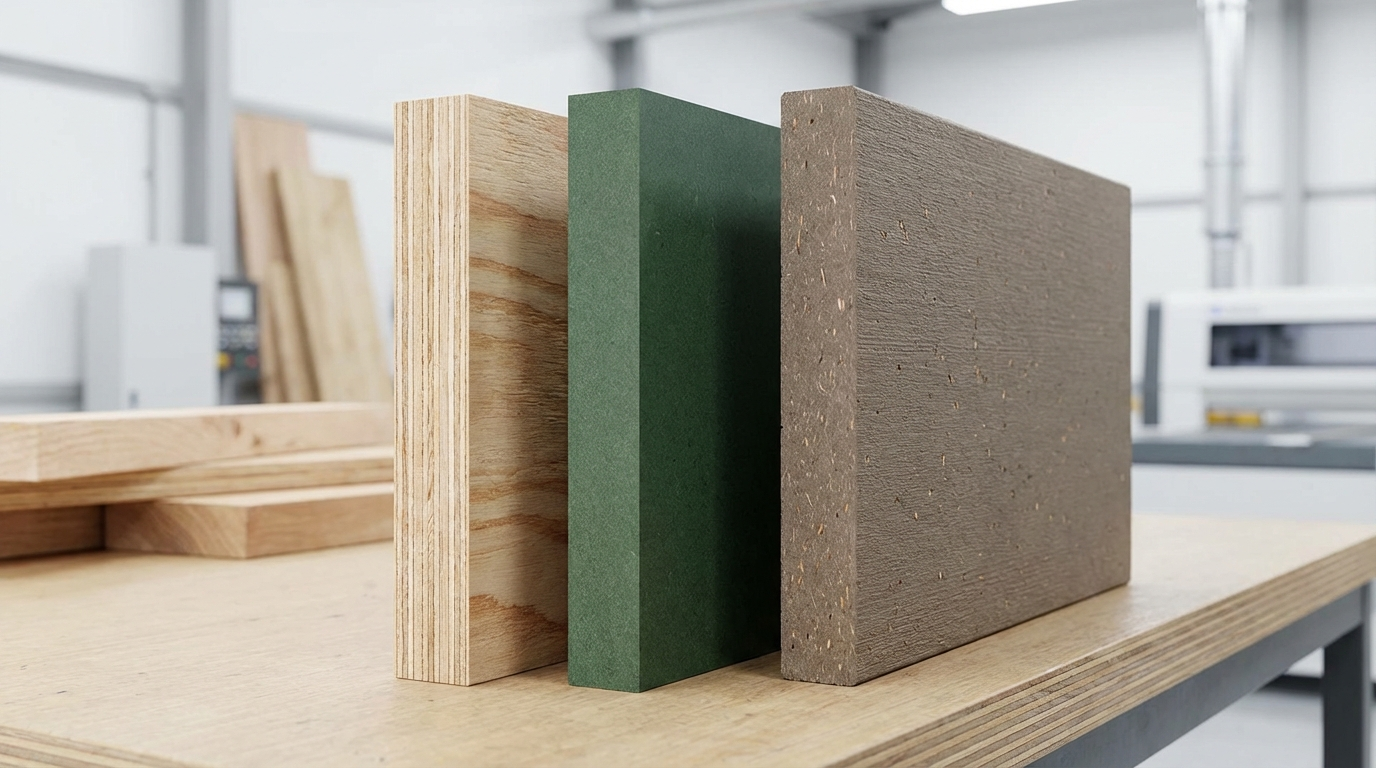
In humid interiors, HDHMR edges MDF for density and screw-holding, but plywood's cross-grain stability suits load-bearing shelves. Dealers note a 15-20% uptick in orders for 18mm commercial MR post-Diwali, tied to ready-to-assemble kits from unorganized fabricators. Tier-3 growth in places like Indore stems from millennials opting for knock-down units, amplifying sheet consumption per household.
Renovation Wave Amplifies Interior Volumes
Post-pandemic upgrades focus on home offices and utility spaces, where plywood partitions offer acoustic benefits without gypsum's fragility. Architects specify pre-oiled BWR for longevity, countering delamination risks in coastal areas.
Relative cost logic: Modular setups leverage plywood's mid-range pricing—higher upfront than particleboard but 20-30% lower lifecycle costs via durability—making it rational for contractors balancing budgets.
Macro Factors Shaping 2026 Demand Trajectory
Urbanization and Demographic Pressures
With urban populations swelling beyond 40% by mid-decade, nuclear families demand compact, plywood-intensive layouts. Housing shortages in peripheral rings fuel satellite townships, where developers stockpile shuttering grades anticipating 20% plot conversion rates.
Government Initiatives and Policy Tailwinds
Extensions to affordable housing quotas and smart city outlays indirectly sustain plywood flows. While not mandating grades, BIS compliance nudges toward ISI-marked BWP for public works, stabilizing dealer inventories.
Supply Chain Realities Influencing Availability
Raw material volatility from eucalyptus imports pressures margins, yet domestic plantations expand. Expect regional premiums: 10-15% higher in Northeast sourcing hubs versus South, prompting bulk buys from Gujarat mills.
Quantitative Forecast: Plywood Volumes Through 2026
Analyst consensus points to sustained 6-8% compound growth, outpacing GDP as construction absorbs 10-12% of GDP. In value terms, 2026 has brought price rises: after resin chemical costs rose sharply in March and April, CenturyPly raised plywood prices by about 7% and Greenply by about 4-5%.
- Optimistic Scenario: Real estate hits 10% absorption growth; modular penetration reaches 75%; total demand +9-11%.
- Base Case: Steady urbanization; interiors steady at 25% share; +6-8% overall.
- Conservative: Monsoon delays or input hikes cap at +4-6%.
By grade: BWP/Marine sees 10%+ uplift from premium projects; standard MR holds 60% share but faces engineered wood encroachment.
| Region | Demand Driver | 2026 Growth Expectation |
|---|---|---|
| Tier-1 (Delhi-NCR, Mumbai) | High-rises, offices | +7-9% |
| Tier-2 (Pune, Ahmedabad) | Suburban housing | +9-11% |
| Tier-3 (Coimbatore, Bhubaneswar) | Modular retail | +10-12% |
Strategic Implications for Buyers and Planners
Contractors should prioritize moisture-graded stocks for upcoming pours, hedging against resin chemical price swings. Architects evaluating specs: Opt BWP where exposure exceeds 3 months; HDHMR for high-humidity cabinets. Dealers in growth corridors like Tier-2 benefit from forward contracts, but test for core quality amid volume rushes.
Homeowners planning interiors weigh durability versus budget: BWR suits most, but marine grades prevent callbacks in basements. Overall, 2026 favors prepared buyers navigating a market where demand outstrips casual supply.
Potential Headwinds to Monitor
Raw log shortages or adhesive price spikes could inflate costs 8-12%, favoring pre-booked volumes. Prefab adoption might trim shuttering needs by 15% in modular homes, redirecting to furniture grades.
Expert Predictions: What Lies Beyond 2026
Beyond immediate horizons, plywood evolves with sustainability mandates—expect FSC-certified variants gaining 20% share as green building norms tighten. Hybrid boards blending plywood with laminates address premium niches, while automation in mills curbs defects. For stakeholders, the outlook underscores proactive sourcing: Demand peaks correlate with real estate cycles, rewarding those aligning grades to regional risks.
Related guides on PlyPrice
Want Plywood Suggestions?
Share a few details and a PlyPrice specialist will suggest suitable brands and connect you to responsive dealers.