Ply Door: Complete Guide to Plywood Doors in India 2026
Complete guide to ply doors in India. Compare plywood door designs, prices, types & installation tips. Find the best ply door for your home interior.
Quick Guide to Ply Doors
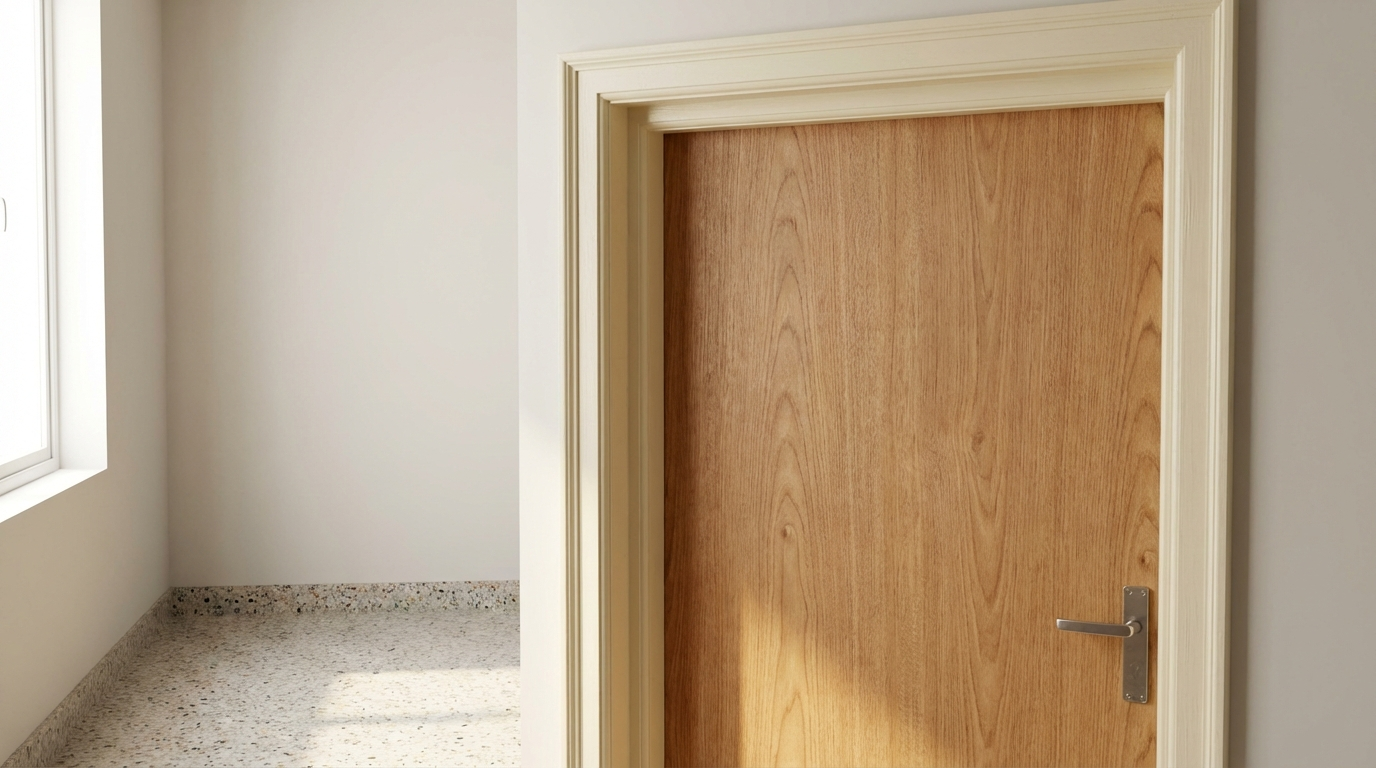
Ply doors (plywood doors) are engineered wooden doors constructed by attaching plywood sheets to a solid or hollow timber frame, offering superior strength, dimensional stability, and versatile design options compared to traditional solid wood doors. Plywood is always a good choice for doors, mainly interior doors, as "it is tough and lightweight, and it is cheaper than solid wood."
According to plyprice.com's extensive research across 100+ brands in India, ply doors represent the most popular door choice for Indian homes, accounting for over 65% of all interior door installations. These doors range from ₹68-250 per square foot depending on grade, finish, and core construction—making them accessible across budget segments.
A flush door is characterized by "its flat, smooth surface on both sides, without any raised panels or ornate detailing." Typically made from plywood, it can have a solid, hollow, or lightweight core to provide structural integrity and sound insulation. Flush doors are commonly used in both interior and exterior applications—especially in homes and offices—due to their cost-effectiveness, clean design, and low maintenance.
Key Facts About Ply Doors
- The ideal thickness for main doors should be about 35-45mm, while for interior doors, a thickness of 32-38mm is usually recommended
- Quality ply doors meet IS 2202 standard and carry BIS certification, passing over 25 performance checks including screw holding, slam, and impact resistance
- Plywood doors with finished surface finishing are sold at a starting price of Rs 120-130 per square feet and range up to Rs 225-230 per square feet
- Premium flush doors are available in BWP Grade conforming to IS 2202 for maximum durability
- Plywood doors do not easily warp and can carry different styles of designs
- Termite-treated variants last 15-25 years with proper maintenance
- Available in 25mm to 45mm thickness, allowing flexibility for specific applications
What is a Ply Door?
A ply door is a flat-surfaced door manufactured by bonding plywood face panels to a wooden or engineered core frame using high-pressure adhesives. The typical flush door is manufactured by using two sections of plywood that are attached to each side of a wooden frame, while the interior of the door is made of solid hardwood blocks or particle board.
IS 2202 (Part 1): 2023, set forth by the BIS, outlines the specifications for wooden flush door shutters with solid core and plywood face panels. This standard ensures that Indian consumers receive doors meeting stringent quality and safety parameters.
Unlike traditional panel doors with raised mouldings and decorative elements, ply doors feature a completely smooth, flat surface that complements modern interior aesthetics. Plyprice.com's analysis shows that this minimalist design has made ply doors the preferred choice for contemporary Indian homes, apartments, and commercial spaces.
Manufacturing Process of Ply Doors
Quality flush doors are made of 100% seasoned hardwood and pressed at high pressure with superior phenol formaldehyde to intensify inner strength. The manufacturing process involves:
- Frame preparation: Kiln-seasoned timber is cut and assembled into rectangular frames
- Core construction: Solid wood blocks, particle board, or honeycomb structures are fitted within the frame
- Plywood bonding: Face panels of plywood are glued under high temperature and pressure
- Finishing: Doors are sanded, treated for termites, and finished with veneer, laminate, or paint
Why Ply Doors Matter for Indian Homes
India's diverse climate zones—from humid coastal areas to dry northern regions—demand doors that resist warping, moisture damage, and termite attack. Exterior doors or places that may have high moisture contact call for BWP plywood for better water resistance and durability. This makes properly graded ply doors essential for Indian conditions.
Types of Ply Doors Available in India
The Indian market offers six primary categories of ply doors, each designed for specific applications and budget requirements. Understanding these variations helps homeowners and contractors select the most appropriate option for their projects.
| Door Type | Core Material | Best For | Price Range (₹/sq ft) | Moisture Resistance |
|---|---|---|---|---|
| Solid Core Flush Door | Hardwood blocks/Particle board | Main entrance, bedrooms, offices | ₹120-200 | High (with BWR/BWP grade) |
| Hollow Core Flush Door | Honeycomb/Cardboard structure | Closets, storage rooms, pantry | ₹68-120 | Low to Medium |
| Cellular Core Flush Door | Wooden battens grid | Bedrooms, office cabins | ₹95-150 | Medium |
| BWR Grade Ply Door | Moisture-resistant core | Kitchens, bathrooms | ₹140-220 | Very High |
| BWP/Marine Grade Ply Door | Waterproof core (IS:710 grade) | Bathrooms, exteriors, coastal areas | ₹180-280 | Excellent |
| Decorative/Laminated Flush Door | Solid/Cellular with laminate finish | Living rooms, premium interiors | ₹150-300+ | Varies by base grade |
Solid Core Flush Doors
Solid core flush doors are the most popular type. As the name suggests, solid core flush doors have solid blocks of wood inside. Solid core doors are strong and have better soundproofing properties.
Solid-core flush doors are not affected by any environmental changes. These doors are eco-friendly, waterproof, and have good sound insulators as well. These doors are dimensionally accurate and stable, more durable, and have high screw-holding capacity.
According to plyprice.com recommendations, solid core ply doors are ideal for:
- Main entrance doors requiring security and durability
- Bedroom doors where sound insulation matters
- Office cabin doors for privacy
- High-traffic areas requiring impact resistance
Hollow Core Flush Doors
As the name suggests, hollow core doors have a hollow core and are lighter in weight than solid core flush doors. They are less expensive and a popular option for interior use in homes and buildings.
Hollow core doors are hollow inside with only a supporting honeycomb structure. In hollow core type flush door, the frame consists of stiles, top, bottom and intermediate rails, which are not less than 7.5 cm in width.
Best applications for hollow core ply doors:
- Closet doors
- Pantry entries
- Storage room access
- Budget interior projects
- Rental properties
BWR and BWP Grade Ply Doors for Wet Areas
Plywood doors can indeed be great for bathrooms, but it depends on the kind of plywood used. When it comes to bathrooms, plywood should be waterproof or water-resistant, such as Marine Plywood or BWP (Boiling Water Proof) plywood, as it can resist moisture and humidity. Normal plywood could easily wrinkle, swell, or degrade because it comes in contact with moisture.
Doors complying with ISI 2202 standards and certified as Boiling Water Resistant (BWR) ensure high performance even in humid or wet conditions, offering superior water resistance and moisture protection, making them excellent for bathrooms, kitchens, offices, hotels, and other high-moisture areas.
Design Options and Trends 2026
The Indian ply door market in 2026 emphasizes minimalist aesthetics combined with practical functionality. While flush doors are great for simplicity, decorative doors such as decorative laminate or veneer flush doors offer a wide variety of wood designs and textures to warm up the look of interiors.
Popular Finish Options
| Finish Type | Appearance | Maintenance Level | Price Addition (₹/sq ft) | Best For |
|---|---|---|---|---|
| Natural Veneer | Real wood grain patterns | Medium | ₹40-120 | Premium homes, traditional interiors |
| Laminate (HPL) | Wide color/pattern range | Low | ₹25-80 | Modern homes, high-traffic areas |
| Membrane/PVC | 3D textures, matte finish | Very Low | ₹35-90 | Modular interiors, offices |
| Paint/Duco | Solid colors, gloss options | Medium-High | ₹30-70 | Minimalist designs, matching walls |
| Charcoal Sheet | Unique textured appearance | Low | ₹45-100 | Contemporary, designer spaces |
Trending Designs for Indian Homes
Doors with laminate or painted finishes mostly require less maintenance compared to flush doors with veneer surfaces. In 2026, plyprice.com's market analysis reveals these dominant trends:
- Matte Finish Laminates: Anti-fingerprint surfaces in earthy tones (walnut, oak, teak)
- Grooved Patterns: Horizontal or vertical lines adding depth to flush surfaces
- Two-Tone Doors: Contrasting frame and panel colors
- Natural Wood Veneers: Teak, rosewood, and ash veneers for premium segments
- Handleless Designs: Push-to-open mechanisms for seamless aesthetics
- Glass Panel Integration: Frosted or tinted glass inserts for partial visibility
Material and Construction Details
The quality of raw material used dictates the strength of all types of flush doors. For making the best quality doors, it is essential to use high-grade timber for frames and waterproof, termite-proof plywood for the structure. The better the quality of raw materials, the longer the door would last.
Core Materials Explained
Plywood, MDF, and solid wood are common options. Plywood, known for its inherent strength, often emerges as the preferred choice. MDF doors are cost-effective but may compromise on durability. Solid wood doors offer a timeless aesthetic but come with a higher price tag.
| Core Material | Weight | Screw Holding | Moisture Resistance | Sound Insulation | Price Level |
|---|---|---|---|---|---|
| Hardwood Block | Heavy | Excellent | Good | Excellent | Premium |
| Pine Wood Block | Medium-Heavy | Very Good | Good (treated) | Very Good | Mid-Premium |
| Particle Board | Medium | Good | Fair | Good | Budget-Mid |
| Blockboard | Medium | Good | Fair-Good | Good | Mid |
| Honeycomb/Cardboard | Light | Limited | Poor | Poor | Economy |
| MDF Core | Medium-Heavy | Good | Fair | Good | Mid |
Face Panel Quality Factors
Moisture resistance through BWR and BWP grade plywood options are specifically designed to resist moisture, preventing warping and swelling. The face panel directly impacts durability and aesthetics.
Key face panel considerations for Indian conditions:
- Gurjan Plywood Face: Premium hardwood veneer, excellent for high-end applications
- Okoume Plywood Face: Imported veneer offering smooth finish and dimensional stability
- Commercial Plywood Face: Cost-effective for interior doors with laminate overlay
- Pre-laminated Faces: Factory-finished for immediate installation
Standard Dimensions in India
The nominal thickness of flush door shutters shall be 25 mm, 30 mm, and 35 mm as per BIS standards. Plyprice.com's database indicates these standard Indian dimensions:
- Standard Heights: 6'6" (1981mm), 7'0" (2134mm), 8'0" (2438mm)
- Standard Widths: 2'6" (762mm), 2'9" (838mm), 3'0" (914mm), 3'6" (1067mm)
- Thickness Range: 25mm, 30mm, 32mm, 35mm, 40mm, 45mm
- Main Door Recommended: 35-45mm thickness
- Interior Door Recommended: 30-35mm thickness
Ply Doors for Different Applications
Selecting the right ply door depends heavily on its intended location within the home. Each application has unique requirements for moisture resistance, security, aesthetics, and sound insulation.
Main Door/Entrance
Thicker doors are often preferred for main entrances, while interior doors can be slightly thinner for functionality and design flexibility. The ideal thickness for main doors should be about 35-45mm.
Requirements for main entrance ply doors:
- BWP or BWR grade for weather exposure
- Solid core construction for security
- Minimum 35mm thickness (40-45mm preferred)
- Heavy-duty hardware compatibility
- Termite treatment essential
- Weather-resistant finish (PU coating or marine lacquer)
Bedroom Doors
Solid core doors are fantastic for rooms where you want a higher-quality option. They're ideal for rooms where you might want a bit more privacy and sound insulation—making them perfect for bedrooms.
Bedroom door specifications:
- Solid or cellular core for sound insulation
- 30-35mm thickness adequate
- BWR grade optional (MR grade acceptable for dry climates)
- Focus on aesthetic finishes matching interior design
- Standard hardware sufficient
Bathroom Doors
BWP plywood or marine plywood is the best choice for doors because these types of plywood are very resistant to moisture. They are recommended for interior and exterior doors since they offer good strength and water resistance qualities for areas of high humidity.
As per plyprice.com's moisture zone recommendations:
- BWP grade mandatory for attached bathrooms
- BWR grade minimum for well-ventilated bathrooms
- 30-32mm thickness standard
- Waterproof laminate or PVC finish recommended
- Stainless steel or aluminum hardware to prevent rust
- Proper gap below door for ventilation (10-15mm)
Kitchen Doors
Kitchen environments expose doors to steam, oil splatter, and temperature variations. Plyprice.com recommends:
- BWR grade minimum for humid kitchen environments
- Laminate finish for easy cleaning and oil resistance
- Matte finish to hide fingerprints
- 30-35mm thickness
- Consider sliding doors for space efficiency
Pooja Room Doors
Pooja rooms hold special significance in Indian homes and deserve premium door treatment:
- Decorative veneer or carved ply options
- Traditional wood-look laminates (teak, rosewood patterns)
- Double door configurations popular
- Glass panel inserts for visibility
- 30-35mm thickness with ornamental handles
Top Brands for Ply Doors in India
Leading manufacturers incorporate the latest technologies and set benchmarks with a wide variety of doors categorized under plain flush doors, decorative flush doors, and moulded panel doors.
| Brand | Specialty | Price Segment | Key Features | Availability |
|---|---|---|---|---|
| CenturyPly (CenturyDoors) | Full range, IS 2202 certified | Mid-Premium | 25+ quality tests, slam-proof | Pan-India |
| Greenply | Dimensional stability, decorative range | Mid-Premium | High impact resistance, lock provision both sides | Pan-India |
| Duro (Sarda Group) | BWP grade, kiln-seasoned timber | Premium | Customizable sizing, IS 2202 compliant | Pan-India |
| Sylvan Ply | Premium plywood doors, eco-friendly | Premium | Sustainable forestry, BWR/BWP options | Major metros |
| Action TESA | Pre-laminated options | Budget-Mid | Ready-to-install, cost-effective | Pan-India |
| Kitply | Gurjan core flush doors | Mid | Traditional quality, multiple finishes | North & East India |
| Austin Plywood | Budget flush doors | Economy-Mid | Wide dealer network, accessible pricing | South India |
| Splice Ply | Modern designs, customization | Mid-Premium | R&D focus, contemporary options | Major metros |
Note: This is independent editorial content. Plyprice.com is not affiliated with any brand mentioned above. Please verify current specifications and prices with authorized dealers.
Price Guide: Ply Door Costs in 2026
Indicative price ranges for plywood doors include: Waterproof Plywood Door at ₹99-₹121 per sq ft, and Waterproof Good Quality at ₹122-₹149 per sq ft. However, prices vary significantly based on brand, quality, and location.
Comprehensive Price Breakdown
| Door Category | Price Range (₹/sq ft) | Estimated Cost per Door (7x3 ft) | Notes |
|---|---|---|---|
| Economy Hollow Core | ₹68-95 | ₹1,430-2,000 | Basic interior use |
| Standard Flush Door | ₹95-130 | ₹2,000-2,730 | MR grade, plain finish |
| BWR Grade Flush Door | ₹130-180 | ₹2,730-3,780 | Moisture resistant |
| BWP/Waterproof Grade | ₹180-250 | ₹3,780-5,250 | Bathroom/exterior suitable |
| Decorative Laminated | ₹150-220 | ₹3,150-4,620 | Pre-finished, designer |
| Veneer Flush Door | ₹180-300 | ₹3,780-6,300 | Natural wood veneers |
| Premium Branded | ₹220-350+ | ₹4,620-7,350+ | Top brands, full warranties |
Additional Costs to Consider
- Laminate/Veneer Finish: ₹25-120 per sq ft additional
- Edge Banding/Lipping: ₹150-400 per door
- Hardware (hinges, handles, locks): ₹500-3,000 per door
- Installation Labor: ₹300-800 per door
- Door Frame: ₹1,500-4,000 per frame (wood/metal)
- Transport Charges: ₹50-200 per door (varies by location)
Regional Price Variations
Plyprice.com's pan-India dealer surveys reveal significant regional price differences:
- Metro Cities (Delhi, Mumbai, Bangalore, Chennai): Base prices, highest variety
- Tier-2 Cities: 5-10% lower than metros, moderate variety
- Tier-3 Towns: 10-15% lower than metros, limited brands
- Yamunanagar (Haryana) Manufacturing Hub: 15-25% lower, factory direct options
- Coastal Areas: 5-10% premium for BWP grade due to higher demand
Quality Checks Before Buying
Quality doors should meet IS 2202 and carry BIS certification, passing over 25 performance checks, including screw holding, slam, and impact resistance.
Visual and Physical Verification
- Surface Flatness Test: Place a straight edge across the door—gaps indicate warping
- Knock Test: Knock across the surface; consistent sound indicates uniform core, hollow sounds reveal voids
- Edge Inspection: Check for continuous, chip-free edges without visible gaps between core and face
- Weight Assessment: Solid core doors feel heavier; unusually light doors may have inferior cores
- Veneer Alignment: Grain patterns should flow naturally without abrupt breaks
- Corner Check: All four corners must be perfectly square (use a carpenter's square)
- Thickness Uniformity: Measure thickness at multiple points—variation indicates poor quality
- ISI Mark Verification: Look for valid IS 2202 certification mark with license number
Questions to Ask Your Dealer
- What grade of plywood is used (MR/BWR/BWP)?
- What is the core material (hardwood/particle board/honeycomb)?
- Is the door IS 2202 certified? Can you show the certificate?
- What species of timber is used for the frame?
- Is termite treatment included? What chemicals are used?
- What is the warranty period and what does it cover?
- Can you provide a cut sample of the door construction?
- What is the moisture content of the wood?
Red Flags to Avoid
- Unusually low prices compared to market rates (could indicate recycled or substandard materials)
- Missing or unclear certification marks
- Reluctance to show construction details or cross-sections
- Strong chemical smell indicating poor-quality adhesives
- Visible gaps at door edges or corners
- Uneven surface or visible patches
- No proper packaging or transport protection
Installation and Maintenance
Flush doors are straightforward to install due to their uniform thickness and simple design. Their easy installation process reduces labor costs and simplifies future renovation needs.
Installation Best Practices
- Acclimatization: Store doors horizontally in the installation room for 48-72 hours before fitting
- Frame Preparation: Ensure frame is perfectly plumb and level
- Hinge Placement: Position first hinge 225mm from top, second 225mm from bottom, third (if used) centered
- Gap Standards: Maintain 3mm gap on sides and top, 6-10mm at bottom (15mm for bathrooms)
- Hardware Selection: Use appropriate screw lengths—too long may penetrate through door faces
- Edge Sealing: Seal all exposed edges with primer before painting to prevent moisture ingress
Monsoon Care for Ply Doors
India's monsoon season poses significant challenges for ply doors. Plyprice.com recommends:
- Apply waterproof sealant on all edges before monsoon
- Ensure proper ventilation to reduce humidity buildup
- Avoid direct water contact—use mats at bathroom doors
- Check and repair any finish damage immediately
- Use dehumidifiers in enclosed spaces during peak monsoon
- Oil hinges monthly to prevent rust-related sticking
Routine Maintenance Guide
- Daily: Wipe with dry cloth to remove dust
- Weekly: Clean with damp cloth (avoid excess water)
- Monthly: Inspect hinges, handles, and edges for damage
- Annually: Re-polish or touch up finish as needed
- Every 3-5 Years: Consider complete refinishing for high-use doors
Frequently Asked Questions
What is the full form of ply door?
Ply door refers to "plywood door"—a door constructed using plywood panels bonded to a wooden or engineered core frame. The term "ply" comes from plywood, which consists of multiple thin layers (plies) of wood veneer glued together with adjacent layers having their wood grain rotated perpendicular to each other. This cross-lamination provides exceptional strength and dimensional stability compared to solid wood. In India, ply doors are commonly called flush doors when they have a flat, smooth surface, distinguishing them from traditional panel doors with raised or recessed decorative elements.
Are ply doors waterproof?
BWP plywood or marine plywood is the best choice for doors because these types of plywood are very resistant to moisture. They are recommended for interior and exterior doors since they offer good strength and water resistance qualities for areas of high humidity. Not all ply doors are waterproof—it depends on the grade. MR (Moisture Resistant) grade handles humidity but not direct water. BWR (Boiling Water Resistant) grade withstands moisture in kitchens and washrooms. BWP (Boiling Water Proof) or marine grade provides complete waterproofing for bathrooms and exterior applications. Always verify the grade certification before purchase.
Which is better: ply door or solid wood door?
Plywood is always a good choice for doors, mainly interior doors. It is tough and lightweight, and it is cheaper than solid wood. Ply doors offer better dimensional stability, resist warping better than solid wood, cost 40-60% less, and are easier to install due to lighter weight. Solid wood doors offer superior aesthetics and can be refinished multiple times but are prone to warping in India's humid climate, require more maintenance, and cost significantly more. For most Indian homes, plyprice.com recommends quality ply doors with premium veneer finishes—achieving similar aesthetics at practical prices.
What is the best thickness for ply doors?
The ideal thickness for main doors should be about 35-45mm. For interior doors, a thickness of 32-38mm is usually recommended which offers a balance of strength and ease of installation. Bedroom doors work well at 30-32mm, bathroom doors at 30-35mm, and closet doors can use 25-30mm. Never go below 25mm for any application as structural integrity and screw-holding capacity become compromised. Thicker doors (40-45mm) are recommended for main entrances requiring enhanced security and sound insulation.
How long do ply doors last?
Quality ply doors with proper installation and maintenance typically last 15-25 years in Indian conditions. BWP grade doors in dry areas can exceed 25 years. Factors affecting longevity include: plywood grade (BWP lasts longest), core quality (hardwood cores outperform particle board), finish quality and maintenance, exposure to moisture and sunlight, hardware quality, and installation precision. Doors made with kiln seasoned timbers ensure high strength with long-lasting durability. Tested on demanding quality parameters, they are crafted to add value to space and meet safety requirements.
Can ply doors be used for bathrooms?
Plywood doors can indeed be great for bathrooms, but it depends on the kind of plywood used. When it comes to bathrooms, plywood should be waterproof or water-resistant, such as Marine Plywood or BWP (Boiling Water Proof) plywood. Normal plywood could easily wrinkle, swell, or degrade because it comes in contact with moisture. For bathroom use, always specify BWP grade plywood doors with waterproof laminate or PVC finish. Ensure proper ventilation gaps at the bottom (15mm recommended), use stainless steel or aluminum hardware, and seal all exposed edges during installation.
What is the price of ply door per square foot in India?
Plywood doors with finished surface finishing are sold at a starting price of Rs 120-130 per square feet and range up to Rs 225-230 per square feet. Economy hollow core doors start at ₹68-95 per sq ft, standard flush doors range ₹95-130 per sq ft, BWR grade doors ₹130-180 per sq ft, and premium branded BWP doors can reach ₹220-350 per sq ft. Prices vary by region—manufacturing hubs like Yamunanagar offer 15-25% lower prices than metro cities. Always get quotes from multiple dealers and verify the exact specifications to compare fairly.
Which brand is best for ply doors in India?
Premier manufacturers offer remarkable collections of entrances that exude class, strength, and durability. Doors crafted with the latest technologies set new standards in the industry. All quality doors meet IS 2202 and carry BIS certification, passing over 25 performance checks. Leading brands include CenturyPly, Greenply, Duro, Sylvan Ply, Action TESA, and Kitply. Brand selection should depend on your budget, regional availability, specific requirements (moisture resistance, aesthetics), and dealer support. Plyprice.com recommends prioritizing IS 2202 certification and warranty coverage over brand name alone.
How to identify good quality ply doors?
Quality ply doors exhibit these characteristics: uniform weight distribution indicating consistent core, flat surfaces without warping (check with straight edge), smooth edges without visible gaps or chips, consistent knock sound across entire surface, valid IS 2202 certification with license number, proper thickness measurements matching stated specifications, and quality finish without bubbles or delamination. The quality of raw material used dictates the strength. For best quality, high-grade timber for frames and waterproof, termite-proof plywood for structure are essential. Better quality raw materials mean longer door life.
Are ply doors termite-proof?
Quality flush doors are processed with chemicals and preservatives to protect them from termite, borer, and other microorganisms. They are covered with BWP grade phenol formaldehyde resin. However, termite resistance depends on treatment quality. Always ask dealers about specific anti-termite treatment methods and chemicals used. In termite-prone regions (most of South and coastal India), verify that both the core and frame receive proper treatment. Additional measures like using metal door frames and periodic pest control inspections enhance protection. Plyprice.com recommends branded doors with documented termite treatment for areas with known termite activity.
What is the difference between flush door and panel door?
A panel door differs from a flush door in its construction and appearance. While a flush door has a completely smooth surface on both the front and back sides, a panel door has recessed or raised panels creating grooves and texture. Panel doors have rails securing vertical stiles with wood or glass panels between constructions. Flush doors suit modern, minimalist interiors and cost less due to simpler construction. Panel doors offer traditional aesthetics suitable for colonial or classical interiors but require more maintenance for the grooved areas. For most contemporary Indian homes, flush doors with decorative laminates provide the best balance of appearance and practicality.
Can ply doors be painted or laminated later?
Yes, ply doors can be refinished. For painting, sand the existing surface lightly, apply wood primer, and use enamel or PU paint for durability. For laminating existing doors, the surface must be clean, flat, and free from major defects—professional installation is recommended. Available in a variety of finishes like paint, veneer, and laminate, flush doors can be customized to suit any interior style. However, factory-finished laminated doors typically offer better adhesion and longevity than post-installation lamination. If planning future refinishing, choose doors with plain plywood faces rather than pre-laminated versions.
What is the difference between solid core and hollow core ply doors?
Solid core doors are made of a mixture of wood and synthetic wood composites with a heavy, solid interior and wood veneer exterior. They provide durability, sound insulation, and the look of a solid wood door without the weight or hefty price tag. Solid wood doors tend to expand or shrink from moisture and temperature changes, whereas solid core doors resist these fluctuations. Hollow core doors have a honeycomb cardboard interior wrapped by veneer or fiberboard. They are lightweight, cost-effective but don't insulate sound very well. Choose solid core for main doors, bedrooms, and offices; hollow core for closets and storage areas.
How to maintain ply doors during monsoon?
Monsoon maintenance is critical for ply door longevity in India. Apply waterproof polish or sealant on all edges before monsoon season. Ensure bathroom doors have proper ventilation gaps (15mm at bottom). Avoid direct water contact—use door mats at wet area entrances. Check and immediately repair any finish damage or edge exposure. Use silica gel packets in closed spaces to absorb excess moisture. Oil hinges monthly to prevent rust-related sticking. For coastal areas, consider additional protective coating on exposed surfaces. After monsoon, inspect for swelling, delamination, or finish damage and address promptly.
What are the ISI standards for ply doors in India?
IS 2202 (Part 1): 2023 outlines specifications for wooden flush door shutters with solid core and plywood face panels. This standard specifies requirements for wooden flush door shutters (solid core type) with face panels of plywood or of cross-band and face veneers. Prescribed tests include: dimensions and squareness test, general flatness test, local planeness test, slamming test, end immersion test, knife test, and glue adhesion test. IS 2202 Part 2 covers particle board, HDF, MDF, and hardboard face panels. Always look for valid ISI certification with license number when purchasing quality ply doors in India.
Where can I buy ply doors in India?
Ply doors are available through multiple channels: authorized brand dealers (best for warranty and genuine products), local timber and plywood markets (competitive pricing, negotiate carefully), hardware stores and building material retailers, online platforms like IndiaMART, JustDial for dealer contacts, and directly from manufacturers in production hubs like Yamunanagar (Haryana), Perumbavoor (Kerala), and Gujarat. As detailed in plyprice.com's dealer database, visiting 2-3 dealers before purchase helps compare quality and pricing. Always collect written quotations specifying exact grade, dimensions, and brand for accurate comparison.
Conclusion: Making the Right Ply Door Choice
Selecting the right ply door involves balancing multiple factors: application (interior vs. exterior), moisture exposure (dry rooms vs. wet areas), budget constraints, aesthetic preferences, and regional climate conditions. As India's most comprehensive plywood and doors resource, plyprice.com recommends following this decision framework:
- For main entrances: BWP grade solid core, 35-45mm thickness, branded options with full warranty
- For bedrooms: BWR or MR grade solid/cellular core, 30-35mm, focus on aesthetics and sound insulation
- For bathrooms: BWP grade mandatory, 30-35mm, waterproof laminate finish, stainless hardware
- For kitchens: BWR grade minimum, laminate finish for easy cleaning
- For closets/storage: Hollow core acceptable, economy grades work well
By understanding the types, grades, and quality parameters outlined in this guide, you can confidently select ply doors that deliver lasting value for your home or project. Always prioritize IS 2202 certification, verify quality through physical inspection, and choose reputable dealers with proper warranty support.
Disclaimer: This content is provided for general informational purposes based on industry practices and publicly available information. Product specifications, standards, prices, and availability may vary by manufacturer, region, and time. Readers should independently verify details with manufacturers, dealers, or qualified professionals before making purchase or construction decisions.Want Plywood Suggestions?
Share a few details and a PlyPrice specialist will suggest suitable brands and connect you to responsive dealers.