HDHMR vs MDF for Wardrobe: Which Board Lasts Longer in Indian Homes?
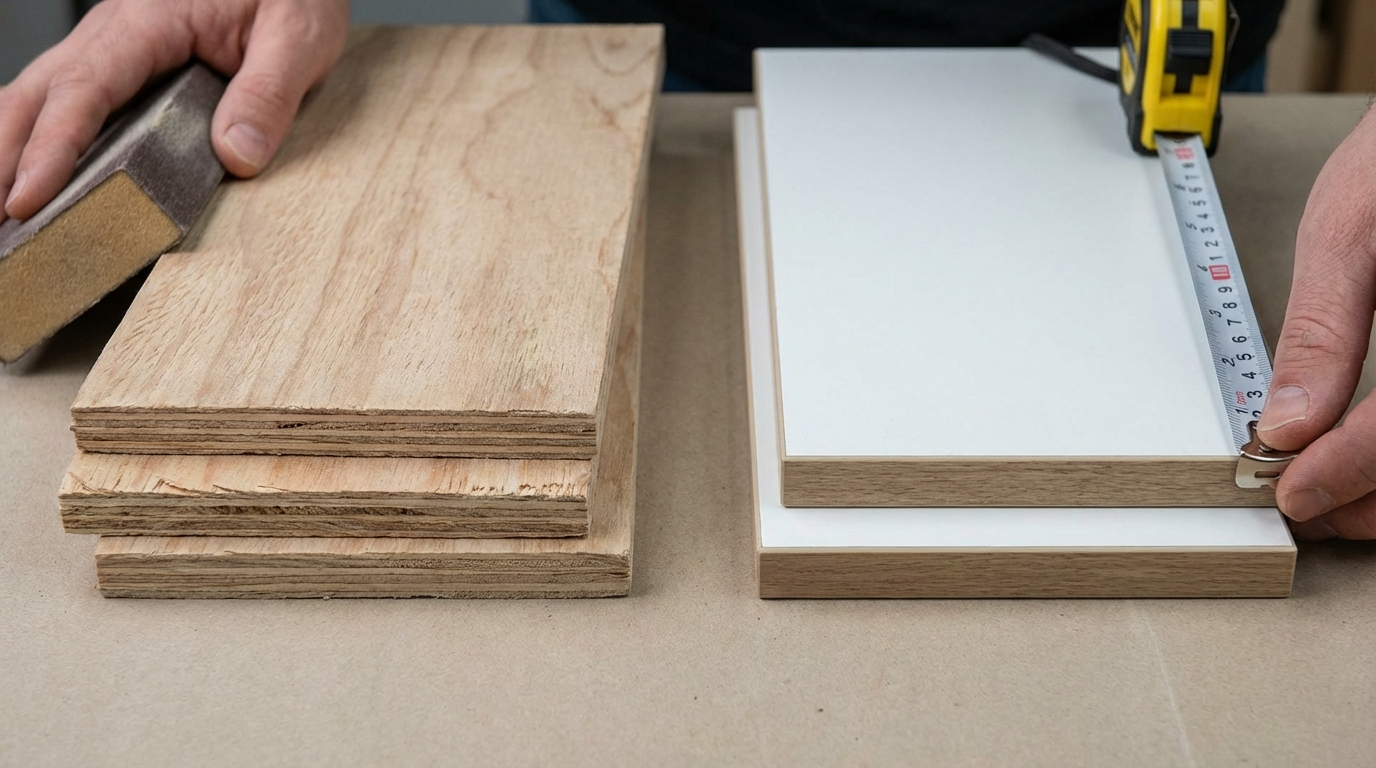
HDHMR is usually the safer wardrobe board in humid Indian homes: it is pressed to about 800-900 kg/m³ with moisture-repellent resins, so it resists swelling better than standard MDF. MDF typically costs less upfront and suits dry rooms and painted finishes.
Core Material Properties: Breaking Down Density and Structure
In the context of wardrobe construction, the foundation of any board lies in its density and internal structure. Density determines how tightly fibers or particles are compressed, directly influencing strength, weight, and resistance to environmental stresses common in Indian homes.
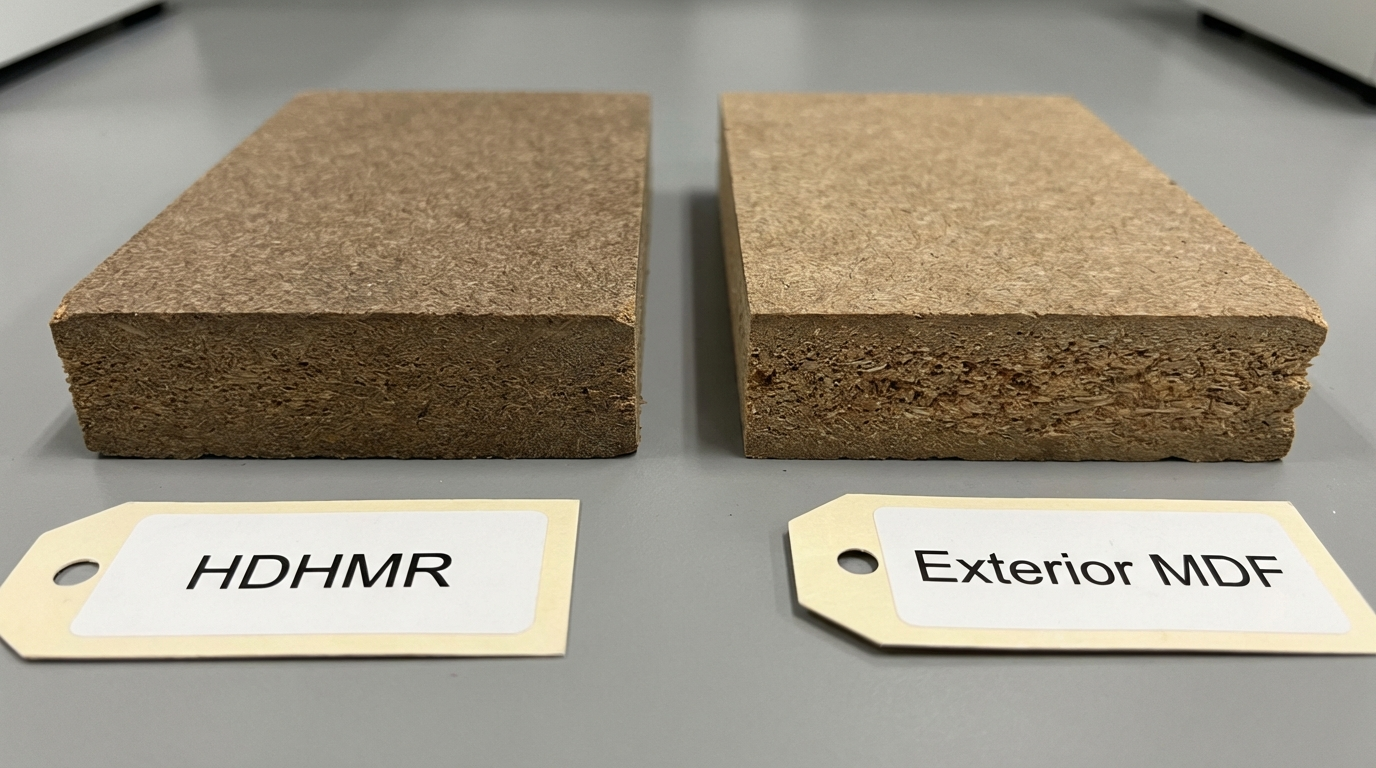
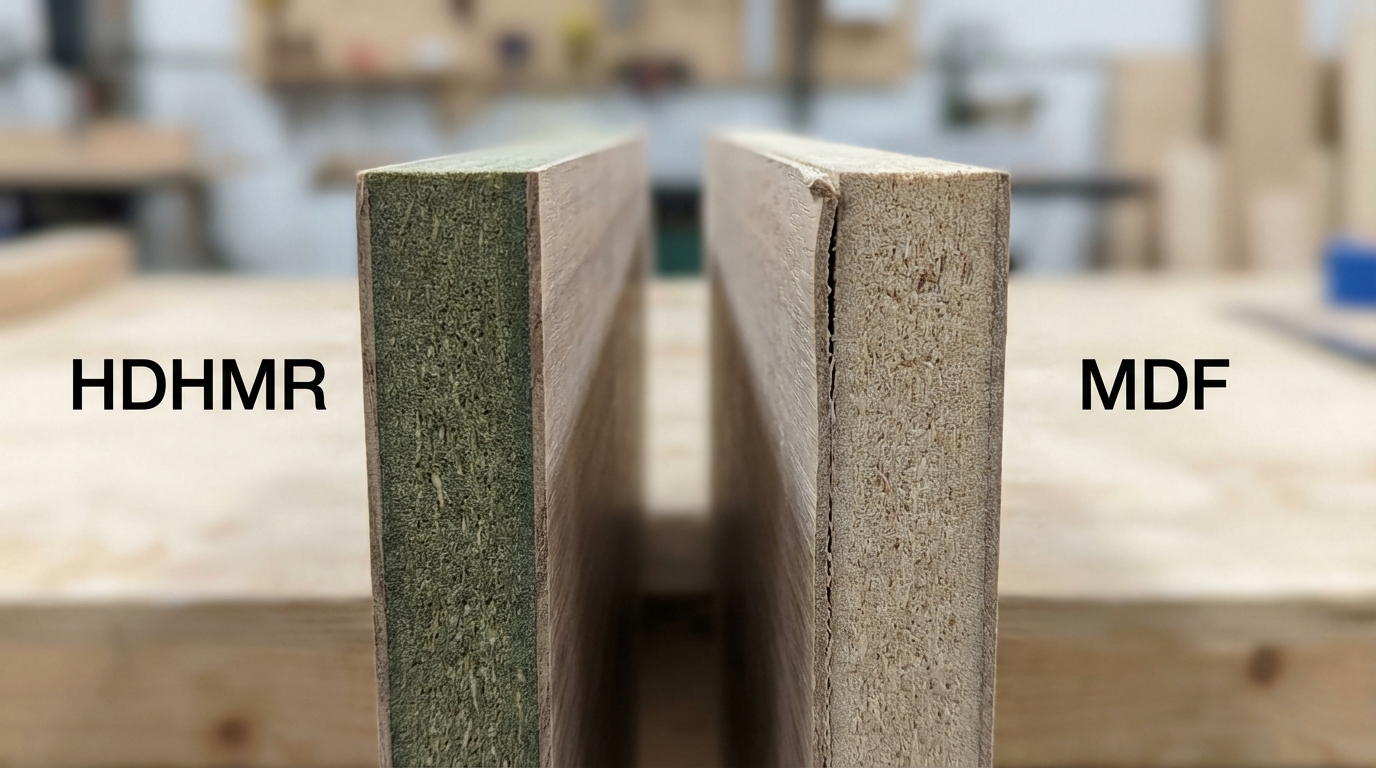
HDHMR, or High Density High Moisture Resistant board, starts with wood fibers processed under extreme pressure and heat, often exceeding 800-900 kg/m³. This high compression creates a rigid matrix that mimics solid wood's resilience without the warping tendencies. Manufacturers bond these fibers with moisture-repellent resins, tailored for India's variable humidity levels—from dry Rajasthan summers to Mumbai's monsoon deluges.
MDF, Medium Density Fiberboard, operates at a lower density range of 650-750 kg/m³. It uses similar fiber technology but with less aggressive compression, resulting in a smoother, more uniform surface ideal for painting or basic laminates. However, this uniformity comes at the cost of internal rigidity, making it susceptible to sagging under sustained loads like stacked clothes in a wardrobe.
From a first-principles view, higher density in HDHMR means fewer voids for moisture ingress, explaining its edge in longevity. Homeowners in coastal cities like Chennai or Kolkata notice this difference during humid seasons, where MDF edges might soften faster.
Density Impact on Wardrobe Durability
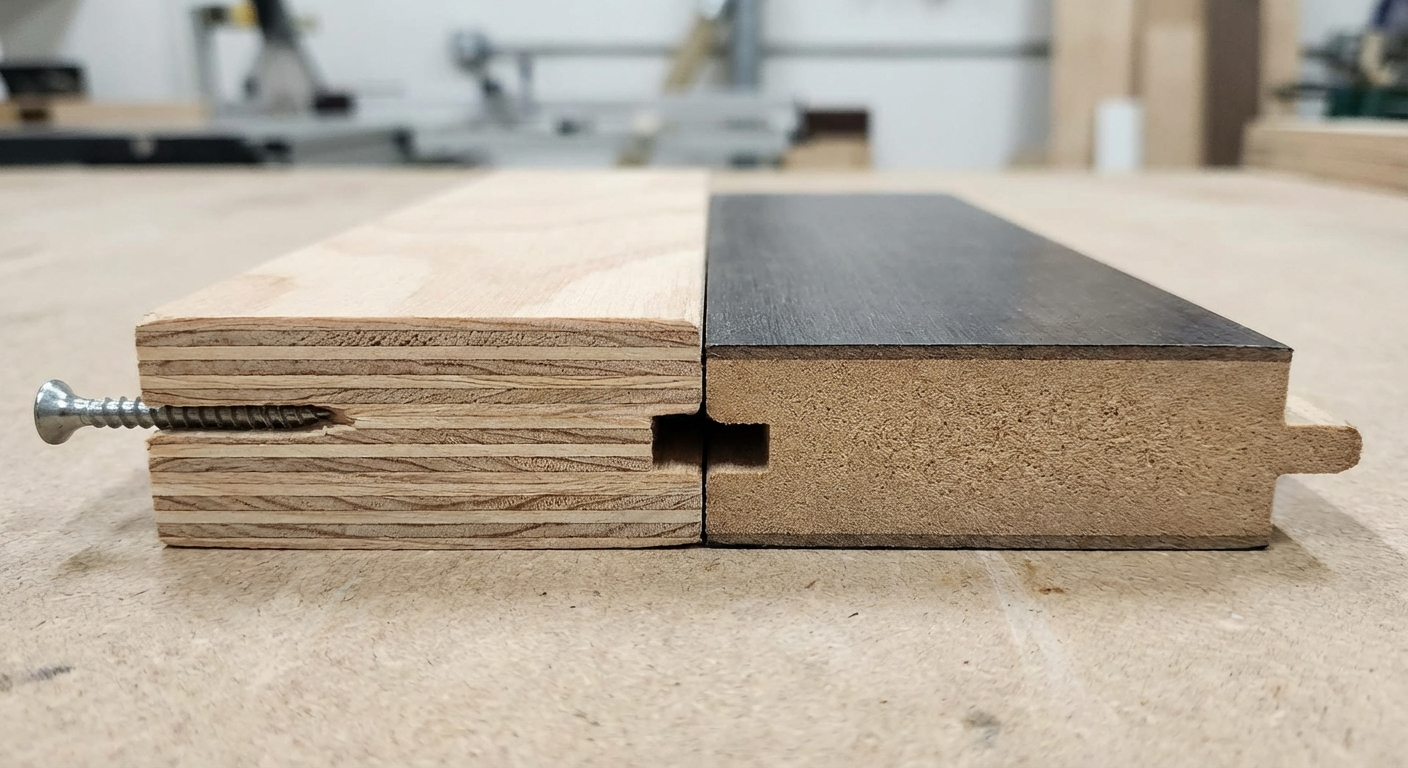
- HDHMR's superior screw-holding capacity supports heavy hinges and sliders without pilot holes stripping—critical for modular wardrobes with multiple shelves.
- MDF requires reinforced edges or thicker profiles (18mm+), adding to overall build weight and cost for contractors rushing site installations.
- Architects specify density thresholds in specs; below 700 kg/m³ often signals budget MDF prone to deformation in non-climate-controlled apartments.
Moisture Resistance: Surviving India's Humid Challenges
India's climate demands boards that withstand 70-90% relative humidity spikes, especially in wardrobes exposed to bathroom steam or kitchen proximity. Moisture resistance isn't just a grade—it's about resin type, particle size, and edge sealing.
HDHMR incorporates hydrophobic melamine-formaldehyde resins with wax emulsions, limiting water absorption to under 8-10% thickness swell per BIS testing analogs. This makes it suitable for semi-wet areas, like wardrobes in 2BHK flats with poor ventilation. In practice, interior designers in Bangalore report HDHMR maintaining flatness post-monsoon, unlike MDF.
Standard MDF absorbs 15-20% or more, leading to swelling and delamination if laminates peel. Upgraded MR-grade MDF improves this marginally with moisture-resistant glues, but it still lags HDHMR in prolonged exposure. Contractors in Tier-2 cities like Indore often face callbacks for MDF wardrobes bubbling in the first rainy season.
| Property | HDHMR | MDF (Standard) | MDF (MR Grade) |
|---|---|---|---|
| Thickness Swell (24hr immersion) | 8-10% | 15-25% | 12-18% |
| Edge Sealing Need | Moderate (pre-sealed options) | High (mandatory wax/PVC) | Moderate-High |
| Suitability for Humid India | High (coastal/interior) | Low (dry interiors only) | Medium (urban apartments) |
This table highlights why HDHMR shifts buyer logic toward long-term savings, especially for homeowners planning 10+ year usage without refinishing.
Finish Quality and Aesthetic Performance
Wardrobes demand flawless finishes for laminates, veneers, or paints to achieve that premium modular look. Surface smoothness, porosity, and adhesion dictate how well these hold up to daily wipes and abrasion.
HDHMR's dense surface (often sanded to 180-220 grit) accepts UV laminates or PU paints with minimal sanding patches, reducing defects in high-volume furniture factories. Its subtle grain texture enhances wood-look finishes popular in Pune's designer showrooms.
MDF excels in ultra-smooth finishes for flat-panel wardrobes, bonding primers without telegraphing fibers. However, its softer face scratches easier under rough handling, a common issue in kids' rooms or rental properties. Interior designers note MDF's paint absorption leads to orange-peel effects unless multiple primer coats are applied—time-consuming for on-site work.
In buyer scenarios, architects for luxury villas favor HDHMR for textured laminates that hide minor dings, while budget contractors push MDF for quick spray-paint jobs in builder-floor projects.
Surface Durability Metrics
Taber abrasion tests show HDHMR enduring 400-600 cycles before visible wear, versus MDF's 200-400. For wardrobes, this translates to scratches from hangers or vacuuming lasting longer on HDHMR.
Strength and Structural Integrity for Wardrobe Loads
Wardrobes bear dynamic loads: 20-50 kg per shelf from clothes, plus door mechanisms. Screw pull-out strength and modulus of rupture define failure points.
HDHMR's density yields 800-1000 N screw retention, supporting heavy-duty soft-close sliders without reinforcement. This suits spacious master wardrobes in metro apartments. Blockboard alternatives are sometimes considered, but HDHMR's uniformity avoids core voids.
MDF manages 500-700 N, necessitating thicker sections or metal inserts for stability. Contractors in Delhi NCR report MDF shelves sagging 2-3mm under full load within 2 years, prompting upgrades to 25mm profiles.
First-principles reasoning: Higher density equals better fiber interlocking, resisting shear forces from opening/closing cycles—up to 10,000 operations in a household.
| Strength Aspect | HDHMR | MDF |
|---|---|---|
| Screw Holding (N) | 800-1000 | 500-700 |
| Modulus of Rupture (N/mm²) | 35-45 | 25-35 |
| Sag Resistance (under 30kg load) | Low (<1mm/24hr) | Medium (1-2mm/24hr) |
Cost Analysis: Balancing Upfront and Lifecycle Expenses
Pricing in India's fragmented market varies by region, thickness, and dealer margins. HDHMR commands a 20-40% premium over MDF due to intensive manufacturing—high-pressure presses and specialized resins inflate mill costs.
For an 8x4 ft sheet in 18mm:
- MDF: Base range for dealers in Gujarat or UP hubs.
- HDHMR: Higher due to raw material (eucalyptus/poplar with additives) and certification overheads.
Lifecycle cost favors HDHMR: Fewer repairs offset initial outlay. Homeowners calculate ROI via replacement cycles—MDF every 5-7 years vs. HDHMR's 12-15 in humid zones.
Regional variations: North India (dry) tilts MDF for cost; South/West (humid) HDHMR standard. Architects advise total project cost: HDHMR reduces labor by 10-15% via easier machining.
Cost Drivers Table
| Factor | Impact on HDHMR | Impact on MDF |
|---|---|---|
| Material Production | Higher (density/moisture tech) | Lower (standard process) |
| Thickness Availability | 16-25mm common | 6-25mm (thinner options) |
| Dealer Pricing Volatility | Moderate (premium stock) | High (commodity fluctuations) |
| Installation Labor | Lower (machinability) | Higher (edge prep) |
Pros and Cons: Tailored for Indian Wardrobe Buyers
HDHMR Advantages and Drawbacks
- Strengths: Exceptional load-bearing for full-height wardrobes; minimal expansion in AC/non-AC rooms; clean cuts for CNC routing in modular factories.
- Limitations: Heavier (25-30% more than MDF), raising transport costs for remote sites; limited thin profiles (<16mm rare); higher upfront for small projects.
MDF Advantages and Drawbacks
- Strengths: Smoothest paint-ready surface; lighter weight eases handling for solo installers; abundant in 12-18mm for budget walk-ins.
- Limitations: Prone to moisture-induced failures in non-sealed edges; requires skilled lamination to prevent bubbling; faster wear in high-traffic homes.
Decision Framework: Which Board Fits Your Wardrobe Project?
Buyers weigh priorities: Budget homeowners in arid Dehradun opt MDF with PVC edges. Families in humid Kochi prioritize HDHMR for peace of mind.
Choose HDHMR if:
- Wardrobe in moisture-prone spots (adjacent to baths, kitchens).
- Heavy usage (family of 4+, linens/suits).
- Long-term ownership (10+ years, resale value).
- Premium finishes (veneers, high-pressure laminates).
Choose MDF if:
- Dry interiors, climate control.
- Short-term rental flips.
- Ultra-smooth minimalist designs.
- Tight budgets demanding thin shelves.
Contractors blend: MDF carcasses with HDHMR shelves. Architects simulate via load charts—essential for open shelving trends.
Practical Buying Guide for Indian Markets
Navigate dealers wisely: Verify density via weigh-test (heavier = better). Check edge moisture (no softening post-water drop). Prefer mills near sourcing hubs like Punjab for HDHMR freshness.
- Inspect Certifications: Look for voluntary density/moisture marks; avoid unbranded "HDHMR" lacking lab proofs.
- Thickness Logic: 18mm standard for stability; 16mm viable only for uppers.
- Source Strategy: Dealer yards in Surat/Ghaziabad for volume; online for samples. Negotiate bundles with fittings.
- Alternatives Check: Particleboard cheaper but weaker; plywood for curves but pricier.
- Installation Tips: Pre-seal all edges; use SS hardware to match board strength.
For interior designers, prototype small sections to test site humidity. Homeowners, consult local carpenters on regional failures.
Real-World Scenarios from Indian Projects
In a typical Mumbai high-rise, HDHMR wardrobes endure 80% RH without issues, saving repaint costs. Contrast with Lucknow rentals: MDF suffices in dry AC, but swaps needed post-summer.
Contractor feedback: HDHMR cuts warranty claims 30-40%; MDF speeds bids by 20% via easy sourcing. Architects in Hyderabad blend for hybrid costs.
Future Trends in Wardrobe Boards
Emerging HDHMR variants add fire retardancy for urban codes, narrowing MDF's niche. Eco-pressures push recycled fibers, but density holds key. Buyers monitor for ISI-aligned upgrades by 2026.
Ultimately, align board choice with your home's micro-climate, usage intensity, and budget horizon. HDHMR edges out for demanding Indian conditions, but MDF remains viable with precautions.
Related guides on PlyPrice
Want Plywood Suggestions?
Share a few details and a PlyPrice specialist will suggest suitable brands and connect you to responsive dealers.