Calibrated vs Non-Calibrated Plywood: Thickness, Laminating and CNC
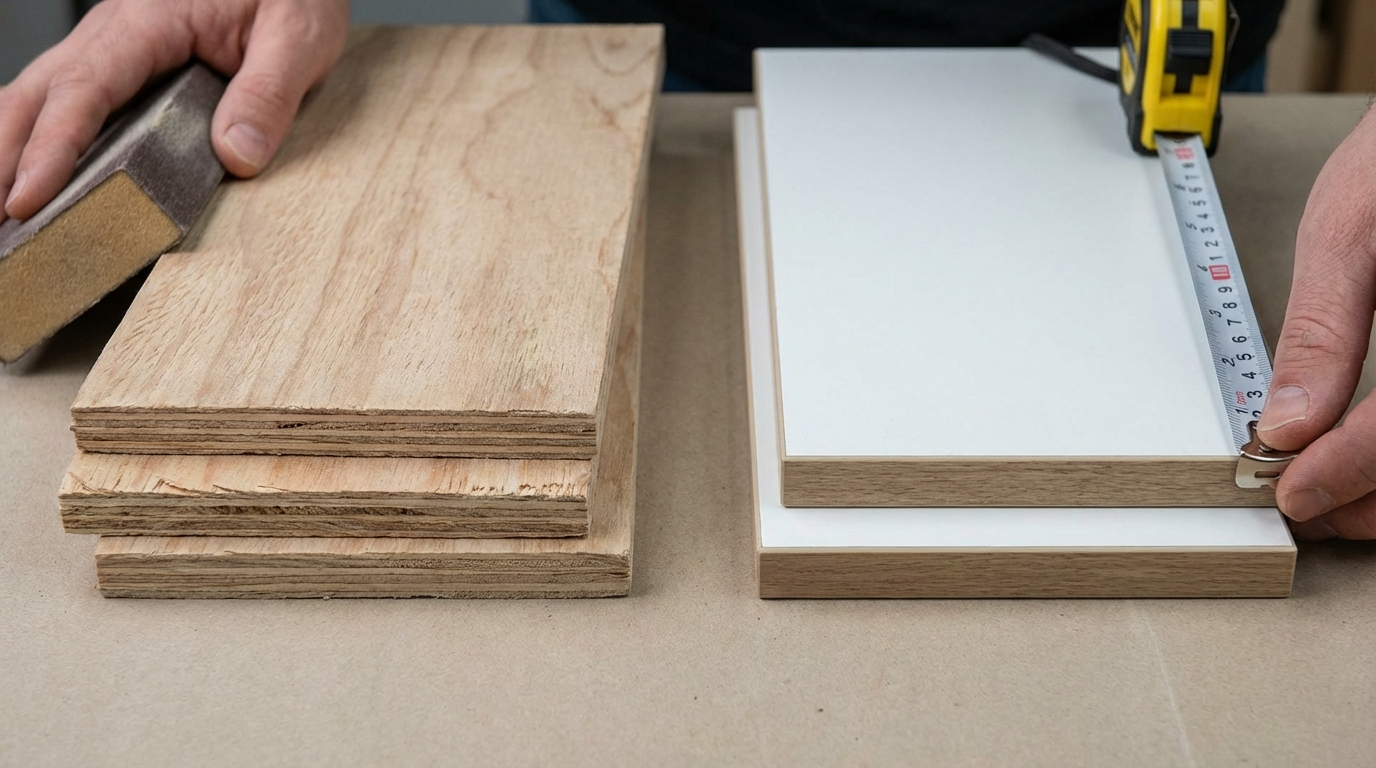
Calibrated plywood is sanded after pressing so every point on the sheet holds its exact nominal thickness, such as 18mm edge to edge, while non-calibrated sheets keep small pressing variations. That precision is why modular factories prefer it for laminating and machine cutting.
What is Calibrated Plywood?
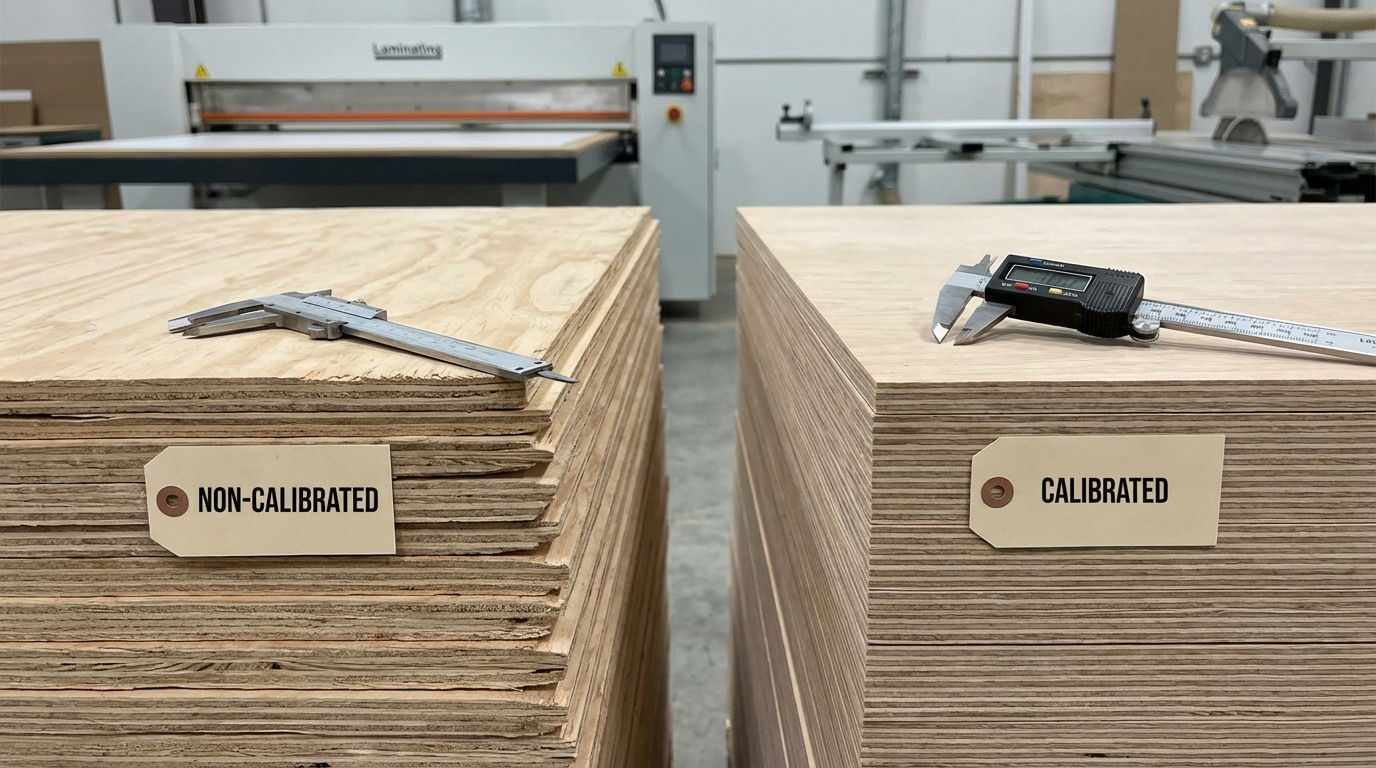
In India's plywood market, where construction and interior projects face humid monsoons and varying site conditions, the distinction between calibrated and non-calibrated plywood hinges on manufacturing precision. Calibrated plywood refers to sheets processed through specialized sanding machines after the standard pressing stage. This calibration step ensures every point on the sheet maintains the exact nominal thickness—such as precisely 18mm from edge to edge and corner to corner.
From first principles, plywood production starts with layering thin wood veneers, gluing them under heat and pressure. The pressing process inherently creates minor thickness variations due to glue distribution, wood moisture, and press inconsistencies. Non-calibrated plywood exits this stage as-is, with potential deviations of 1-2mm or more across a sheet. Calibrated versions undergo wide-belt sanding on both faces, removing high spots and achieving uniformity within tight tolerances, often ±0.2mm.
This process aligns with ISI standards for commercial plywood (IS 303), where calibrated options meet enhanced dimensional stability requirements. In practical terms, Indian manufacturers label it clearly on packaging, distinguishing it from standard sheets. Homeowners rarely notice this at purchase, but carpenters and modular fabricators value it for downstream work.
How Calibration Affects Plywood Structure
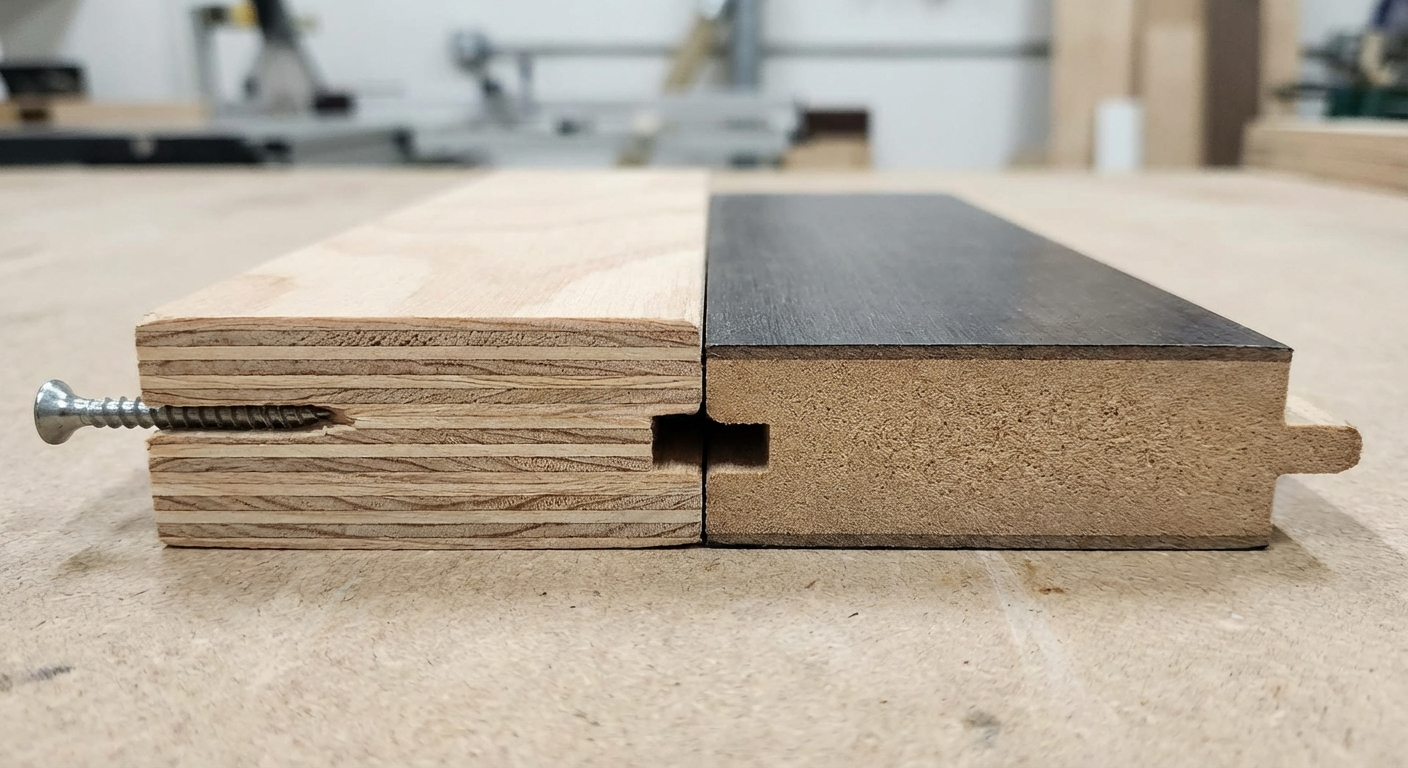
Consider the core mechanics: uneven thickness leads to stress concentrations during use, exacerbating swelling in coastal regions like Kerala or Chennai. Calibration distributes loads evenly, improving screw-holding strength by up to 15-20% in tests, as uniform faces allow better pilot hole consistency. For BWR or BWP grades, this extends to boil-proof glues, where even glue lines prevent delamination under humidity cycles typical in Indian apartments.
Availability in Indian Grades
Calibrated plywood spans MR (moisture-resistant for dry interiors), BWR (boiling water-resistant for kitchens), and BWP (boiling water-proof for high-moisture zones). Thicknesses from 6mm to 25mm cater to wardrobes, cabinets, and partitions. Dealers in Tier-1 cities like Delhi or Bangalore stock more, while regional variations in Gujarat or Tamil Nadu emphasize costlier BWP calibrated for marine-like conditions.
Key Differences: Calibrated vs Non-Calibrated Plywood
Buyers—whether contractors quoting for bulk shuttering or architects specifying modular wardrobes—must weigh these traits against project demands. Non-calibrated suits rough framing where tolerances exceed 1mm, but calibrated excels in finish-critical applications.
| Aspect | Calibrated Plywood | Non-Calibrated Plywood |
|---|---|---|
| Thickness Uniformity | Exact across sheet (±0.2-0.5mm) | Variable (±1-2mm or 5% tolerance) |
| Surface Finish | Smooth, sanded both sides | Rough, press marks visible |
| Manufacturing Cost Driver | Extra sanding step adds 10-25% premium | Basic pressing, lower base cost |
| Weight Consistency | Uniform, predictable handling | Slight variations affect stacking/balancing |
| Durability in Humidity | Better resistance to warping | Prone to cupping in monsoons |
| Ideal Thickness Range | 9-19mm for precision work | 12-25mm for structural |
This table highlights causal trade-offs: the sanding investment yields reliability, but non-calibrated remains viable for non-precision builds like temporary formwork.
Why Modular Factories Prefer Calibrated Plywood Over Non-Calibrated Sheets
India's modular furniture sector, booming in urban hubs like Pune and Hyderabad, relies on CNC routers, edge banders, and automated lines. Factories process hundreds of sheets daily, where even minor thickness deviations cascade into production halts. Non-calibrated sheets fed into a machine cause blade chatter, uneven feeds, and rejects—issues amplified in high-volume runs for ready-to-assemble kitchens.
From a factory manager's logic: programming a CNC for 18mm cuts assumes uniformity. A non-calibrated sheet at 17.5mm one end and 18.5mm the other yields misaligned doors or gaping joints. Calibrated ensures repeatable outcomes, cutting setup time by 30-40%. In India's post-pandemic modular surge, firms report 15-20% yield improvements, offsetting the upfront cost.
Production Efficiency Gains
- Seamless Integration: Panels stack flush for nesting on CNC beds, minimizing material waste in humid factories where swelling varies.
- Assembly Precision: Hinges, sliders align without shims; critical for flat-pack exports meeting global tolerances.
- Scalability: Bulk procurement from dealers yields consistent batches, unlike mixed non-calibrated lots causing batch rejects.
India-Specific Factory Realities
In Mumbai's humid bays or Bangalore's dust-prone shops, non-calibrated swells unevenly post-acclimation, forcing recalibrations. Modular players favor calibrated BWP for vanities, as it holds edges during post-forming curves. Contractors for site-built vs factory-prefab weigh this: factories prioritize it for margins, while on-site carpenters tolerate non-calibrated to trim budgets.
Benefits of Calibrated Plywood for Laminating
Laminating—applying 1mm PVC or paper foils—demands a flawless base. Calibrated plywood's sanded faces promote uniform glue spread, preventing air pockets or bubbles that plague uneven non-calibrated sheets. In India, where heat-activated glues cure under local presses, this adhesion strength reduces callbacks from peeling laminates in steamy kitchens.
Mechanically, smooth surfaces lower glue consumption by 10-15%, as voids fill naturally. Post-lamination, edges tape cleanly without sanding dust clogging vacuums. Architects specify it for high-end laminates like acrylics, where warpage risks amplify under Delhi summers.
Step-by-Step Laminating Advantages
- Prep Savings: Minimal sanding; direct to glue.
- Bonding Reliability: Even pressure yields void-free bonds.
- Finish Quality: No telegraphing of core defects.
- Longevity: Resists delam in 80% RH cycles.
For interior designers, this means predictable sheen in wardrobes; homeowners avoid unsightly repairs.
Benefits of Calibrated Plywood for Machine Cutting
Machine cutting via panel saws or CNC thrives on predictability. Calibrated sheets feed straight, with bits lasting 20-30% longer sans deflections from lumps. In Indian workshops, where blade costs bite, this extends tool life amid power fluctuations.
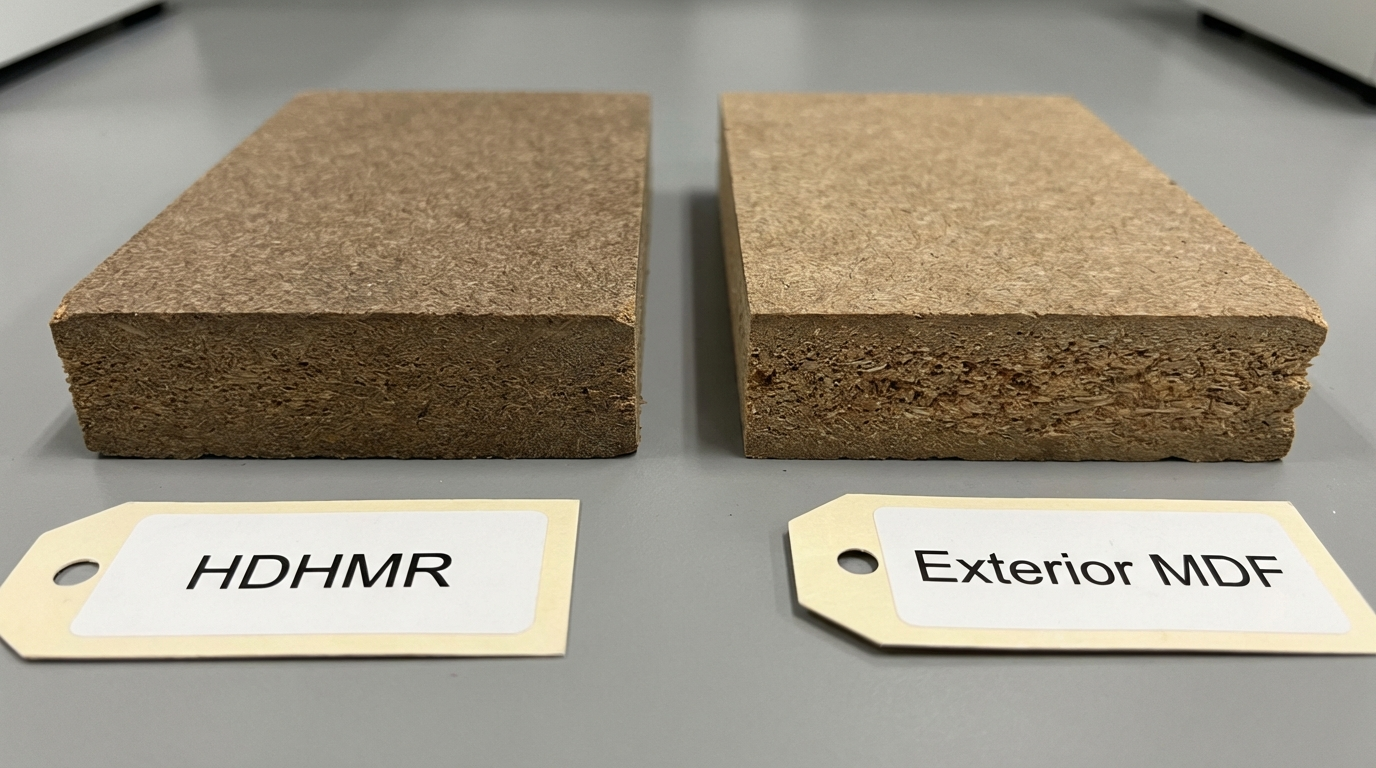
Precision cuts enable tight joinery—dovetails or miters—for frameless cabinets. Non-calibrated demands test cuts per sheet, inflating labor in labor-short factories. For routering grooves, uniformity prevents tear-out, vital for HDHMR edges mimicking solid wood.
Cutting Workflow Impacts
- Nesting Optimization: Sheets layout maximizes yield, cutting scrap from 10% to 5%.
- Edge Quality: Clean exits reduce profiling needs.
- Safety: Stable feeds lower kickback risks.
Contractors note: for 100-unit runs, time savings compound; non-calibrated suits one-offs.
When to Choose Calibrated vs Non-Calibrated: Buyer Decision Framework
Indian buyers navigate dealer markups (20-40% retail over wholesale) and regional swings—cheaper in plywood hubs like Kerala, pricier in metros. Calibrated commands a relative premium due to processing, but lifecycle savings favor it for 70% of modular projects.
| Buyer Type | Prefer Calibrated If... | Opt for Non-Calibrated If... |
|---|---|---|
| Homeowner (Wardrobes) | Factory-made units; laminate finish | Site-built; paint only |
| Contractor (Bulk Sites) | Modular kitchens; CNC fab | Shuttering; partitions |
| Architect/Designer | Precision joins; veneers | Rough framing |
| Dealer Logic | Upsell to factories (higher margins) | Volume sales to carpenters |
Inspect visually: measure corners with calipers; uneven signals non-calibrated. Demand ISI marks; avoid unbranded for core glue quality.
Challenges and Limitations of Calibrated Plywood
Not universal: thinner gauges (<9mm) lose integrity post-sanding; heavier for manual lifts. In rural builds, the premium rarely justifies over non-calibrated HDHMR alternatives. Always acclimate sheets 48 hours—calibration doesn't negate humidity physics.
Future Trends in India's Calibrated Plywood Market
With modular penetration hitting 30% by 2026 in urban India, demand surges for calibrated in sustainable glues (UF to PF shifts). Expect hybrid boards blending MDF cores for ultra-precision. Buyers should track regional mills adopting automation for consistent supply.
Calibrated or Non-Calibrated: Which Should You Buy?
Weigh project scale: small DIY favors non-calibrated economy; scaled interiors demand calibrated reliability. Test samples—cut and laminate to verify. In India's ecosystem, where callbacks erode trust, precision upstream preserves downstream value.
Related guides on PlyPrice
Want Plywood Suggestions?
Share a few details and a PlyPrice specialist will suggest suitable brands and connect you to responsive dealers.