BWP vs Marine Plywood: Not the Same, and Why IS 710 Matters
No, BWP and marine plywood are not the same. BWP is a water-resistance grade for general-purpose plywood under IS 303, while marine plywood must be certified to the stricter IS 710 standard, so check the IS number printed on the sheet, not just the label.
Last updated: . Grades and standards checked against current BIS standards.
Is BWP Plywood the Same as Marine Plywood? A Direct Fact Check
In the Indian construction and interiors market, confusion around BWP (Boiling Water Proof) and marine plywood arises frequently among homeowners, contractors, and designers. Both terms evoke images of highly water-resistant sheets suitable for kitchens, bathrooms, and coastal structures. However, they are not identical.
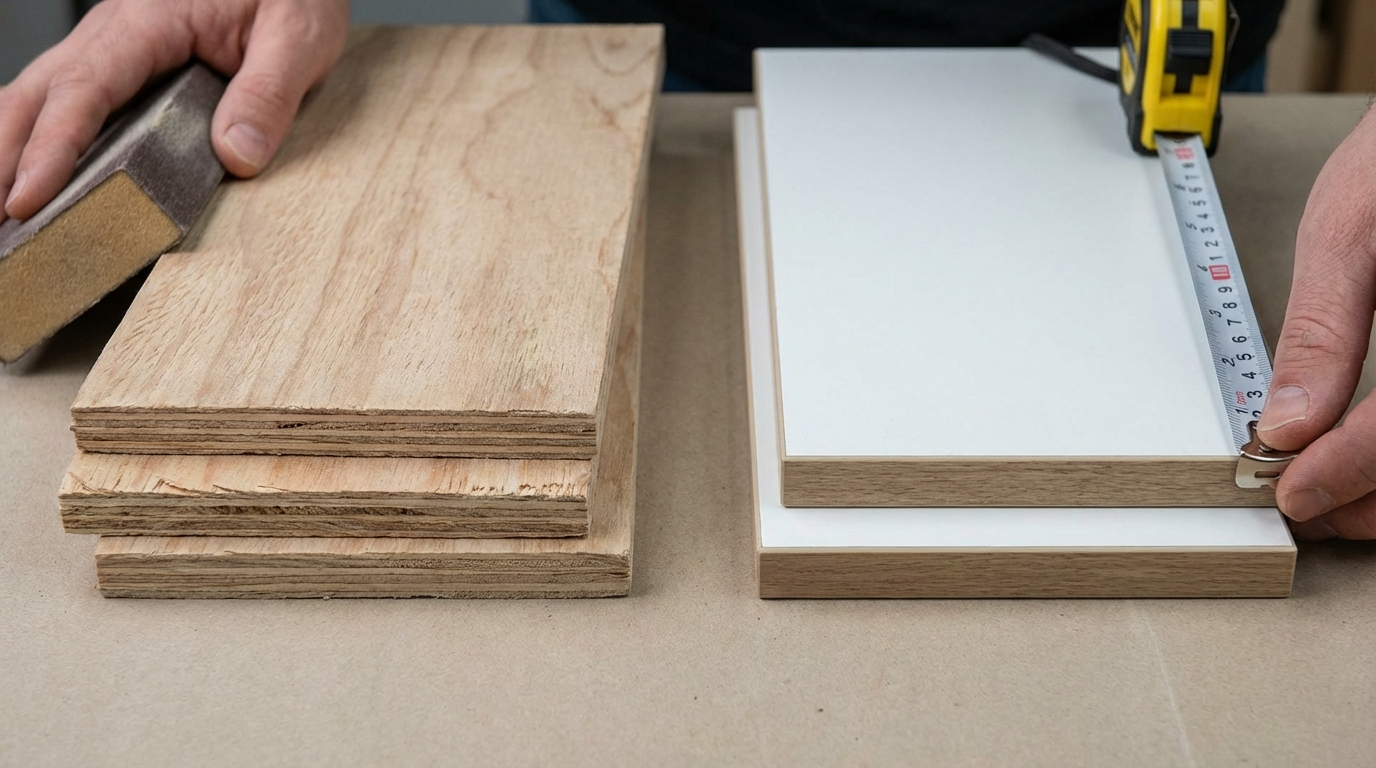
Short answer: No, BWP plywood and marine plywood are not the same, though significant overlap exists. BWP describes a water-resistance grade applicable to general-purpose plywood under IS:303 standards, while marine plywood specifically refers to sheets certified under the stricter IS:710 standard for marine and high-structural applications. Market terminology often blurs this line, with many suppliers labeling IS:710-compliant products as "BWP marine plywood."
This distinction matters in India's diverse climates—from humid coastal Kerala to monsoon-soaked Mumbai—where plywood faces repeated moisture exposure. Choosing incorrectly can lead to delamination, warping, or structural failure within months. Below, we break down the terms, tests, certifications, and decision logic using first-principles of plywood construction: layered veneers bonded by synthetic resins under heat and pressure.
Decoding Industry Terms: What BWP Plywood Really Means
Plywood's water resistance stems from its glue line—the adhesive bonding thin wood veneers. Standard urea-formaldehyde glues in MR (Moisture Resistant) grades hydrolyze (break down) in high humidity, causing layers to separate. BWP upgrades to phenolic resins, which are cross-linked polymers stable at boiling temperatures.
Under Bureau of Indian Standards (BIS) IS:303 (Plywood for General Purposes), BWP is the top grade. Introduced via recent amendments, it requires plywood to endure a 72-hour boiling water immersion without delamination or significant strength loss. This makes IS:303 BWP suitable for semi-exposed interiors like kitchen cabinets or bathroom vanities, where spills and steam are common but submersion rare.
Key attributes from first principles:
- Veneer quality: Mix of hardwoods (e.g., poplar, eucalyptus) and some softwoods; core voids minimized but allowed within limits.
- Glue shear strength: Minimum individual 800-1000 N post-boiling; focuses on bond integrity.
- Mycological resistance: Treated against fungal decay in humid conditions.
- Typical thickness: 6-25 mm, density 500-700 kg/m³.
In practice, Indian contractors use IS:303 BWP for cost-sensitive projects like apartment renovations in Tier-2 cities (e.g., Pune, Ahmedabad), balancing performance with affordability.
Defining Marine Plywood: Beyond Basic Water Resistance
Marine plywood earns its name from origins in boat-building, where sheets endure saltwater immersion, wave impact, and flexing. In India, IS:710 (Marine Plywood - Specification) sets a higher bar for structural plywood in perpetually wet environments.
IS:710 plywood must also pass the 72-hour boiling test but with elevated benchmarks:
- Wood selection: Exclusively durable tropical hardwoods (e.g., gurjan, andaman padauk); no softwood fillers, ensuring uniform strength.
- Glue lines: Phenol-formaldehyde with superior shear (min. 1000 N individual, 1350 N average post-boiling) and tensile strength for load-bearing.
- Dimensional stability: Lower moisture content (8-12%), minimal swelling (<2% thickness).
- Defect limits: Stricter on knots, splits, and gaps; higher density (600-800+ kg/m³).
This makes marine plywood ideal for boat hulls, bridges, or coastal homes in Goa or Chennai, where tidal humidity exceeds 90%. Architects specify it for structural elements like roof sheathing or formwork in marine-exposed sites.
The 72-Hour Boiling Water Test: Core to Both Standards
Imagine plywood as a laminate sandwich: failure occurs when water penetrates glue lines, softening bonds. The boiling water test simulates accelerated hydrolysis under India's extreme humidity (e.g., 80-95% RH in monsoons).
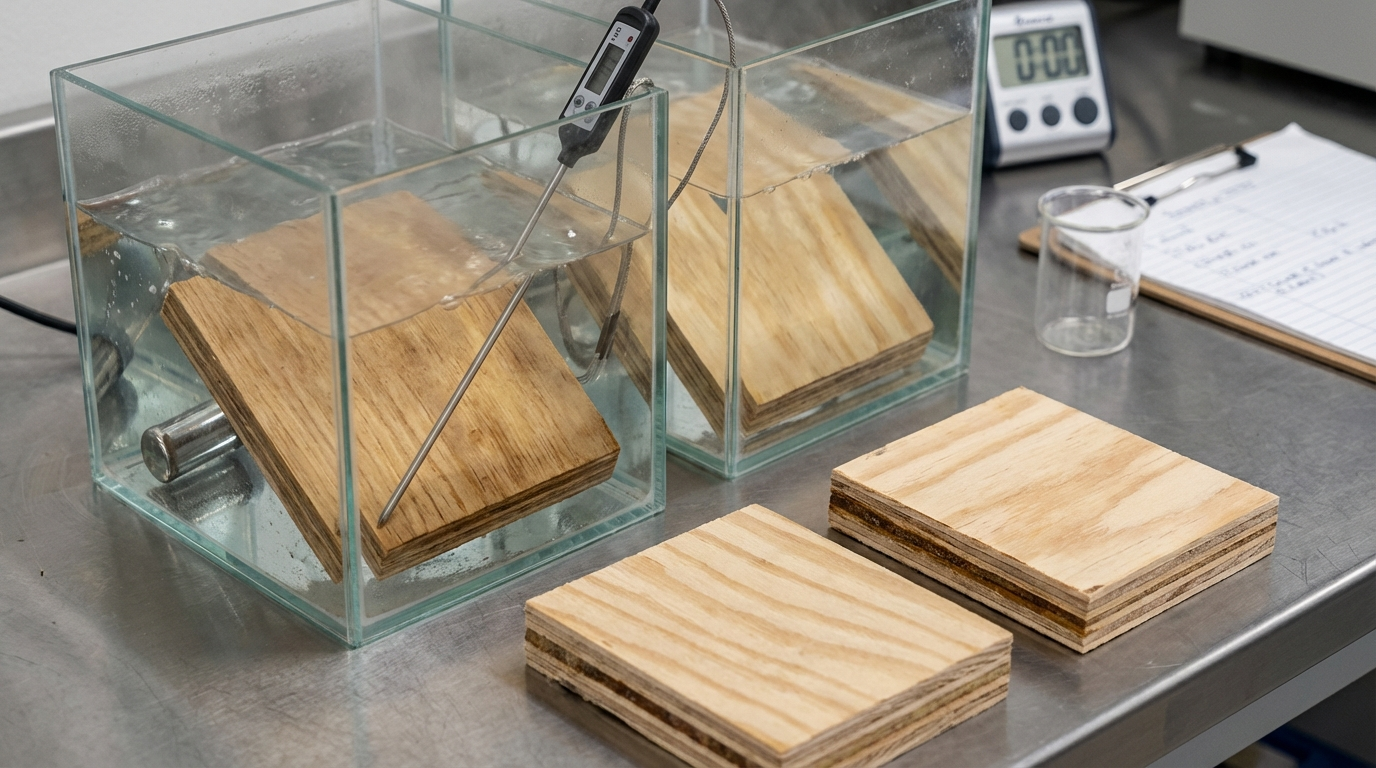
Test procedure (common to IS:303 BWP and IS:710):
- Cut specimens into 5x5 cm squares from face, core, and edges.
- Submerge in boiling water (100°C) for 72 continuous hours (or equivalent cycles).
- Inspect for delamination (separation >2 mm), swelling, or softening.
- Test glue shear strength post-immersion.
Pass criteria: No delamination; shear strength retains 75-90% of dry values. This differentiates BWP from BWR (Boiling Water Resistant, tested over three 8-hour boil cycles) or MR (three 3-hour soaks in 60°C water).
In buyer scenarios: Homeowners test samples informally by boiling scraps overnight. Contractors rely on lab reports, but fakes abound—diluted resins fail after 24 hours, revealing dealer-sourced counterfeits common in unorganized markets like Delhi's Bhagirath Palace.
IS:710 Certification Compliance: Why It Overrides Labels
BIS certification (ISI mark) via third-party testing ensures compliance. IS:710 carries CM/L number (unique license), verifiable on bis.gov.in.
Compliance logic:
| Aspect | IS:303 BWP | IS:710 Marine |
|---|---|---|
| Standard Scope | General/interior use | Structural/marine use |
| Wood Species | Mixed hard/soft | Hardwoods only |
| Boiling Test Retention | 75% strength | 90%+ strength |
| ISI Mark Frequency | Common, but variable enforcement | Strict, higher scrutiny |
| Typical Indian Use | Kitchen carcasses | Boat building, facades |
The May 2024 revision of IS:303 added a BWP grade, allowing some substitution for IS:710 in non-structural roles. However, PWD specs for public works mandate IS:710. Verify via QR codes or BIS portal—avoid verbal dealer claims.
Key Differences and Similarities: Side-by-Side Analysis
Both resist water via phenolic glues, but IS:710's rigor shines in longevity.
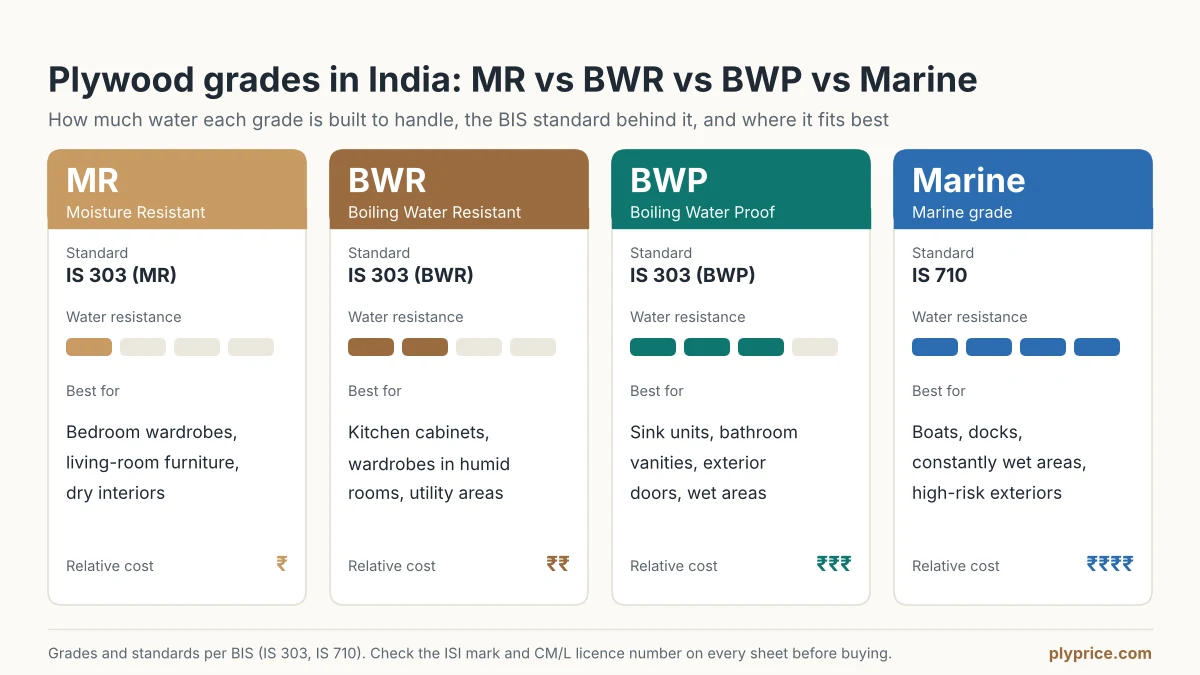
Similarities:
- 72-hour boil-proof.
- Termite/bores resistant (per IS:12076).
- Suitable for humid India (e.g., post-monsoon drying cycles).
Differences unpacked:
| Parameter | IS:303 BWP | IS:710 Marine | Buyer Impact |
|---|---|---|---|
| Strength Post-Boil | 800-1100 N | 1000-1400 N | Marine holds heavy loads longer |
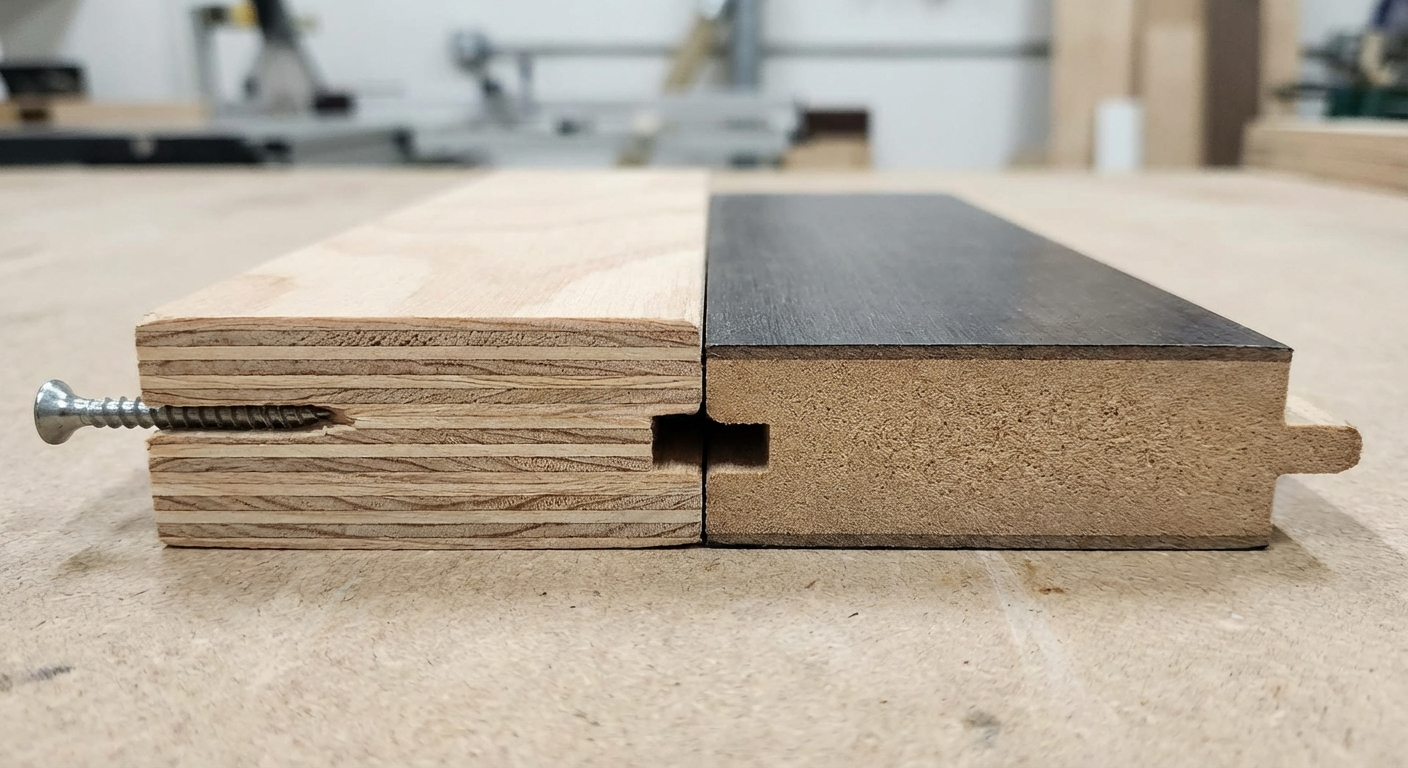
| Core Uniformity | Moderate gaps OK | No voids, dense core | Less screw pull-out in marine |
| Cost Driver | Lower wood costs | Premium hardwoods | 20-50% premium for marine |
| Weight/Thickness | Lighter | Heavier, stable | Marine for floors/beams |
Relative pricing: IS:303 BWP starts lower due to domestic poplar cores; IS:710 escalates with imported hardwoods and testing overheads. Regional variation—coastal dealers charge more for marine amid demand.
Practical Applications in Indian Homes and Projects
Consider buyer personas:
Homeowners (urban apartments): IS:303 BWP for modular kitchens. Why? Sinks leak, steam condenses, but no constant submersion. Pair with edge-banding and laminates for 10+ year life.
Contractors (commercial fitouts): IS:710 for high-rise bathrooms or hotels. Structural integrity prevents sagging under ceramic loads.
Architects (coastal villas): Marine for verandas exposed to salt spray. Avoids fungal bloom in 90%+ RH.
Scenario: Mumbai high-rise renovation. Monsoon flooding risks delamination—IS:303 BWP suffices for cabinets (cost savings), but marine for balcony partitions.
Cost Factors Driving BWP vs Marine Choices
Pricing logic ties to inputs:
- Wood sourcing: Poplar (IS:303) cheaper than gurjan (IS:710).
- Resin quality: Marine uses purer phenolics.
- Testing/certification: IS:710 labs add overhead.
- Regional dynamics: North India (lower humidity) favors BWP; South coasts premium marine.
Expect IS:710 to cost relatively higher (1.2-1.5x) per sq ft, varying by thickness (18mm premium). Dealers discount bulk BWP; architects negotiate marine via specs.
Verifying Genuine Products: Tests and Red Flags
Dealer ecosystems breed fakes—thinner glues pass short boils but fail long-term.
At-site checks:
- ISI mark + CM/L number (scan QR).
- Knock test: Uniform thud (dense core).
- Edge immersion: 24-hour boil sample—no swell.
- Weight: Marine feels heavier.
Report fakes to BIS. Prefer authorized distributors over roadside yards.
Common Myths Debunked for Informed Decisions
Myth 1: All BWP is marine-grade. Reality: Only IS:710 is.
Myth 2: No need in dry climates. Reality: AC leaks + monsoons demand it everywhere.
Myth 3: Laminates make MR sufficient. Reality: Core delamination lifts laminates.
Myth 4: Thicker = better. Reality: Grade trumps thickness.
BWP or Marine Plywood: Which Should You Buy?
Map exposure risk:
| Risk Level | Recommended | Why |
|---|---|---|
| Occasional spills (living rooms) | BWR | Adequate, cost-effective |
| Frequent moisture (kitchens) | IS:303 BWP | Boil-proof balance |
| Constant wet (bathrooms, coasts) | IS:710 Marine | Structural durability |
Consult specs, test samples, factor lifecycle costs. In India's evolving market, certified IS:710 offers peace of mind for demanding sites, while IS:303 BWP empowers budget-conscious builds without compromise.
Related guides on PlyPrice
Want Plywood Suggestions?
Share a few details and a PlyPrice specialist will suggest suitable brands and connect you to responsive dealers.