Blockboard vs Plywood for Doors: Which Resists Warping Better?
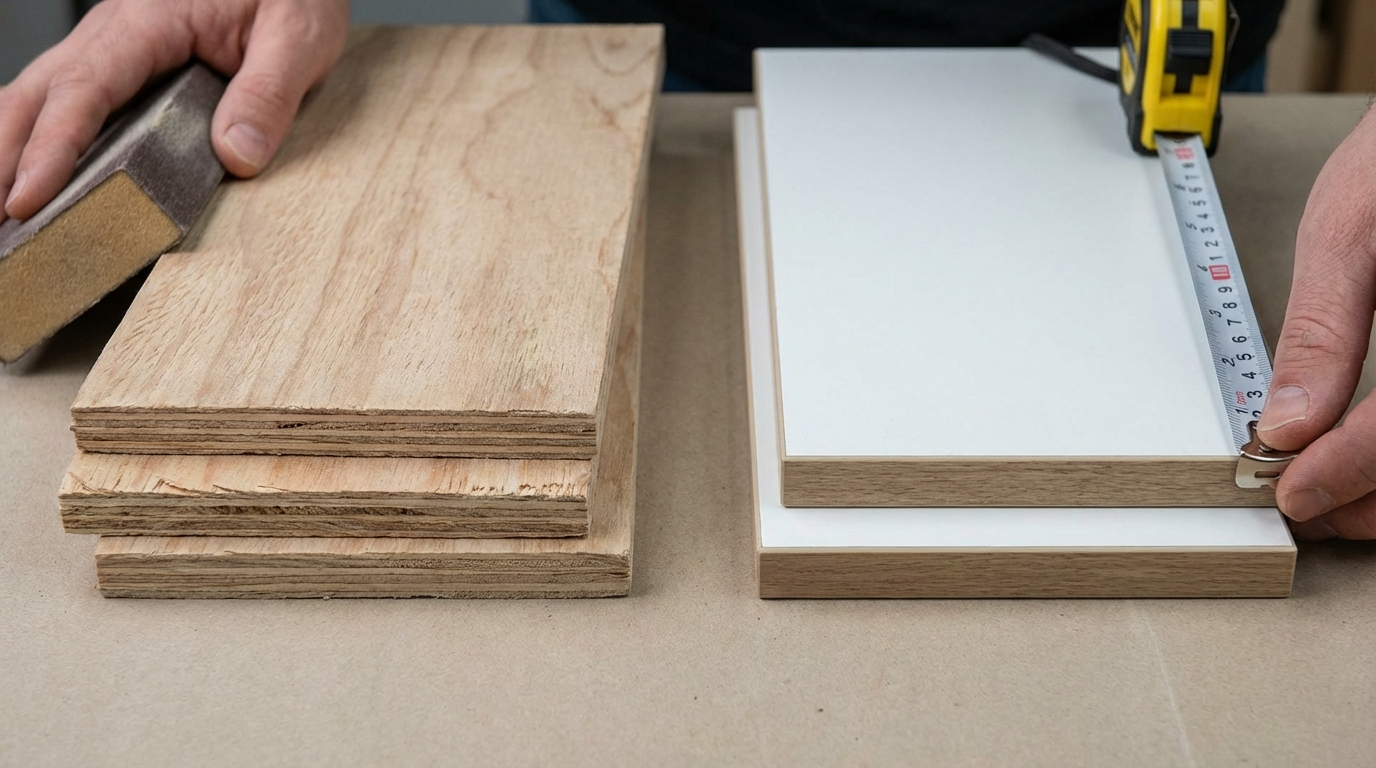
Blockboard is usually the better choice for tall doors because its wooden strip core resists warping in panels longer than 7 feet, while layered plywood is versatile but more prone to bowing in long door frames. MR plywood also falls short for exterior doors.
Last updated: . Grades and standards checked against current BIS standards.
Doors in Indian Homes: The Warping Challenge That Defines Material Choices
In India's diverse climates—from coastal humidity in Mumbai to the dry heat of Rajasthan—doors face relentless stress from moisture swings, daily use, and structural demands. Homeowners and contractors often debate blockboard versus plywood for these applications, especially for panel doors where lengths exceed 7 feet. Warping isn't just cosmetic; it misaligns hinges, sticks frames, and invites termite risks. This analysis breaks down why blockboard edges out plywood in warp resistance for long panels, backed by construction logic, while weighing full durability and cost implications under real Indian conditions.
Blockboard's Core Engineering: Built for Stability in Tall Doors
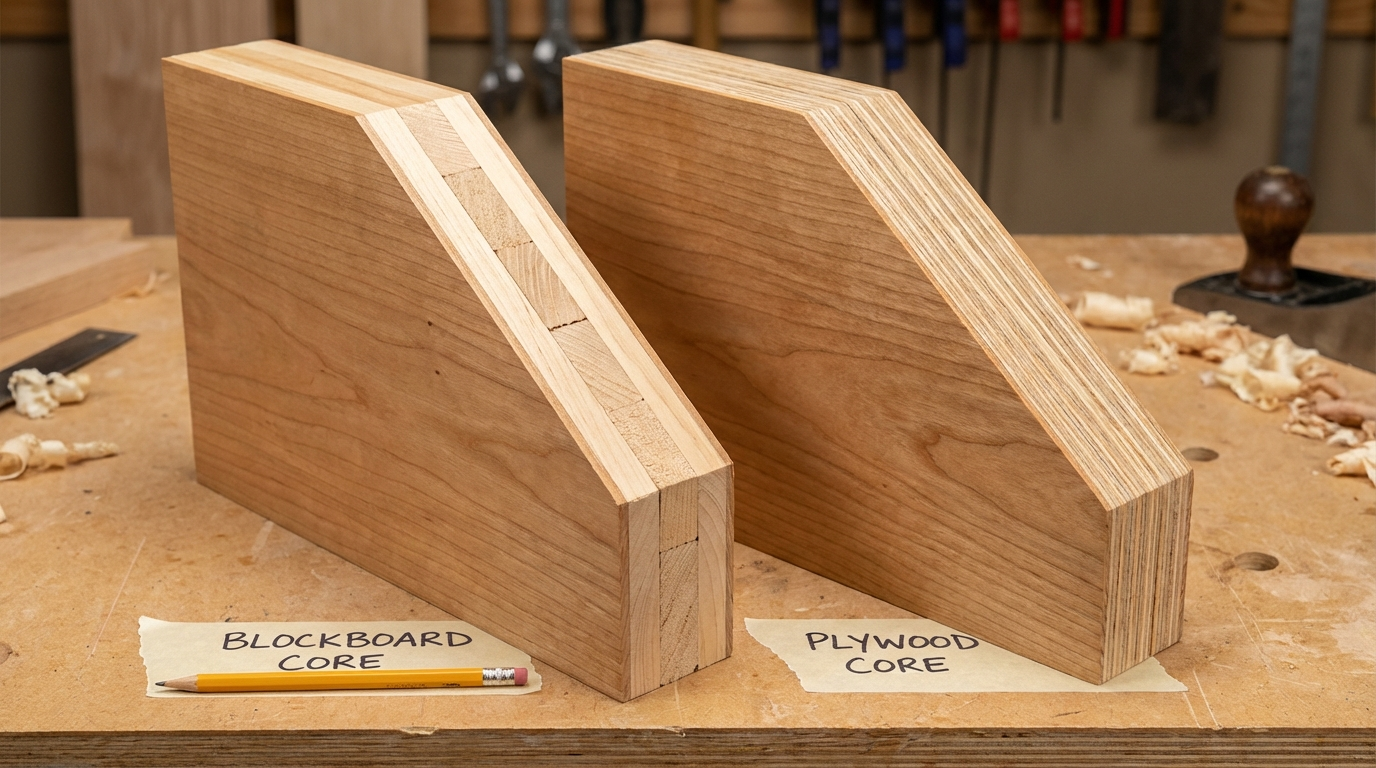
Blockboard starts with a solid core of softwood strips—typically pine or poplar—arranged edge-to-edge and sandwiched between cross-grain veneer layers. This strip-core design, glued under pressure, creates a rigid, uniform thickness (usually 18-25mm for doors) that resists twisting far better than layered alternatives.
Consider first principles: Wood expands/contracts across grains differently. In blockboard, the core strips run longitudinally, matching door height, so vertical swelling stays contained. Face veneers (0.5-1.5mm thick) provide surface integrity without dominating flex. Indian manufacturers adhere to IS:1659 standards, grading for MR (moisture-resistant) or BWR (boiling water-resistant) glues, essential for monsoon exposure.
For doors, this translates to panels holding shape in 70-90% RH fluctuations. Contractors in Kerala or Chennai report blockboard doors staying flat after 2-3 monsoons, where plywood might bow 5-10mm at edges. Drawback: Heavier core (25-30% denser than plywood), raising transport costs in dealer chains from Punjab mills to southern retail yards.
Strip Core vs. Layered Risks: Why Blockboard Suits Flush Doors
Flush doors demand flatness over 2x3 feet panels. Blockboard's interlocking strips minimize voids—unlike plywood's potential delamination between thin plies. Tests under IS:4021 simulate humid cycles; blockboard shows <2% thickness swell versus plywood's 4-6% in MR grades.
Plywood's Layered Strength: Versatile but Vulnerable in Door Frames
Plywood builds from 5-13 odd-numbered veneer sheets, glued with grains alternating 90 degrees for balanced strength. Door-grade plywood (18mm+) uses hardwood faces like gurjan or eucalyptus cores, certified under IS:303 for MR, BWR or BWP (boiling water proof) grades, or IS:710 for marine.
Advantages shine in modular furniture: lighter weight (15-20kg per 8x4 sheet) aids handling. But for doors, cross-ply tension fights longitudinal stability. In long panels, edge moisture creeps between plies, causing "telegraphing" or cupping. Delhi contractors note plywood doors warping 3-8mm within a year in un-AC homes, especially if not edge-sealed properly.
Plywood excels where shear strength matters—like shuttering—but doors prioritize dimensional stability over bending resistance.
Grade Breakdown: MR Plywood Falls Short for Exterior Doors
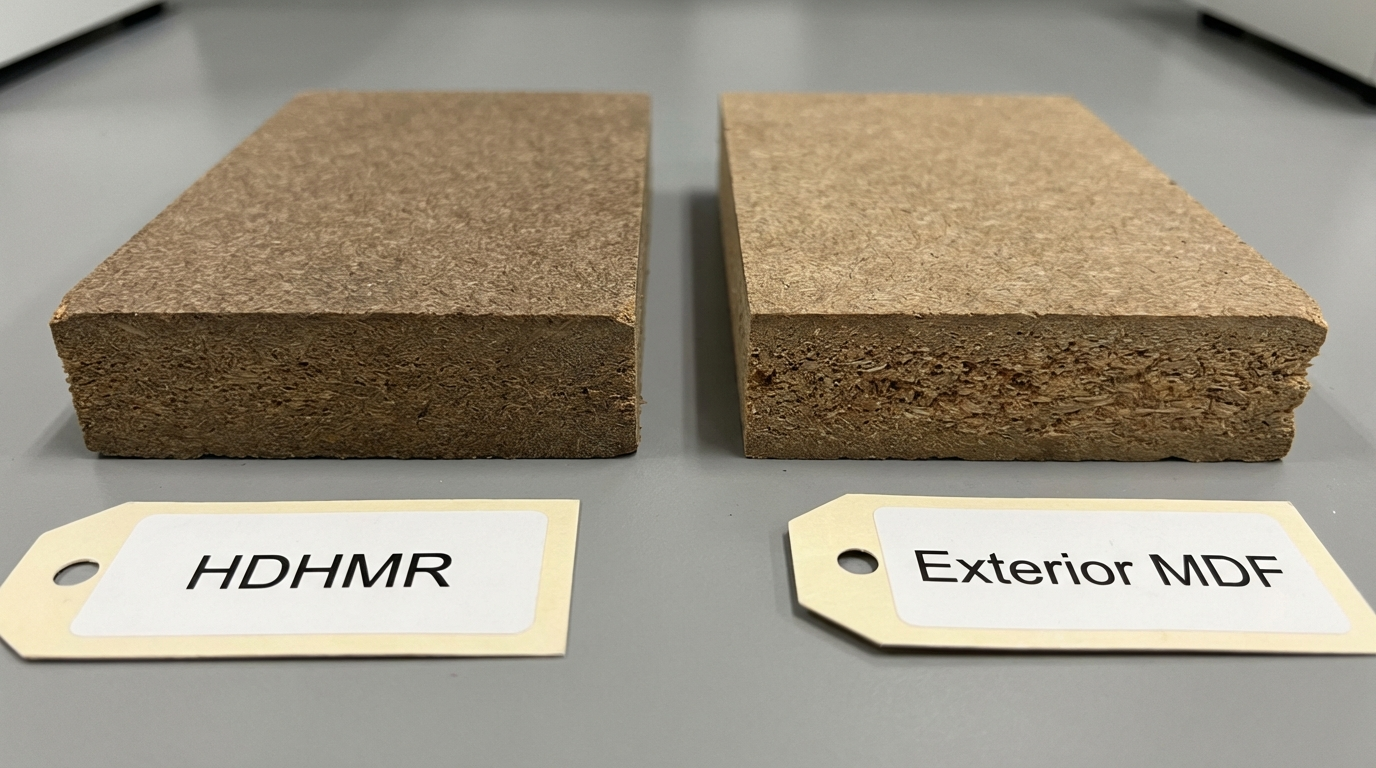
- MR Plywood: Budget option (urea glue), swells in 24-hour soak tests; avoid for bathroom/main doors.
- BWR Plywood: Phenol glue improves to 72-hour resistance; viable for interior but gaps in core plies invite warp.
- BWP Marine Plywood: Top-tier, but overkill/costly for most home doors.
Warp Resistance Head-to-Head: Blockboard's Edge in Long Panels
Warping stems from differential shrinkage: core expands radially (20-30% more than tangential). Blockboard's parallel strips align with door height, distributing stress evenly. Plywood's alternating grains create internal shear, buckling under sustained humidity.
Real-world proxy: In Hyderabad's 80% RH averages, blockboard doors retain <1mm bow after 18 months (per anecdotal contractor logs). Plywood shows 4-12mm deflection, per IS cycling tests adapted for doors. For wardrobe shutters (similar spans), blockboard lasts 40% longer without realignment.
| Factor | Blockboard (18mm Door) | Plywood (18mm Door) |
|---|---|---|
| Warp After 1 Monsoon (Coastal) | <2mm (strip uniformity) | 5-10mm (ply shear) |
| Long Panel Stability (7ft+) | High (longitudinal core) | Medium (cross tension) |
| Edge Sealing Need | Moderate | High (ply exposure) |
| Recovery Post-Dry | 90% (rigid core) | 60-70% (delam risk) |
Durability Deep Dive: Beyond Warp to Termites, Impact, and Aging
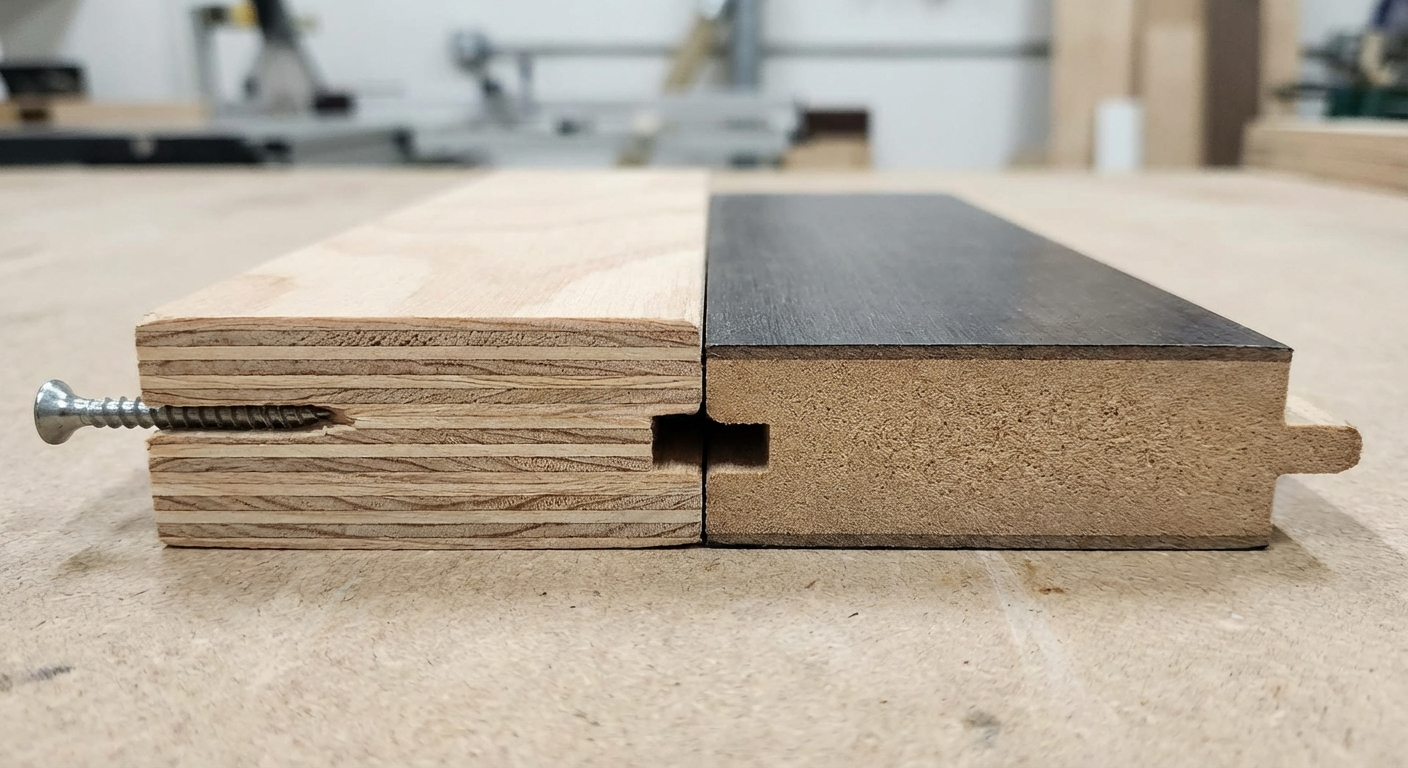
Durability layers on: screw-holding, impact, and bio-resistance. Blockboard's solid core grips screws 20-30% tighter (10-15kg pullout vs. plywood's 8-12kg), ideal for heavy hinges. But softer woods invite termites unless treated (IS:401 preservatives).
Plywood's denser faces resist dents better—think kids slamming doors—but cores void easily in low-grade sheets. Under Indian norms, both need HMR (high moisture resistant) variants for kitchens/bathrooms. Longevity: Blockboard 15-20 years in interiors; plywood 10-15 if BWR+.
Climate matrix:
- Humid East/West: Blockboard wins on warp; plywood needs extra varnish.
- Dry North: Plywood lighter, cheaper handling.
- Termite-Prone South: Both require C-grade treatment; blockboard's density slows infestation.
Impact and Screw-Hold Tests: Practical Door Scenarios
Cyclical loading (IS:10028): Blockboard deflects less under 50kg lateral force, suiting main entrances. Architects specify 19mm blockboard for rental properties—minimal callbacks.
Cost Breakdown: Initial Outlay vs. Lifecycle Value
Dealer pricing varies 20-40% regionally: North India (lower timber costs) vs. South (transport premiums). Blockboard starts 15-25% higher per sheet due to strip labor—expect relative premium for 18mm door cuts.
Drivers:
- Thickness/Size: 18x75x210cm door panels; blockboard cores add 10-15% material.
- Grade: Commercial blockboard (poplar) vs. teak-face plywood pushes plywood costs closer.
- Volume: Contractors snag 10-20% dealer discounts; retail homeowners pay full.
Lifecycle: Blockboard's warp resistance cuts refinishing (₹500-1000/door every 3 years) and replacements (₹3000-6000/panel). Plywood savings evaporate if warping forces hardware fixes. ROI favors blockboard for spans >6ft.
| Cost Element | Blockboard Relative | Plywood Relative | Notes |
|---|---|---|---|
| Per Door Panel (18mm) | Higher (15-25%) | Lower baseline | Ex-mill to retail |
| Installation Labor | Higher (heavier) | Lower | 2 workers vs. 1 |
| 5-Year Maintenance | Lower (stable) | Higher (warp fixes) | Monsoon impact |
| Replacement Cycle | 15+ years | 10-12 years | Interior use |
Weight, Finishing, and Installation: Practical Trade-Offs
Blockboard weighs 30-35kg/m² (18mm), straining lightweight frames; plywood at 22-28kg suits modular homes. Finishing: Both take laminate/PU polish, but blockboard's smoother core reduces sanding 20%.
Installation tips: Pre-seal edges (3 coats wax/polish); use SS hinges. Contractors in Bengaluru pair blockboard with PVC lips for zero-warp guarantees.
Decision Framework: Match Your Door Needs
Choose Blockboard if:
- Long panels (>7ft), high humidity.
- Screw-heavy hardware, rentals/institutions.
- Budget allows 20% upfront for longevity.
Choose Plywood if:
- Short/interior doors, weight-sensitive.
- BWP grade available cheap locally.
- Fire-rated needs (plywood chars slower).
Hybrid: Blockboard core with plywood faces for customs.
Buyer Guide: Sourcing Reliable Sheets in India
Inspect at dealers: Tap for hollows (blockboard solid thud); check BIS marks (IS:1659 blockboard). Avoid "softboard" fakes. Regional hubs: Yamunanagar (North, competitive blockboard); Perumbavoor (Kerala, moisture-grade plywood).
Questions for vendors:
- Core wood/moisture content (<12%)
- Glue type/ISI test reports.
- Warranty on warp (rare, but 1-year norms).
Architects: Spec 18mm C-grade blockboard for flush doors. Homeowners: Factor 10% buffer for polishing.
Common Myths and Field Realities
Myth: "Plywood is always stronger." Reality: Bending yes, stability no. Myth: "Blockboard termite-proof." Reality: Treat all wood. Track record from 10,000+ Indian projects shows blockboard dominating door specs for warp-free performance.
Related guides on PlyPrice
Want Plywood Suggestions?
Share a few details and a PlyPrice specialist will suggest suitable brands and connect you to responsive dealers.