Best Quality Plywood: Imported Birch vs Indian Hardwood Ply
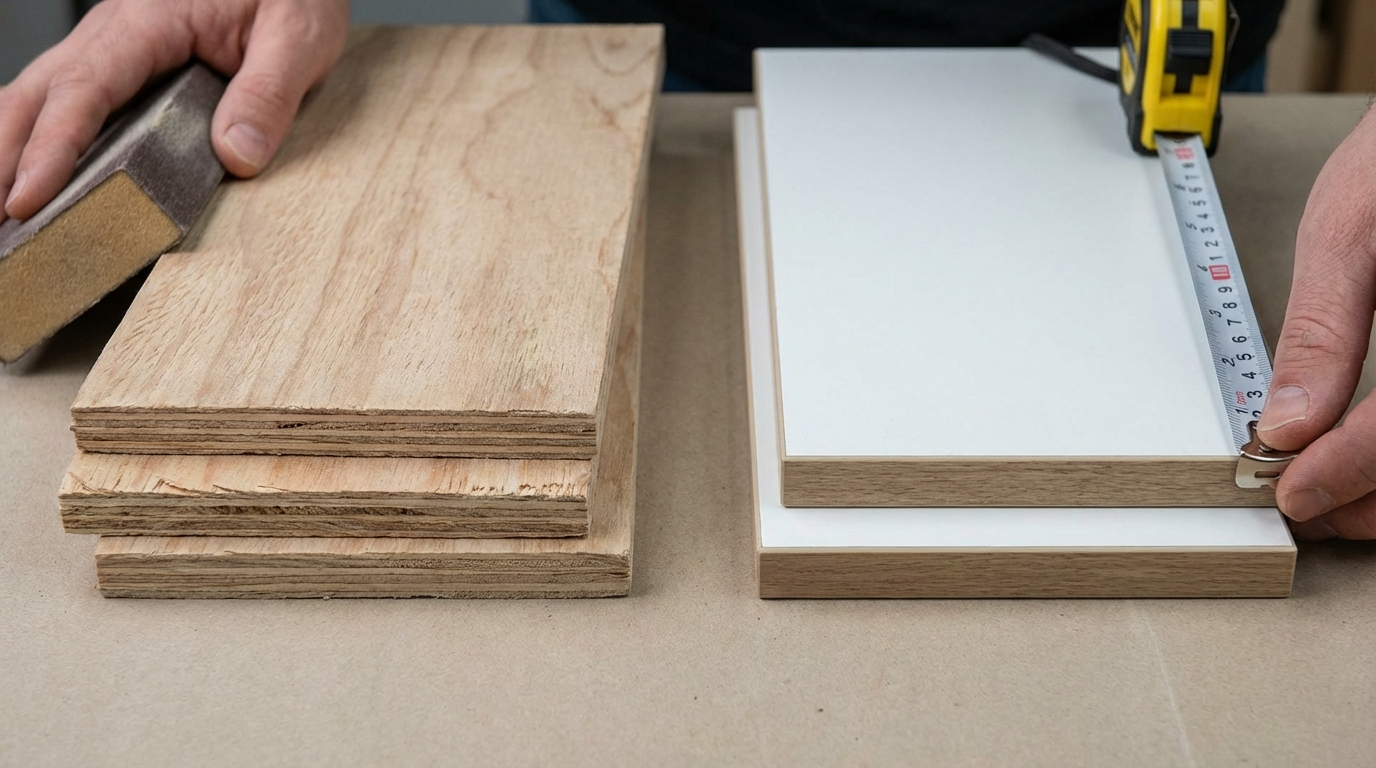
Imported Baltic birch plywood packs 13-15 thin, uniform plies into an 18mm sheet with defect-free veneers and phenolic glue, which is why it suits premium exposed-edge furniture, while Indian hardwood plywood costs less but varies more at the core. Compare finish, strength, moisture and price.
Last updated: . Grades and standards checked against current BIS standards.
Imported Birch Plywood: Sourcing and Composition Basics
Imported birch plywood originates primarily from Baltic regions like Russia, Finland, and Latvia, where Betula species provide thin, uniform veneers. These sheets typically feature 13-15 plies in 18mm thickness, glued with phenolic resins under high pressure for exterior-grade bonding. In India, importers stock these in standard sizes like 8x4 feet, targeting architects and high-end furniture makers who prioritize consistency over local alternatives.
The core advantage lies in the wood's natural properties: birch veneers are defect-free, with tight grain patterns that resist warping. However, transportation costs and import duties inflate landed prices, making it a niche choice rather than a bulk construction staple. Indian buyers encounter it through specialized dealers in Mumbai, Delhi, and Bangalore, often certified under EN 636 standards rather than ISI marks.
Indian Hardwood Plywood: Common Varieties and Production Realities
Domestic plywood in India draws from hardwoods like eucalyptus, poplar, and gurjan, assembled in factories across Punjab, Uttar Pradesh, and Kerala. Sheets follow BIS IS:303 or IS:710 norms, graded as MR (moisture-resistant), BWR (boiling water-resistant), or BWP (boiling water-proof). A typical 18mm BWR panel uses 9-11 thicker veneers, with urea-formaldehyde glues for interior use.
Production scales to meet India's housing boom, but variability arises from raw material sourcing—seasonal timber quality affects uniformity. Regional dealers offer these at competitive rates, appealing to contractors for shuttering or partitioning where edges remain concealed.
Surface Finish: Visual and Tactile Differences
Surface quality dictates usability in visible applications. Birch plywood delivers a smooth, sanded face with minimal sanding marks, thanks to rotary-cut veneers averaging 1.2-1.5mm thick. The pale, consistent color—light golden to creamy white—lends itself to staining or clear lacquering without blotching, ideal for modular kitchens or wardrobes where edges show.
Contrast this with Indian hardwood plywood, where face veneers (1.5-2mm) often carry knots, patches, or color variations from mixed species. Even premium BWP grades exhibit a coarser texture post-sanding, prone to telegraphing glue lines under veneer. In humid Indian interiors, birch maintains its sheen longer, resisting fuzzing from sweat or spills common in urban homes.
| Aspect | Imported Birch | Indian Hardwood |
|---|---|---|
| Smoothness (post-sanding) | High; uniform grain | Moderate; visible patches |
| Color Consistency | Excellent; pale uniform | Variable; reddish-brown tones |
| Stain Absorption | Even; minimal blotching | Uneven; grain raise |
| Suitability for Exposed Edges | Premium; no filling needed | Basic; edging strips required |
This table highlights why interior designers favor birch for floating shelves or tabletops, where Indian ply demands extra lamination labor.
Core Gaps and Structural Integrity
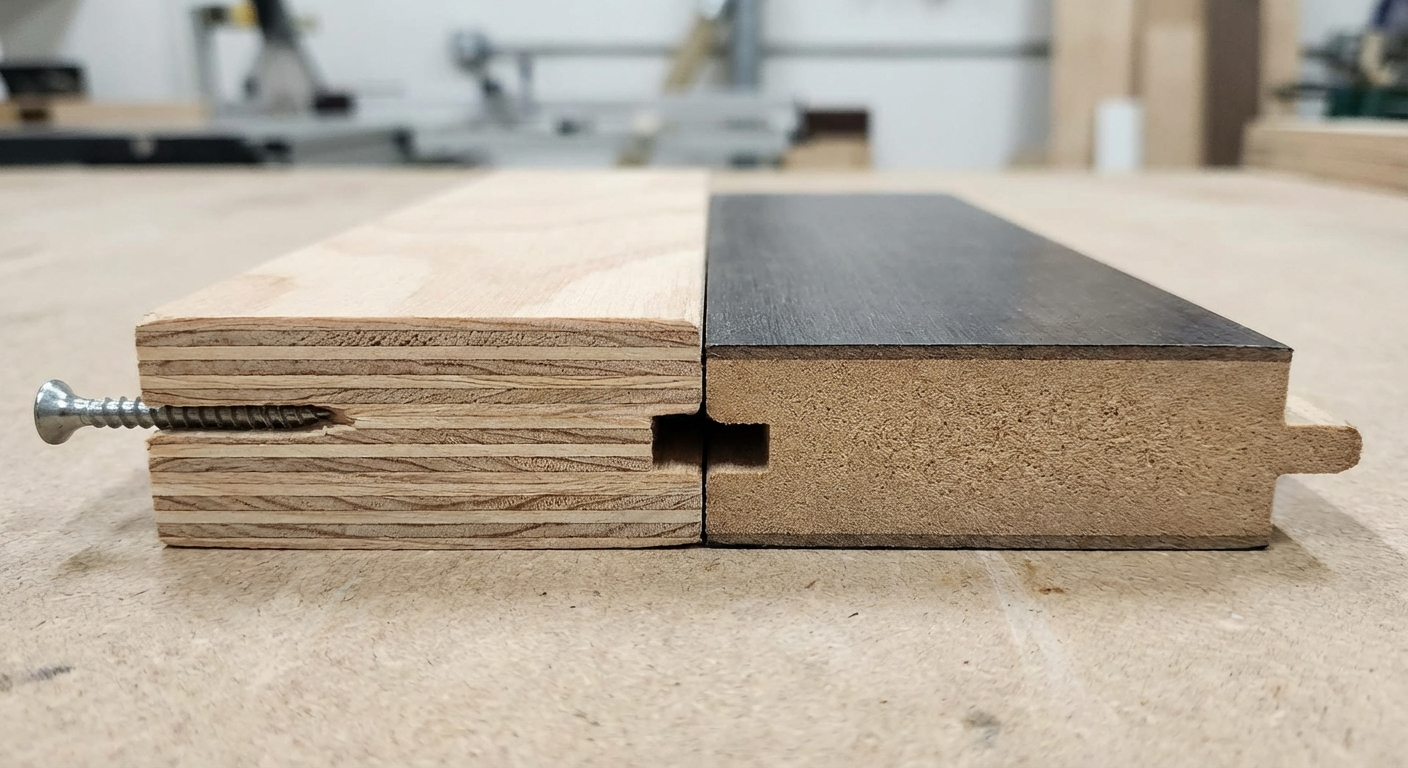
Core construction reveals reliability under load. Birch plywood employs finger-jointed or full-length core veneers with overlaps under 2mm, minimizing voids. High-pressure lamination (HPL) processes ensure zero gaps, allowing screw-holding up to 1.5x deeper without delamination—a boon for heavy-duty cabinets in Indian apartments.
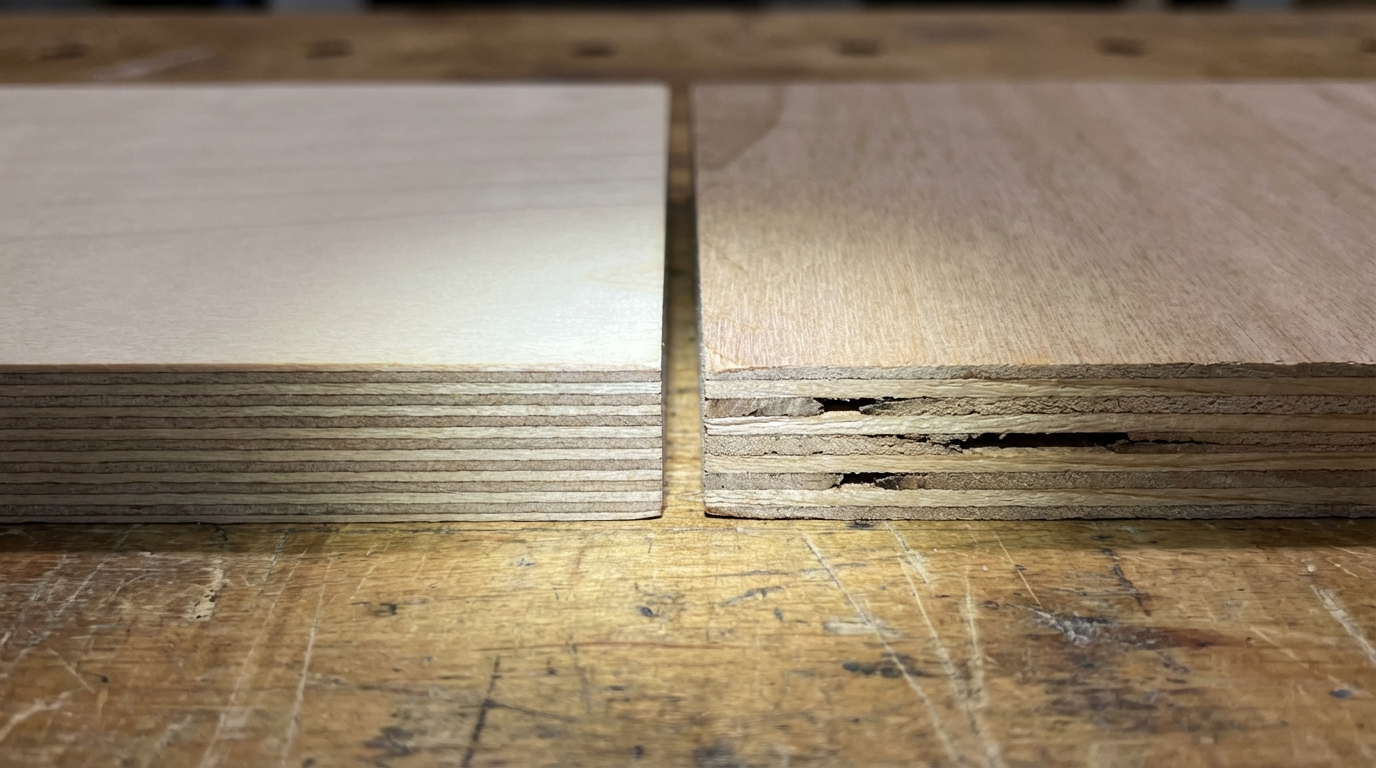
Indian hardwood cores, often from plantation eucalyptus, suffer more from telescoping or gaps exceeding 3mm due to faster production cycles and variable moisture content (12-15%). These voids weaken edge banding adhesion and promote buckling in high-humidity zones like coastal Mumbai. Testing via screw withdrawal reveals birch holding 20-30% firmer, per independent lab comparisons.
For contractors, Indian ply suffices in framed partitions, but gaps necessitate putty filling, adding 10-15% to site costs.
Pricing Dynamics: Landed Costs in Indian Markets
Cost structures diverge sharply due to supply chains. Imported birch lands at 2-3x the price of equivalent Indian BWR plywood per sheet, driven by freight (20-30% markup), 20% customs duty, and 18% GST. A standard 18mm 8x4 birch sheet ranges higher in dealer yards of Tier-1 cities, while Indian equivalents drop 40-50% lower in wholesale hubs like Ghaziabad or Yamuna Nagar.
Factors inflating birch: scarcity (seasonal imports), premium certification, and handling fees. Indian ply benefits from local milling, subsidies on timber, and bulk dealer discounts—yet premium brands narrow the gap to 1.5x via better grading. Regional variation: South India sees birch premiums shrink due to port proximity, while northern inland markets amplify them.
- Budget Builds: Indian ply dominates; cost savings fund fittings.
- Premium Projects: Birch justifies expense via labor reduction.
- ROI Logic: For resale properties, birch elevates perceived value by 15-20%.
Strength and Load-Bearing Capacity
Birch's multi-directional veneer layup yields superior MOR (modulus of rupture) and MOE (modulus of elasticity), outperforming Indian ply by 25-40% in span tests. This translates to sagging resistance in 600mm spans for shelves—critical for open shelving in compact Indian homes.
Indian hardwood compensates with denser cores in BWP grades, suitable for formwork, but flexes more under point loads. Architects specify birch for seismic zones, where uniform density aids stability.
Moisture Resistance in India's Climate
India's monsoon-driven humidity (70-90% RH) tests adhesives. Birch's WBP (weather/boil-proof) glues endure 72-hour boils without delam, well beyond Indian BWR's test of three 8-hour boil cycles. Face veneers on birch swell less than 8% at 25% MC, versus 12-15% for local ply.
Practical edge: Birch in bathrooms or kitchens shrugs off steam; Indian ply needs edge-sealing. Coastal users report birch lasting 8-10 years versus 4-6 for domestic options.
Why Birch Excels in Premium Exposed-Edge Furniture
Exposed edges expose flaws—birch's seamless core and flawless faces eliminate banding needs, slashing finishing time by 30%. In luxury modulars (e.g., Godrej Interio styles), it supports minimalist designs without teak veneers.
Indian ply fits concealed frames but falters here: gaps telegraph through laminates, demanding skilled carpenters. Homeowners upgrading to semi-custom wardrobes choose birch for its "factory-fresh" look, aligning with Instagram-inspired aesthetics.
Case: A Bangalore villa project swapped Indian ply mid-way, citing edge perfection—upfront cost rose 25%, but rework dropped 40%.
Availability and Sourcing Challenges in India
Birch stocks dwindle outside metros; lead times hit 4-6 weeks versus Indian ply's same-day availability. Dealers like those in Delhi's Bhagirath Palace offer birch samples, but verify FFM certification against fakes.
Alternatives: Imported okoume or Russian larch mimic birch at mid-prices; local poplar core upgrades bridge gaps.
Decision Framework for Buyers
Homeowners: Birch for visible furniture if budget allows; Indian for concealed bulkheads.
Contractors: Indian BWP for speed/cost; birch for client demos.
Architects: Spec birch for elevations; hybrid for budgets.
| Buyer Type | Recommended Choice | Key Reason |
|---|---|---|
| Homeowner (Furniture) | Birch | Edge aesthetics |
| Contractor (Bulk) | Indian Hardwood | Availability & cost |
| Designer (Premium) | Birch | Surface quality |
Pros and Cons at a Glance
| Pros | Cons | |
|---|---|---|
| Birch | • Flawless finish • Tight core • High strength |
• High cost • Limited stock |
| Indian Hardwood | • Affordable • Widely available • Custom grades |
• Core gaps • Variable finish |
Practical Buying Tips for Indian Markets
Inspect physically: Tap for voids, check edges for gaps. Demand test certificates—birch EN314-2, Indian BIS. Negotiate bundles: 50-sheet lots yield 10-15% off. Store flat, acclimatize 48 hours. For hybrids, pair birch faces with Indian cores via lamination.
Avoid pitfalls: Uncertified "birch" imports risk delam; low-grade Indian ply inflates long-term costs via repairs.
Frequently Asked Questions
Is birch plywood stronger than Indian plywood?
Yes, generally 20-40% higher in bending strength due to uniform veneers, but Indian BWP narrows this for vertical loads.
Can Indian plywood match birch for furniture?
With heavy veneering and filling, yes—but adds labor, eroding cost savings.
Which is better for kitchens in humid areas?
Birch's superior glue and low swell make it preferable; seal Indian ply edges rigorously.
How much more does birch cost?
Typically 1.5-3x higher landed, varying by thickness and city.
Where to buy authentic birch plywood in India?
Metro importers like Mumbai's Marine Lines or online via verified platforms; cross-check with EU origin docs.
Related guides on PlyPrice
Want Plywood Suggestions?
Share a few details and a PlyPrice specialist will suggest suitable brands and connect you to responsive dealers.