18mm Plywood vs 18mm HDHMR: Load, Screw Holding and Cost per Sq Ft
18mm plywood uses cross-laminated veneers that span gaps and spread heavy loads well, while 18mm HDHMR is a uniform compressed-fibre board of about 800-900 kg/m³ that stays flat and takes laminates cleanly. Choose by load, span, moisture and screw holding needs, not price alone.
Last updated: . Grades and standards checked against current BIS standards.
Core Differences in Material Composition and Build
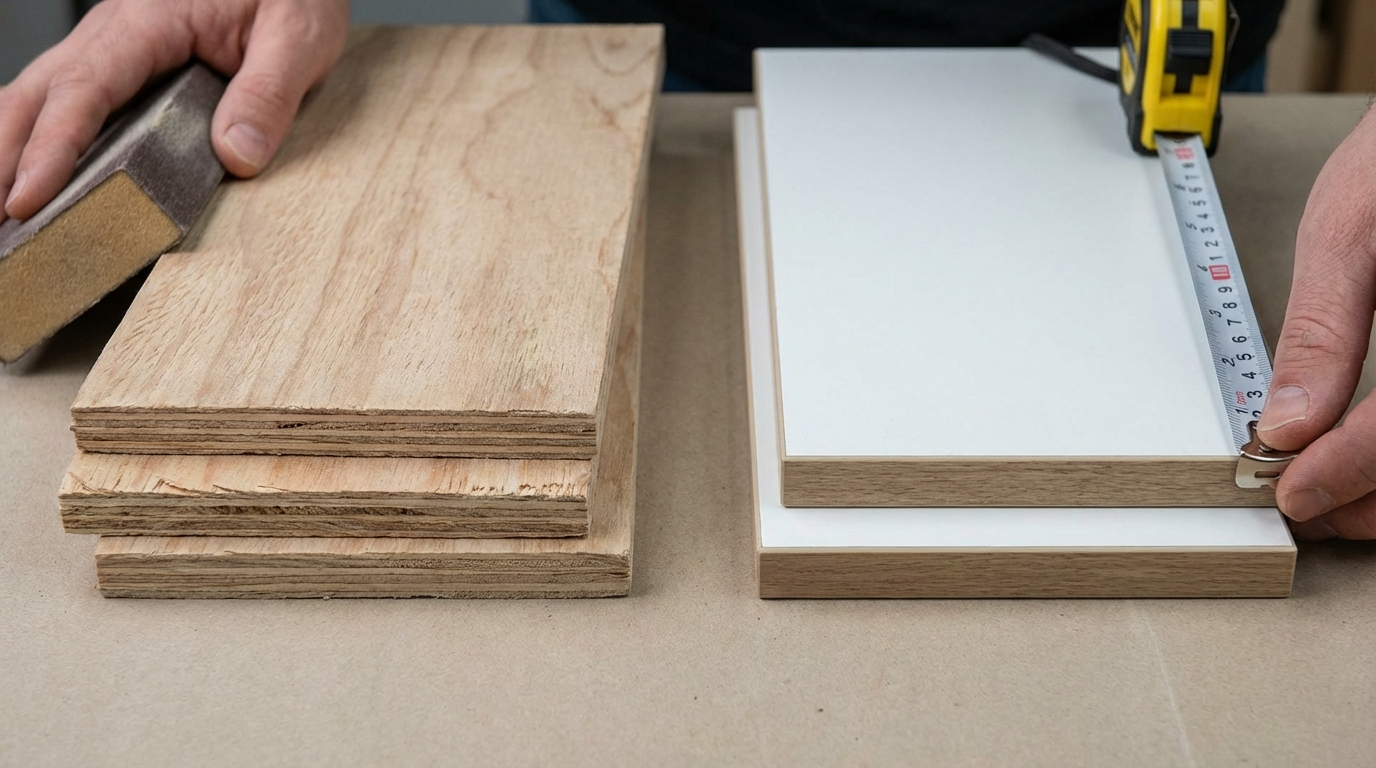
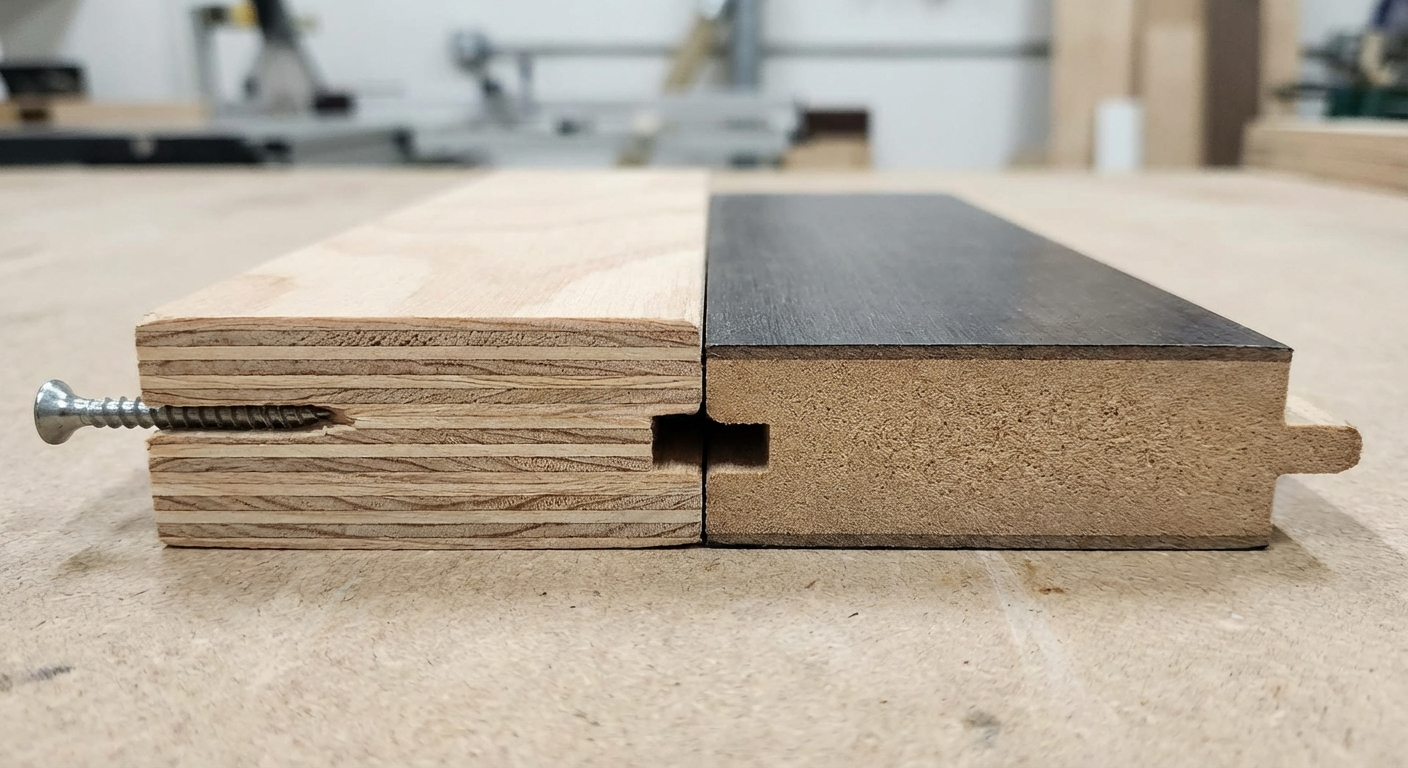
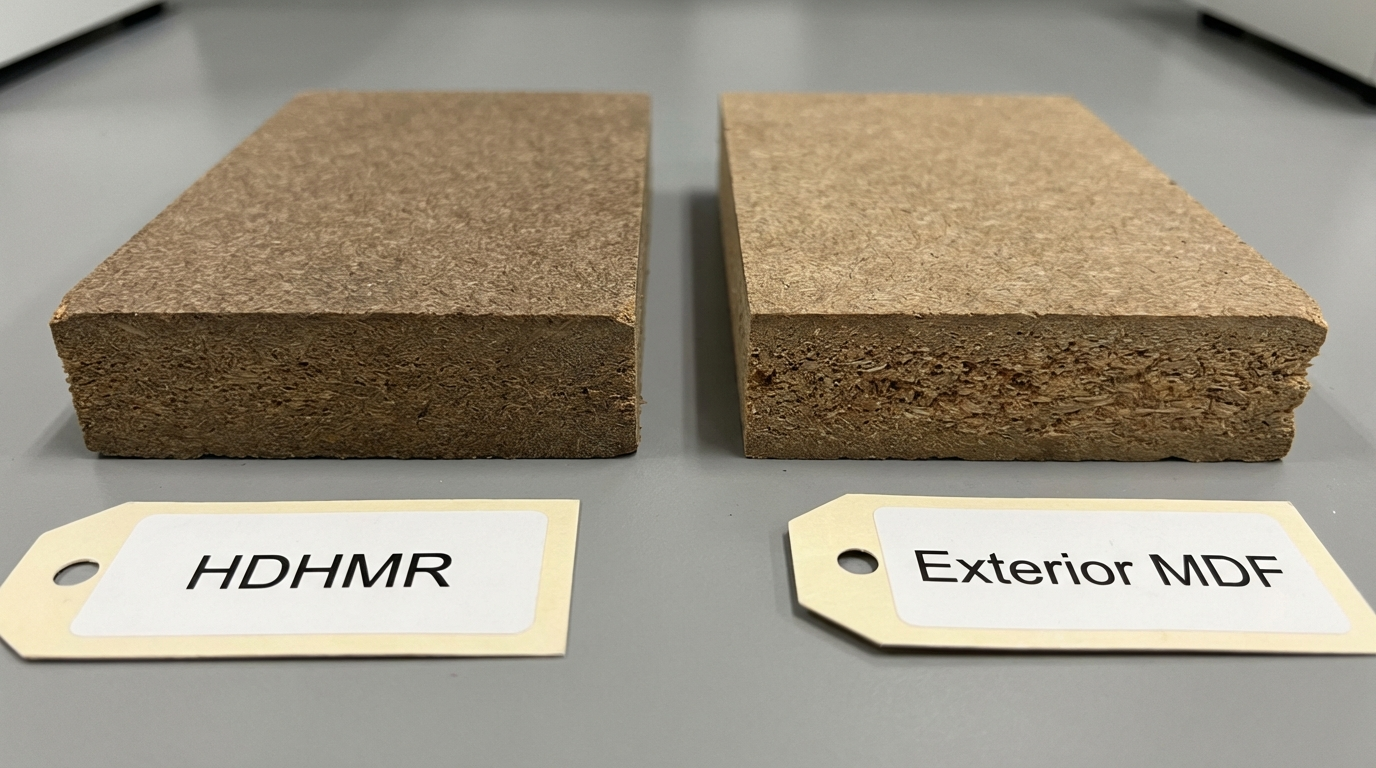
At 18mm thickness, both plywood and HDHMR serve as go-to options for demanding furniture like heavy wardrobes, kitchen cabinets, and bed frames in Indian homes. Plywood starts with thin veneers of wood glued in cross-grain layers, creating a balanced, anisotropic structure that resists warping under load. HDHMR, or High-Density High-Moisture Resistant board, derives from compressed wood fibers or particles bonded with resins under heat and pressure, yielding a uniform, high-density matrix typically around 800-900 kg/m³.
This foundational difference shapes their performance. Plywood's layered veneers excel in spanning gaps and distributing directional stresses, common in modular furniture setups where panels bridge supports. HDHMR's fiber homogeneity suits edge banding and surface applications but can reveal limitations in pure flexural demands. In India's variable climates—from Mumbai's humidity to Delhi's dry heat—these traits influence longevity, with plywood's natural wood gaining from quality glues (like phenolic for BWP grades) and HDHMR relying on synthetic moisture barriers.
Load-Bearing Capacity: Flexural Strength Under Heavy Loads
Strength begins with how each board handles vertical and horizontal loads, critical for heavy furniture where a 18mm shelf might support 100-150 kg of books or utensils over a 600-900mm span.
Plywood's cross-ply construction provides superior modulus of rupture (MOR), often 40-60 MPa for commercial MR or BWR grades, rising to 50-70 MPa in BWP. This allows an 18mm plywood panel to deflect less than 5mm under uniform distributed loads equivalent to 200 kg/m², based on span-to-depth ratios typical in Indian carpentry. Independent tests under ISI IS:303 standards show plywood outperforming particleboards in three-point bending, thanks to continuous veneer fibers bridging micro-cracks.
HDHMR counters with density-driven rigidity, posting MOR values around 30-45 MPa. It shines in short-span, compression-heavy scenarios like cabinet bases but shows 20-30% more deflection in longer spans compared to equivalent plywood. In real-world Indian furniture—think almirahs with full-height doors—plywood edges out for unsupported shelves, reducing sag over 5-10 years.
| Aspect | 18mm Plywood (BWR/BWP) | 18mm HDHMR |
|---|---|---|
| Modulus of Rupture (MPa) | 40-70 | 30-45 |
| Deflection under 150 kg load (900mm span) | <5mm | 6-10mm |
| Sag resistance over time (humid conditions) | High (cross-grain stability) | Moderate (density aids but uniform expansion) |
For contractors building load-heavy lofts or bunk beds, plywood's predictability wins; HDHMR suits lighter modular units where spans stay under 600mm.
Impact of Indian Manufacturing Variations
Local production quirks amplify differences. Northern mills favor poplar-core plywood, lighter but prone to core voids if not ISI-certified, dropping load capacity by 15-20%. Southern teak-faced options hold firmer. HDHMR from Gujarat or Tamil Nadu clusters maintains density consistency via urea-melamine-formaldehyde (UF-MF) resins but varies in fiber quality—cheaper variants underperform in edge loading.
Screw Holding Strength: Fastener Grip for Assembly
Furniture assembly hinges on screw retention, especially for laminated surfaces or hardware like hinges on 18mm boards. Poor hold leads to loose joints in high-use areas like kitchen drawers.
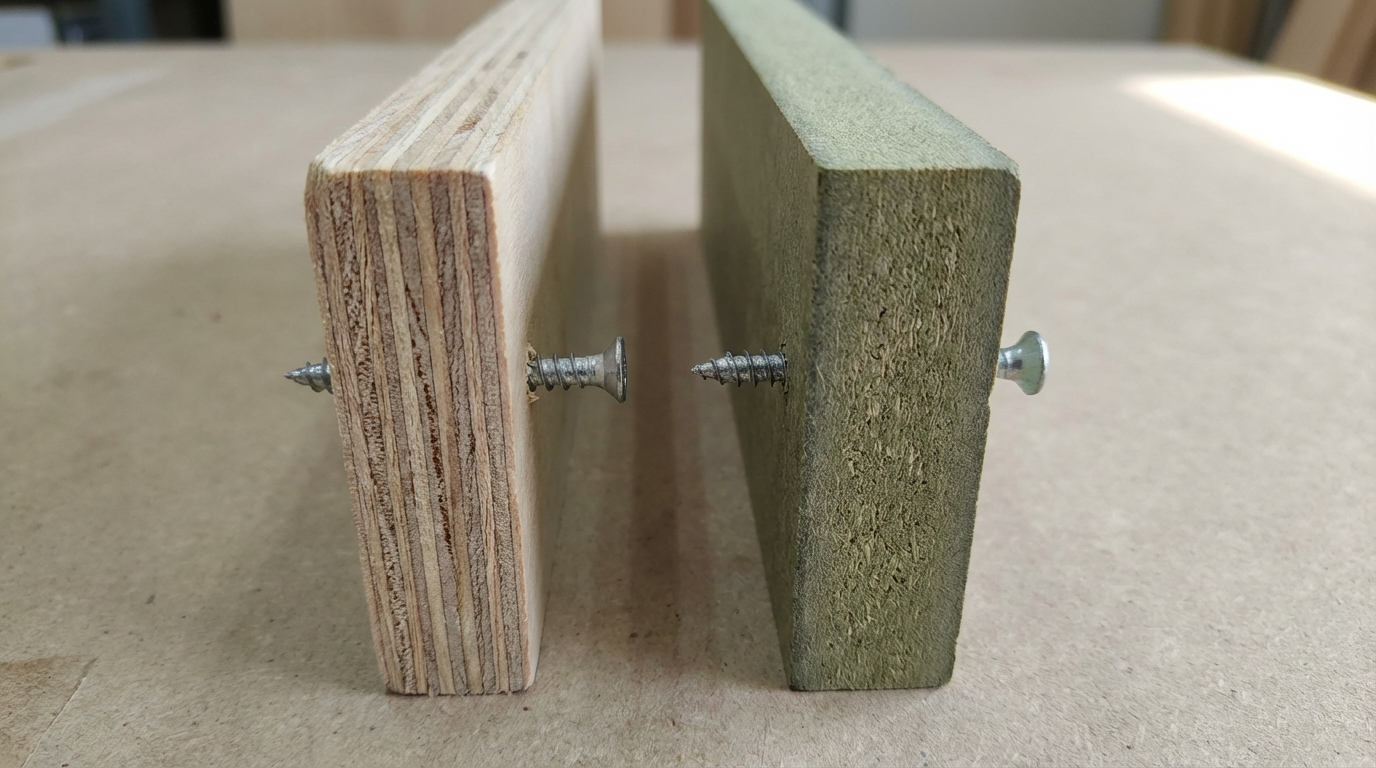
HDHMR dominates here, with its compressed fibers creating a vice-like grip. Pull-out tests reveal 400-600 N for 4mm screws at 25-30mm depth, 25-40% better than standard plywood. This stems from uniform density eliminating soft spots. Ideal for homeowners drilling into pre-laminated HDHMR for adjustable shelves.
Plywood's screw hold depends on face veneers and core: hardwood faces hit 350-500 N, but softwood cores (common in budget MR grades) slip to 250-350 N. Reinforcement with wooden inserts or edge lips boosts it, a staple in Indian workshop practices. BWP plywood resists pull-out best in moist areas like bathrooms.
| Screw Type/Depth | 18mm Plywood | 18mm HDHMR |
|---|---|---|
| 4mm chipboard screw, 25mm embed | 300-500 N | 450-650 N |
| Confirmat screw, 40mm embed | 500-700 N | 600-850 N |
| Repeated loading (100 cycles) | Moderate loosening | Minimal (density advantage) |
Architects specifying for commercial fit-outs favor HDHMR for quick assemblies; carpenters prefer plywood with pilot holes for precision longevity.
Edge and Surface Prep Considerations
HDHMR's smooth extrusion allows direct screwing without pilot holes in many cases, speeding Pune workshop timelines. Plywood demands careful edge sealing to prevent veneer delamination around fasteners, a frequent issue in monsoon-hit regions.
Price Per Square Foot: Cost Drivers and Value Breakdown
Budget drives 70% of Indian buyer decisions, with 18mm boards priced relative to grade, region, and dealer margins. Expect plywood at higher upfront costs due to raw veneer sourcing, while HDHMR leverages agro-waste fibers for affordability.
Commercial MR plywood runs 10-20% above HDHMR equivalents in metro dealer yards, flipping for premium BWP which commands 30-50% premiums over HDHMR. Per sq ft, factor transport: North India sees tighter spreads (HDHMR closer to ply prices), while coastal South adds 15% logistics variance.
Value tilts by use—HDHMR's lower material cost suits volume furniture projects, but plywood's durability offsets over 10-15 years via fewer repairs. Dealers in Delhi-NCR quote based on bulk: 100-sheet lots shave 5-10% off both.
| Grade/Region | 18mm Plywood (₹/sq ft range) | 18mm HDHMR (₹/sq ft range) | Key Cost Driver |
|---|---|---|---|
| Commercial (North India) | 80-110 | 65-90 | Veneer quality |
| BWR/BWP (South India) | 110-150 | 85-115 | Moisture resins |
| Pre-laminated | 120-160 | 95-130 | Finish + density |
Price volatility ties to eucalyptus/poplar harvests and resin chemical prices, which rose sharply in March and April 2026. Homeowners calculate total project cost: HDHMR saves 15-25% on materials for a 10x20 ft wardrobe.
Suitability for Heavy Furniture: Real-World Scenarios
Heavy furniture demands balanced traits. For a 6x4 ft wardrobe with 18mm sides holding 200kg clothes:
- Plywood: Preferred for doors and shelves—minimal sag, stable under torque from repeated opening. BWR grades handle Bangalore humidity without swelling.
- HDHMR: Excels in carcasses and partitions—superior screw hold for L-brackets, lighter weight eases installation in high-rises.
In contractor projects like society interiors, hybrid use prevails: plywood for spans over 750mm, HDHMR elsewhere to cut costs 20% without compromising. Interior designers note plywood's machinability for curved edges in luxury vanities.
Climate and Termite Resistance Nuances
India's termite belts (e.g., Eastern UP) favor treated BWP plywood over HDHMR, which needs added preservatives. Coastal Kerala sees HDHMR's edge in 85% RH, swelling under 10% vs plywood's 12-15% if MR-grade.
Weight, Workability, and Long-Term Durability
At 18mm, plywood weighs 35-45 kg/sq m (poplar core lighter), HDHMR 45-55 kg/sq m—denser mass aids stability but burdens solo handling in Mumbai apartments. Cutting plywood requires sharp blades to avoid tear-out; HDHMR saws cleanly, favored by CNC routers in Hyderabad factories.
Durability tests (accelerated aging) show BWP plywood retaining 85% strength post-50 cycles, HDHMR 75-80%. Surface hardness: HDHMR's 3-4H pencil scale resists scratches better for tabletops.
Decision Framework: Which 18mm Board for Your Project?
Match to priorities:
| Priority | Choose Plywood | Choose HDHMR |
|---|---|---|
| Max load spans | Yes (shelves >800mm) | No |
| Screw-heavy assembly | With inserts | Yes (direct grip) |
| Budget focus | Premium durability | Yes (15-25% savings) |
| Moist areas | BWP grade | Yes (inherent resistance) |
| Weight-sensitive | Yes (lighter cores) | No |
Test samples at dealers—load a cut piece, check screw pull. Verify ISI marks: IS:303 for BWP plywood (IS:710 for marine), IS:16539 for HDHMR proxies. For heavy furniture, plywood often proves stronger overall, but HDHMR optimizes cost-strength for most Indian households.
Buying Tips for 18mm Plywood and HDHMR in India
Approach dealers with measurements: request MOR/screw test data, not just brochures. Bulk buys (10+ sheets) negotiate 8-12% off. Regional shifts: North opts HDHMR for speed, South plywood for tradition. Avoid unbranded—voids plague cheap ply, delams HDHMR.
Future trends: Eco-resins narrowing performance gaps, but layered plywood retains edge for structural demands.
Related guides on PlyPrice
Want Plywood Suggestions?
Share a few details and a PlyPrice specialist will suggest suitable brands and connect you to responsive dealers.