12mm vs 18mm Plywood: Right Thickness for Wardrobe Carcass and Doors
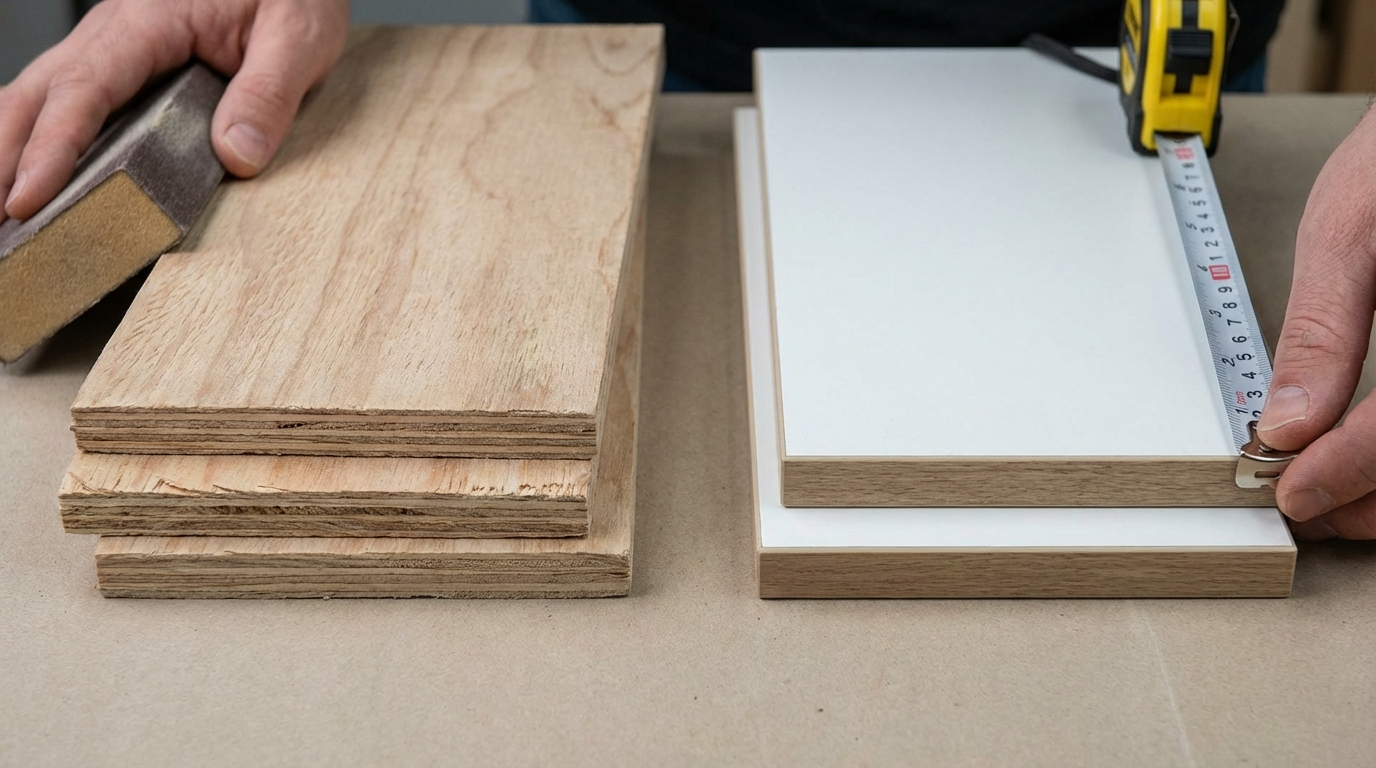
Use 18mm plywood for the wardrobe carcass (sides, top, bottom and partitions) and 12mm for doors, especially sliding shutters, to keep weight down. For shelves, 12mm is enough for spans under 60cm with light loads; go 18mm for longer spans or heavy linen.
Last updated: . Grades and standards checked against current BIS standards.
Direct Recommendation: 12mm or 18mm for Your Wardrobe?
In Indian homes, where wardrobes often bear heavy clothing loads amid fluctuating humidity, the choice between 12mm and 18mm plywood hinges on the component and expected use. For most modular wardrobes, opt for 18mm thickness for the carcass (sides, top, bottom, and partitions) to ensure structural rigidity and minimal deflection over time. Use 12mm for wardrobe doors, especially sliding ones, to keep weight manageable for smooth operation. For shelves, select based on span length and load: 12mm suffices for spans under 60cm with light loads, but upgrade to 18mm for longer spans or heavier items like stacked winter clothes or linens.
This layered approach balances strength, weight, and economy. Homeowners in coastal areas like Mumbai or Chennai should pair thickness with BWR or BWP grades to counter monsoon moisture, while inland users might lean toward MR grade for cost savings without sacrificing basics.
Mechanics of Plywood Strength: Why Thickness Drives Performance
Plywood derives strength from layered veneers glued crosswise, distributing loads evenly unlike solid wood prone to warping. Thickness directly influences bending resistance via the moment of inertia—a physics principle where stiffness scales with the cube of thickness. Doubling thickness from 12mm to 24mm boosts resistance eightfold; here, 18mm (50% thicker than 12mm) reduces deflection by roughly two-thirds under identical loads.

Consider shelf deflection: Under a uniform 20kg load over a 80cm span, 12mm plywood might sag 5-8mm visibly, per engineering approximations from span calculators adapted for Indian hardwood cores. 18mm limits this to under 2mm, imperceptible and lasting decades. Indian construction favors hardwood cores (gurjan, eucalyptus) in these thicknesses, but actual performance varies with glue quality and veneer count—typically 9-13 plies for 12mm, 15+ for 18mm.
Climate amplifies differences: In humid Kerala or Rajasthan's dry heat, thinner sheets absorb swell more, accelerating sag. Architects specify 18mm for high-end projects anticipating 10-15 year lifespans; contractors economize with 12mm for rentals.
Load-Bearing Realities in Indian Households
Typical wardrobe loads: 10-15kg per linear shelf meter for daily clothes, spiking to 30kg+ for storage. Unsupported spans beyond 70cm demand thicker material—12mm handles 15-20kg/m safely up to 50cm, while 18mm supports 40kg+ over 90cm. Dealers often demo by loading samples; insist on this to verify.
Component-Specific Thickness Guide for Wardrobes
Wardrobe design logic prioritizes carcass integrity first, then shelf support, minimizing material where possible. Here's tailored advice rooted in standard Indian modular practices:
Carcass: Sides, Top, Bottom, and Partitions
The frame endures racking forces from door slides and shelf weights. 18mm provides the torsional stiffness absent in 12mm, preventing door misalignment over years. In a 7ft x 4ft wardrobe, carcass plywood comprises 60% of sheet usage—opting for 12mm risks bulging sides under humidity cycles common in Pune apartments.
Shelves: Span, Load, and Support Strategy
Sagging strikes shelves hardest, visible within months if underspecced. Rule: Match thickness to unsupported distance between supports.
| Span Length | Light Load (<15kg/m) | Heavy Load (20kg+/m) | Reasoning |
|---|---|---|---|
| <60cm | 12mm | 12-18mm | Adequate for folded sarees/t-shirts; add lip supports for edge loads. |
| 60-80cm | 18mm | 18mm | Prevents 3-5mm sag under bedsheets/jeans stacks. |
| >80cm | Not recommended | 18mm + mid-support | Requires cleats or extra verticals; 12mm fails here. |
Interior designers in Bangalore often mix: 12mm for upper light shelves, 18mm below.
Doors: Sliding vs Hinged
12mm strikes the balance—light enough for aluminum tracks (reducing glide resistance by 40% vs 18mm), sturdy for laminates. Hinged doors tolerate 12-15mm; avoid 18mm unless oversized (>2.5m height) to prevent sagging bottoms.
Back Panels and Drawers
6-9mm suffices for backs (dust-proofing only); drawers use 12mm sides/bases for 10-15kg capacity.
Grade Pairing: Thickness Alone Isn't Enough
Indian plywood standards (IS 303 for MR, BWR and BWP; IS 710 for marine) define glue bonds: MR for dry interiors, BWR for humid, BWP for boiling resistance. Pair wisely:
- 12mm MR: Budget shelves/drawers in AC bedrooms (Delhi/NCR).
- 12mm BWR: Doors in semi-humid zones (Hyderabad).
- 18mm BWP: Carcass everywhere, especially coastal (Kolkata/Mumbai) to resist 25-30% monsoon swells.
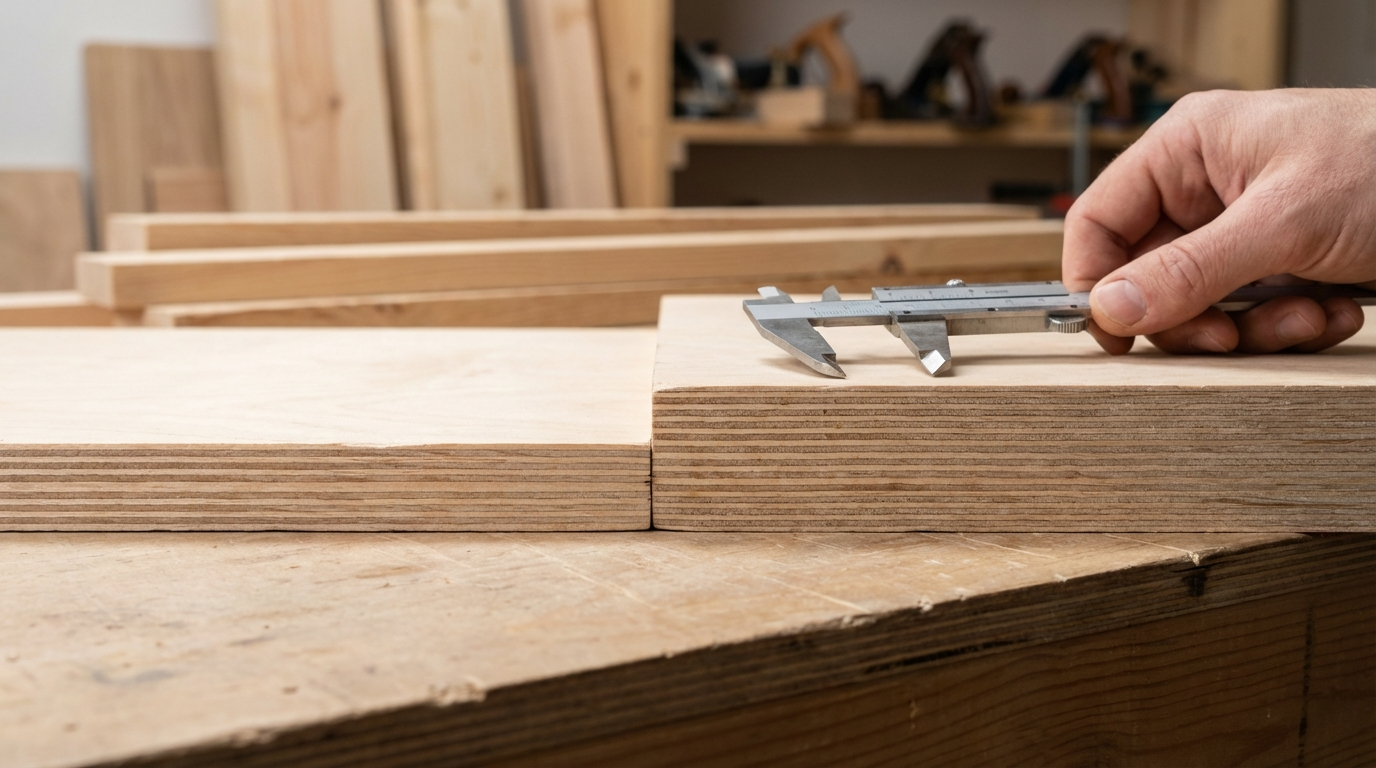
Thickness tolerances: Nominal 12mm measures 11.5-12.2mm; verify with calipers at dealers, as underthickness plagues 20-30% of market stock.
Cost Dynamics: 12mm vs 18mm in Dealer Ecosystems
18mm commands 30-60% higher sheet cost due to more veneers and material volume—expect relative premiums scaling with grade (MR lowest uplift, BWP highest). Regional variance: Metro dealers (₹ per sqft basis) add 10-20% over Tier-2; bulk contractor buys shave 15%.
Long-term math favors 18mm: A 12mm wardrobe sagging in 3-5 years incurs ₹20,000+ rework; 18mm extends to 12+ years, amortizing extra upfront by half. Homeowners weigh this vs resale value; architects bake into quotes.
| Factor | 12mm Impact | 18mm Impact | Buyer Decision |
|---|---|---|---|
| Per Sheet Cost | Baseline | +30-60% | Budget projects: Mix; Premium: Full 18mm. |
| Weight/Transport | Lighter (easier labor) | Heavier (+20-30% shipping) | Site access limited? Favor 12mm where safe. |
| Total Wardrobe Cost | Saves 15-25% | Higher initial | ROI via durability in family homes. |
Durability in India's Varied Climates
Humidity swings (40-90% RH) delaminate thin edges faster; 18mm's denser core resists 2-3x better. Monsoon testing: Submerge samples—BWP holds, MR blisters. Contractors in Goa specify 18mm universally; Delhi users test MR viability.
Practical Buying and Verification Tips
Dealer checks:
- Measure 5+ sheets for uniformity.
- Load test shelf sample (stack 20kg bricks).
- Seek BIS marks (IS 303/710); ignore unbranded "waterproof" claims.
- Negotiate mixes: 18mm carcass, 12mm accents.
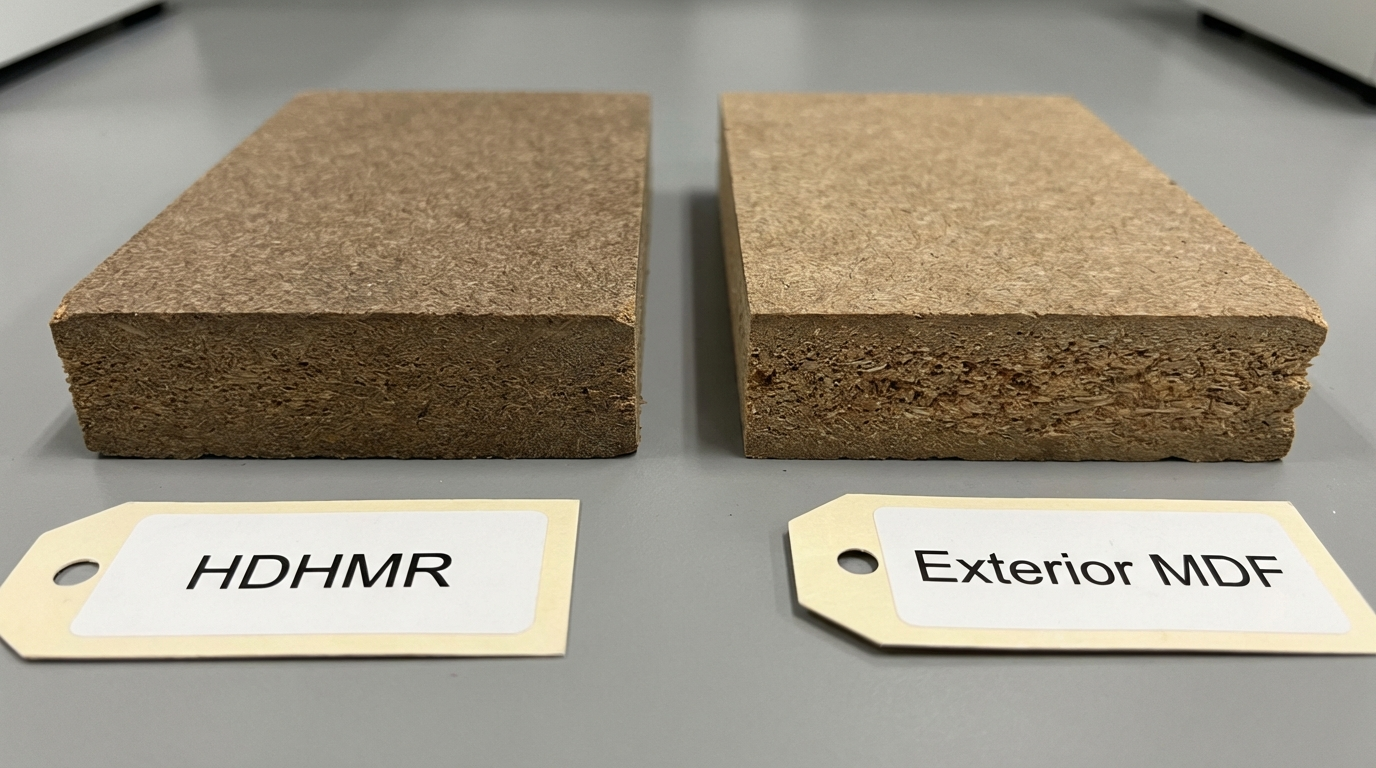
Alternatives: HDHMR boards mimic 18mm strength at 16-18mm thickness, lighter for upmarket fits.
Common Errors Causing Wardrobe Failures
- Inadequate spans: 12mm over 70cm bows under suitcases.
- MR in wet areas: Bedroom ok, attached bath? No.
- Skipping edge banding: Exposes thin plies to swell.
- Overlooking screws: Use 45mm for 18mm into frames.
- Budget overrides structure: All-12mm looks fine initially, fails Year 2.
Pros and Cons: Side-by-Side Comparison
| Aspect | 12mm Plywood | 18mm Plywood |
|---|---|---|
| Strength/Deflection Resistance | Moderate; suits light duties | High; heavy-duty standard |
| Weight | Lower (easier handling) | Higher (sturdier) |
| Cost Efficiency | Better for volume | Premium but longer life |
| Best For | Doors, short shelves, drawers | Carcass, long shelves |
| Humidity Tolerance | With BWR; marginal MR | Superior across grades |
Frequently Asked Questions
Is 12mm plywood strong enough for wardrobe shelves?
Yes, for spans under 60cm and loads below 15kg/m—like daily apparel. Beyond that, sag appears; reinforce or upgrade to 18mm.
Can I use 12mm for the entire wardrobe?
Possible for low-use rentals, but carcass risks racking. Contractors avoid for warranties.
What's better for preventing sagging: thickness or grade?
Thickness governs bending; grade moisture. Prioritize 18mm BWR for most Indian homes.
How much more does 18mm cost than 12mm?
Typically 30-60% per sheet, varying by region and grade. Factor total project savings from durability.
Should wardrobe doors be 12mm or 18mm?
12mm standard for sliders; 18mm only for heavy hinged or wide panels.
Does plywood thickness affect laminate adhesion?
Indirectly—flatter 18mm surfaces bond better, fewer waves post-lamination.
Related guides on PlyPrice
Want Plywood Suggestions?
Share a few details and a PlyPrice specialist will suggest suitable brands and connect you to responsive dealers.