Plywood Price Index India: How Rates Are Tracked Without an Official Index
India has no government-published plywood price index like those for steel or cement, so buyers rely on an informal benchmark built from dealer quotes, manufacturer price announcements and trade platforms. Tracking it by grade and region helps time purchases.
Last updated: . Grades and standards checked against current BIS standards.
Understanding the Plywood Price Index Concept in India
Unlike commodities with formal exchange-traded indices, the Indian plywood market lacks a centralized, government-published price index akin to those for steel or cement. Instead, what functions as a "plywood price index" emerges from aggregated dealer quotes, manufacturer announcements, and trade platforms tracking average wholesale and retail rates across grades and regions. This informal benchmark reflects real-time shifts driven by supply-demand dynamics, helping contractors, architects, and homeowners gauge cost trajectories for projects.
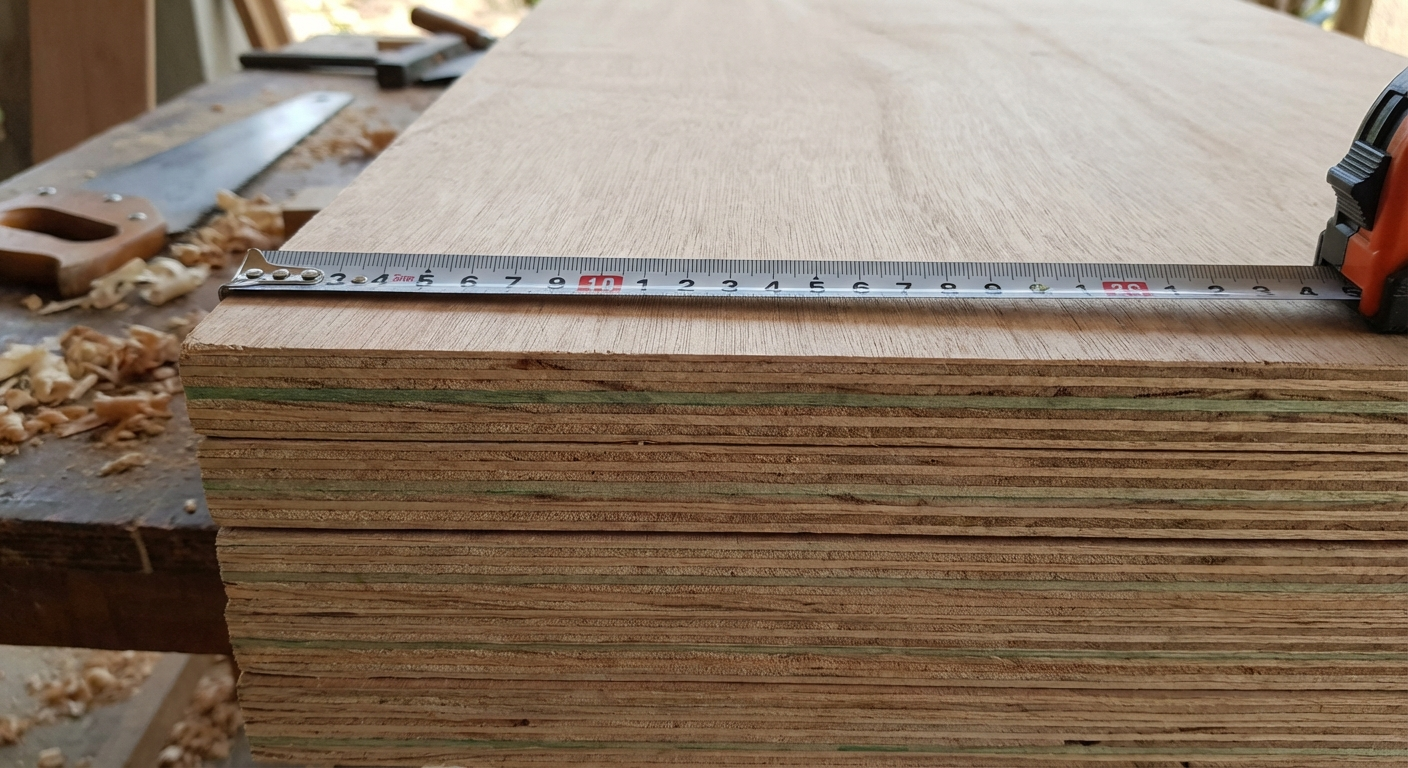
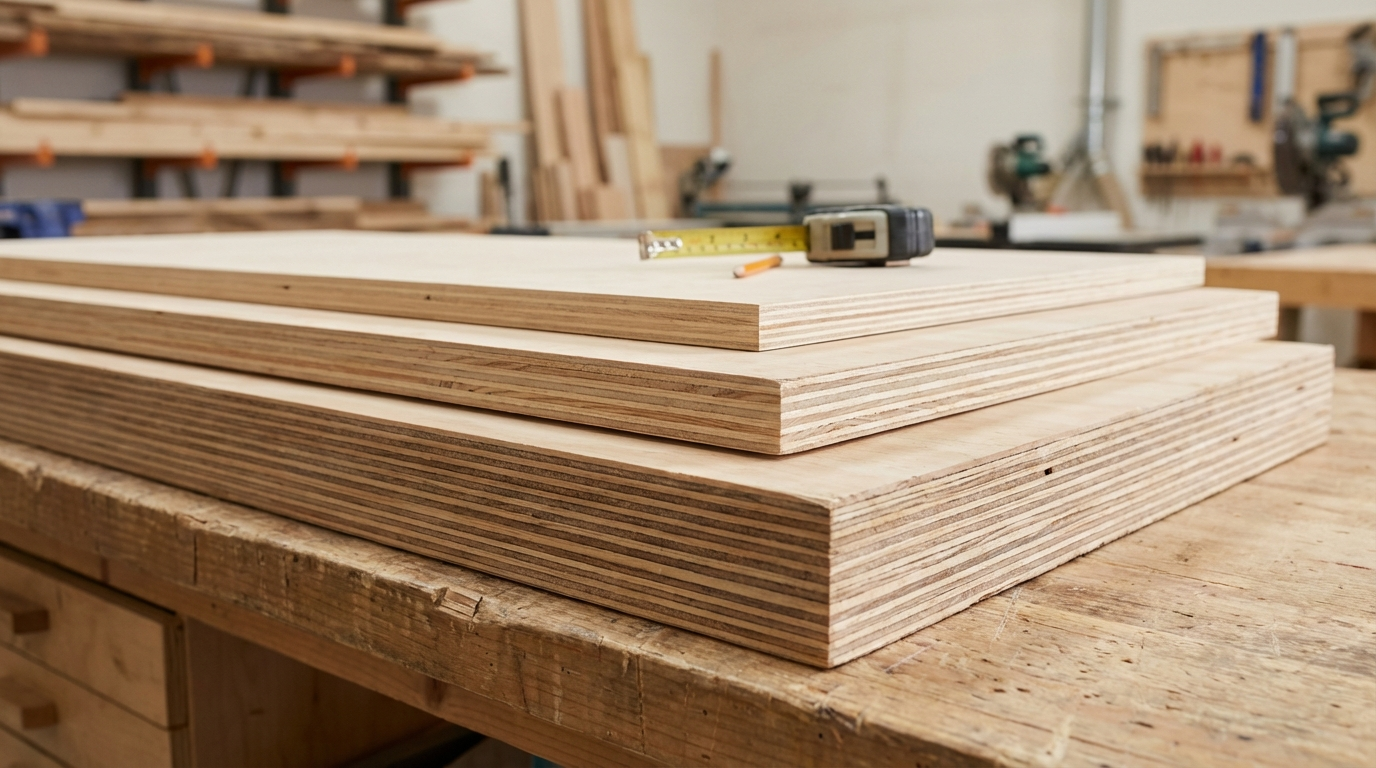
From first principles, plywood pricing stems from its layered construction: thin wood veneers glued cross-grain for stability. Costs cascade from raw timber sourcing to adhesive quality, pressing processes, and distribution logistics. In India, where monsoon humidity demands moisture-resistant variants, grades like MR (moisture resistant), BWR (boiling water resistant), and BWP (boiling waterproof) form the core segments, each carrying distinct price premiums based on glue type and boil-test durability under ISI norms (IS 303 for MR, BWR and BWP grades; IS 710 for marine).
Buyers interpret this "index" through monthly dealer surveys or platforms like IndiaMART, where averages for an 18mm 8x4 ft sheet might serve as a reference point. For instance, baseline MR grade often anchors lower-end quotes, while BWP pulls averages upward during peak construction seasons.
Core Factors Influencing Plywood Prices Across India
Plywood costs do not fluctuate randomly; they respond to interconnected variables rooted in India's resource ecosystem and construction cycles. Timber, comprising 60-70% of production expense, varies with eucalyptus/poplar harvests in Uttar Pradesh and Punjab—regions supplying 40% of veneers. Adhesives, urea-formaldehyde for MR versus phenolic resins for BWP, add 20-30% and spike with petrochemical volatility.
Logistics amplify this: Transport from northern mills to southern markets like Kerala or Tamil Nadu incurs 10-15% surcharges due to fuel and tolls. GST at 18% applies uniformly, but dealer margins (15-25% for retailers) widen retail-wholesale gaps. Demand surges pre-monsoon for waterproof grades push premiums, while off-season slumps (post-Diwali) offer dips.
- Raw Material Volatility: Timber shortages from export bans or crop failures elevate base costs by 5-10% quarterly.
- Energy and Labor: Power-intensive hot-pressing and wage hikes in labor-heavy gluing stages contribute 10-15%.
- Regulatory Norms: ISI compliance and formaldehyde emission testing (E1 or E2 class) for interiors add certification overheads.
- Market Cycles: Urban realty booms in Tier-1 cities (Delhi-NCR, Mumbai) outpace rural steadiness.
These drivers explain why prices rarely stabilize; after resin chemical costs rose sharply in March and April 2026, CenturyPly raised plywood prices by about 7% and Greenply by about 4-5%.
Grade-Specific Price Dynamics
MR grade, suited for dry interiors like wardrobes, relies on cost-effective synthetic resins, positioning it as the entry-level option. BWR upgrades to extended boil resistance for kitchens, incurring higher glue expenses. BWP, mandatory for marine or high-humidity exteriors, demands marine-grade phenolics, justifying 30-50% premiums over MR.
Decision logic for buyers: Homeowners prioritize MR for bedrooms to control budgets, contractors opt BWR/BWP for commercial durability despite upfront costs, as delamination risks amplify long-term expenses.
Typical Price Ranges by Plywood Grade and Thickness
Market data aggregates reveal broad ranges per square foot (sq ft), assuming standard 8x4 ft sheets (32 sq ft). These are indicative dealer averages; actual quotes demand site-specific verification. Thicker sheets command linear premiums due to veneer volume.
| Grade | Use Case | 12mm Range (₹/sq ft) | 18mm Range (₹/sq ft) | Key Cost Driver |
|---|---|---|---|---|
| MR | Dry interiors, furniture | 50-90 | 65-110 | Basic urea resin |
| BWR | Kitchens, bathrooms | 75-115 | 90-140 | Improved boil resistance |
| BWP | Marine, exteriors | 95-150 | 115-180 | Phenolic waterproofing |
Relative comparisons: BWP costs 1.5-2x MR at equivalent thickness, reflecting resin superiority. For a 6x3 ft sheet (18 sq ft), multiply accordingly—e.g., 18mm MR might total 1,200-2,000 ₹, scaling with grade.
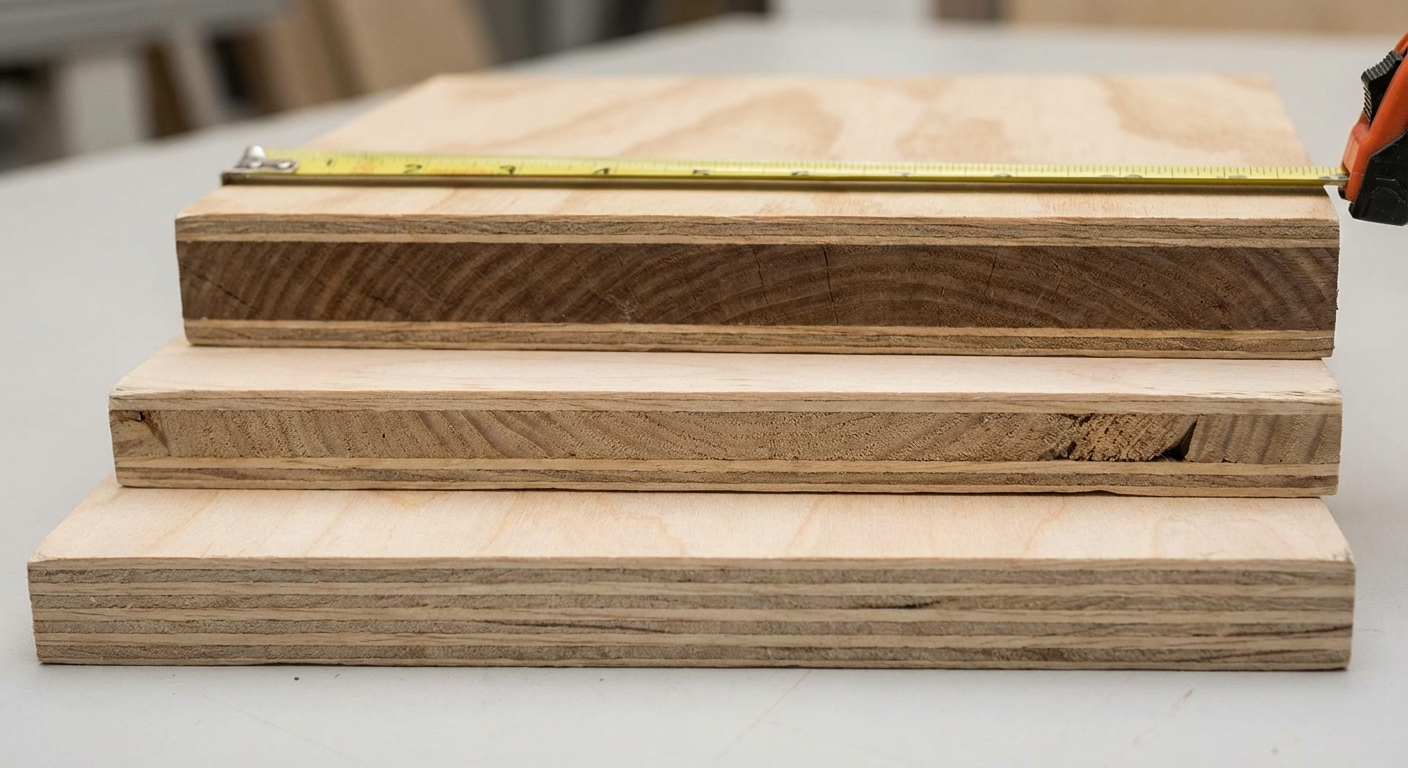
Architects note: 16-19mm suits structural loads in cabinets; thinner 6-9mm for partitions. Non-standard sizes (7x4 ft) adjust 5-10% lower per sheet.
Regional Variations in Plywood Pricing
India's federal market structure breeds disparities: Northern hubs (Delhi-NCR, Punjab) benefit from mill proximity, undercutting southern retail by 10-20%. Mumbai's port logistics inflate imports, while Bangalore's IT-driven interiors demand sustains highs.
| Region/City | MR 18mm Avg (₹/sq ft) | BWP 18mm Avg (₹/sq ft) | Influencer |
|---|---|---|---|
| North (Delhi, UP) | 70-100 | 120-160 | Mill access |
| West (Mumbai, Gujarat) | 80-110 | 130-170 | Transport premiums |
| South (Bangalore, Chennai) | 75-105 | 125-165 | Humidity demand |
| East (Kolkata) | 65-95 | 115-155 | Lower demand |
Contractor insight: Bulk hauls from Indore mills to Kerala save 15%, but fuel volatility erodes gains. Homeowners in coastal Tamil Nadu favor BWP despite uplifts, as MR fails in 70% humidity.
Price Trends and Future Outlook
In 2026, resin chemical costs (phenol, formaldehyde) rose sharply in March and April, and CenturyPly raised plywood prices by about 7% in April and Greenply by about 4-5%. Q4 stabilization hints at 3-5% moderation if harvests rebound, though urban infra (₹10 lakh crore budget) sustains upward pressure.
Forecast reasoning: Supply chains shorten via poplar farms in Bihar; however, export duties on wood chips cap domestic availability. Dealers anticipate 5-7% hikes in waterproof grades amid El Niño risks elevating monsoon disruptions.
Historical pattern: Post-2023 dips, 2024-25 recovery mirrors construction CAGR of 7-8%. Track via trade portals for weekly dealer polls, as no formal index exists.
Seasonal Fluctuations Explained
Pre-monsoon (March-May): 10-15% spikes for BWR/BWP stockpiling. Festive (Oct-Nov): Demand peaks inflate 5-8%. Winter (Dec-Feb): 5-10% softening aids negotiations.
Interpreting Price Data for Informed Decisions
To "read" the index, normalize to ₹/sq ft for apples-to-apples: Divide sheet quotes by area (e.g., 8x4=32 sq ft). Cross-check wholesale (10-20% below retail) via mill-direct inquiries. Verify against grade specs—IS-marked sheets justify 15-20% over unbranded.
Buyer scenarios:
- Homeowners: Benchmark local MR quotes; add 20% buffer for wastage/labor.
- Contractors: Lock bulk rates quarterly; favor BWR for multi-unit ROI.
- Architects/Designers: Spec HDHMR alternatives if budget-constrained, as they rival BWR at lower weights.
Avoid pitfalls: Ignore "fire-sale" lows signaling sub-grade veneers; test screw-hold and delam resistance on-site.
Comparative Analysis: Plywood vs Alternatives
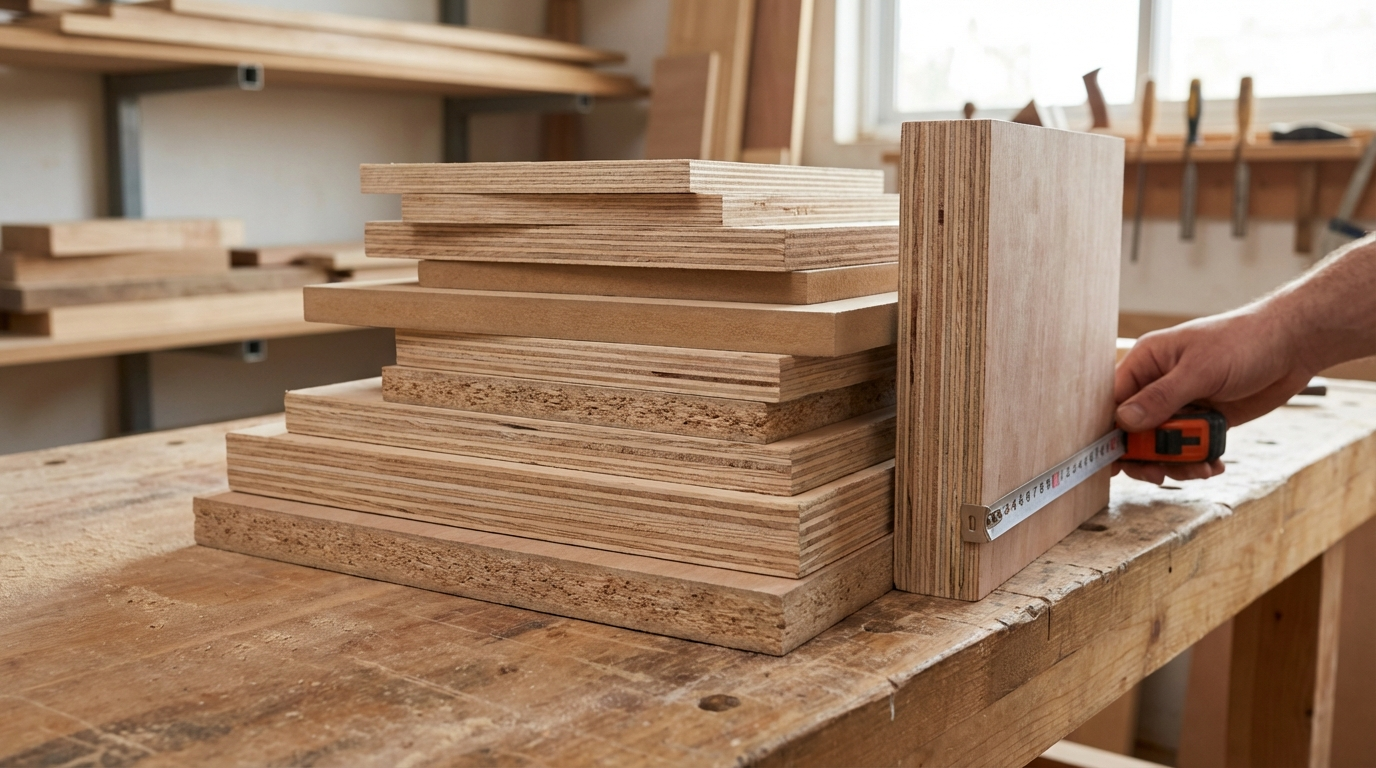
Engineered options like MDF/HDHMR undercut plywood by 20-30% for non-structural uses but falter in load-bearing. Blockboard offers stability at MR parity but absorbs moisture faster.
| Material | 18mm Cost Relative to MR Plywood | Strengths | Limitations |
|---|---|---|---|
| Plywood (MR) | Baseline (1x) | Versatile, screw-retention | Humidity-sensitive |
| BWR/BWP Plywood | 1.3-1.8x | Durability in wet areas | Higher weight/cost |
| MDF/HDHMR | 0.7-0.9x | Smooth finish, machinable | Poor strength, swelling |
| Blockboard | 1.0-1.2x | Core stability | Warping risk |
Logic: Plywood dominates 70% market share for justified premiums in high-stress applications.
Practical Guide to Tracking and Negotiating Prices
Leverage dealer networks: North India portals like PlyReporter aggregate polls; South via Kerala associations. Quote multiple suppliers—volume discounts hit 10-15% over 100 sheets.
Verification steps:
- Confirm ISI grade via stamp authenticity.
- Request boil-test reports for BWP claims.
- Factor delivery (5-8% in metros).
- Monitor fuel indices for logistics hedges.
For new projects, assume 5% escalation buffer; coastal buyers allocate 20% extra for BWP mandates.
This framework equips stakeholders to navigate India's fragmented plywood pricing landscape, prioritizing value over nominal lows.
Related guides on PlyPrice
Want Plywood Suggestions?
Share a few details and a PlyPrice specialist will suggest suitable brands and connect you to responsive dealers.