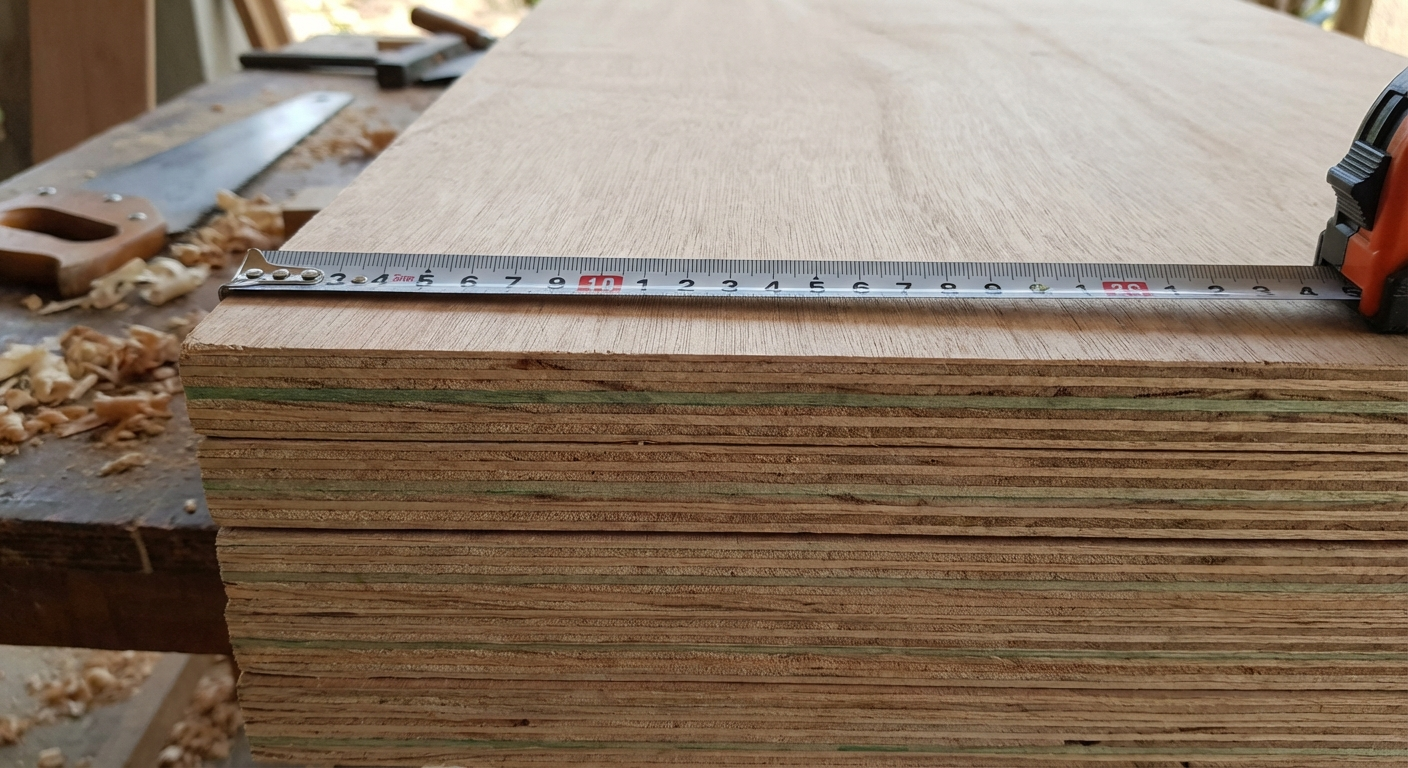
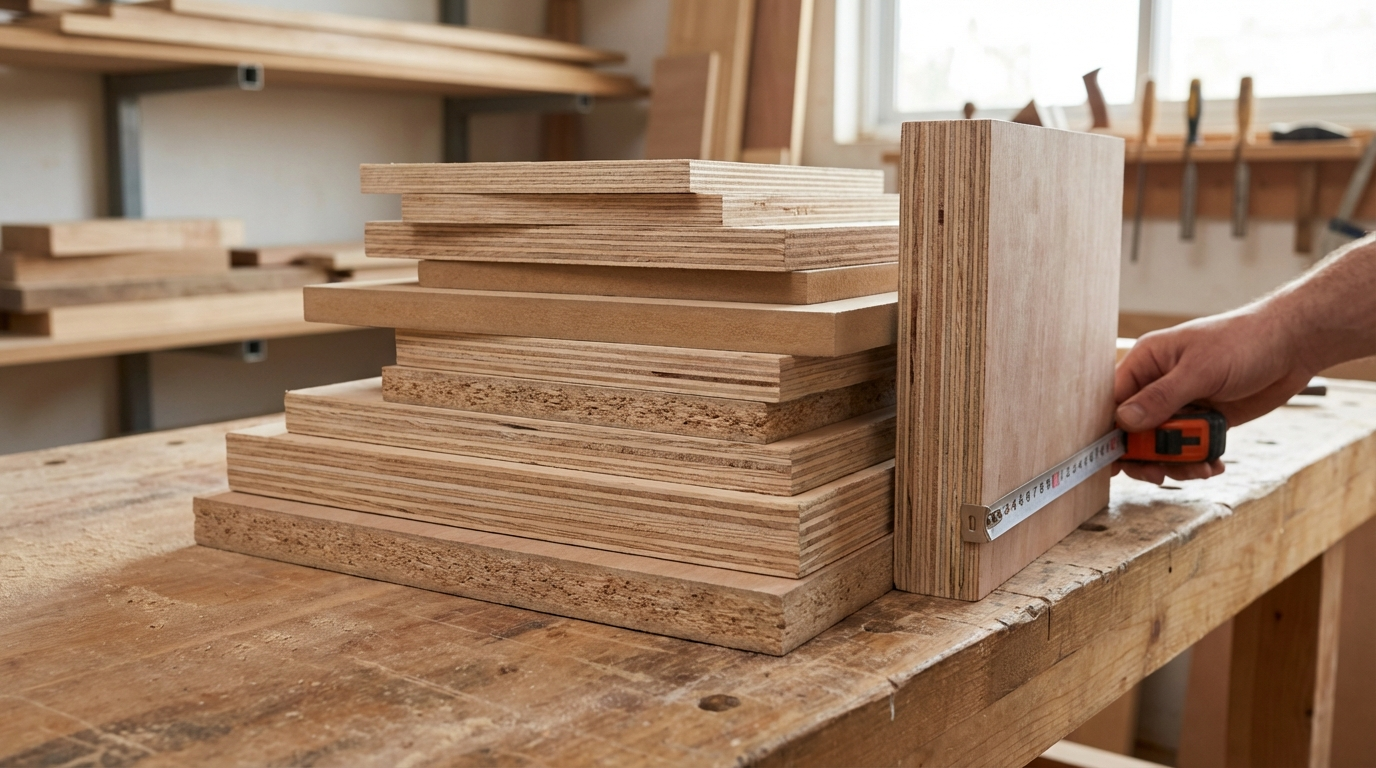
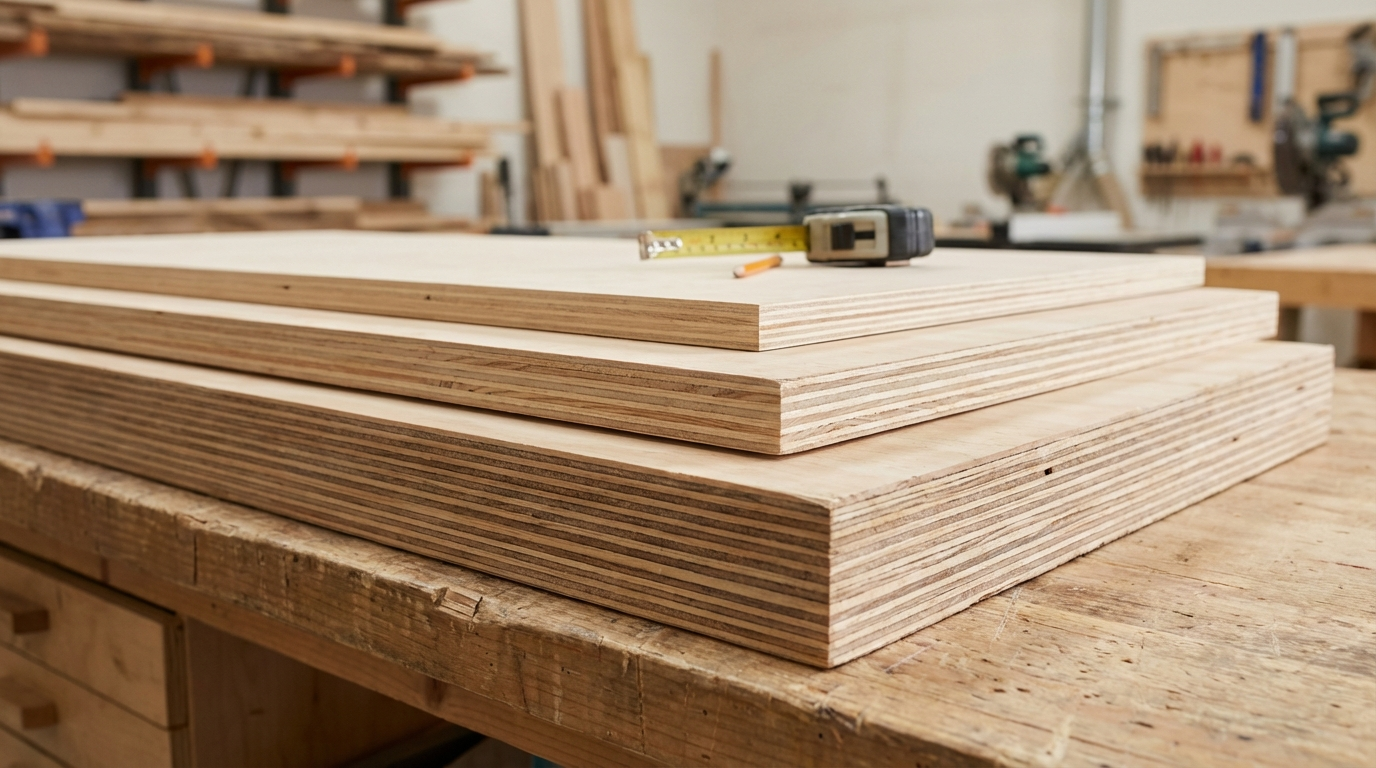
Commercial Plywood Price in India: What It Is, MR Grade Rates and Uses
Commercial plywood is MR grade plywood made to IS 303 with urea-formaldehyde glue, the low-cost choice for wardrobes, partitions and furniture in dry rooms. It handles moderate humidity but delaminates with prolonged water exposure, and price rises with thickness.
Last updated: . Grades and standards checked against current BIS standards.
What Defines Commercial Plywood in the Indian Market
Commercial plywood, often synonymous with MR (moisture-resistant) grade under Indian standards, serves as the baseline option for non-structural interior applications. Constructed from multiple thin wood veneers glued together with urea-formaldehyde resin, it meets IS:303 specifications for general-purpose use. This grade withstands moderate humidity but delaminates under prolonged water exposure, making it suitable for wardrobes, partitions, and furniture in dry rooms.
From a first-principles view, its affordability stems from using poplar or eucalyptus cores—fast-growing species abundant in northern India—combined with simpler adhesives versus phenolic resins in higher grades. Buyers, including small contractors and budget-conscious homeowners, prioritize it for cost-sensitive projects where exposure to moisture is minimal. Architects specify it for temporary formwork or backing sheets, while interior designers layer laminates over it to enhance aesthetics.
Core Factors Influencing Commercial Plywood Pricing
Prices fluctuate due to interconnected variables rooted in supply chain dynamics and local economics. Timber constitutes 60-70% of costs; shortages from monsoon disruptions or export demands push rates up. Thicker sheets require more veneers and glue, scaling linearly with thickness.
Brand positioning adds premiums: Local mills offer unbranded sheets 20-30% cheaper than ISI-certified national players, but with inconsistent quality. Dealer networks in tier-2 cities apply 10-15% margins, higher in metros due to logistics. GST at 18% applies uniformly, yet transport from production hubs (Uttar Pradesh, Gujarat) inflates southern prices by 15-25%.
- Raw Material Volatility: Eucalyptus prices swing with rainfall patterns; a poor monsoon elevates costs by 10-15% nationwide.
- Thickness and Size: Standard 8x4 ft sheets dominate; custom cuts add 5-10% fabrication fees.
- Face Veneer Quality: Smooth, uniform faces (1st grade) cost more than knotty ones.
- Market Demand: Peak construction seasons (post-monsoon) see 8-12% hikes.
- Certifications: ISI marks signal compliance but raise prices marginally through testing overheads.
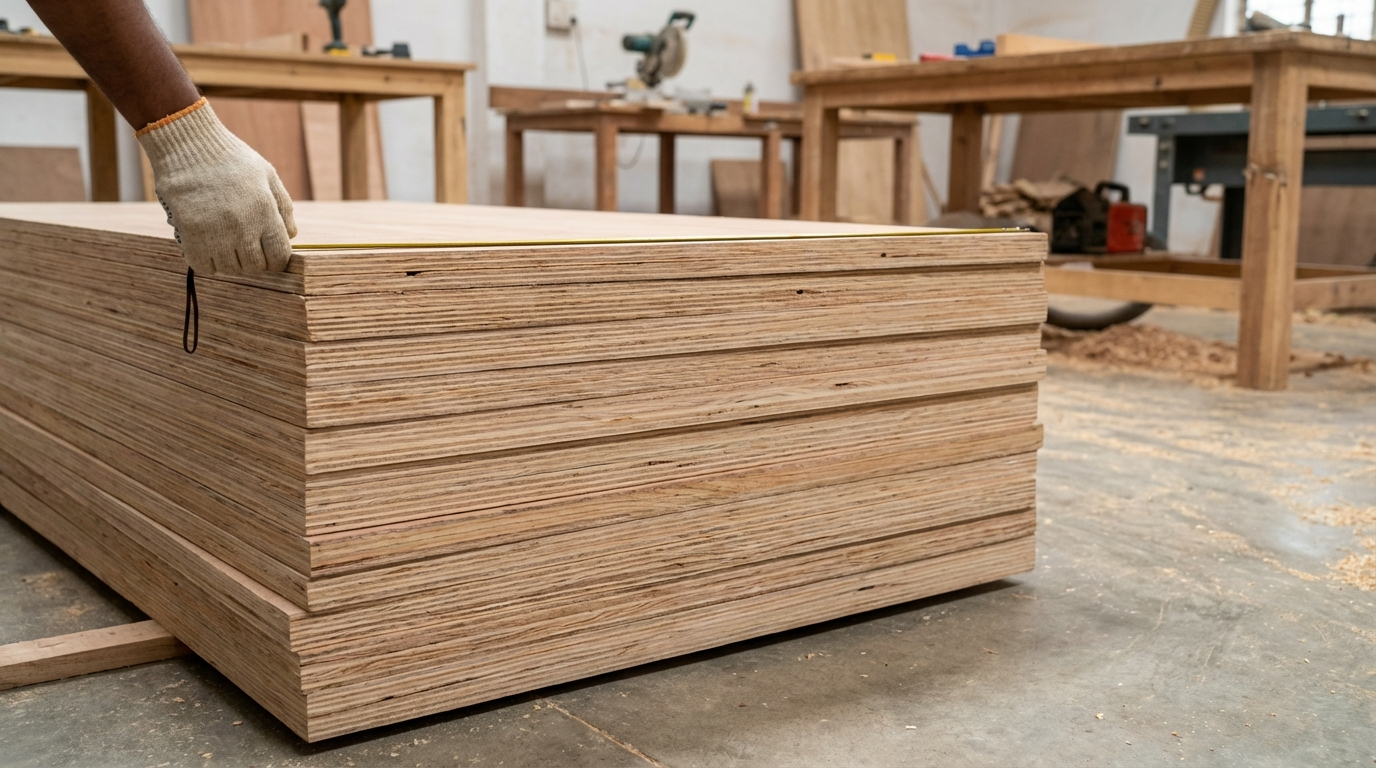
Contractors hedge by bulk-buying from wholesalers, securing 5-10% discounts, while homeowners pay retail premiums at hardware stores.
Impact of Economic and Seasonal Cycles
India's plywood market ties to real estate cycles: Residential booms in Tier-1 cities spike demand, while industrial slowdowns stabilize prices. Fuel costs affect trucking from mills, adding ₹2-5 per sq ft in distant regions. Environmental norms limiting log felling indirectly favor imported alternatives, though domestic production dominates 90% of supply.
Typical Price Ranges by Thickness and Specifications
Expect ranges per square foot for 8x4 ft sheets, exclusive of taxes and delivery. These are indicative ranges across mid-tier brands; unbranded options sit 15-20% lower, premiums 20-30% higher.
| Thickness | Common Use | Price Range per Sq Ft (₹) | Full Sheet Estimate (₹, 32 sq ft) |
|---|---|---|---|
| 6 mm | Partitions, shelves | 30-45 | 1,000-1,500 |
| 9 mm | Door panels, lightweight furniture | 40-55 | 1,300-1,800 |
| 12 mm | Wardrobes, cabinets | 50-70 | 1,600-2,300 |
| 16-18 mm | Heavy furniture, flooring base | 65-95 | 2,100-3,100 |
| 19 mm+ | Structural backups | 75-110 | 2,400-3,600 |
Notes: Prices assume Gurjan or poplar face veneers. Calibrated (sanded) edges add ₹5-10 per sq ft. Bulk orders (50+ sheets) yield 10% savings.
Regional Price Variations: North vs South vs East India
Production clusters in the Gangetic plains keep northern prices baseline. Southern humidity demands better sealing, inflating retail. Eastern markets face import dependencies.
| Region | 12 mm Range (₹/sq ft) | 18 mm Range (₹/sq ft) | Key Drivers |
|---|---|---|---|
| North (Delhi, UP) | 45-60 | 60-80 | Proximity to mills; wholesale hubs |
| West (Mumbai, Gujarat) | 55-70 | 75-95 | Urban demand; port logistics |
| South (Bangalore, Chennai) | 60-80 | 85-110 | Transport premiums; humidity adjustments |
| East (Kolkata, Odisha) | 50-70 | 70-95 | Monsoon volatility; smaller dealers |
Homeowners in Bangalore might allocate 20% more than Delhi counterparts for equivalent specs due to trucking from 1,500+ km away. Contractors source locally to minimize this.
Cost Comparisons: Commercial Plywood Against Alternatives
Commercial plywood undercuts moisture-resistant options but limits versatility. BWR (IS:710) resists boiling water for semi-wet areas like kitchens, costing 25-40% more due to phenolic glues. BWP marine grade doubles that for bathrooms, justified only in high-exposure zones.
| Type | 12 mm (₹/sq ft) | 18 mm (₹/sq ft) | Best For | Not Ideal For |
|---|---|---|---|---|
| Commercial (MR) | 50-70 | 65-95 | Dry interiors | Wet areas |
| BWR | 70-95 | 85-120 | Kitchens, laundry | Submersion |
| BWP Marine | 100-140 | 120-170 | Bathrooms, outdoors | Dry bulk use |
| MDF/HDHMR | 40-60 | N/A | Flush doors | Load-bearing |
Decision logic: A contractor renovating 10 wardrobes saves ₹20,000 opting commercial over BWR, but risks callbacks in humid Bihar summers. Designers mix: Commercial core with BWR edges.
Brand vs Generic: Value Trade-offs
National brands ensure consistent density (550-650 kg/cum) and termite treatment, warrantied 5-10 years, at 15-25% premium. Generics suffice for painted applications but vary in glue boil resistance. Test via screw hold: Commercial should grip 50-75 kg per point.
Calculating Total Project Costs Step-by-Step
Estimate surface area, add 10-15% wastage. For a 200 sq ft wardrobe: 12 mm commercial at ₹60/sq ft totals ₹13,200 material, plus ₹5,000 labor/hardware.
- Measure Precisely: Length x height x sides; deduct openings.
- Select Thickness: 12 mm for panels, 18 mm for shelves (spans >60 cm).
- Factor Add-ons: Laminates (₹30-50/sq ft), edges (₹10/linear ft).
- Negotiate Bulk: Dealers discount 50-sheet lots by ₹5-8/sq ft.
- Budget Buffer: 10% for fluctuations.
Architects use software for optimization; homeowners sketch with graph paper. Total outlay for a 1,000 sq ft flat interiors: ₹2-4 lakhs in commercial plywood alone.
Practical Buying Strategies for Different Buyers
For Homeowners
Visit 3-5 dealers; demand ISI test reports. Avoid godown-stored sheets (warping risk). Post-monsoon buys lock lower rates.
For Contractors
Build supplier relationships for credit (30-60 days). Mix grades: Commercial bulk, BWR accents. Track via apps for price alerts.
For Architects/Designers
Specify veneer count (7-13 plies for 18 mm) in BOQs. Recommend hybrids for cost-moisture balance.
Red flags: Peeling edges, hollow knocks, prices <₹40/sq ft (likely softwood fillers).
Anticipating Price Movements in Coming Years
Sustainable sourcing (FSC alternatives) and automation may stabilize costs, but urbanization sustains demand pressure. Eucalyptus plantations expand in Andhra, potentially easing 5-10% hikes. Watch timber and resin chemical prices; rises compound at retail.
Buyers plan ahead: Stockpile during dips, diversify to blockboard for non-plywood needs.
Common Buyer Questions About Commercial Plywood
Is commercial plywood termite-proof? Most include synthetic treatments; verify via lab reports. Natural repellents add minor costs.
Delivery and storage tips? Stack flat, elevate off ground; use within 3 months.
Recycling value? Minimal; focus on durability to avoid replacements.
This framework equips decisions grounded in India's diverse construction landscape, balancing economy with performance.
Related guides on PlyPrice
Want Plywood Suggestions?
Share a few details and a PlyPrice specialist will suggest suitable brands and connect you to responsive dealers.