25mm BWP Plywood Price in India: Rates, Uses and Buying Checks
25mm BWP plywood is a 13-15 ply, phenolic-bonded board built to survive more than 72 hours of boiling, so it costs more than 19mm BWP and is used for heavy-duty structural and wet-area work. Prices vary by brand, core and market.
Last updated: . Grades and standards checked against current BIS standards.
What Makes 25mm BWP Plywood a Premium Structural Choice
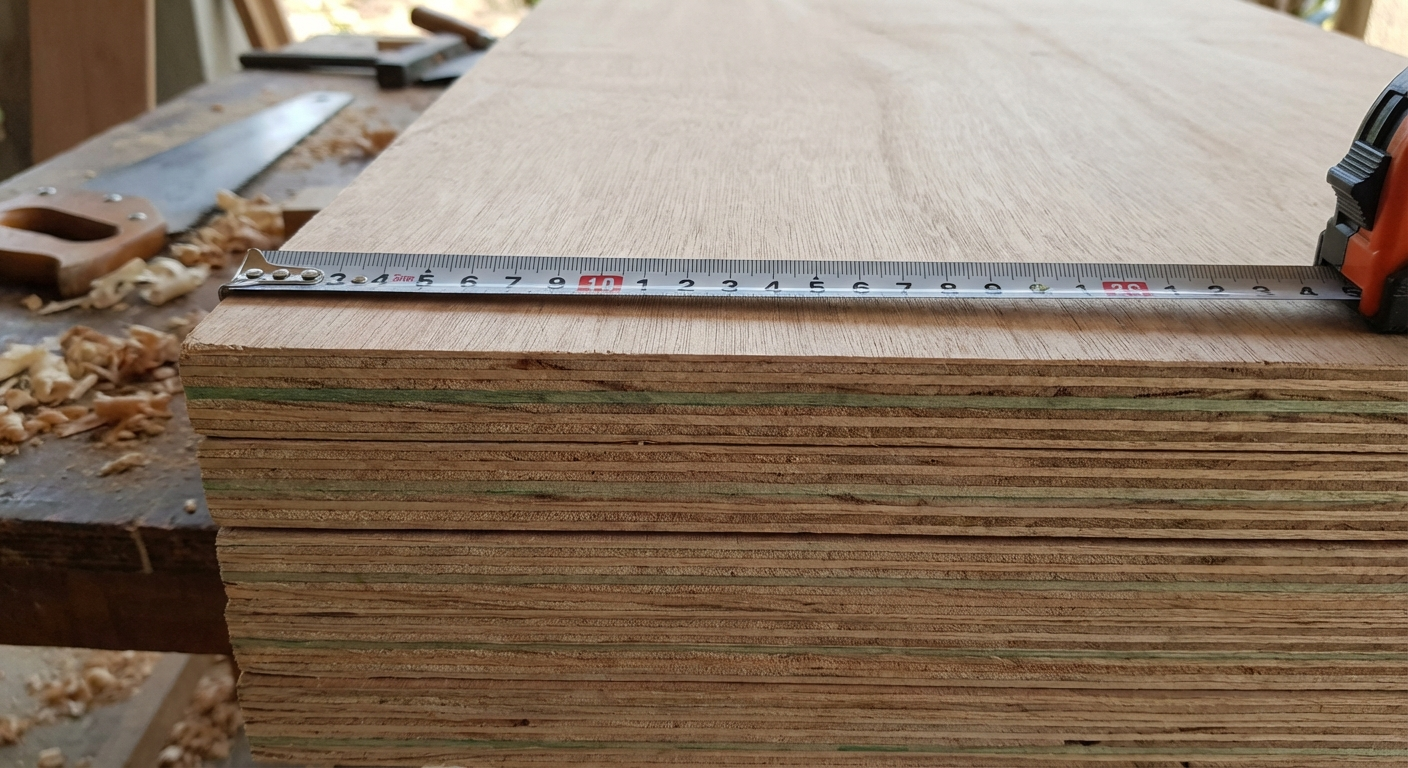
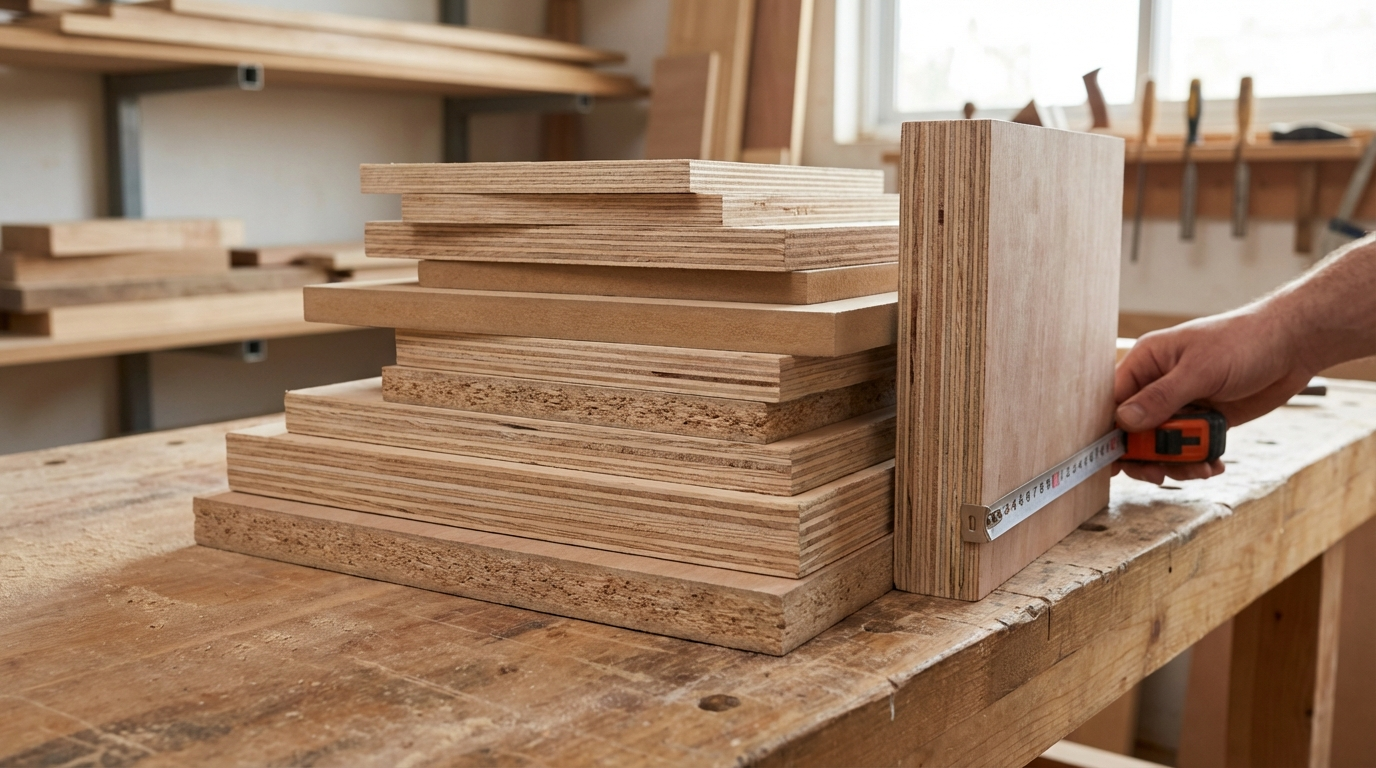
Boiling Water Proof (BWP) plywood at 25mm thickness represents the upper tier of engineered wood products designed for demanding structural roles in India's variable climate. Unlike thinner sheets used primarily for furniture or partitions, 25mm BWP plywood derives its strength from a higher number of cross-laminated veneers—typically 13 to 15 plies—bonded with phenolic resins that endure boiling water tests for over 72 hours without delamination, as per IS:710 standards. This construction ensures dimensional stability under prolonged moisture exposure, a critical attribute in monsoon-prone regions from Kerala to Mumbai.
From a materials science perspective, the core consists of dense hardwoods like gurjan or eucalyptus, selected for their high compressive strength and low swelling coefficient. Face veneers are often finer-grained okoume or hardwood for smooth finishing. This setup positions 25mm BWP plywood not as a general-purpose sheet but as a load-bearing element, capable of supporting distributed loads exceeding 500 kg per square meter in flooring applications without excessive deflection.
Buyers—ranging from civil contractors handling high-rise formwork to architects specifying industrial sheds—value its predictability. In India's construction ecosystem, where site storage often occurs under open skies, inferior grades fail via core rot or warping, leading to rework costs that can inflate project budgets by 10-15%.
Core Drivers Behind 25mm BWP Plywood Pricing Variability
Pricing for 25mm BWP plywood hinges on inherent production economics rather than arbitrary markups. Thicker sheets demand more raw veneer volume; a standard 8x4 foot panel requires roughly 2.5 times the wood and resin compared to an 18mm equivalent, directly scaling material costs. Resin quality is pivotal—synthetic phenolic formulations meeting IS:710 must resist hydrolysis in humid environments, adding 20-30% to glue expenses over urea-formaldehyde used in MR grades.
Supply chain dynamics amplify this: Timber sourcing from Northeast India or imported gurjan faces logistics premiums, especially post-2023 export restrictions on softwoods. Manufacturing involves high-pressure hot presses operating at 140-150°C, with energy costs fluctuating with diesel prices for captive power in plywood hubs like Kerala and Assam.
Market positioning introduces further variance. Branded options from established mills incorporate extended warranties (10-20 years) and third-party testing for formaldehyde emissions (E1/E0 levels), justifying premiums. Unbranded or regional variants cut corners on glue penetration or ply count, risking early failure in cyclic wetting-drying scenarios common in Indian sites.
| Cost Driver | Impact on Price | India-Specific Context |
|---|---|---|
| Core Wood Density | High (gurjan/eucalyptus) | Coastal sourcing hikes freight to inland markets |
| Resin Type & Cycle | Phenolic BWP | Monsoon-tested; 2-3x MR glue cost |
| Ply Count & Calibration | 13-15 plies, ±0.5mm tolerance | Essential for shuttering reuse in mass housing |
| Brand Certification | ISI Mark, Warranty | Dealer preference in competitive bids |
| Volume Procurement | Dealer bulk vs Retail | Contractors save 15-25% on full truckloads |
Current Price Ranges for 25mm BWP Plywood Across Key Indian Markets
Plywood prices rose in April 2026 after resin chemical costs climbed sharply, with CenturyPly raising prices by about 7% and Greenply by about 4-5%. Expect retail rates per square foot to cluster in the upper mid-range for branded IS:710 certified sheets, with dealer quotes offering discounts for bulk. These are indicative ranges based on market scans from major hubs; actual quotes demand site visits or verified dealer lists, as GST (18%) and transport add 10-20%.
Regional disparities stem from production proximity: Southern hubs like Kerala benefit from local veneer mills, undercutting northern imports. Metro surcharges cover warehousing and quick delivery demands from high-volume developers.
| Region/City | Retail Range (₹/sq ft, Branded) | Dealer Range (₹/sq ft, Bulk) | Key Influences |
|---|---|---|---|
| South India (Kerala, TN) | 180-240 | 160-210 | Local production, high humidity demand |
| West India (Mumbai, Gujarat) | 200-260 | 175-225 | Port logistics for imports, coastal projects |
| North India (Delhi-NCR) | 210-270 | 185-235 | Freight from east, winter storage premiums |
| East/Northeast (Assam, Kolkata) | 170-230 | 150-200 | Raw material hubs, but flood disruptions |
| Tier-2 Cities (e.g., Lucknow, Coimbatore) | 190-250 | 165-220 | Balanced supply, lower overheads |
A standard 8x4 foot sheet (32 sq ft) thus lands in broader project budgeting at 15-20% above 19mm BWP equivalents. Track dealer portals or apps for flash quotes, but cross-verify with physical core tests for glue line integrity.
When and Where to Deploy 25mm BWP Plywood Effectively
Usage guidance starts with matching thickness to load dynamics. At 25mm, this plywood excels in scenarios demanding shear strength over 15 N/mm² and modulus of elasticity above 7,000 MPa, per structural engineering norms. Primary applications include:
- Heavy-Duty Flooring: Industrial godowns or mezzanine levels in warehouses, where foot traffic and static loads from machinery prevail. Its density (650-750 kg/m³) minimizes vibration transmission.
- Shuttering/Formwork: Column and beam molds in multi-story RCC pours, reusable 8-12 times with edge banding. Ideal for PMAY housing projects in flood-vulnerable belts.
- Structural Partitions: Load-sharing walls in commercial complexes, especially seismic zones, providing fire resistance up to 60 minutes when treated.
- Marine/Outdoor Elements: Boat decking repairs or coastal shed bases, leveraging zero delamination in saline mist.
Contrast this with thinner BWP (12-19mm) for cabinetry, where over-specifying 25mm inflates costs without proportional benefits. Architects should model spans using plywood deflection formulas: maximum = (5wL⁴)/(384EI), ensuring under 1/360th for live loads.
Pros and Limitations in Indian Contexts
Strengths include unmatched moisture cycling endurance—vital during India's 4-6 month humid seasons—and screw-holding power over 200 kg per anchorage point. However, its weight (45-55 kg per sheet) complicates solo handling, necessitating site cranes for upper floors. Weight-to-strength ratio favors it over blockboard in vibration-prone factories, but termite susceptibility requires pre-treatment in sub-tropical soils.
| Attribute | 25mm BWP Performance | Vs. Alternatives |
|---|---|---|
| Water Resistance | Boiling 72+ hrs | Superior to BWR (8 hrs) |
| Bending Strength | 50-60 N/mm² | 2x MR grade |
| Weight per Sheet | 50 kg avg | Heavier than 19mm (35 kg) |
| Suitability | Structural/Heavy | Not for decorative veneering |
Practical Installation and Longevity Optimization
Site preparation dictates lifespan. Acclimatize sheets 48-72 hours in ambient humidity to prevent cupping. Fix with 5-inch screws at 150mm centers, pre-drilling to avoid splits. For flooring, apply epoxy grout joints to block capillary ingress. Edge-seal with two coats of phenolic primer, especially in groundwater-rich sites like Bihar floodplains.
Maintenance involves annual inspections for veneer checks, reapplying marine varnish in exposed uses. Expect 20-25 years in semi-exposed roles versus 10-15 for BWR under similar stresses. Avoid direct soil contact without DPC, as alkali leaching accelerates degradation.
Strategic Buying Framework for Different Buyer Profiles
Homeowners prioritize certified brands for one-off sheds, accepting 10-15% premiums for peace of mind. Contractors optimize via tiered dealer networks, negotiating 20% off list for 100+ sheets, factoring reuse in shuttering cycles. Architects specify via BOQ with alternatives: "25mm IS:303 BWP or IS:710 marine, or equiv."
Red flags: Missing ISI stamps, visible glue stars, or underweight sheets signal diluted cores. Demand lab reports for MOR/MOE. Bulk buyers leverage platforms linking mills to sites, bypassing retail spreads.
- Verify: Glue-line count via cross-cut, density via weigh-scale.
- Negotiate: Volume slabs, transport inclusion.
- Alternatives: HDHMR for non-structural wet areas (cheaper, lighter).
Addressing Common Queries on 25mm BWP Plywood
Is 25mm BWP Plywood Suitable for Home Flooring?
Yes, for ground floors or reinforced upper levels in villas, but pair with joists at 400mm c/c. Not ideal for lightweight apartments due to dead load addition.
How Does Price Compare to 19mm BWP?
Typically 30-50% higher per sq ft, reflecting added plies and volume. Choose 19mm for spans under 2m to economize.
What Certifications Matter Most?
IS:303 (BWP grade) or IS:710 (marine) for BWP integrity, CARB Phase 2 for emissions. Regional labs like CFRI provide boil tests.
Can It Be Used Outdoors Without Treatment?
Short-term yes, but UV exposure degrades resins; apply alkyd paints for permanence.
Dealer vs. Mill Gate Savings?
Dealers add 15-25% margins but offer credit/logistics; direct mill suits mega-projects with own fleets.
This framework equips buyers to navigate 25mm BWP plywood procurement amid India's dynamic material markets, balancing cost with performance imperatives.
Related guides on PlyPrice
Want Plywood Suggestions?
Share a few details and a PlyPrice specialist will suggest suitable brands and connect you to responsive dealers.