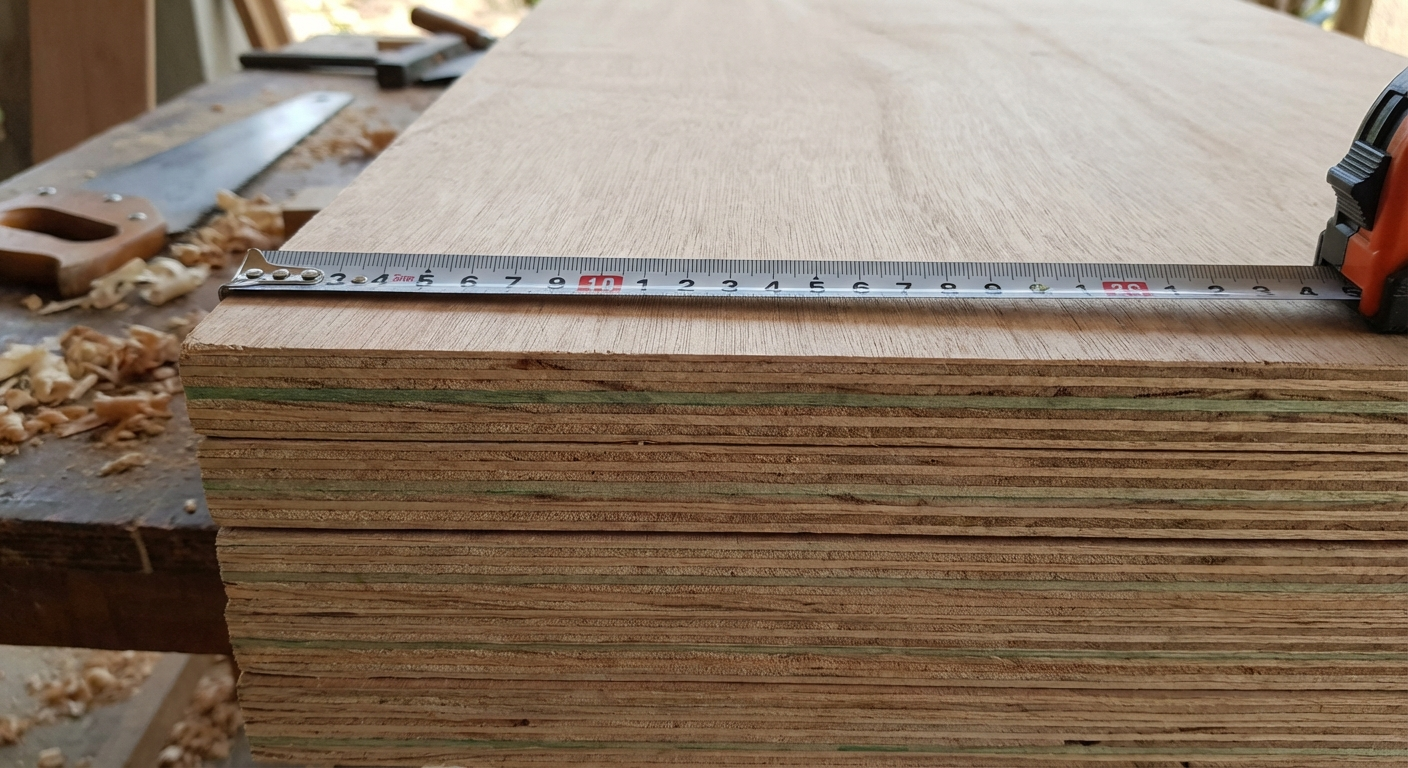
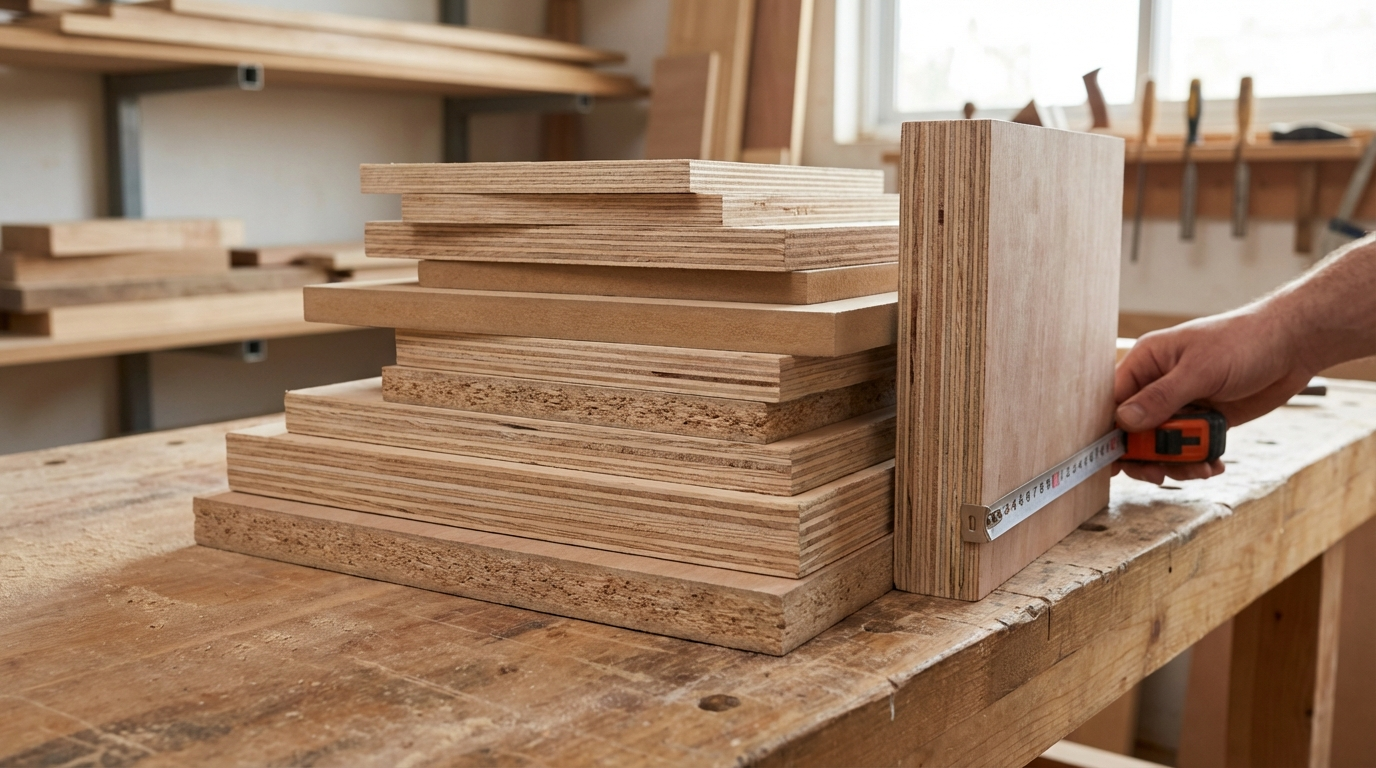
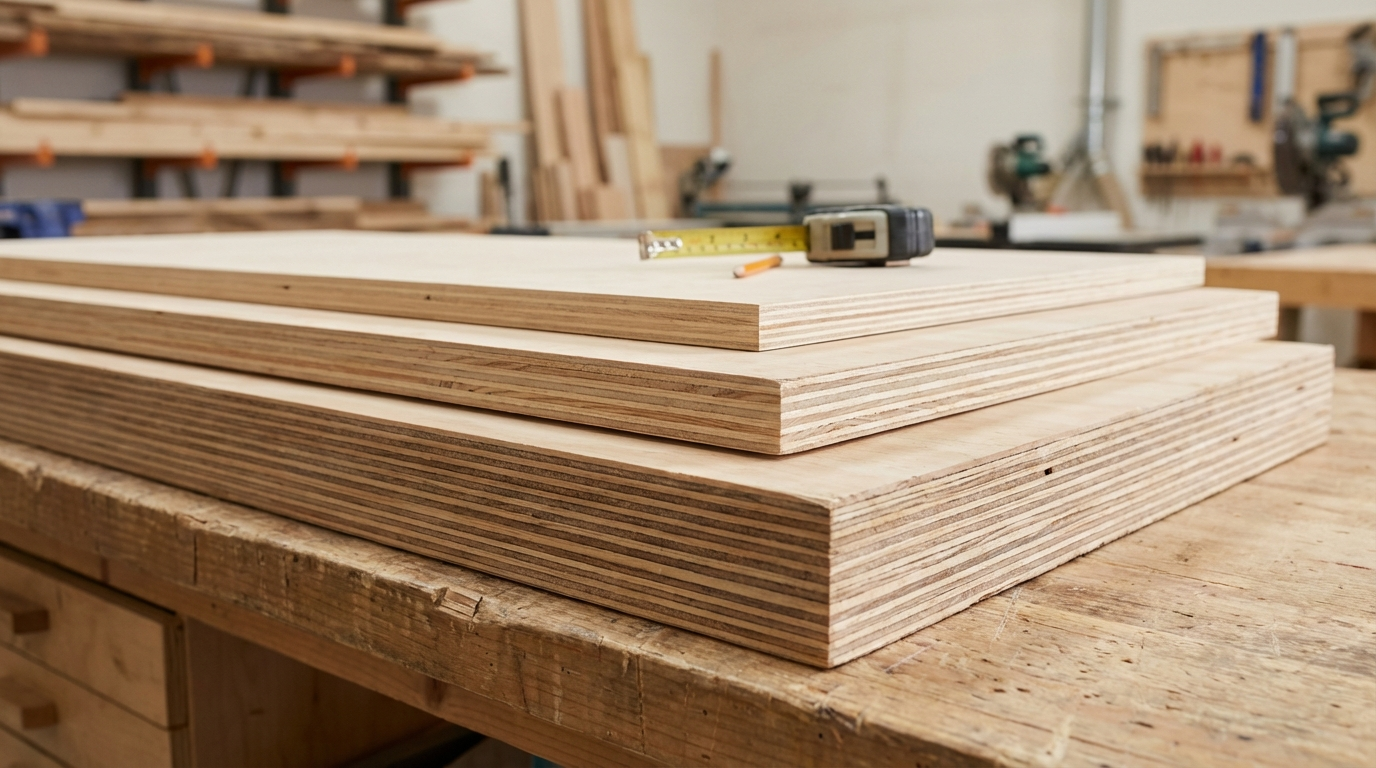
18mm BWR Plywood Price in India 2026: Per Sheet and Per Sq Ft Rates
In October 2026, 18mm BWR plywood cost about ₹45-85 per sq ft for local ISI sheets and ₹95-160 for branded ones, or roughly ₹1,440-5,120 for an 8x4 sheet. Under IS 303:2024, BWR samples must survive three cycles of 8-hour boiling, which suits kitchen wall units and humid rooms but not the sink base.
Last updated: . Prices, grades and standards checked against brand websites, BIS standards and dealer listings.
18mm BWR plywood price in India: quick answer (October 2026)
In October 2026, 18mm BWR plywood cost about ₹45-85 per sq ft for local ISI-marked sheets and ₹95-160 for branded sheets. A standard 8x4 ft sheet is 32 sq ft, so that is about ₹1,440-2,720 a sheet for local BWR and ₹3,040-5,120 for branded BWR. Dealer listings on IndiaMART between August and October 2026 showed BWR plywood at about ₹43-86 per sq ft.
| 18mm BWR tier | Price per sq ft (₹) | 8x4 sheet (₹) | Typical buyer |
|---|---|---|---|
| Local or unbranded, ISI-marked | 45-85 | 1,440-2,720 | Contractors and budget projects |
| Branded (national and regional brands) | 95-160 | 3,040-5,120 | Homeowners and designers who want a written warranty |

Rates exclude transport, and many dealer quotes exclude 18% GST, so ask what is included. For other grades and thicknesses, see plywood price per sq ft and plywood sheet price.
What is 18mm BWR plywood?
BWR plywood (boiling water resistant) is the middle grade of IS 303:2024, between MR and BWP. Under the standard, BWR samples are boiled for 8 hours and dried for 16 hours at 65°C, for three cycles, and must still pass the ply-adhesion test. At 18mm, it is the standard thickness for wardrobe carcasses, kitchen uppers, partitions and furniture that faces humidity but not standing water.
BWR handles steam, splashes and monsoon humidity better than MR. It is not built for the sink base or bathroom vanities, where water sits on the sheet; use BWP or marine plywood there.
ISI norms for BWR plywood: what the mark guarantees
- Bond strength: the 8-hour boil cycles above, tested on samples from production.
- Moisture content: IS 303:2024 requires 5-15%.
- Formaldehyde class: each sheet is classed E1 or E2; E1 is the lower-emission class. "E0" is a brand label, not a BIS class.
- Marking: the ISI mark, IS 303, the BWR grade and a CM/L licence number (CM/L followed by 10 digits). Verify the number in the BIS Care app; see how to check the ISI mark on plywood.
Since February 2025, a BIS Quality Control Order requires plywood sold in India to carry the ISI mark, so an unmarked "BWR" sheet should not be on sale at all.
What drives the price difference in 18mm BWR
- Glue: BWR uses melamine-fortified or phenolic resin, which costs more than the urea glue in MR. Resin prices rose sharply in March and April 2026.
- Core: eucalyptus, poplar or mixed hardwood cores, and how evenly they are laid, affect density, flatness and screw holding.
- Calibration: calibrated sheets hold their thickness closely, which modular furniture needs. See calibrated plywood.
- Brand and warranty: branded sheets cost more but come with a written warranty and a traceable maker.
- Order size and city: small orders pay transport and loading; freight from plywood clusters moves city rates.
More on raw materials: how raw material costs affect plywood prices.
What moved plywood prices in 2026
Resin chemicals drove most of the change this year. Phenol and formaldehyde, the raw materials for BWR and BWP glue, rose sharply in March and April 2026, and the large brands passed it on: CenturyPly raised plywood prices by about 7% in April and Greenply by about 4-5%. MDF makers announced increases of around 15% from April, but most of those were rolled back by August. GST on plywood stays at 18%, unchanged by the September 2025 rate changes. More context: why plywood prices fluctuate and GST on plywood.
18mm BWR plywood price by city
Rates differ with freight, local demand and dealer competition. North Indian cities near the Yamunanagar cluster often see keener rates, and coastal cities buy more BWP for wet areas. Check your city: Delhi, Mumbai, Bengaluru, Chennai, Hyderabad, Pune and Kolkata, or all 80 cities in plywood price in India.
Where 18mm BWR works, and where it does not
- Good fit: wardrobe carcasses in humid cities, kitchen wall units, lofts, utility cabinets, partitions and beds.
- Use BWP or marine instead: sink base units, bathroom vanities, balconies and anything that can sit in water. See 18mm BWP plywood price.
- MR is enough: dry bedrooms and living rooms, where BWR adds cost without much benefit. See 18mm MR plywood price.
Working with 18mm BWR plywood
- Acclimatise: stack sheets flat at the site for a day or two before cutting.
- Seal the edges: cut edges are where moisture gets in; finish them with edge banding or a sealer.
- Balance the faces: laminate both faces, or use a balancing laminate on the back, to keep panels flat.
- Pre-drill: pre-drill for hinges and screws near edges to avoid splitting.
Storage and handling: how to store plywood.
Quality checklist for buyers
- Markings: ISI mark, IS 303, BWR grade, CM/L number and formaldehyde class.
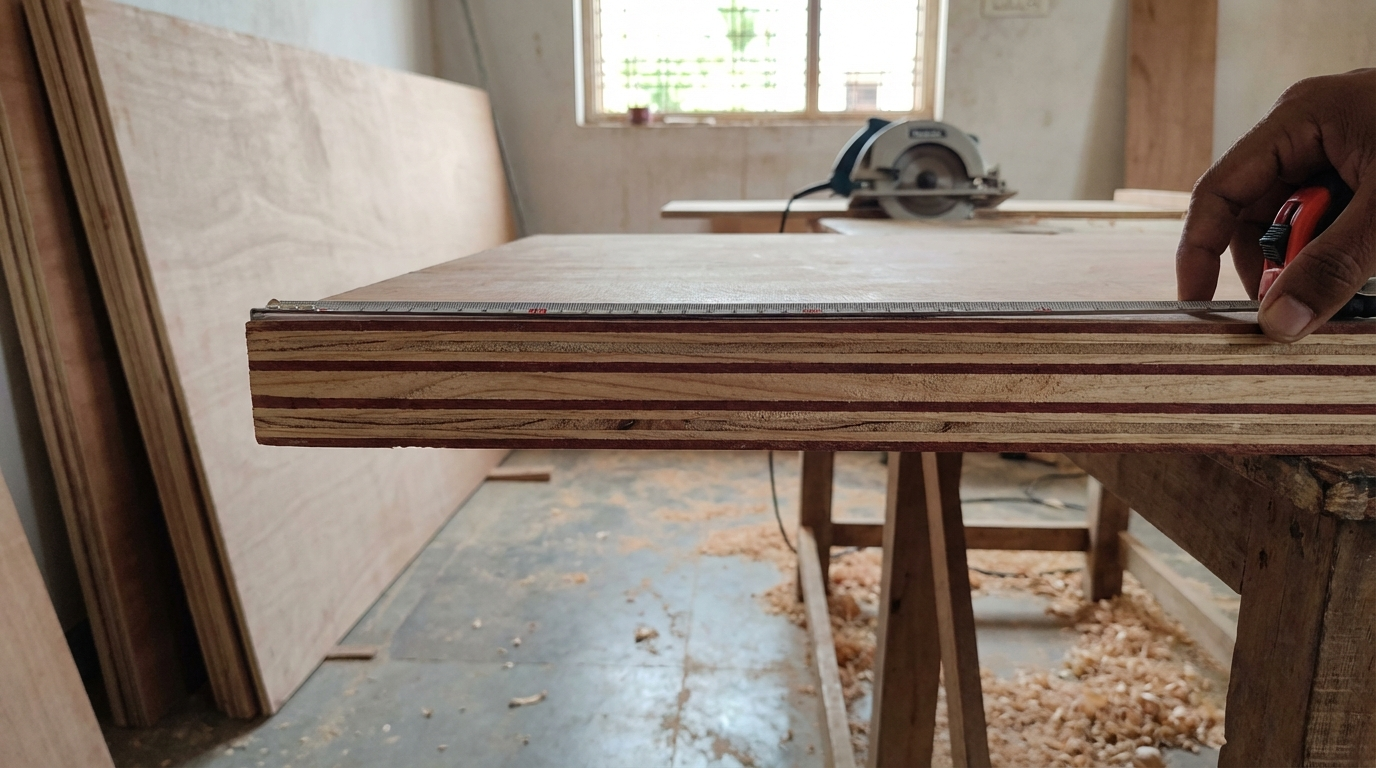
- Thickness: measure at several points; a sheet sold as 18mm should be close to 18mm everywhere.
- Edges: look for even layers with no gaps or overlaps in the core.
- Knock test: a hollow sound in one area points to a void in the core.
- Weight: compare sheets of the same thickness; an unusually light sheet often has a weaker core.
More tests: how to check plywood quality and how to identify fake plywood.
BWR vs MR vs BWP: a side-by-side comparison
| Attribute | MR | BWR | BWP or marine |
|---|---|---|---|
| BIS water test | Soak 3 hours at 60°C, three cycles (IS 303) | Boil 8 hours, dry 16 hours, three cycles (IS 303) | 72 hours in boiling water (IS 303 BWP or IS 710 marine) |
| Typical glue | Urea formaldehyde | Melamine-fortified or phenolic resin | Phenol formaldehyde |
| 18-19mm price (₹/sq ft) | 45-80 local, 85-130 branded | 45-85 local, 95-160 branded | 78-113 local, 120-175 branded |
| Best for | Dry bedrooms, wardrobes, TV units | Kitchen uppers, humid rooms, utility areas | Sink units, bathrooms, exteriors |
For a kitchen, the common split is BWP or marine for the sink base and BWR or HDHMR for the wall units. On 10 sheets of 18mm, choosing branded BWR at ₹120 per sq ft instead of branded BWP at ₹150 saves 10 x 32 x 30 = ₹9,600. See MR vs BWR vs BWP.
Which grade for which buyer
- Homeowners: buy a branded or verified ISI sheet with a written warranty from an authorised dealer, and get the series, grade and thickness on the GST invoice.
- Contractors: local ISI-marked BWR saves money on bulk orders; verify the CM/L licence on every lot and check thickness before accepting delivery.
- Designers: specify the standard (IS 303 BWR), thickness tolerance and formaldehyde class (E1) in writing, not just "18mm waterproof".
Frequently asked questions
What is the price of an 18mm BWR plywood sheet (8x4)?
About ₹1,440-2,720 for a local ISI-marked sheet and ₹3,040-5,120 for a branded sheet in October 2026. That is ₹45-85 and ₹95-160 per sq ft.
Is BWR plywood waterproof?
No. BWR is boiling water resistant: it survives the IS 303 boil cycles, but it is not meant to stay wet. For waterproof needs, use BWP or marine plywood.
Is 18mm BWR good for kitchen cabinets?
Yes for wall units and dry base units. Use BWP or marine for the sink base. See the best plywood for kitchen cabinets.
Can 18mm BWR be used for flooring?
It can serve as a sub-floor in dry interiors, over a proper frame and under a finished floor. For wet or load-heavy floors, use thicker or waterproof grades. See plywood for flooring base.
How much does transport add?
It depends on distance and order size; small orders often pay transport and loading separately. Ask for a delivered price before you compare quotes.
What are the alternatives to 18mm BWR?
HDHMR for shutters and modular work, BWP for wet areas and blockboard for long spans such as doors and table tops. See 18mm plywood vs HDHMR.
Sources and method: brand price pages and guides (CenturyPly Club Prime, Greenply marine plywood price guide, April 2026), dealer and B2B listings on IndiaMART (August to October 2026), online retail listings (October 2026), BIS standards IS 303:2024 and IS 710:2024, and analyst reports on Century Plyboards and Greenply (2026). Thickness-wise ranges marked as estimates are PlyPrice calculations from the 18-19mm bands and Greenply's published thickness steps. Prices are indicative, checked on 15 October 2026, and vary by city, dealer, brand series, thickness and order size. PlyPrice is an independent buyer's guide and is not affiliated with any brand.
Related guides on PlyPrice
Want Plywood Suggestions?
Share a few details and a PlyPrice specialist will suggest suitable brands and connect you to responsive dealers.