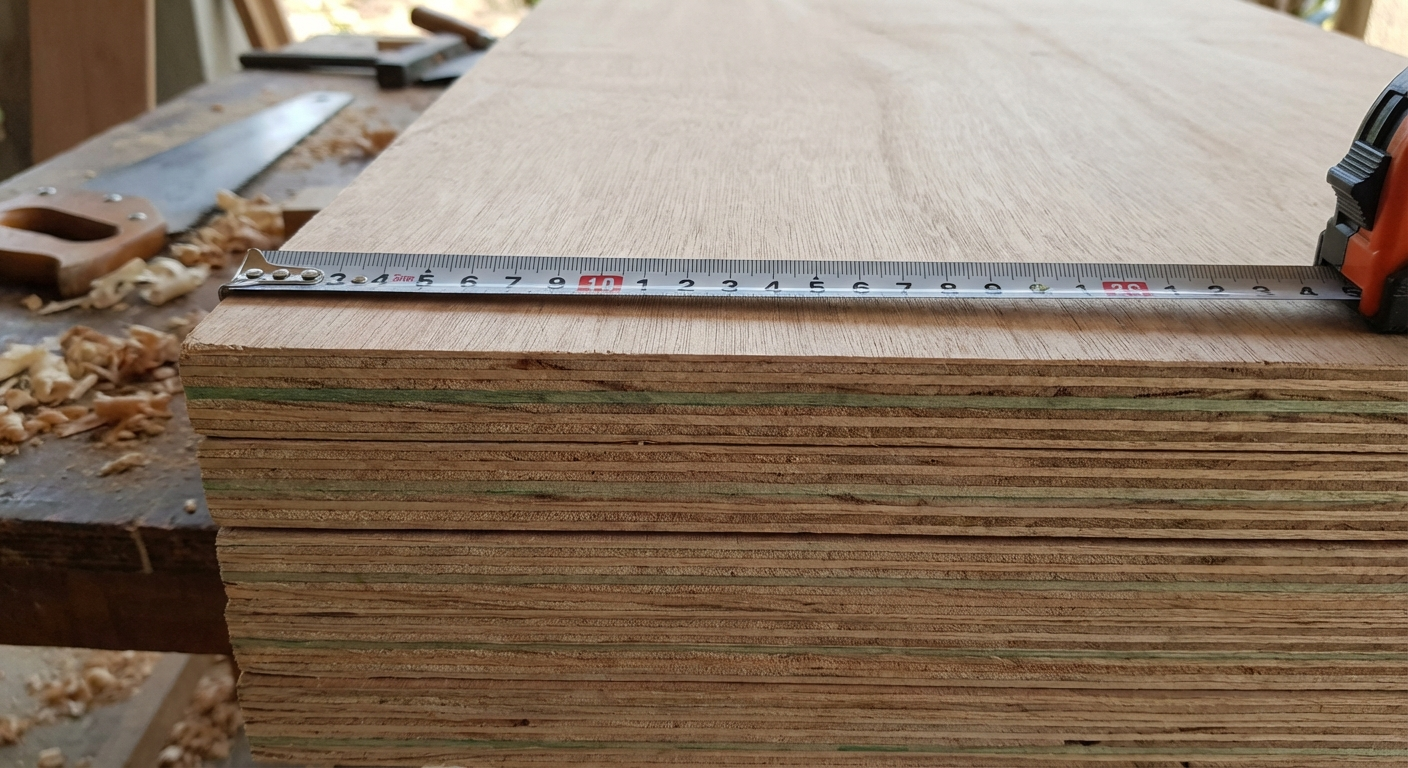
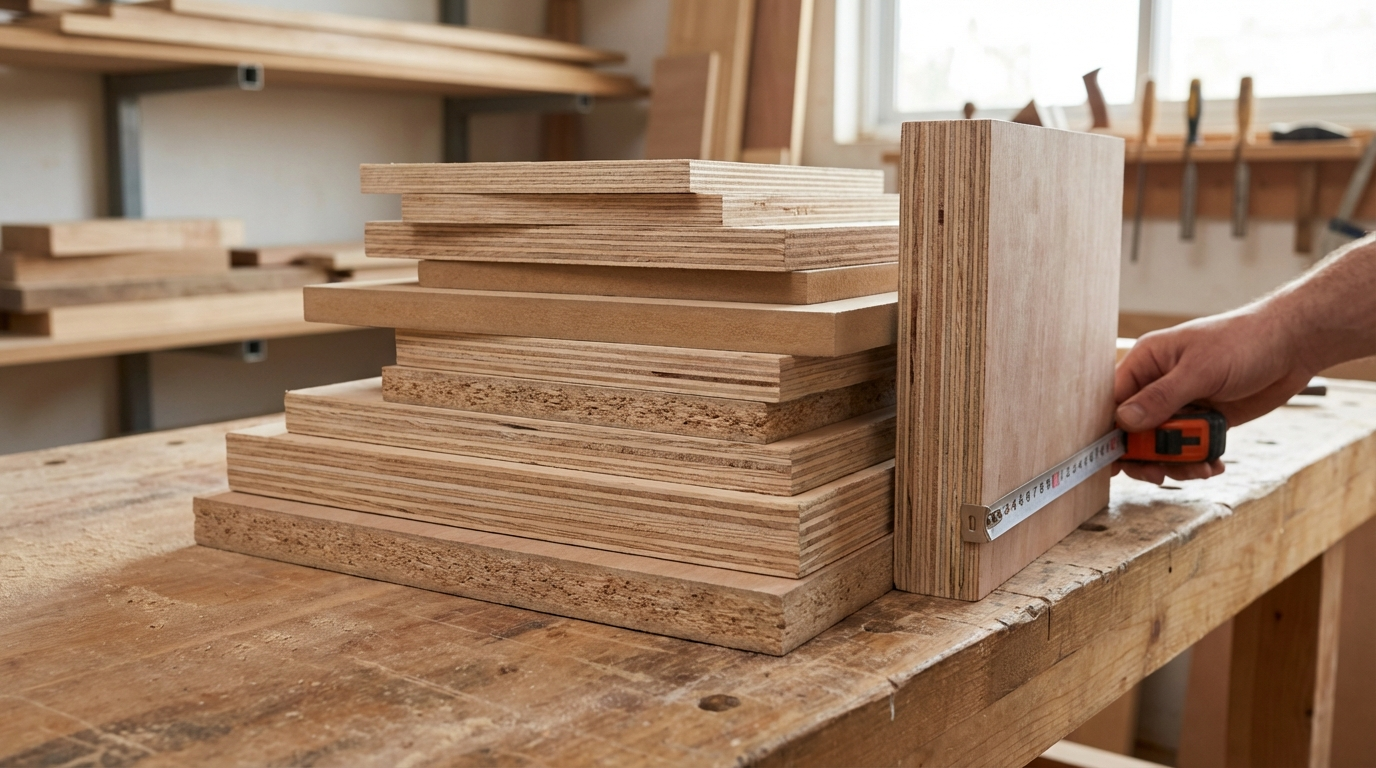
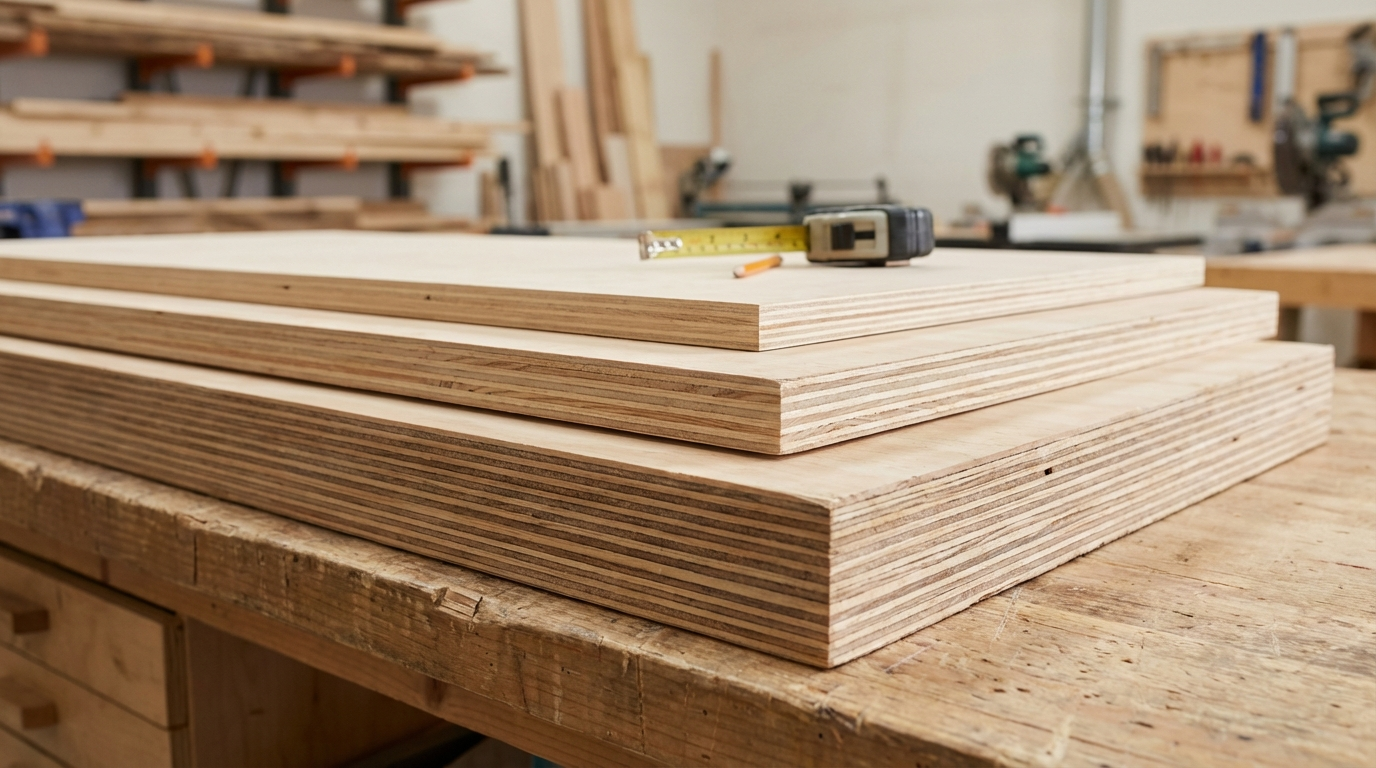
16mm BWR Plywood Price in India: Per Sq Ft and Per Sheet Rates
16mm BWR plywood costs roughly ₹60-120 per sq ft in India, about ₹1,900-3,800 for a full sheet, with city and brand driving the spread. It suits kitchen and bathroom cabinets, wardrobes and partitions where moisture exposure is moderate rather than constant.
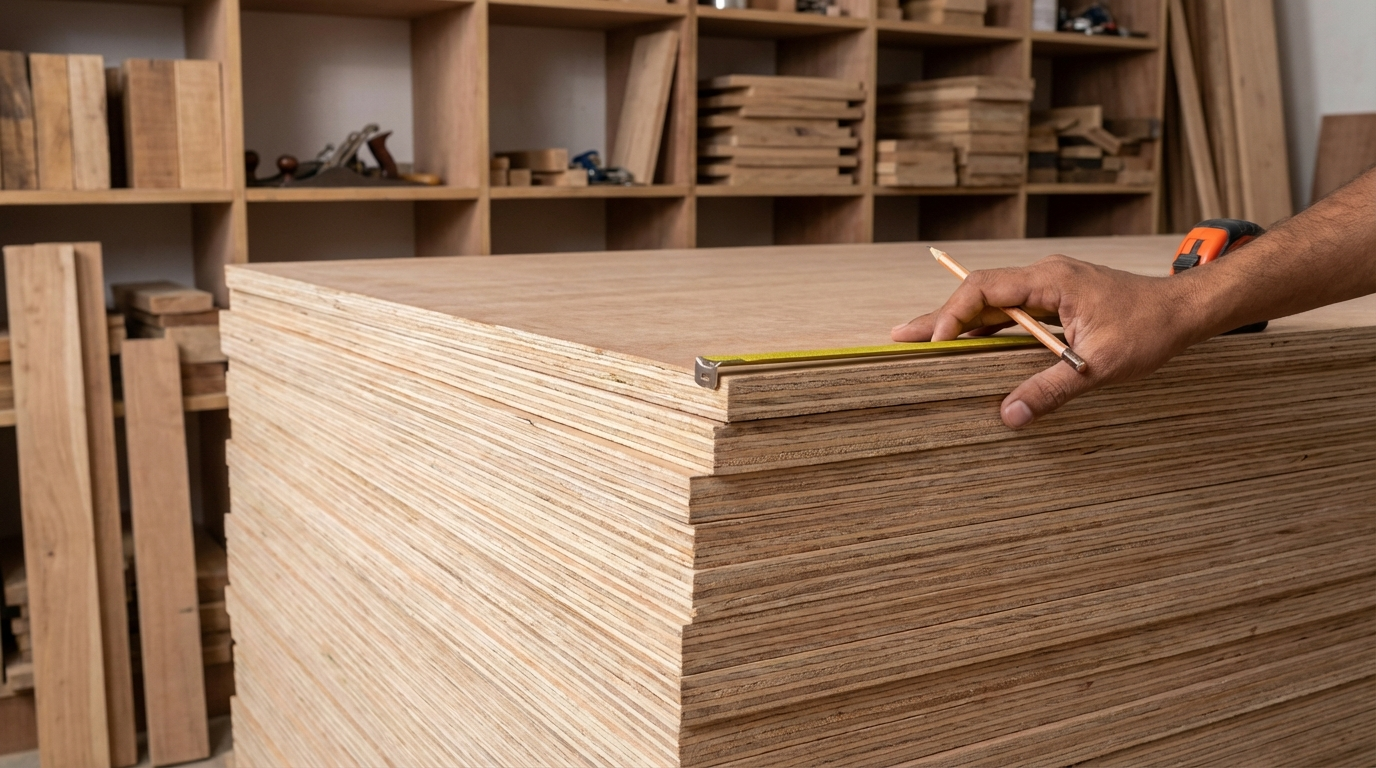
Last updated: . Grades and standards checked against current BIS standards.
What Makes 16mm BWR Plywood a Practical Choice for Indian Construction?
Boiling water resistant (BWR) plywood derives its name from adhesive bonds formulated with resorcinol or phenol-formaldehyde resins, and it must survive three cycles of 8-hour boiling and 16-hour drying without delamination under IS 303 standards. At 16mm thickness, it strikes a balance between structural rigidity for load-bearing furniture and machinability for detailed carpentry. In India's diverse climates, from coastal humidity in Mumbai to dry interiors in Rajasthan, this grade addresses moderate moisture exposure without the premium cost of fully waterproof alternatives.
Contractors favor 16mm for its screw-holding strength, essential in modular kitchens where fittings bear daily stress. Homeowners weigh it against thinner 12mm options for cost efficiency, while architects specify it for partitions in high-humidity zones. Understanding its positioning clarifies why prices fluctuate and how to align purchases with project needs.
Current Price Ranges for 16mm BWR Plywood Across India
Expect 16mm BWR plywood to range from ₹60 to ₹120 per square foot at retail, translating to ₹1,900 to ₹3,800 per standard 8x4-foot sheet. Dealer bulk rates often dip 10-20% lower, while premium hardwood-core variants push toward the upper end. These indicative figures are influenced by timber availability and resin costs.
| Region | Price per Sq Ft (₹) | Typical Sheet Price (8x4 ft, ₹) | Key Influences |
|---|---|---|---|
| North India (Delhi-NCR, Punjab) | ₹70-₹110 | ₹2,200-₹3,500 | High transport from southern mills; demand from urban housing. |
| West India (Mumbai, Gujarat) | ₹65-₹105 | ₹2,100-₹3,400 | Coastal logistics premiums; strong furniture sector pull. |
| South India (Bangalore, Chennai, Kerala) | ₹60-₹100 | ₹1,900-₹3,200 | Proximity to plantations; competitive local manufacturing. |
| East India (Kolkata, Odisha) | ₹65-₹110 | ₹2,100-₹3,500 | Monsoon-driven demand; import dependencies. |
These ranges assume ISI-marked IS 303-compliant boards. Non-branded or imported options may undercut by 15-25%, but quality risks rise. Always verify with local dealers for spot quotes, as monsoon-season spikes of 5-10% occur due to storage challenges.
Factors Driving Variations in 16mm BWR Plywood Pricing
Price stems from production fundamentals: core veneers (poplar for lightness vs. gurjan hardwood for density), glue line count (13-15 plies at 16mm), and surface treatments like calibration for uniform thickness. Timber sourcing dominates—eucalyptus or poplar cores keep costs lower (₹60-80/sq ft), while imported okoume faces elevate to ₹100+.
- Raw Material Volatility: Timber prices swing with plantation yields, and resin chemical costs rose sharply in March and April 2026.
- Grade and Certifications: IS 303 BWR requires mycological resistance and dimensional stability; non-compliant boards sell 20-30% cheaper but fail in humid tests.
- Brand Positioning: Established names command 15-25% premiums for consistent boil resistance, while generics suit low-exposure uses.
- Supply Chain Logistics: Southern mills serve pan-India, but freight to northern/eastern markets inflates by ₹5-15/sq ft.
- Market Demand Cycles: Real estate booms in Tier-2 cities like Pune or Coimbatore lift prices; off-season dips favor bulk buyers.
Contractors calculate total project cost: a 100 sq ft kitchen using 16mm BWR might range ₹6,000-₹12,000, excluding labor. Homeowners factor resale value—durable BWR extends wardrobe life by 5-7 years over MR grades.
Ideal Usage Guidance for 16mm BWR Plywood in Indian Projects
16mm BWR excels where intermittent moisture meets structural demands, bonding resilience to India's tropical challenges. Its 0.5-1.5% moisture absorption (post-boiling) suits non-submerged applications, unlike BWP for marine or constant wetting.
Kitchen and Bathroom Applications
In modular kitchens, use for carcasses and shutters exposed to steam—seal edges with putty and laminate for longevity. Avoid direct sink proximity; opt for thinner shelves overhead. Bathrooms favor it for vanities, resisting splashes during monsoons when ventilation lags.
Furniture and Wardrobes
Standard for full-height wardrobes in humid bedrooms; 16mm prevents sagging under linen weight. Carpenters machine it for dovetail joints, holding screws 2-3x better than 12mm. In coastal homes, pair with anti-termite treatments per IS 5539.
Partitions and Commercial Fit-Outs
Interior partitions in offices or hotels benefit from its fire-retardant glue (self-extinguishing per tests). Architects specify for semi-exposed elevations, where rain splatter occurs occasionally.
Installation tips: Acclimatize sheets 48 hours on-site; use SS screws to combat corrosion. Laminates (2-3mm) enhance UV resistance for exposed furniture. Lifespan: 10-15 years in moderate use, dropping in high-humidity without sealing.
Comparing 16mm BWR with MR and BWP Alternatives
BWR occupies the mid-tier: more resilient than moisture-resistant (MR) for dry zones, yet cost-effective vs. boiling water proof (BWP) for exteriors.
| Grade | ISI Standard | Water Resistance | 16mm Price/Sq Ft (₹) | Best For |
|---|---|---|---|---|
| MR | IS 303 | Cyclic humidity <24 hrs | ₹45-₹75 | Dry wardrobes, false ceilings |
| BWR | IS 303 | Boiling cycles 72 hrs | ₹60-₹120 | Kitchens, humid partitions |
| BWP | IS 710 | Permanent immersion | ₹90-₹160 | Marine, exteriors |
Logic for choice: MR saves 25-40% for bedrooms but delaminates in kitchens. BWP overkill (30-50% pricier) unless constant wetting. BWR's sweet spot: 80% of interior projects. Thickness logic—16mm for spans >600mm; downgrade to 12mm for shelves.
Decision Framework for Buyers: Homeowners vs. Contractors
Homeowner Perspective
Prioritize ISI stamps and core density (>500 kg/m³). Test samples: tap for uniform thud (no voids). Budget 20% buffer for sealing. In metros, dealer markups hit 15%; source via apps for transparency.
Contractor and Architect Logic
Volume discounts scale with 50+ sheets; negotiate 10% off list. Verify boil test compliance via lab reports. For bids, factor lifecycle: BWR cuts callbacks 30% vs. MR in humid sites. Regional hubs (Kerala for south) minimize freight.
Red flags: Warped edges signal poor drying; fuzzy faces indicate low-density veneers. Demand preservative treatment for termite-prone areas like Uttar Pradesh.
Practical Tips to Optimize Costs Without Compromising Quality
- Verify Certifications Early: IS 303 BWR mark + batch code ensures traceability.
- Buy Seasonally: Post-monsoon (Oct-Dec) sees 5-8% dips as stocks clear.
- Hybrid Sourcing: Branded for visible areas, certified generics for hidden frames—saves 15%.
- Storage Protocol: Vertical stacking prevents warping; cover against site dust.
- Edge Finishing: Mandatory melamine polish adds ₹5-10/sq ft but extends life 40%.
Project example: 150 sq ft wardrobe—BWR at ₹90/sq ft totals ₹13,500; MR alternative risks ₹20,000 rework in 2 years.
Frequently Asked Questions on 16mm BWR Plywood
Is 16mm BWR plywood suitable for Indian monsoons?
Yes for interiors; seals prevent absorption. Not for unprotected exteriors—use BWP there.
How does dealer pricing differ from retail?
Dealers offer 10-25% off for 10+ sheets; retail includes cutting services.
What thickness for kitchen cabinets?
16mm for base/carcass; 12mm shelves suffice under 500mm span.
Does brand justify the premium?
Often yes for consistency; compare boil tests. Generics work if ISI-verified.
Price trend outlook for 2026?
Stable to +5% with timber recovery; watch resin imports.
This guide equips decisions grounded in material science and market realities, steering clear of oversimplifications.
Related guides on PlyPrice
Want Plywood Suggestions?
Share a few details and a PlyPrice specialist will suggest suitable brands and connect you to responsive dealers.