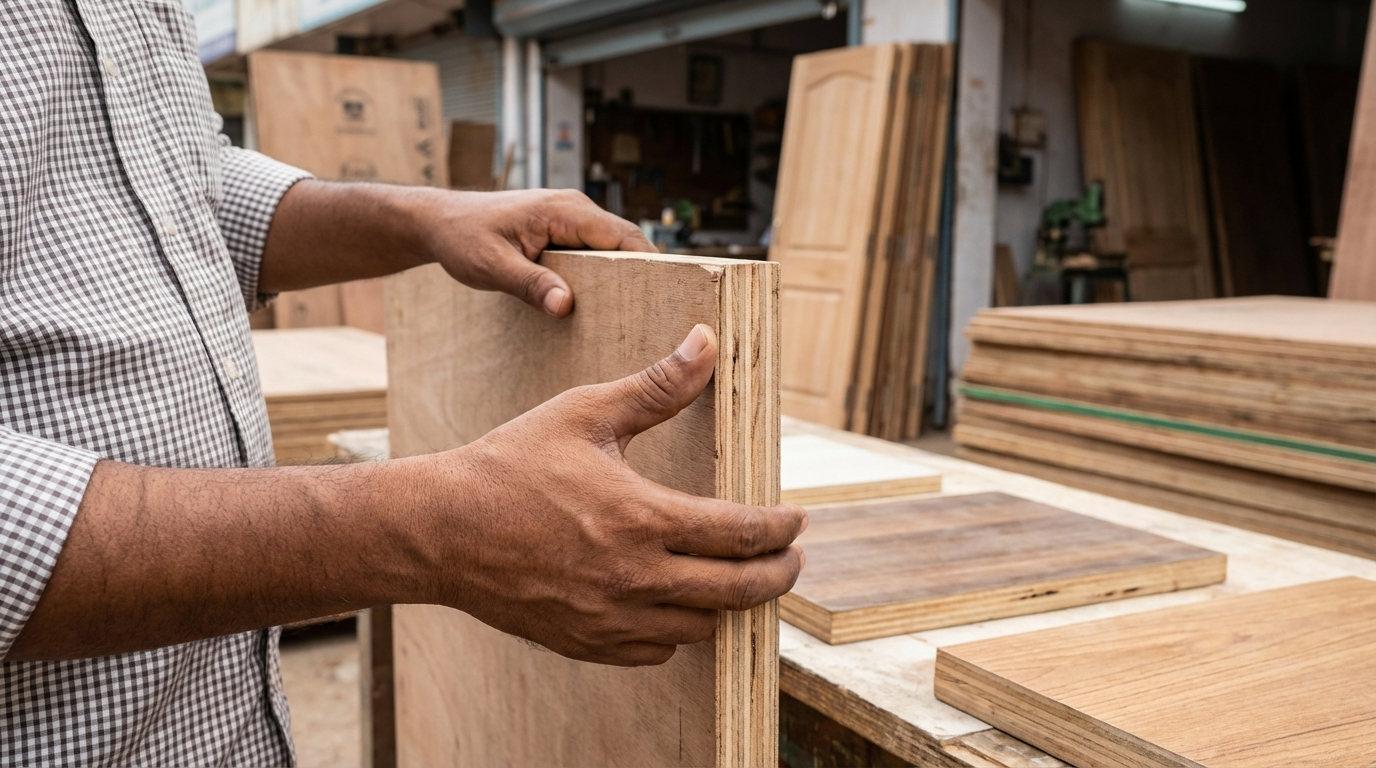
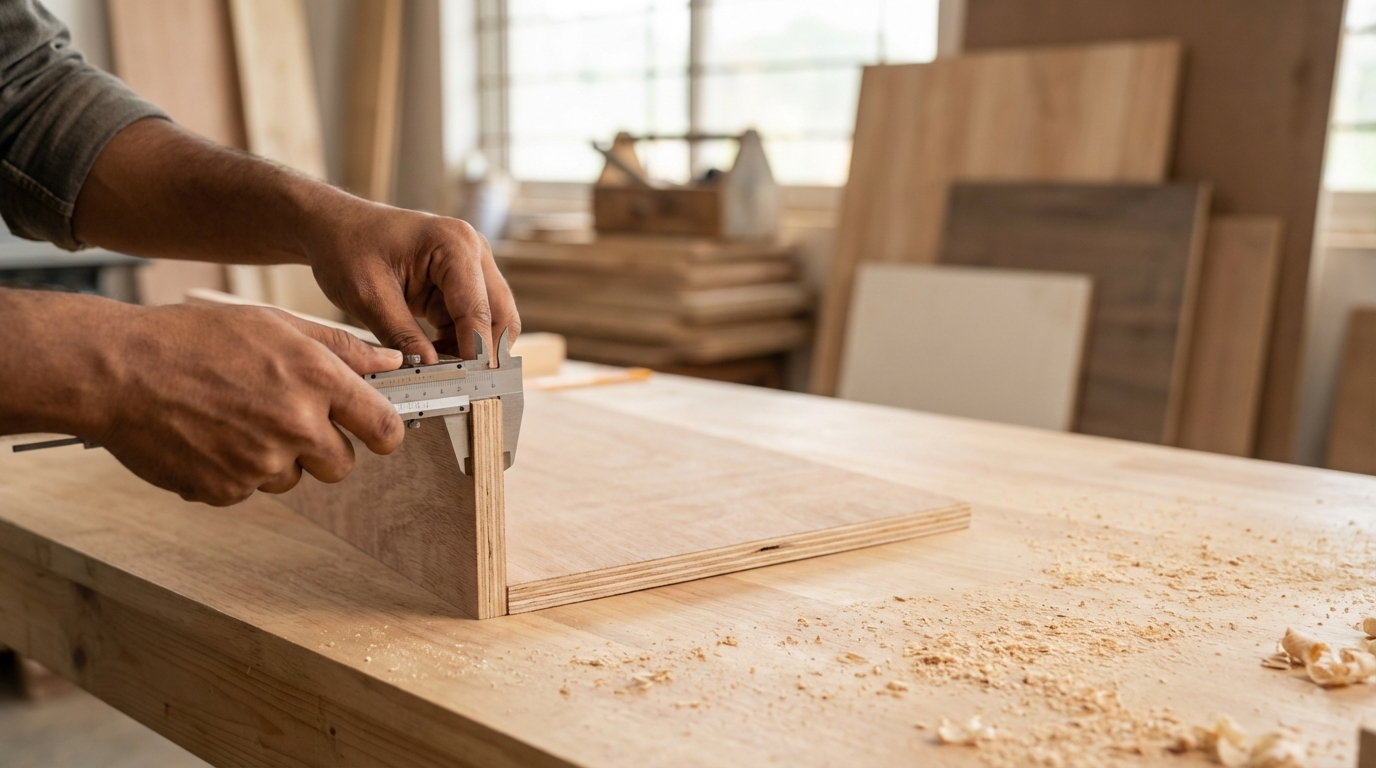
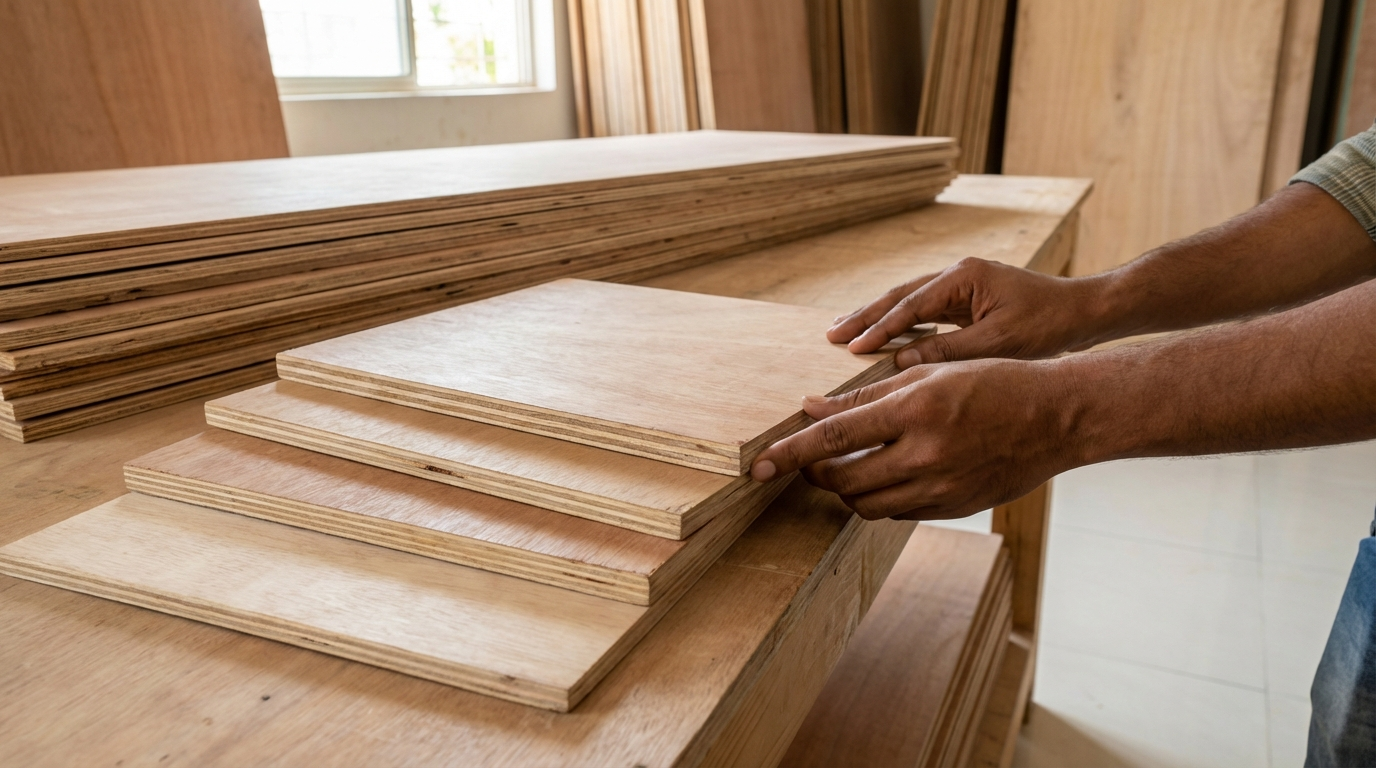
Which Plywood Grade to Choose
Confused by grades? We simplify the choice. Know exactly when to use MR, BWR, or BWP grade plywood for different rooms in your house.
Decoding Plywood Grades: Start with Your Project Needs
In India's diverse climates—from humid coastal regions to monsoon-prone interiors—choosing the right plywood grade hinges on moisture exposure, usage intensity, and long-term durability. Homeowners often face confusion at dealers where MR, BWR, and BWP labels dominate shelves, but each grade serves distinct purposes rooted in adhesive performance and structural tests. This guide cuts through the noise by linking grades directly to real-world room scenarios, helping contractors, architects, and DIY buyers make informed picks without overpaying or under-specifying.
What Defines Plywood Grades? Adhesives and Endurance Tests Explained
Plywood grades aren't arbitrary labels; they stem from the type of synthetic resin glue binding the wood veneers and the standardized lab tests those bonds endure. Under Indian standards like IS 303 or IS 710, grades classify based on boiling water exposure cycles, simulating real-life humidity and water contact.
MR Grade: Moisture Resistant Basics
MR plywood uses urea-formaldehyde (UF) glue, optimized for low-moisture environments. It withstands limited humidity but fails after 2-8 hours in boiling water immersion tests. Ideal for dry indoor applications, it delaminates quickly under persistent dampness, making it unsuitable for kitchens or bathrooms where spills or steam are routine.
BWR Grade: Boiling Water Resistant Fundamentals
BWR employs phenolic-formaldehyde (PF) glue, tougher than UF. It survives 4-24 hours of boiling cycles per IS 303 norms, resisting warping from occasional splashes or high humidity. This positions it as a mid-tier option for semi-wet areas, balancing cost with moderate protection.
BWP Grade: Boiling Water Proof Core Mechanics
The premium tier, BWP (IS 710), features specialized PF resins with additives for marine-grade endurance. It endures 72+ hours of boiling without separation, plus pressure cooker tests mimicking steam exposure. Engineered for extreme conditions, it maintains integrity in submerged or high-steam scenarios.
From first principles: Glue hydrolysis (breakdown in water) drives grade differences. UF hydrolyzes faster in tropics; PF variants add cross-linking for stability. Always cross-check ISI certification stamps—absence signals potential shortcuts in glue formulation.
Grade Comparison Table: Performance at a Glance
| Aspect | MR Grade | BWR Grade | BWP Grade |
|---|---|---|---|
| Glue Type | Urea-Formaldehyde (UF) | Phenolic-Formaldehyde (PF) | Advanced PF (Marine Spec) |
| Boiling Test (Hours) | 2-8 | 4-24 | 72+ |
| Moisture Tolerance | Dry interiors only | Semi-wet, occasional water | Constant wet, submersion |
| Typical Lifespan (India Climate) | 5-10 years dry use | 10-15 years humid use | 20+ years wet exposure |
| Cost Relative to MR | Baseline | 20-40% higher | 40-80% higher |
Room-by-Room Guide: Precise Grade Recommendations
Indian homes vary by region—coastal Kerala demands higher resistance than arid Rajasthan. Prioritize based on daily exposure: steam, spills, humidity levels above 70%, or direct rain during monsoons. Here's targeted advice for common spaces.
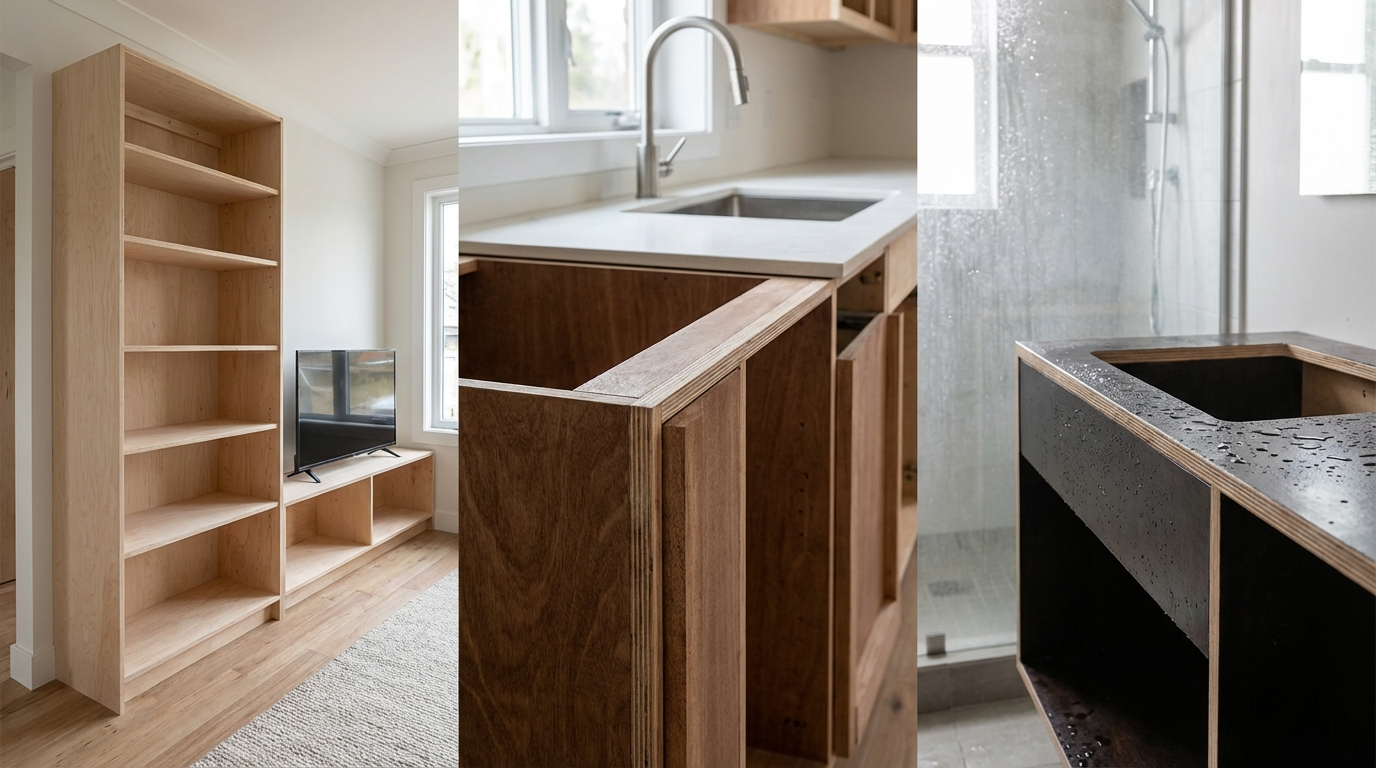
Living Room and Bedrooms: MR Suffices for Cost Savings
These dry zones see minimal moisture beyond AC condensation. MR grade handles furniture carcasses, wardrobes, or paneling reliably. In inland cities like Delhi or Pune, where humidity dips below 50% seasonally, opting for BWR adds unnecessary expense without proportional gains. Contractors note MR's lighter weight aids faster installation in bulk projects.
Kitchen Cabinets and Modular Units: Lean on BWR
Oil splatters, steam from cooking, and sink proximity demand BWR's edge. In Indian kitchens—often open-plan with gas stoves—MR warps within 2-3 years from vapor buildup. BWR withstands routine cleaning and humidity spikes during monsoon cooking. Architects specify 18mm BWR for base cabinets; thinner 12mm for uppers. Avoid BWP here unless coastal (e.g., Mumbai) with salt-laden air accelerating corrosion.
Bathrooms and Wash Areas: BWP is Non-Negotiable
Constant steam, shower splashes, and poor ventilation make BWP essential. MR fails catastrophically in 6-12 months; even BWR blisters over time in humid belts like Chennai or Kolkata. Use BWP for vanity units, mirror cabinets, or wet walls. Pair with waterproof sealants for edges. Homeowners in high-rise apartments report BWP extending vanity life by 2x versus downgrades.
Balconies, Puja Rooms, and Utility Spaces: Context-Driven Choices
- Enclosed Balconies: BWR if semi-covered; BWP for open-to-rain exposures.
- Puja Rooms: MR for dry shelves; upgrade to BWR near water offerings.
- Laundry/Utility: BWR standard; BWP if washing machine overflows are common.
Cost Drivers: Why Grades Aren't Just Price-Tiered
MR starts as the affordable entry, but premiums scale with resin quality and veneer sourcing. Regional variations play in: South India dealers quote 20-30% higher due to teak core preferences; North sees fluctuations from import glues. Expect BWR at 1.2-1.4x MR rates per sheet; BWP 1.4-1.8x, influenced by thickness (6-25mm) and size (8x4 ft standard).
Value equation: Calculate total ownership—MR's early replacement in wrong spots erodes savings. Contractors factor labor: Thicker BWR/BWP cuts screw-holding callbacks. Bulk buys from wholesalers shave 10-15%, but verify lab reports over verbal claims.
| Project Scale | Recommended Grade Mix | Cost-Saving Tip |
|---|---|---|
| Single Room Renovation | 80% MR, 20% BWR | Stick to 18mm for stability |
| Full House Modular | 50% MR, 30% BWR, 20% BWP | Negotiate dealer bundles |
| Commercial/Contractor | Custom per zone | Source direct from mills |
Beyond Grade: Layers of Plywood Quality Decisions
Grade alone doesn't guarantee performance. Interrogate core material—softwood for MR economy, hardwood for BWR/BWP strength. Face veneers impact finish: Commercial grades hide knots; decorative add sheen but hike costs.
Thickness and Density Logic
9-12mm for partitions/shelves; 18-25mm for load-bearing. Higher density (above 500 kg/m³) resists termites better in termite-prone Gujarat or UP. HDHMR variants blend MR affordability with MDF-like screw grip for modulars.
Climate and Regional Tweaks
Coastal (Goa, TN): Bias BWP everywhere. Humid East (WB, Odisha): BWR minimum. Dry West/North: MR dominates 70% projects. Monsoon-proofing via edge sealing applies universally.
Dealer Verification: Spotting Genuine Grades
India's fragmented market breeds fakes—test via water-soak sample or hammer-tap for voids. Demand BIS hallmark (CM/L number), boil test certificates, and formaldehyde emission reports (E0/E1 for health). Reputable dealers provide third-party lab sheets; walk away from "equivalent" claims without proof.
Questions to Ask Dealers
- What boiling cycles does this exact batch certify?
- Core wood species and density?
- Warranty terms for delamination?
- Source mill and ISI validity?
Pitfalls Homeowners and Contractors Overlook
Over-specifying BWP site-wide inflates budgets 30-50% unnecessarily. Ignoring edges leads to capillary wicking in all grades. Mixing grades without zoning causes mismatched expansion. Architects stress: Prototype wet areas first.
For multi-story builds, factor floor-wise humidity—upper levels drier, basements need BWP. Interior designers pair grades with laminates: MR with PVC for budget bedrooms; BWP with HPL for kitchens.
Final Decision Framework: Your Quick Checklist
- Assess exposure: Dry (MR), Occasional wet (BWR), Constant (BWP).
- Match room function: Bedrooms MR; Kitchens BWR; Baths BWP.
- Balance budget: Baseline MR, upgrade only where needed.
- Verify docs: ISI, tests, no shortcuts.
- Regional adjust: Humidity map your area.
This targeted approach ensures plywood investments align with India's variable conditions, minimizing callbacks and maximizing longevity.
Want Plywood Suggestions?
Share a few details and a PlyPrice specialist will suggest suitable brands and connect you to responsive dealers.