Best Plywood for Doors: Flush, Panel & Entrance Door Selection
Which plywood for doors? Guide to selecting the right grade & thickness for flush doors, panel doors & main entrances. Prevent warping & swelling.
Quick Buying Decision: Best Plywood for Doors
BWP (Boiling Water Proof) grade plywood with minimum 30mm thickness is the best choice for main entrance doors in India, providing superior moisture resistance and dimensional stability against India's extreme weather conditions. For main entrance doors, BWP plywood ensures maximum durability and weather resistance.
If you're short on time, here's the essential summary: Main entrance doors require BWP/Marine grade plywood with 35-45mm thickness to withstand direct exposure to rain, sun, and temperature variations. Interior bedroom and living room doors perform well with MR (Moisture Resistant) grade plywood at 30-32mm thickness, offering an optimal balance of cost and durability. Bathroom doors need BWR or BWP grade to handle constant humidity exposure without warping or swelling.
Quick Picks Based on Application:
- Best for Main Entrance: BWP/Marine Grade Plywood (35-45mm thickness)
- Best for Bedroom/Living Room: MR Grade Plywood (30-32mm thickness)
- Best for Bathroom: BWR or BWP Grade Plywood (30-35mm thickness)
- Best Budget Option: Commercial MR Plywood (30mm thickness)
- Best Premium Option: Gurjan Core BWP with Hardwood Face (40mm thickness)
How to Choose Plywood for Doors: Step-by-Step Guide
Selecting the right plywood for doors requires understanding five critical factors: application location, plywood grade, correct thickness, core material, and brand certification. A good plywood for doors should have strength and stability to hold its shape and support hardware like locks and hinges without cracking, plus moisture resistance especially important for kitchens, bathrooms, or places with high humidity. According to plyprice.com's research across 100+ brands, these factors determine whether your door will last 5 years or 25 years.
Step 1: Identify Your Application
The door's location determines everything about your plywood selection. Exterior doors face direct weather exposure including monsoon rains, summer heat up to 45°C, and winter cold. Interior doors encounter varying humidity levels based on room function. It's important to categorise the ideal plywood according to its usage as there can be a lot of differences in the plywood you should choose depending on the space—for bathroom doors, marine plywood is recommended as it is completely waterproof.
Application Categories:
- Main Entrance/Exterior: Maximum weather exposure, security requirements, aesthetic focal point
- Bathroom/Kitchen Adjacent: High humidity, steam exposure, frequent moisture contact
- Bedroom/Living Room: Moderate conditions, aesthetic priority, regular use
- Balcony/Terrace Access: Semi-exterior exposure, occasional rain, temperature variations
- Pooja Room/Study: Dry conditions, minimal moisture, decorative priority
Step 2: Select the Right Grade/Type
BWP/Marine Plywood is best for exterior and main doors exposed to weather as it is highly water-resistant and durable against fungal attack. BWR (Boiling Water Resistant) Plywood is great for semi-exterior doors and areas with high humidity. MR Grade (Moisture Resistant) Plywood is economical and commonly used for interior doors such as bedrooms and living areas.
| Application | Recommended Grade | Minimum Thickness | Why This Grade |
|---|---|---|---|
| Main Entrance Door | BWP (IS:710) | 35mm | Withstands direct rain, sun exposure, and temperature extremes |
| Bathroom Door | BWP or BWR | 30mm | Handles constant humidity and steam without swelling |
| Kitchen Door | BWR | 30mm | Resists cooking steam, oil vapours, and moisture |
| Bedroom Door | MR (IS:303) | 30mm | Cost-effective for dry interior conditions |
| Living Room Door | MR or BWR | 32mm | Handles moderate humidity with good aesthetics |
| Balcony Access Door | BWP | 35mm | Exposed to rain splashes and outdoor humidity |
| Store Room Door | Commercial MR | 25mm | Budget option for low-traffic, dry areas |
Step 3: Determine Correct Thickness
The ideal thickness for main doors should be about 35-45mm. For interior doors, a thickness of 32-38mm is usually recommended which offers a balance of strength and ease of installation. Plyprice.com's analysis shows that thickness directly impacts door weight, screw-holding capacity, sound insulation, and overall durability.
| Furniture Type | Ideal Thickness | Acceptable Range | Never Use Below |
|---|---|---|---|
| Main Entrance Door | 40mm | 35-45mm | 32mm |
| Interior Flush Door | 32mm | 30-35mm | 25mm |
| Bathroom Door | 30mm | 30-35mm | 25mm |
| Panel Door | 35mm | 32-40mm | 30mm |
| Fire-Rated Door | 45mm | 40-50mm | 35mm |
| Sound-Insulated Door | 40mm | 35-45mm | 32mm |
Step 4: Verify Quality Indicators
Look for ISI (IS:2202) and ISO marks as your primary quality verification. The IS 2202 Wooden Flush Door (Part 1): 2023 is the updated Bureau of Indian Standards (BIS) specification that defines the quality, construction, and performance requirements for wooden flush door shutters with solid core and plywood face panels.
Quality Checks You Can Perform:
- Check ISI mark authenticity on BIS website using license number
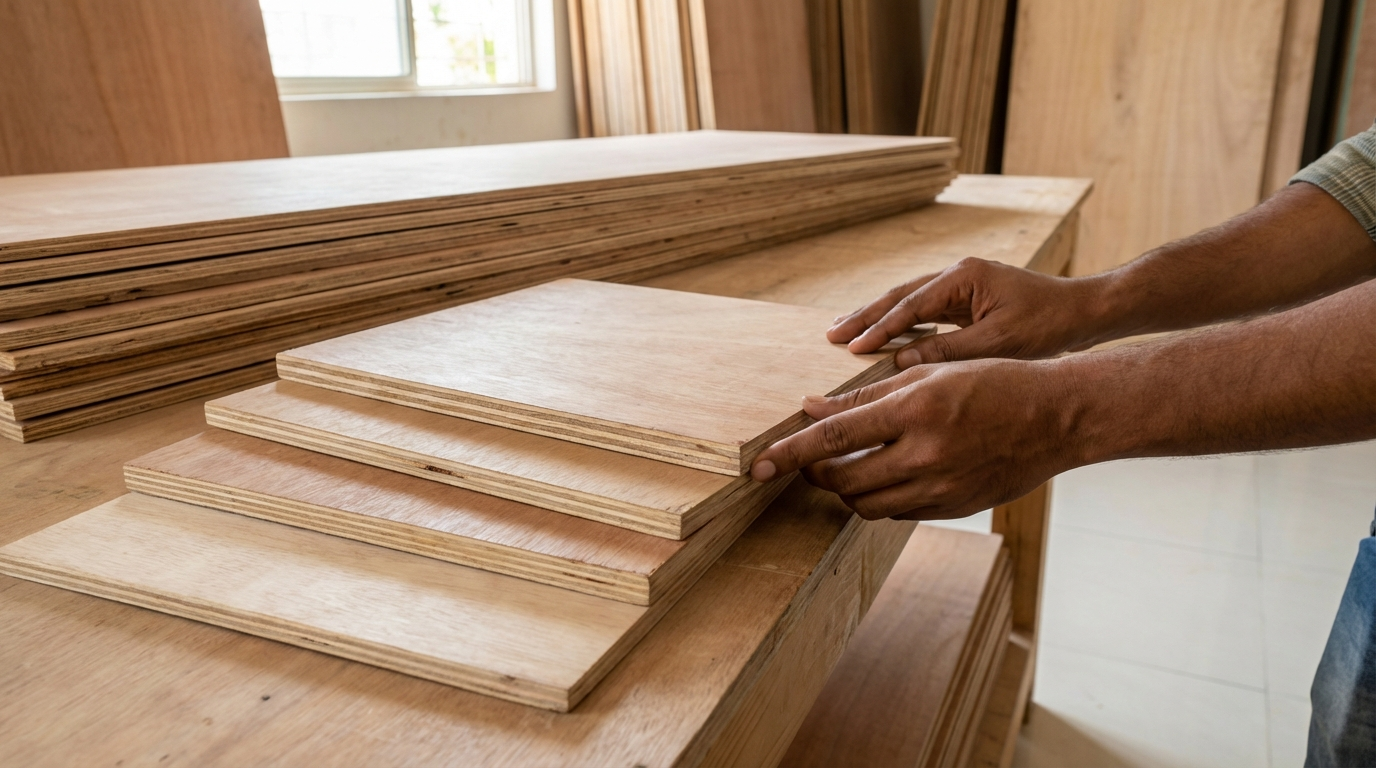
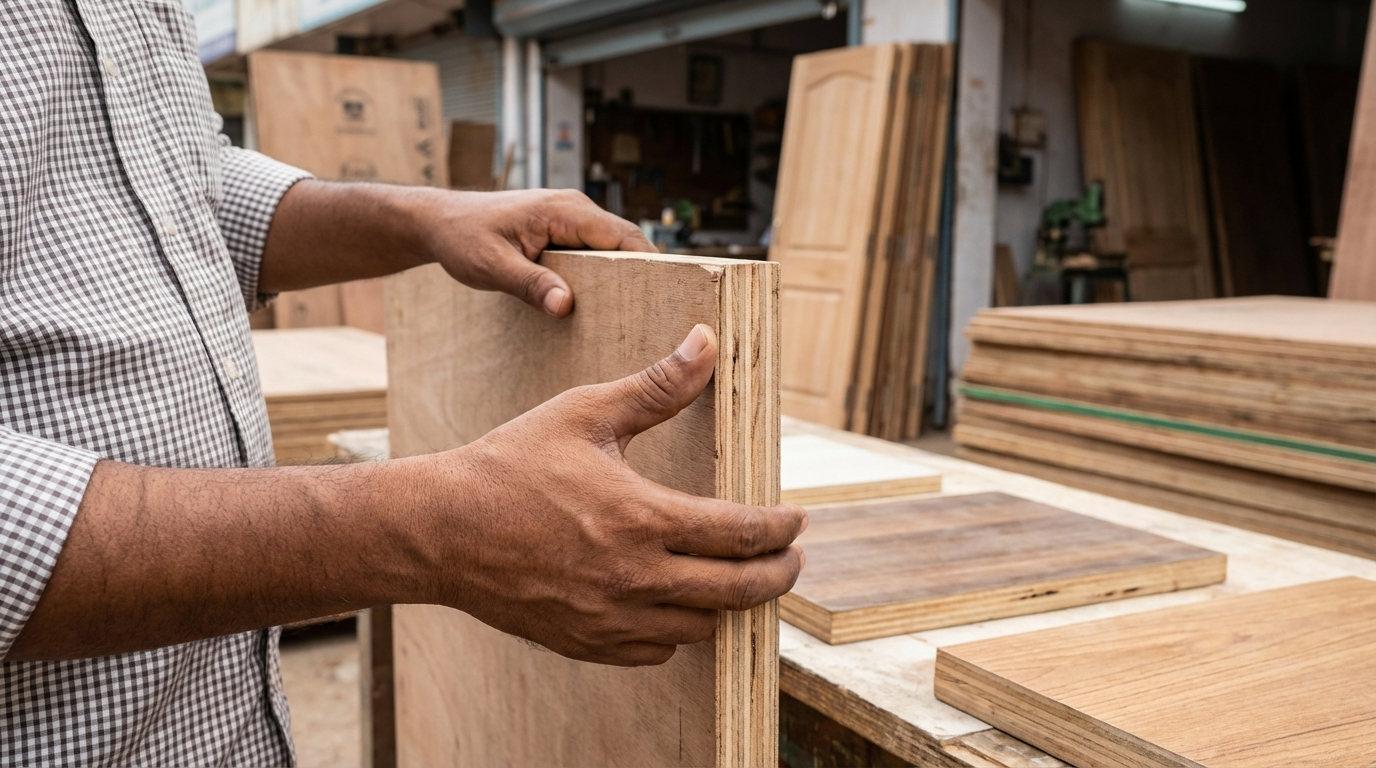
- Inspect edges for uniform layering and gap-free bonding
- Tap surface to detect hollow spots or voids
- Verify face veneer thickness (should be at least 0.5mm)
- Check for termite treatment certificate
- Request manufacturer's test report for glue adhesion
Step 5: Compare Brands and Get Quotes
According to plyprice.com's pricing database covering 100+ brands, door-grade plywood prices vary significantly based on brand reputation, core quality, and certification level. Always collect quotes from at least 3-4 authorized dealers before making a purchase decision.
Decision Matrix: What to Buy for Each Situation
This comprehensive decision matrix eliminates confusion by matching your specific situation with the optimal plywood choice. As detailed in plyprice.com's extensive dealer surveys across India, these recommendations account for regional climate variations, budget constraints, and performance requirements.
| Situation | Recommended Option | Alternative | Verify This | Budget Range (₹/sq ft) |
|---|---|---|---|---|
| Coastal city main door | Marine BWP Gurjan | BWP Hardwood | Salt-air resistance treatment | ₹120-180 |
| High-rise apartment entrance | BWR Calibrated Ply | BWP Standard | Fire-retardant option | ₹85-130 |
| Villa main gate (outdoor) | Marine BWP + UV coating | Film-faced BWP | Weatherproof finish | ₹150-250 |
| Budget bedroom doors | Commercial MR | BWR Economy | Termite treatment | ₹50-75 |
| Premium bedroom doors | BWR Gurjan Face | Calibrated BWR | Surface finish quality | ₹80-120 |
| Bathroom (attached to bedroom) | BWP Grade | BWR Premium | Edge sealing | ₹100-150 |
| Kitchen entrance | BWR Grade | BWP for heavy cooking | Moisture resistance | ₹75-110 |
| Heavy monsoon region | BWP Marine Grade | None recommended | IS:710 certification | ₹120-200 |
| Dry climate (Rajasthan) | MR with proper finish | BWR for safety margin | Anti-crack treatment | ₹55-85 |
| Office/commercial space | Calibrated BWR | Pre-laminated flush door | Fire safety compliance | ₹90-140 |
Price Guide and Budget Planning
BWR (Boiling Water Resistant) Plywood costs ₹60-₹100 per sq ft. MR (Moisture Resistant) Plywood ranges from ₹50-₹80 per sq ft. Marine Plywood costs ₹120-₹250 per sq ft. Hardwood Plywood ranges from ₹100-₹200 per sq ft. These prices represent plywood material only; finished door costs include additional expenses for fabrication, finishing, and hardware.
Why Prices Vary Between Dealers
Plyprice.com's pan-India pricing research reveals that the same branded plywood can vary by 15-25% between dealers in the same city. Key factors driving price variations include:
- Location: Plywood rates in metropolitan cities may be slightly higher compared to smaller towns due to transportation and demand.
- Dealer Type: Authorized dealers vs wholesalers vs retail shops
- Order Quantity: Bulk purchases often receive 5-10% discount
- Season: Pre-monsoon and festival seasons see 5-8% price increases
- Payment Terms: Cash payments may fetch 2-3% additional discount
Complete Door Cost Calculation
| Cost Component | Budget Door (7x3 ft) | Mid-Range Door | Premium Door |
|---|---|---|---|
| Plywood (21 sq ft) | ₹1,050-1,575 | ₹1,680-2,520 | ₹2,520-5,250 |
| Laminate/Veneer Finish | ₹800-1,200 | ₹1,500-2,500 | ₹3,000-6,000 |
| Carpenter Labour | ₹500-800 | ₹800-1,200 | ₹1,500-2,500 |
| Hardware (hinges, lock) | ₹400-700 | ₹1,000-2,000 | ₹2,500-5,000 |
| Door Frame | ₹1,500-2,500 | ₹2,500-4,000 | ₹4,000-8,000 |
| Total Estimated Cost | ₹4,250-6,775 | ₹7,480-12,220 | ₹13,520-26,750 |
How to Get the Best Price
- Visit plywood mandis or wholesale markets for 10-20% lower rates
- Compare prices from minimum 3 authorized dealers
- Negotiate for cutting/transport charges to be included
- Ask about ongoing brand promotions or dealer discounts
- Consider off-season purchases (avoid pre-Diwali rush)
- Check if dealer offers free delivery above certain order value
Red Flags: When to Walk Away
Plyprice.com recommends immediately walking away from a purchase if you encounter these warning signs:
- Missing or fake ISI mark: Verify every license number on BIS portal before purchase
- Significantly lower prices: If price is 30% below market rate, quality is compromised
- No printed manufacturer details: Genuine plywood always displays manufacturer name, license number, and grade
- Visible gaps in core layers: Indicates poor manufacturing and weak structural integrity
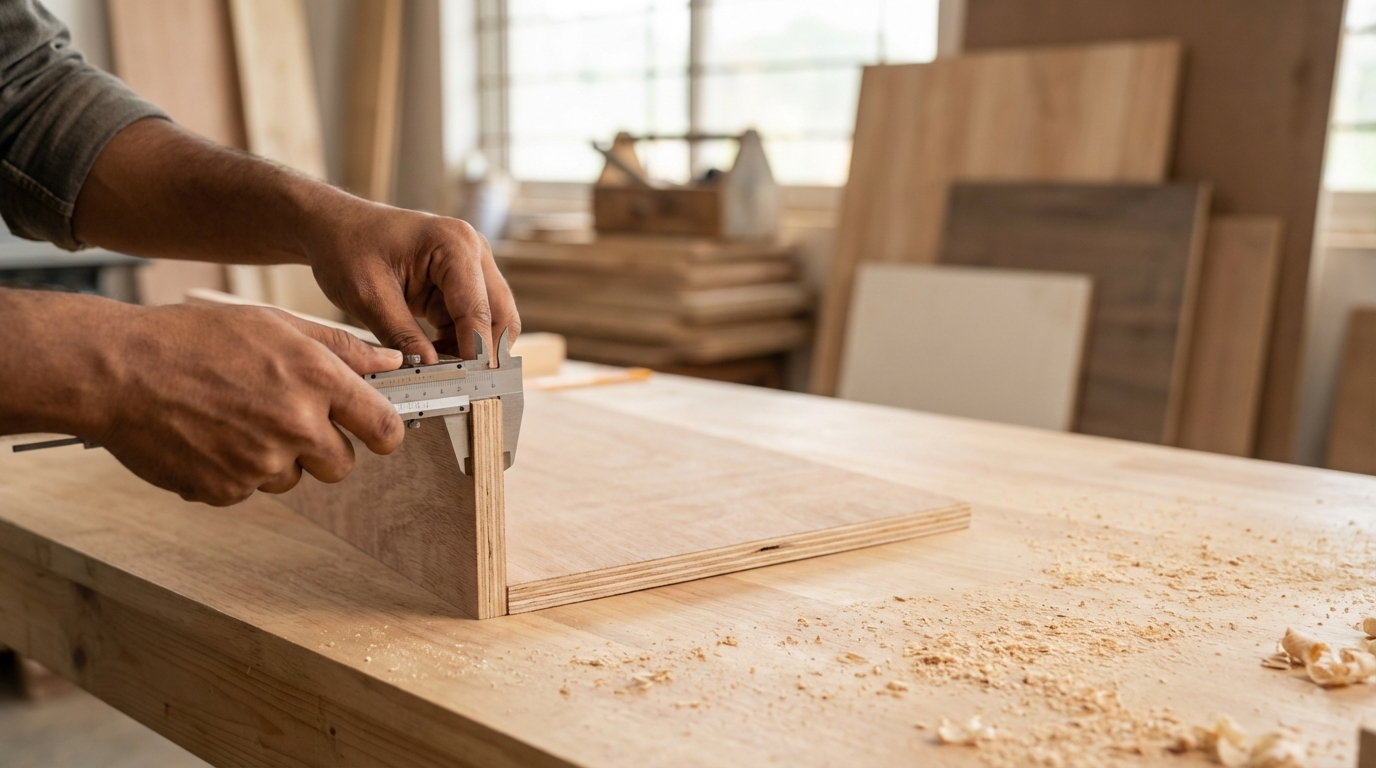
- Uneven thickness: Test with vernier caliper; variation beyond ±0.5mm is unacceptable
- Strong chemical odour: Excessive formaldehyde indicates poor-quality adhesives
- Dealer refuses written bill: Authentic products always come with proper tax invoice
- No warranty card: Reputed brands provide 7-25 year warranties depending on grade
Common Buying Mistakes (And How to Avoid Them)
Mistake 1: Choosing MR Grade for Bathroom Doors
Plywood doors can be great for bathrooms, but it depends on the kind of plywood used. Plywood should be waterproof or water-resistant such as Marine Plywood or BWP (Boiling Water Proof) plywood, as it can resist moisture and humidity. Normal plywood could easily wrinkle, swell, or degrade because it comes in contact with moisture. Always use BWR minimum, preferably BWP for bathroom applications.
Mistake 2: Using Hollow Core for Main Entrance
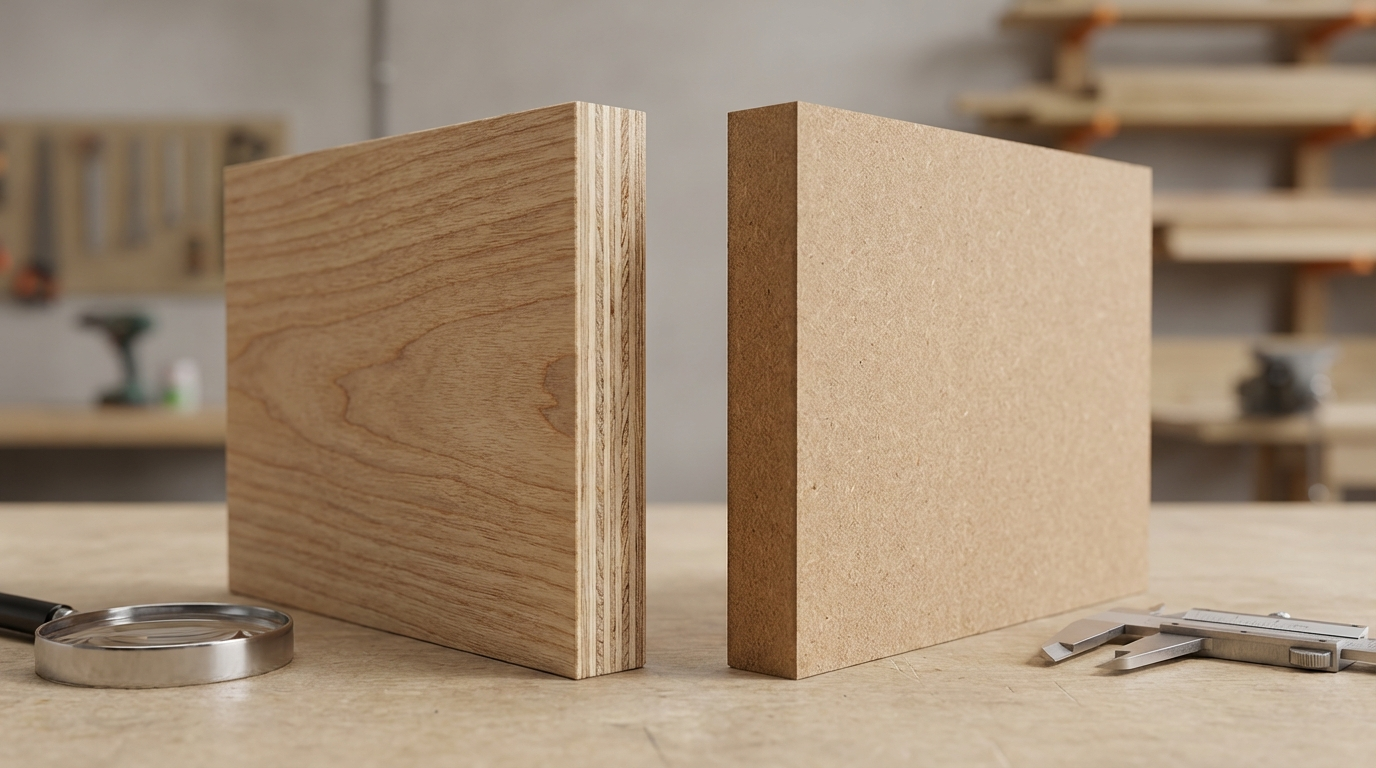
Hardwood Core offers highest durability but is slightly pricier. Particleboard Core is lightweight but less sturdy. Hollow Core is affordable but not ideal for main doors. Main entrance doors require solid core construction for security and durability.
Mistake 3: Ignoring Regional Climate Requirements
Austin's doors thrive in extreme climates—no swelling in monsoons or cracking in summers. Best for north Indian summers and northeast rains. South and coastal India require higher moisture resistance than North India's dry regions.
Mistake 4: Skipping Termite Treatment Verification
Ensure chemical treatments against termites and borers. Even premium plywood can be destroyed by termites if not properly treated. Always request termite treatment certificate.
Mistake 5: Selecting Based on Price Alone
The cheapest plywood often costs more in the long run due to premature replacement, warping repairs, and aesthetic degradation. Consider total cost of ownership over 10-15 years.
Mistake 6: Not Checking Core Material
Flush Doors made of kiln seasoned imported Maranti hardwood with GURJAN core and face are made out of high quality wood to make them exceptionally durable and dimensionally stable. Gurjan and hardwood cores significantly outperform poplar or mixed softwood cores.
Mistake 7: Ignoring Calibration Requirements
Flush doors demand perfectly even sheets to prevent warping, especially during lamination or veneer application. Calibrated ply ensures dimensional accuracy. Non-calibrated plywood leads to uneven lamination and finishing issues.
Mistake 8: Overlooking Face Veneer Quality
A smooth surface makes painting or applying laminates easy and ensures the final finish looks great. Poor face veneer results in visible defects after lamination or polish.
Mistake 9: Buying Without Brand Research
Unknown brands may lack quality control, warranty support, and consistent availability. Stick to established manufacturers with proven track records.
Mistake 10: Not Inspecting Before Delivery
Always inspect plywood sheets at the dealer's shop before accepting delivery. Check for damage, moisture stains, warping, and size accuracy.
Essential Questions to Ask Your Dealer
Plyprice.com recommends asking these specific questions before finalizing your purchase:
- "Is this plywood ISI marked? Can you show me the license number for verification?"
- "What is the exact grade—MR, BWR, or BWP? Show me the marking."
- "What core wood is used—Gurjan, poplar, eucalyptus, or mixed hardwood?"
- "Is this plywood calibrated for flush door applications?"
- "What termite and borer treatment has been applied?"
- "What warranty does the manufacturer provide? Is it transferable?"
- "Can you provide a proper GST invoice with manufacturer details?"
- "What is the face veneer thickness and wood species?"
- "Are you an authorized dealer for this brand?"
- "What is the cutting charge per sheet if I need specific sizes?"
- "Is transport included in the quoted price?"
- "Can you provide test certificates for glue adhesion and moisture resistance?"
- "What is your return/replacement policy if sheets are defective?"
- "Are there any ongoing promotions or bulk discounts available?"
- "How fresh is this stock? When was it manufactured?"
After Purchase: Transport, Storage, and Installation
Proper handling after purchase is critical to prevent damage and ensure optimal door performance. Flush doors should be dimensionally stable and free from defects like twisting, cupping, cracks, tearing or delamination.
Transport Guidelines
- Ensure sheets are flat during transport—never bend or fold
- Protect edges with cardboard or foam during loading
- Cover with tarpaulin to prevent moisture exposure
- Avoid transport during heavy rain if possible
Storage Requirements
- Store flat on a level surface, not leaning against walls
- Keep in covered, ventilated area away from direct sunlight
- Maintain minimum 6 inches gap from floor to prevent moisture absorption
- Stack with uniform support across the entire sheet
- Allow 48-72 hours acclimatization before fabrication
Installation Best Practices
- Ensure door frame is perfectly square and level before fitting
- Use appropriate size hinges based on door weight (3-inch for light, 4-inch for heavy doors)
- Pre-drill holes for screws to prevent splitting
- Maintain 3-5mm clearance at bottom for thermal expansion
- Seal all edges with primer before final finishing
- Apply minimum two coats of sealant/polish for complete protection
Top Brands for Plywood Doors in India
Greenply's flush doors are known for their antifungal coatings and elegant finishes, and their BWR-grade doors are a hit in humid regions like Kerala and coastal areas. Here's plyprice.com's analysis of leading door-grade plywood manufacturers:
| Brand | Specialty | Price Segment | Best For | Warranty |
|---|---|---|---|---|
| CenturyPly | Anti-termite, impact resistant | Premium | High-traffic areas | Up to 25 years |
| Greenply | Antifungal, BWR specialist | Premium | Coastal/humid regions | Up to 21 years |
| Action TESA | HDHMR doors, pre-laminated | Mid-Premium | Modern apartments | 10-15 years |
| Duro Ply | Hollow and solid core options | Mid-Range | Budget-conscious quality | 15 years |
| Austin Plywood | Extreme climate resistance | Mid-Premium | North India, NE states | Up to 20 years |
| Kitply | Monsoon Shield range | Budget-Mid | Rainy climate zones | 10-15 years |
| Archidply | Triple-layer bonding | Mid-Premium | Coastal/salt-air areas | 15 years |
| National Plywood | Budget-friendly, reliable | Budget | Standard residential | 7-10 years |
Note: This is independent editorial content. Plyprice.com is not affiliated with any of these brands. Please verify current specifications and prices with authorized dealers.
India-Specific Considerations for Door Plywood
Monsoon Impact
India's 3-4 month monsoon season is the ultimate test for door plywood. In India, where weather conditions can vary from one region to another, homeowners need something reliable. Doors facing outward in coastal Karnataka, Kerala, Mumbai, and Kolkata face 95%+ humidity for extended periods. BWP grade is mandatory for such locations.
Regional Climate Zones
- North India (Delhi, Punjab, UP, Rajasthan): Extreme temperature swings from 5°C to 45°C; choose plywood with good dimensional stability; MR grade acceptable for interior, BWR for exterior
- South India (Chennai, Bangalore, Kerala): Year-round humidity above 70%; BWR minimum for all doors, BWP for exterior and bathroom
- Coastal Areas (Mumbai, Goa, Vizag, Kochi): Salt-air corrosion, high humidity; Marine grade BWP essential for all exterior doors
- East India (Kolkata, Bhubaneswar, NE states): Heavy monsoon, prolonged humidity; BWP grade strongly recommended
Termite Prevalence
Always go for plywood that has been treated to prevent termite damage. South and coastal India face higher termite risk than North India. Ensure your plywood carries certified termite treatment documentation regardless of location.
ISI Standards Reference
- IS:303 - Commercial/MR Grade Plywood
- IS:710 - Marine/BWP Grade Plywood
- IS:2202 (Part 1) - Specifies the requirements for wooden flush door shutters (solid core type) with face panels of plywood or of cross-band and face veneers.
- IS:5509 - Fire-Retardant Plywood
Frequently Asked Questions
Which plywood grade is best for main entrance doors?
For main entrance and exterior doors, BWP/Marine plywood is the best choice because of its superior water resistance and durability. For semi-exterior or high-humidity areas, BWR plywood is suitable. Main entrance doors face direct exposure to rain, sun, dust, and temperature extremes. BWP (Boiling Water Proof) plywood conforming to IS:710 provides the necessary moisture resistance and dimensional stability. Always choose minimum 35mm thickness with hardwood or Gurjan core for maximum durability. This investment protects your home's primary entry point for 15-25 years.
What thickness plywood should I use for flush doors?
Typical door constructions use plywood or panels that result in finished door thicknesses of 25mm to 40mm. Choose thicker cores for heavier doors and security entrances. Standard flush door size is 7 feet x 3 feet with thickness ranging from 25mm to 40mm—thicker means sturdier. For interior flush doors, 30-32mm provides adequate strength for daily use. Main entrance doors should be 35-40mm for better security, sound insulation, and premium feel. Never go below 25mm even for store room doors as hardware installation becomes problematic.
Can I use MR plywood for bathroom doors?
MR (Moisture Resistant) plywood is not recommended for bathroom doors. Marine Plywood is ideal for exterior doors and moisture-prone areas as it is water-resistant, durable, and prevents warping—perfect for long-lasting doors. Bathrooms generate constant humidity from showers and steam. MR grade plywood will absorb moisture over time, leading to swelling, warping, and eventual delamination. Use BWR grade at minimum, preferably BWP grade for bathrooms with heavy usage or poor ventilation.
What is the price difference between MR, BWR, and BWP plywood for doors?
Commercial plywood price generally falls between ₹40-₹60 per sq ft. Waterproof (BWR) plywood price ranges between ₹60-₹90 per sq ft. Marine plywood price usually starts from ₹90 and can go up to ₹150 per sq ft. For a standard 7x3 feet door requiring approximately 21 sq ft of plywood, the material cost difference between MR (₹1,050-1,260) and BWP (₹1,890-3,150) ranges from ₹840 to ₹1,890. This premium is worth paying for moisture-exposed applications.
How do I identify genuine BWP plywood for doors?
Look for products that conform to Indian Standards (IS:710) for BWP Grade plywood. This certification ensures that the plywood has undergone rigorous testing and meets the necessary quality benchmarks. Verify the ISI mark authenticity by checking the license number on the official BIS website. Genuine BWP plywood will display clear markings including manufacturer name, license number, grade (BWP), thickness, and standard reference (IS:710). Request test certificates from the dealer if marks are unclear.
Which core material is best for door plywood—Gurjan, poplar, or eucalyptus?
Gurjan core plywood is the premium choice for doors, offering superior strength, screw-holding capacity, and dimensional stability. The Globe Gurjan Inside Flush Door is built with a full pine double core topped with premium Gurjan hardwood face, offering excellent dimensional stability, resistance to moisture, and a refined appearance. Eucalyptus offers good value at mid-range prices. Poplar is lightest and most affordable but less durable. For main entrance doors, always choose Gurjan or hardwood core.
Should I buy ready-made flush doors or get them fabricated?
Both options have merits depending on your requirements. Flush doors are flat panel doors with a solid or semi-solid core sandwiched between plywood layers, popular in Indian homes, offices, and commercial buildings for their durability, clean design, and cost-effectiveness. Ready-made flush doors from reputed brands offer factory quality control, consistent dimensions, and warranty coverage. Custom fabrication allows size flexibility and specific grade selection. For standard sizes, branded ready-made doors are often more reliable. For non-standard sizes or specific requirements, custom fabrication is necessary.
How long does plywood door last in Indian conditions?
Plywood door lifespan depends on grade selection, installation quality, and maintenance. BWP grade doors in proper locations last 20-25 years with minimal maintenance. BWR grade interior doors perform well for 15-20 years. Plywood for doors is popular for homeowners looking for durability, strength, and aesthetic appeal. Choosing the right plywood ensures long-lasting doors that resist warping, moisture damage, and termites. Poor grade selection or improper installation can reduce lifespan to just 5-7 years.
Can plywood doors be painted, laminated, or polished?
Properly manufactured plywood resists warping, provides consistent thickness, and accepts veneers, laminates, paints, or polish very well—making it ideal for both interior and exterior doors. Pre-Laminated doors are ready-to-install with glossy/matte finishes. Paintable options allow customization with your favorite colors. All finishing options work well on quality plywood with smooth face veneers. Ensure surface is properly sanded and primed before applying any finish for best results.
What is the difference between flush doors and panel doors?
Flush doors have a plain, smooth surface, ideal for modern and minimalist interiors. Panel doors feature raised or recessed panels and are more traditional in design. Flush doors use plywood sheets over a core structure, creating a flat surface. Panel doors incorporate solid wood frames with raised/recessed panels for a classic aesthetic. Flush doors are more affordable and easier to maintain. Panel doors offer better sound insulation and a premium traditional look.
Is waterproof plywood truly waterproof for exterior doors?
Boiling Water Proof (BWP) plywood is specifically treated to withstand boiling water exposure without delamination or losing its structural integrity. It is made using phenolic resins and is ideal for applications where the plywood will be exposed to water for extended periods. However, "waterproof" means water resistance, not complete impermeability. Even BWP doors require proper finishing, edge sealing, and periodic maintenance. Direct and prolonged water pooling will eventually damage any plywood. Proper installation with adequate overhangs and drainage is essential.
How do I prevent my plywood doors from warping during monsoon?
A plywood with a consistent core will be more stable and last longer. Prevent warping by selecting BWR or BWP grade plywood with uniform core construction. Ensure both sides of the door receive equal finishing treatment—if you laminate or polish one side, treat the other side similarly. Seal all edges completely with primer and top coat. Maintain proper ventilation in the room. Avoid direct water splashes on door surfaces. Install appropriate weather strips on exterior doors.
What hardware works best with plywood doors?
Use stainless steel or brass hardware for moisture resistance. For hinges, choose ball-bearing type rated for your door weight—100mm hinges for doors up to 35mm thickness, 125mm for heavier doors. Pre-drill pilot holes to prevent core splitting. Use minimum 3 hinges for doors above 7 feet height. For locks, ensure mortise pocket depth matches door thickness minus 6mm for structural integrity. Always use appropriate length screws—typically 25-30mm for hardware installation.
Are fire-retardant plywood doors available for residential use?
Yes, fire-retardant plywood conforming to IS:5509 is available for residential applications. These are recommended for kitchen doors, electrical room doors, and main entrance doors in high-rise buildings. Fire-retardant treatment adds approximately 20-30% to the base plywood cost. While not mandatory for residential interiors, they offer valuable safety benefits especially in apartments and multi-story buildings.
Where can I buy the best plywood for doors in India?
Purchase from authorized brand dealers for genuine products with warranty support. Major cities have dedicated plywood markets (timber mandis) offering competitive prices—Yamunanagar hub for North India, Kerala timber markets for South India. Online platforms of established brands also offer convenient purchasing. Regardless of source, always verify ISI certification, collect proper tax invoice, and inspect products before accepting delivery. Plyprice.com's city-wise guides provide specific market locations and dealer information across India.
Disclaimer: This content is provided for general informational purposes based on industry practices and publicly available information. Product specifications, standards, prices, and availability may vary by manufacturer, region, and time. Readers should independently verify details with manufacturers, dealers, or qualified professionals before making purchase or construction decisions.Want Plywood Suggestions?
Share a few details and a PlyPrice specialist will suggest suitable brands and connect you to responsive dealers.