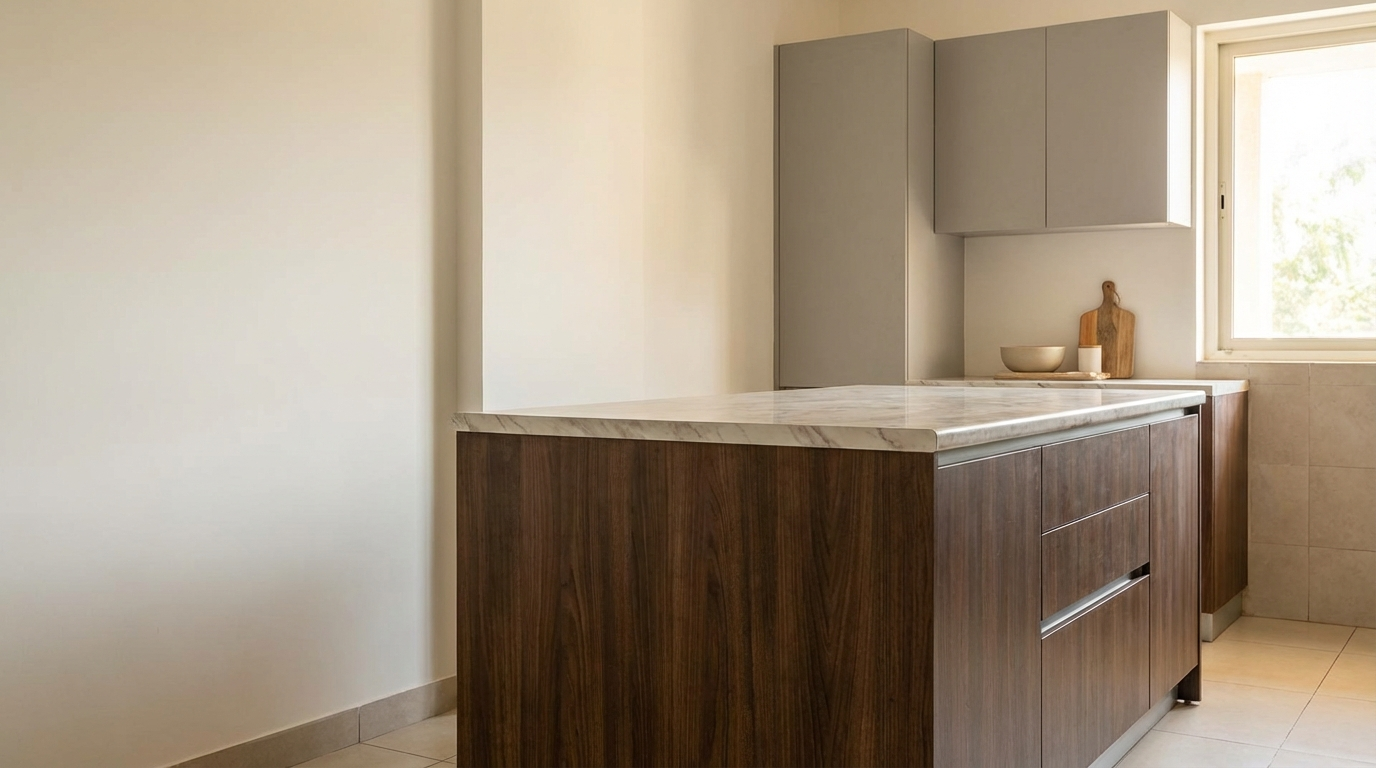
Types of Laminates: Complete Guide for Indian Interiors 2026
Complete guide to laminate types in India. HPL, LPL, acrylic, PU, matte & glossy finishes explained. Best laminates for wardrobe, kitchen & more.
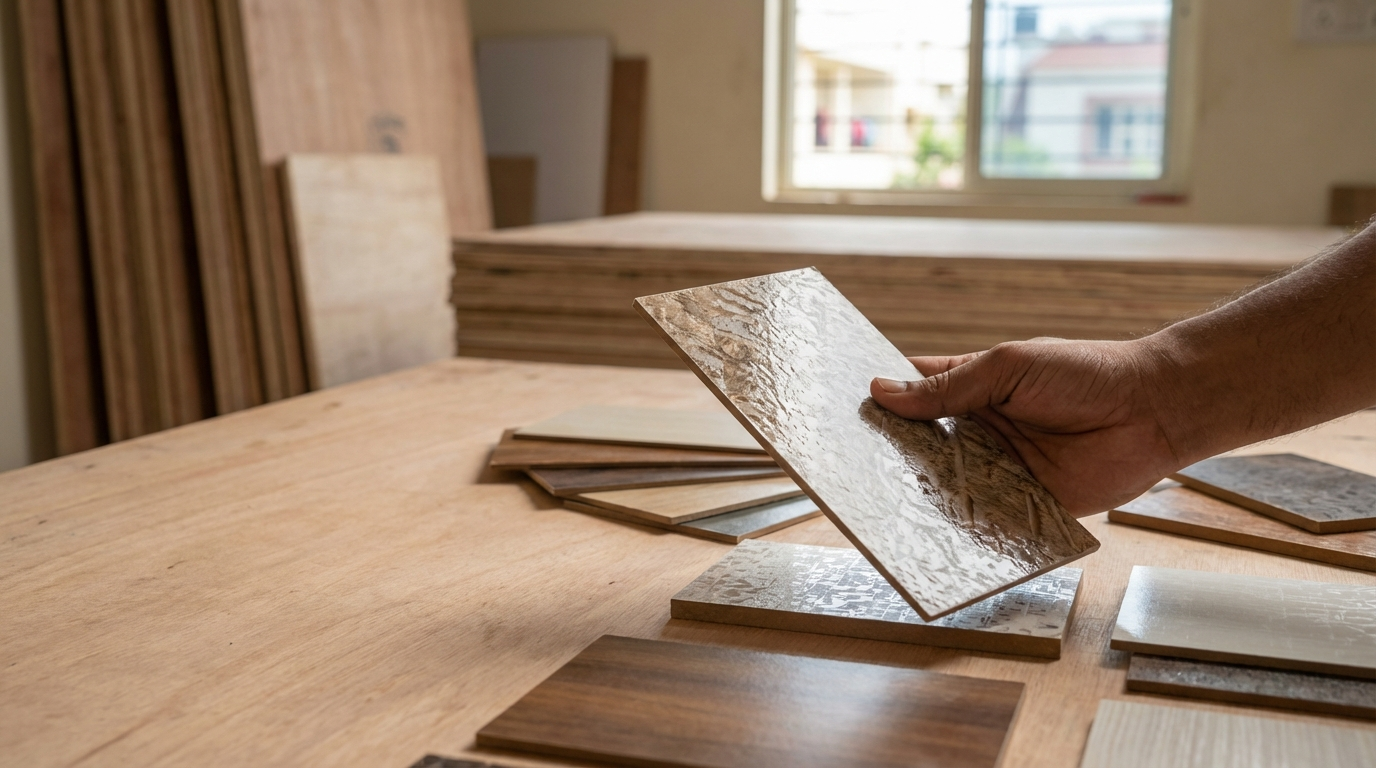
Quick Answer: Types of Laminates in 30 Seconds
Laminates are thin decorative sheets made by pressing layers of paper, resin, and protective coatings together under heat and pressure, then bonded to substrates like plywood, MDF, or HDHMR for furniture and interior applications. Laminate can enhance the aesthetics of different types of surfaces like walls, cabinets and furniture. They also provide durability and strength to these surfaces.
In simple terms, laminates are the protective and decorative surface layer you see on kitchen cabinets, wardrobes, tables, and wall panels across Indian homes. According to plyprice.com's research across 100+ brands, laminates in India range from ₹30 to ₹350 per square foot depending on type, thickness, brand, and finish—making them one of the most versatile and cost-effective surfacing solutions available.
- High-pressure laminates (HPL) are known for exceptional durability and resistance to wear and tear, perfect for high-traffic areas like kitchens and commercial spaces.
- Low-pressure laminates (LPL) are more affordable than HPL and suitable for areas with moderate traffic, such as bedrooms and living rooms.
- Acrylic laminates provide a premium, super high-gloss, mirror-like finish very popular in modern kitchens. They are highly scratch-resistant and give a luxurious feel.
- Compact laminates are thick, self-supporting laminates that are extremely strong and water-resistant. They are used for restroom cubicles, lab tables, and wall panelling.
- The laminate cost per square foot lies between ₹56.25 per sq ft (high gloss laminate sheets) to ₹350 per sq ft (PVC laminate cost).
- Standard sheet size in India: 8x4 feet (most common), also available in 10x4 feet
What Exactly Are Laminates? Complete Understanding for Indian Homeowners
Laminates are multi-layered decorative sheets manufactured by fusing paper layers with thermosetting resins under controlled heat and pressure conditions. The composition of HPL sheets is typically 60-70 per cent paper and 30-40 per cent thermosetting resin. There are three layers: overlay paper, decorative paper and kraft paper. Overlay paper contributes to the product's abrasion and scratch resistance; decorative paper contributes to its aesthetic appeal and craft paper acts as a core to control the product's thickness.
For Indian homes, laminates solve a critical problem: they provide the appearance of expensive materials like marble, teak wood, or stone at a fraction of the cost. As detailed in plyprice.com's pricing database, a marble-finish laminate costs ₹40-100 per sq ft versus actual marble at ₹300-800+ per sq ft—a savings of up to 80%.
Manufacturing Process Simplified
High-pressure laminate sheets are manufactured by stacking layers of paper or fabric and thermosetting with resins and additives under high heat and pressure conditions. They are strong, flexible, and versatile and can be used for numerous applications, like flooring and cladding. A protective outermost layer is applied onto the surface to make HPL sheets resistant to fire, construction chemicals, and water.
Laminate Full Form and Terminology
The term "laminate" comes from "lamina" meaning thin layer. In India, laminates are commonly called "sunmica" (a brand name that became generic), "formica," or simply "ply finish." Key terminology includes:
- HPL – High Pressure Laminate (pressed at 1000-1500 psi)
- LPL – Low Pressure Laminate (pressed directly onto substrate)
- Decorative Laminate – Any laminate with aesthetic surface pattern
- Compact Laminate – Thick, self-supporting laminate panels
- Post-forming Laminate – Flexible laminates for curved surfaces
Types of Laminates Available in India: Complete Classification
India's laminate market offers over 15 distinct laminate types, each designed for specific applications and performance requirements. Plyprice.com's analysis of 100+ brands shows that understanding these categories is essential for making the right choice for your interiors.
| Laminate Type | Best For | Moisture Resistance | Price Range (₹/sq ft) | Availability in India |
|---|---|---|---|---|
| HPL (High Pressure Laminate) | Kitchens, commercial spaces, high-traffic areas | High | ₹40-300 | Widely available |
| LPL (Low Pressure Laminate) | Wardrobes, bedroom furniture, budget projects | Moderate | ₹25-60 | Very common |
| Acrylic Laminate | Modern kitchens, luxury wardrobes, premium interiors | High | ₹80-250 | All metros, limited in Tier-3 |
| PU (Polyurethane) Finish | High-end kitchens, designer furniture | Very High | ₹150-400 | Metro cities primarily |
| Compact Laminate | Restroom cubicles, lab tables, exterior cladding | Very High | ₹150-400 | Major cities |
| Decorative Laminate | All interior furniture, walls, cabinets | Moderate | ₹30-150 | Pan-India |
| Post-forming Laminate | Curved edges, rounded furniture, countertops | Moderate-High | ₹50-120 | Major hardware markets |
| Anti-bacterial Laminate | Hospitals, kitchens, laboratories | High | ₹80-200 | Specialty dealers |
| Fire-retardant Laminate | Commercial buildings, hotels, public spaces | High | ₹100-250 | Commercial dealers |
| Exterior Laminate | Building facades, outdoor furniture | Very High | ₹100-350 | Specialty stores |
| Digital Print Laminate | Custom designs, personalized interiors | Moderate | ₹80-200 | Brand showrooms |
| Metallic Laminate | Modern offices, accent furniture | Moderate | ₹100-200 | Premium dealers |
High Pressure Laminate (HPL) – The Industry Standard
HPL is the most common and durable type of decorative laminate. It is made under high pressure, making it ideal for surfaces that see a lot of use, like kitchen countertops, tables, and doors.
HPL thickness ranges from 0.6mm to 1.5mm for decorative applications and up to 12mm+ for compact panels. For most furniture, a thickness of 0.8mm to 1.2mm is ideal. Thicker laminates generally offer better durability and impact resistance.
The perfect choice for heavy-use environments, high pressure laminate sheets are ideal for various applications such as retail outlets, hospitals, offices, and hotels. In addition to being suitable for bonding to all types of substrates, HPL sheets can be cold bent or postformed for curved surfaces.
Low Pressure Laminate (LPL) – Budget-Friendly Option
Differing only in the pressure with which the laminate material is applied to a substrate, HPL is usually used with plywood while LPL finds its use with MDF. LPL is thermally fused directly onto particle board or MDF during manufacturing, making it inseparable from the substrate.
LPL is frequently used for wall panels because of its architectural versatility and ease of cleaning. Because of its low cost and vast range of design options, it is commonly used for cabinetry and interior furniture. Pros: low cost, easy to clean, and various design alternatives. Cons: Not as long-lasting as HPL and may not tolerate hard wear.
Acrylic Laminate – Premium High-Gloss Option
Similar to Lacquer, Acrylic is also a transparent paint that has a high gloss finish, which gives your cabinets a smooth appearance. As compared to lamination, it is the more expensive option; however, it is nontoxic and gives a glossy shine to the cabinets.
Acrylic offers a broader range of colors and finishes and tends to be less expensive than PU, while PU provides a durable, high-gloss finish but may cost more and offer fewer color options.
PU (Polyurethane) Finish – Luxury Choice
PU (Polyurethane) paint is a high-quality liquid paint coating applied to MDF or plywood cabinets. It offers a seamless, luxurious, and glossy or matte finish that enhances the overall look of the kitchen. Features include high-gloss or matte finish with a seamless look, smooth and luxurious texture, scratch-resistant and durable.
PU chips easily even on minor hits and hence is unsuitable for moving pieces or those that will come under heavy use. If you want maintenance-free shutters then avoid duco or any other painted finish (like PU).
Compact Laminate – Heavy-Duty Solution
Compact laminates are thick, self-supporting laminates (usually 3–12 mm). Due to their remarkable durability and moisture resistance, compact laminates provide the strongest partitions for restrooms. These materials are utilized for tabletops in commercial settings due to their long-lasting qualities. Wherever a durable and easily maintained surface is needed, compact laminates are the best material for wall cladding. Pros: Exceptionally strong, long-lasting, and resistant to water. Cons: It may need professional installation and is more costly.
Laminate Finishes Explained: Matte, Gloss, Textured, and More
The finish of a laminate determines its visual appearance, maintenance needs, and suitability for different applications. Plyprice.com recommends understanding finish types before selecting laminates for your project.
| Finish Type | Appearance | Fingerprint Visibility | Best Applications | Maintenance Level |
|---|---|---|---|---|
| High Gloss | Mirror-like, reflective | Very High | Modern kitchens, accent pieces | High (frequent wiping needed) |
| Matte/Suede | Smooth, non-reflective | Low | Wardrobes, bedrooms, offices | Low |
| Textured/Embossed | Tactile surface, realistic wood/stone feel | Low | Living room furniture, doors | Medium |
| Satin | Subtle sheen, between matte and gloss | Medium | All-purpose furniture | Medium |
| Anti-fingerprint (AFX) | Smooth with fingerprint resistance | Very Low | Kitchen handles, high-touch areas | Very Low |
| Metallic | Metal-like shimmer | High | Accent walls, modern offices | High |
"Using an amalgamation of acrylic and laminate is the best thing one can do in their kitchen. This combination gives the richness of glass through acrylic and the subtlety of matte finish through laminate."
Which Laminate Type for Kitchens and Bathrooms?
Laminates for Indian kitchens should be resistant to moisture, heat, and stains. Because of their durability and moisture resistance, high-pressure (HPL) and compact laminates are frequently recommended.
For Indian kitchens, where cooking involves heavy spice use, oil splatter, and steam exposure, plyprice.com recommends:
- Cabinet shutters: HPL with matte or anti-fingerprint finish (0.8-1mm thickness)
- Cabinet carcass: Pre-laminated HDHMR or BWR plywood with basic LPL
- Countertops: Compact laminates (6-12mm) or HPL on BWP plywood
- Backsplash: Compact laminates or anti-bacterial HPL
High-pressure laminates (HPL) are highly resistant to heat, moisture, and scratches, making them ideal for countertops and cabinets. Compact laminates are thicker and self-supporting, suitable for worktops and areas with high wear and tear. Fire-retardant laminates offer added safety in kitchen environments. Choose laminates with antibacterial properties to maintain hygiene.
Which Laminate Type for Wardrobes and Bedrooms?
A good quality High-Pressure Laminate (HPL) with a thickness of 0.8mm or 1mm from a reputable brand is the best and most durable choice for beds, wardrobes, and tables. A thickness of 0.8mm is suitable for vertical surfaces like wardrobe doors, while a slightly thicker 1mm laminate is recommended for horizontal surfaces like tabletops for better durability.
For wardrobes and bedrooms, moisture resistance requirements are lower, so options include:
- Shutter exteriors: Decorative HPL or acrylic for modern look
- Internal partitions: LPL on MDF or pre-laminated boards
- Bed headboards: Textured laminates or leather-finish options
- Study tables: HPL 1mm for horizontal surfaces
Which Laminate Type for Commercial/Office Use?
Stylam is a major manufacturer known for its vast portfolio of surfacing products, including high-performance speciality laminates. The brand is recognised globally for its technical excellence and its ability to produce durable laminates for demanding commercial and industrial applications.
Commercial applications require enhanced durability:
- Office furniture: HPL with scratch-resistant finish
- Reception desks: Compact laminates or premium HPL
- Conference tables: Anti-bacterial and scratch-resistant HPL
- Wall paneling: Fire-retardant laminates (compliance with safety norms)
Technical Specifications: What Each Spec Means for You
Understanding laminate specifications helps you make informed decisions and communicate effectively with your carpenter or contractor.
| Specification | Standard Range | What It Means for You | Relevant Indian Standard |
|---|---|---|---|
| Thickness | 0.6mm - 12mm+ | Thicker = more durable, better for horizontal surfaces | IS:2046 |
| Sheet Size | 8x4 ft, 10x4 ft, 12x6 ft | Standard 8x4 covers 32 sq ft; plan cutting to minimize waste | - |
| Density | 1.35-1.45 g/cm³ | Higher density = better scratch and impact resistance | IS:2046 |
| Abrasion Resistance | 100-500 revolutions | Higher number = more scratch-resistant surface | IS:2046 |
| Impact Resistance | 20-60 N | Important for surfaces prone to accidental hits | IS:2046 |
| Heat Resistance | 140-180°C | Critical for kitchen applications near cooking zones | IS:2046 |
| Boiling Water Resistance | Grade 1-4 | Grade 1 is best for wet areas like kitchens | IS:2046 |
Specifications like size and thickness play a pivotal role in the pricing of the products. Thick, heavy-grade sheets, up to 6mm thick or above, carry a higher price than their thin counterparts, which are 1 mm or less in thickness.
Top Laminate Brands Manufacturing in India
The best laminate brands in India are Royale Touche, Greenlam, CenturyPly, and Merino, which are known for their quality and variety. According to plyprice.com's analysis of the Indian laminate market, these brands offer varying price points and specializations.
| Brand | Grade Range | Price Segment | Key Feature | Pan-India Availability |
|---|---|---|---|---|
| Greenlam | Premium to Luxury | ₹50-200/sq ft | Eco-certified, antibacterial options | Excellent (14,000+ dealers) |
| Merino | Mid to Premium | ₹45-180/sq ft | 10,000+ designs, visualizer tool | Excellent |
| Century Laminates | Economy to Premium | ₹35-150/sq ft | Germ-guard technology, fire-resistant | Excellent |
| Royale Touche | Premium to Luxury | ₹60-250/sq ft | Luxury finishes, 600+ designs | Very Good |
| Stylam | Mid to Premium | ₹50-200/sq ft | Commercial-grade, exterior options | Good |
| Virgo | Economy to Mid | ₹30-120/sq ft | Budget-friendly, acrylic range | Good |
| AICA Sunmica | Economy to Mid | ₹30-100/sq ft | Legacy brand, reliable quality | Excellent |
| Formica | Premium | ₹70-200/sq ft | International quality standards | Moderate |
Merino is manufacturer and exporter of decorative laminates from last 48 years, exporting more than 60 countries across globe. Merino laminates has over 10,000 designs, colours, textures and finishes.
Greenlam Laminates – Asia's largest laminate sheets company – offers premium laminate sheets popularly known as sunmica sheet, in plenty of designs and textures for interiors.
Note: This is independent editorial content. Plyprice.com is not affiliated with any brand mentioned. Please verify current specifications and prices with authorized dealers.
Common Misconceptions About Laminates Cleared
Plyprice.com regularly encounters confusion about laminates among homeowners. Here are the facts:
Misconception 1: All laminates are waterproof
Standard decorative laminates are not waterproof. Decorative laminates are water-resistant, but not waterproof. Compact laminates are the closest to being waterproof and can be used in wet areas like bathroom partitions.
Misconception 2: Laminates attract termites
Laminates themselves are generally not susceptible to termites as they are made of paper and resin. However, the underlying wood (like plywood or MDF) should be termite-proof.
Misconception 3: Higher price always means better quality
Price often reflects design exclusivity rather than durability. A ₹50/sq ft HPL from a reputed brand may outperform a ₹100/sq ft decorative laminate in kitchen conditions.
Misconception 4: Glossy laminates are harder to maintain
Durability depends on how you maintain the material. One of the easiest to maintain is laminate, though. Glossy surfaces show fingerprints more but are actually easier to wipe clean than textured surfaces.
Misconception 5: Acrylic and laminate are the same
If you like a glossy finish, acrylic is better than laminate. Laminate is more affordable, however. Acrylic is a solid sheet bonded to substrate; laminate is a multi-layer pressed product.
Misconception 6: LPL can be used for kitchen cabinets
While technically possible, LPL lacks the moisture and heat resistance needed for Indian kitchen conditions with heavy cooking and steam exposure.
Advantages and Limitations: Honest Assessment
Advantages of Laminates
- Cost-effective aesthetics: Laminates offer the appearance of high-end materials like marble or teakwood without the hefty price tag. Elevate your home's style without exceeding your budget.
- Durability: Laminates are incredibly tough, surviving scratches, stains, and even accidental heat exposure. Your kitchen counters and furniture will remain pristine for years to come.
- Design variety: Available in thousands of patterns, colors, and textures mimicking wood, stone, fabric, and abstract designs
- Easy maintenance: Dust your laminated surfaces regularly. Clean with a mildly wet cloth and wipe dry with gentle strokes. Avoid using abrasive cleaners or steel wool scrubbers.
- Hygienic: Non-porous surface prevents bacterial growth; antibacterial options available for healthcare settings
- Consistent quality: Factory-manufactured under controlled conditions ensures uniform quality
- Climate suitable: Performs well in India's varied humidity conditions when properly installed
- Quick installation: Carpenters across India are familiar with laminate application techniques
Limitations and Workarounds
- Not repairable: Damaged laminates must be replaced, not patched. Workaround: Keep spare sheets from original purchase for future repairs.
- Edge visibility: Laminates wear better but show thin black edging which even the best laminates show. Workaround: Use matching edge banding or post-forming laminates.
- Heat sensitivity: Standard laminates can blister near direct heat sources. Workaround: Use heat-resistant variants near cooking zones; always use trivets.
- Moisture penetration at edges: Water can seep through unsealed edges. Workaround: Ensure proper edge sealing with PVC edge bands.
- UV fading: Some laminates may fade with prolonged sun exposure. Workaround: Choose UV-resistant exterior grades for sun-exposed furniture.
- Not truly natural: Cannot replicate 100% feel of real wood or stone. Workaround: Consider premium embossed/textured laminates for more realistic feel.
Best Applications for Laminates in Indian Homes
According to plyprice.com's expert recommendations, here's where different laminates work best:
Kitchen Applications
- Cabinet shutters: HPL (0.8-1mm) with matte or anti-fingerprint finish
- Countertops: Compact laminates (6-12mm) on BWP plywood
- Backsplash: Antibacterial HPL or compact laminates
- Internal carcass: Pre-laminated HDHMR or basic LPL
Bedroom and Wardrobe Applications
- Wardrobe exteriors: Decorative HPL or acrylic for modern look
- Wardrobe internals: LPL on MDF (cost-effective)
- Bed headboards: Textured or fabric-finish laminates
- Dressing units: Mirror-finish acrylic or high-gloss HPL
Living Room Applications
- TV units: Combination of matte and high-gloss for contrast
- Wall paneling: Textured or woodgrain HPL
- Display shelves: Decorative HPL matching furniture theme
- Center tables: 1mm+ HPL for horizontal surfaces
Commercial Applications
- Office furniture: Scratch-resistant HPL with matte finish
- Restroom partitions: Compact laminates (12mm+)
- Reception areas: Premium compact or acrylic laminates
- Healthcare facilities: Greenlam offers antibacterial laminates manufactured using antimicrobial agents that are commonly used in many cosmetics. Their antibacterial range is completely US-EPA approved, making it ideal for laboratories, chemistry labs, hospitals, and other spaces prone to microbial growth.
Quality Verification Without Lab Tests
When purchasing laminates, use these practical checks that any homeowner can perform:
Take a small sample and try to bend it. A good quality laminate will be flexible and resist snapping.
- Brand marking check: A genuine laminate from a top brand will have the brand name, logo, and product code printed on the brown paper backing of the sheet. Always purchase from authorised dealers.
- Flexibility test: Bend a sample slightly—quality laminates flex without cracking; poor quality ones snap or show stress marks
- Uniform thickness: Check for a uniform finish and consistent thickness across the sheet.
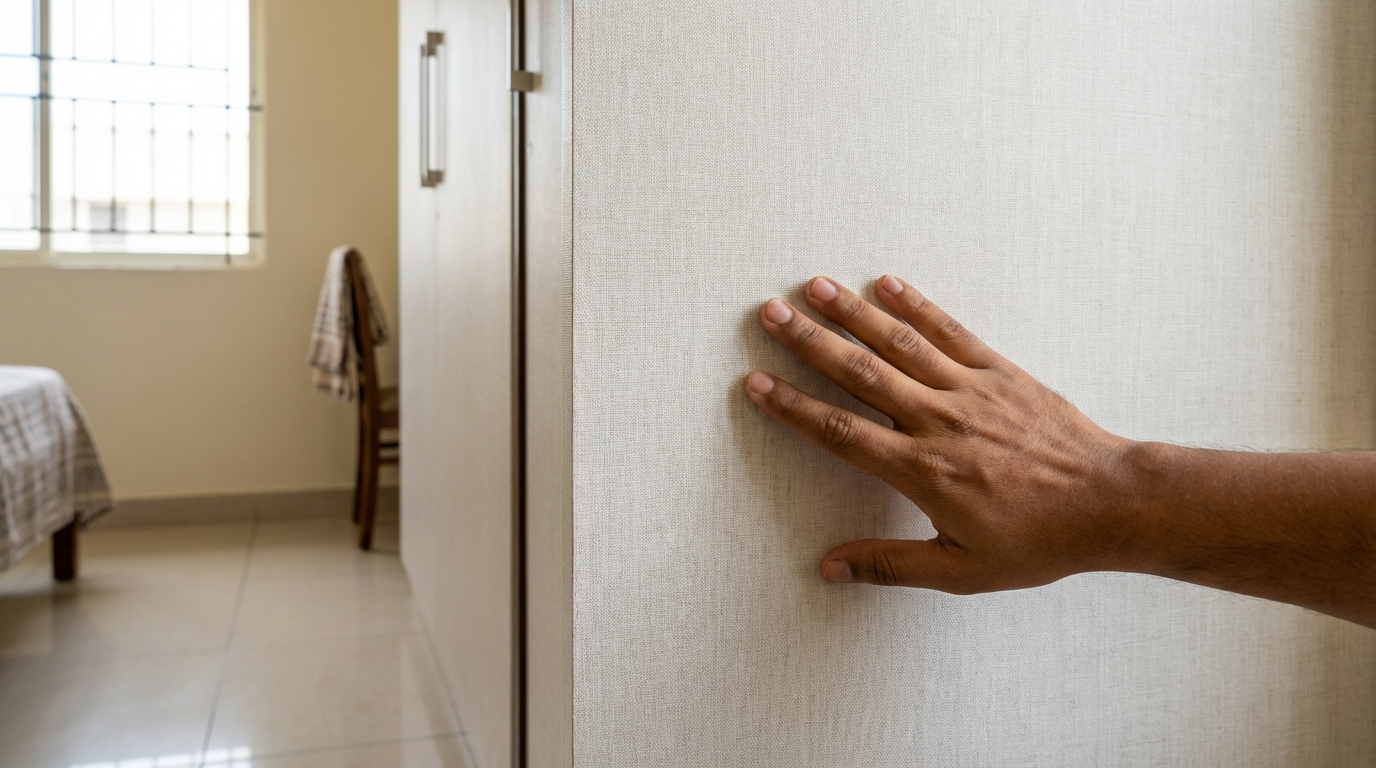
- Surface consistency: Run your hand across the surface; it should feel uniformly smooth without bumps or depressions
- Edge quality: Edges should be clean-cut without chipping or delamination
- Color matching: If buying multiple sheets, ensure the colour, pattern, and finish are consistent across all of them to avoid a patchy look.
- Smell test: Strong chemical odor indicates poor-quality resins or fresh manufacturing (allow curing time)
- Weight comparison: Similar-sized sheets should have comparable weight; unusually light sheets may indicate low density
Questions to Ask Your Dealer
- Is this HPL or LPL? (Don't rely on "decorative laminate" description)
- What is the exact thickness in mm?
- Is this suitable for kitchen/wet area use?
- What is the warranty period and coverage?
- Do you have the manufacturer's technical datasheet?
- Is this from the latest production batch? (Check manufacturing date)
Care, Maintenance, and Longevity
Proper care extends laminate lifespan significantly. Here's what plyprice.com recommends:
Daily Care Routine
- Dust your laminated surfaces regularly. Clean with a mildly wet cloth and wipe dry with gentle strokes.
- Wipe spills immediately, especially acidic substances like lemon or vinegar
- Use coasters under hot vessels (even on heat-resistant laminates)
Cleaning Methods
- Any basic home cleanser or water is utilized to clean HPL surfaces. To clean HPL surfaces, do not use acids, alkalis or chlorinated products. After washing HPL surfaces with a cleaning agent, always wipe them down with a dry towel. Additionally, wax polishing is not advised for HPL surfaces since it could draw in dust and dirt build-up.
- For stubborn stains: Mix mild dish soap with warm water; avoid abrasive pads
- For greasy surfaces: Use a mixture of vinegar and water (1:4 ratio)
What to Avoid
- Avoid using abrasive cleaners or steel wool scrubbers. Protect the surface from exposure to excess water and sunlight.
- Never use bleach, acetone, or strong solvents
- Avoid cutting directly on laminate surfaces
- Don't place extremely hot items directly on surface
Expected Lifespan by Type
- HPL in kitchens: 15-20 years with proper care
- Acrylic laminates: 12-15 years
- LPL on furniture: 10-15 years
- Compact laminates: 20-25+ years
- PU finish: 8-12 years (may need re-coating)
Price Guide: What to Expect in 2026
Laminate pricing in India varies based on type, thickness, brand, finish, and location. Latest cost of sunmica sheet is ₹30-200/sq ft.
| Laminate Type | Economy Range (₹/sq ft) | Mid-Range (₹/sq ft) | Premium Range (₹/sq ft) |
|---|---|---|---|
| Decorative HPL (0.8mm) | ₹30-50 | ₹50-80 | ₹80-150 |
| Decorative HPL (1mm) | ₹40-60 | ₹60-100 | ₹100-200 |
| Acrylic Laminate | ₹80-120 | ₹120-180 | ₹180-250 |
| Compact Laminate (6mm) | ₹150-200 | ₹200-300 | ₹300-400 |
| LPL/Pre-laminated Board | ₹25-40 | ₹40-60 | ₹60-80 |
| Exterior HPL | ₹100-150 | ₹150-250 | ₹250-350 |
On average, the 3mm HPL sheet price in India ranges between ₹100 to ₹250 per sq ft. On average, the 4mm HPL sheet price in India ranges between ₹120 to ₹250 per sq ft. On average, the 6mm HPL sheet price in India ranges between ₹150 to ₹250 per sq ft. On average, the 8mm HPL sheet price in India ranges between ₹190 to ₹315 per sq ft.
Regional Price Variations
- Metro cities (Delhi, Mumbai, Bangalore, Chennai): Base prices as quoted
- Tier-2 cities: 5-10% lower than metros due to lower overhead
- Tier-3 and rural areas: 10-15% higher due to transport costs and limited availability of premium options
- Manufacturing hub areas (Gujarat, Haryana): 5-15% lower for local brands
Factors Affecting Price
- The prices of glossy and matte finishes differ from each other, and for user-specific customisations, prices may differ for different brands.
- Discrete and customised designs, attention to detail and complexity of patterns can increase the price per sq ft of HPL sheets.
- Brand premium: Tier-1 brands command 20-40% premium over local brands
- GST: 18% GST applicable on all laminates
- Quantity discounts: 10-15% savings possible on bulk purchases
India-Specific Considerations: Climate, Monsoon, and Regional Factors
Monsoon and Humidity Impact
India's monsoon season (June-September) creates unique challenges for interior materials. Plyprice.com recommends:
- Coastal areas (Mumbai, Chennai, Kerala): Use only HPL or compact laminates; avoid LPL for exposed furniture
- High humidity regions: Ensure all edges are properly sealed with PVC edge banding
- Monsoon installation: Allow extra curing time for adhesives; avoid installation during heavy rains
- Bathroom adjacency: Use compact laminates or ensure waterproof substrate (BWP plywood)
Regional Climate Considerations
- North India (Delhi, Punjab, UP): Extreme temperature variations require laminates with good thermal stability; avoid cheap laminates that may warp
- South India (Chennai, Bangalore, Kerala): Year-round humidity demands moisture-resistant options; compact laminates recommended for kitchens
- West India (Mumbai, Gujarat, Rajasthan): Coastal humidity in Mumbai requires HPL minimum; dry heat in Rajasthan less demanding
- East India (Kolkata, NE states): Heavy monsoons require careful edge sealing and moisture-resistant options
Termite Considerations
While laminates themselves don't attract termites, the underlying substrate does. Always:
- Use BWR/BWP grade plywood with anti-termite treatment
- Apply termite-resistant primer on all wood surfaces before laminating
- Ensure no gaps between laminate and wall where termites can enter
- Regular inspection of furniture bases and wall contact points
Frequently Asked Questions
What is HPL and why is it better than regular laminate?
HPL stands for High Pressure Laminate, manufactured under 1000-1500 psi pressure compared to LPL's lower pressure. HPL is the most common and durable type of decorative laminate. It is made under high pressure, making it ideal for surfaces that see a lot of use, like kitchen countertops, tables, and doors. The higher pressure creates denser, more durable sheets with better scratch, heat, and moisture resistance. For Indian kitchens with heavy cooking, HPL is strongly recommended over LPL.
What is the difference between laminate and sunmica?
Sunmica is actually a brand name that became generic in India, similar to how "Xerox" is used for photocopies. All sunmica sheets are laminates, but not all laminates are Sunmica brand. When shopping, focus on laminate type (HPL, LPL, compact) rather than brand names to ensure you get the right product for your application.
Which is better: acrylic or laminate for kitchen cabinets?
If you like a glossy finish, acrylic is better than laminate. Laminate is more affordable, however. Acrylic cabinets are generally less expensive than PU cabinets. However, both options are more costly compared to other materials like laminate. For Indian kitchens, HPL with matte finish offers the best balance of aesthetics, durability, and cost. Acrylic suits modern kitchens where high-gloss look is preferred.
What is the best laminate thickness for wardrobes?
A thickness of 0.8mm is suitable for vertical surfaces like wardrobe doors, while a slightly thicker 1mm laminate is recommended for horizontal surfaces like tabletops for better durability. For wardrobe shutters (vertical), 0.8mm HPL is adequate. For shelves and dresser tops (horizontal), use 1mm for better impact resistance.
How long do laminates last in Indian conditions?
Quality HPL laminates last 15-20 years in kitchen conditions and 20+ years in bedroom furniture with proper care. Factors affecting lifespan include: quality of installation, edge sealing, exposure to moisture and heat, and maintenance practices. Cheap laminates may show wear within 5-7 years, especially in high-use kitchen areas.
Can laminates be used in bathrooms?
Compact laminates are the closest to being waterproof and can be used in wet areas like bathroom partitions. Standard decorative laminates should not be used in direct wet areas. For bathroom vanities, use compact laminates on marine plywood with properly sealed edges.
What is the price of laminate sheets in India?
Laminates from top brands in India range between ₹700 to ₹2,000 per sheet, depending on quality and design. Per square foot, the latest cost of sunmica sheet is ₹30-200/sq ft. Premium compact and acrylic laminates can exceed ₹300/sq ft. Always compare per sq ft rates for accurate budgeting.
Which laminate brands are best for kitchen use in India?
Brands like Greenlam, CenturyLaminates, and Merino are excellent choices. They offer durable, heat-resistant, and antibacterial high-pressure laminates ideal for kitchen environments. Standard brands like Merino, Century and Greenlam are recommended. For budget-conscious projects, brands like Virgo and AICA Sunmica offer a wide variety of good-quality laminates at more accessible price points.
How do I identify genuine branded laminates?
A genuine laminate from a top brand will have the brand name, logo, and product code printed on the brown paper backing of the sheet. Always purchase from authorised dealers. Additionally, check for proper packaging, invoice with GST details, and warranty documentation.
Is PU finish better than laminate for kitchens?
If you want a high-end, luxurious modular kitchen with a seamless look, PU paint is the best choice. If durability, cost-effectiveness, and easy maintenance are your priorities, laminate is the better option. PU (paint and application inclusive) is approximately 3 times as expensive as the laminate. For most Indian households, HPL laminate offers better value.
Can laminates be painted or refinished?
Standard laminates cannot be conventionally painted as the smooth surface doesn't allow paint adhesion. Specialty primers can prepare the surface, but this is not recommended. If you need a color change, replacing the laminate is more practical. For damage, localized sheet replacement is the standard solution.
What is anti-fingerprint (AFX) laminate?
Anti-fingerprint laminates have a special surface treatment that prevents fingerprint marks and smudges from being visible. They're ideal for high-touch areas like kitchen cabinet handles, wardrobe door surfaces, and office furniture. The AFX coating also makes cleaning easier while maintaining a matte or semi-gloss appearance.
How do I calculate laminate requirement for my project?
Calculate total surface area in square feet, add 10-15% for cutting waste, then divide by 32 (area of standard 8x4 sheet) to get number of sheets needed. For complex designs with patterns that need matching, add 20% wastage. Consult your carpenter for precise estimates based on furniture design.
What substrate should be used under laminates?
For marine or highly wet applications, a waterproof substrate like BWP Plywood should be used. For general furniture: commercial plywood or MR grade. For kitchens: BWR or BWP plywood, or HDHMR boards. For wardrobes: MR plywood or MDF. Never laminate directly on particle board for heavy-use applications.
Are laminates eco-friendly?
Merino offers eco-conscious laminates that seamlessly blend impressive design with sustainability. Greenlam is proudly dedicated to producing high-design green laminates with eco-certified laminates that are completely harmless and safe for indoors. Look for brands with FSC certification and low-emission (E0/E1) ratings for environmentally responsible choices.
What is the standard laminate sheet size in India?
The standard size recommendations for HPL sheets are 4 x 8 ft (1220 x 2440 mm), 4 x 10 ft (1220 x 3050 mm) and 5 x 10 ft (1525 x 3050 mm). Merino offers 10 available sizes: 4'x8′, 4'x10′, 4.24'x 8′, 4.3'x9′, 4.3'x10′, 5'x8′, 5'x12′, 6'x12′, 6'x14′, 3'x7′. The 8x4 feet size is most common and readily available across India.
Disclaimer: This content is provided for general informational purposes based on industry practices and publicly available information. Product specifications, standards, prices, and availability may vary by manufacturer, region, and time. Readers should independently verify details with manufacturers, dealers, or qualified professionals before making purchase or construction decisions.Want Plywood Suggestions?
Share a few details and a PlyPrice specialist will suggest suitable brands and connect you to responsive dealers.