Plywood Grades in India Explained: A, B, BB Veneer and Structural Grades
Plywood grades in India rate two different things: face veneer quality, from premium A/A down to plainer B and BB faces, and the structural strength of the core under IS:303 norms. A glossy A-grade face can still hide a weak core, so check both.
Last updated: . Grades and standards checked against current BIS standards.
Decoding Plywood Grades: The Foundation of Quality Decisions
In India's diverse construction landscape, where humid coastal regions meet arid interiors, plywood grades serve as a critical shorthand for balancing aesthetics, durability, and cost. Unlike uniform global standards, Indian plywood grading draws from IS:303 norms, emphasizing veneer quality on the face and back panels alongside core construction. These grades—ranging from premium A/A to utilitarian structural options—directly influence how plywood performs under moisture swings, load-bearing demands, and everyday wear.
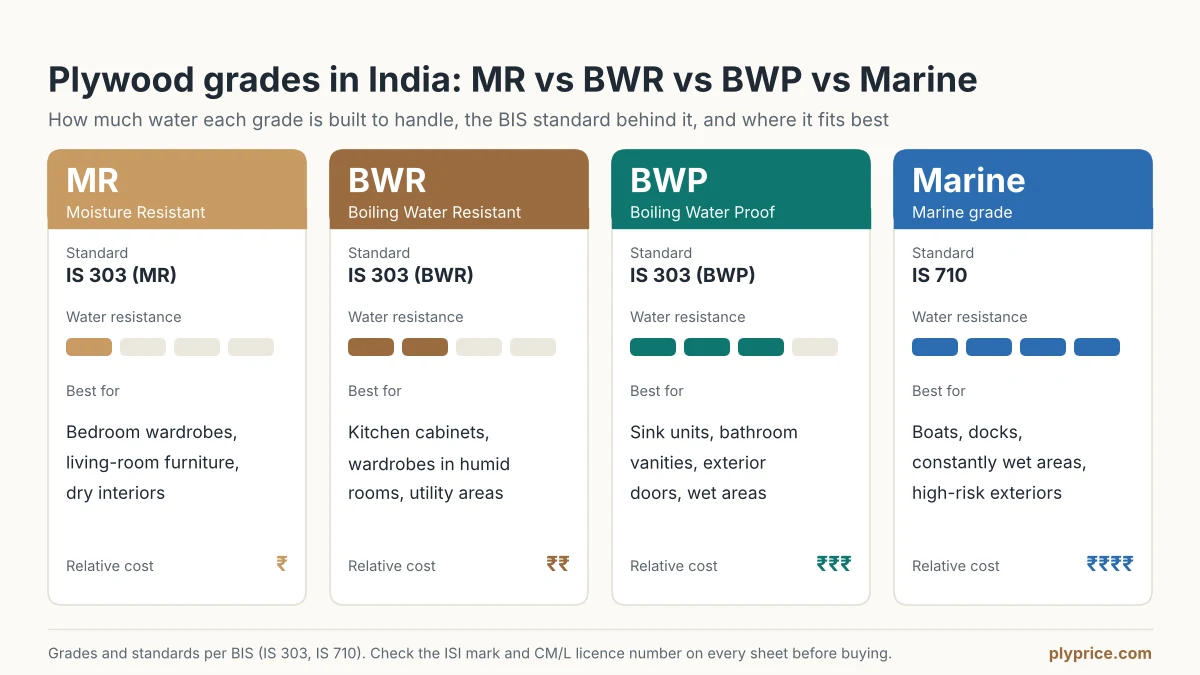
Buyers often encounter confusion at dealer yards: a glossy A-grade veneer might hide a weak core, while a rough BB face excels in hidden framing. This guide breaks down grades through first-principles logic: plywood is cross-laminated thin wood veneers glued under pressure. Grade labels reflect allowable defects (knots, splits, patches) per veneer layer, impacting visible finish for furniture and hidden strength for structural use. For Indian homeowners eyeing wardrobes or contractors framing partitions, matching grade to exposure is key to avoiding callbacks or replacements.
The Veneer Grading System: What A, AA, B, and BB Actually Mean
Plywood grades in India classify the face (outer veneer) and back veneers separately, denoted as "Face/Back" (e.g., A/BB). Grading stems from visual inspection under IS standards: higher letters indicate fewer natural imperfections like worm holes, color variations, or decay. This isn't arbitrary—veneer defects weaken bonds and invite moisture ingress, a perennial issue in monsoon-prone areas like Mumbai or Kerala.
Core veneers, often ungraded, determine bending strength and screw-holding power. Here's the hierarchy, reasoned from defect tolerance:
- AA or A/A Grade: Top-tier, with faces featuring whole veneers under 1/8th inch thick. Minimal plugs or crossbands; color-matched for uniformity. Ideal where finish is paramount, as it sands smoothly for painting or polishing. Expect tighter glue lines, resisting delamination in high-humidity kitchens.
- A/B or A/BB: Face remains A-quality (smooth, defect-free), but back allows minor knots or patches. Common for tabletops where only one side shows, balancing cost without compromising primary aesthetics.
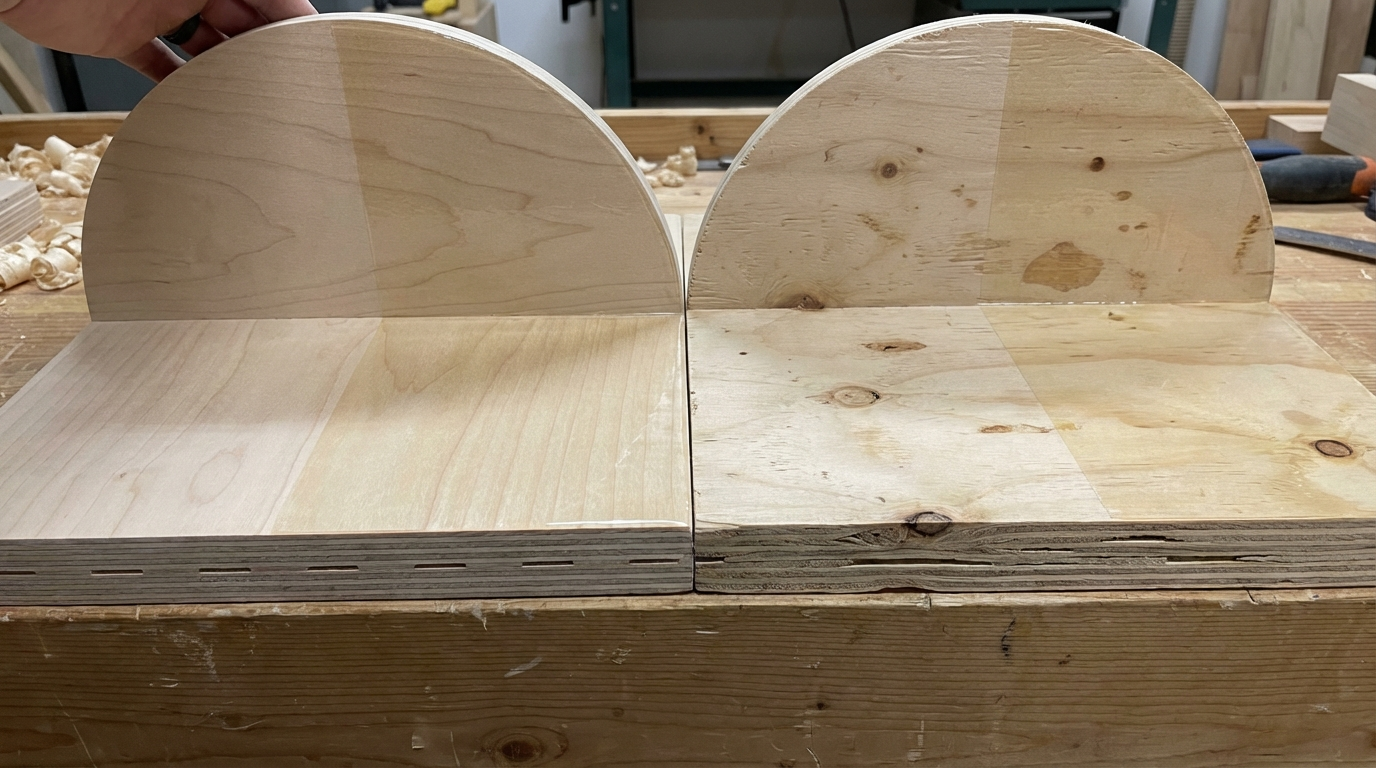
- B/BB or BB/BB: Both sides tolerate small knots, filled repairs, and slight color bands. BB veneers use butterfly patches for splits, suitable for painted surfaces or under laminates where texture hides flaws. In furniture backs or shelves, this grade holds up without premium pricing.
- Lower Grades (BP, CP): BP allows larger patches and open knots; CP is coarsest, for non-visible utility. Rarely chosen for interiors due to rough texture prone to swelling.
Why does this matter for Indian buyers? Homeowners in Delhi's dry winters prioritize A-grades for visible polish, while contractors in Chennai opt for BB to cut costs on plastered walls.
Visual Comparison of Veneer Grades
| Grade | Face Veneer Traits | Back Veneer Traits | Typical Indian Use Case | Finish Suitability |
|---|---|---|---|---|
| A/A or AA | Near-flawless; no knots, uniform color | Same as face | Wardrobe doors, kitchen cabinets | Polished or veneered |
| A/BB | Smooth, minimal repairs | Small knots, patches allowed | Tabletops, shelves | Painted one side |
| BB/BB | Knots <10mm, filled splits | Same as face | Furniture carcass, partitions | Laminated or painted |
| BP/CP | Large defects, open knots | Heavy repairs | Shuttering, pallets | Hidden or rough |
Structural Grades: Strength Over Surface Polish
Beyond aesthetic veneers, structural plywood grades prioritize core integrity for load-bearing roles, often labeled under IS:303 for MR, BWR and BWP (boiling water proof) or IS:710 for marine. These aren't "face grades" but full-sheet classifications ensuring minimum strength metrics like modulus of elasticity and tensile strength.
First-principles: Structural plywood uses thicker core veneers (often 3-5 layers) with uniform grain orientation, tested for deflection under 200-500 kg/m² loads. Face veneers may be BB or lower since they're concealed behind plaster or paint. Key markers:
- IS:303 Structural (MR/BWR): Moisture-resistant glue; core poplar or mixed hardwood. Suited for interior framing where occasional dampness occurs, like bathroom walls in apartments.
- BWP (IS:303) or Marine (IS:710) Structural: Phenol-formaldehyde glue boils without separating. Mandated for marine or exterior exposure, with faces engineered for warp resistance. Core often eucalyptus for screw grip.
- Strength Indicators: Look for "100% structural core" or "no broken core layers"—dealers often stamp sheets. Test via screw withdrawal (should hold 100+ kg without pull-out).
In practice, architects specify structural grades for RCC formwork or mezzanine flooring, where a pretty face means nothing against 2-ton pours. Homeowners misuse aesthetic grades here, leading to sagging over time.
Strength Testing Basics for Indian Buyers
At dealer lots, probe cores with a screwdriver: uniform resistance signals quality. Structural sheets flex less than 1/300th span under weight, per lab norms. Regional note: Northern mills favor softwood cores for machinability; southern prefer hardwood for termite resistance.
Balancing Finish and Strength: Grades in Furniture Applications
Furniture demands a dual calculus: visible faces for appeal, cores for longevity. In India's hot-humid belts, poor grades swell 10-15% in monsoons, cracking laminates or warping shutters.
For Finish-Driven Pieces (Wardrobes, Beds): A/A or A/BB with BWR glue. Why? Smooth faces take PU polish without telegraphing defects; BWR handles steam cleaning. Cost driver: veneer sourcing—AA adds 20-40% premium from select logs.
For Strength-Focused (Carcass, Legs): BB/BB structural core. Hides under fabric or laminate; prioritizes flatness under 50-100 kg loads. Laminators prefer this for edge banding grip.
Decision logic: If >30% surface exposed, invest in A-grade faces. For enclosed boxes, BB suffices, saving 15-25% on material.
Grade Impact on Key Furniture Metrics
| Metric | A/A or AA | B/BB | Structural (BB Face) |
|---|---|---|---|
| Finish Quality (Polish/Paint) | Excellent; mirror-like | Good; minor texture | Fair; needs filler |
| Strength (Screw Hold) | High (uniform core) | Medium-high | Very high (thick plies) |
| Moisture Resistance | Pair with BWR/BWP | Pair with BWR | BWP standard |
| Cost Relative | Highest | Medium | Balanced for utility |
Navigating Glue Types Alongside Grades
Grades pair with adhesives: MR (interior dry), BWR (humid interiors), BWP (wet/exterior). A A/A sheet with MR fails in kitchens; BB structural BWP thrives. Indian logic: Coastal buyers default BWR+; inland MR saves marginally but risks bubbles.
Practical Buying Framework for Indian Scenarios
Contractors: Bulk structural BB/BWP for speed; verify ISI stamps. Homeowners: A/BB BWR for modular kitchens—check core layers (min 7 for 18mm). Architects: Specify "A face, structural core" for hybrids.
Red flags: Faded stamps, wavy faces, soft cores. Dealer variances: Mumbai premiums 10-20% over UP hubs due to transport. Test batch: Load 50kg center; no sag >5mm.
- Define exposure: Dry interior? MR BB. Humid? BWR A-grade.
- Match to visibility: Exposed? A-face. Hidden? Structural.
- Budget tiers: Premium (+30%), Standard (BB), Utility (CP structural).
Common Pitfalls and Regional Adaptations
Oversights: Ignoring core over face—furniture sags post-monsoon. Regional: Kerala marine plywood mandates BWP structural; Rajasthan favors MR A/A for AC-cooled villas. Dealers push "imported" labels; insist on IS certification.
Longevity math: A-grade furniture lasts 15+ years polished; BB laminated 10-12. Strength failures stem 70% from glue-core mismatch.
Which Plywood Grade Should You Buy? A Quick Decision Matrix
| Project Type | Recommended Grade | Glue Type | Why It Fits Indian Conditions |
|---|---|---|---|
| Visible Furniture (Polish) | A/A or A/B | BWR | Humidity-proof finish; uniform for carpenters |
| Laminated Modular | BB/BB | BWR | Cost-effective; laminate conceals |
| Partitions/Framing | Structural BB | BWP | Load-bearing; plaster hides |
| Shuttering/Formwork | CP Structural | BWP | Reusable; high impact |
This matrix empowers choices aligned with real-world trade-offs, ensuring plywood investments endure India's variable climates and usage patterns.
Related guides on PlyPrice
Want Plywood Suggestions?
Share a few details and a PlyPrice specialist will suggest suitable brands and connect you to responsive dealers.