Plywood for Modular Furniture
Building modular units? Discover why Calibrated Plywood is essential for machine-made furniture, perfect alignment, and smooth finishes.
Modular Furniture's Precision Puzzle: Where Plywood Choices Shape Outcomes
In India's fast-growing modular furniture segment—think wardrobes, kitchens, and TV units churning out from urban workshops—CNC machines and automated edge banders demand materials that play by exact rules. Uneven plywood leads to misaligned panels, wavy laminates, and callbacks from picky homeowners. Calibrated plywood steps in as the quiet hero, ensuring every sheet feeds smoothly into machines for flawless builds. This guide unpacks why calibration trumps other specs for modular projects, drawing from workshop realities across Mumbai's humid bays to Bangalore's dry mills.
Modular Boom in Indian Homes: Contractor and Designer Realities
Modular furniture sales have surged with Tier-1 apartment deliveries, where space optimization rules. Homeowners want sleek, factory-like finishes without on-site mess; contractors chase repeat business via zero-defect installs. Designers specify plywood that laminates evenly under PU polish or HPL sheets. Non-calibrated stock? It gums up saw blades, causes 1-2mm thickness drifts per sheet, and turns a 10-panel wardrobe into a alignment nightmare. Calibration—sanding both faces to uniform thickness—fixes this at the source.
Decoding Calibrated Plywood: From Raw Veneers to Machine-Ready Sheets
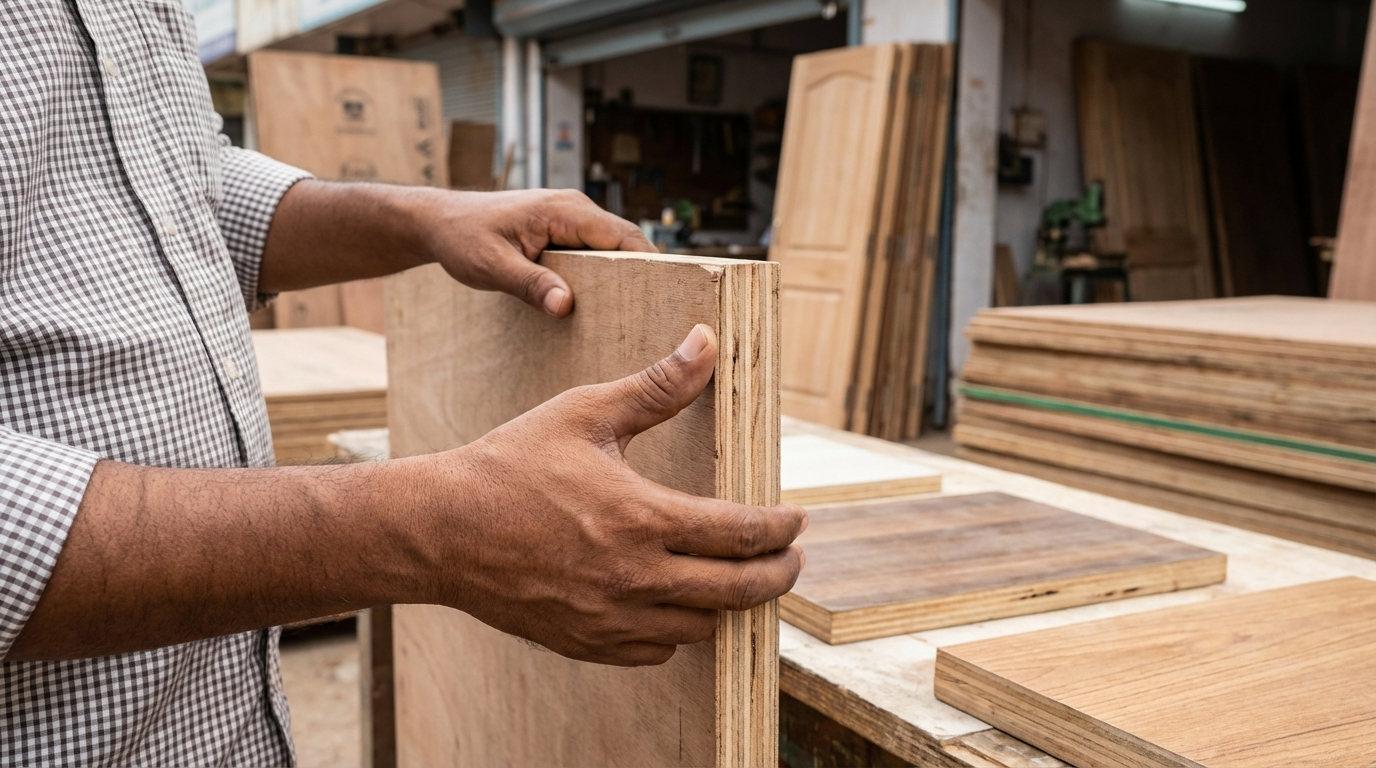
Start with basics: Plywood layers (veneers glued under heat/pressure) naturally vary 0.5-2mm across a sheet due to wood grain, glue spread, and press inconsistencies. Calibration machinery—wide-belt sanders—planes both faces post-pressing, hitting tolerances like 18mm ±0.3mm. Indian mills label it "calibrated" if it meets this uniformity, often stamped alongside ISI BIS marks.
First-Principles Breakdown: Why Uniformity Starts Here
Imagine veneers from poplar or eucalyptus (India's go-to cores): Knots swell in monsoon humidity, glue pockets compress unevenly. Uncalibrated sheets measure 17.2mm at edges, 18.8mm mid-sheet. Stack them in a modular carcass? Cumulative errors hit 5-10mm over height, dooming drawer slides. Calibration enforces planarity, letting CNC routers bite consistently without blade chatter or burn marks.
Indian Mill Practices: Hot Presses Meet Calibration Lines
In Gujarat or Punjab hubs, better mills integrate calibration post-BWR/BWP boiling tests. Cheaper MR-grade skips it, fine for shutters but disastrous for modular. Spot it by feel: Calibrated feels glass-smooth; others have roller marks or dips.
Machine-Made Modular Magic: How Calibration Enables CNC Workflows
Modular factories rely on panel saws, CNC nests, and auto-laminators. Feed uncalibrated plywood? Dust extraction clogs, bits dull 20% faster, and nesting software spits errors on thickness scans. Calibrated sheets nest perfectly, yielding 5-10% more panels per sheet.
CNC Compatibility: Tolerance Breakdown
- Thickness uniformity: ±0.2-0.5mm ideal; prevents Z-axis drift in 3D carving.
- Surface flatness: No waves over 1mm/ meter; edge banders grip flush.
- Edge squareness: Post-cut edges mate without gaps in tongue-groove joints.
Bangalore workshops report 30% rework drop after switching. For humid Kerala sites, pair with BWP calibration to fight post-install swelling.
Edge Banding and Hardware Insertion: Seamless Integration
Modular hinges and sliders demand perpendicular bores. Calibration ensures drill bits plunge true; uneven faces skew angles by 1-2 degrees, loosening soft-close mechanisms over time. Laminators heat-press HPL without bubbles, as uniform backing prevents telegraphing.
Perfect Alignment: Calibration's Role in Flawless Modular Assembly
Alignment fails cascade from sheet to structure. A wardrobe side (18mm) meets top (17.5mm)? Doors sag, shelves bow. Calibration locks tolerances, letting laser levels confirm plumb on first try.
Real-World Scenario: Mumbai Contractor Case
Picture a 2BHK kitchen mod: 20 cabinets, 100+ linear meters banding. Non-calibrated: 15% panels scrapped for thickness mismatch. Calibrated: Zero rejects, 2-day faster install. Architects note it in BOQs as "calibrated BWR min. ±0.3mm."
Stacking and Warping Resistance
Vertical stacks in transport amplify bows. Calibrated faces shed moisture evenly, cutting warp risk 40-50% in un-AC godowns—key for dealer yards in Chennai rains.
Smooth Finishes: From Raw Panels to Showroom Polish
Modular appeal lies in finishes: Membrane pressing, UV coating, or veneer overlays. Calibration preps ideal canvas—no sanding gouges needed pre-laminate.
Lamination Dynamics: Why Even Sanding Wins
PU glue cures under pressure; dips trap air, causing blisters. Calibrated grit (120-180) accepts spray paint uniformly, dodging orange-peel textures. Homeowners spot this: Glossy islands amid matte? Poor calibration upstream.
Post-Finish Durability in Indian Climates
Delhi winters dry out edges; calibrated resists cracking. Coastal Andhra? BWP calibration holds vs. termite-boards.
Grades and Specs: Matching Plywood to Modular Needs
| Grade | Moisture Resistance | Calibration Suitability | Modular Use Case | Typical Cost Driver |
|---|---|---|---|---|
| MR (Moisture Resistant) | Low (interior dry) | Optional; often skipped | Basic partitions; avoid kitchens | Lowest; core poplar heavy |
| BWR (Boiling Water Resistant) | Medium (72hr boil) | Essential for CNC | Wardrobes, vanities; urban homes | Mid-range; glue/formaldehyde balance |
| BWP (Boiling Water Proof) | High (multiple boils) | Mandatory for premium | Kitchens, bathrooms; coastal/humid | Highest; gurjan face veneers |
| HDHMR | High (pre-laminated) | Factory-calibrated standard | Ready-modular; no extra lam | Premium; particle density |
BWR calibrated dominates 70% modular specs for value. HDHMR skips plywood cuts but costs 20-40% more upfront.
ISI Norms and Tolerance Benchmarks
BIS IS:303 mandates calibration for commercial grades, but enforcement varies. Demand test certificates: Thickness gauge across 5 points per sheet.
Buyer Checklist: Sourcing Calibrated Plywood in India
Dealers in Delhi's Bhagirath Palace or Hyderabad's markets stock mixed bags. Contractors: Buy direct from mills (Punjab/UP) for consistency.
Verification Steps at Yard
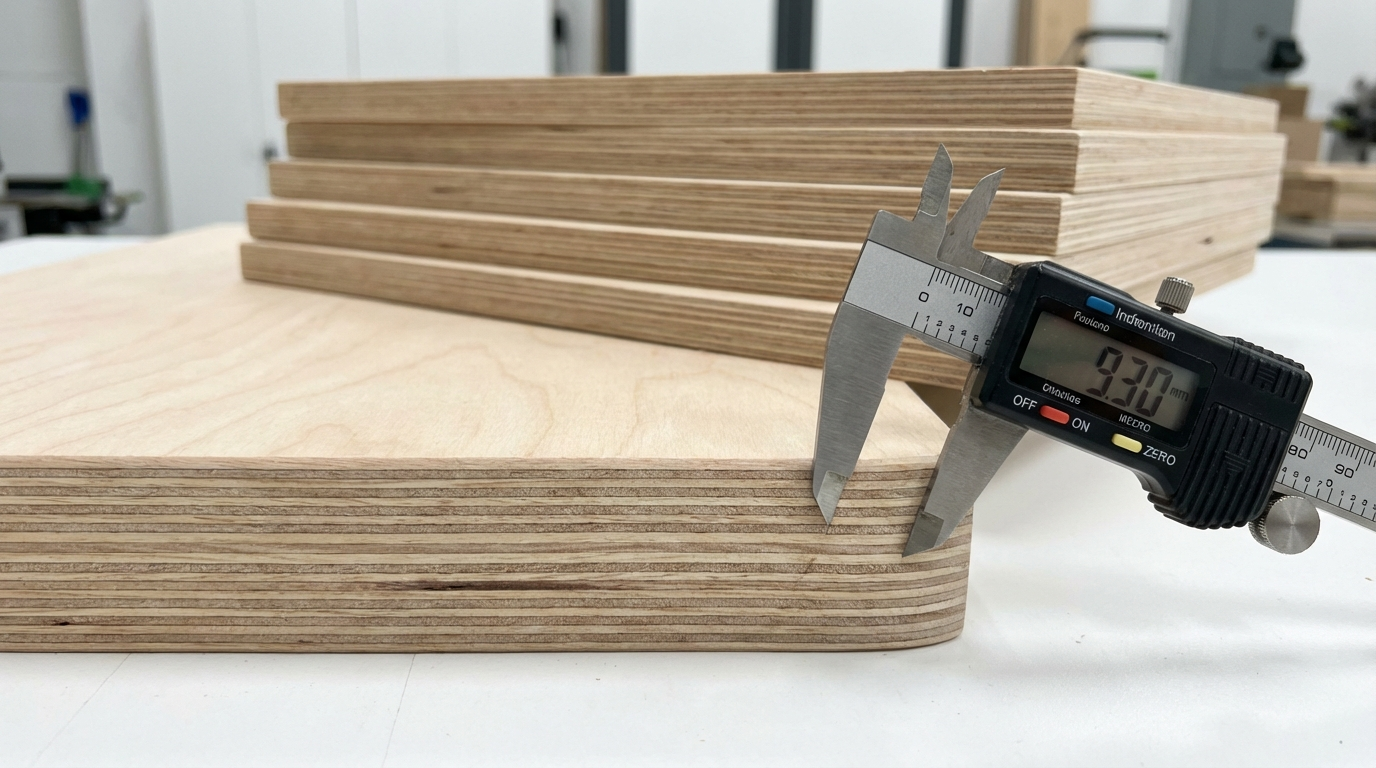
- Measure thickness: Digital caliper at 4 corners + center; reject >0.5mm variance.
- Tap test: Uniform thud = good glue; hollow = delam risk.
- Surface scan: Straightedge check; no light under 1m span.
- Labels: BIS CM/L no., calibration stamp, batch date (use within 6 months).
- Sample cut: CNC test-run one sheet.
Dealer vs Retail Logic
Dealers offer 10-20% bulk discounts but push stock. Retail (Asian Paints outlets) premiums 15-25% for branded calibrated. Regional swing: North 10% cheaper vs South humidity premiums.
Cost Logic: What Drives Calibrated Plywood Pricing
No fixed rupees/sheet—variables rule. Base: Poplar core BWR ~ baseline. Calibration adds 8-15% (sanding lines). BWP jumps 30-50%. Drivers:
- Face veneers: Softwood cheap; hardwood doubles.
- Thickness: 18mm standard; customs +20%.
- Volume: 50+ sheets? Negotiate 10-15% off.
- Region: Mill proximity cuts freight 5-10%.
Workshops budget 12-18% total material cost for plywood; calibration saves labor overruns.
Pitfalls, Alternatives, and When to Skip Calibration
Common Traps
- Faux-calibrated: Visual smooth but unmeasured—always gauge.
- Over-spec BWP for dry bedrooms: Waste 25% budget.
- Dealer mixing: Batch-test every 10 sheets.
| Option | Pros for Modular | Cons | Best For |
|---|---|---|---|
| Calibrated BWR Plywood | Uniform CNC feed, align easy | Mid-moisture only | Urban wardrobes |
| Non-Calibrated | Cheaper upfront | Rework hell, finish flaws | Handmade shutters |
| Pre-Lam HDHMR | Zero prep, durable | Heavy, cut waste high | Budget kitchens |
| MDF Calibrated | Super smooth paint base | Swells fast, no load | Carcasses only |
Alternatives for Niche Builds
Particle board for fillers (cheaper, uniform natural). Marine ply for exteriors. Skip calibration? Only carpenter-handled, low-precision jobs.
Long-Term Performance: Calibration's Hidden Payoff
Beyond build: Uniform moisture migration means even expansion. Modular units last 10-15 years vs. 5-7 mismatched. Architects push it for warranty claims—homeowners thank later.
Maintenance Angle for End-Users
Wipe with damp cloth; no sag in drawers means no adjustments. In monsoon belts, BWP calibrated shines.
Final Decision Framework for Buyers
Prioritize calibration if >50% machine work. Test small batch first. Consult local fabricator on grade-climate match. This spec shift elevates modular from commodity to premium, aligning with India's upgrade to organized interiors.
Want Plywood Suggestions?
Share a few details and a PlyPrice specialist will suggest suitable brands and connect you to responsive dealers.